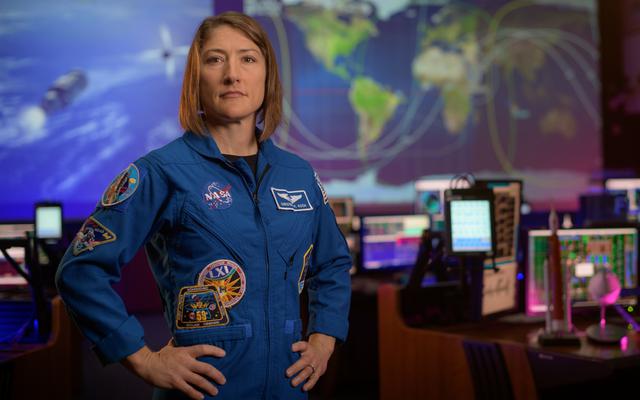
When NASA announced the crew for its return to the Moon, one name stood out for both her experience and her endurance: Christina Hammock Koch. An engineer, explorer and record-setting astronaut, Koch represents a generation of astronauts shaped not only by laboratories and simulators, but also by some of the harshest environments on Earth.
In 2013, she was selected as part of the twenty-first class of NASA astronauts. A decade later, she was assigned as Mission Specialist I for Artemis II, the first crewed mission in the Artemis programme and a flight designed to carry astronauts around the Moon. Between those milestones lies one of the most remarkable careers in modern human spaceflight.
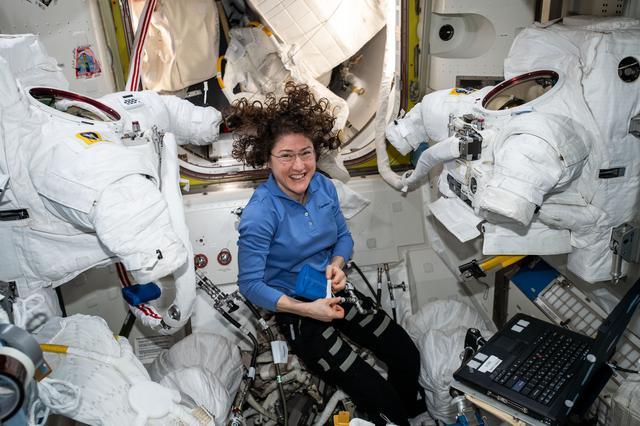
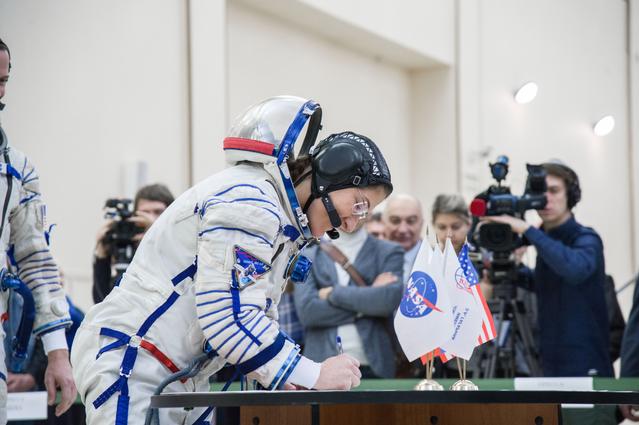
Christina Koch is best known for her extended stay aboard the International Space Station. She launched on 14th March 2019 from the Baikonur Cosmodrome aboard Soyuz MS-12, alongside Russian cosmonaut Alexey Ovchinin and NASA astronaut Nick Hague. The mission began as a standard long-duration expedition.
Serving as a flight engineer during Expeditions 59, 60 and 61, Koch ultimately spent 328 consecutive days in space. That achievement set a record for the longest single spaceflight by a woman. During her time in orbit, she contributed to hundreds of scientific investigations and technology demonstrations, helping to advance research in biology, physics and engineering.
One of the most notable projects she participated in involved upgrades to the Alpha Magnetic Spectrometer, a sophisticated particle physics experiment mounted on the exterior of the station. She supported robotics operations that enabled repairs and enhancements to the instrument, extending its ability to search for clues about dark matter and the origins of the universe. Other experiments included growing protein crystals in microgravity to improve pharmaceutical research and testing three-dimensional biological printing technologies in the weightless environment of low Earth orbit.
Koch conducted six spacewalks, accumulating 42 hours and 15 minutes outside the station. Three of those excursions were part of the first all-woman spacewalks in history, a landmark moment reflecting decades of gradual progress. Working in bulky suits against the blackness of space, she and her colleagues upgraded power systems and carried out essential maintenance to keep the orbiting laboratory operational.
She returned to Earth on 6th February 2020 aboard Soyuz MS-13, landing on the steppes of Kazakhstan after nearly a year away from the planet’s surface.
Koch’s journey to orbit began far from launch pads and mission control rooms. Born in Grand Rapids, Michigan, she grew up in Jacksonville, North Carolina, and spent summers working on her family’s farm. Those early years instilled a respect for hard work and resilience. Physical effort and problem-solving were not abstract ideas but daily realities.
She attended the North Carolina School of Science and Mathematics in Durham and, later, White Oak High School in Jacksonville. Her academic path led her to North Carolina State University in Raleigh, where she earned Bachelor of Science degrees in electrical engineering and physics, followed by a Master of Science degree in electrical engineering. She also studied abroad at the University of Ghana, expanding her perspective beyond the United States. In recognition of her achievements, North Carolina State University later awarded her an honorary doctorate.
Long before she wore a spacesuit, Koch built a career at the intersection of science and extreme environments. She began as an electrical engineer at NASA Goddard Space Flight Centre, contributing to instruments on several space science missions. Her work involved the development and testing of hardware designed to survive launch stresses and operate reliably in the vacuum of space.
Yet laboratories were only part of her professional story. Koch joined the United States Antarctic Program as a research associate, spending a year wintering over at the Amundsen–Scott South Pole Station and a season at Palmer Station. Life at the South Pole demands technical expertise and mental fortitude. Temperatures can plummet below -70°C, and darkness dominates the winter months. In addition to maintaining scientific equipment, she served on firefighting and search-and-rescue teams, roles requiring calm decision-making under pressure.
After returning to space instrument development at the Johns Hopkins University Applied Physics Laboratory, where she worked on missions including Juno and the Van Allen Probes, Koch again sought out remote assignments. She completed additional tours in Antarctica and at Summit Station in Greenland. Later, with the National Oceanic and Atmospheric Administration, she worked as a field engineer in Utqiagvik, Alaska, and served as Station Chief of the American Samoa Observatory. Across these postings, she maintained complex scientific systems in isolated locations where help could be days or weeks away.
These experiences formed a clear through-line to her eventual role as an astronaut. Operating in Antarctica or the Arctic shares many characteristics with spaceflight: isolation, confinement, reliance on small teams and the need for technical precision. The environments differ, but the mindset required is strikingly similar.
Koch’s relationship with NASA pre-dates her selection as an astronaut. She participated in the NASA Academy programme in 2001 and worked early in her career at Goddard Space Flight Centre. In 2013, she was chosen as one of eight members of NASA’s twenty-first astronaut class. Two years later, she completed astronaut candidate training, qualifying for assignments to the International Space Station.
Following her record-setting mission, Koch took on leadership responsibilities within the Astronaut Office. She served as Branch Chief of the Assigned Crew Branch and later rotated as Assistant for Technical Integration for the Centre Director at Johnson Space Centre. These roles involved coordinating crews, integrating technical requirements and helping to shape future missions.
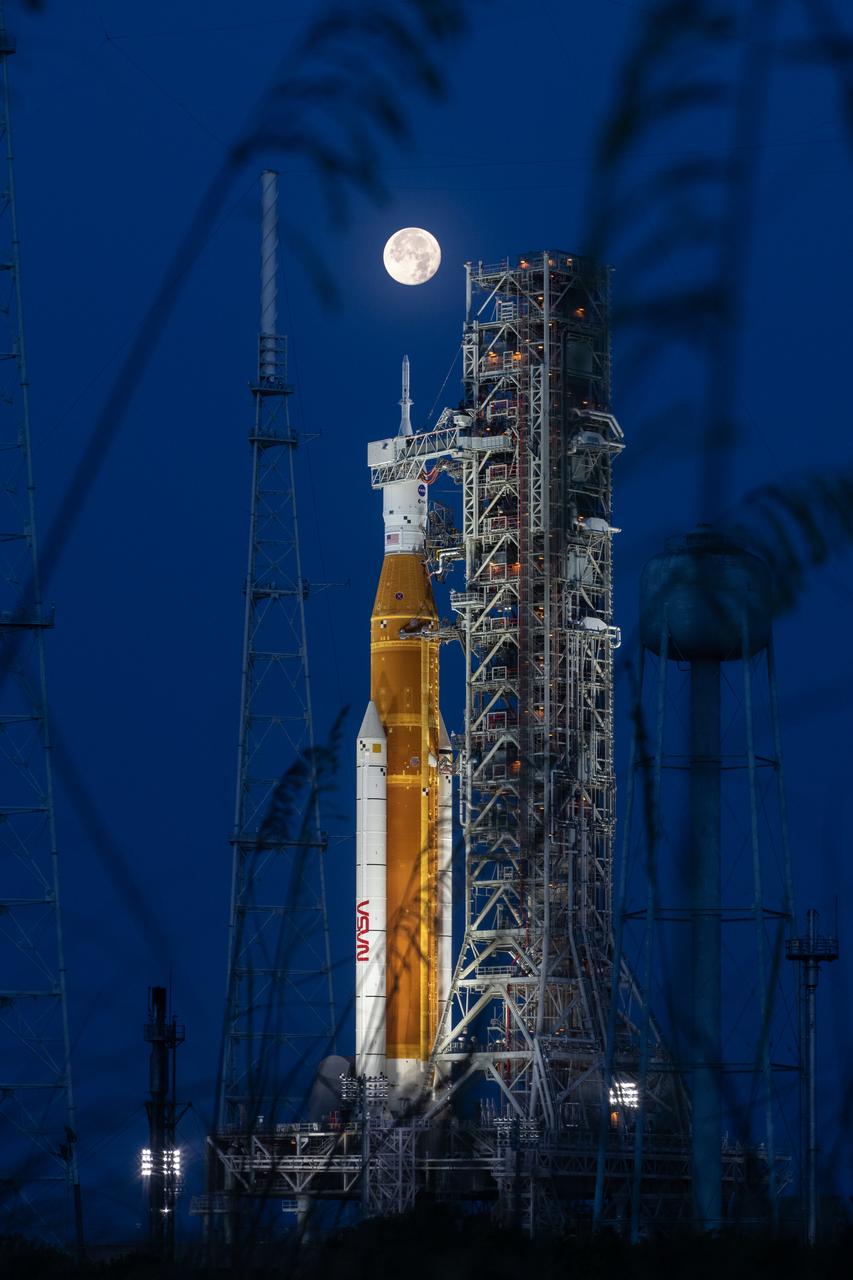
Her next major chapter is tied to Artemis II. The Artemis programme aims to establish a sustained human presence on and around the Moon, serving as a stepping stone for eventual missions to Mars. Artemis II is designed to send astronauts on a lunar flyby, testing the spacecraft and systems that will later support landings. For Koch, the mission represents both a personal milestone and a continuation of a broader human effort to explore beyond low Earth orbit.
Koch’s achievements have earned significant recognition. She received the Neil Armstrong Award of Excellence from the Astronaut Scholarship Foundation in 2020, the Astronautics Engineer Award from the National Space Club and Foundation in the same year, and the Global ATHENA Leadership Award. Earlier honours include the NASA Group Achievement Award for work on the Juno mission’s Jupiter Energetic Particle Detector Instrument and for contributions to the Suzaku mission X-ray spectrometer. She also received the United States Congress Antarctic Service Medal with Winter-Over distinction for her time at the South Pole.
Outside her professional life, Koch maintains an active range of interests. She enjoys surfing, rock and ice climbing, running, yoga, backpacking, photography and travel. Many of these pursuits reflect the same appetite for challenge that defines her career. Whether scaling a cliff face or conducting a spacewalk, she gravitates towards environments that test both body and mind.
What distinguishes Christina Koch is not only the number of days she has spent in space, but the pattern that emerges across her life. Again and again, she has chosen assignments that demand endurance, technical mastery and teamwork in extreme conditions. From Antarctic winters to orbital laboratories, she has operated in places where preparation and trust in colleagues are essential.
Her 328-day mission offered scientists valuable data about the effects of long-duration spaceflight on the human body. Extended exposure to microgravity influences bone density, muscle mass and cardiovascular function. Understanding these changes is critical as space agencies plan missions that will last months or even years. Koch’s experience contributes to a growing body of knowledge that will shape the future of exploration.
As Artemis II approaches, the arc of her career appears almost deliberate. The farm fields of Michigan, the frozen expanse of Antarctica, the engineering laboratories of Maryland and the orbiting outpost circling Earth all converge in a single objective: pushing human presence further into space. For readers following the evolution of modern exploration, Christina Koch’s story offers a compelling portrait of preparation meeting opportunity at precisely the right moment.
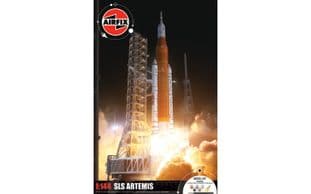
For those inspired to bring a piece of that journey into their own hands, the Airfix SLS Artemis Gift Set offers a detailed representation of the rocket that will carry astronauts like Koch back towards the Moon. Combining precision engineering with the heritage of space exploration, it provides an engaging way to connect with the next chapter of human spaceflight from the workbench at home.
All images supplied courtesy of NASA.