Elevating your model vehicles- adding details
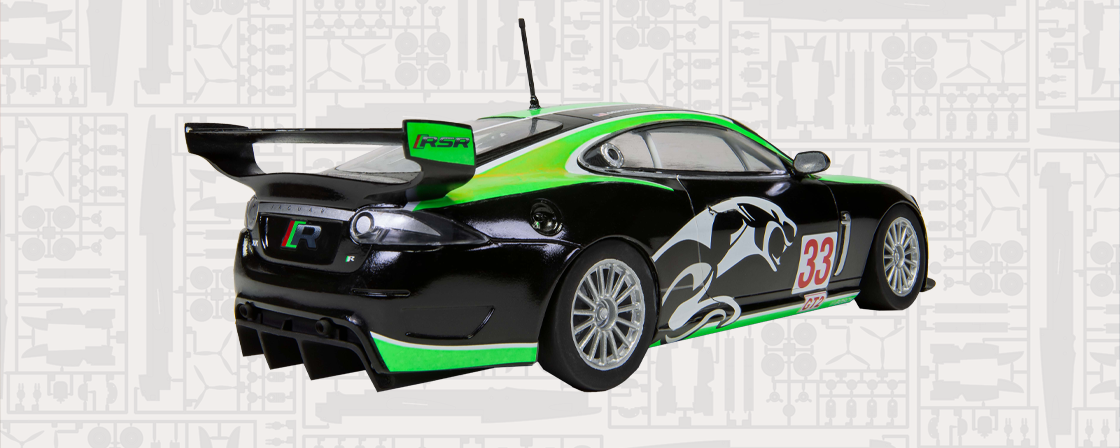
Today we’ll be discussing how car model lovers can elevate their vehicles by upping their detail game, with our help! We at Airfix have put together some tips and tricks to get you and your painting skills off the ground. The sky's the limit when it comes to what you can do with our models!
A word of warning- this guide will be the most useful for advanced modellers, who would class themselves at a more intermediate level. You’ve mastered your first build (or completed it at least!) and are now looking to take it to the next level by painting details on your model vehicle!
Though if you’re new to the scene, there is still plenty you can learn from this helpful guide. We have everything you need from painting prep tips to a brush breakdown!
Preparing your painting area
We’re sure that you know all this by now, but we wouldn’t be doing our jobs if we didn’t offer a gentle reminder! When it comes to assembling your workbench, there are a few things that you should prioritise. Ensure that whatever flat surface has been multi-purposed for your mighty modelling station, is sturdy and stable! Otherwise, you’re one wobble away from an ugly smudge instead of a fine detail. Also, double check with whoever you share your space with that they’re happy to sacrifice the surface in case of glue or paint spillages!
Now normally we would discuss the standard tools which you would expect to be involved in a build. Your self-cutting mat (the best in the business in terms of mats), glue, paints, brushes, a hobby knife, and nippers (a clipping tool designed to remove any extra plastic). However, if you’re reading this, then this isn’t your first rodeo. So, we’re going to assume that you’re already armed and ready with your modelling arsenal.
The final step is to secure the best lighting that you can find. Good lighting works fine for a Starter Kit type of build, but if you’re looking to improve on the next one, you need stellar lighting. This is to ensure that you don’t miss an important detail during the painting process, as poor lighting can lead to unfortunate mistakes which often aren’t caught until you think you’re finished. As for the type of lighting, try to avoid warm, incandescent lighting as this doesn’t show colours as accurately as a neutral, white LED lamp does.
We also recommend a reliable chair and a good supply of paper towels to be ready for spills and any excess paint.
Picking the right brush
It’s now time to discuss the paintbrushes! The most important ingredient for success in miniature vehicle painting. When you’re completing a starter kit, the brush you use isn’t that important. A larger one to cover a greater surface area, a smaller one for details. However, when taking your model to the next level, it is imperative that you have the correct brushes for the job. We’re going to give you a quick breakdown of what we class as absolutely essential brushes but stay tuned for techniques further down.
These are the ideal brushes for the tiny but important details – such as insignias. They’re the perfect size to do the work that a fine detail brush can’t, with much more control and attention to detail.
Fine detail brush (sizes 1 to 4)
A fine detail brush is the brush for painting the majority of smaller details on a model. They are ideal to catch the bits that a larger brush can’t handle with as much grace and sophistication. They’re also essential for steady-hand techniques such as edge-highlighting.
Dry brush
You don’t need a fancy brush here – any old one will do. They’re needed for the dry brushing technique so pick one that you’re not too attached to as things will be getting a little rough
Extra-fine detail brush (size 0)
These are the ideal brushes for the tiny but important details – such as insignias or bolts. They’re the perfect size to do the work that a fine detail brush can’t, with much more control and attention to detail.
Priming your vehicle
The final step before we get to the painting, is to prime your model vehicle. This is an underrated but incredibly important step to ensure that you can add as many layers of paint as needed to end up with the best paint job. It helps to avoid uneven coats of colour and prevents any issues that might arise from layering on multiple shades.
If you’re not sure where to purchase a reliable can or pot of primer, the Humbrol website has primer in bucketloads. Whether you’re a spray can whiz or a pot classic, Humbrol has it all. Just make sure that you’re picking the right primer for your project!
Start painting!
And now it’s time to begin the painting process! The first step to the paint job of your dreams is to know which brush you need for each technique. The different brush sizes should give you some sort of clue as to which one will be important for covering different surface areas- the larger brushes are the best for the initial colour blocking coats, whereas the smaller brushes are perfect for the tiny details needed to make your model come alive.
It’s also important that you’re working with the right paint. Our two options are acrylics and enamels – both great choices but we have found that many of our modellers tend to skew towards acrylic. This is because acrylic paints are, generally speaking, easier to apply and come in a far greater variety of colours. They also dry much quicker than enamel paints for the modellers who aren’t made of patience.
We’ve found that the best place to begin with the actual painting, is by adding all the dark colours first as part of your initial base coats. This way, you can go in later with a tiny brush to add the important details over the top. This is known as the colour blocking technique and adds richness and depth to your model vehicles.
We would also recommend starting with thin layers of paint as well, as it’s easier to build up a colour than it is to continuously try to cover a thick initial layer. They also aid the drying process and ensure that your coats will dry smooth and even.
Applying Decals
A decal is a decorative sticker designed to enhance the look of your model vehicle or add a bit of realistic detailing that would be very difficult to achieve with just a brush. The decals come on a sheet of cardboard which means you’ll need your trusty hobby knife to free them from their paper prison.
Once you have separated your decal from the sheet, the next step is to place it in some warm water. We recommend warm water as opposed to cold to help the decal slide off the remaining cardboard without any issues.
A handy tip is to carefully dab a little of the water onto the area of the model where your decal is going to go. This ensures that you can continue to adjust it once you have applied it to the model in case it didn’t lie as smoothly as you would have liked, or the positioning was slightly off.
To apply the decal to your model vehicle, grab a brush and use it to pick the decal up from the cardboard and manoeuvre it carefully onto your model. A gentle hand is necessary when positioning the decal and ridding it of any air bubbles as you don’t want it to tear.
If water isn’t cutting it and you’re after something a little more permanent, we also sell adhesives made specifically to secure your decals!