
Welcome to this latest edition of Aerodrome and our regular look at the fascinating world of aeroplanes and the historic aviation scene around the UK.
What a start to a new year that’s been. Due to a slight tweaking of our blog schedule for the coming year, for the first time in a long time, we will be starting a new year by publishing TWO editions of Aerodrome in January, both of which feature historic aviation events which have taken place over the past couple of months. Coming on the back of our previous Lightning T.5 event at Cranfield, we return to the subject of preserved classic British jet aircraft in this latest edition, as we braved winter conditions to attend the first aviation nightshoot event arranged in 2026.
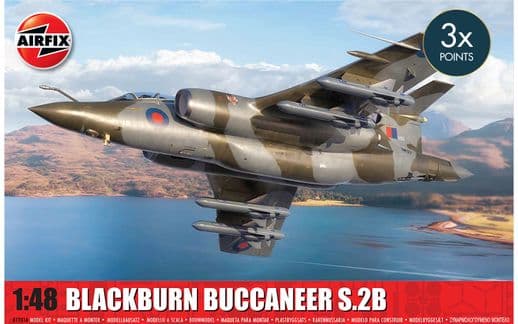
Heading into 2026 with hope that it will be a memorable year for aviation and aviation related events, in this latest edition, we head down to the Cotswolds for a bitterly cold appointment at the Cotswold Airport, a location which to many Aerodrome readers will probably be referred to as the former RAF Kemble. Our photographic subjects are a pair of immaculately maintained Blackburn Buccaneers, aircraft which have called this airfield home since re-locating there from Bruntingthorpe in August 2020. Bringing you a selection of images which were all taken on the day, we have beautiful Buccaneers, engine runs and wing folds for your delectation, as we join The Buccaneer Aviation Group for their first event of 2026.
Please join us as we start the year by paying homage to Britain’s Banana Jet, and a group of people dedicated to their ongoing preservation at the former home of the Red Arrows.
Blackburn Buccaneer XW544 is resplendent in a new colour scheme, one which takes its inspiration from the first aircraft to enter Royal Air Force service.
Although aviation enthusiasts here in the UK are extremely fortunate to have the number of quality museums available, where we can spend quality time with the machines which fascinate us so, there really is no substitute for seeing an aeroplane come to life, firing up its engines, and doing what it was designed to do ….. dominate the skies (or at the very least sound like they could). We can certainly do that with the latest aircraft in British military service at such airfields as Coningsby, Marham and Lossiemouth, but when it comes to classic British jets of the Cold War era, those opportunities are far less common.
That being the case, when such an opportunity does present itself, a hardy band of committed enthusiasts will usually travel long distances to make sure they’re able to be in attendance, and are usually grateful for the tireless efforts and incredible dedication of the people who are determined to keep these mighty examples of our aviation heritage in running order. The Buccaneer Aviation Group (TBAG) are one such group of people, and indeed are the only group in the world dedicated entirely to the preservation of this single aircraft type.
TBAG are a volunteer, not for profit organisation, solely dedicated to the maintenance and preservation of the aircraft under their charge, with Buccaneer S.2B XX894 and XW544 currently maintained in something close to operational condition. They do so with the aim of preserving the legacy of this impressive aircraft for the current generation, and those to come, not only to honour those who flew these aircraft operationally, but also those who designed, built, tested and maintained them.
TBAG Buccaneers doing what they did best on Fast Taxi Day at Bruntingthorpe, thrilling the crowds.
Many enthusiasts will have first experienced this group’s aircraft and impressive endeavours by visiting them at their previous home, the huge former RAF airfield site at Bruntingthorpe. The Annual Cold War Jets events held there regularly saw the Group’s two Buccaneers blasting down the runway at Bruntingthorpe in a display of raw aviation power which saw thousands of enthusiasts descending on the airfield for this unique demonstration of classic jet power. The TBAG Buccaneers were joined by other aircraft types such as English Electric Lightnings, Hawker Hunters, Canberras, Jet Provosts, a Vickers VC-10 and a Handley Page Victor, and as you might imagine, these were always extremely popular events.
Unfortunately, those memorable days are now a thing of the past, and the runway at Bruntingthorpe is now a vehicle storage site, but as news of impending changes at the site started to circulate several years ago, the TBAG team decided to take a proactive approach to their future operations. Having enjoyed an excellent relationship with the owners of the airfield throughout almost 20 years of calling Bruntingthorpe their home, they wanted this to continue during conversations about the airfield’s future and their own requirements for the future of the aircraft under their charge.
For reasons which purely related to the ongoing maintenance of their Buccaneers and their desire to create a unique and lasting legacy to the service life of the Buccaneer, they felt it was important for them to find a new home for their aircraft. Initial discussions resulted in officials from two potential new home locations contacting the group, however, a third option soon came up for consideration, following a chance meeting in connection with a display commitment event for the group’s Buccaneer cockpit section.
As news of impending changes at Bruntingthorpe had the UK’s aviation enthusiast corps nervously looking for updates and information, the TBAG team started work on the challenging task of preparing their aircraft to make a rather unusual road trip. The Buccaneer Aviation Group also announced that the new home for their much loved aircraft was going to be Cotswold Airport, the former RAF Kemble and an airfield steeped in post war jet aviation heritage.
Both of the TBAG Buccaneers are now settled into their new home at Cotswold Airport.
Cotswold Airport was regarded as an ideal fit for TBAG’s future plans, with this exciting development also seeing the groups volunteer force providing active care for several historic aircraft already based at the airfield – two Canberra PR.9s, a Hunter T.7 and also a Folland Gnat. All they had to do now was to arrange for their two Buccaneers to be transported to Kemble safely, something which was going to be an incredibly costly exercise for them. Facing any number of potentially unquantifiable costs, what they did know was that they would have to finance the dismantling, transportation and re-assembly of both their aircraft, not to mention the additional expense of police and highways agency assistance.
For an organisation which operated on a ‘not for profit’ basis, and one which relies solely on donations and revenue generated from event and shop sales to exist, this clearly presented them with a sizeable problem. Hoping to garner the support of enthusiasts, they launched a crowdfunding campaign to help raise the anticipated £24,000 the move operation was conservatively expected to cost them. Thankfully, it seemed as if they only needed to ask, because the public response was nothing short of astonishing and as donations started to arrive immediately, they became confident that the move was really was going to happen. An exciting new chapter lay ahead for them and their aircraft.
When such an unusual move operation as this gets underway, it’s easy for costs to start running away with themselves, and as it transpired, they would eventually be faced with a significant cost overrun against what was initially estimated by the time the aircraft arrived at Kemble, but this wasn’t too much of an issue thanks to the incredible public support they received. What was much more of a problem for them was the fact that the nation was in the grip of the Covid pandemic at that time, and as a consequence, the TBAG team would have to wait quite some time before they were in a position to show their aircraft off to the public at Kemble, and to start raising money for their ongoing upkeep again.
Thankfully, those pressures soon eased, and the team could start to settle into their new home, and introduce their new Gloucestershire airfield home to the sound of Rolls Royce Spey turbofan engines.
Buccaneer XW544 may be wearing a smart new RAF colour scheme, but she’s always more than happy to demonstrate her naval heritage.
For those with an interest in such things, they will be only too aware that the Blackburn/Hawker Siddeley Buccaneer was a powerful naval strike aircraft which can trace its development history back to the 1950’s and a massive naval expansion programme undertaken by the Soviet Navy. The Buccaneer has to be considered as one of the most successful of Britain’s post war jet aircraft and one which would go on to see service with both the Fleet Air Arm and the Royal Air Force. With the Russians expanding their naval forces with the introduction of large numbers of their new Sverdlov Class Cruisers, the Royal Navy were concerned that they would not be in a position to mount an effective defence against this new threat with their existing forces alone.
The state of the country’s finances at that time dictated that Britain would not be in a position to counter this move with a similar expansion programme of their own, so it was quickly decided that a capable new naval strike aircraft would be the answer, one able to operate from existing carriers and possess the ability to effectively detect and destroy the new Soviet vessels.
The new aircraft would be the first of its type to be developed from the outset as an ‘under radar’ design and would need to provide excellent performance at low altitudes, as well as the capability to deliver nuclear munitions as and when required. Clearly, these requirements would place particular demands on any aircraft, however, the new jet would also need to achieve all this whilst operating from one of Britain’s diminutive aircraft carriers – this would have to be a very special aeroplane indeed.
The technology required to undertake this kind of work would usually be sourced from American companies, however, this would not be possible in this case, as the project lead time would be an unacceptably long three years – Blackburn set about producing their own bespoke machinery. Clearly, producing an aircraft capable of withstanding the rigors of carrier operation and the stresses associated with fast, low level operations dictated that their new aircraft would have to be tough, but this strength would come at a cost.
The TBAG Buccaneers proudly commemorate the service history of this incredible aircraft, both with the Fleet Air Arm and the Royal Air Force.
Building in the necessary levels of strength and durability into the design resulted in an aerodynamic penalty and the performance of the aircraft would therefore be compromised, nevertheless, what they eventually produced was a truly exceptional aeroplane. Their Buccaneer may not have been supersonic, but it was manoeuvrable, built like a brick outhouse and the most capable aircraft of its kind the world had ever seen – it also just happened to be the heaviest aircraft the Royal Navy had ever operated from a carrier.
An incredibly successful aircraft for the Royal Navy, the Buccaneer would also see service with the Royal Air Force, and would eventually be held in the same high regard. Although initially allocated to them due to project cancellations and continuing budgetary constraints, and in a manner which initially left RAF officials feeling that the aircraft was essentially forced upon them, the rugged, no nonsense attributes of the Buccaneer soon won them over, and they came to both appreciate and admire the many qualities possessed by their new semi-naval jets.
Marking the dual service history of this incredible aircraft, The Buccaneer Aviation Group have two beautifully maintained examples of the S.2B variant of the jet under their care, one wearing a Royal Navy colour scheme, with the other an early scheme applied to Royal Air Force Buccaneers, something which is rather a recent development in that particular aircraft’s history.
Let’s take a closer look at both of their aircraft in turn.
Blackburn Buccaneer S.2B XX894
Despite her current Fleet Air Arm appearance, Buccaneer XX894 was one of the aircraft ordered for service with the Royal Air Force and subsequently delivered to the RAF in December 1975, at a cost reported to be around £7Million at that time. She would go on to enjoy an active 19 year service career with the RAF, which included periods with Nos.16, 15, 12 and 208 Squadrons, in addition to time spent with the A&AEE at Boscombe Down and No.237 Operational Conversion Unit.
She also served as one of the ‘Sky Pirates’ during the Gulf War, undertaking several strike missions and claiming the destruction of an Iraqi Air Force Antonov An-12 ‘Cub’ transport aircraft, returning home adorned with 15 mission markings.
As the Buccaneer neared her service retirement, XX894 would be one of several aircraft emerging from the paint shop wearing special commemorative schemes. She was selected to wear a beautiful Royal Navy scheme representing 020/R of No.809 NAS operating aboard HMS Ark Royal during the late 1970s. Wearing this scheme, she would take part in an official air-to-air photoshoot to mark the retirement of the Buccaneer, and appear at several commemorative events throughout the country.
The aircraft taking part in these events were all presented in different schemes worn by Buccaneers during the type’s Royal Navy and RAF service careers, intended to be a visual representation of how this incredibly effective aircraft was universally loved by all those who served with her, even though she served through some of the most dangerous and volatile times in world history.
Following her withdrawal from service, XX894 spent time in storage at several locations around the UK, including St Athan, Bruntingthorpe, Kemble and Farnborough, before eventually arriving back at Bruntingthorpe one final time in 2003. Once there, she received some much needed tlc and was returned to fast taxi condition, regularly starring at one of the many aircraft running events held at this Leicestershire airfield.
She came into the possession of The Buccaneer Aviation Group in 2011, who have been maintaining and displaying the aircraft ever since, moving from Bruntingthorpe to Kemble (Cotswold Airport) in 2020, where she now continues to honour the legacy of this impressive aircraft.
Blackburn Buccaneer S.2B XW544
Now unquestionably one of the most famous Buccaneers in the UK, XW544 is presented here in the first operational scheme Royal Air Force Buccaneers wore during their service career. This aircraft was delivered to the Royal Air Force in 1972, initially entering service with No.15 Squadron at Laarbruch that same year, before moving on to No.16 squadron in 1979 and returning back to No.15 Squadron in 1982.
It appears that this particular aircraft proved to be rather temperamental in RAF service, spending many hours in various maintenance hangars due to her being plagued by persistent fuel leaks. Consequently, and after just ten years of service, with only 2227:10 hours flight time logged, she was unceremoniously withdrawn from service. Flown to RAF Shawbury for storage, the aircraft had her engines removed, in addition to losing various pieces of electronic equipment taken from her cockpit, all items required to keep the remaining RAF Buccaneer fleet flying.
In 1984, the aircraft was transported the short distance to RAF Cosford, where she served under the care of No.2 School of Technical Training, remaining there for the next ten years, until the eventual retirement of the RAF's last remaining Buccaneers. Following this development, she was no longer required by the SoTT and was therefore sold to a local scrap metal dealer, transported to his premises in Shawbury and stored outdoors on her belly to await her fate.
I might be an RAF aircraft, but I can still do this!
Thankfully, XW544 was discovered laying in that sorry state by a group of Buccaneer enthusiasts, who managed to raise enough money between them to purchase the airframe. Because of the sorry state they found her in, she actually underwent a programme of rudimentary preservation whilst she was still on site, in an attempt to ensure she did not deteriorate any further. Eventually, the aircraft was transported to a new home at Bruntingthorpe Airfield, where her future began to look much brighter, particularly when she became the subject of a concerted attempt to restore her to ground running condition.
A proud achievement for all those connected with this project, XW544 performed her first engine run in almost 25 years during May 2008 and three years later, went on to perform her first public fast taxi runs at one of Bruntingthorpe's famous Cold War Jet running events, in conjunction with two other preserved Buccaneers. After spending a happy and successful 16 years at Bruntingthorpe, changes at the airfield saw this Buccaneer hitting the road once more, this time to take up residence at a new home, the former RAF Kemble, an airfield which is steeped in post war jet aviation heritage.
Now firmly established as one of the major attractions at Cotswold Airport, when Buccaneer XW544 isn't charming the nation's photographers at one of TBAG's regular nightshoot events, she can be found blasting down the runway at the former RAF Kemble, a living tribute to the Royal Air Force career of the mighty Blackburn/Hawker Siddeley Buccaneer.
The first activity of the evening was an engine run and wing fold cycle demonstration from XW544, apparently with a Red Arrow at the controls.
Any photographer will tell you that getting your first event of the year under your belt nice and early is always an extremely positive development, so when I saw this event advertised to be taking place in just the second week of the new year, I jumped at the chance and secured my place. Although the opportunity to see these two famous Buccaneers is always appealing, I was particularly keen to attend this time because XW544 was now wearing a different plumage.
For many years, she had been resplendent in a wrap around RAF No.16 Squadron scheme, however, she was starting to look a little tatty, and the TBAG team decided it was time they did something about it. She underwent a period of conservation and preparation, where the old markings and paint scheme were removed, prior to the application of a smart new coat of paint.
Cockpit section XW550 currently has a new role as paint test airframe, as the team look to complete the repaint work on XW544.
The scheme selected was that worn by the first Buccaneers to enter Royal Air Force service, complete with light aircraft grey undersides. This scheme was selected specifically because of the lack of preserved Buccaneers wearing this early scheme, and with their aircraft capable of performing taxi runs as Kemble, thought it would look particularly impressive. Significantly for this event, the team have yet to apply the unit markings to the aircraft, so I thought an event where I could photograph the aircraft in its current ‘clean(ish)’ state had to be one worth documenting.
Speaking with one of the team members on the day, it appears that they have experienced some issues with the quality/adhesion of the new paint finish on the aircraft, so consequently, they will not be applying any further markings until they’re happy with the finish, meaning that if you have been planning a visit to see this Buccaneer pair at Kemble, 2026 might be a good year to do so.
They are currently in the process of stripping the paint off their Buccaneer cockpit section, as this will be serving as their paint adhesion guinea pig, before any further paint is applied to XW544, so we will be watching developments with some interest.
Looking good, but when it comes to paint finish and the TBAG team, nothing but perfection will do.
This event proved to be the perfect way with which to head into a new year, even though we lost daylight very quickly and it was really cold once it got dark. In addition to seeing the attractive new scheme on XW544, the team treated us to a live engine run on a secure section of the airfield taxiway, and arranged their aircraft in appealing photographic poses in front of a suitably photogenic hangar. They also arranged for both aircraft to cycle through multiple wing fold demonstrations for the benefit of the gathered photographers, something which can produce some really pleasing images, if you have all your settings right.
It has to be said that the TBAG team worked hard to ensure their aircraft were seen in the best possible light on the day, and that the gathered photographers came away with all the pictures they were hoping for – they really couldn’t do too much for us. My hands were so cold even with gloves on, that I can’t imagine how cold they must have been pushing those big metal birds around – they must have been freezing.
I would like to thank the TBAG team and the good people at Threshold.aero for organising such an enjoyable event, and also TBAG’s Jake Wallace for providing information which helped with the production of this feature – thanks one and all.
A final selection of images taken during this first aviation photography event of 2026. Welcome to Cotswold Airport and the thunderous sound of two Rolls Royce Spey engines.
A photographic play on the same wing folding theme – which one do you prefer?
Buccaneer heaven. Thanks to the ongoing efforts of the TBAG volunteers, the future looks extremely bright for these magnificent aircraft.
I’m afraid that’s all we have for you in this latest edition of Aerodrome, however, we’ll be back again in four week’s time with more news, updates and pictures from the fascinating world of aviation. Thank you for your continued support and as always, if you would like to comment on anything blog related or suggest a subject you would like to see covered in a future edition of Aerodrome, please do drop us a line at aerodrome@airfix.com, where we would be delighted to hear from you.
Should you wish to continue the aviation discussions between editions, you will always find something of interest over on the Airfix Aerodrome Forum and if social media is more your thing, please use the respective official social media icon links at the bottom of the main Airfix and Corgi website homepages to access our official sites.
The next edition of Aerodrome is scheduled to be published on Friday 20th February, and we look forward to sharing more aviation inspired content with you then.
I hope to see you all back here in four weeks.
Michael