
Welcome to this latest edition of Aerodrome and our regular look at the fascinating world of aeroplanes and the historic aviation scene around the UK.
After what has been a great summer for Airshow events and aircraft photography, we currently find ourselves within the swansong period of the current season, a time which usually requires a visit to RAF Coningsby, in order to attend the annual ‘At Home Day’ for the Battle of Britain Memorial Flight and their loyal supporters. A ticketed, restricted numbers event, this day is an opportunity for current BBMF personnel to say thank you to their supporters, and for their supporters to show their appreciation for the aircraft, crews and support trades that keep these beloved aircraft in British skies.
In this latest edition of Airfix and CORGI Aerodrome, we will be reporting from this year’s BBMF and Lincolnshire’s Lancaster Association Members Day, featuring a selection of pictures taken on the day. We will be looking at all the Flight’s aircraft present on the day, whilst at the same time featuring most of the specially invited aviation guests which graced the occasion this year. We will close with a photographic record of the flying display element of the event, where we intend to let the pictures do all the talking.
Please join us as we say thank you to the Battle of Britain Memorial Flight for providing us with another spectacular year of commemorating Britain’s cherished aviation heritage.
Although the 2026 Airshow season will probably be one remembered as the year we lost another RIAT event, we really should be thankful for the fact that in the main, the majority of this year’s major events have taken place in fine weather, something we often can’t count on here in the UK. That being said though, on a personal level, I seem to have struggled to catch up with BBMF displays this year, particularly those where one of the Flight’s multi-engined aircraft is flanked by two of their single engined fighters, for one reason or another.
Obviously, we all knew that this current season would be one without the Flight’s Lancaster making an appearance at any of the year’s shows, as PA474 is currently in the midst of her ‘Major’ maintenance program at IWM Duxford, so it was clearly going to be a very different year for BBMF fans. That being the case, I was more excited than usual (if that could even be a thing) to be taking my place amongst the crowds at RAF Coningsby for the annual BBMF and Lincolnshire’s Lancaster Association Members Day, and with the weather forecast ‘set fair’, I was even okay with the typically early am start.
I usually like to visit RAF Coningsby at least a couple of times each year, not only because it’s one of the country’s busiest military aviation stations, but because on any given visit, you really don’t know what aviation delights you’re going to come across. In addition to seeing home based Eurofighter Typhoons and visiting aircraft from other stations, you might also be fortunate to see the current RAF Typhoon Display pilot putting his aircraft through its paces, of even a 1940s era air superiority fighter equivalent taking to the skies for a practice flight, as the aircraft of the BBMF also call this Typhoonfest of a station home.
The Members Day event itself really is something special in the calendar of those with a leaning towards the RAF’s oldest collection of aircraft. It’s an opportunity for devoted fans to enjoy a relatively intimate audience experience with the aircraft they are so passionate about, and the ability to express their gratitude to the men and women who maintain, administer and operate them for the enjoyment of millions of people each and every year.
This year, we were all looking forward to seeing Douglas Dakota ZA947 wearing her new SEAC markings.
I used the word ‘fans’, however, what all those gathered at Coningsby for Members Day each year all have in common is the fact that they are actual supporters to the cause, contributing members of either Lincolnshire's Lancaster Association, or the RAF Memorial Flight Club, happy to provide financial support towards the ongoing maintenance, restoration and general wellbeing of historic aircraft which mean so much to them.
Unfortunately, the popularity of these aircraft and the ever growing membership numbers both groups can boast usually dictates that places at this hugely enjoyable event are at a premium, and members are usually quite active in finding out when tickets are due to become available to Members. One of the major perks of being a member, ticket prices are incredibly reasonable for the event, however, they can be in short supply, so securing yours early is always a priority for those wishing to attend.
Once you have your ticket in hand, you can sit back and look forward to the best way to bid farewell to the current Airshow season, and keep your fingers crossed that the BBMF met team have arranged for good weather on the day of their popular at home event.
Many people will be fully aware of the BBMF and the growing influence of their excellent Official Memorial Flight Club, but possibly less so about the group which I have been a member of for many years now.
Lincolnshire’s Lancaster Association is an organisation steadfastly dedicated to the preservation of Avro Lancaster PA474, in addition to helping to ensure she remains in the county which played host to so many of her type during the Second World War. A registered charity, the Association was unique in its position as the official support group for the Battle of Britain Memorial Flight and over the years, the Association’s strong membership numbers have managed to raise many thousands of pounds, and sourced rare aircraft artefacts and components which have benefited all the aircraft of the Memorial Flight.
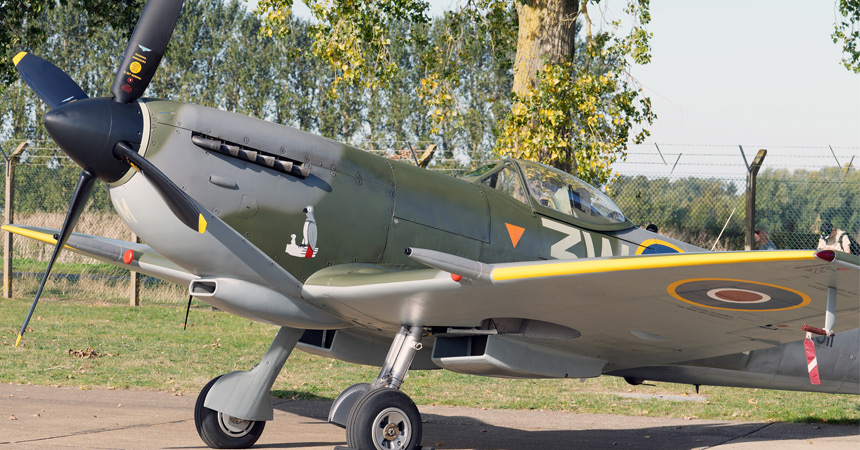
This much loved Spitfire carries a poignant code tribute to former BBMF pilot Squadron Leader Mark Long.
Originally established to ensure that a preserved example of the Avro Lancaster remained in the Lincolnshire area to mark the close association between the county and Bomber Command during WWII, Association members have worked tirelessly towards this goal over the years, and can be extremely proud of everything they’ve managed to achieve. Not only do members now have an Avro Lancaster permanently based in their fair county, but they can also boast Europe’s only airworthy example of this famous bomber operating from Lincolnshire, just as hundreds of Lancaster's did on most nights during the final three years of the Second World War.
Initially, the Association’s campaign was to have Lancaster PA474 brought back to the county for preservation when she was due to be retired back in the early 1980s and in those days, they could hardly have imagined what members of the Association would be able to boast today. Due to the care and attention bestowed on this famous aircraft by the talented engineers and technicians of the Battle of Britain Memorial Flight, Lincolnshire will hopefully have a flying example of the mighty Avro Lancaster for many years to come, with the continuing efforts of Lincolnshire's Lancaster Association and their worldwide membership providing support in any way they can.
It will be a proud moment for members when PA474 returns to Lincolnshire following her maintenance program, and when she can take her place at a future Member’s Day once again.
These events usually take the format of initially allowing Members to get up close and personal to as many of the BBMF’s aircraft as possible, via an impressive ground display, before those currently airworthy are released to perform a flying display element later in the afternoon. Of course, as this is RAF Coningsby, there’s always the chance that a Typhoon could be called out on a QRA scramble, or if another event is taking place on the same day, that BBMF aircraft have to take off to perform other display duties.
This year’s event was taking place on the same day that nearby RAF Waddington were celebrating their Families Day, so some aircraft from Coningsby were assigned additional display duties across the county, but we did benefit from some acts making the short flight from Waddington.
Starting with the BBMF element of the static display, let’s take a look at some of the aircraft on parade at this year’s Members Day event.
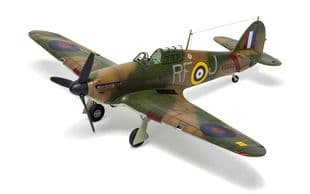
Hawker Hurricane Mk.IIC – PZ865
Looking resplendent in the Coningsby sunshine, the only BBMF Hurricane on show at this year’s event is currently presented as BE634/ZY-V of RAF No.247 Squadron, a fighter which flew out of Predannack and Exeter during 1942 and was engaged in the night defence of an area which encompassed Plymouth and Exeter. As suggested by this appealing scheme, the aircraft would go on to conduct night intruder operations into northern Europe, in an attempt to disrupt and demoralise the Luftwaffe as the RAF move onto the attack.
This historic aircraft has the distinction of being the last Hurricane produced at Hawker’s famous Langley factory, from a total production run of 14,533 aircraft. As the fighter occupied such a significant position in the company’s history, workers at the factory painted the slogan ‘The Last of the Many’ on the aircraft’s fuselage, an artwork addition this aircraft would proudly wear for many years to come a clear identifier of her status for all fortunate enough to see her. Marking her importance within the history of the Hawker company, she was immediately purchased back from the Air Ministry and would be used as a general communication, media asset and test aircraft in coming years, with this development definitely saving her from the scrapman’s torch, with the end of the war being so near.
Supermarine Spitfire Vb – AB910
It would be a real challenge to select one BBMF aircraft as being more famous than any of its hangar mates, however, it has to be noted that Spitfire Vb AB910 must be in with a shout for this particular aviation accolade. With an active combat career to its name, this Spitfire flew 143 operational missions during almost three years continual use, initially allocated to No.222 (Natal) Squadron at North Weald in August 1941. She would go on to see action during air operations covering the disastrous Dieppe Raid of August 1942 (Operation Jubilee), before flying numerous sorties in support of the D-Day landings in the summer of 1944.
Even when relegated to support duties after July 1944, this famous Spitfire just couldn’t keep itself out of the headlines. Whilst operating from RAF Hibaldstow in early 1945, the aircraft was being taxied to the runway with a WAAF ground crew fitter sitting on the tail, helping to prevent the aircraft from lifting in the windy conditions. The usual procedure in such cases would be for the pilot to hold at the runway threshold, allowing his temporary passenger time to climb down, before applying power and beginning his take off run.
Unfortunately, on this occasion, this did not happen and the pilot simply carried straight on to the runway. Immediately applying take off power, all his terrified passenger could do was to cling on to the tail for dear life and pray. As soon as the Spitfire became airborne, the pilot realized something was seriously wrong, as he was having great difficulty controlling the fighter, but thankfully, he was able to avert disaster, flying a wide circuit of the airfield and landing safely back at Hibaldstow. Both the pilot and his unsuspecting passenger were shaken by the experience, but had a truly unique story to tell their respective families from that day forward.
Following the end of her service career, AB910 would take part in several high profile air races around the country, before returning to Vickers Armstrong for refurbishment in 1953. In the capable hands of celebrated test pilot Geoffrey Quill, she performed at Airshows all over the UK until she was presented to the Battle of Britain Memorial Flight in September 1965. Her current scheme also sports full D-Day identification markings, with the codes SH-F representing the aircraft flown by Flight Lieutenant Tony Cooper, who was the Commanding Officer of No.64 Squadron on D-Day.
Supermarine Spitfire Mk XVI – TE311
This aircraft is the most recent acquisition for the Flight and for the first six years of being its custodians, there were actually no real intentions of returning this fighter to airworthy condition. It was only when engineers started working on the aircraft in their spare time that they thought it such a waste if all this effort would not result in a ‘flyer’, if at all possible.
Originally delivered on 8th June 1945, TE311 would end up having a rather uneventful service career, but was another aircraft which found itself being used during the filming of the Battle of Britain movie. She was made to look like a much earlier variant of the Spitfire and restored to taxiing condition, but following the end of filming, received a further period of renovation to return her to her original configuration. She would spend the next twenty years or so as something of a mobile exhibition aircraft, positioned in several locations around the country and wearing a number of different schemes.
The initial intention for this aircraft was that it would be offered for sale, but before this could happen, it was donated to the Battle of Britain Memorial Flight for use as a spares airframe, an aircraft they could use to keep their other Spitfires flying. As engineers began working on the aircraft to hone their skills, the question was later raised about the possibility of actually returning the aircraft to airworthy condition and a feasibility study was completed. After receiving official approval, the aircraft underwent an exhaustive period of restoration, making her first post restoration flight on 19th October 2012.
The fighter emerged from its most recent major servicing wearing the markings of Spitfire TD322/3W-M of RAF No.322 (Dutch) Squadron – she also wears a poignant tribute to Sqn Ldr Mark Long on her starboard side L0NG.
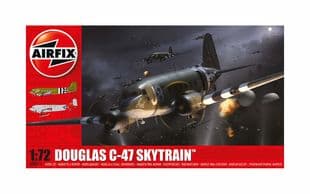
Douglas Dakota – ZA947
An aircraft type which was a real aviation workhorse during the Second World War and one which has been described as one of the most important machines in helping the Allies win the war, this particular Dakota was only allocated to the BBMF in 1993. At that time, she was intended to be used as a support aircraft for the Flight’s other aircraft and to provide vital multi-engine tail wheel training and currency support for Lancaster crews.
Originally constructed in 1942, the aircraft was allocated to the US Army Air Force, but transferred to the Royal Canadian Air Force just a week later. Flown to the UK in 1944, the aircraft served with No.109 Communications Flight RCAF, operating around Europe for the next 20 years or so. Having been deemed surplus by the Canadians, ZA947 was rescued from storage by the Royal Aircraft Establishment, who were looking for a replacement for the Dakota they were about to retire and over the next few years, she would be seen wearing the classic livery of RAF Transport Command and the distinctive red, white and blue of the RAE.
Presented to the Battle of Britain memorial Flight in March 1993, this beautiful aircraft, which has now gone on to be an important display aircraft in her own right, has worn the liveries of several famous wartime RAF Dakotas and is currently in her first season sporting this smart new livery. Marking an important, yet often overlooked theatre of the Second World War, the aircraft is currently resplendent in RAF No.31 Squadron colours from their time with South East Asia Command, and doesn’t she look a picture.
It seems as if the Flight have been plagued with Dakota engine issues this season, which makes her starring role at this year’s Member’s Day event all the more memorable.
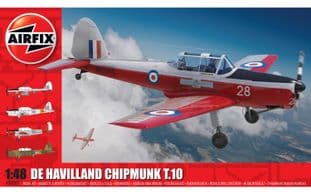
de Havilland Chipmunk – WK518
The Chipmunk was a prolific post war aircraft for training pilots and giving many thousands of people the opportunity of experiencing the thrill of flight, something which makes this a much loved aircraft in its own right. The two aircraft operated by the Flight are always in high demand, as they provide valuable tail-dragger currency and conversion support for BBMF pilots preparing for their season flying the more high-profile aircraft under their charge.
WK518 is actually the longer serving of the Flight’s two Chipmunks, having been allocated to the BBMF way back in 1983. Although both Chipmunks have mirrored the other aircraft in the Flight by sporting several different liveries over the years, she is currently wearing the markings she wore between 1970 and 1973, when she was serving with the University of London Air Squadron. This hard working aircraft actually spent time with University Air Squadrons at Manchester, Liverpool, Hull, Cambridge and London, in addition to serving on the RAF Cottesmore Station Flight.
Eurofighter Typhoon FGR4 – ZK434
Clearly not one of the aircraft under the care of the Battle of Britain Memorial Flight, I have included this current example of Britain’s air defence capability because it was part of the impressive static aircraft display, and it has become a popular tradition at these events to have an example of Britain’s current air superiority fighter displayed with its classic piston powered forebears. In any case, we were all looking forward to a dynamic Typhoon display from the current RAF Typhoon display pilot during the flying element of the day, and the aircraft was positioned next to the Royal Air Force Typhoon Display Team trailer on the day of the event.
Serving as the backbone of the contemporary Royal Air Force, the Eurofighter Typhoon has undergone continuous enhancements throughout its operational life, making it far more advanced than when it first arrived at RAF Coningsby in 2006. Now a common sight in the skies over Britain, the Eurofighter Typhoon stands as the RAF's present-day airspace guardian. While it was initially introduced in 2006 as a dedicated air superiority fighter, this fourth-generation combat aircraft has demonstrated capabilities far beyond that role.
Now recognised as the world's most sophisticated swing-role combat aircraft, the Typhoon has evolved into a genuine multi-role platform and is arguably among the most efficient combat aircraft in service today. It is equally proficient in conducting reconnaissance and precision strike missions as it is in intercepting the latest Russian aircraft entering British airspace, having the Typhoon on display helps to showcase over 85 years of RAF fighter development.
Aircraft currently undergoing maintenance
As already mentioned, Avro Lancaster B1 PA474 is currently in the middle if a major servicing project with the Aircraft Restoration Company down at their facility at IWM Duxford, so we knew she wouldn’t be playing any sort of a role at this year’s event. However, some of the other aircraft undergoing maintenance TLC were visible on the day. Both of the Flight’s Supermarine Spitfire PR Mk XIX aircraft (PM631 and PS915) were visible in the main BBMF hangar, but it was clear that they are both some way off returning to the skies.
On the opposite side of the facility, Spitfire IIa P7350 and Hawker Hurricane Mk.II LF363 were looking much more complete, but with all their engine panels removed, it was clear that both were still in the hands of the engineers.
Supermarine Spitfire PR.XIX – PS853 Rolls Royce Heritage
With both of the Flight’s Griffon powered Spitfires currently out of commission, the BBMF invited one of their friends to attend this year’s event, in the shape of this aircraft which was once under their charge. A genuine WWII veteran, PS853 was one of 79 Spitfire PR.XIX aircraft built by Supermarine at their Southampton factory towards the end of 1944 and was subsequently delivered to the Central Photographic Reconnaissance Unit at RAF Benson on 13th January 1945.
She would fly operationally with RAF Nos. 16 and 268 Squadrons from bases at Melsbroek and Eindhoven in Holland, sorties which included nine information gathering mission against suspected German V-Weapon sites. Following the end of the war, PS853 would become associated with performing commemorative flypasts, becoming one of the first aircraft initially allocated to the RAF’s Historic Flight at Biggin Hill in 1957.
The Flight would sell PS853 thirty years later to raise funds for the restoration of their crashed Hawker Hurricane LF363, however, following the tragic death of her new owner, the aircraft was subsequently acquired by the Heritage Department of Rolls Royce. Since then, the ‘Rolls Royce Spitfire’ has thrilled millions of spectators at Airshows and events across the country, with the distinctive throaty growl from her Rolls Royce Griffon engine demanding that every eye in her vicinity be glued to her every display move.
A fitting flying tribute to the work of Photographic Reconnaissance Units during the Second World War, PS853 also proudly represents the rich heritage Rolls Royce possesses in the field of aero engine technology and is a much-loved focal point of their impressive Heritage Flight activities from their East Midlands Airport base.
Noorduyn Harvard IIB – KF183
To many people turning up to RAF Coningsby last weekend, this particular aircraft may have appeared to be a rather innocuous visitor to this year’s event, however, it’s an aircraft which possesses real aviation gravitas, with this Harvard IIB actually having a genuine claim to being potentially the most significant individual aircraft in post war Royal Air Force history. Built by the Noorduyn Aircraft Company of Montreal in 1944, the aircraft was directly funded by the British Government, as opposed to being procured via the Lend-Lease agreement, which explains its classification as a Noorduyn Harvard IIB.
After arriving in the UK on board the freighter SS Cliona, she entered Royal Air Force service with No.7 (Pilots) Advanced Flying Unit at Conington in early 1944, before subsequently moving on to No.3 Service Flying Training School.
At the end of November 1947, the trainer was transferred to the aircraft fleet operated by Controller Services, where she embarked on a long and successful career undertaking test and evaluation flying. She would spend the next few decades serving both the Aeroplane & Armament Experimental Establishment at Boscombe Down and the Empire Test Pilot's School, where she performed roles as varied as project chase aircraft, photo ship and currency training aircraft for pilots in need of 'taildragger' type hours.
When KF183 was finally relieved of her military flying duties, she had an astonishing 72 years of service to her name, something which must surely single her out as one of the most important and hard working aircraft in Royal Air Force history. With over 15,000 flying hours to her name, the aircraft still proudly wears her RAF livery, even though she is now lovingly cared for by a private owner.
Supermarine Seafire F Mk.XVII – SX336 Navy Wings
Supermarine Seafire Mk.XVII SX336 was built under licence by Westland Aircraft Limited at Yeovil in April 1946, and it is interesting to note that the entire production run of 232 of this variant were built under licence, with Westlands accounting for no fewer than 212 of them. She was accepted into Royal Navy service at RNAS Bramcote later in 1946 and during her short service life, it is thought that she spent time with No.833 NAS Royal Naval Volunteer Reserve, but by May 1950, was relegated to a ground instructional role. By 1953, the Seafire had been moved to RNAS Stretton near Warrington for storage, but this would be her final Royal Navy posting, as she was selected for disposal in 1955 and collected by a local scrap merchant. With her dismantled airframe stored along with those of several other Seafires in this scrapyard for many years, this could have been the end of her short and relatively uneventful story, but thankfully, that was not to be the case.
Seafire SX336 was discovered in the Warrington scrapyard by a well-known Warbird enthusiast in 1973, who purchased her fuselage and substantial sections of several other Seafires he found at the same location, with the intention of returning at least one of them to airworthy condition, after embarking on an ambitious restoration programme. Although now having the aircraft in his possession, it would be a further five years before work started in earnest and even then, it did not appear to be a priority project. Over the next few years, work was started, then left unattended for long periods, in addition to the aircraft changing hands on several separate occasions, with a concerted effort to get her back in the air looking some way off in truth.
Perhaps the most significant development in the history of this particular aircraft occurred in November 2001, when former US naval aviator Tim Manna acquired the aircraft and provided both the investment and impetus to get the restoration underway in a concerted manner. With work continuing apace at his Kennet Aviation facilities at North Weald airfield, SX336 would go on to make her first post restoration test flight from the airfield on 6th May 2006, a date specifically chosen as it was exactly sixty years to the day since she performed her maiden flight from RNAS Yeovilton.
A rare and exciting historic aeroplane, the Seafire has been away from the Airshow scene for far too long and its appearance at Member’s Day will hopefully be the sign of better things to come, and more of the sound of that beautifully throaty Griffon engine.
Hawker Hurricane XIIa – 5711 Polish Heritage Flight
The final aircraft selected for individual attention is one which has been a regular at recent BBMF Member’s Day events, one which had been particularly active in commemorating the wartime contribution of Polish airmen in the Royal Air Force over recent weeks. UK Airshow scene stalwart Hawker Hurricane XIIa 5711 (G-HURI) is owned and operated by the Historic Aircraft Collection, and is an aircraft which possesses strong links to the tireless work of the Polish Heritage Flight. She is currently presented in a dual scheme in honour of two Polish fighter pilots who took part in the Battle of Britain.
With both aircraft commemorated serving with No.302 'City of Poznan' Squadron, the port side of the aircraft is presented as Hurricane P3935 coded WX-D, an aircraft flown by (future) Wing Commander Julian Kowalski, whilst the starboard side represents Hurricane P2954 and wears the codes WX-E, a fighter flown by Flt Lt Tadeusz Chlopik.
On 15th September 1940, both aircraft were scrambled from Duxford to intercept an inbound raid of Luftwaffe bombers in the vicinity of RAF North Weald, around 30 miles away from their home airfield. During the engagement, Flt Lt Tadeusz Chlopik was credited with a share in the destruction of a Dornier Do17 bomber, but with his aircraft damaged, was forced to bail out - tragically, he didn't survive the incident.
Pilot Julian Kowalski in Hurricane P3935 was credited with the destruction of another Dornier and inflicting damage on another, but unlike his comrade, managed to safely land back at Duxford. He would later go on to command No.302 Squadron and subsequently, on to command No.1 Polish Wing at RAF Northolt.
Highlighting the contrasting fortunes of two airmen on the same combat sortie, this tribute not only commemorates the contribution Polish airmen made to the Allied war effort during WWII, but also the contribution they made to the Royal Air Force, something the Polish Heritage Flight are determined to inform people about.
As always, this and all the other aircraft in the static display were a welcome sight for those who gathered to celebrate the continuing legacy of the Battle of Britain Memorial Flight.
Although not a flying display as such, yet member entertainment that is still subject to the usual perils of weather, serviceability and crew availability, most Member’s Day events have usually benefitted from a flying element, where the BBMF get to fly for a home crowd, and where the home crowd can usually bank on other displays from non BBMF aircraft types. This year, as the show was taking place on the same day as RAF Waddington Families Day, we were hoping for an appearance from the Red Arrows, keeping our fingers crossed for a rare appearance from the Irish Air Corps Aerobatic Display Team, the Silver Swallows, and the thrill of seeing the RAF Typhoon Display Team going through their paces one final time for the year.
Thankfully, this year’s event was blessed with great weather, so we were treated to a spectacle of aviation both on the ground, and in the air.
Here is a final photographic record of the flying element of this year’s event.
I think this was a first for me – the precision aerobatics of the Irish Air Corps Silver Swallows Aerobatic Display Team.
Harvard KF183 must surely have a claim to being amongst the most historic aircraft still flying in Britain today.
Time to bring the noise – Flt Lt Tom Nation in the RAF’s Display Typhoon.
On to the main event. We were treated to two displays from the massed ranks of the BBMF, both with the Dakota as the bigger Mother Ship.
I’m afraid that’s all we have for you this time around, however, we’ll be back again in four weeks’ time with more news, updates and pictures from the fascinating world of aviation. Thank you for your continued support and as always, if you would like to comment on anything blog related or suggest a subject you would like to see covered in a future edition of Aerodrome, please do drop us a line at aerodrome@airfix.com, where we would be delighted to hear from you.
Should you wish to continue the aviation discussions between editions, you will always find something of interest over on the Airfix Aerodrome Forum and if social media is more your thing, please use the respective official social media icon links at the bottom of the main Airfix and Corgi website homepages to access our official sites.
The next edition of Aerodrome is scheduled to be published on Friday 30th October, and we look forward to sharing more aviation inspired content with you then.
I hope to see you all back here in four weeks.
Michael