

Welcome to this latest edition of Aerodrome and our regular look at the fascinating world of aeroplanes and the historic aviation scene in the UK.
For aviation enthusiasts right across the country, there is nothing quite like getting the first photographic event of a new year under our belts and when that occasion comes in January, you can be quite confident that the year ahead is already shaping up to be a good one. For myself, that first outdoor event took place at the end of January this year and a sunny afternoon and evening where I had the opportunity to attend something of a photographic housewarming event for two preserved and much-loved icons of the British aviation industry.
For this 171st edition of Aerodrome, please join us as we check in on the enigmatic aviation charges of The Buccaneer Aviation Group and the first chance I had to see their aircraft at their new home in the Cotswolds. Featuring our usual selection of exclusive event imagery, you will see not only the starts of this show by both day and night, but also a couple of their new aviation friends who were allowed to gate-crash this memorable photographic party. With my grateful thanks to the dedicated TBAG team, this weekend, its time for some Buccaneering excitement!
TBAGs Buccaneers preparing to entertain the crowds at their former Bruntingthorpe home, during one of the popular Cold War Jets display days.
Situated in the delightful Cotswold countryside, the former RAF Kemble may no longer be an active military airfield, but unlike so many other former RAF sites, is one which still resembles a major airfield and can boast an impressive selection of aircraft types. During its military days, Kemble became inextricably linked with the world’s most famous aerobatic display team, the Red Arrows, who called Kemble their home for fifteen years from 1968 until moving to their current home at Scampton in 1983. Much of that time was spent flying the diminutive Folland Gnat trainer, however, the team’s conversion to the BAe Hawk we have all now become so familiar with actually took place whilst they were still based at this Gloucestershire airfield.
Following the departure of the ‘Reds’, Kemble went on to become an important service and maintenance facility for the US Air Force, but with the end of the Cold War era, the airfield quickly saw the cessation of all military flying. In 2001, the airfield was sold to a new private owner but thankfully, one who appeared to be keen on retaining Kemble’s historic status as an airfield, something it holds on to to this day. Now known as Cotswold Airport, the airfield is now home to several aviation related businesses and preservation groups, but during recent times is probably best known as being a storage and disposal facility for civilian airliners, many examples of which could be seen during my recent visit. I did take the opportunity to document this rather sad and depressing new role for Kemble whilst I was there, however, that is the subject of a different kind of blog and one to be published a little later in the year.
Over recent months, Cotswold Airport has become somewhat notorious as a destination for civil airliner storage and disposal, something which really illustrates the current state of world aviation.
What lies beneath - we were not expecting to see this pair of aviation classics during our visit to Gloucestershire.
This latest visit to Kemble (sorry, Cotswold Airport) was made for one specific aviation reason and that was to join the members of The Buccaneer Aviation Group at their new home, as they prepared to host a select group of photographers for their first official event of the year. Proving to be a popular event with enthusiasts, this was to be a late afternoon and evening photoshoot featuring their two Blackburn Buccaneer S.2Bs XX894 and XW554 and if we were especially fortunate, the opportunity to see (and hear) one of these aviation beasts bursting into life during one of their popular engine runs.
Aerodrome regulars will probably recall that in a previous edition of our blog, we reported from one of the extremely popular Cold War Jets Days held at Bruntingthorpe airfield, where we were fortunate enough to experience the two TBAG Buccaneers blasting along the runway only feet away from us, as they performed fast taxy runs, whilst at the same time giving everyone in attendance an impromptu hearing test. Not long after that edition, we carried the rather distressing news that a change of use licence at the former RAF airfield left the immediate future of many of the aircraft there in some doubt, but how TBAG had proactively decided that their future operations would lie away from the airfield. A significant and costly decision, this was a huge undertaking for this volunteer group and we promised at the time that we would bring readers a blog update on the situation once the aircraft had settled into their new home.
Unfortunately, the last couple of years proved to be a bit ‘different’ to say the least and this first official event of the year turned out to be my first opportunity to catch up with the TBAG team and to check on the wellbeing of the aircraft they so passionately maintain - at long last, it was Buccaneer time!
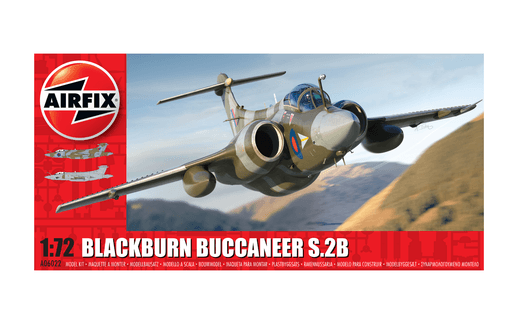
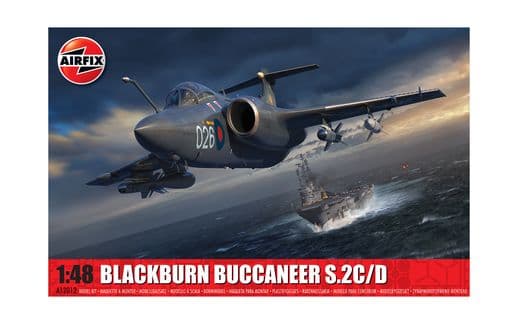
Possessing exceptional low altitude performance, the Blackburn Buccaneer was built to be tough and to excel in the challenging arena of aviation operations at sea.
A powerful British strike aircraft which can trace its development history back to the 1950’s and a massive naval expansion programme undertaken by the Soviet Navy, the Blackburn Buccaneer has to be considered as one of the most successful of Britain’s post war jet aircraft and one which would go on to see service with both the Fleet Air Arm and the Royal Air Force. With the Russians expanding their naval forces by introducing large numbers of their new Sverdlov Class Cruisers, the Royal Navy were concerned that they would not be in a position to mount an effective defence against this new threat with their existing force alone. The state of the country’s finances at that time dictated that Britain would not be in a position to counter this move with a similar expansion programme of their own, so it was quickly decided that a capable new naval strike aircraft would be the answer, one able to operate from existing carriers and possess the ability to effectively detect and destroy the new Soviet vessels.
The new aircraft would be the first of its type to be developed from the outset as an ‘under radar’ design and would need to provide excellent performance at low altitudes, as well as the capability to deliver nuclear munitions if required. Clearly, these requirements would place particular demands on any aircraft, however, the new jet would also need to achieve all this whilst operating from one of Britain’s diminutive aircraft carriers – this would have to be a very special aeroplane indeed.
Developed under a cloak of absolute international secrecy, the favoured design was submitted by famous British naval aircraft manufacturer Blackburn and was referred to as the Blackburn Advanced Naval Aircraft (BANA), an acronym which would stay with the aircraft throughout its life and attract a somewhat predictable nickname of the ‘Banana Jet’ – come to think of it, its fuselage did look a little banana like. Although well versed in the production of naval aeroplanes, this would be the company’s first jet aircraft and the demanding performance criteria would dictate that the project would pose many manufacturing and development problems for the Blackburn team, not least the fact that the strength and durability of the aircraft would require components to be worked from solid blocks of metal.
The technology required to undertake this kind of work would usually be sourced from American companies, however, this would not be possible in this case, as the lead time would be an unacceptably long three years – Blackburn set about producing their own bespoke machinery. Clearly, producing an aircraft capable of withstanding the rigors of carrier operation and the stresses associated with fast, low level operations dictated that their new aircraft would have to be tough, but this strength would come at a cost. Building in the necessary levels of strength and durability into the design resulted in an aerodynamic penalty and the performance of the aircraft would therefore be compromised, nevertheless, what they eventually produced was a truly exceptional aeroplane. Their Buccaneer may not have been supersonic, but it was manoeuvrable, built like a brick outhouse and the most capable aircraft of its kind the world had ever seen – it also just happened to be the heaviest aircraft the Royal Navy had ever operated from a carrier.
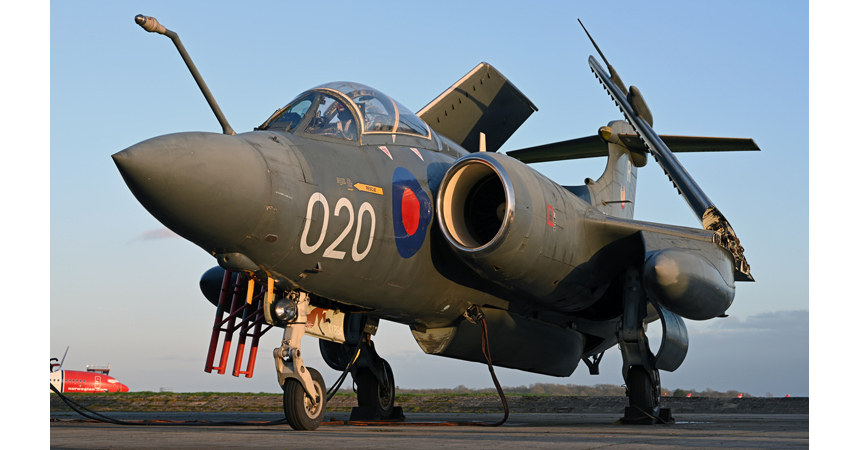
Although this particular Buccaneer wears the camouflage of the Royal Air Force, it still displays its unmistakable naval heritage.
Possessing such significant British aviation credentials such as these, it is no wonder that the unique attributes of the Blackburn Buccaneer have impressed service personnel and captivated enthusiast over the years and when the aircraft was finally withdrawn from RAF service in 1994, there was no shortage of museum suiters hoping to offer them a new home. As impressive as the sight of a preserved Buccaneer might be, there is one group of volunteers here in the UK who had something much more exciting in mind for the legacy of this magnificent aircraft, to maintain two impressive examples in ground running condition. Taking this one step further, both aircraft are also capable of performing fast taxi runs under their own power, allowing the general public to experience the power and majesty of this classic Cold War warrior for themselves.
The Buccaneer Aviation Group (or TBAG, as they like to refer to themselves) are a committed group of volunteers who are dedicated to the preservation and maintenance of two former Royal Air Force Blackburn Buccaneer S.2Bs and as they keep them in fast taxiable condition, are the only group of their kind anywhere in the world. Their continued operation is due solely to the endeavours of the group’s volunteers, who all spend much of their spare time working on the aircraft, bringing their skills and various trade expertise to a project dedicated to preserving the legacy of this magnificent aeroplane. Perhaps of even greater significance than this, the team also help other groups and museums who may have pressing Buccaneer related problems, whilst also providing support for any number of aircraft anniversary events, squadron reunions and former aircrew experience days. It would be fair to say that these people actually do live and breathe Buccaneers.
The stars of this TBAG photoshoot event, Blackburn Buccaneer S.2B XX894 in her Royal Navy scheme and XW544 wearing the camouflage of the Royal Air Force.
The two magnificent aircraft they have under their charge are XX894 and XW544, both S.2B variants of the Buccaneer, and both former Royal Air Force machines. XX894 was delivered to the RAF in December 1975 and would go on to have an active 19 year service career which included flying operations in the Gulf War and the destruction of an Iraqi An12 ‘Cub’ transport aircraft. Towards the end of her service career, this Buccaneer was repainted in the colours of a No.809 Naval Air Squadron aircraft, which operated aboard HMS Ark Royal during 1978. She was painted in this manner so she could take her place in an evocative official photoshoot to mark the service retirement of the Buccaneer and the various guises in which she appeared over that time.
Following her withdrawal from service, the aircraft spent time in storage at several locations around the UK, including St Athan, Bruntingthorpe, Kemble and Farnborough, before arriving back at Bruntingthorpe for the final time in 2003. The aircraft came into the possession of The Buccaneer Aviation Group in 2011, who have been maintaining and displaying the aircraft ever since.
Blackburn Buccaneer S.2B XW544 was built at Blackburn’s famous Brough factory in Yorkshire and delivered to the RAF in 1972. During a relatively short service career, she would serve with the Royal Air Force in Germany and with the No.2 Technical Training School at RAF Cosford. On retirement, XW544 was deemed surplus to requirements and ultimately ended up in a scrap yard near Shawbury, unloved and sitting forlornly on her belly, a pale shadow of her former self. She was discovered there by enthusiasts, purchased and underwent a programme of rudimentary preservation on site, to ensure she did not deteriorate further. Eventually, the aircraft was transported to Bruntingthorpe, where her future began to look much more positive, especially when she became the subject of a concerted period of restoration. She was quickly returned to ground running condition is now a far cry from the forlorn hulk which was found languishing in a Midlands scrap yard all those years ago.
We were extremely lucky with the weather on the day, but the main focus of the event would be taking place after the sun went down, so we had better not forget those all-important settings.
Before proceeding any further, it is important to stress that whilst The Buccaneer Aviation Group’s decision to leave their former Bruntingthorpe home in the late summer of 2020 was a huge one for them, they made it not because of a fall out or any dispute with the airfield’s owners. They have been fortunate to have enjoyed an excellent relationship with the owners of the airfield over the years and will always be grateful for the magnificent support they received during almost 20 years spent at Bruntingthorpe. Whilst they understood the pressures which brought about the changes which came about at Bruntingthorpe, their own Group requirement to create a lasting legacy for their operation and to maintain the ongoing maintenance of their Buccaneers was the reason why they felt it necessary to find a new home for their Buccaneers. Initially, two appealing potential sites made contact with the group, however, a third option was made available following a chance meeting in connection with a display commitment for the group’s Buccaneer cockpit section, one which would ultimately fall victim to the national restrictions of 2020.
As they began the task of preparing their aircraft for an unusual road trip, The Buccaneer Aviation Group announced in 2020 that the new home for their beloved aircraft would be Cotswold Airport, the former RAF Kemble and airfield steeped in post war jet aviation heritage. Cotswold Airport was seen as an ideal fit for the group’s future plans, with this exciting development also seeing the groups volunteer force providing active care for aircraft already based at the airfield – two Canberra PR.9s, a Hunter T.7 and a Folland Gnat. All they had to do now is to arrange for their two Buccaneers to be transported to Kemble safely, something which was going to be an incredibly costly exercise for them. With any number of potential unknown costs facing them, the definitely knew they would have to finance the dismantling, transportation and re-assembly both their aircraft, in addition to having to factor in police and highways agency costs.
The arrival of the Buccaneer pair has allowed two long term Kemble residents to enjoy a little long overdue time in the sun, the speedster variant of the famous English Electric Canberra
For an organisation operating on a ‘not for profit’ basis, and one which relies solely on donations and revenue generated from event and shop sales to exist, they had a sizeable financial problem on their hands and decided to give enthusiasts the opportunity to help them. Launching a crowdfunding campaign to hopefully raise the anticipated £24,000 the move operation was expected to cost, TBAG were astounded at the public response and as donations started flowing in, they could see that this move really was going to happen and their aircraft would be embarking on a new chapter in their post service lives. As it later transpired, the total final cost of the move would be nearer to £40,000 and as this was all taking place during lockdown restrictions, things have been tight from a money perspective and challenging from a general logistics perspective.
Perhaps the most worrying aspect of the move operation for the TBAG team was the fact that once they had managed to get their Buccaneers settled into their smart new home, the continuing restrictions prevented them from holding much needed revenue generating events and the long haul back to having available funds in their account. Thankfully, that situation is now easing, but if you would like to help them in their ongoing endeavours, any donation or purchase from their on-line store would be greatly appreciated by every member of the team, or better still, sign up to attend one of their 2022 events and spend some time with them and their impressive aeroplanes.
Night photography poses some unique challenges, not least of which is the fact that the appeal of certain ‘dark’ looks can very much be in the eye of the beholder. My view is that if you are shooting aeroplanes at night, they should at least appear a bit dark in the images!
Bringing The Buccaneer Aviation Group story right up to date, I was unable to visit the aircraft once they had made the journey to Cotswold Airport as originally planned, due to the ongoing national restrictions at the time, however, this recent photoshoot event finally gave me the opportunity to see them in the surroundings of their new home. It was great to catch up with members of the team once again and to see the genuine excitement on their faces - after such a challenging period for them, they were finally hosting visitors once again. With their aircraft ready to entertain once again, there was a palpable air of positivity about the place, with the team clearly looking forward to the future of their operation and an extremely bright future for their much-loved aviation charges.
This event allowed photographers the opportunity to take pictures of the aircraft gathered for their benefit during the late afternoon sunshine and culminating in an LED illuminated evening photoshoot, which would also see one of the Buccaneers powered up to operate its wing folding procedure and all its lights. We were also treated to an engine run which clearly demonstrated the awesome power this strike jet possessed, something which was made all the more impressive when we learned that they were only using a single engine and that was running at reduced power settings. I suppose you would have needed quite a bit of thrust to propel one of these aviation behemoths off the deck of a relatively small British aircraft carrier.
Another icon of the British aviation industry, English Electric Canberra PR.9 XH134 was a bonus item at this nightshoot event and I have to say, she looks to be in extremely good condition.
Serving as something of an unexpected aviation bonus, the Buccaneer pair were also joined by two of the other former RAF residents at Cotswold Airport, in the iconic shape of a brace of English Electric Canberras and weren’t they a sight for sore eyes. With such aviation delights as these arranged as our photographic subject matter, a great time was most definitely had by all, even though the event seemed to be over much too quickly for the majority of us. At least it did give me the opportunity to finally see the TBAG Buccaneers looking more than happy at their new home and will hopefully be a trip I make many more times in the future.
Please enjoy this final selection of images taken during the recent TBAG Buccaneer nightshoot event, which I hope will serve as a record of the monumental effort this group have made in securing a new home for the aircraft they have lavished so much time and attention in caring for over the past few years.
Please enjoy this final selection of images taken during the extremely enjoyable The Buccaneer Aviation Group/Threshold Aero organised photoshoot on 29th January this year.
I would like to thank The Buccaneer Aviation Group for kindly hosting us during this event and for arranging such an enjoyable early season occasion for all those in attendance. What they managed to achieve with this move is nothing short of astounding and stands as testament to their determination and dedication to the preservation of this magnificent aircraft’s legacy. The fact that they managed to achieve all this during a period of nationwide restrictions is almost incomprehensible, but I have to say thank goodness they did. The future is looking extremely bright for this particular pair of Buccaneers.
To support their continuing endeavours, please visit The Buccaneer Aviation Group website to see how you can help and if you get the chance to come and attend one of their many events, please do so, as you most definitely will not be disappointed.
I’m afraid that’s all we have for you in this latest edition of Aerodrome. Should any of our readers have an interesting aviation story they would like to tell, or could perhaps share details of a restoration or aviation heritage project taking place near to them, please do consider sending details to us here at Aerodrome, so we can share them with our ever-growing worldwide blog audience, who I am certain would be delighted to hear about it.
To send us details, or to simply open lines of blog communication, please use our aerodrome@airfix.com address when getting in touch.
Between editions of our blog, you will always find interesting aviation discussions taking place on the Airfix Aerodrome Forum and if social media is your thing, the bottom of both the Airfix and Corgi home pages have all the access links you will need.
The next edition of Aerodrome is scheduled to be published on Friday 1st April, where we will have another aviation story to bring you.
Thank you so much for your continued support our Aerodrome blog.
Michael