
Welcome to this latest edition of Aerodrome and our regular look at the fascinating world of aeroplanes and the historic aviation scene in the UK.
Although this year’s Airshow season didn’t exactly go to plan, it is still such a relief to actually be able join other aviation enthusiasts and enjoy a day on an airfield in the company of historic aeroplanes once more. In the latest edition of Aerodrome, we will be joining the sell-out crowd at the former wartime bomber station at East Kirkby in deepest Lincolnshire, not only to attend the latest instalment of the Lincolnshire Aviation Heritage Centre’s annual Airshow, but also to check on the current status of their famous Avro Lancaster ‘Just Jane’ and her bid to attain airworthy status once more. We will see how the magnificent sound of six Rolls Royce Merlin engines may have kept the crowd captivated on the ground, but it was the four Wright Cyclones of another famous WWII bomber which stole the show in the air.
Before we begin, could we make an appeal to our overseas readers. As we all slowly start getting back to Airshow normality, our intention is to try to get to as many events as possible, keeping readers informed about everything aviation related taking place around the UK. Whilst we clearly hope that these future reviews will be of interest to our readers, we rarely have the opportunity to see what might be happening a little further afield and that it something we would love to change. I’m sure you will all agree, there is nothing like reading a report written by an enthusiast for the enjoyment of fellow enthusiasts, so if you intend to go to a museum or Airshow event in the next few months, please do consider sending us a short, illustrated review, so Aerodrome readers can get an idea of how the aviation world is slowly recovering from a turbulent couple of years. Whether you are in Canada, Australia of India, please let us know the interesting developments taking place in your country, because we would love to hear about them and for our Australian readers, could I please just mention one word - Canberra! As always, could I please ask anyone interested to drop me a quick line at aerodrome@airfix.com. Thank you.
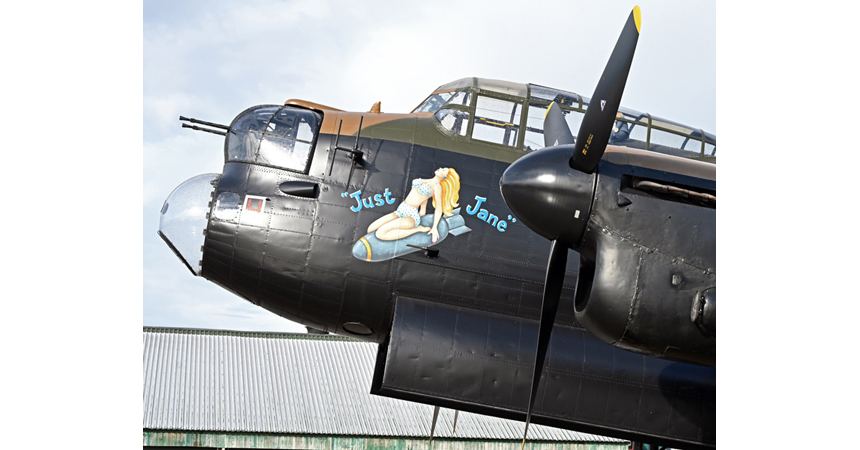
Preparing to meet her adoring public, Avro Lancaster NX611 emerges from her hangar to take her place as the star of the latest East Kirkby Airshow
As we all begin to emerge from the most challenging period most of us will ever have to live through, we may find that the ‘new normal’ could turn out to be quite different from what we had become accustomed to previously. The staggering costs associated with providing public reassurance during the pandemic will have to be repaid at some stage, meaning that money could be tight for many years to come and as we all now know, the aviation sector has been hit particularly hard, be that the world’s airlines, or everything associated with Airshows and the owning and operation of historic aircraft. Income derived from Airshow appearances may only contribute a small fraction towards annual operating costs of the aircraft we all love to admire, which is still welcome, but if no shows have been taking place, even this modest income has been lost, despite the fact that ongoing costs will still have to be met. Having already lost almost two full years of potential appearance income, could the UK Airshow industry we have enjoyed for so many years have finally reached a watershed moment?
This is the environment in which one of the world’s most ambitious restoration projects is taking place, the plan to return a much loved Avro Lancaster bomber back to airworthy condition, hopefully making this the second airworthy UK based Lancaster and only the third airworthy example of this WWII classic to be found anywhere in the world. The prized possession of the Lincolnshire Aviation Heritage Centre, Avro Lancaster Mk.VII NX611 has long been a popular tourist attraction in this part of the world, particularly as its home at East Kirkby served as a Bomber Command station during the Second World War and was home to the Lancasters of Nos. 57 and 630 Squadrons. A visit to this magnificent museum is always a memorable occasion, but probably more so over the past few years, as the aircraft’s restoration to flying condition has been taking place in the full gaze of her adoring public.
Although Lancaster ‘Just Jane’ has long been a popular feature of the UK historic aviation scene, an announcement made towards the end of 2016 elevated her status even further and gave her international exposure. The team behind her announced that they were embarking on an ambitious project to return her to airworthy condition, with that winter’s maintenance schedule marking the beginning of a project which could take them anywhere from seven to ten years to complete and that is if everything went to plan. As if to reinforce the magnitude of this announcement as well as the team’s commitment in achieving this goal, that winter maintenance period would witness the removal of the aircraft’s paintwork, allowing inspection works to begin in earnest, whilst at the same time resulting in some stunning images of a bare metal Lancaster being circulated within the aviation press - operation ‘return Lancaster to flight’ was well and truly underway.
A Lancaster optimised for low altitude operations, or just one continuing on its journey towards airworthy status? Minus her wingtips, ‘Just Jane’ did look a little unusual as she took her place as the star of the latest East Kirkby show
Since that date, the project has continued apace, however right from the very beginning, the team have been incredibly pragmatic in their approach to the restoration, not placing strict goals and deadlines on the work, preferring to adapt and re-schedule depending on what they discover along the way. The work they are undertaking is pioneering in the world of historic aviation and there are no blueprints or guidelines for them to follow - the aircraft they are working on was manufactured over 76 years ago, using techniques and technologies which are now long forgotten. As they learn how to take apart, then re-assemble a wartime Lancaster, the many processes they will have to complete in order to achieve the dream of an airworthy aircraft will all have to be done to the satisfaction of modern Civil Aviation Authority standards and far in excess of the standards required during wartime Lancaster production.
With the restoration task facing the LAHC team already being a significant one, the past two years of disruption will have dealt them a real blow, with the museum forced to close and all centre events having to be cancelled, in line with government measures to combat the pandemic. The resultant loss of income will definitely have had an adverse impact on the project and whilst works have continued when allowed, the costs will have to have been borne by any reserves they managed to build up, reserves which must now be running a little low. For a project which relies on donations, sponsorship and merchandise sales, the announcement that this year’s LAHC Airshow was taking place must have been a real boost for the team and the fact that the event was sold out well before the day of the show also showed them how much support they could still rely on from the great British public. There have also been some significant Lancaster developments announced in recent weeks, which we will cover in a moment, but this is probably a good time to remind ourselves of the history of this very famous Lancaster.
Every trip to East Kirkby allows the opportunity to document the ongoing progress of arguably the most fascinating project in the world of historic aviation
Avro Lancaster Mk.VII NX611 was built by Austin Motors at their Longbridge factory site in April 1945 and was destined for service in the Far East as part of the RAFs ‘Tiger Force’. The surrender of Japanese forces would dictate that the aircraft was now surplus to requirements and would therefore spend the next few years languishing in storage. In 1952, she would be one of 54 Lancasters sold to the French Government, being converted to French Naval Air Arm configuration at Avro’s Woodford factory in Cheshire. Repainted in a smart all-over Midnight Blue scheme and given the codes WU15 and Aeronavalé markings, she was later picked up by a French military ferry crew and flown across the Channel, where she joined Escadrille de Servitude 55s and was tasked with performing maritime patrol, reconnaissance and Air Sea Rescue duties.
Having undergone a major overhaul in November 1962, the Lancaster was given a smart new all-over white paint scheme, with black sections behind each engine, presumably as these were areas which would be prone to exhaust and oil staining during operation. She was ferried to New Caledonia in the Southwest Pacific, where she would once more conduct maritime patrol duties, a task for which this aircraft was particularly well suited. As one of the last three Lancasters in French service, the lack of spares and general serviceability issues were becoming a problem, so much so that the French were soon forced to offer the aircraft for sale. Avro Lancaster NX611 was secured by Britain’s Historic Aviation Preservation Society and was handed over to their charge at Sydney Bankstown Airport in Australia. All they had to arrange now was her repatriation flight back to the UK.
Following a monumental 12,000 mile, nine day journey, Lancaster NX611 finally arrived at RAF Biggin Hill on 13th May 1965. Temporarily grounded due to paperwork irregularities, it would be 1967 before she would fly again and even then, Airshow appearances would be few and far between due to the sheer costs associated with her operation being so prohibitive. Based at Lavenham in Suffolk by her owner, the next significant date in this aircraft’s history was when she turned up at a high-profile historic aircraft auction taking place at Blackpool in 1972, an event which attracted the attention of the Lincolnshire based Panton brothers. This initial auction failed to attract a bid significant enough for the owner to sell his Lancaster, however, the Panton brothers did take the opportunity to speak to the owner and inform him why they were interested in his aircraft. They were looking for an aircraft to form the basis of a unique tribute to their elder brother, who had been lost whilst flying a Bomber Command operation during WWII - this meeting would eventually bear fruit ten years later.
With all four engines turning, it isn’t difficult to imagine this aircraft climbing into the sky, one day in the not too distant future
Her wingtips may be missing, but a recent development has ensured the restoration project is still very much on track
Eventually purchased by the Panton Brothers in 1983, Avro Lancaster B Mk.VII NX611 ‘Just Jane’ was originally intended as a rather impressive personal aviation memorial to the memory of their older brother, but as time went on, it would become the focal point for something much more ‘public’. When they bought the aircraft, it was at that time serving as Gate Guardian at RAF Scampton, however, as that existing arrangement stated that the Lancaster must remain in position for ten years and it would therefore be a further four years before it could be moved to its new home at East Kirkby. This gave the two brothers plenty of time to construct a hangar on the site of an original wartime T2 hangar and continue the renovation of the existing airfield buildings on their farm site. As East Kirkby was a former Lancaster bomber base, it seemed somehow fitting that NX611 would now be forming the centrepiece of their unique tribute to their fallen brother.
Following its arrival, work to reassemble and renovate their impressive acquisition began immediately and it did not take long before the brothers decided that this should not simply be a static aircraft memorial. Pleased with what they had achieved so far, they were now determined that the former East Kirkby airfield would once again reverberate to the sound of Merlin engines and as the renovation work progressed, their plans became much more ambitious. What if all four Merlin engines were restored to operational capability and what if they allowed members of the public to come and see their magnificent aircraft and to experience the thrill of seeing it fire up its engines in the historic surroundings of this genuine former Bomber Command airfield? With this as their ultimate aim, the Lincolnshire Aviation Heritage Centre opened its doors for the first time in 1988 and ever since that date, this quiet corner of Lincolnshire has attracted huge numbers of visitors to Bomber County, each one excited to fill their senses with this unique aviation experience.
As we have all been watching the progress of the Lancaster restoration with no little excitement over the past few years, the team behind the project have been working hard behind the scenes to ensure they have the best chance of succeeding in their endeavours. They have been negotiating with officials at Les Ailes Anciennes at Le Bourget in France, who also own a Lancaster and are in the process of restoring their own aircraft. The negotiations centred around a mutually beneficial association which would see both projects advancing significantly and both concerning the wings of the respective aircraft. As the French continued with the restoration of their Lancaster NX664, the most complex future phase of this project would be the renovation of the aircraft’s wings to taxiable condition and this is where the LAHC team could help, but only if the restored wings could find their way onto the fuselage of ‘Just Jane’ for a period of time once the work was completed.
Part of the French Lancaster wing section which only recently arrived at East Kirkby
So that’s where they are! The Lancaster’s wing tips have been receiving some attention over recent weeks
The second collaboration recently arranged has seen the arrival of a Lancaster rear fuselage section, which will be used as part of this ambitious project, before returning completed to its owners at the South Yorkshire Air Museum
An arrangement which would allow the LAHC’s NX611 ‘Just Jane’ to maintain her status as a working exhibit as this project advances, continuing to attract visitors to the centre and crucially, keeping the money rolling in, this plan would see the yet to be restored outer wing sections of the French Lancaster being transported to East Kirkby (one at a time) where the Lincolnshire based team will restore them to taxiable condition. Once each wing is completed, it will be fitted to ‘Just Jane’ to allow her continued operation, with the aircraft’s actual removed wing then being placed in the jig produced at the outset of the project and restored to airworthy condition. Later replacing this restored original wing back on ‘Just Jane’, once this stage has been reached, the restored French Lancaster wing would be sent back to Le Bourget and the entire process will be repeated with the second wing section.
This is a huge development for the restoration project and will allow the team to attack what they consider to be arguably the most complex phase of the entire project. The arrangement will allow them to undertake work on the wings uninterrupted, without having to take the wing off, do some of the work and reattach it before it is finished, allowing the aircraft to continue its events schedule. It will also allow them to produce their wing jig and to embark on this crucial process without undue pressure, learning about the structure and processes of the wing fabrication they will have to master if they are to successfully restore their Lancaster’s wings to flying condition.
The second new project development is a collaboration with a group a little closer to home and involves the rear fuselage section of the South Yorkshire Air Museum’s Lancaster KB976. With the same aim of allowing the continued operation of ‘Just Jane’ over the coming few years, this fuselage section is already at East Kirkby and is in a jig being worked on and once completed, will allow the respective section of NX611 to be removed and replaced with this newly fabricated section. Once again, the removed fuselage section of ‘Jane’ will be placed in the jig and restored to airworthy condition and when completed, will be re-attached, allowing the previously restored fuselage section to be returned to its owners at the South Yorkshire Air Museum.
The sun always shines on a future airworthy Lancaster. Despite some inclement weather towards the end of the show, the sun came out later, just to take a look at how the Lancaster’s bif for airworthy status was progressing
Both of the above collaborations are hugely positive developments for this fascinating project and will undoubtedly save the restoration team time in the future as everything proceeds towards completion and everyone involved must be delighted. The one significant caveat here is that all this is going to cost lots of money and when reserves have been raided regularly over the past couple of years, they are going to need our support. If anyone would like to help fund the continuing restoration of Lancaster NX611 ‘Just Jane’ the team behind the project would be delighted to receive whatever people feel able to give, with no donation being insignificant. There are now two ways in which you can pledge your support, from their long-standing Rivet Club initiative, where people can help with a regular monthly contribution, to the recently launched Gofundme campaign specifically arranged to raise the £500,000 minimum cost needed to complete the innovative wing restoration. For the Lincolnshire Aviation Heritage Centre team, thankfully, the 2021 Airshow was able to take place, with the sell-out crowd directly helping to support the ongoing restoration of their beloved Lancaster.
Six Merlin engines in unison at the latest East Kirkby Airshow
Since the summer of 2017, the historic airfield site at East Kirkby has not only been the home of famous Avro Lancaster ‘Just Jane’, but also welcomed the arrival of another unique former WWII aircraft type, one which is now also capable of taxiing under the power of its two Rolls Royce Merlin engines, de Havilland Mosquito NF.II HJ711. A stunning example of the Nightfighter variant of the RAF’s celebrated ‘Wooden Wonder’ multi-role aircraft, this long-time resident at the Yorkshire Air Museum relocated to East Kirkby to allow a final restoration push for a project which has been the life’s work of the aircraft’s owner Tony Agar, utilising the expertise available through the team at East Kirkby. Since that date, Tony and Eastthe LAHC have managed to complete their work on the aircraft’s two Merlin engines, which are now run regularly and are capable of powering this magnificent aircraft to perform her popular taxying demonstrations.
A stunning example of one of Britain’s most famous wartime aircraft, this beautiful aeroplane is currently the only Mosquito in Europe capable of taxying under the power of its own engines and as such, HJ711 is now a huge aviation attraction at the Lincolnshire Aviation Heritage Centre in its own right, a venue which is fast becoming a haven for historic Rolls Royce Merlin powered aircraft.
Tony Agar’s association with this project goes back an impressive forty years and it is quite astonishing what he managed to achieve over that period, particularly as he had no financial backing to call upon, with this obsessive project residing in his garage for many years. Knowing he wanted to try and restore a Mosquito, he located the remains of Mosquito B.XVI, arranged to purchase them and transported them back to his home. The same year, he purchased the cockpit section of another Mosquito in a Blackpool auction, a cockpit which was reputedly that of Mosquito NF.II Nightfighter HJ711, encouraging him to try to corroborate the validity of this information. This work brought him into contact with Mosquito veterans and groups dedicated to promoting the operational histories of both RAF No.141 and 169 Squadrons, units which this aircraft had spent time serving with.
Is there a better profile in the world of historic aviation? De Havilland Mosquito HJ711 is now a huge draw to the Lincolnshire Aviation Heritage Centre in its own right
On its way to its display position, the Mosquito takes a look at East Kirkby’s historic control tower
The only venue in Europe where you can see a de Havilland Mosquito looking for all the world as if it is about to take off on its latest interception sortie
His research unearthed information concerning a sortie flown by Mosquito HJ711 on 30th January 1944, when she was flying from Little Snoring airfield in Norfolk with No.169 Squadron. During a night intruder sortie deep into Germany and just to the west of Berlin, pilot Squadron Leader J.A.H Cooper scored the squadron’s first kill, when he stalked and shot down a Messerschmitt Bf 110 nightfighter. Armed with this information, the links he had forged with former members of both squadrons and with the paperwork which suggested his cockpit section was from this aircraft, he decided to formally adopt the identity of Mosquito HJ711 for his restoration project, even though at that stage, he could have had no idea how far this journey would take him.
Over the years, Tony literally scoured the world for the Mosquito components he needed for this project, visiting crash sites, scrap yards, auctions and the classified pages of aviation magazines, but he was also fortunate enough to benefit from the generosity of friends and Mosquito enthusiasts who became aware of his project. Once news of this project began to circulate and signs of progress, no matter how small, began to receive more media attention, so the number of people willing to help began to increase and if they had a genuine Mosquito component, would either offer them for sale, or in many cases, donate them to what they thought to be a worthy and extremely viable cause.
This unbelievably ambitious project initially started as a build in the garage attached to Tony’s home, but as work began to show signs of progress and larger components were secured, this limited space was becoming a problem. This problem came to a head when two Rolls Royce Merlin 25 engines were obtained, the variant of this famous engine which would have powered HJ711 during her wartime service, further adding to the authenticity of the project. Perhaps the most significant development in the history of this astonishing build occurred in 1986 when Tony was given access to hangar space at the Yorkshire Air Museum, allowing him to move the major components out of his garage to a much more appropriate working space. This move would see his Mosquito receiving even more attention, with every advance in the restoration work being played out in the full gaze of a fascinated public. The museum site at Elvington would be home to Mosquito HJ711 for the next 31 years, with this aircraft transforming from a collection of parts taken from various different aircraft of the same type, into a magnificent example of de Havilland’s famous Wooden Wonder, the proud achievement of one man and his Mosquito dream.
The business end of a de Havilland Mosquito NF.II
Such a beautiful aeroplane, the combination of damp ground and a little late evening sunshine were ideal conditions for some appealing photographic opportunities
Moving the entire project from Elvington to East Kirkby in 2017, HJ711 was able to benefit from the specialist expertise available at this former WWII Bomber Command station and once re-assembled, work on the aircraft’s Merlin engines to prepare them to operate safely whilst attached to the Mosquito moved on apace. By the following year, the Mosquito was ready to join her famous Lancaster host in performing running engine demonstrations and significantly, joining ‘Just Jane’ in providing the highlight attraction at the Centre’s annual Airshow. Not only could the show’s crowds marvel at the sight of a complete Lancaster bomber in engine running order, but a trip to East Kirkby would now also include the sight of a de Havilland Mosquito in the same impressively restored condition. The only venue in Europe which could boast such a sight, this former Bomber Command airfield was now home to two of Britain’s most famous wartime aircraft and the crowds just couldn’t get enough of this unique experience.
Elevating the status of this hugely enjoyable show still further, the capacity crowds at East Kirkby shows not only now have a restored Lancaster and Mosquito on the programme, with both firing up their engines for several taxying demonstrations throughout the day, but also the acts arrange to take part in Lincolnshire’s largest independent Airshow. A large proportion of the profits from the day will be used towards the ongoing restoration of the Lancaster’s bid for airworthy status, which is why the Centre’s ability to hold this year’s show was such a welcome boost to a programme which has taken such a financial hit over the past few months. Although the display programme was perhaps not quite as robust as it had been in previous years, the fact that the show sold its ticket allocation well before the day of the show highlighted just how much the public were desperate to get back to some Airshow action and the sound of six Rolls Royce Merlin engines turning in unison. Whilst the Merlin powered aircraft where the undoubted stars of the ground display at the show, it would be an American WWII classic which stole to show from a flying perspective.
Europe’s only airworthy Boeing B-17 Flying Fortress is one of the most popular display acts on any Airshow programme
When America entered the Second World War following the devastating Japanese sneak attack at Pearl Harbor, she brought with her her huge industrial might and the resolve of a population desperate to avenge this unprovoked attack and a determination to win the war, whatever the cost. In the opinion of many people, the most visible manifestation of America’s entry into the war, particularly in the European Theatre, was the Boeing B-17 Flying Fortress and the sight of massed formations of US four engined bombers flying from bases in southern Britain, streaming across the skies and heading for their latest target in occupied Europe. Designed to literally pound an enemy into submission, as its name clearly suggests, the Boeing B-17 was bristling with defensive armament, with its designers intending that formations of B-17s could throw so much lead into the air, that any attacking enemy aircraft would either be shot down before they could get close enough to inflict damage, or simply fly away from their certain demise. Although this idea didn’t exactly prove to be accurate in a combat situation, the number of gins fitted to the aircraft did help to give the B-17 a fearsome reputation.
Without doubt, one of the most famous fighting aeroplanes of all time, the Boeing B-17 Flying Fortress possessed the range and bomb load to inflict significant damage on any strategic target against which it was sent, however its initial use in the European theatre would result in the USAAF sustaining heavy losses. Initially, it was thought that the impressive defensive armament possessed by these aircraft would allow carefully arranged box formations of bombers to effectively defend themselves against enemy air attack however, the ferocity of the Luftwaffe fighter defence they would face quickly proved this theory to be wrong. Nevertheless, these early combat experiences and constant development of the aircraft saw successive upgrades to the B-17’s design improve its effectiveness and when combined with the greater range of Allied fighters able to protect the bombers deeper into enemy territory, survivability rates began to increase dramatically.
The definitive version of the Flying Fortress was the ‘G’ model, an aircraft which incorporated a host of improvements over its predecessors and one which would become the most heavily produced variant of this famous bomber, with 8680 aircraft eventually being produced. The B-17 earned the distinction of dropping more bombs on Axis targets than any other aircraft in WWII and stood to represent the industrial might and fighting resolve of America, as they streaked across the skies towards their targets during daylight hours, day after day, month after month. It is interesting to note that whilst many of the thousands of Allied aircraft taking part in D-Day operations were painted with black and white identification markings, the four engined heavy bombers of the USAAF and Bomber Command were not, unless the aircraft were involved in glider towing or paratrooper delivery. This is because the lack of an effective German heavy bomber in service at that time, meant that misidentification of these Allied ‘Heavies’ was highly unlikely and therefore unnecessary.
Commemorating the sacrifice of American airmen flying from bases in the UK during the Second World War, ‘Sally B’ has now been based in the UK for 45 years, but needs our help if she is to remain performing to UK audiences
An aircraft which has been delighting UK Airshow audiences for over 40 years, Boeing B-17G ‘Sally B’ Flying Fortress is the only airworthy example of this famous aircraft currently flying in Europe and we are so fortunate to have her. Operated by a dedicated team of volunteers, this magnificent bomber is reliant on charitable donations, sponsorship, souvenir sales and the support derived from the aircraft’s supporters club, one of the most impressive organisations of its kind to be found anywhere in the world. Now able to boast around 8,000 members dedicated to the wellbeing of this aircraft, there is always room for more ‘Sally B’ devotees, as the costs associated with her continued operation are astronomical and the team need as much financial help as they can get. Like many other historic aircraft, the past couple of years have been disastrous from a financial perspective and whilst many will hope to obtain some form of financial support, this aircraft is special and cannot be allowed to leave these shores - if you are in a position to help ‘Sally B’, please do what you can.
Built as one of the last B-17Gs produced at the Lockheed Vega plant at Burbank, this bomber would be allocated the USAAF serial 44-85784 in June 1945, but was too late to see service during WWII. Going on to be used in training and research roles, she would later be sold to the French Government, where she served for many years in the role of geographic research aircraft, helping to produce maps and conduct aerial surveys all over the world. After years of successful service, a general lack of available spares threatening the continued use of these aircraft and as a consequence, the B-17s were put up for disposal and former 44-85784 was purchased by a British businessman and pilot, Ted White. Mr White flew his new bomber to IWM Duxford in March 1975, an airfield which is still home to the aircraft more than 45 years later.
The bomber would later be named ‘Sally B’ in honour of Ted’s long-time companion Elly Sallingboe, a lady who is still the driving force behind ensuring Europe still has an airworthy example of this magnificent aircraft to marvel at. The aircraft’s first Airshow appearance took place at the 1975 Biggin Hill Air Fair and since then, she has been a stalwart of the Airshow scene and one of the most popular display acts in the history of British Airshows.
A flying memorial to the many USAAF airmen who fought during the Second World War, particularly those who flew from bases in the UK, ‘Sally B’ not only performs at Airshows across the country, but also flies many commemorative and memorial flypasts, linked with groups and sites which are also dedicated to the preservation of the memory and sacrifice of US airmen based in Britain during WWII and the special relationship between our two nations. The starboard inner engine cowling of the bomber sports an unusual black and yellow chequered paint scheme, a tribute to Ted White, who was tragically killed in his Harvard aircraft in 1982 and is linked to this trainer which was presented with a similarly pained engine cowling.
In tribute, Flying Fortress ‘Sally B’ trails smoke during her final pass, always a symbolic moment at any Airshow event and beautifully flown at East Kirkby
A famous aircraft in so many ways, ‘Sally B’ has not only been a regular Airshow performer over the past 45 years, but she has also enhanced her status by serving as a high profile TV and Film star. Helping to tell the story of one of the most famous individual bomber aircraft of the Second World War, she would be used extensively during the filming of ‘Memphis Belle’, a Flying Fortress which flew operations from Britain during WWII and the aircraft which the US media promoted widely as the first bomber to successfully complete 25 operational missions.
The appearance of ‘Sally B’ at the East Kirkby show was something of a late addition to the flying programme, but one which delighted the capacity crowd. With the airfield avoiding the worst of some quite inclement weather on the day, the B-17 performed in some truly spectacular skies, allowing those of us taking photographs to come away with some truly memorable images. The hum of the aircraft’s four Wright Cyclone engines provided a stark contrast to the Merlin engines which had been entertaining the crowds prior to the arrival of the Flying Fortress and there is no doubt that from a flying display perspective, the B-17 definitely stole the show. Hopefully, her appearance will mark the start of a more stable future for the UK Airshow industry and that Europe’s only airworthy Flying Fortress can look forward to much increased (and much needed) increased income from this point forwards.
East Kirkby’s famous aviation residents performing for a home crowd, this is the sight which will always ensure maximum attendance at the superb show
In a year where Airshows have once again been disrupted by the country’s continuing battle against Covid-19 and the restrictions imposed on large public gatherings, the fact that we had the opportunity to attend the latest instalment of the East Kirkby Airshow was something of a watershed moment for the 5,000 people who travelled to this former WWII Bomber Command station. With the weather conditions further south being particularly inclement and the general lack of serviceability of major display acts both giving organisers some serious headaches on the day, the display programme was definitely a little lighter than what regulars had become used to, however, this definitely didn’t affect the sheer joy of being able to gather with other like minded people to just enjoy historic aviation for the day. I mean where else can you see a Lancaster, Mosquito and B-17 all performing with all engines turning, with their backdrop being a former WWII Bomber Command station? An experience such as this is worth the entrance fee alone.
Here we have a final selection of images taken at this year’s East Kirkby Airshow.
With a high power to weight ratio, the Yak 50 is rather a dynamic performer, especially when presented in this striking colour scheme
The precision aerobatics section of the show was performed by the ever impressive Blades, who made light of the challenging conditions
I have been lucky enough to see the Miles Gemini displaying a couple of times this year and I have to say that it is quite the little performer
The historic control tower at East Kirkby is a high profile confirmation of the heritage centre’s previous role as a Bomber Command Station
We leave the final two pictures to the bombers who played starring roles in this year’s East Kirkby Airshow, one on the ground and one in the air
I’m afraid that is all we have for you in this latest edition of Aerodrome, but we will be back with more aviation related content for your enjoyment in four weeks’ time. If you would like to send us a selection of your own pictures, or suggest an aviation related subject you would like to see covered in a future edition of the blog, please use our aerodrome@airfix.com address to drop us a line - we will be delighted to hear from you.
Between editions of our blog, the aviation related conversation is always continuing over on the Airfix Aerodrome Forum and if social media is your thing, there is always interesting content and discussion taking place on our Official Airfix Facebook, Twitter and Instagram accounts, not forgetting our Official Corgi Facebook, Twitter and Instagram sites too. We would be delighted if you took part in all the aviation related discussions going on there and please don’t forget to let us know what you think about Aerodrome and any suggestions you may have.
The next edition of Aerodrome is scheduled to be published on Friday 24th September, where we will have more interesting aviation content to bring you.
Thank you, as always, for continuing to support our Aerodrome blog.
Michael