
Welcome to this first edition of Aerodrome for 2021 and our regular look at the fascinating world of aeroplanes and the historic aviation scene in the UK.
After what has been an unexpectedly long period without posting an edition of Aerodrome, we are delighted to report that this first blog of 2021 marks a return to something close to normal service being resumed. There are a number of reasons for our blog absence which we won’t go into now, however, the main thing is that we are back and we are here to stay. Whether we will have any new events to report from this year is another matter, but we are determined and resourceful and aeroplanes are magnificent, so we will come up with something.
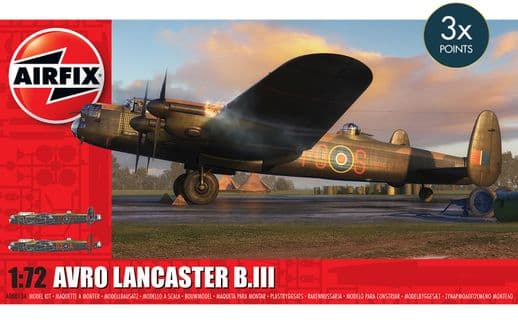
When living through times such as these, our hobbies, interests and pastimes all seem somewhat trivial and inconsequential when compared to what most of the world is currently having to endure, but as many people have more spare time than usual on their hands and with no museums, events or gatherings currently taking place, it could be argued that these simple distractions are actually more important to us than ever before. Looking through your picture files, or making an Airfix model kit for the first time in many a year will certainly keep us engaged with our interests, whilst at the same time helping to take our minds of the fact that it could be some time before museums and certainly Airshow events, are operating in a manner in which we have all become accustomed.
As far as your Aerodrome blog is concerned, we carry on as best we can, sharing our love of all things aviation with our ever growing worldwide audience of like-minded enthusiasts - we are clearly going to have to be a little creative with our subject matter and perhaps uncovering some aviation gems from the past, which may otherwise have slipped through the blog net. The current restrictions regarding large gatherings of people dictates that a full Airshow season may still be some time away, so until that joyous situation manifests itself, we carry on regardless and hope for better days soon.
For this first Aerodrome blog of the year, we wanted to start with something of a bang and thanks to our friends at the Lincolnshire Aviation Heritage Centre, we are able to do just that. Our subject for Aerodrome edition 157 is without doubt, one of the most interesting and certainly the most ambitious aircraft restoration projects to be found anywhere in the world, one which is taking place at a former RAF Bomber Command airfield, on the edge of the Lincolnshire Wolds. If everything goes to plan, the culmination of the project will see an Avro Lancaster once again taking to the air from East Kirkby airfield, just as they did during the latter stages of WWII and with it, doubling Britain’s compliment of airworthy Lancasters. We start 2021 by returning to East Kirkby and looking in on Lancaster NX611 ‘Just Jane’ as she negotiates her latest winter maintenance/restoration program.
During my memorable visit in January 2017, I was able to marvel at a Lancaster in a state I had never seen before and quite possibly may never do again
As I am sure is the case for most aviation enthusiasts, making a very early season visit to a museum or to record the progress of an ongoing restoration project is absolutely the most enjoyable way in which to embark on any new year, hopefully setting the tone for a busy and feature packed twelve months of aviation indulgence to come. Unfortunately, at the moment, this simple pleasure is just one of many things we are all having to put on hold until this terrible pandemic can be brought under control, but we have to remain optimistic that that time will now not be too far in the future. Indeed, mid-January 2021 is certainly a far cry from the same period four years ago, when my line manager at the time took pity on me in my birthday week and allowed me a day away from the computer to report on one of the most interesting restoration projects in the country. My destination was the magnificent Lincolnshire Aviation Heritage Centre and the focus of my attentions was Avro Lancaster Mk.VII NX611 ‘Just Jane’, one of the best loved historic aircraft in Britain and one which was embarking on a fascinating journey which will hopefully see her taking to the air once more.
My visit had been kindly granted by Centre General Manager Andrew Panton, who had also afforded me the opportunity to spend a few fascinating minutes discussing the project with him, before also being allowed access to the hangar to photograph this historic early stage of the restoration and to chat with members of his team. I had planned to go back to Lincolnshire and produce an update blog on the current state of restoration proceedings this winter, but clearly lockdown restrictions are currently preventing that. Thankfully, aviation people are a resourceful bunch and you definitely can’t keep this particular Lancaster down - thanks once again to the tremendous support of Andrew Panton and the talents of Centre photographer Martin Keen, we are still able to provide a full and current blog update, including a selection of recently obtained images, even if everything had to be obtained remotely.
As one of the finest restored examples of Britain’s most famous WWII heavy bombers of the Second World War, NX611 ‘Just Jane’ is now familiar to many millions of aviation enthusiasts the world over and has become a major tourist attraction in this delightful corner of the Lincolnshire countryside. The aircraft continues to attract visitors to this former WWII Bomber Command airfield for a great many reasons, but four in particular - four working Rolls Royce Merlin engines. On regular occasions throughout each ‘normal’ year, ‘Just Jane’ emerges from her hangar and allows people to experience what an operational RAF station might have been like during the dark days of WWII. Overlooked by the restored wartime control tower at the site, which sent the Lancasters of Nos. 57 and 630 off on night operations during the Second World War, this famous leviathan of the Royal Air Force can be seen bursting into life once more, a living and emotional tribute to the men of Bomber Command and the men and women who kept RAF airfields operational throughout the war. Even for people who would claim to have little interest in aviation, the sight and perhaps even more significantly, the sound of a Lancaster will all engines turning on the hardstanding of an old Bomber Command airfield, is quite breath taking and is an experience which stays with you for life. Indeed, it is not uncommon to see people in floods of tears when ‘Jane’ plays her Merlin music for the latest group of East Kirkby visitors. But how did a restored wartime Avro Lancaster end up in the middle of the Lincolnshire countryside in the 21st century?
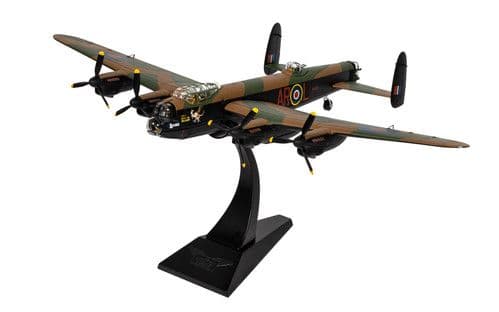
Looking like a 1:1 scale diecast ‘First Shot’ Avro Lancaster, ‘Just Jane’ somehow managed to look even more impressive in this bare metal state, after she had shed the incredible weight of over 50 years of paint
Built to accommodate Bomber Command’s rapidly expanding force of four engined heavy bombers, the airfield at East Kirkby was constructed on farmland during 1942/43 and opened as an operational base from August 1943. For the remainder of the war, the Lancasters of Nos.57 and 630 Squadrons would operate from the airfield, taking part in 212 operational raids, with 121 bombers and their crews failing to return - a further 29 of East Kirkby’s Lancasters would be lost as a result of accidents. Seeing only limited military use after the end of the war, the airfield was deemed surplus to requirements and sold off by the government in 1964 and quickly reverted back to the farmland on which it had been built, even though it retained many of its purpose built wartime structures.
The farming family who owned the land, had suffered the loss of one of their loved ones during the war, with flight engineer Christopher Whitton Panton, the eldest of three brothers, being lost in a Halifax bomber during a raid over Nuremberg on the night of 31st March 1944. His two surviving brothers, Fred and Harold, wanted to preserve the airfield buildings at the former RAF East Kirkby as a tribute to the memory of their brother and to all the men who served in Bomber Command during the Second World War. Slowly restoring the airfield buildings to their former glory, they also began to amass an impressive collection of wartime airfield equipment and memorabilia, as their personal tribute began to gather momentum. Having achieved so much in such a short space of time, the brothers attention turned to a tribute of even greater magnitude - wouldn’t it be the ultimate tribute if they could find a wartime bomber to display at this former airfield site!
Avro Lancaster NX611 has come a long way since the Panton Brothers first saw her at Squires Gate in 1972. She is now one of the best loved historic aircraft in Europe and a huge tourist attraction for the county of Lincolnshire
The Panton brothers had first become aware of Avro Lancaster NX611 when she was being auctioned with other historic aircraft at Squires Gate near Blackpool in 1972. Feeling that this would make the ideal aviation tribute to their older brother, they attempted the purchase the bomber, only to be thwarted when it was withdrawn from sale, with the owners valuation having not been met. Undeterred, they made the acquaintance of the owner and stayed in contact with him, regularly attempting to prize the Lancaster from him over the coming years. Finally, partly as a result of their polite persistence and the fact that the owner was aware of the specific reason why they wanted his Lancaster, he agreed to sell it to them in 1983, but with a significant caveat. Avro Lancaster NX611 was at that time serving as RAF Scampton’s rather impressive gate guardian and there was a standing covenant which dictated that the bomber could not be relieved of these duties for a further four years. Although they now had their Avro Lancaster, she would not arrive at their East Kirkby farm site until 1987, but when she did, it was probably one of the most momentous days in their lives. After so many years of effort, they now had the ultimate tribute to their airman brother.
Avro Lancaster Mk.VII NX611 was built by Austin Motors at their Longbridge factory in April 1945 and was destined for service in the Far East as part of the RAFs ‘Tiger Force’. The Japanese surrender dictated that the aircraft was now surplus to requirement and would therefore spend the next few years languishing in storage. In 1952, she would be one of 54 Lancasters sold to the French Government and converted to French Naval Air Arm configuration at Avro’s Woodford factory in Cheshire. Repainted in a smart all-over Midnight Blue scheme and given the codes WU15 and Aeronavalé markings, she was later picked up by a French military ferry crew and flown across the Channel, where she joined Escadrille de Servitude 55s and was tasked with performing maritime patrol, reconnaissance and Air Sea Rescue duties.
Having undergone a major overhaul in November 1962, the Lancaster was given a smart new all-over white paint scheme, with black sections behind each engine, presumably as these were areas which would be prone to exhaust and oil staining. She was ferried to New Caledonia in the Southwest Pacific, where she would once more conduct maritime patrol duties, which she completed with distinction. As one of the last three Lancasters in service, the lack of spares and general serviceability issues were becoming a problem for the French, so much so that the aircraft were offered for sale soon afterwards. Avro Lancaster NX611 was secured by Britain’s Historic Aviation Preservation Society and was later handed over to their care at Sydney Bankstown Airport. All they had to do now was to arrange for her repatriation back to the UK.
Following a monumental 12,000 mile, nine day journey, Lancaster NX611 finally arrived at RAF Biggin Hill on 13th May 1965. Temporarily grounded due to paperwork issues, it would be 1967 before she would fly again and even then, Airshow appearances would be few and far between due to the sheer costs associated with her operation being so prohibitive. Based at Lavenham in Suffolk by her owner, the next significant date in this aircraft’s history was when she turned up at a high-profile historic aircraft auction at Blackpool in 1972, where she attracted the attention of the Panton brothers.
The next series of images have all been kindly supplied by Martin Keen and show this magnificent aircraft in various states from over the past year or so. Here we see her looking magnificent at the entrance to the LAHC, but minus her wingtips
Once the aircraft had made its final road journey to its new home at the former RAF East Kirkby airfield, the farming brothers could have been excused for revelling in their success and simply enjoying the fact that they had pulled off this unique tribute to their older brother, but that was not in their make-up. Once reassembled, this majestic bomber seemed to speak to them on a daily basis and just begged the brothers to be brought back to life. A serious effort to service the engines and attempt at start-up began in 1993, when two former RAF engineers were engaged to assess the aircraft and hopefully, see the engines firing into life once more. It seemed as if with every new achievement, the brothers became more ambitious and significantly, their Lancaster more ‘alive’.
As the brothers began renovating and reassembling their new Lancaster, it was not long before the entire project began to head in an exciting new direction and a determination that their magnificent bomber should not simply be a static museum piece, but that the former RAF East Kirkby should once again resonate to the sound of Rolls Royce Merlin engines. As work on the aircraft progressed, they were also encouraged to consider allowing members of the public to share in this unique experience, visiting this former Bomber Command Airfield and admiring their impressive collection of historic WWII artifacts. Clearly, the major draw would be the chance to see a wartime Lancaster, with one or all of its engines working. To that end, a significant development occurred during 1988, when the doors of the Lincolnshire Aviation Heritage Centre opened for the very first time and the brothers saw just how much public interest there was in the project which had been their passion for so many years. From that date onwards, many former Bomber Command aircrew and their families have made the journey to East Kirkby, with most finding the experience both memorable and extremely emotional, bringing back memories of their wartime service and at the same time, allowing their loved ones to gain a unique insight into what they did during the war. The fact that visitors are allowed to experience all this in an extremely relaxed atmosphere, but at a place where Lancaster bombers were based during WWII, ensures that East Kirkby and its resident Lancaster secure a special place in their hearts and this is somewhere they always look forward to coming back to.
When nationwide restrictions allow, any recent visit to the Lincolnshire Aviation Heritage Centre will offer some unique photographic opportunities and the chance to see Lancaster NX611 in some fascinatingly unusual configurations
As you can imagine, media interest in the two farming brothers from Lincolnshire who owned a Lancaster bomber was quite significant and over the years, a great many TV features and news/magazine articles were written about this fascinating story. With the brothers often sitting in the cockpit of their bomber, many of these interviews would include a reference to their ultimate desire to see their Lancaster take to the air once more, but would this be just one step too far in a story which had already seen them achieve so much? As the aircraft continued to have time, attention and money lavished on its renovation and she became a much-loved tourist attraction in this part of the country, attracting many thousands of visitors each year, talk of her potential return to airworthy condition seemed to take something of a back seat, even though enthusiasts certainly never stopped hoping.
This is just about where the continuing story of Lancaster NX611 ‘Just Jane’ was positioned on the eve of my January 2017 visit to the Lincolnshire Aviation Heritage Centre, albeit with one significant difference - the project had been given a discernible boost and renovation work was already underway. In support of her proposed renovation to airworthy status, the team decided that the winter 2016/17 maintenance schedule would be a landmark period in the history of this aircraft and they would take this opportunity to assess every aspect of the Lancaster’s condition. Allowing them to produce a comprehensive schedule of required actions, this would give them a much more accurate assessment of tasks which would need to be completed if the aircraft was to take to the air once more, what all this specialist work was going to cost and a realistic timeframe around which they could base the project. At the very heart of this assessment was the essential decision to strip all the paint from ‘Just Jane’, revealing the aluminium skin of the bomber for the first time in almost forty years, allowing the engineering team to assess the actual condition of the aircraft. Anything they discovered which was a particular cause for concern, could either be rectified immediately, or scheduled for future attention and crucially, would allow the team to begin the search for rare parts and any specialist services they were going to need. For the enthusiast, this development presented them with a unique opportunity to see a Lancaster bomber in its bare metal state and if they applied to attend one of the centre’s renovation tours, they would have a fascinating glimpse into how these magnificent aircraft were constructed and maintained back during the wartime years. It would also allow them to witness this exciting early stage in the renovation of one of Britain’s best loved historic aircraft.
Now you see it, now you don’t! This next series of images focus on ‘Just Jane’s’ rear turret and how this is also subject to the renovation process
In this picture, the removed turret appears to have been replaced with a tree - hopefully not a long term arrangement
A truly spectacular way to start any new year, my aviation schedule for 2017 began in the NAAFI at the Lincolnshire Aviation Heritage Centre, as I waited to interview Andrew Panton regarding the latest news about ‘Just Jane’ and her restoration to flying condition, a project which seemed to be just about the biggest news in the historic aviation world at that time. At the end of our meeting, I was given the opportunity to enter the restoration hangar myself, documenting what I saw for the production of two major blog articles for publication on the Airfix and Corgi websites, articles which have since been read by hundreds of thousands of people from all over the world. In the four years which followed my restoration visit, there has been advancement, lots of project positives and just a few setbacks, as you might well imagine and it was always my intention to post a significant update at this latest anniversary. Unfortunately, as we all know, the start of this current year saw the country enduring a further period of national lockdown and with travel restrictions in place and the LAHC currently being closed, I thought an anniversary update edition of Aerodrome impossible, but where there is a will, there is always a way.
Thanks to our friends at the Lincolnshire Aviation Heritage Centre and the kind assistance of centre manager Andrew Panton and photographer Martin Keen, we will still be able to bring you our 4th anniversary ‘Lancaster return to flight’ update as planned, just a slightly different than anticipated socially distanced version. With Andrew allowing us to ask him a series of project update questions, and Martin supplying us with a selection of recently taken photographs, we are still able to publish the update we had been hoping to do at this point.
The first question we put to Andrew was, “What has changed over the past 4 years and how much further has the project advanced?”
Taking the positives first, Andrew described how the past few years have seen huge progress made on the restoration project, with my initial visit in 2017 marking a concerted start towards their intention to return Lancaster NX611 to flying condition. The paint strip and detailed inspection allowed a basic schedule of works to be completed and ‘packages’ of work identified for the future, so things could be attempted in a sensible ‘bite sized chunks’ format during each coming winter period. This exercise also allowed them to see the sheer size of the task ahead of them, as they were embarking on a project which is unique in the aviation world, but one they are determined to pull off. As well as completing a multitude of hidden, internal restoration tasks, more visible advancements include the restoration of both stabilisers and rudders, work completed on the main ailerons and the renovation of both wing tips.
Once again with huge thanks to Martin Keen, this next selection of images show the very latest condition of the aircraft and evidence that the 2020/21 winter restoration program is progressing as planned
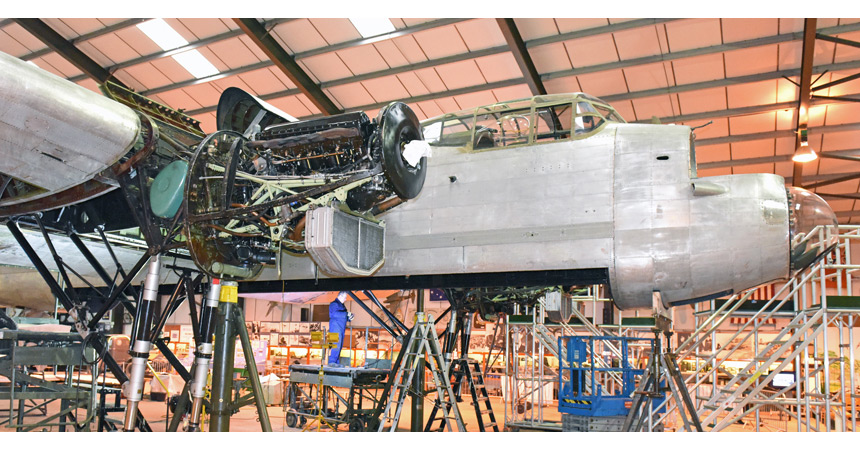
A milestone for the project, the sectional construction of the Lancaster is certainly helping the restoration team as they continue with their quest in returning this aircraft to flight. Here, the rear fuselage and all attached major components have been removed for inspection
A gap in the schedule. Members of the team pose for a photograph which will no doubt be treasured once the Lancaster has been returned to flying condition
At the very start of this project, the team decided they would be adopting an open minded approach, if for no other reason than they were entering uncharted aviation territory and it isn’t every day that you decide to restore a 70 year old WWII bomber to flying condition. In truth, this wasn’t the type of undertaking you could place firm parameters and timeframes on, so from the start, expectations had to be kept at a realistic, if optimistic level. They knew only too well that as they embarked on their investigative works, a multitude of additional, unforeseen issues were going to rear their heads, issues they had absolutely no way of anticipating. Once the paint had been removed from ‘Jane’, it would be fair to say that the team were met with both pleasant surprises and equally some disappointments, as the renovation gods gave with one hand, whilst smashing the other down hard on the workbench. The workload was huge and for a project of this magnitude, there were always going to be two constants that will forever have the team looking over their shoulders, time and money, or more accurately, the lack of both. With every new works requirement uncovered, more time would have to be devoted to the project and additional funding allocated - if there are any philanthropic Lancaster enthusiast millionaires out there, the team would love to hear from you!
Another aspect of this project which quickly became apparent once the team got underway was the fact that they would have to regularly remove components for restoration or replacement, only to have to re-attach them in time for the busy summer events programme at the Lincolnshire Aviation Heritage Centre. In some cases, quite large sections of the aircraft will have to be detached and reattached many times during the life of this project, as there is simply no other way of completing this work. Thankfully, Roy Chadwick and his team designed the aircraft to be constructed in sections back in the 1940s, so the LAHC restorers are certainly able to take advantage of this feature. Without doubt, working to restore a 70 year old Lancaster is not a task many people would take on, but for Andrew and his team, it almost feels like they were destined to be the ones to do it - they will certainly have some interesting stories to tell their grandchildren in the years to come.
Over the past four years, have you had to change any of your original goals?
The paint strip and full inspection back in the winter of 2017 allowed the team to produce their works schedule and devise a ten year plan from that point, splitting that schedule into winter activity periods, when the aircraft would be resident in its hangar for several months at a time. The first two years proceeded without too many issues, however, nobody could have foreseen a world pandemic situation which has affected the way everyone lives their lives over the past year and has also clearly had an impact on the Centre’s restoration schedule. For several obvious reasons, 2020 was a bad year for the project and the current year isn’t faring much better, but these have not been the only problems the project has faced.
With the latest group of visitors to the Lincolnshire Aviation Heritage Centre to greet, ‘Just Jane’ doesn’t let the small matter of having her wing tips missing stop her from performing
When Lancasters were originally being built in factories both here in the UK and in ‘Just Jane’s’ case, in Canada, they were all constructed using components and manufacturing techniques which were cutting edge at that time and required skills which have long been forgotten in the intervening years. In addition to this, it has to be accepted that the anticipated wartime lifespan of these aircraft was rather short, as it was increasingly felt that Allied manufacturing prowess would see the war ending in a matter of months, if not a few short years. Whilst the team may have the desire to replicate these skills and production techniques as faithfully as possible, some of them and more specifically, some of the components used back then, would not be deemed acceptable for use on an airworthy aeroplane today and would not be cleared by CAA inspectors. For that reason, many aspects of the restoration have to replace original components with acceptable modern alternatives, documenting every step of the process to provide CAA inspectors with the evidence they are going to need.
One of the largest and most complex areas of the restoration where this has become a major consideration is the aircraft’s wiring system, all of which will have to be upgraded to current standards. If ‘Just Jane’ does manage to triumphantly take to the air once more, externally, she may look every inch the iconic WWII Lancaster bomber that she undoubtedly is, but on the inside, her innards will be very different.
Getting back to the main question, this is a massive project and whilst the team initially put a 10 year timeframe on the restoration, they were sensible enough to know that this may have to be somewhat flexible in actual delivery. Closure of the Heritage Centre for long periods and the cancellation of many fund generating events has had a massive impact on things, but rather than describe this as putting the project behind schedule, Andrew prefers to think of it as taking a year out. Politely pressing him for a figure, he is of the opinion that another seven years should see them somewhere close to achieving their goal, but if the past twelve months has taught us anything, it’s that it's foolhardy to count your restoration chickens before they have hatched.
Are you managing to advance any of the works this winter?
Despite the current nationwide restrictions everyone is having to live with, Andrew was pleased to say that work on his Lancaster was still progressing this winter, albeit within current budgetary constraints. The inability to run all the many fundraising events the Lincolnshire Aviation Heritage Centre would usually plan each year has been a massive loss and as a consequence, they have had a bad year and have been forced to take a significant income hit. Despite this, they still hope to undertake the following works this winter:
Another selection of the latest restoration images, showing Lancaster NX611 looking absolutely pristine at East Kirkby, if a little ….. disconnected!
As you can see, the team will not be resting on their laurels, but this work carries an estimated cost of around £50,000 and with little money coming in, they are going to need our help - we will have more on this a little later.
In a post Covid world, is Lancaster NX611 ‘Just Jane’ still going to fly?
Andrew must have known this question was coming and that it is probably going to be raised every time he speaks to somebody about the project. Trying to stay positive, the pragmatic way he and the team have approached this restoration to flight bid means that they always had some inbuilt flexibility to accommodate unforeseen circumstances and even though the Covid pandemic has been an unforeseen circumstance of unimaginable magnitude, their plans remain in place. As we have already seen, the two things the project will never have enough of are time and money and whilst you can possibly claw some time back by taking on more people to help, not one thing associated with this project can be achieved without money and there simply is not enough of it around. Trying to keep everything as close to the original schedule as possible has eaten massively into financial reserves and with the inability to generate new income over the past twelve months, the situation could hardly be more challenging.
With the country’s vaccine rollout programme now in full swing, the team are hopefully looking forward to a much brighter future and the monumental day when the gates at the Lincolnshire Aviation Heritage Centre can be opened to visitors once more. Currently, although clearly nothing can be confirmed at this stage, the Centre is hoping to run some events this year, starting with the Lancaster preparing for her late Spring debut on taxying duties for 2021. East Kirkby will soon once again be echoing to the delightful sound of multiple running Rolls Royce Merlin engines and once it is safe to do so, allowing visitors to come and soak up this experience. At this point, they are also intending to hold their annual Airshow, which this year is scheduled to take place on 7th August and is an occasion which is so popular, that audience numbers have to be capped to prevent the site becoming overcrowded.
Until the Centre reopens and in order to keep informed on all the latest developments at East Kirkby, Andrew has asked if everyone would be good enough to visit the main Lincolnshire Aviation Heritage Centre website, which is regularly updated in line with all the very latest information.
The thing we all need to know now is for those people who are moved to offer their financial support to the project, how can they do so? It does have to be acknowledged that times are now quite hard for the renovation team and could get even harder over the coming few months. Andrew did mention that they currently feel a bit like they are in survival mode, however, an easing of restrictions and the return of visitors to the LAHC would put a much more positive light on things. The top and bottom of it is that the project is going to need money and lots of it, if this Lancaster is eventually going to be reaching for the sky.
One of the most effective ways people can help directly with this is to consider joining their Rivet Club, the proceeds from which go directly towards the ongoing restoration of Lancaster NX611 ‘Just Jane’. With monthly donations starting from as little as £3.00, if enough people pledge their support, the project will receive a huge boost and when they see the Lancaster flying in the years to come, they will have an immense sense of pride in knowing that they helped to make that happen.
If you are ever lucky enough to become the country’s next big Euromillions lottery winner, please don’t be shy about picking up the phone and giving Andrew a call, as I am sure he would be delighted to hear from you. In all seriousness though, any donation, no matter how small, would be gratefully received and could have a huge impact on the future success of this project. In all cases, please help support the team by visiting the LAHC website for all the latest news and updates from the project and to make your purchases from their on-line store. When the doors can finally open once more, make a visit to this delightful corner of Lincolnshire one of your first day’s out of the year, to see the current status of the Lancaster renovation for yourself and to give the hard working team behind it your support. Everyone at East Kirkby can’t wait to welcome you back.
I would like to extend my sincere thanks to Andrew Panton and Martin Keen for their invaluable help in putting this review feature together, because without them, it simply would not have been possible to do it. I am very much looking forward to thanking them both in person in the LAHC NAAFI over a cup of tea, when I am next allowed to visit. You can be sure that I will have my camera in hand and that a further project update will be posted on both the Airfix and Corgi websites soon after.
Hopefully it won’t be too long before the LAHC can welcome visitors back to the site and their hugely successful schedule of events can begin to take place once more - we wish them every success
I am afraid that is all we have for you in this first edition of Aerodrome for 2021, but we will be back in three weeks’ time with more aviation related content for your enjoyment. If you would like to send us a selection of your own pictures, or suggest an aviation related subject you would like to see covered in a future edition, please use our aerodrome@airfix.com address, where we will be delighted to hear from you.
In between new editions of our blog, the aviation related conversation continues over on the Airfix Aerodrome Forum and we can also be contacted on either the Airfix Facebook or Corgi Facebook pages, in addition to Twitter for both Airfix and Corgi – please do get involved in all the aviation related discussions and let us know what you think about Aerodrome.
The next edition of Aerodrome will be published on Friday 12th March, when we look forward to seeing you all back here for more aviation related indulgence.
May I extend a sincere thank you to you all for continuing to support our Aerodrome blog, which is now entering its 6th year of production.
Michael
Return to the Aerodrome home page
Model link section
Airfix
Avro Lancaster and de Havilland Mosquito
Corgi