Welcome to this latest edition of Aerodrome and our regular look at the fascinating world of aeroplanes and the historic aviation scene in the UK.
Bringing another year of Aerodrome blogs to a close, we have something a little bit special for this edition, as we pay a return visit to one of the most exciting and ambitious aviation restoration projects currently ongoing in Britain today, a true D-Day veteran aircraft which it is hoped will eventually be based and operate out of the airfield from where she delivered her complement of paratroopers on the night of 6th June 1944. The aircraft we are speaking of is Douglas C-47A-65-DL Skytrain 42-100521 'Night Fright' and in a recent visit to her restoration facility at Coventry Airport, we were allowed the opportunity to check in on this fascinating project, in order to bring Aerodrome readers an update on how the restoration is progressing.
With our usual selection of exclusive imagery taken during the visit, readers will have a visual update on how the project is progressing, which will also include photographic confirmation of the almost obsessive levels of detail and authenticity the restoration team have included throughout this entire project. Also having the opportunity to speak with senior figures behind the restoration, we will be bringing you details of how things have progressed over the past couple of years, major project milestones which lie ahead and a possible timescale for when we might hope to start hearing news about engine runs and a first post restoration flight. It's exciting times on the site of the old Baginton Airfield and the ideal way in which to look forward with some optimism to an exciting 2023 for Britain's historic aviation scene.
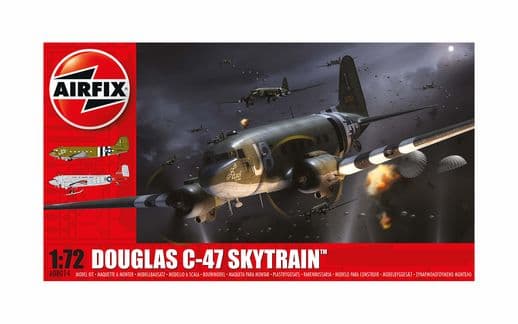
One of the most ambitious restoration projects currently underway in Britain, Douglas C-47 Skytrain 'Night Fright' flew out of Membury airfield on the night of 6th June 1944.
For many of us, filling the screen wash tank in our cars with water is about the extent of our mechanical expertise, with the sight of an open car bonnet actually inducing levels of stress and anxiety that can only be alleviated by closing it at once, so with that being the case, we could hardly imagine what might possess anyone to take on the restoration of a Second World War era transport aircraft, especially when that project aimed to return the aircraft to airworthy condition. Thankfully, these special people do exist and whilst they roll their sleeves up and get on with it, we just look on with huge admiration and the excitement of eventually being able to view the fruits of their labours.
One team of specialists who are currently engaged in doing just that, the 'Night Fright' restoration team are taking on the significant challenge of restoring a D-Day veteran C-47 Skytrain to airworthy condition, with the ultimate aim of basing and operating her from the very airfield from which she took off in the early hours of D-Day. A project which has been ongoing (when allowed) throughout the turbulent times of the past couple of years, we first introduced Aerodrome readers to 'Night Fright' during the Autumn of 2020, whilst the country was in one of the lockdown restriction relaxation periods and therefore thought it was about time we paid them another visit. Over recent months, there have been some worrying reports in the press regarding the future of Coventry Airport and the proposed construction of a battery technology centre for the motor industry on the site, so we were keen to find out if this was going to impact the 'Night Fright' project and if it would cause them to alter their plans. Thankfully, that doesn't appear to be the case, but before we bring you an overview of the current state of proceedings, we should probably start with a little Night Fright project retrospective.
This particular aircraft was manufactured at the Douglas Aircraft Company's Long Beach plant in California during October 1943, designated C-47A-65-DL and one of many such aircraft destined to transport Allied forces to victory during the latter stages of the Second World War. Following acceptance by the USAAF, the aircraft was allocated the serial number 42-100521 and assigned to 79th Troop Carrier Squadron, 436th Troop Carrier Group. Along with her new squadron mates, she was destined to fly over foreign lands, plying her trade in the war-torn skies of Europe.
On 27th of December 1943, the aircraft departed Morrison Field, Palm Beach, Florida bound for England, flying the Southern Ferry Route stopping at Borinquen Field, Puerto Rico, then on to Atkinson Field, British Guyana, Belem in Brazil and on to Recife’s Iburia Field where they prepared for the long crossing to Ascension Island. They reached Ascension around New Year’s Day 1944, with their next destination being Roberts Field, Liberia, which was significant, as it was the first destination the aircraft would land at on the eastern side of the Atlantic. From there, it was on to Refisque, near Dakar then Marrakesh, before flying across the Bay of Biscay to RAF St. Mawgan in Cornwall. This leg of the journey would be particularly hazardous, as they were desperate not to attract the attentions of marauding Luftwaffe Junkers Ju88 heavy fighters, aircraft which had historically been extremely active in this area. They would have relished the opportunity to increase their individual victory scores attacking a large formation of American transport aircraft bound for England.
The aircraft arrived at its new ‘English home’ at Bottesford in Nottinghamshire on 7th January 1944, where it became part of the US 9th Army Air Force’s newly created Troop Carrier Command. Assigned to the 53rd Troop Carrier Wing, the 436th Troop Carrier Group was made up of the 79th, 80th, 81st and 82nd Troop Carrier Squadrons and they were going to be kept busy during their time in England. At their time of arrival, the aircraft’s crew consisted of Pilot 1st Lt. William K. Watson, Co-pilot 1st Lt Frank Bibas, Navigator 2nd Lt Arthur E. Thornton, Crew Chief T. Sgt Owen W. Voss and Radio Operator S/Sgt Robert S. McKnight. There was also one other member of the crew who had less challenging, but no less crucial duties to perform, ‘Hap’ the Cocker Spaniel, or as he was otherwise known to the crew, ‘General Happiness’.
Hap arrived with his owner, Frank Bibas when the crew met at Fort Wayne, Indiana to collect the aircraft and he would go on to fly on many missions with the crew. Clearly not normal military practice during wartime, Hap’s mission status appeared to have been overlooked by higher authorities, presumably as he was viewed as a vital ‘good luck’ member of a hard working C-47 crew. He survived his air force secondment and would return home to America with his owner at the end of the war.
The 436th Troop Carrier Group did not stay too long at Bottesford, but were to find a new, more permanent home at RAF Membury, between Swindon and Newbury in Berkshire from 3rd Match 1944, referred to as US Station 466 in USAAF hands.
Just for context, this next selection of images were taken during our first visit to the 'Night Fright' project and will help to illustrate how work has progressed since that time.
On the 19th of April 1944, 2nd Lt James H Hardt arrived in England from America and was assigned to the 79th TCS, becoming Bill Watson’s Co-Pilot in 42-100521. Hardt would fly as Co-Pilot with Bill Watson for the majority of the remainder of the war, with the two becoming firm friends in the process. During the build-up to the Allied invasion of France, the 436th took part in many training missions and simulated practice operations, such as the review of the 101st Airborne Division for Winston Churchill and General Eisenhower which took place on March the 23rd at Welford Park. Nine aircraft from each squadron took part, one being Frank Bibas’ aircraft which dropped members of Fox Company, 506th Parachute Infantry Regiment on to the designated drop zone.
Throughout the following month, the Group took part in several training missions, usually carried out at night, with one such mission being ‘Exercise Eagle’. At the end of another training mission, the C-47s started to peel-off to land back at base when a base alert was sounded due to enemy aircraft activity in the area. All lights on the airfield were immediately extinguished, leaving the pilots to hold in the dark night skies and consider their options, whilst all the time scouring the black for other aircraft, particularly those with hostile intentions. In what must have been a hair-raising few minutes, a decision was quickly taken to allow aircraft to land but without the aid of runway, perimeter or aircraft landing lights – thankfully, all aircraft made it back safely.
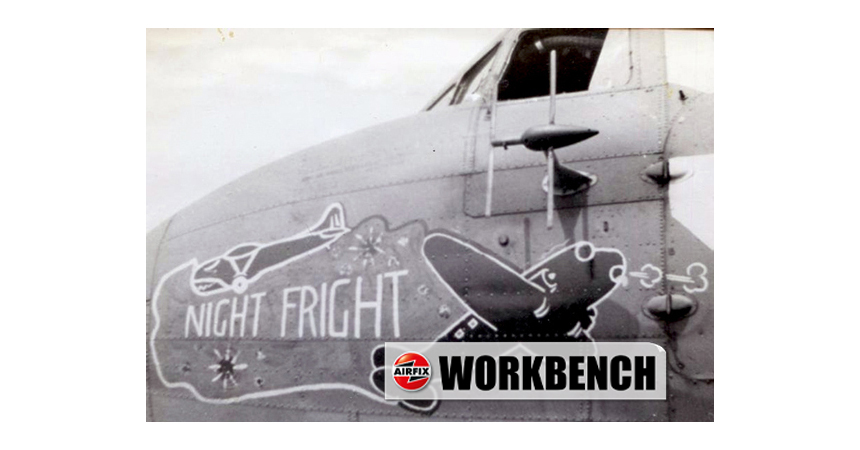
It was at around this time that all of the Douglas C-47’s of the 436th TCG would have been given a squadron identity code, which was painted on both sides of the fuselage just aft of the cockpit. Codes applied to the Membury squadrons were ‘S6’ for the 79th Troop Carrier Squadron, ‘7D’ for the 80th, ‘U5’ for the 81st and ‘3D’ for the 82nd . Each C-47 within each squadron would also be given a unique tail letter to act as its radio call sign. Our subject aircraft 42-100521 was given the tail letter ‘D for Dog’ which it would keep for the remainder of the war – could this have had anything to do with General Happiness being a four-legged crew member, or was it just a fortuitous coincidence? At around the same time and prior to commencing D-Day operations, the aircraft would also gain its distinctive nose art ‘Night Fright’, which was a play on words from Antoine de Saint–Exupéry’s book ‘Night Flight’, which was a particular favourite of pilot Bill Watson's.
With the long anticipated invasion of Europe now imminent, there were some new arrivals at Membury airfield during the last few days of May – the paratroopers of the famous 101st Airborne Division ‘Screaming Eagles’, members of the 377th Parachute Field Artillery Battalion and a detachment of the 326th Airborne Medical Company. These men would be putting their lives in the hands of the crews of the home based C-47 Skytrains, with everyone having trained exhaustively for the historic mission which lay ahead of them. Everyone involved would take part in detailed briefings to give them information regarding flight routes, timings, drop-zones and known enemy anti-aircraft positions in preparation for the attack and significantly, on 3rd June, base personnel were given immediate orders to paint black and white stripes around the rear fuselage and on the wing top and bottoms of their aircraft.
With so many aircraft destined to in the air at the same time and with the increased possibility of friendly-fire incidents not only from Allied fighter activity, but also from ground and seaborne anti-aircraft fire, D-Day planners called for ‘invasion stripes’ to be painted on the majority of Allied aircraft, in an attempt to clearly identify them to other friendly units. For everyone involved in this momentous day, the official situation was clear – ‘if it ain’t got stripes, shoot it down’. In order to prevent German spies and reconnaissance aircraft from discovering this black and white secret, the plan was a matter of the utmost secrecy and only divulged in the days immediately prior to invasion, something which increased the already hectic workload on airfield personnel.
Thanks to a dedicated group of professionals, this particular D-Day aviation veteran will soon be taking to the air once more.
As the Allies embarked on their great crusade into occupied France, the Skytrains of the 436th Troop Carrier Group were assigned to fly two sorties into Normandy on D-Day itself. 'Serial #9' would be flown by the 79th and 82nd Troop Carrier Squadrons delivering the 1st Battalion 502nd PIR onto their assigned DZ, whilst the 80th and 81st TCS would fly 'Serial #10' carrying the 377th PFAB and the 326th AB Med Co into Normandy. Due to the particularly heavy loads which needed to be carried for the 377th PFAB due to their field guns and ammunition, the 85th TCS from the 437th TCG over at Ramsbury airfield were sent on detached service to the 436th and assigned as a third squadron for 'Serial #10'.
The original planned departure day for the operation was to be the 4th of June, however, a violent weather front forced a 24 hour delay, with Operation Neptune finally getting underway in the late evening of June 5th 1944. Para-packs were assembled ready to load on to the six racks beneath each C-47, with the packs containing the component parts of broken-down field guns, ammunition, explosives, firearms and other essential equipment for war. Other packs including wheels for the howitzer field guns were loaded into the aircraft themselves, ready for the troopers to push out when the green light was turned on over their assigned Drop Zones.
On the 5th of June, shortly before departure for ‘Mission Albany’, General Eisenhower and 101st Airborne Division Commander General Maxwell Taylor visited Membury airfield and the troops who were about to embark on their ‘Great Crusade’. Eisenhower visited all five airfields of the 53rd TCW that day to rally the troops but when he saw the blackened faces and the number of weapons and knives each paratrooper carried, he knew that the men of the Screaming Eagles were itching for a fight. ‘Night Fright’ flew as Chalk No 20 in the first of the two serials which took-off from Membury at 2300 hours on the night of 5th June, carrying elements of 1st Battalion, 502nd Parachute Infantry Regiment, arriving over the DZ ‘A’ near Saint-Germain-de-Varreville at around 0108hrs on 6th June 1944. The flight crew on that fateful night were Pilot; William Watson, Co-pilot; James Hardt, Radio Operator; Robert McKnight, Navigator; Arthur E. Thornton and Crew Chief, Owen Voss.
Upon reaching the coast of the Cherbourg peninsula, low cloud made staying in tight formation extremely challenging for pilots, particularly as German anti-aircraft fire became much heavier the closer they got to their assigned Drop Zone. Navigators aboard the lead aircraft skilfully guided the other aircraft in the formation to their assigned locations and they successfully dropped the paratroopers in roughly the correct area, give or take a couple of miles. Following the drop, a relatively uneventful return flight saw the Group’s aircraft returning back to Membury just before 0400hrs.
A second sortie, ‘Mission Elmira’, was planned to take place in the late evening of D-Day. '#Serial 32' consisted of two CG-4As and forty-eight Horsa gliders towed by Douglas C-47 Skytrains of the 436th TCG, departing Membury airfield at 2037hrs (Double British Summer Time). They were scheduled to meet the Mustangs of the 363rd Fighter Group over St. Alban’s Head, before taking a bearing for the onward route to LZ ‘W’ between St. Mere Eglise and Carentan. The gliders carried members of the US 82nd Airborne Division’s 319th Glider Field Artillery Battalion, the 307th Airborne Medic Company, ‘A’ Company of the 307th Airborne Engineer Battalion and the 82nd Airborne Division Artillery. Unfortunately, as the mission unfolded, many of the gliders were released prematurely, which caused some to land in or close to German-held territory at around 2300hrs as light was fading. Many of the gliders and C-47s encountered extremely heavy ground fire from the German-held territory, which forced three aircraft from Serial 33 to ditch in the Channel on their return – these aircraft were being flown by crews of the 435th TCG, operating from Welford airfield.
Miraculously, all the C-47s of the 436th TCG managed to make it back to Membury, even though a great many had sustained damage from the savage ground fire they encountered – ‘Night Fright’ herself sustained around one hundred separate holes in her wings and fuselage, which put her out of service for the next four days whilst she underwent repairs. The Group’s glider pilots were not so lucky, with several men being either killed or injured during the release and landing procedure. Between June 9th and 13th, the 436th carried out a number of further sorties, towing CG-4As needed to resupply troops fighting in the area of St. Mere Eglise.
Taking a look inside this magnificent restoration shows just how far the team have come over the past two years. Here, we are looking forward from the main door towards the cockpit and I can confirm that it sits at quite the angle!
The mounting bracket for the Jumpmaster's release control panel, an original example of which the team have in their stores and ready to go.
The fuselage windows are installed, complete with their rifle ports, rubber grommets and retaining cord.
Rifle ports from the outside.
From the cockpit looking back towards the tail (and where the toilet will be fitted).
After undergoing repairs, Night Fright returned to post D-Day flight operations, carrying out resupply missions, medical evacuations and freight-moving flights throughout the remainder of this historic month and beyond.
Although ‘Night Fright’ and the C-47s of the 79th Troop Carrier Squadron only entered the war at a relatively late stage, they were to make an invaluable contribution to Allied victory following their arrival in England. Clearly, preparations for D-Day and the successful delivery of her brave airborne troops on the 6th June 1944 would prove vital if this long awaited invasion of Fortress Europe was to succeed, but once their initial objectives had been secured and the landing beachheads began to flood men and equipment into Northern France, the work of the C-47 crews would continue apace. The resupply of troops and equipment would be equally vital if the ‘Great Crusade’ was to succeed and once airfields in Normandy had been liberated and could be used by Allied aircraft, the Skytrains, Skytroopers and Dakotas of the Allied air forces could once more display their many qualities.
On the flights out from Membury, the C-47s of the 79th TCS usually carried men, supplies or both and on the way back, the load cabin could be configured to carry stretchers for the wounded men who needed evacuation back to medical facilities in the UK. The weeks which followed D-Day would have been extremely hectic for C-47 crews, including ‘Night Fright’, as their missions were now equally vital replenishment and support flights, which were arguably just as crucial as the paratrooper drops on the night of 5th/6th June 1944.
Marking the crucial wartime contribution made by the Douglas C-47 Skytrains and their brave crews, ‘Night Fright’ certainly did not rest on her D-Day laurels and would be heavily involved in several other significant operations during the final year of conflict. In mid-August and operating from bases in Italy, the aircraft took part in Operation Dragoon, the invasion of Southern France, which was in itself a monumental military undertaking. Around forty eight C-47s from the 436th Troop Carrier Group towed Waco CG-4A gliders to drop zones around Le Muy, returning to Membury on 24th August.
Image P - One of the most amazing aspects of this restoration, the newly renovated wings will soon be attached to the aircraft, using the array of fixing holes positioned around the wing cavity. That is one process I would dearly love to be present for.
‘Operation Market Garden’ was another massive Allied airborne operation which required the services of 'Night Fright' and the men of the 79th Troop Carrier Squadron. An attempt to create a bridgehead in German held territory and provide a springboard for offensives across the Rhine, the plan called for the capture of nine bridges by airborne forces, which would clearly require their accurate delivery by C-47 transport aircraft, either by parachute or glider. The Germans were now becoming adept at repelling airborne assaults and Membury’s C-47s would come under heavy fire during their Market Garden support flights, losing several aircraft and aircrew during this period. Despite facing increasingly effective German anti-aircraft defences, C-47 crews were relentless in bringing their cargoes of men or supplies to where they were needed most.
‘Operation Market Garden’ commitments took care of most of September 1944 for the Membury based C-47 squadrons and they would spend the next two months flying numerous resupply and casualty evacuation sorties. December started badly for ‘Night Fright’, as she suffered engine failure whilst hauling a load of diesel fuel to an advanced landing ground near Reims and had to turn back to Membury. The problem required the change of both engines and a period of respite in the hangar. Once this work had been completed, she would again play an active role in continuing the offensive momentum of the Allied forces in Europe. During Operation Repulse, ‘Night Fright’ flew missions over Christmas to resupply the 101st Airborne Division who were bravely holding the line at Bastogne, utilising the under-fuselage mounted parapacks and supply bundles which were simply pushed out through the cargo door on drops.
‘Operation Varsity’ would not only be the largest Allied airborne assault of the war in Europe, but also the final one and once again, ‘Night Fright’ and the C-47s of the Membury based squadrons would be fully involved. An operation which paved the way for the Allied advance on Berlin itself, Varsity saw ‘Night Fright’ hauling a Waco CG-4A glider into the combat zone once again, safely returning home to Membury later on 24th March 1945. The following weeks were spent flying supplies to advanced landing grounds in Europe and either evacuating casualties or repatriating former POWs on the return leg.
With the war in Europe now over the C-47s of the 79th TCS set off on their journey back to the US on the 10th of July 1945, flying the reverse route taken when originally embarking for England in early 1944. Their epic flight ended at Hunter Field, Georgia on the 19th July and after enjoying a well-earned 30 days leave, crews reported to the 436th Troop Carrier Group’s new base at Malden, Missouri. ‘Night Fright’ herself underwent maintenance checks at Romulus Field to the west of Detroit and was returned to the 79th shortly thereafter, just days before the unit’s disbandment in the wake of the Japanese surrender. By early October 1945, the remnants of the group, including ‘Night Fright’, had been absorbed into the 434th TCG and shortly thereafter, this aircraft, which had played such an active role in the liberation of Europe, was declared surplus to military requirements. She was flown to Walnut Ridge airfield in Arkansas for sale or disposal, thus bringing her wartime career to an end.
The team are hopeful that 2023 will be a significant year for the project and Night Fright might even get to spend some time outside her hangar.
We will not be including an overview of the restoration team's acquisition of 'Night Fright' and how they embarked on the project in this update review, but as things now appear to be moving at quite a pace and a further update will hopefully be published at some point next year, we will include those details then and not the aircraft’s wartime exploits we have covered here.
During my first visit to the restoration back in 2020, I was impressed not only by the amount of work the team had managed to get through in a relatively short period of time, but also by the lengths they were going to in ensuring even the smallest of details were replicated as authentically as possible. It also became clear that team members had become extremely proficient in scouring the internet and using social media as a means of locating and securing items from a long list of genuine wartime Douglas C-47 components they were going to need if 'Night Fright' was going to be as close to her D-Day configuration as possible. By the look of their full storage racks and the sheer number of vintage boxes with original stores tags they have, it seems as if they had been spending lots of money and calling in lots of favours when it came to their impressive parts stash.
Externally, the main differences I could see between my two visits to the 'Night Fright' hangar at Coventry were the fact that the aircraft was now facing in the opposite direction and how everything just seemed to be that much more complete, with propellers now attached, fuselage windows in place and significant progress made on the tail section of the aircraft. Perhaps the most significant advancement concerned the wings and how this had clearly taken up much of their efforts over the previous few months. During my first visit, the stripped and detached wings were stored on trestles in an adjoining section of the hangar and were about to undergo renovation, however, it appears as if this work proved to be a much larger task than the team had initially envisaged. Although in excellent condition, the wings still required the refabrication and replacement of many internal sections, before the huge task of checking and replacing (where necessary) the outer skin of the wings could begin.
I recall how the wings, or rather the attachment of the renovated wings was the feature of this project which fascinated me the most, knowing how large these units are and the forces they would be subjected to once the aircraft was again undertaking flight operations. With the exposed wing fixing points outboard of the aircraft's engines not revealing a huge metal spar to provide strength for the attachment of the outer wing sections, but just a series of small drill holes around the entire cross section onto which the wing will be fixed, I am still amazed at how the team have such faith in the effectiveness of these fixings and indeed their ability to correctly align the wings. With the wing attachment procedure not that far away now, I really hope I have the opportunity to finally put my inquisitive mind to rest and watch this operation as it unfolds - I will be sure to bring my camera for a future Aerodrome feature if I am lucky.
A final look around 'Night Fright' as she stood during our recent visit, an important snapshot in the timeline of this impressive restoration project.
The next time we see 'Night Fright', she will hopefully have her wings attached and quite possibly, the distinctive artwork which gives this project such personality.
As we all might expect, the disruption of the past couple of years has certainly had an impact on the project as a whole, however, despite the fact that the outward appearance of the aircraft may not appear to have altered that much, significant progress has been made on the internal structure of Night Fright, advancements which have put this project back on track for an eventful immediate future. One of the major prospects now coming towards a successful conclusion is the wiring and internal fabrication on the aircraft and during my visit, I was allowed the opportunity to see this internal advancement for myself. Everything inside the aircraft looks pristine, robust and clearly heading towards completion, with the inclusion of fixing points for the array of period equipment the team have managed to amass over the years to be fixed during the final fit-out phase.
These details included the fixing bracket for the Jumpmaster's release control unit near the jump door of the aircraft, something which the team just happened to have an original example of within their stores supplies, waiting to take its place in this astonishingly accurate restoration. Other fascinating details which help to illustrate just how faithful the team have stayed to the construction of a wartime C-47 Skytrain includes the newly fitted fuselage windows, complete with removable gun port covers and even the little string retaining cords which prevent them from being lost during use. Internally, everything is looking much more robust and dare I say, almost looking ready to start being fitted out with all the many pieces of equipment carried by these hard-working aircraft. One thing I will say is that the attention to detail shown by the restoration team is truly impressive and a real credit to each and every one of them.
During my recent visit, I was fortunate enough to be there at the same time as an enthusiast group and was included in the project overview presentation given by the team leader, Charlie Walker. Charlie gave us a detailed overview of both the history of 'Night Fright' and how this project to return her to airworthy condition had progressed up to this point. We were particularly interested to learn that he is now confident that much of the preparation and unseen internal works are now coming to an end and how the historic aviation world can now look forward to some major visual advancements in the very near future. This will include the fitting of the newly renovated wings, fitting of the rudder and control surfaces, and the symbolic first running of the engines whilst attached to the airframe.
Once this significant engine milestone has been reached, the team can really start to look forward to a first post restoration flight and the culmination of a project which means so much to so many people. Charlie told us that this maiden flight will hopefully take place at some point next year, but how we should all keep an eye on the official Night Fright Facebook page for all the latest details and project announcements. I am keeping everything crossed that I might be invited to document the wing attachment process in the New Year and at that stage, maybe more details will be available about future project timelines. If at all possible, I will try to engineer a spot amongst those gathered to witness the triumphant first flight of a restored 'Night Fright', although I would imagine I would be one of a great many people desperate to be present for this momentous occasion - it will be the hottest aviation ticket in town.
The 'Night Fright' team have big plans for the aircraft's future, including a significant new home for the restored aircraft and a museum/education centre which will commemorate and preserve the vital contributions of those involved in D-Day, especially the aircrews of the USAAF C-47 Skytrain Squadrons and the heroes they carried into battle. We will have more information on this and future project timelines in our next update, when hopefully, 'Night Fright' will have her wings. In the meantime, we would like to extend our sincere thanks to Charlie Walker and the entire Night Fright team for their hospitality and to congratulate them on their spectacular progress to date.
Let's hope that 2023 is a big year for everyone connected with Night Fright.
I’m afraid that’s it for another edition of Aerodrome and indeed for another year. We will be making some exciting changes to our aviation related blog next year, with the intention of bringing our readers even more exclusive content and topical features from the world of aviation and we look forward to updating you on these plans early in the New Year. Until then, may I take this opportunity to thank you for continuing to support Aerodrome and I hope each and every one of you have a happy, peaceful and enjoyable Christmas.
As always, if you have time between mince pies and cold turkey sandwiches over the next few weeks, if you would like to continue the aviation discussions between editions of the blog, you will always find something of interest on the Airfix Aerodrome Forum and if social media is more your thing, please use the respective official social media icon links at the foot of the main Airfix and Corgi website homepages for direct access to each.
The next edition of Aerodrome is scheduled to be published on Friday 6th January, so we look forward to seeing you all in the New Year.
Thank you so much for your continued support of our Aerodrome blog.
Michael