
Welcome to this latest edition of Aerodrome and our regular look at the fascinating world of aeroplanes and the historic aviation scene around the UK.
With a spectacular summer serving as the backdrop for a memorable 2026 Airshow season, enthusiasts will have fond memories of the events season just passed, despite the unfortunate loss of the Royal International Air Tattoo, with many other shows posting impressive attendance numbers, boasting unusual aviation acts. 2026 also marked a significant anniversary for Britain’s most famous aircraft, as prototype Spitfire K5054 embarked on its maiden flight on 5th March 1936, 90 years ago this year, something the nation celebrated in some style. Although the ever increasing number of airworthy Spitfires are always popular with enthusiasts and Airshow-goers alike, and made fitting tributes to this year’s historic first flight anniversary, one of the UK’s Spitfires made its own late season tribute to another significant anniversary this year, one being celebrated across the North Sea.
A year of events planned in celebration of the Centenary of the Swedish Air Force culminated with a Jubilee Air Show held at Malmen Air Base over the weekend of 22nd and 23rd August, where the story of Swedish aviation was told by an impressive selection of aircraft, both historic and contemporary. One of the unexpected visitors at that show is the subject of this latest edition of Aerodrome, as we take a look at a UK Airshow regular which made a particularly poignant tribute for her attendance at the Jubilee Air Show. Sporting temporary Swedish Air Force markings in honour of the 50 aircraft which served the Swedish Air Force during the late 1940s, she proved to be quite the aviation star in 2026.
One of the undoubted highlights of the 2026 Airshow season, our subject for this latest edition of Airfix and Corgi Aerodrome is Rolls Royce Spitfire PR.XIX PS853 and what turned out to be her final Swedish markings appearance at the Duxford Battle of Britain weekend.
The Swedish Air Force purchased around 55 Gloster Gladiators during the mid-1930s, aircraft they designated the J8.
As one of our near European friends and neighbours, and a country which had spent the earlier part of this year making the aviation headlines by offering their capable Saab JAS 39 Grippen multirole fighter to several nations around the world as a viable Lockheed Martin F-35 Lightning II alternative, Sweden may have had something of a slow start when it came to their aviation and Air Force capabilities, but it certainly made up for that during the Cold War era. Now regarded as a major world player in terms of aviation capability, the jet era was a time that witnessed a dramatic emergence of the Saab company as aircraft producers, and the introduction of aircraft which are regarded by many as some of the most exciting aeroplanes to have ever taken to the skies.
Military aviation in Sweden can trace its origins back to 1912, when their Army and Navy independently started experimenting with aeroplanes in mainly reconnaissance and artillery spotting roles, but embracing the incredible potential these craft held. The Swedish Air Force (Svenska Flygvapnet) was established as an independent force on 1st July 1926, the beginning of a significant period of expansion in its capabilities, but mainly by equipping themselves with existing aircraft types procured from their European neighbours, such as Britain, France, Germany and Italy.
The inter war years would see this capability strengthening continuing apace, but would also see the emergence of aviation companies in Sweden itself, using foreign guidance and support to help establish modern facilities, giving them the ability to design and produce their own aircraft types. As Europe erupted into conflict, Sweden was forced to defend its neutrality using an unusual collection of aircraft types secured from many of the waring nations, and by the outbreak of hostilities, could boast a force totalling some 180 aircraft of all types and capabilities. Clearly, this situation left them vulnerable in a capability sense, and if they were unable to make good losses by securing new aircraft from other nations, or couldn’t guarantee a supply of spare parts, defence of their airspace might be compromised.
The only airworthy example of the Saab B-17, this picture was taken during a rare visit to Duxford. The B-17 was another of the star aviation performers at this year’s Swedish Air Show centenary event.
In order to take control of their own destiny, great resource was directed towards the creation of an indigenous Swedish aviation industry, one which resulted in the introduction of their first front-line military aircraft design in 1942. With significant support from the Douglas Aircraft Company of America, SAAB (Svenska Aeroplan AktieBolaget) produced their extremely Douglas-like SAAB 17, the B-17 in its dive main bomber configuration, and the S-17 when configured for reconnaissance and spotting duties.
A large, radial engine powered aircraft, the B-17 may have looked a little ungainly, but actually proved to be an agile and incredibly capable performer, one which held the promise of much more to come from this new aviation manufacturer. The search was now on to introduce Sweden’s first indigenous fighter aircraft, with the FFVS J22 entering service towards the end of 1943, a diminutive fighter which had more than a passing resemblance to a Focke Wulf Fw190.
As the Swedish aircraft manufacturing industry started to find their feet, they soon developed something of a flair for producing unusual and innovative aircraft designs, with the SAAB 21 highlighting this in some style. The J 21 was a twin boom fighter/fast attack aircraft which featured a pusher piston engine and a twin boom design, however, even though this was one of the most interesting looking fighter aircraft to grace European skies, the type wouldn’t enter service until December 1945.
The end of the Second World War brought new challenges for Sweden in protecting its sovereign airspace, as aviation was propelled into the jet age and relations between the West and the Soviet Union cooled considerably. This resulted in them once again having to rely on jet aircraft purchased from Britain, with de Havilland Vampires and Venoms both seeing service with the Svenska Flygvapnet in some numbers, prior to their home-based industries catching up with the technology.
The Swedish Air Force entered the jet age by securing types produced by other nations, such as this British de Havilland Vampire T.II, or SK 28C-3 in Svenska Flygvapnet parlance.
The first indigenously designed jet powered fighter was the Saab Tunnan, a distinctive looking aircraft which was powered by the British de Havilland Ghost engine and with this rotund little fighter being referred to as the ‘Flying Barrel'. This was followed by the cultured and highly capable Saab 32 Lansen, an aircraft which served in large numbers as a fighter, ground attack and reconnaissance aircraft, with some specially modified aircraft remaining in service for an impressive 44 years – not bad for an early Cold War jet.
We mentioned earlier that Sweden’s aviation industry gained a reputation for designing and producing unusual, innovative and highly capable aircraft, a tradition which was continued in some style with their next fighter-interceptor, the magnificent Saab 35 Draken. A futuristic design, the ‘Dragon’ was truly groundbreaking at the time of its introduction, and equipped the Swedish Air Force with an interceptor that was the equal of any aircraft of its type anywhere in the world, and more capable than most. This proved to be just the aircraft they needed to protect their airspace against hostile Eastern Bloc airspace incursions.
In actual fact, the above statement is slightly misleading, because Sweden’s neutrality put them in the unique position of being between both the Western allies and the Eastern Bloc nations, slap bang in the middle of two clashing ideologies during the most volatile period in world history. It’s a good job they were able to call upon the services of some of the most capable aircraft ever to see service.
The Saab Tunnan was an unusual looking early jet fighter, but one which started a tradition for aviation excellence with the design and production of jet aircraft in Sweden.
The next indigenous jet type to enter service was a true classic, unquestionably one of the best looking aircraft of the 20th century, and one which could boast performance to match its irresistible aesthetic appeal, the mighty Saab Viggen. The name Viggen translates to ‘Thunderbolt’, or ‘Lightning Bolt’, and if ever a name suited the performance of a jet aircraft, then this was it. A multi-mission capable aircraft, the Viggen was designed to operate from extremely short runways, resulting in the production of the most powerful single engined fighter jet in the world, at the time of its introduction.
The Viggen was required to operate from dispersed, forested locations, using the nation’s roads as its runways, something the Viggen could do with consummate ease, ensuring that Sweden had no problems when it came to hiding their forces from potential enemies during times of conflict. These well concealed locations were fully autonomous bases, with everything these aircraft needed to operate effectively in times of war.
The Viggen was an extremely rugged aircraft, not only capable of operating from dispersed locations with little in the way of facilities, but could also be easily maintained by its pilot, should that be required. The aircraft was truly multi-capable, with variants taking on fighter interceptor, ground attack, marine attack, reconnaissance and training duties during its long service career, and always doing it in style – the Viggen really was something special in jet aviation terms.
The final operational Viggen flight in Flygvapnet service took place on 25th November 2005, as this mighty Thunderbolt finally gave way to a lighter, more modern and much more economical replacement.
Such an imposing aeroplane, the Viggen was a triumph for the Swedish aviation industry and it’s a travesty that it didn’t capture hundreds of export orders.
The current Swedish Air Force may not be one of the largest air forces in the world, but is a highly capable and extremely adaptable force when it comes to operational effectiveness. The most important aircraft in its current inventory is the Saab JAS 39 Gripen, a diminutive, cost effective multi-role aircraft which once again underlines Sweden’s impressive capabilities in the field of aviation design and manufacture. Described as the best non-stealth jet fighter currently in service, Gripen forms the backbone of the current Swedish Air Force, and is unquestionably the most important aircraft in their inventory.
Whilst they are hard at work developing its replacement, currently a sixth generation concept fighter, it remains to be seen if Sweden will continue to go it alone in an aviation sense, or whether the eyewatering costs associated with such projects might force them to look towards the west again for their main interceptor aircraft in future. Going off their track record with Gripen, they might just produce an aircraft which captures export success, thus making their new stealth jet a commercially viable project – never bet against the determination and capabilities of the Swedish people.
One of the most admired operations in the historic aviation world, the Swedish Air Force Historic Flight operate airworthy examples of the classic jet aircraft designed and built by Saab during the 20th century, and as they include both a Draken and a Viggen amongst their thrilling inventory, are headline acts with enthusiasts wherever they perform. As this year marked the centenary of the Swedish Air Force, Airshow enthusiasts flocked to see Saab’s airworthy classic jets at this year’s Malmen Air Base Jubilee Air Show, an event which definitely turned out to be the Airshow event of the year.
This feature-packed show welcomed several visitors from the United Kingdom, including a famous Photo Reconnaissance Spitfire which was making its own rather poignant presentation tribute in honour of this auspicious aviation occasion.
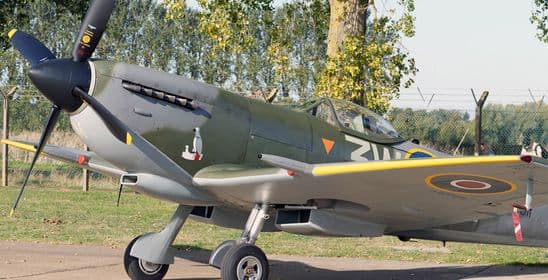
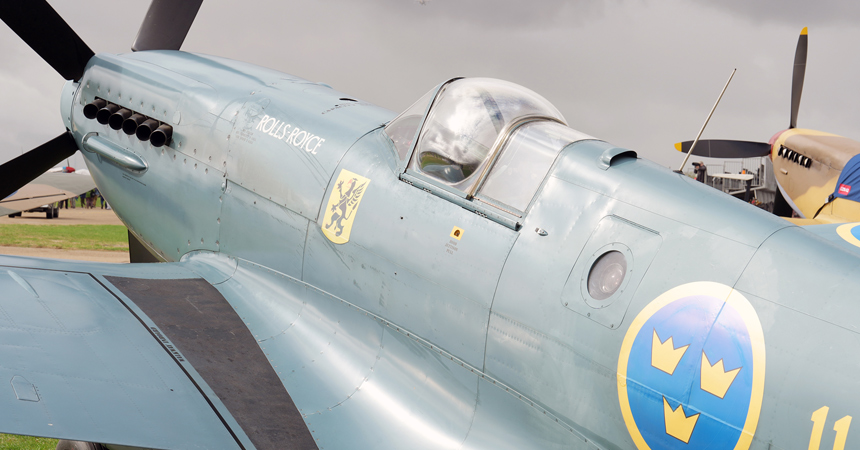
Sweden’s use of PR Spitfires was too good an opportunity for the Rolls-Royce Heritage Trust to pass up in this centenary anniversary year. Here we see their Spitfire PR.XIX PS853 resplendent in her temporary Swedish Air Force markings at the Duxford Battle of Britain Airshow.
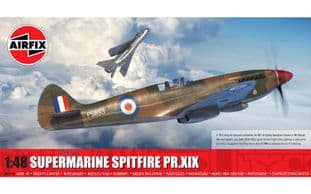
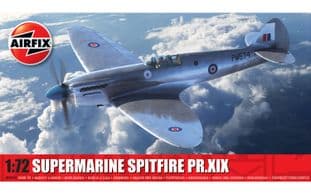
As arguably the most versatile single engined aircraft ever introduced into Royal Air Force service, the Supermarine Spitfire performed many roles during its impressive service career, including that of a snooping photo reconnaissance aircraft. The most capable examples of this variant were the Rolls Royce Griffon powered PR.XIX machines which utilised the now exceptional support network behind the gathering, examining and dissemination of Allied photographic intelligence in Britain.
The operational capabilities of these aircraft was exceptional, and they could definitely be described as 'speedbirds', with their performance being something their pilots came to rely upon, as they were flying unarmed missions deep into enemy occupied territory, with the enemy trying to stop them. RAF Photo Reconnaissance Spitfire crews went by the motto ‘Alone, unarmed and unafraid’, so confident were they in the capabilities of their exceptional aircraft.
Flying at altitudes of around 40,000 ft, PR.XIX Spitfires were almost impervious to ground defences and interception by most piston engined aircraft the Luftwaffe had in operation. Indeed, even the feared Messerschmitt Me 262 jet fighter would have difficulty bringing down a Spitfire PR.XIX, that is if one could be spared from anti-bomber duties. If a Spitfire was being stalked by an enemy aircraft, the tactic used by most pilots would be to enter a shallow dive, gradually building up speed as they gently descended earthwards. A pilot also had the option of increasing altitude still further and whilst there were reports of Spitfires flying above 40,000 ft, this was actually an exercise fraught with many dangers.
Capable of maintaining a steady 370mph even at extreme altitude, these aircraft also carried the highest internal fuel load of any PR Spitfires, all attributes which made these the most effective clandestine, information gathering variants of this famous aircraft to ever see service. Clearly, when operating at these altitudes, the aircraft were usually only deployed on days when the weather was fine, as cloud cover and stormy conditions would prevent them from obtaining the photographs they were sent to gather.
Not a huge departure from her usual scheme, but the temporary Swedish Air Force markings applied could hardly have been more appropriate for this year’s anniversary celebrations.
The gathering of aerial reconnaissance imagery was just as important to the Flygvapnet as it was to any other force, even though they initially entrusted this task to a number of modified, but outdated Seversky P-35A (J 9) fighters. The advent of the Cold War resulted in an immediate need for a more capable aircraft, and whilst it was intended that their new Saab J 29 Tunnan jet would perform this role in some style in future years, development delays with this new aircraft required the purchase of a more capable stop-gap aircraft.
To this end, Sweden arranged to purchase 50 surplus Supermarine Spitfire PR XIX aircraft from Britain in 1948, aircraft which were secured for a bargain price and were actually faster and capable of flying higher than any other aircraft in Flygvapnet service at that time. They would be instrumental in allowing the Swedish Air Force to develop effective reconnaissance strategies during this volatile period in world history, something they would later pass on to a new breed of indigenously designed and produced jet powered aircraft.
The Spitfire PR XIX was designated the J 31 in Flygvapnet service and assigned to the specialist F11 Wing at Nyköping south of Stockholm, a unit which comprised of 4 reconnaissance squadrons, and reverberated to the sound of Rolls Royce Griffon engines for several years. The PR XIX was a thoroughbred aeroplane, and it didn’t take long for Swedish Air Force pilots to fall in love with it. Despite their neutrality, Swedish PR pilots provided plenty of detailed reconnaissance information to their friends in the West, even though much of this information was of a highly secretive nature, and only confirmed in recent years.
In a development which appeared to be nothing less than a case of aviation vandalism, every one of the former Swedish Airforce Supermarine Spitfire PR XIX aircraft were destroyed, either summarily scrapped, sent to be used for target practice, or used as fire training support airframes, such a crying shame when considering the important role these capable aircraft performed during a particularly volatile period in Flygvapnet history.
Supermarine Spitfire PR.XIX PS853 in her normal scheme at home in the Rolls-Royce Heritage hangar at East Midlands Airport.
One of the UK historic aviation scene’s most famous airworthy WWII era display aircraft, Supermarine Spitfire PR.XIX PS853 was built by Vickers Supermarine at their Southampton factory works towards the end of 1944 and subsequently delivered to the Central Photographic Reconnaissance Unit at RAF Benson on 13th January 1945. She would see active service with No.16 Squadron before the end of the Second World War, flying sorties over Belgium and Holland, missions which included attempting to locate possible German V1 and V2 launch sites in northern Europe.
Spending time with No.268 Sqn before returning once again to No.16 Sqn, she would be damaged following her involvement in a flying incident in early 1949, with the damage requiring her to be sent back to Vickers Supermarine for repair.
Spitfire PR.XIX PS853 would later be allocated to the civilian operated Meteorological Research Flight at RAF Woodvale, where she would be involved in another accident in June 1957. On an Airshow ‘At Home Day’ to mark the end of THUM Spitfire operations, the aircraft took off to perform a demonstration flight, but developed engine problems as soon as it got into the air. The pilot made an immediate return to the airfield, only to have the Spitfire nose over at the end of its landing run due to a divot, damaging the aircraft’s propeller in the process.
With the disbandment of the flight occurring the very next day, PS853 was allocated to the RAF's new Historic Flight, transiting to RAF Biggin Hill following repair of the damaged propeller, along with two other Spitfire PR.XIX aircraft - this unit would later become the Battle of Britain Memorial Flight which is held in such high regard by so many people to this day.
Despite this development which should have secured her future, this Spitfire would later be selected for service as the station gate guardian, although thankfully this never actually came to pass, because she had a much more unusual assignment to undertake – more on this in a moment or two. Later still, she would be the subject of a painstaking restoration programme, with the intention of returning her to airworthy condition, and the role which she continues to perform to this day.
All grace and power, Supermarine Spitfire PR.XIX PS853 is the prized possession of the Rolls-Royce Heritage Flight and a hugely popular performer on the UK Airshow circuit.
The story of this magnificent aircraft would can never be considered complete unless it includes the unusual episode of this Spitfire being flown in mock combat trials against arguably the most impressive fighter aircraft Britain’s aircraft industry ever produced, the English Electric Lightning.
Following her allocation to the Central Fighter Establishment, Spitfire PS853 was sent to RAF St Athan for extensive overhaul, and on her return to the CFE at RAF Binbrook, she was immediately brought back on strength, with the aim of using her for an unusual role.
This significant part of this aircraft’s fascinating history was linked to events taking place on the other side of the world. Unrest in South-east Asia saw the RAF allocating jet aircraft for use against Indonesian guerrilla forces in Malaysia, and the very real prospect of powerful jet aircraft coming into contact with enemy piston engined fighters from an earlier era, such as the North American Mustang. Aircraft such as the mighty Gloster Javelin were in position to deal with the threat, but how would they cope against these older, much slower opponents.
Back in the UK, the current boss of the RAF’s Air Fighting Development Squadron (part of the Central Fighter Establishment) had plenty of experience in flying powerful piston engined fighters in the Far East and as Fighter Command’s liaison officer assigned to the English Electric Lightning programme, was just the man to oversee a unique series of flight trials. The trials pitted one of the world’s most advanced Mach 2 jet interceptors with a powerful piston engined fighter, to see how the modern aircraft would cope with such an incompatible foe and specifically, how tactics could be developed to deal with such low-tech adversaries.
Spitfire PR.XIX PS853 was flown in mock combat trials with two new Lightning F.3 aircraft delivered to the Central Fighter Establishment for evaluation and trials purposes, something very few people in the Royal Air Force could have contemplated at that time. With the Gloster Javelins already in theatre destined to come into contact with the Indonesian Mustangs, it’s open to debate as to how seriously the prospect of Lightnings being used in any Far East conflict was being contemplated at that time, but what isn’t up for debate is the fact that Spitfire PS853 was flown in combat trials against English Electric Lightnings.
Artwork depicting this fascinating period in Spitfire PS853’s history.
It will come as no surprise to hear that the Spitfire did rather well against the Lightnings, with the fact that it was around 1,000mph slower than Britain’s latest jet being exploited as a welcome combat advantage. The Spitfire offered little in the way of a ‘lock-on’ target signature when it came to using the Lightning’s missiles, and the high closing speed of the Lightning left absolutely no room for error for the attacking jet’s pilot. If they slowed down to better target the Spitfire, they were playing right into its hands, and had the PR.XIX been equipped with guns (it was obviously an unarmed reconnaissance variant), this is the scenario when it would bring them to bear.
Essentially, whilst there was a huge gulf in aviation technology and capability between the two aircraft, this mismatch actually worked in favour of the older, slower piston powered aircraft, unless the cutting edge Lightning could unleash a well-aimed cannon strike, but that would have to be one of the earlier variants still in RAF service, as the F.3 variant omitted the inclusion of guns.
A fascinating footnote in the service history of the Spitfire, it appears that these trials were undertaken after all the other Lightning development work for the day had been completed, and very much on an unofficial basis.
The accurate dating of these Spitfire versus Lightning trials has also been the subject of some conjecture over the years, however, those in the know report the Lightnings as arriving at Binbrook on the 1st and 15th January 1964, and Spitfire PS853 as being sent back to the Historic Flight, which was now at RAF Coltishall, by April that same year. That means that the window of opportunity for these mock combat trials to have taken place was between those dates, just a few short weeks in early 1964.
Thankfully, the latest RAF jets were not required to engage in combat with Indonesian Air Force Mustangs, as a settlement to the disagreement was negotiated and conflict avoided. Nevertheless, how attractive did our subject Spitfire look when she was wearing her RAF camouflage scheme?
Looking magnificent positioned in front of Duxford’s historic control tower, the Rolls-Royce Spitfire was sporting an interesting look during 2026, one which was removed the day after this photograph was taken.
The last 30 years of this aircraft’s history have been marked by its association with one of Britain’s most famous companies, and one which is inextricably linked to the Spitfire. This magnificent aircraft was purchased by Rolls-Royce in 1996 and since that date, has become a much loved component of their heritage preservation initiative, used extensively for promotional and ceremonial purposes, in addition to now being a regular display act on the UK Airshow circuit.
She can be seen thrilling audiences throughout the summer months, with her displays of grace and power allowing those in attendance to experience this Photo Reconnaissance incarnation of the famous Spitfire. Using history and their proud heritage to inspire the skills and technologies of today, Rolls Royce are rightly proud of their beautiful Spitfire, lavishing much time and attention on her care and maintenance.
Spitfire PS853 wears a scheme which is as close to the one she wore during her operational flying days with No.16 Squadron at RAF Benson back in 1945, and were it not for the Rolls Royce wording carried on her nose, looks for all the world like she could set off on a V2 launch site hunting mission from her East Midlands Airport home base at a moment's notice.
Cared for by a dedicated team in a beautifully prepared hangar at East Midland Airport, this magnificent aircraft marks more than a century of Rolls Royce excellence in the field of aviation propulsion, sharing her base with some of the most advanced aero engines in world service today. The star of many a flying display during the summer months, this powerful aircraft not only represents her owners with distinction, but she is also becoming much more active on the UK Airshow circuit, a fine example of this powerful variant of Spitfire.
I was so pleased to be able to capture a few pictures of this historic aeroplane whilst she was wearing her temporary Swedish Air Force plumage.
Over 80 years since she was built and celebrating 30 years under Rolls-Royce ownership, 2026 turned out to be a significant year for this much-loved aircraft, but for an unusual and quite unexpected reason. Although retaining her usual paint finish, she sported temporary Swedish Air Force markings to mark this year’s centenary of the Swedish Air Force and her intended attendance at the spectacular Jubilee Air Show held at Malmen Air Base at Linköping, where she would prove to be one of the stars of the show.
Obviously, this interesting development was one which immediately attracted the attention of the nation’s aviation enthusiast corps, who were desperate to get some pictures of PS853 in her Swedish phase, particularly as we didn’t know how long she would be wearing them. For me, that opportunity came at this year’s Duxford Battle of Britain Airshow, but as it turned out, things didn’t exactly go to plan.
Over the show weekend, I was working with the CORGI events team in the American Air Museum, which meant that my opportunities for taking photographs of the display aircraft would be limited over the weekend, so if I wanted to catch the Swedish Spitfire, I was going to have to be on the ball. Unfortunately, despite my very best efforts and the support of my CORGI colleagues, I was able to take up a suitable position on a couple of occasions, however, despite this, she continued to elude my attentions.
Firstly, when I had what I thought was the perfect position from where to catch her at close quarters as she taxied past after landing, the aircraft’s pilot decided to back-track down the length of the runway rather than come past my position – Strike 1!
Although there were plenty of highlights at this year’s Duxford Battle of Britain Airshow, I really only had eyes for a certain Spitfire in her Swedish centenary markings.
Next, having missed her earlier display as I was working, I decided to hurry to the land warfare end of the crowd-line to catch the aircraft taking off as part in the formation flypast. As I framed up Spitfire PS853 in her beautiful markings as she approached my position, I thought to myself ‘I’ve got you now’, just as the warning ‘Battery Exhausted’ appeared in my viewfinder – Strike 2!
Strike 3 was a combination of work commitments and less favourable work conditions during the Sunday morning of the show, by which time I was getting a bit desperate. The situation was made even worse by the news that following her attendance at the show, the Spitfire would be losing her Swedish markings the very next day, so the photographic clock was very much ticking – was I going to miss out on one of the highlights of the 2026 Airshow season?
Thankfully, my kind colleagues covered for me and allowed me to go and get some static shots of the aircraft as she was positioned in front of the control tower at Duxford, even though it wasn’t in the best light, and there always seemed to be people around the Spitfire. I’m all about the aircraft when it comes to photography, and don’t really like people being in there if it can be helped.
In the years to come, pictures of PS853 in her temporary Svenska Flygvapnet markings will be one of the interesting aviation curiosities of 2026.
Unfortunately, I have to make some excuses before recounting the next part of this tale. You know how I said I was getting a little stressed, well, I almost had a clear shot of the Spitfire, however, two gentlemen appeared to be in deep conversation towards the rear of the aircraft, and despite waiting for several minutes, they just weren’t for moving. I had to do something, so politely approached the gents to ask if they would mind moving slightly, so I could grab a few pictures.
Both men were more than happy to oblige me, but one said to me, ‘You do know who this is, don’t you? It’s the great nephew of R.J Mitchell!’
I was mortified, but at least I had used my manners. I managed to take the pictures I needed, but also went back to the gents and thanked them again, giving them my business card and telling them why I needed the pictures, with the entire conversation being extremely cordial. In fact, Julian Mitchell came to visit me later at the CORGI stand and he was delightful, such a pleasant chap.
All that being said though, obviously not my finest hour.
Thankfully, I did manage to take one or two pictures of the Rolls-Royce Spitfire wearing her Swedish Air Force markings, which definitely did prove to be one of the highlights of the show in this significant centenary year for the Svenska Flygvapnet.
We will fondly remember her appearance during her Swedish Season.
The Swiss Air Force Yorknite deployment has become one of the highlights of the UK aviation scene.
In a similar vein to how the Swedish marked Spitfire eluded my initial attempts to photograph her at Duxford’s Battle of Britain Airshow this year, despite planning a visit to RAF Leeming to see the F-18 Hornets during their current Yorknite deployment, I have been thwarted so far, for a number of different reasons. I had been hoping to bring readers this content in this latest edition of Aerodrome, however, that trip hasn’t taken place yet, but I’m still intending to make it.
Let’s hope that I have better luck over the coming couple of weeks, and we can enjoy documenting the sight of these beautiful aircraft in Yorkshire skies once again – watch this space.
I’m afraid that’s all we have for you this time around, and indeed for 2026. As the next edition is scheduled to be published on Christmas Day itself, we obviously won’t be releasing one then, but will continue to bring you more news, updates and pictures from the fascinating world of aviation in the New Year.
Could I therefore please take this opportunity to extend a huge thank you for your continued support throughout 2026 and to wish each and every one of you a very happy Christmas and an aviation filled New Year – have a great time.
We’ll be back as usual in January, but as always, if you would like to comment on anything blog related or suggest a subject you would like to see covered in a future edition of Aerodrome, please do drop us a line at aerodrome@airfix.com, where we’d be only too delighted to hear from you.
Should you still wish to continue the aviation discussions between editions, you will always find something of interest over on the Airfix Aerodrome Forum and if social media is more your thing, please use the respective official social media icon links at the bottom of the main Airfix and Corgi website homepages to access our official sites.
The next edition of Aerodrome is scheduled to be published on Friday 22nd January, and we look forward to sharing more aviation related content with you then.
I hope to see everyone back here in the New Year.
Michael