During this month, Airfix is proud to highlight some key contributions of women throughout history, as part of an exciting campaign celebrating Women’s History Month, March 2023.
As part of this campaign, aimed to inspire young people, especially young women to strive for their dreams, we throw a spotlight on women in aviation. Over the course of the month, we will speak with some aviation icons and share key dates and accomplishments of women who changed the face of the aviation industry forever.
In an exclusive interview with Mandy Hickson, a former RAF pilot, Mandy describes the challenges she faced during one of the toughest training courses in aviation, all the way to serving on the front line in combat.
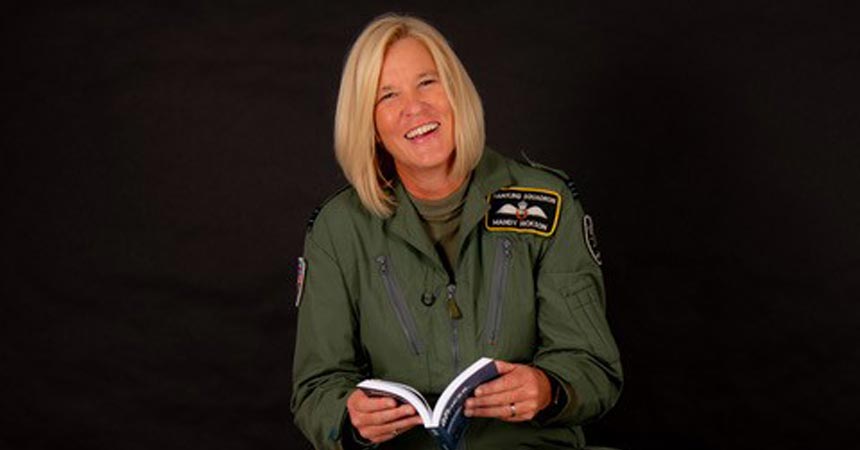
Mandy has flown many aircraft during her career; the Chipmunk, the Bulldog, the Firefly, and the Tornado GR4 to name a few. Before earning such aviation credentials, Mandy’s ambitions all started with a role model.
“We always talk about role models and the part that they can play” Mandy said, “my role model was my grandpa. He was a pilot during the Second World War. Every time he used to visit; I would hear these stories. He probably never thought I would follow him into that career, but on the first night that the Air Cadets opened its doors to girls, I joined.”
“Suddenly I found my sort of my people; I really loved the flying, and it was that which set the spark alight really. Flying [through the cadets] led to me getting a flying scholarship at 17, and that led me to getting my private pilots license, which I paid for via my paper round money. Then, I went off to university. “
Reflecting on the significance of being the first woman in her squadron, Mandy explained: “It’s really only retrospectively that we are reflecting so much on being the first or being the second” Mandy added, “at the time, you’re just trying to try as hard as you possibly can to pass each of the courses to become the best pilot that you can be”.
“It was a little tough because I was the only female pilot that they had, and I was for the whole of my tour. I finally got a female navigator that turned up in my last year, but ultimately, you’re alone. To be honest though, you’re not thinking about being a woman doing this job. You’re just doing your job. “
Thinking back to her time in her squadron, Mandy reflected on other challenges she faced when becoming a fast jet pilot.
“The challenges are going to be the same as all the men, it’s a tough training course. The first part of Hawk training is where they teach you how to fly the aeroplane and you learn instrument flying and navigation skills. Then you progress onto the tactical weapons unit, where they bring in air-to-air combat and weaponeering. Finally you pull everything together in simulated attack profiles (SAPs) where you’re basically flying low level, hitting targets within 5 seconds in a pair of aircraft with an enemy after you and often dropping weapons on the range as well.
The challenge was the rate of change, rate of learning. There were more challenges when I got to the squadron, the Tornado Operational Conversion Unit itself. I initially went through the GR1 Operational Conversion Unit (OCU) and then it became the Tornado GR4. So, I have flown both variants.”
Mandy was the first woman to fly the Tornado GR4 on the front line.
“I think when I got to the squadron it was a little bit different” Mandy reflects, “because the challenges were now not necessarily just about the flying side of things. But it was about embedding yourself within a very male culture, so there were going to be harder things to deal with. There was a lot of casual sexism in those days. Nothing that was particularly nasty; I always say that I’ve had incredible support the whole way through my RAF career by everyone,” Mandy added. “So none of it was meant with a really sort of vindictive undertone, but it was just the culture at the time. It was just going into an all-male environment, but it’s changed, it’s changing all the time. There was no female flying kit for example. Now [they] realise that women are not just small men, they have different measurements, different ergonomics.
Those were the sort of things, the normal challenges going through training that every pilot would go through and just a few little additional ones that were thrown in on the side.”
Up until 1994, women were not permitted to fly on the frontline. This changed whilst Mandy was at university.
“When you’re a budding pilot at the start of your career, you want to fly the best aeroplanes you know. For me, that was a fast jet, so I always wanted to fly fast jets. Generally, it’s considered that the pilots that graduate at the top of their course go on to become the fast jet pilots. And if that’s what I’d set my sights on, which I had done, then you’re going to have to be pretty much right at the top of your game to get those slots.”
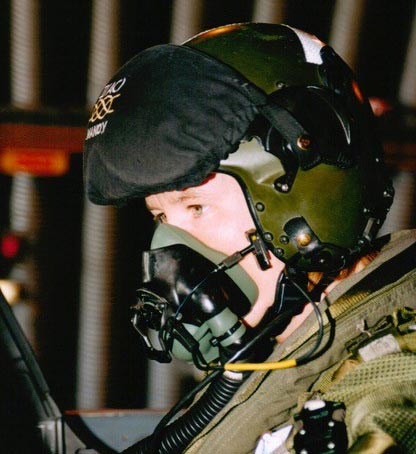
“One of the most memorable moments was graduation day from the Hawk on the day that we got our wings, and we went off as a 9 ship. So suddenly we are launching a 9 ship of aircraft. And the instructors love it as well. There’s a video that my parents have of them recording the formation flypast from the ground, and there’s this lovely commentary from them throughout. That was a really special moment for me. Also, I think the first time really that you go off to an area of conflict. That feels like you’ve ramped up to that next level.
When I was in Iraq, there was a mission where we were tasked to proceed really far north. We were normally limited to what’s called the 33rd parallel and weren’t really meant to go above that. But on this one occasion, we were given special dispensation because we were given some targeting near Baghdad, and we were heading up to the north. It’s in my book, basically my navigator just said ‘Mandy, are your night vision goggles up or down?’ I said, ‘they’re up’ and he went ‘yeah, leave it that way’. I instantly went to click them down and it was literally like bonfire night in the UK. There was Anti-Aircraft Artillery (AAA) being fired. The whole sky in front of me was lit up as a passageway of weapons being fired at the preceding aircraft that were going through, and I thought ‘this is very, very real’. That was one of the moments of reality. But they didn’t appear to be attacking anyone. Bizarrely, they were just sending out these tracer rounds to try to mark where they were going to be sending them, so we carried on with the mission.”
After such incredible achievements, Mandy thinks about the advice she would give to other young people, women in particular who would love to do what she has done.
“My advice would be to do everything that you can possibly do to facilitate your way into that. There’s a young girl that I really admire called Amelia [who’s] a glider pilot who reached out to me when I first published my book. She puts posts out on social media and has grown a huge following, I simply comment on them. I just think these are the people we’re targeting, who say ‘I want to be a pilot’. This is it. I’ve realised that I’m probably a good role model for them. “
“You can help yourself by working really hard at school” Mandy explained, “the second thing that you can do is you can join the air cadets, but if that’s not your thing, that’s fine as well. What I would always say is, it’s never too late. Make sure that you experience different things; I loved, for example, the Rangers and the girl guides, and I did my Duke of Edinburgh award scheme, in fact, through them I got my gold award. What I was doing, [I] hadn’t realised it, of course is building up [the] skillsets that will hold you in good stead for becoming a pilot; Determination, resilience, leadership, teamwork and communication skills.
If you think ‘I’ve done absolutely nothing, I sit here in my house the whole time and I don’t go out, I don’t do anything,’ You probably won’t become a fast jet pilot. So, you must demonstrate leadership qualities. You have to show that you’ve got an interest, put yourself out there. The other thing I think is really important is to believe in yourself. If you’re at school and you think okay, I’m really quite quiet, but I really want to do this, then put yourself forward to become a school prefect. This is where you’ve got to make yourself slightly uncomfortable, outside of your comfort zone because that gives you that skill set that you would need. You have got to put yourself in the best position possible.”
Only 15.4% of the RAF were women in 2020.
“There are still very few females in aviation. I speak to different groups of people and actually I’ve often had young people contact me, often they say they don’t feel they fit in school, they just don’t feel like they belong. [It’s] okay to be like that, it genuinely is because guess what? It’s going to be the people that are a little bit different that will often go the furthest. “
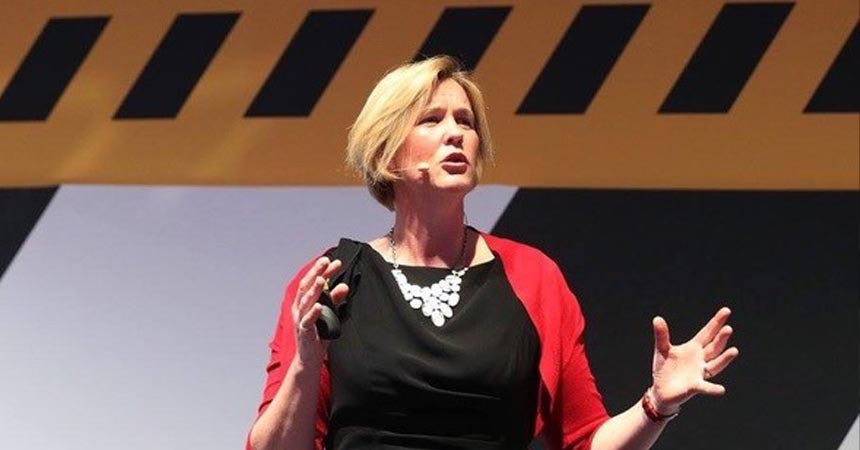
Since leaving the Air Force 12 years ago, Mandy has had widespread success, publishing a bestselling book titled ‘An Officer, not a Gentleman’, as well as becoming a motivational speaker.
“I realise that we almost have a responsibility to the next generation to put ourselves out there and be those role models, very visible role models to say we’ve done it. You can do it, and that ladder is firmly rooted on the ground for people to literally stream up behind us now.”
“I left the air force 12 years ago” Mandy explained “with the intention of going into commercial flying because that’s what every pilot does when they leave the Air Force, or the majority. There’s a chapter in my book right at the end where it’s called ‘flying with Emily’. I was flying with the volunteer reserves, and I flew a young girl, and she was really good. At the end, we were chatting, and she said, ‘I want to be a pilot just like you’. I just thought it hit home to me that I didn’t have to go into the airlines. I didn’t have to do what everyone else was doing. I just thought it’s going to be better for me to do something different.
I realised that if I took a different track, I could do something very different. I thought my story was quite powerful to be able to share and I started sharing [it] with schools initially. I’ve now spoken to over 100,000 school children globally. I’ve covered all 5 continents in lockdown. I’ve spoken to plenty of air cadets and all the university air squadrons as well, and it’s been really well received. “
Mandy has given speeches at hundreds of events, applying her learnings to businesses, as well as inspiring many women across the country.
“I realised that all the lessons that we use, all the things like decision making under pressure, communication skills, leadership, trust, all of those things that we talk about; they’re the things that can create, not just safety but profitability. They’re all the things that literally are the lifeblood of organisations and I’d retrained as a facilitator to do CRM training and I realised that I could use those lessons and that they would make some fantastic sessions for business as well. Although I’ve not got a business background, I’ve made sure these stories are relatable and transferrable into any business context. So, I’m pretty much fully booked as a speaker now, which is great, really wonderful place to be in.”
Mandy concluded on her current plans: “challenge wise,” Mandy shared, “I did Kilimanjaro four years ago and this year, in two weeks’ time, my husband and I are joining an expedition to the base camp of Everest; we’ve been doing lots of training for that. So two weeks today we go on the 23rd of March which is really exciting.
I’m still of that mindset of challenging myself, pushing myself, building my own levels of resilience again, using these stories to remain current in what I’m doing as well to take them back into the workplace.”