There has been so much exciting news coming from the Airfix design team over the past few months that Workbench has struggled to keep pace with all the new model announcements. As we go live with the latest instalment of our Airfix development blog, we are going to focus on two relatively new model toolings from 2015 which have been upgraded for 2016 to offer the modeller some new and exciting construction options to these highly regarded kits.
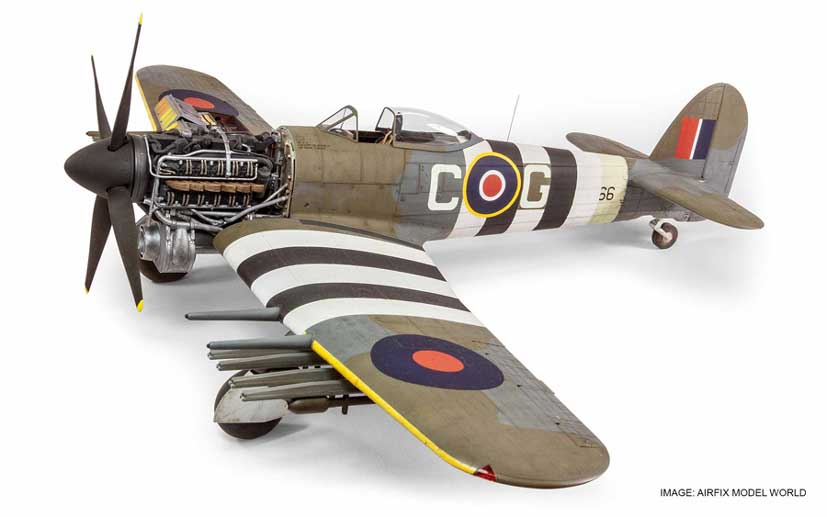
Impressive detail on the 1/24th scale Airfix Typhoon
Without doubt, one of the most impressive kits available to the plastic modelling enthusiast is the magnificent 1/24th scale Hawker Typhoon Mk.IB (A19002). The levels of detail that the Airfix design team have managed to capture are simply astonishing and even the most proficient modellers amongst us will find constructing this kit to be a longer term project. The picture above illustrates just what can be achieved with a little patience, and lots of modelling skill – built by accomplished modeller Steve Budd, this is a spectacular piece of work and certainly serves to inspire the rest of us!
As the largest model scale currently available in the Airfix range, these impressive 1/24th scale models pose some particular problems for the designers. The sheer size of the model dictates that much more detail will be required on this type of model, and more than any other kit project will closely follow the actual construction of the real aeroplane. These models are the closest thing to a miniaturised version of a WWII Hawker Typhoon that a modeller can get their hands on.
Frustratingly for the designers, much of the detailed work carried out on this kit may never actually be seen once the model has been constructed and painted. From internal wing detail, cockpit interior, gun bays and engine detail, all these exquisitely researched and modelled sections of the aircraft will more than likely be covered up. For most modellers, the beautiful shape of the aircraft they are building is the most important feature of the model, so much of this fine, additional detail will simply not be called upon. Should you decide to construct your model with gun bays exposed, or with the engine cowling covers removed, your finished model will show these areas in extreme detail and will make for a magnificent display piece.
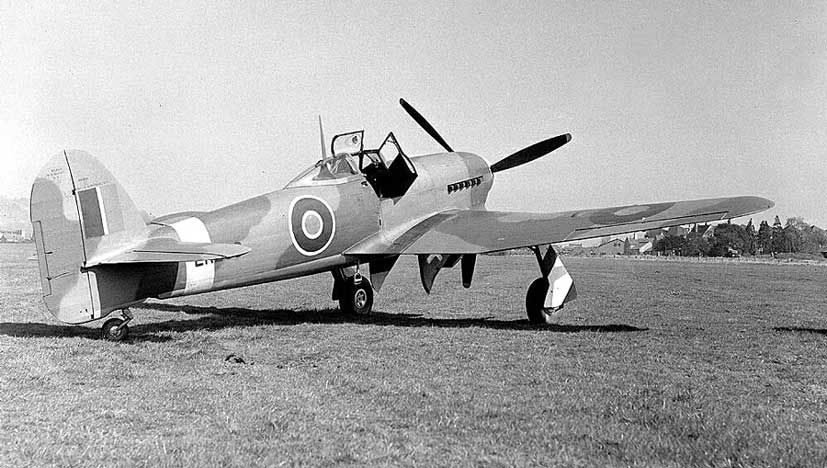
The early ‘Car Door’ cockpit can be seen on this RAF Typhoon
The Airfix 1/24th scale range of aircraft models has been around for many years now and have always been held in high regard by modellers. The most recent additions to this impressive range, however, have been designed using the very latest computer and manufacturing techniques and as a consequence, are even more accurate and contain more detail than their predecessors. In the case of the Typhoon, this was a significant project and would have involved many members of the Airfix team. Obtaining the relevant plans and documentation would have been the job of the lead researcher, who scoured the country for original construction plans, technical drawings and pilots notes, as this huge undertaking would require as much original information as possible. A number of research trips would have also been needed, particularly to view the extremely rare Typhoon (MN235) on display at the RAF Museum, Hendon and the restored cockpit section of a Typhoon, which is at Duxford.
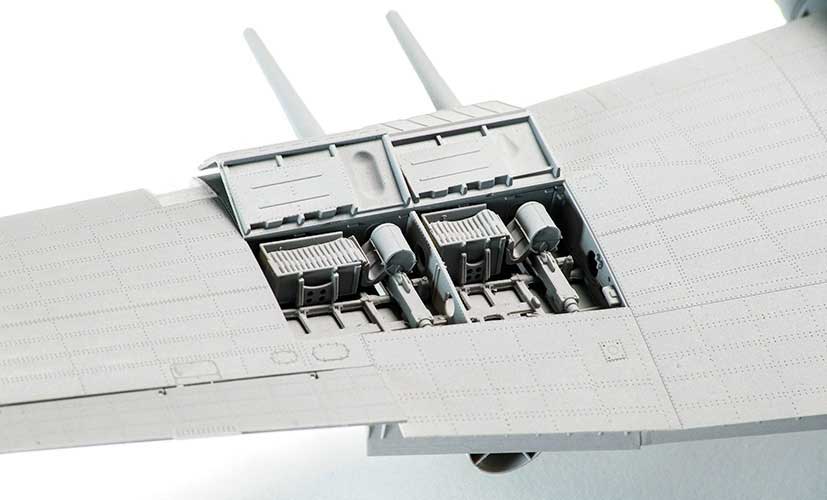
Impressive gun bay detail featured on the Typhoon kit
All this extensive research data would then allow the Airfix design team to work on every individual component of this model. This design work alone took ten months to complete, which gives you some indication of the sheer amount of work that has to go in to one of these larger scale models. As we have seen in previous editions of Workbench, even at the end of this design stage of the process when the team can show beautifully rendered 3D CAD images of the new model, there is much work still to be done. A resin prototype model has to be produced, before all this information is passed to the toolmakers in the Far East who will begin the work of manufacturing the sizeable tools for this large model. More testing and more development work will have to be done before the new model is available for release, but I think it is fair to say that the bigger the model, the longer the development period.
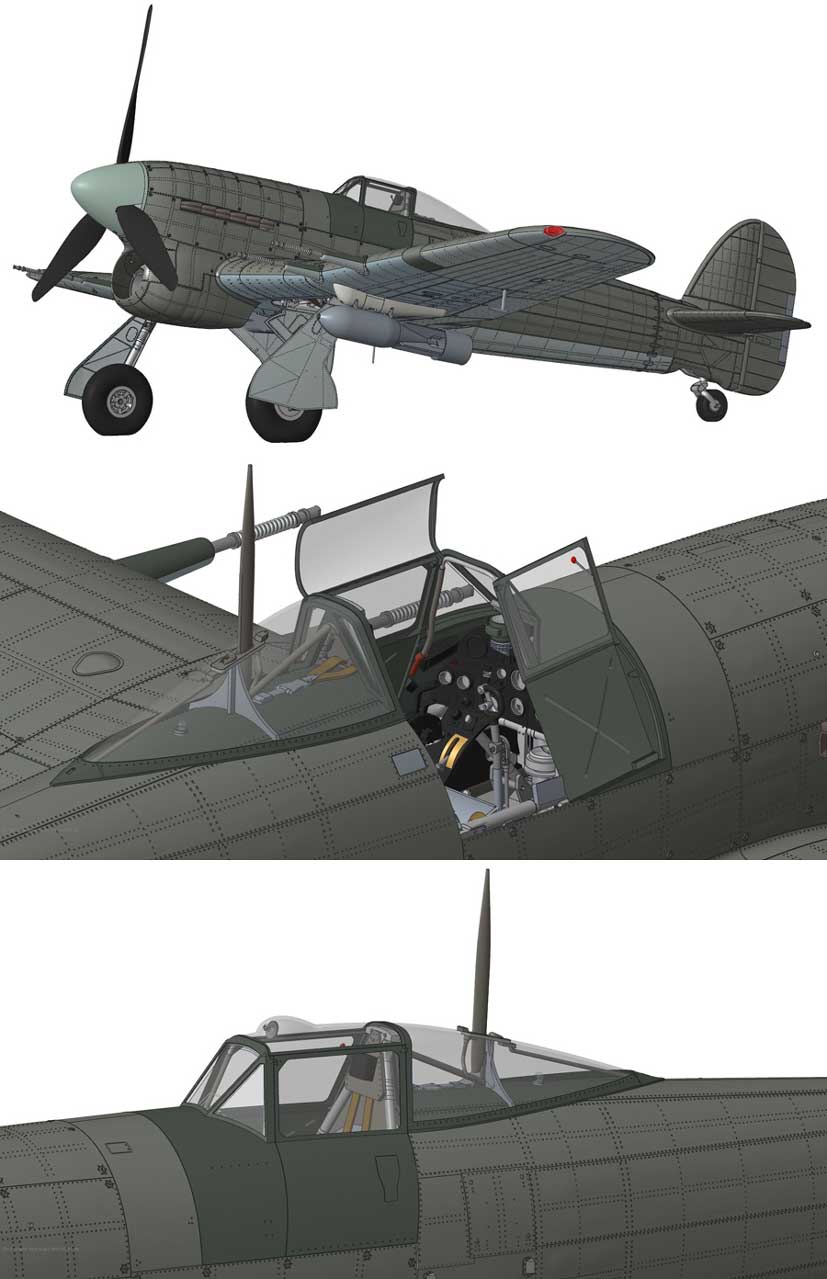
CAD screen grabs of the new ‘car door’ Hawker Typhoon
The exciting news that we have for you this week is that this magnificent model has been upgraded and now allows the modeller to construct an example of one of the first Hawker Typhoons to enter service. These early machines were somewhat rushed into service and it was discovered that a number of modifications would be desirable, if not totally essential. Perhaps the most noticeable difference from the later models were around the canopy area – the first Typhoons were supplied with a forward opening ‘car door’ style cockpit entry for the pilot which even included a wind down window. The pilot also had a transparent roof panel, which hinged open to the left and some machines had the addition of a rear-facing mirror, on the canopy frame.
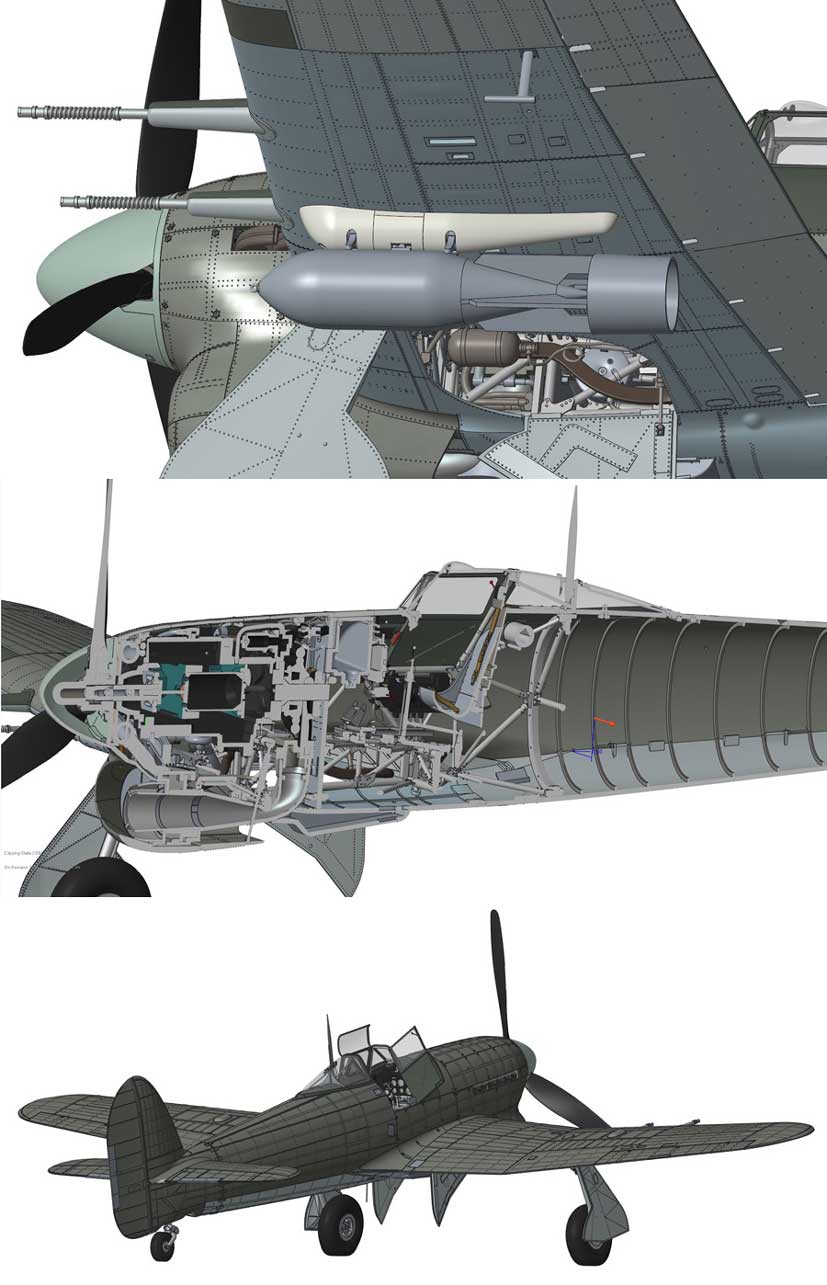
CAD screen grab montage of the new ‘car door’ Hawker Typhoon
This really is an exciting development for the 1/24th scale modeller and transforms the profile of this famous WWII low-level fighter and ground attack aircraft. Some of the other options this new version will allow are:
In addition, this new version of the 1/24th scale Hawker Typhoon will give the modeller the option to construct his model with or without the main aerial in place, with a similar option for the pilot's optional rear-facing mirror.
Test sprue component pieces for the 1/24th scale ‘car door’ Hawker Typhoon.
This impressive new Typhoon kit is scheduled to be available in the summer of 2016 and we very much look forward to bringing you regular project updates in future editions of Workbench – I think that I may have just confirmed my winter modelling project for next year!
As we head towards Battle of Britain Day and the 75th anniversary of this decisive aerial confrontation, we are very much reminded of the sacrifices made by the brave pilots of Fighter Command and the famous aeroplanes that they fought in. We also have to be mindful of the fact that Britain’s feared enemy in 1940 is now a staunch ally and they will be viewing the occasion from a very different perspective. Aviation enthusiasts, however, certainly view the Luftwaffe aircraft taking part in the battle with equal importance to those operated by the Royal Air Force.
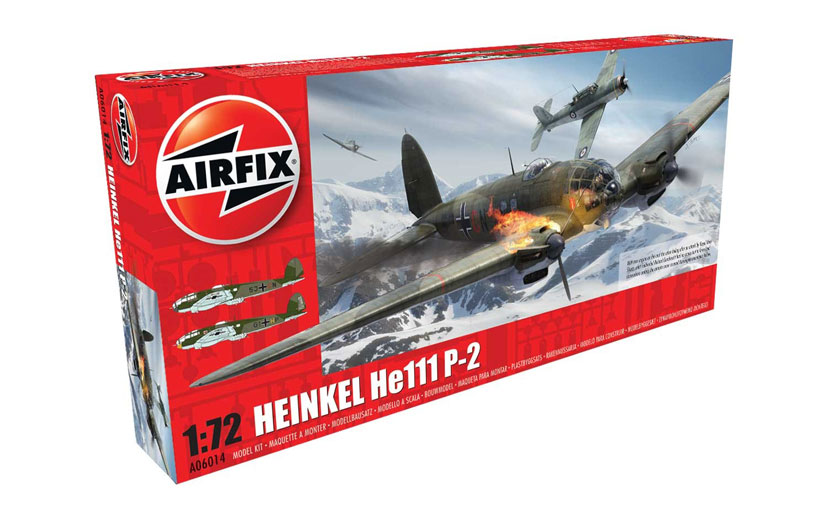
If the Messerschmitt Bf 109 is the Luftwaffe fighter aircraft most closely associated with the Battle of Britain, then it would be true to say that the twin engine Heinkel He III was most definitely the most famous bomber of the period. Serving in large numbers throughout WWII, the Heinkel can trace its origins back to the early 1930s and to something of a smoke and mirrors exercise. At a time when the Treaty of Versailles prohibited Germany from operating an air force, the Heinkel He III was supposedly built as a civilian transport and cargo aircraft, even though it was intended from the outset to be a fast medium bomber. As war broke out, the Heinkel, with its large, glazed ‘greenhouse’ nose was to become one of the most famous aircraft of WWII, with its unmistakable form spreading panic amongst anyone unlucky enough to be in its path.
The Airfix 1/72nd scale range can boast the inclusion of a magnificent Battle of Britain era Heinkel He III, which has only been available for a short while and has been produced using the very latest 3D scanning technology and access to a preserved example of the aircraft. Also benefiting from the very latest design and manufacturing techniques, this kit builds into a highly accurate representation of this most famous Luftwaffe bomber, which was responsible for causing more damage from strategic bombing than any other Luftwaffe aircraft during the Battle of Britain.
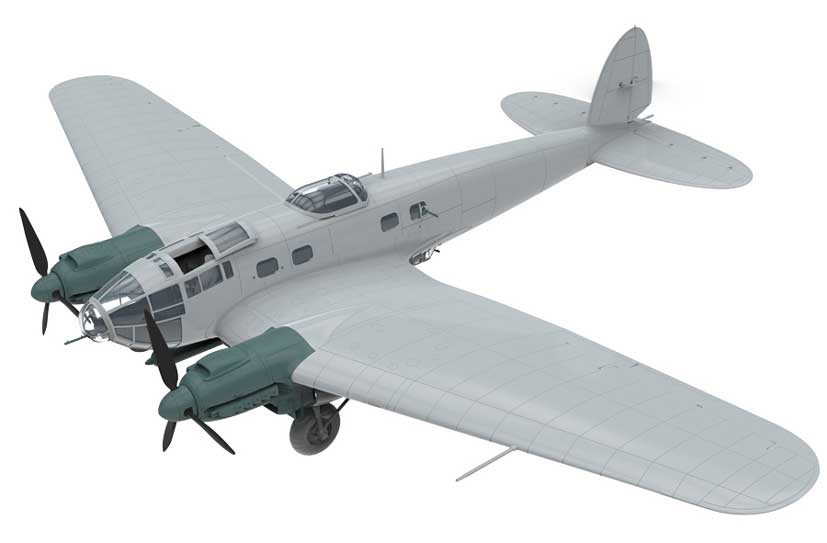
Beautiful rendered CAD image of the new Heinkel He III H
Arguably the most effective version of the He III series and certainly the one that was built in most numbers, the Heinkel He III ‘H’ attempted to address some of the shortcomings of the earlier models and upgrade the performance of this widely used aircraft. Although German ministers thought that they were being clever in classifying the original He IIIs as airliners, the design parameters that had to be adhered to, in order to satisfy this deception, dictated that the bomb carrying capabilities of Luftwaffe aircraft was woefully inadequate. In actual fact, the aircraft was capable of carrying more bombs than its weapons bay could hold.
Also, the Battle of Britain clearly illustrated that whilst the Heinkel could not really be described as being obsolete, it was seriously out-dated in terms of manoeuvrability and defensive firepower and most of the Allied fighters of the day were capable of shooting it down. Unfortunately, without the benefit of a suitable replacement aircraft, the Heinkel would have to soldier on and despite beginning to show its age, was still in production right up until the final few months of the war.
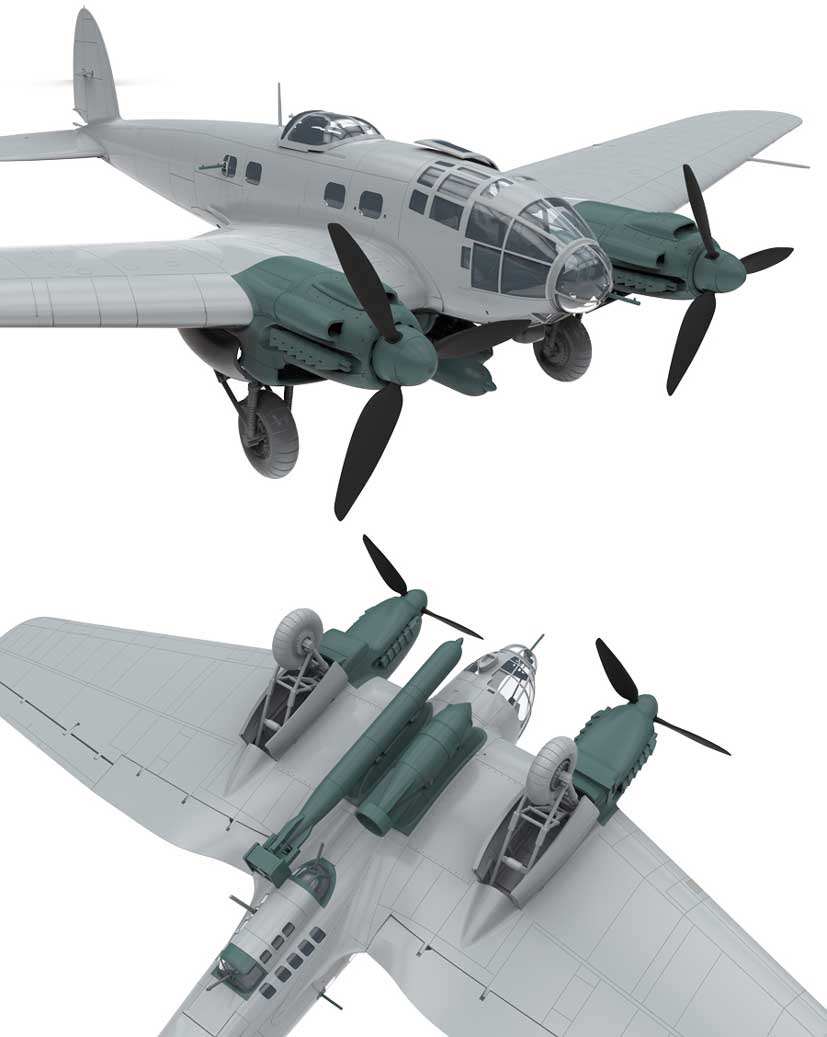
Computer rendered CAD montage showing the new parts for the Heinkel He III H model.
Although the Heinkel He III was no longer classed as an adequate attack bomber on the Western Front, it did go on to serve with distinction in a variety of different roles and in every theatre of Luftwaffe operation. Successive upgrades allowed the aircraft to deliver a more effective weapons payload, whilst also providing the crew with much better defensive armament. The internal weapons bay was no longer used to carry bombs, but was converted to house an additional fuel tank which allowed for much longer patrols and was particularly useful for maritime operations.
Perhaps the most interesting missions carried out by ‘H’ model Heinkel He IIIs was that of the torpedo carrying maritime attack bomber. Used in both the Battle of the Atlantic and against targets in the Mediterranean and on the Eastern Front, Luftwaffe units enjoyed notable successes against Allied shipping, until the weight of Allied air superiority began to take its toll of experienced torpedo bombing crews. As less experienced crews began to fly these missions, success rates plummeted and loss rates continued to cause concern.
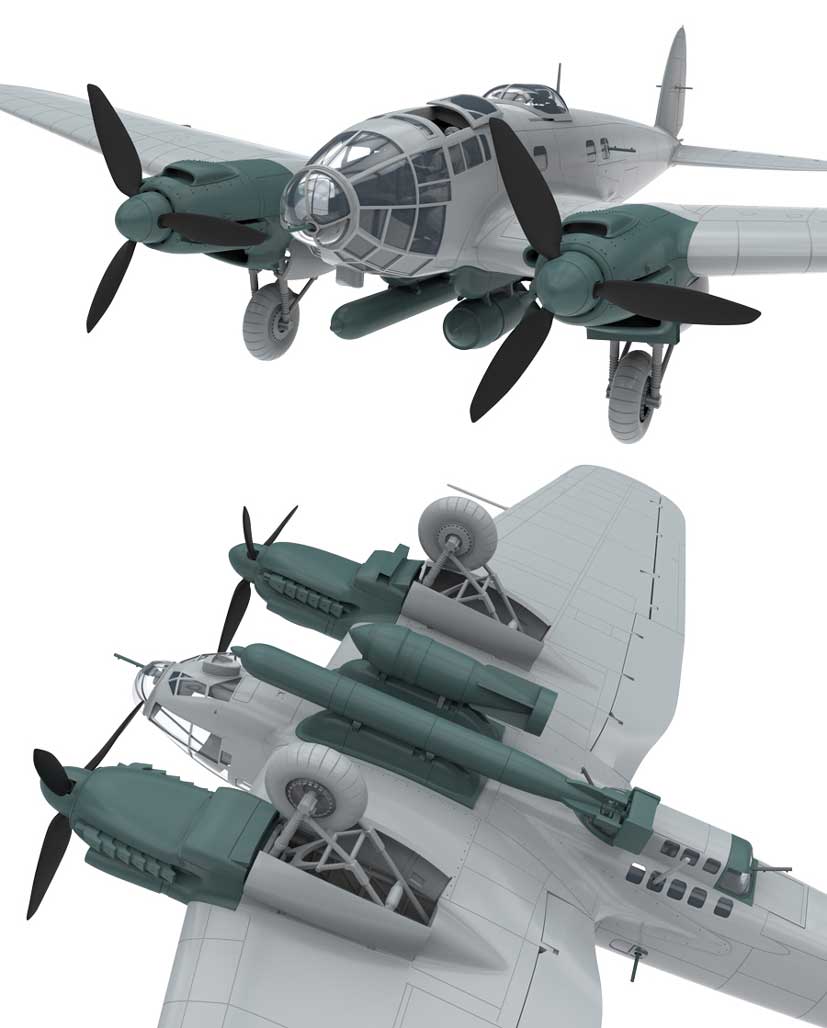
Computer rendered CAD montage showing the new parts for the Heinkel He III H model
The new Airfix 1/72nd scale example of the Heinkel He III ’H’ will allow the modeller to build an example of this significant and most heavily produced version of the aircraft. You can see from the computer rendered 3D images supplied by the Airfix development team that this will be a highly detailed model and will include a number of significant new parts:
The fantastic computer rendered image clearly show the new parts that will be supplied with the Heinkel kit, which is again scheduled for a summer 2016 release.
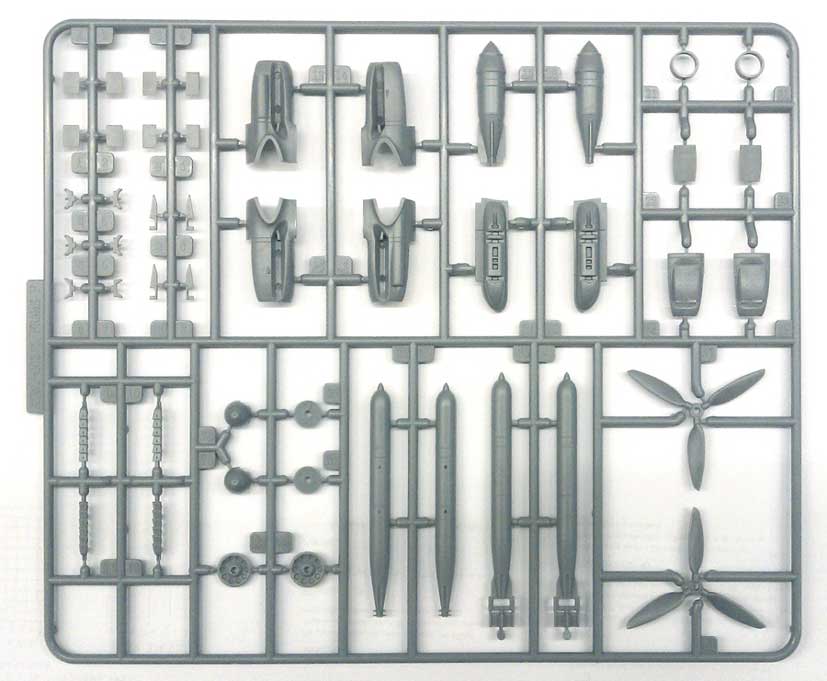
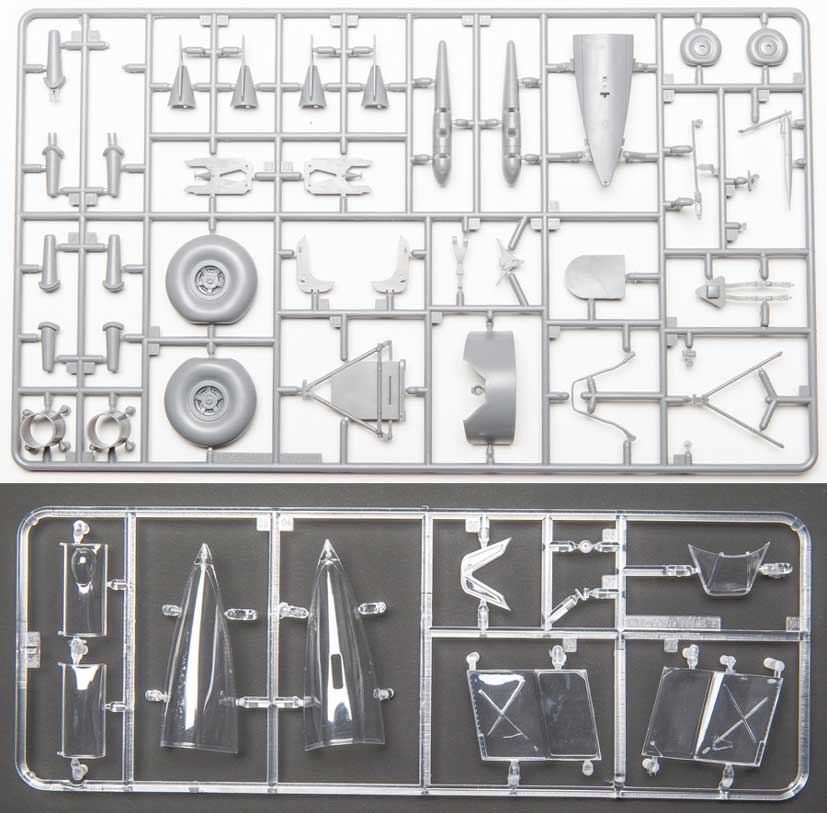
Test sprue component pieces for the new 1/72nd scale Heinkel He III H variant
We hope that you have enjoyed Workbench Edition 5 and all the latest news from the Airfix camp – as usual, we will have more exciting information for you in our next edition! Until then, thank you very much indeed for reading and don’t forget to keep modelling!
We now have a Workbench thread on the Airfix Forum for you to get involved with all the latest Airfix developments, news and suggestions. Alternatively, you could also drop us a line on either Facebook or Twitter using #airfixworkbench.
See you next time
The Airfix Workbench Team
© Hornby Hobbies Ltd. All rights reserved.