Welcome to this latest edition of Workbench and all the news, updates and exclusive announcements from the fascinating world of Airfix modelling.
With a title such as the one above, could there possibly be even the slightest doubt as to what the lead feature in this latest edition of our blog is going to be? With an unbeatable combation of Hollywood, aviation and Airfix model kits, we see how despite the fact that this blockbuster movie sequel has been delayed until the end of the year, the 2020 Airfix range will have quite a selection of kits available for the ‘Maverick’ modeller by then. We also delve back into the always popular Vintage Classics kit range to update readers on a highly anticipated future release which now has its ship date and is therefore not too far away from gracing our workbenches, the cultured and extremely appealing Hawker Siddeley Dominie T.1. We take a quick look at the development of this successful aircraft and the attractive scheme details which will be included with this latest release.
We end this 127th edition with another contribution from one of our extremely talented readers, where we will see how once again, Airfix box artwork proved to be the only inspiration needed for another eye-catching model build. We think you will be interested to see what Nico Fang managed to do with an aircraft which he initially dismissed as something of an aviation ‘Ugly Duckling’.
All this awaits you in the latest edition of Airfix Workbench.
As we currently find ourselves commemorating 75 years since the end of the Second World War, we don’t really have to look too hard to find some interesting WWII related programming on our TV schedules, particularly if you have access to one of the many subscription services which are now available. Amongst the plethora of interesting documentaries which will undoubtedly be available, it is also an opportunity to reacquaint ourselves with some of the most famous war related feature films which have been produced throughout the history of cinema. Although few of these will have a strong aviation leaning, over the years, there have been some notable exceptions.
From the docufilm ‘Target for Tonight’ which was filmed and produced during wartime conditions, to such post war classics as ‘The Dambusters’, ‘633 Squadron’, ‘The Blue Max’ and of course ‘The Battle of Britain’, these films are still regarded as required viewing for the aviation enthusiast and it doesn’t matter how many times you have seen them before, your latest viewing is still one of life’s undeniable pastime pleasures. When it comes to jet powered aviation, the list of classic films is arguably much shorter, but one film which must definitely be positioned at the head of this group is ‘Top Gun’, a high octane, big budget movie which brought jet aviation and film star aviators to a much wider worldwide audience. Although the Hollywood portrayal of military aviation may not be to everyone’s liking, millions of people will be familiar with this popular movie blockbuster and the news that this year will witness the release of a much anticipated sequel entitled ‘Top Gun: Maverick’ will be of huge interest to many.
Over the past few years, Workbench readers have come to appreciate the talents and blog support of our Photographer David, who provides many of the fantastic images which have been the highlight of so many previous editions of Workbench. Well, David also happens to be something of a TV and Film enthusiast and on many occasions, has provided research information and detailed copy for projects across the various Hornby Hobbies product ranges. When we mentioned our intention to include a Top Gun Maverick model feature in Workbench and if he would he like to be involved, he jumped at the opportunity – before we hand over to David, it might be a good idea if we first looked at the story behind the actual Top Gun programme as it was before Hollywood got hold of it.
In the aftermath of the Vietnam War, US military officials undertook a thorough review of air operations during the conflict, looking specifically at air combat losses and the performance of their air-to-air missiles in a combat situation. In light of the review’s findings, the US Navy’s response was to establish the US Navy Fighter Weapons School at Miramar in 1969 and from relatively humble beginnings, this fascinating programme would go on to earn a reputation for aerial excellence. Taking some of the very best young naval aviators and schooling them in the art of aerial combat, the programme adopted ‘Dissimilar air combat training’ methods, with instructors using nimble jet aircraft which were intentionally flown and operated to replicate tactics used by potential adversaries at that time.
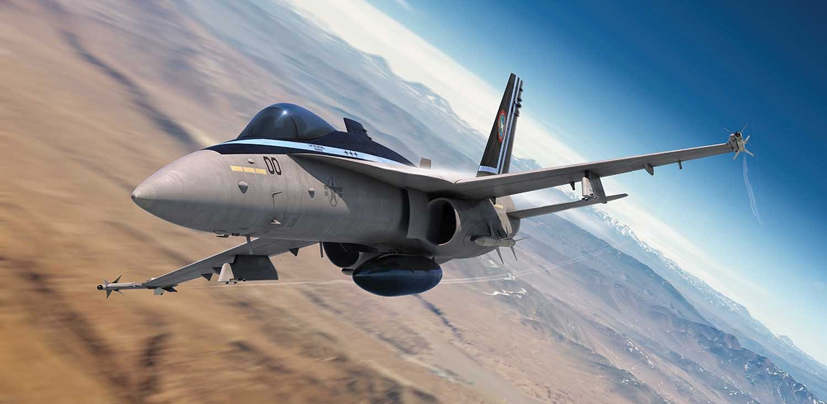
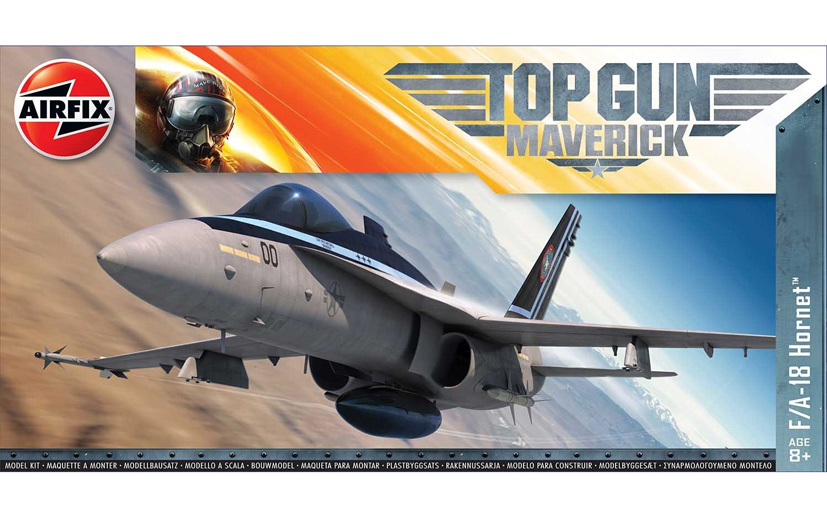
New artwork has been produced in support of these Top Gun Maverick kit releases and it is interesting to see how the base artwork is adapted to take the additional release information, whilst adhering to licensor guidelines
As the students enrolled on these courses were amongst the most gifted airmen the US Navy had to offer, it clearly follows that ‘Top Gun’ instructors had to be exceptional pilots themselves, able to regularly out fly and out think students who were desperate to prove their combat credentials, with each training sortie placing incredible demands on both airmen and their airframes. By the end of the Vietnam War, most US Navy units could boast a Top Gun graduate amongst their ranks and during this period and as a consequence, air combat success ratios posted by navy pilots saw immediate and quite dramatic improvements.
During the history of the Top Gun programme, some of America’s most iconic jet aircraft have been used by students and their instructors, including the distinctive F-14 Tomcat and rugged F-18 Hornet as mounts for student crews, with A4 Skyhawks, Northrop F-5s and F-16 Fighting Falcons hunting them down as their adversaries. An aviation centre of excellence, Top Gun graduates returned to their parent units and effectively became instructors themselves, sharing the skills and information they had gained with fellow aircrews. It was hoped that dissemination of this valuable information would better equip crews to negotiate future combat operations, increasing both their success rates and survivability potential – clearly this was an incredibly serious business.
Right, with the real Top Gun business out of the way, it’s over to David for some Hollywood aviation action.
Since its release in 1986, Top Gun has been held up as a classic of 1980s popcorn cinema, cementing the stardom of its leading actor and featuring some of the most thrilling aerial action sequences ever committed to the screen. The road to a sequel has been extremely long, with filming eventually beginning on Top Gun: Maverick in the spring of 2018. While whatever happens narratively in the film is something still to discover, the trailers released thus far show a film that features aerial sequences which clearly surpass those in the original – not least because of the production team’s decision to put the actors playing the pilot characters into real US Navy aircraft. These aircraft were actually in the air while being filmed with some of the best camera technology available, all with the express aim of creating the most impressive and immersive aerial footage ever captured. To say we’re just a little bit excited about seeing this one is an understatement of F-18 Hornet sized proportions.
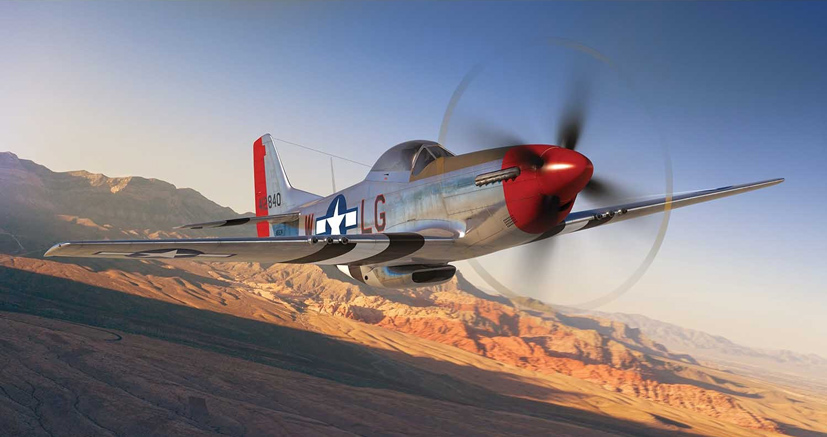
The timeless P-51D Mustang appears in the new film, which also created an opportunity for more new box artwork. Pictured flying over a desert scene, this magnificent aircraft is Mavericks personal hack when he is not engaged in training the latest intake of aircrew recruits to the Top Gun programme
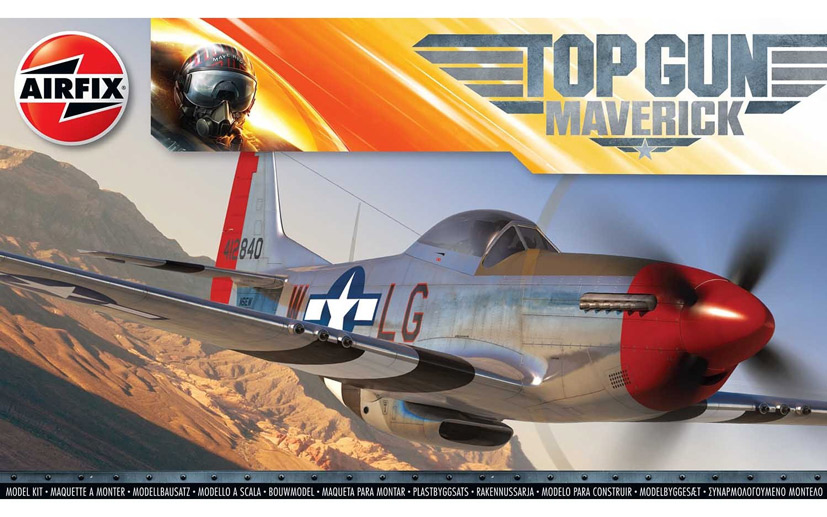
Though the times in which we are living has made a delay to the cinema release of Top Gun: Maverick somewhat inevitable, Airfix has been working behind the scenes to produce a range of model kits which tie into the new movie, whilst at the same time also harking back to the original 1980s classic. These kits are primarily geared towards movie goers who may never have built an Airfix kit before, while still allowing a burst of nostalgia for those who remember the original releases. Significantly, due to their TV and Film links, these fantastic kits will be available in many more retail establishments than just your favourite model shop.
The Top Gun range comprises three aircraft from the original 1986 classic, and two which will appear in the forthcoming sequel Top Gun: Maverick. In the case of the kits for Top Gun, the packaging is a nostalgic recreation of the original presentation style released back in the 1980s. In order to achieve this, it involved sourcing examples of each original kit, scanning the artwork in high resolution and then reproducing them as closely as possible to the originals, whilst at the same time updating them with brand new digital artwork representations created by talented digital artist Adam Tooby. The two kits for the new Top Gun: Maverick movie would require a slightly different approach. Both would also benefit from new Adam Tooby artwork, but they had to integrate into the brand new packaging style which covers all merchandise for the new film. As is often the case with tie-in movie merchandise projects, a degree of back and forth on the creation of both the packaging and the models themselves was necessary with the licensor, before we were able to finalise the details of each kit release, however, we are delighted to be able to unveil these to Workbench readers now.
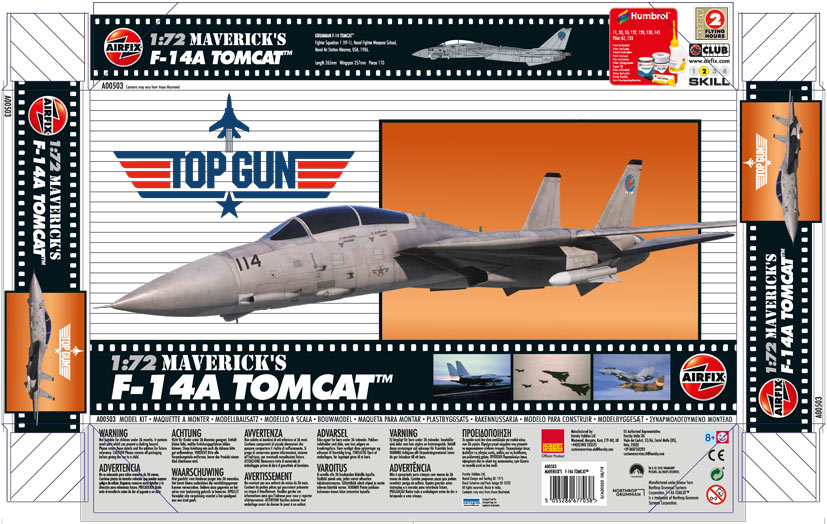
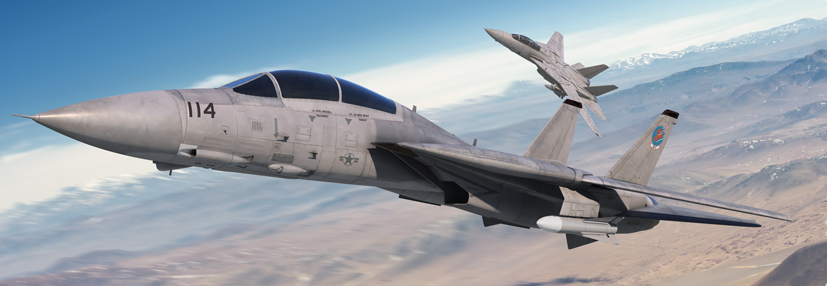
Easily the most famous aircraft from the original Top Gun film, this kit is a representation of the F-14A Tomcat that LT Pete “Maverick” Mitchell and LTJG Nick “Goose” Bradshaw operated throughout much of the film. Initially flying in combat sorties aboard the USS Enterprise, Maverick, Goose and their aircraft are transferred to TOPGUN, the US Navy Fighter Weapons School. Their posting to Topgun was initially by default, but their maverick reputation would make them the central characters in this high octane story. Serving as the pair’s mount during the initial stages of the school’s highly competitive training, both the aircraft and Goose are sadly lost after Maverick pulls one reckless manoeuvre too many in pursuit of graduating top of the class.
A kit which possesses significant Airfix heritage, the Grumman F-14A Tomcat kit was first release back in 1975 and anyone modelling at that time will remember this as an exciting development in model tooling technology. In addition to beautifully recreating the sleek lines of this awesome fighting aeroplane, the kit itself featured a geared wing sweep design which allowed your model to be posed in fully swept forward, high speed flight configuration or any position in between – absolutely mind-blowing for the young and impressionable modeller. Add to this the stunning box artwork and decals for a VF-1 ‘Wolfpack’ machine and its not hard to see why Airfix had a real modelling winner on their hands with the Tomcat.
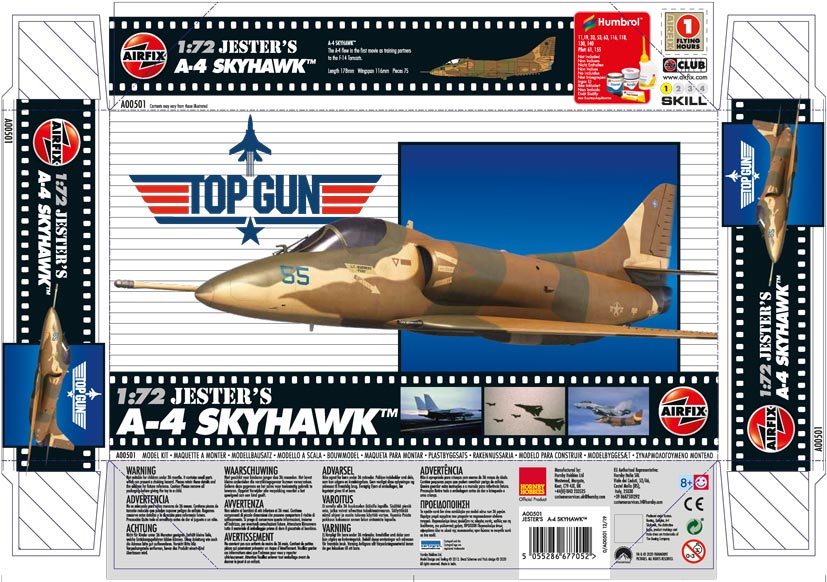
Serving as an adversarial trainer at TOPGUN in both film and reality, the A-4 Skyhawk acted as a surrogate for the MiG-17 that could readily test pilots in combat training. Flown most visibly by LCDR Richard “Jester” Heatherly (Michael Ironside), an instructor at the school, the A-4 Skyhawk is the target that Maverick is relentlessly trying to catch in the training engagement that ultimately costs the life of his friend Goose.
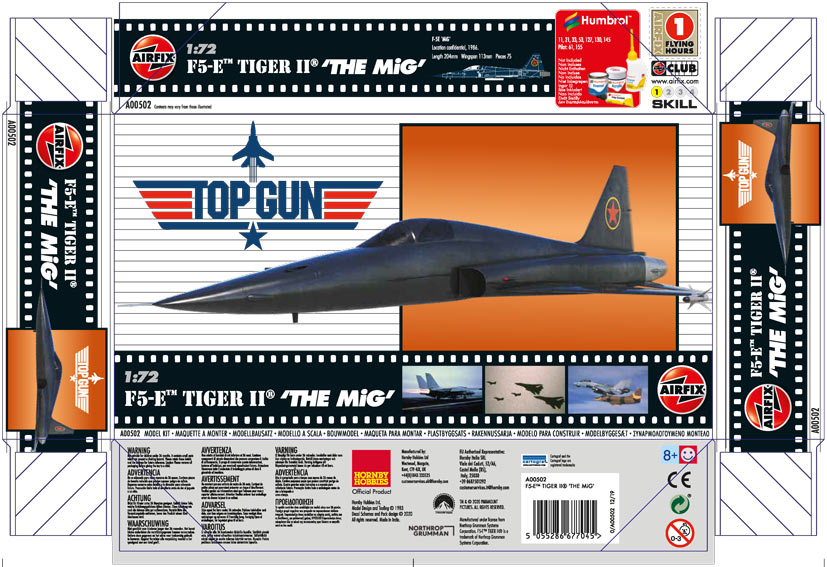
An interesting quirk of producing a military combat adventure film during the latter stages of the Cold War – if you’re wanting to have an aircraft to represent a hostile power and you obviously have no access to actual MiG-28s, then a substitute is required. As in reality though, the US Navy used older yet still capable aircraft as aggressors in training, and for the purposes of the film repainted F5-E Tiger II’s were chosen by the filmmakers to represent the actual enemy combatants in the aerial combat sequences – with perhaps the most memorable example of their use coming thanks to Maverick and Goose’s inverted ‘greeting’ to one of those opposing pilots at the conclusion of the first engagement in the movie.
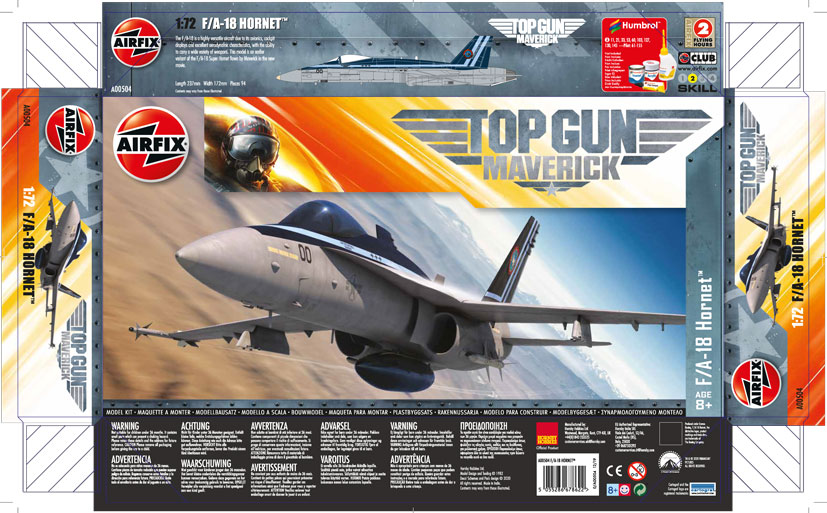
Moving onto the new film, this particular kit release is a representation of the F-18 Hornet which will be flown by the now promoted Captain Pete “Maverick” Mitchell in his role as an instructor at TOPGUN. With this latest release of a classic kit benefitting from decals which replicate the striking aggressor colours featured on Maverick's Hornet in the forthcoming movie, the film aircraft will be pitted against a new intake of pilots at the flight school, which includes Bradley “Rooster” Bradshaw (Miles Teller), the son of Maverick’s deceased best friend Goose.
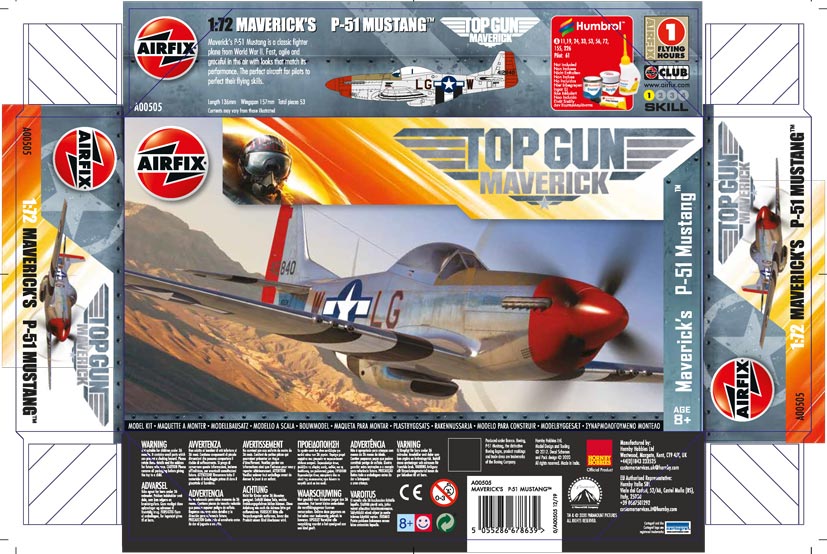
Maverick will also pilot this beautifully restored P51D Mustang in the new film - it seems that even when not piloting fast combat jets he can’t stay out of the sky, and so flies this magnificent aircraft in his downtime. A fascinating twist to this story is that the actual aircraft used onscreen in Top Gun: Maverick is owned by one of the film's leading actors. This ultimate 'Boy’s Toy' has been modified to allow a passenger to be carried in the rear of the cockpit and when it is not starring in the latest blockbuster movie, it has to be the coolest way in which to spend your free time - the Mustang is undoubtedly an American aviation classic and will allow its owner significant bragging rights.
Top Gun: Maverick is currently scheduled for release in cinemas in December 2020. The five Airfix kits which make up our Top Gun modelling tribute are currently set for release shortly before the film’s much anticipated release.
We would like to thank David for his ‘starring role’ in this opening feature of our latest blog and for updating us on a film project which many Workbench readers will be looking forward to watching over the Christmas holiday period.
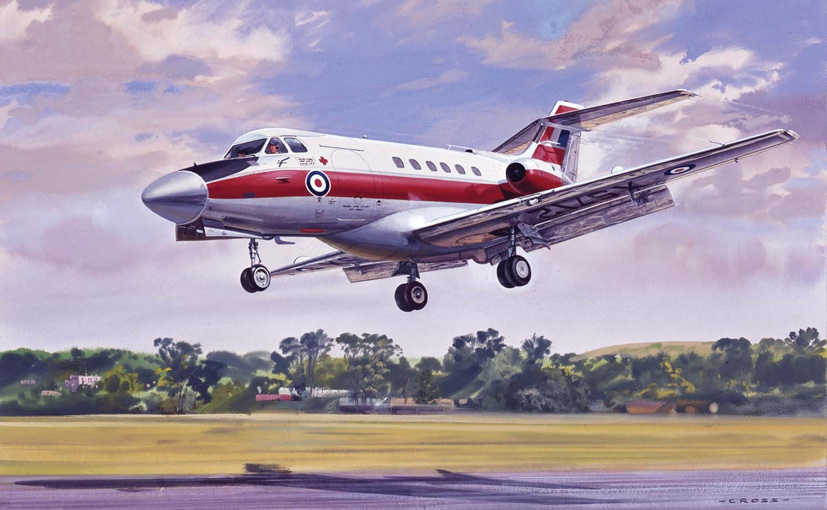
The magnificent artwork created by Roy Cross is probably one of the main reasons behind millions of young people taking up the modelling hobby during their formative years. As Airfix is just as much about nostalgia as it is about cutting edge kit production, the sight of these iconic images can still have us rushing to add one of these classic kits to our current build schedules
Over the previous few editions of Workbench, our popular Vintage Classics series of kits has been receiving plenty of attention, not simply by focusing on impending model releases in this range, but also featuring some magnificent reader supplied model builds which used classic Airfix kits as their inspiration. In this latest edition, we are delighted to be able to continue this trend by looking at a kit which has now been released for production and will therefore be gracing our workstations in just a few short week’s time, the Hawker Siddeley Dominie T.1 trainer.
A particularly attractive looking aircraft which can trace its lineage back to the De Havilland DH 125 ‘Jet Dragon’, this aircraft occupies quite a unique position in British aviation history, not only as it was one of the first generation of jet powered executive aircraft to take to the skies, but it was also one which had links to no fewer than five different manufacturers. Initially designed by De Havilland as a replacement for their successful Dove short haul airliner and business aircraft at their famous Hatfield site, due to company mergers and acquisitions, the HS 125 series of jets would also have links with Hawker Siddeley, British Aerospace, Raytheon and Hawker Beechcraft. During an impressive 50 year production run, more than 1700 of these attractive little jets were manufactured, some of which would go on to have a military career with the Royal Air Force.
The first of the RAF’s Dominie trainers (XS709, which is now preserved at the RAF Museum Cosford) made its maiden flight from Hawker Siddeley factory airfield at Hawarden in December 1964. As the military derivative of the popular business jet, the aircraft benefitted from a modified airframe and was powered by two Armstrong Siddeley/Bristol Siddeley/Rolls Royce Viper turbojets, which produced enough power for the aircraft’s intended RAF role. The Dominie would be required to train the RAF’s future navigators destined for squadron service with the V-bomber force, with the aircraft operating with a crew of six – pilot captain and five others in a varying combination of students and instructors. The student’s work stations were initially positioned side by side in a rearwards facing location at the back of the cabin, which effectively simulated the operational environment they would face when eventually posted to a V-bomber squadron.
Arriving at No.1 Air Navigation School at RAF Stradishall in Suffolk from August 1965, the RAF’s new Dominie T.1s took over the Air Navigation training role from Gloster Meteor NF(T)14 jets and would go on to enjoy a long and successful Royal Air Force career. Undergoing a long overdue technology upgrade in 1992, the Dominie T.1s would continue to train RAF Weapons Systems Officers and Weapons Systems Operators until the 2010 Government Strategic Defence and Security Review announced the cancellation of the Nimrod programme and a reduction in the RAF’s Tornado GR.4 fleet. With the resultant reduction in training requirements, the intended out of service date of the remaining Dominie T.1 fleet was brought forward.
On 20th January 2011, RAF Cranwell witnessed the final operational flight of an aircraft which had been in service for almost 46 years, a business jet which had become an RAF stalwart. Performing an impeccable ‘six ship’ formation flypast over this famous airfield, it is interesting to note that the unused spares ship on this emotional occasion was XS709, the first Dominie T.1 to fly back in December 1964 and the aircraft which is now on outside display at the RAF Museum Cosford.
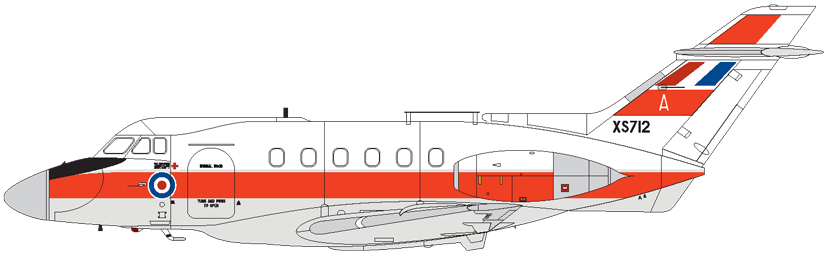
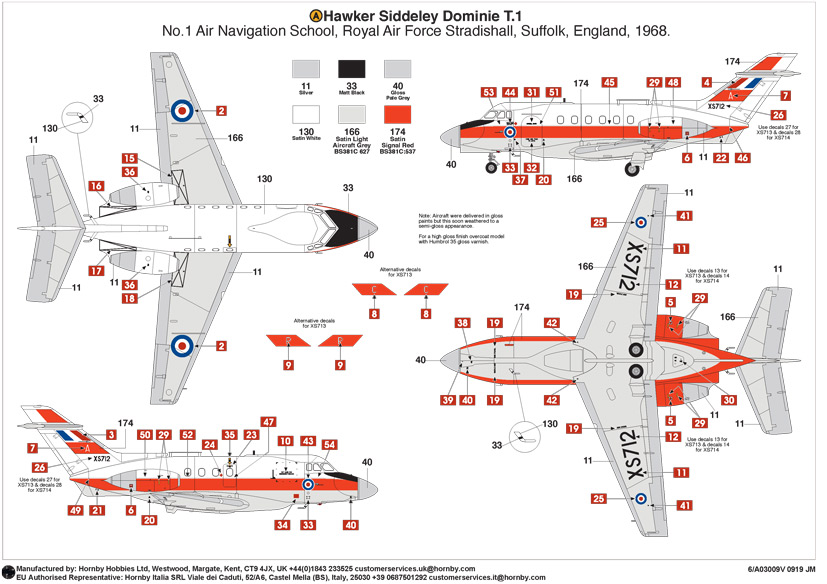
Hawker Siddeley Dominie T.1 XS712 was one of the first 20 Series 2 aircraft built specifically for the Royal Air Force as a navigation instruction trainer. One of the original aircraft delivered to RAF Stradishall between August 1965 and July 1966, it was destined to take over training duties from the station’s Gloster Meteors, which had been providing high speed navigation training until that date. Initially, students would undertake low and slow training in the station’s Vickers Varsity aircraft, with the new Dominies providing high and fast training support, half of which would be carried out at night.
When this aircraft first arrived at Stradishall, it would have been delivered in a natural metal scheme, with red dayglow training bands on its nose and tail. This early scheme would have been quickly replaced by the classic red, white, silver and grey scheme which was synonymous with the RAF training aircraft of this period and the scheme immortalised by Roy Cross in the iconic artwork which featured on the box of this popular release.
Dominie T.1 XS712 would go on to serve with No.6 Flying Training School at RAF Finningley between 1970 and 1995, before spending the final 16 years of its service life at RAF Cranwell with No.3 FTS and No.55(R) Squadron. During its service at Cranwell, the classic red and white scheme would have given way to the slightly less iconic, but equally attractive black and white scheme which was applied to all of the RAF’s training aircraft inventory from 1998 onwards.
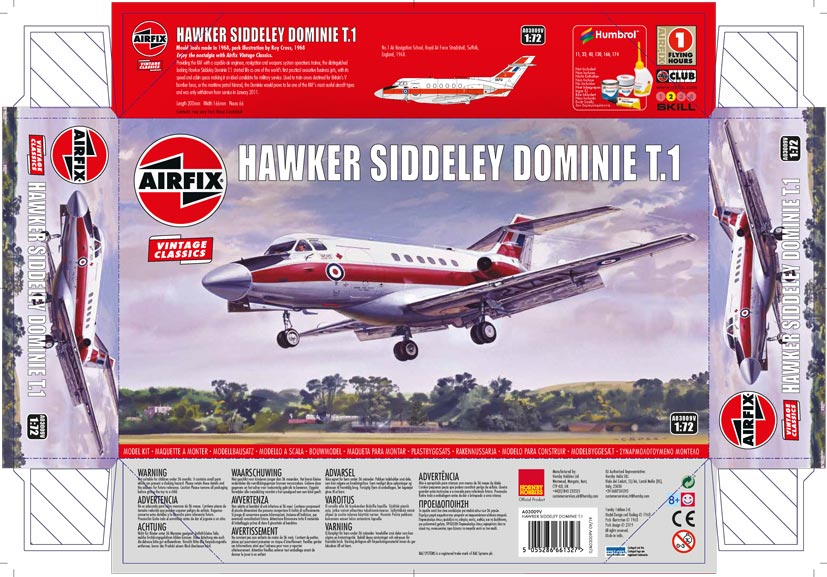
A sight which will not be in model shops for long – this latest RAF Dominie T.1 box will be flying off shelves as fast as retailers can put them on there. It’s time to make sure you have your example on order before it’s too late
The final graduation of RAF Dominie T.1 trained students took place on 19th January 2011 and with it, signalled the end of this handsome and extremely hard working aircraft in Royal Air Force service. The following day, six Dominies from No.55(R) Squadron took part in the final operational sortie of the type in RAF service, as six aircraft performed an impeccable formation flypast over their home station – XS712 was one of the aircraft to take part in this historic event. The aircraft would later be sold with five others to a civilian owner at Kemble airfield, re-registered N19CQ and placed into storage. It would eventually end its days as an active ground handling training aircraft with the BAE Systems R.J Mitchell Aircraft Maintenance Academy at Humberside Airport, arriving there in 2015.
This attractive Hawker Siddeley Dominie T.1 kit (A03009V) will be a popular addition to the growing Vintage Classics range when it arrives in model stores over the next few weeks, as it marks an aircraft type which rarely gains the attention it deserves, particularly when considering its impressive length of service. As one of the most attractive post war RAF jets, the sheer sight of the classic Roy Cross box artwork is the only inspiration many of us will need to have us adding this beautiful kit to our summer build schedules, allowing us to indulge in a little Airfix and Royal Air Force nostalgia.
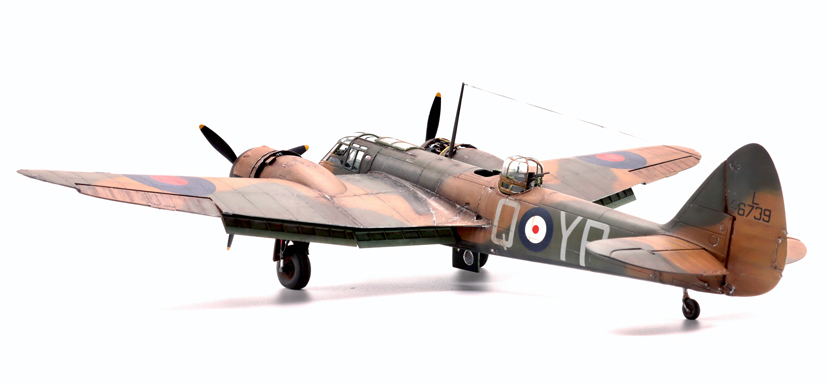
South African modeller Nico Fang kindly sent us pictures of his recent Bristol Blenheim kit build and the story behind its place on his workbench
As we end this latest edition of our blog by featuring another stunning build contribution from one of our exceptionally talented readers, you may think that the title we have used to headline this section is a little spurious – why would we describe one of our relatively new model toolings as an ugly duckling? Well, these were the words used by Workbench reader Nico Fang and all will become apparent when you read on.
As blog producers, we are privileged to be in the position to bring our readers news and updates from the very latest Airfix projects, following them from initial announcement right through to product release, taking in every step of the development process along the way. As such, even though were are simply reporting on the achievements and honest endeavours of our talented Airfix team, we are completely emmersed in this fascinating world and just as attached to the projects we are reporting on. For these reasons, when the new Airfix kit projects are finally released to the modelling world, it is both fascinating and quite moving to see the fantastic model build images which quickly begin to circulate on the Customer Images section of the Airfix website and across wider social media channels.
A recent social media post is how we were fortunate enough to make the acquaintance of Nico Fang, a modeller based in Johannesburg and his latest build project, the first release from our 1/48th scale Bristol Blenheim tooling. Nico was kind enough to send us a selection of build images to include with this feature and also provided us with a little written insight into his Blenheim build – over to Nico.
When speaking about my Blenheim build, if I am being honest, I initially didn’t have any inclination to build such a subject and I would even go so far as to say that I found the aircraft to be quite an ‘ugly duckling’ of a flying craft. I do not know if it was the hypnotic effect of the box artwork framed by the familiar red Airfix edging, but I ultimately found myself at the local hobby shop with kit in hand and returning home with a brand new 1/48th scale Bristol Blenheim Mk.IF kit under my arm.
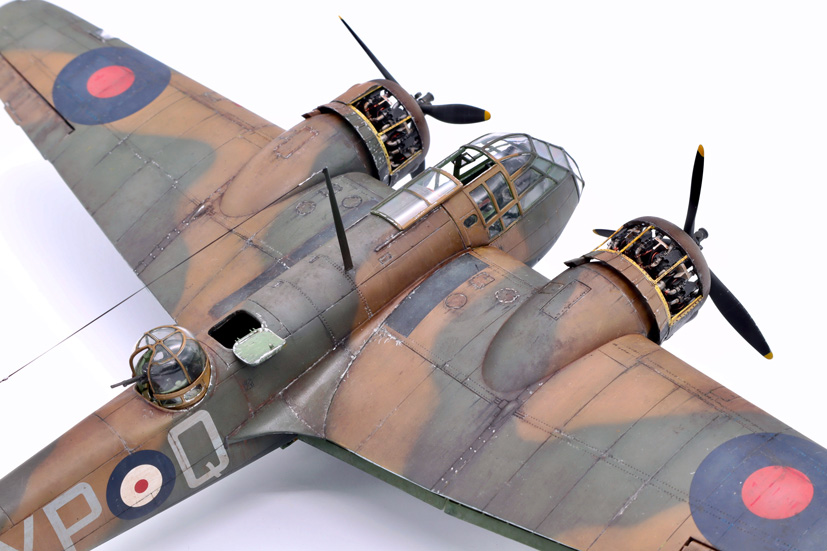
This fantastic selection of images were sent to us by Nico and not only show the quality of his Blenheim build, but also the exceptional weathering finish he managed to apply to the kit. A beautifully realistic representation of a wartime aircraft, these images raise the age old modelling question, ‘Do you prefer to finish your model builds as pristine or weathered representations of the subject kit?’
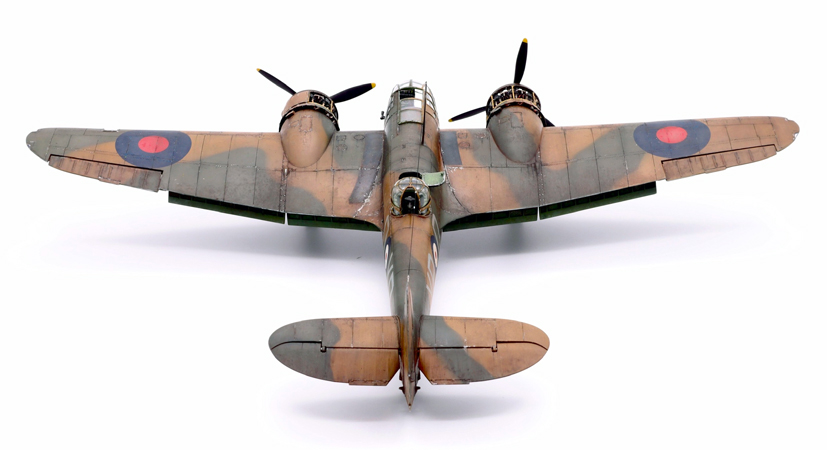
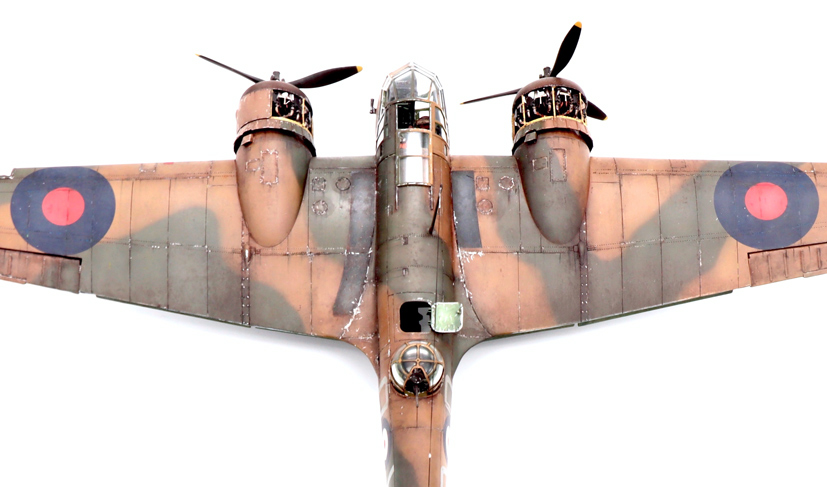
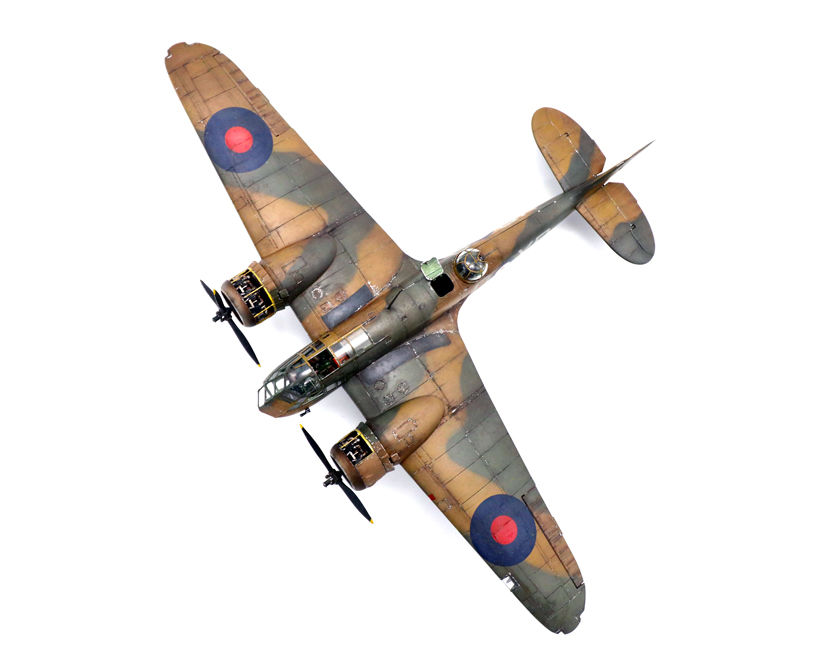
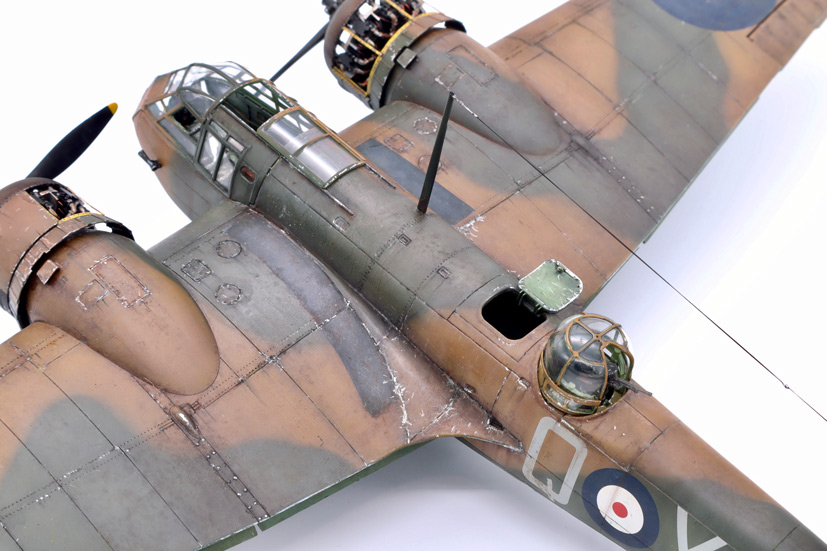
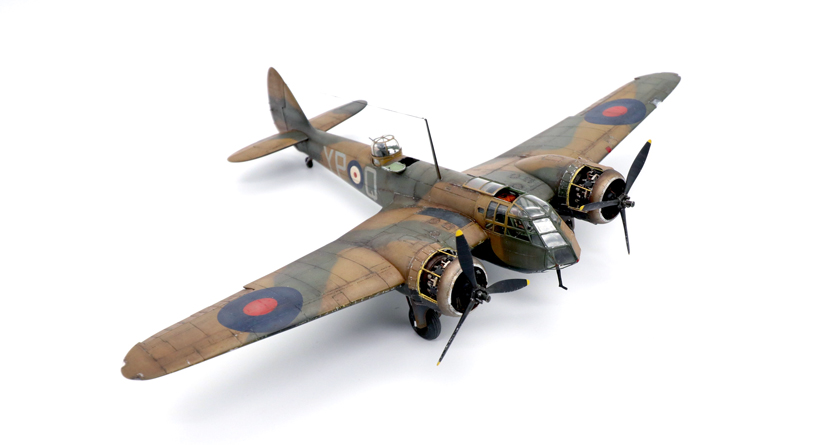
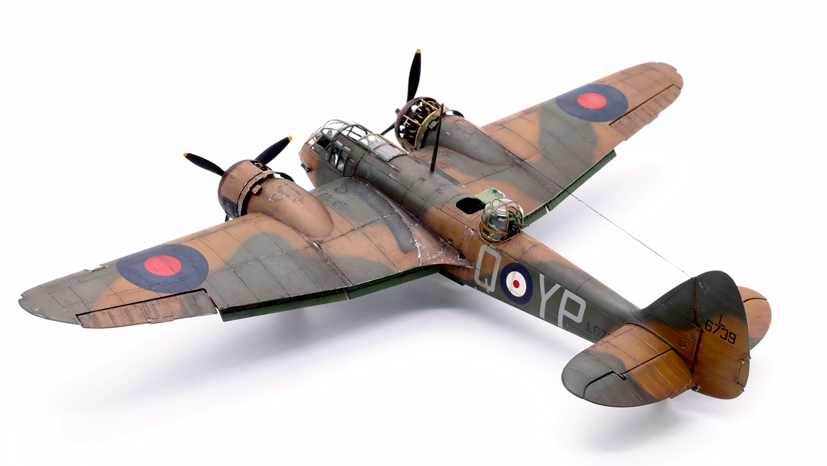
With regard to the build itself, it was straight onto the workbench with this one. Something about Airfix kits for me is the no fuss nature of the kits - one could literally crack open the box and start with care-free, enjoyable building almost immediately on getting it home. This kit was no different in that regard and working through the construction steps was an absolute breeze and joy, especially because this was such a different and interesting subject to what I would usually build. Mid-way through the build process, I had the opportunity to visit the UK and was fortunate enough to see the Blenheim in the flesh at the Imperial War Museum Duxford. This visit sparked a profound appreciation not only of the aircraft but also for all the folks who worked on and operated the Blenheim past and present. This is what definitely sparked the idea of building the model with the panels and hatches open, something which eventually evolved into a diorama. This was my attempt to re-tell the story of the Blenheim in RAF service, but as this was also my first attempt at a diorama build, I hope that I managed to do it justice.
With regards to the build, it was straightforward with just the odd bit of component scratch-building. The model was finished using lacquer paints and a mottling technique to achieve the faded look. On to weathering, which has always been a significant part of my model building. This is definitely my favourite part of any build process and I believe it really awakens the subject and affords the model the ability to tell its own story. This is especially true with the RAF early WW2 camouflage, as it is so unique.
One thing I had to learn whilst trying to create a realistic weathered finish, was to dedicate more time to the process – this cannot be rushed. In earlier attempts, weathering was just a case of slapping on a heavy oil or enamel wash to get the build finished, but through years of experience, I have developed a system of building up layers of weathering using an armamentarium of filters, colour modulation, and washes. It certainly takes a lot longer to achieve the finish, but it does afford one the opportunity to review and criticise each layer of weathering before moving to the next. Obviously, the beauty of our hobby is that there is no right or wrong way in which to achieve the desired finish and there are many techniques and ways to achieve a particular effect.
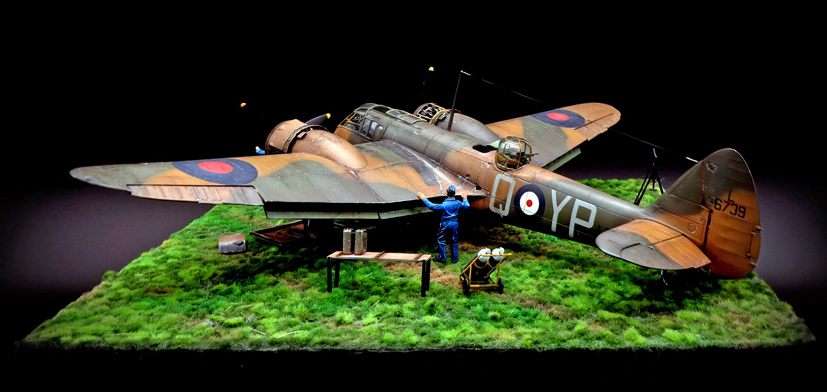
This next series of images illustrate how Nico’s visit to IWM Duxford and the opportunity to see the world’s only airworthy Bristol Blenheim in the metal (so to speak) provided him with the inspiration to finish this build as the centre of an extremely attractive little diorama scene
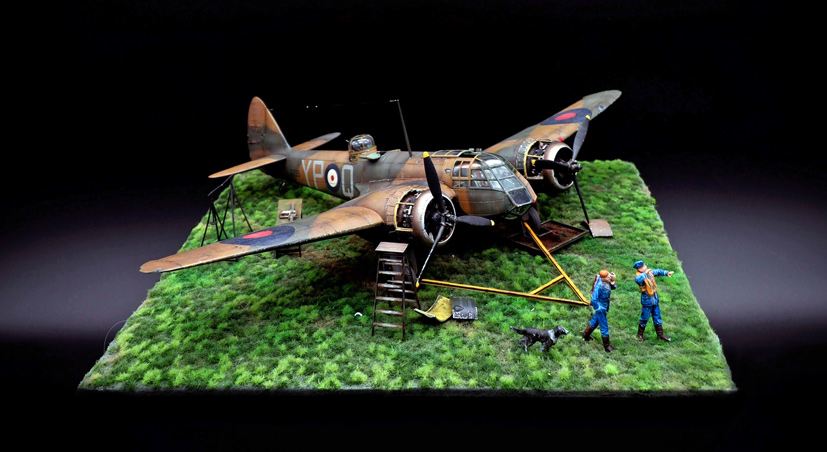
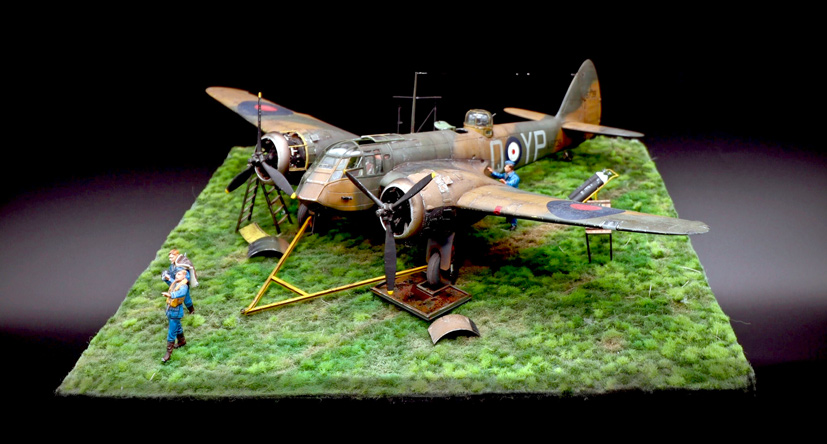
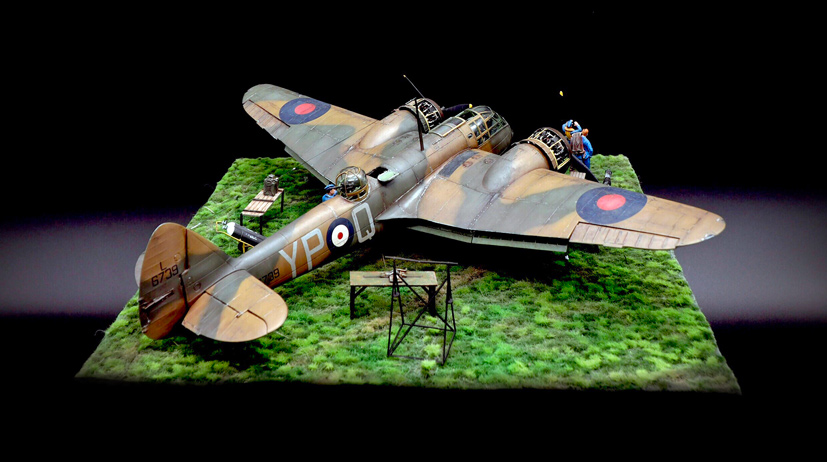
I have been building models since childhood - those days when you could sneak a kit into your mum’s basket when doing family grocery shopping. I only got back into the hobby seriously about 5 years ago and would say that I am still constantly learning with every new build.
I remember my first kit to be the 1989 Airfix boxing of the 1/72nd scale Buccaneer S2B and I remember at the time that I managed to get more tube cement on my hands than on the kit itself – oh for those days of fogged canopies and care-free kit building. With a myriad of kits and manufacturers out there, I don’t think any captures the nostalgia and joy of model building as much as Airfix does. From the moment you open that box, you are greeted with that scent of scale modelling goodness!
So what am I intending to build next? Perhaps a little trip down memory lane with the new Airfix 1/72nd scale Buccaneer might be a good idea.
We would like to thank Nico for sending us his Blenheim build pictures and review article and allowing us to include them in Workbench. Looking at the pictures above, we certainly think that he has managed to perfect his weathering technique – the model looks fantastic. Thanks again Nico and we send a blog shout out to all our readers in South Africa. Please do let us have pictures of your Buccaneer when it is finished.
We are afraid that’s all we have for you in this latest edition of Workbench, however, we will be back as usual in two weeks’ time with a further selection of Airfix modelling delights for your enjoyment. If you have any suggestions for subjects you would like to see covered in a future edition, please use this workbench@airfix.com link to contact us.
In between new editions of our blog, the Airfix conversation continues over on our Airfix Forum Worbench thread, with further discussions taking place on both the official Airfix Facebook page and the Airfix Twitter channel - please do get involved in the discussions and let us know what you think about Workbench.
Whenever you decide to visit, the Airfix website is always the place to be for all the latest model availability information, previous editions of our blog, a selection of modelling tips and much more.
The next edition of Workbench is due to be published on Friday 26th June, when we will have more interesting features from the world of modelling.
On behalf of the entire Workbench team, thank you for your continued support our Airfix blog.
The Airfix Workbench Team
© Hornby Hobbies Ltd. All rights reserved.