

Welcome to this latest edition of our Workbench blog and all the news, updates, and modelling exclusives from the fascinating world of Airfix.
As already mentioned in our previous post, flushed with the success of our latest double blog update posting last weekend, we’re back with another pair of blogs this time, with a similar combination of releases, one a new kit addition to the standard range, with the other being the latest heritage model induction into our Vintage Classics range.
In this second update for the week, we once again delve into the nostalgic modelling world of our Vintage Classics range and an impending addition which allows us all to create our own scale tributes to a truly innovative British aircraft. If you’re looking for a modelling project which features an unusually distinctive aircraft, you could do much worse than spending a little time with our classic Bristol Type 192 Belvedere helicopter, a forerunner of the mighty Chinook and an attempt by the Bristol Aeroplane Company to introduce a powerful tandem rotor helicopter which possessed a host of military and civilian application opportunities.
Of course, as this is a dual blog weekend, please don’t forget to also check out our second posting for the week, because this blog features an impending 1/48th scale model release, one which is destined to become unbelievably popular over the coming weeks and months. Featuring our latest release from our 1/48th scale Messerschmitt Bf 109E-3/E-4 tooling, this kit comes complete with three scheme options, with each one having a fascinating story to tell. How on earth we’re going to choose between them is anybody’s business, but we will attempt to provide some support by describing the details behind each one.
As always, we have classic box artwork to share with you, along with the stories behind the scheme options each kit offers, so please spend a moment or two familiarising yourselves with two of the most engaging new kit releases scheduled to be joining the Airfix range over the coming few weeks.
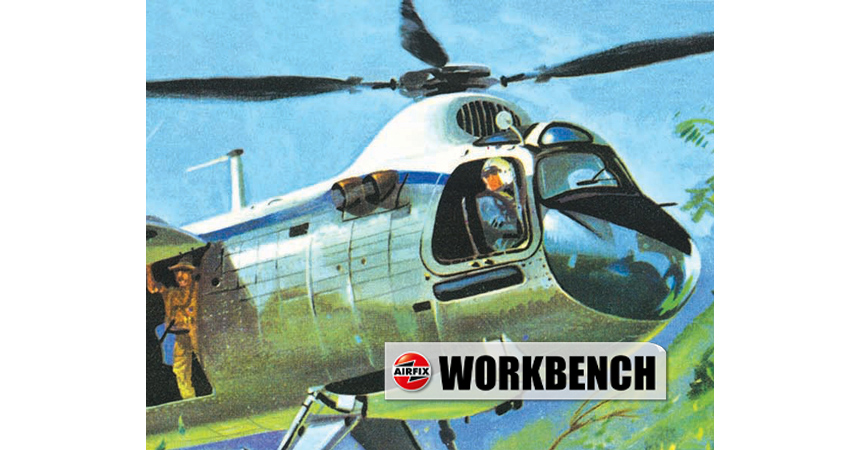
Looking like an aluminium crane fly, the Bristol Belvedere was an unusual, yet technologically advanced tandem rotor helicopter from the late 1950s and the only indigenously produced aircraft of its type to enter RAF service.
Within the history of aviation, it could be argued that the period which followed the end of the Second World War proved to be the era of the helicopter, and how the promise shown by rotary technology was finally perfected by some real aviation innovators, allowing the introduction of ever more effective and application capable machines. Although the German’s advanced helicopter technology significantly during WWII, it’s generally accepted that work carried out in the US, France and Britain in the years which followed, propelled the potential possessed by rotary air power to a new and exciting level, at the same time providing an indication of the many roles these aircraft could potentially undertake.
The British helicopter industry could claim some significant innovators of their own and building on the wealth of experience and technical data gleaned during the production of their Type 171 Sycamore, the first British helicopter to be granted a certificate of airworthiness, the designers at the Bristol Aeroplane Company set their sights on something altogether more ambitious. Their Type 192 was a technologically advanced, twin engined, twin rotor medium lift helicopter and if they could turn their vision into a reality, surely such an aircraft would attract significant worldwide sales appeal.
Like nothing else the world had seen at the time, they hoped that a capable helicopter of this size held the potential to undertake a variety of roles no other aircraft was capable of doing, both civilian and military and as such, could provide the company with a significant commercial success in the process. If progressing to a service aircraft, ongoing improvement and spin-off development could provide the company with production opportunities for many years to come.
At a time when the production of safe, capable and reliable helicopters was still in its relative infancy the Bristol Aeroplane Company had their successful Sycamore rescue and anti-submarine warfare helicopter behind them and would incorporate many of its design elements into their new, much more ambitious project. The Bristol Type 173 (forerunner of the Belvedere) was an innovative twin engined, tandem rotor helicopter designed as a medium civil transport helicopter, but one which could easily be adapted to take on military applications.
A powerful performer, the Bristol 192 Belvedere was a proud achievement for Britain’s aviation industry and the first tandem rotor helicopter to enter RAF service.
Powered by a pair of Alvis Leonides Major 14 cylinder radial piston engines, which generated 550hp, the aircraft was rather a noisy machine in operation and with much of the technology employed being of a highly advanced, even groundbreaking nature, development and testing of the new aircraft asked many questions of the design team. The aircraft incorporated safety redundancy within its design, with the two rotors being connected to a common driveshaft meaning that if an engine should fail, both rotors would keep turning from the power of single engine should the need arise – this was a big helicopter, but with safety built in.
Unfortunately, it was discovered during the testing phase of the new aircraft that the three bladed wooden rotors used created some worrying ground resonance issues which required further investigation and development to overcome, something which did delay the program somewhat. The aircraft made its first hovering flight on 3rd January 1952, with the first flight where transition to forward flight was achieved taking place in the summer of the same year.
During 1953, the helicopter embarked on a series of evaluation trials with both the Royal Air Force and the Royal Navy, and as these trials progressed, Britain’s civilian aviation carrier British European Airways also started to express an interest. With each operator having slightly differing requirements, the project was showing enough promise for the Ministry of Supply to place an order for three further evaluation machines to be produced, all of which were to feature the latest modifications and improvements developed by the Bristol design team.
Three different designs were proposed – the Type 191 to meet the Royal Navy requirement, the Type 192 for the Royal Air Force and the Type 193 intended for the Canadian Navy. At that time, everything was looking incredibly positive for Bristol’s new helicopter, particularly when a significant order for 94 helicopters was received from the three interested parties. Unfortunately, both the Royal Navy and the Canadians would later cancel their orders, leaving just the Royal Air Force to take 26 Type 192 helicopters which would be given the service name Belvedere.
The power of the Belvedere came into its own during its service in the Far East during the 1960s.
Although the Belvedere incorporated many of the design features inherited from the variant intended for the Navy, the aircraft seamlessly made the transition to military transport aircraft for the Royal Air Force. Capable of carrying troops, cargo and delivering underslung loads, the Belvedere helped to showcase the operational flexibility offered by an effective medium/heavy lift helicopter, essentially paving the way for the future dominance of the Boeing Chinook, an aircraft which is arguably one of the most effective and adaptable military aircraft currently in service.
Production Belvederes were highly advanced aircraft, incorporating the reassurance of twin engine safety and redundancy, with crews knowing that the power output from a single engine could be increased should the other engine fail, keeping both rotors turning and allowing the aircraft to get away from trouble and land safely. Production aircraft utilised more powerful and much quieter Napier Gazelle gas turbine engines, with new four bladed metal rotors incorporating a gearing system which synchronised their operation to prevent the possibility of blade collision.
A proposed civilian variant of the Belvedere was later flown in a high profile public demonstration of the aircraft’s incredible potential, in the full gaze of the nation’s media. Making the flight from London to Paris in May 1961, the attempt resulted in the team setting a new world speed record over this distance, a mark which they managed to beat on the return flight the following day. Despite bringing the capability and performance of this magnificent aircraft to the attention of the modern world, this record breaking flight didn’t result in any further orders and the Belvedere would remain one of the world’s most capable helicopters only to be produced in relatively small numbers.
Only three complete examples of this distinctive and innovative helicopter remain in existence and on public display and if you’re ever lucky enough to see one, you can’t fail but be impressed by the size and stature of these incredible machines, particularly the two which are presented in the camouflage finish of the Royal Air Force.
Aviation artwork heritage which shows an RAF Belvedere delivering its complement of troops into a jungle clearing during the Borneo ‘Confrontation’.
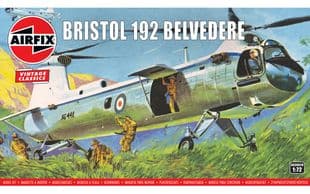
As we welcome this fascinating aircraft and its scale kit representation into the Vintage Classics range, we are marking the release of a kit which occupies a significant position within the wider heritage of the Airfix brand. When this kit was tooled back in 1959, the Belvedere was the pride of Britain’s aviation industry and at that time, it seemed as if this incredible aircraft unquestionably had the world beneath its rotors. With the technology incorporated into the design of the Belvedere unlocking the incredible potential possessed by this impressive machine, it must have seemed as if this twin rotor helicopter would be adopted right across the world, with hundreds of aircraft wearing the markings of a great many air arms and civilian operators from across the globe.
From an Airfix company perspective, even though the Belvedere had only made its first flight the previous year and the aircraft had not yet entered RAF service, the decision to invest in this new tooling project would surely prove to be a prudent one, as the Belvedere was the aircraft the nation was talking about and as they gained admirers across the military and civilian aviation world, this would prove to be one of their most popular model releases as a consequence.
The original release artwork produced in support of this kit made the Belvedere look something like a huge metal crane fly, but with the aircraft appearing in news articles and aviation related magazines, in addition to being a star attraction at the world famous Farnborough Airshow, would have undoubtedly been the model everyone wanted build. The distinctive artwork we have replicated for its Vintage Classics introduction was created by Ken McDonough in 1966 and was a later, much more cultured representation of the Belvedere from an aesthetic perspective.
The kit includes decal options to produce one of two different Belvedere HC.1 helicopters, both of which were operated in a development and trials role during the twelve months from late 1959. Interestingly, both options allow the modeller to choose which configuration of Belvedere tail they prefer most, as each of these options feature either the original, or later design of Belvedere tail.
Let’s take a closer look at both of those options now.
Built in 1959 as the second development airframe, this aircraft was delivered to the Royal Air Force as a Belvedere HC.1 on 20th November 1959 and allocated the serial number XG448. Prior to the wider service entry of this impressive new helicopter type, this aircraft was subjected to detailed evaluation by the Aircraft and Armament Experimental Establishment, a unit which tested and assessed every aspect of a new aircraft’s performance and handling prior to it gaining service acceptance.
The unit could call upon the services of some of the most brilliant minds in the world of aviation and aeronautics, along with a core of pilots and test pilots who were regarded as representing the very pinnacle of their profession. The unit would assess the capabilities of new aircraft and test them vigorously under operational conditions – they would also be the first unit to fly aircraft after they had been configured with additional equipment such as external fuel tanks and in-flight refuelling probes, and in the case of the Belvedere, the safe carrying of various underslung loads.
As the Belvedere finally entered RAF service in 1961, the majority of these aircraft were presented in this rather smart RAF Transport Command style livery and many of the publicity pictures issued at the time show Belvederes wearing this scheme going through their paces, often seen with either a Land Rover, various underslung loads, or even the components of a bridge suspended from their bellies. The aircraft represented a significant capability upgrade for the Royal Air Force and another high profile achievement for Britain’s aviation industry.
As we have done previously, because of the layout of these helicopter artwork scheme files, we’re showing both schemes side by side for both scheme overviews – in this case, they are both rather similar, even though they feature different tail configurations.
A built model image of a kit finished in this scheme and tail configuration.
After its time serving with the A&AEE, this particular aircraft joined RAF No.66 Squadron at Seletar, Singapore during 1966. The Belvedere would have a relatively short service life for a number of reasons, mainly linked to the technologically advanced nature of this first tandem rotor helicopter to see RAF service. Those people who served in Belvedere Squadrons were generally complimentary about the aircraft’s abilities and performance, although others were known to have less supportive opinions about the helicopter, with some even describing how they wouldn’t even stand underneath one, let along fly in one.
When No.66 Squadron disbanded in March 1969, Belvedere XG448 wasn’t immediately struck off charge, but was held back until she could be donated to the Singaporean military to serve as an instructional airframe. She performed this role until the late 1970s, after which time it was thought to have been abandoned and left to the ravages of time. More recently, parts from this aircraft were salvaged and used during the restoration of another Belvedere, XG452 at the Helicopter Museum, Weston-super-Mare.
The Belvedere Trials Unit was formed in early July 1960 at RAF Odiham, with the task of introducing the Bristol Belvedere helicopter into military service, but using pre-production examples of the aircraft in doing so. The unit proved to be rather short lived in undertaking this role, as it was disbanded on 15th September 1961, with its aircraft used as the nucleus of the reforming No.66 Squadron, the first RAF Squadron to operate the Belvedere HC.1 production standard aircraft. These helicopters incorporated many of the changes and modification identified by the Trials Unit, underlining the valuable contribution its crews made during their short time in the role.
Three RAF Squadrons would operate the Belvedere, all of which formed up at RAF Odiham, with No.66 Squadron being the first in September 1961. The second unit was No.72 Squadron, reforming in November that same year and remaining at Odiham with their Belvederes until exchanging their twin rotor helicopters for the Wessex HC.2 in August 1964. The final Belvedere unit was No.26 Squadron, which reformed at Odiham in June 1962, relocating to Khormaksar, Aden in 1963. They would disband in Aden at the end of November 1965, leaving No.66 Squadron as the first and last of the RAF’s Bristol Belvedere Squadrons.
Since June 1962, No.66 Squadron had been operating their helicopters from Seletar in Singapore, but during the ‘Borneo Confrontation’, their aircraft were detached in support of military operations against highly mobile and rather elusive guerrilla force opposition. Operating from several bases across the region during this deployment, the helicopters were often flying over and into inhospitable jungle terrain, with the load carrying capability of the Belvedere not only proving vital, but also pointing to the very future of warfare and the need for an effective helicopter force.
The RAF’s helicopter force was heavily committed during the ‘confrontation’ in Indonesia during the 1960s, with the Whirlwinds of Nos.103,110 and 225 Squadrons serving alongside the Belvederes of No.66 Squadron. These aircraft were vital in supporting British and Commonwealth troops in ensuring rebel guerrilla forces didn’t gain a foothold in the region, and with few roads in the area and quick action often needed to prevent situations from deteriorating, the load carrying capability of the Belvedere proved invaluable, whether that be depositing troops, or providing supplies and ammunition to forces fighting in advanced positions.
Another look at those dual scheme artwork details.
A beautiful, yet unusual looking aircraft, the Belvedere would only have a short service life with the Royal Air Force.
Able to carry at least 18 fully equipped troops, No.66 Squadron Belvederes often carried members of the SAS on their secretive, yet vital missions deep into the jungle, or ferrying the fearsome Gurkhas with their legendary jungle fighting prowess to the latest combat hotspot. When operating in Borneo, the local people referred to the Belvedere as the ‘Flying Longhouse’, but this period was also thought to have given rise to the term ‘Junglie’, particularly when the RAF’s camouflaged Belvederes were working in conjunction with the SAS.
This particular aircraft was the second of three pre-production Belvederes built at Weston-super-Mare for the RAF Belvedere Trials Unit at RAF Odiham, first flown on 18th June 1960 and delivered to the unit on 14th October 1960. Only three weeks after her arrival, she would suffer a double engine failure at a height of 200ft whilst lifting a Land Rover and its trailer using its external hook. Immediately jettisoning the load, the helicopter autorotated onto the grass airfield and the front wheels penetrated the soft ground and sheared, leaving the fuselage to skid ingloriously along the ground. Repairs took four months to complete, but she rejoined the unit and was back in service in March 1961.
On 30th August that same year, she was flown to Farnborough for rehearsals for the Farnborough Air Show, where she was to perform a routine with 25 paratroopers and her 3 man crew. Whilst transitioning from flaring to land, the aircraft caught a crosswind and became difficult to control, striking the ground heavily in a tail first orientation, before collapsing the front undercarriage. The aircraft was subsequently written off and spent the next three years being used as a ground instructional airframe at RAF Netheravon, only to be rescued and moved back to the Weston factory on 15th October 1964 for rebuilding.
Classic artwork with a modern twist, the Vintage Classics range has allowed heritage kits like the Bristol 192 Belvedere to have their day in the modelling spotlight once more.
This work involved the manufacturing of a new rear fuselage and repairs to the centre fuselage and nose, with the aircraft flying again on 23rd February 1967. Although cleared for re-delivery in June 1967 it was retained at the factory to clear minor vibration issues, before once again entering into a period of storage.
On 20th May 1968, XG454 was flown to RAF Abingdon, only to be withdrawn from use five days later. It was displayed at the Queens review of the Royal Air Force on 15th June 1968 and would remain at Abingdon until 13th May 1969, when she was moved to RAF Henlow and a further period of storage, this time having been earmarked as a potential RAF Museum exhibit. The aircraft remained there until 1972 when it was loaned to the Museum of Science & Industry (MOSI) in Manchester and their Air and Space Museum in time for their opening on 30th March 1983. There, she helped to preserve the history of this fascinating helicopter, a fine example of Britain’s first and only indigenously produced tandem rotor helicopter.
In 2016, a change in MOSI policy and subsequent closure of the museum led to the RAF Museum transferring ownership of the aircraft to the Helicopter Museum. XG454 returned to Weston and the Museum on 21st January 2022 where she is now on display alongside her sister Belvedere XG452.
The majority of the above details were inspired by this aircraft’s exhibit page on the excellent Helicopter Museum website.
As the scheme options are quite similar, our modeller just finished a single model, completing it as Belvedere XG448.
The launch of the Vintage Classic range really has allowed us to delve into the modelling heritage possessed by the Airfix brand and in some cases, breathe new life into kit which helped to launch the modelling hobby in this country and immerse ourselves in a nostalgic world when model making was perhaps the most important consideration in our lives. In combination with the memorable artwork which was the inspiration behind the start of many a modelling journey.
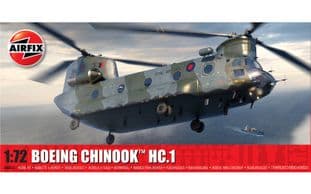
With kits like the Bristol 192 Belvedere, it not only gives us a chance to celebrate the heritage of the Airfix brand, but it also allows us the opportunity to pay our scale respects to a truly historic aircraft type, one which whilst absolutely fascinating, has largely slipped from the memory of most aviation enthusiasts. With our newly tooled Boeing Chinook HC.1 (which incidentally is now back in stock) marking one of the world’s most important aircraft types and the second of the RAF’s twin rotor helicopters to see service, displaying these two models side-by-side will allow us to see the development of medium/heavy lift helicopters over a relatively short 20 year period.
Unfortunately for the Belvedere, one of the two would only see a short 8 year service career, whilst the aircraft which followed it into service has already been in service for 44 years and is still going strong.
An exclusive look at the full box artwork file produced to allow the Belvedere to take its place in the Vintage Classics range.
If you find yourself looking for a helicopter build project worthy of gracing any model display, placing a Belvedere next to a Chinook would certainly be something of a conversation starter and at this current time, both kits are in stock and available.
We are afraid that's all we have for you in this latest edition, but we will be back next Friday with more project development updates and the very latest Airfix kit exclusives. In the meantime, we are always keen to hear your views on all things Airfix and in particular, any thoughts and opinions you may have regarding our Workbench blog. If you would like to drop us a quick line, could we please ask that you use our workbench@airfix.com email for all correspondence.
To re-visit any of the Airfix blogs we have produced over the past seven years or so, please head to our main Workbench hub, where you will find our entire blog back catalogue and all the Airfix design projects we have already covered.
All our dedicated official social media sites can be accessed by clicking the respective link icons at the foot of this page, or by heading to the Airfix homepage. Other useful Airfix links are:
Facebook, YouTube, Twitter and Instagram official sites
Please join us for more Airfix updates next week and thank you for your continued support.