

Welcome to the latest edition of our weekly Workbench blog, and all the news, updates, and modelling exclusives from the fascinating world of Airfix.
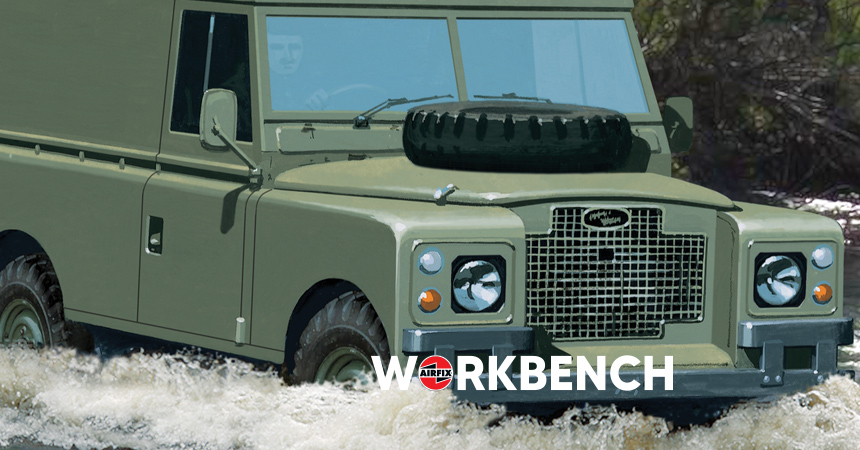
For this week’s edition of Workbench, we will be entering the fascinating world of iconic British military vehicles, as we mark a poignant and rather sad occasion in the history of the British Army. Over the previous few days, the Ministry of Defence have announced the impending retirement of the Land Rover, an incredibly successful series of utility vehicles which have faithfully supported British troops wherever they’ve been deployed since their introduction back in 1949.
In addition to looking at how the Land Rover made the successful transition from rugged, no-nonsense civilian utility vehicle, to dependable military mechanical warhorse in service for seven decades, we will also be looking at the wider subject of how commercial vehicles were successfully adapted for military service, and how these vehicles are definitely the unsung support/transport heroes of any armed force and their associated operations. As you would expect, we will also be taking this opportunity to look at our scale model kit tributes to these vehicles which whilst usually in the shadows of military operations, were actually the life blood of any exercise or military deployment.
We’re racing into British summertime by paying tribute to the incredible military service of a British automotive phenomenon in this latest edition of Workbench.
The idea behind the Land Rover was to build a short-term, rugged and versatile vehicle to serve as the ‘Farmer’s Friend’ until wider motoring production lines could be established. What they actually produced was a motoring classic.
Speaking as a modeller, when considering the subject of modern, mechanized warfare, we usually associate such machines as tanks and tank destroyers with this description, with the largest and most powerful examples of these historically being the ones which capture our attention, and therefore end up on our workbenches as modelling projects. If we were to take the opinion of those who have actually served in the military however, they would probably suggest mobility as key attribute of any battlefield, even suggesting that the most important vehicles supporting that mobility weren’t tracked and probably weren’t even armoured, an interesting case of two rather contradictory positions.
As far as the British Army is concerned, one of their most famous vehicles of the past 70 years or so began its development journey as a low cost, no frills way back into vehicle manufacturing for its parent company, after the end of the Second World War. Indeed, its very production had links to wartime aircraft production, as its use of aluminium was directly linked to the abundance of available supplies due to the nation’s diminishing aircraft production requirements, whilst the colours used to finish the new vehicles were also taken from surplus aircraft production paints.
Angular and purposeful, most people probably wouldn't expect a rugged, hard-working utility vehicle to attract the admiration of the motoring world, however, the Land Rover isn’t like most vehicles and that’s exactly what this range effectively managed to do. Entering production back in 1948, the Land Rover was an attempt by the Rover Company in Britain to re-enter the motoring market during the financial austerity of the post Second World War period, producing an affordable agricultural and light industrial vehicle which possessed a multitude of use applications, similar to how the Jeep proved to be such a revelation during the Second World War, but in a subtly different way.
It’s rugged, no-nonsense credentials meant that the Land Rover quickly came to the attention of the British Military.
The Land Rover was designed with little in the way of driver comfort and unnecessary frills in mind, but was intended to operate effectively in the most demanding of situations, quickly earning a reputation for practicality and reliability. The pick-up version featured an enclosed cab and open rear compartment, which could be used to transport anything from farm machinery to livestock and animal feed over all kinds of terrain. If you had a tough motoring job that needed doing, Land Rover had just the vehicle for you.
From those humble beginnings, Land Rover went on to create something of an automotive phenomenon, although it has to be said that the vehicles which proudly wear that name today are very different to the Series 1 vehicles which first rolled off the production lines. For those originals, luxuries and the latest levels of driver/passenger comfort were definitely way down the list of priorities, they were all about functionality and reliability. Some have even described the first Land Rovers as possessing the sophistication of a petrol powered lawnmower, but then usually qualify the statement by including how it may have been basic, but was also wonderfully capable.
The concept behind the Land Rover was that this was essentially a farmer's friend, a vehicle which would help him go about his business efficiently with an absolute lack of fuss - when he needed it, the Land Rover would always be ready for action. Built around a strong and highly effective ladder type chassis, the aluminium body was light and robust, meaning that the vehicle could be powered by a relatively low power output engine, but one which with the use of a high and low range four wheel drive system, allowed the vehicle to handle almost any terrain.
On open roads, the speedometer may have indicated the ability to attain speeds of 70 mph and above, however, the Land Rover was certainly not built for speed, and anything over 50 mph was an achievement and a rather noisy experience - there certainly wouldn't have been any need for a radio! Unusually, the fuel tank and petrol cap were positioned under the driver's seat on the early models, allowing the driver to have a visual indication of the fuel levels, should the gauge be playing up (which it was prone to doing) and as for the fuel itself, this engine would run on virtually any octane grade of petrol.
The longer wheelbase and larger load carrying area of the station wagon 107 series gave the vehicle incredible versatility and opened up its usage potential to many trades and business applications. In its role as the farmer's friend, the additional space the station wagon offered made it useful when carrying anything from fencing equipment and light machinery, to large amounts of animal feed for outlying livestock at times of poor weather. Most farmers would also tell you that after a sweep out, it also made for the perfect mode of transport for travelling to and from the local pub with a group of fellow farmers, even though the nominated driver on such an occasion had definitely drawn the short straw.
The rugged adaptability of the Land Rover also extended to the doors, which were hinged to open fully back 180 degrees onto the wing panels for accessibility, with the top section being fully removable, should it prove to be one of those rare warm summers here in the UK, a form of natural air conditioning.
In many respects, the Land Rover was designed to fend for itself, with its owners wanting nothing more than to fill it with fuel and get on with their busy day, and in this regard, the Land Rover proved to be exceptional. Described as the finest off-road capable vehicle of its generation, these vehicles may not have been kept in pristine condition, but they were loved for their rugged simplicity nonetheless and relied upon for their functionality. Even if your Land Rover had a prang and sustained a few dents and scratches, a quick lick of paint would have it looking as good as new - well, at least in acceptable farmyard condition.
Establishing a worldwide reputation which endures to this day, many manufacturers have attempted to follow where these vehicles pioneered, but in the world of rugged, functional vehicles, Land Rover reigned supreme.
The Land Rover would become a regular sight in the colours of the British Army.
During the Second World War, some of the most successful utility vehicles used by Allied forces were the Willys Jeep and Chevrolet truck series, both of which were used by British forces in some numbers. Following the cessation of hostilities, the British Government started looking at the prospect of developing a similar, more capable vehicle for widespread military use, handing the project to the Nuffield company under project FV1800. The prototype vehicle ran for the first time in 1945, however, official ‘tinkering’, ever changing specification requirements and development overruns meant that the new vehicle didn’t enter production until the early 1950s.
This vehicle was the ‘Truck, 1/4ton, CT, 4x4, Cargo & FFW, Austin Mk.1’, more commonly referred to as the Austin Champ. It was actually an extremely impressive vehicle, possessing great off-road performance and exceptional water fording capabilities, and offered the British Army one of the most effective vehicles of its kind to be found anywhere in the world.
Unfortunately, the Champ was of rather complex design and was incredibly expensive, both of which proved significant enough to have its use in the British military question whilst still relatively early in its service life.
Alongside the Army’s adoption of the Austin Champ during the early 1950s, they also procured a trial batch of Series 1 Land Rovers to see how they stacked up against their high profile competitor, and the results were something of an eye-opener. Just as impressive in almost every aspect of performance, the Land Rovers were easier to maintain, could do almost everything the Austin Champ could do and were half the price per unit. Arguably, they also possessed much greater development potential in a military role, and it didn’t take long for the Ministry of Supply to cotton on, and switch their allegiance.
Just 4,000 vehicles into what should have been a procurement plan for over 15,000 Austin Champs, the contract was cancelled, and the Land Rover received the call for military service. The rest, as they say, is the stuff of British Armed Forces history.
Looking very different to its predecessors, the Land Rover 101 Forward Control vehicle was designed to pull the British Army’s 105mm Light Field Gun
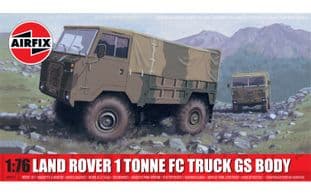
A vehicle which may well have been very different in appearance to the ones which went before it, but was still 100 percent Land Rover in terms of performance and effectiveness, the Forward Control 101 Land Rovers (Truck, General Service, 1 tonne 4x4 Land Rover 101) were a later design to build on the incredible success of the Land Rover in British military service. First announced in the early 1970s, these vehicles were produced specifically for military use, and to meet a British Army requirement for a rugged new vehicle which was capable of towing loads up to 4,000lb.
Designed with power, off road capability and durability as their main attributes, these vehicles were officially rated at 1 tonne of load carrying capability, and were powered by a Rover 3.5 litre V8 engine, utilising a host of feature improvements to further enhance the legendary handling performance of the Land Rovers which were already in service.
Unquestionably, the most significant difference was the repositioning of the crew compartment to one placed over the engine, giving the 101 a distinctly flat fronted appearance, one which was further accentuated by the vehicle’s loft ground clearance, making this very different from any Land Rover that had gone before it.
Built sample models finished in the scheme options included with this hugely appealing kit.
They were initially developed to operate as a ‘Gun Tractor’, one capable of pulling the 105mm Light Howitzer, along with a sizeable amount of ammunition for the weapon, ultimately around 1 tonne of it. The reason for the radical appearance re-design was to enable the vehicle to be transported more effectively by air, with the Forward Control cab making this operation much easier and safer.
In operation, the repositioned cab made driving the 101 quite different to that of its predecessors, much more like driving a high performance truck than a traditional Land Rover. That being said, it did provide the driver with a great deal of confidence in his vehicle, almost as if he was the King of the off-road, and in charge of a vehicle that could literally be driven anywhere, over almost any terrain imaginable.
These capable machines were in production from 1975 until 1978, and whilst this might only have been a relatively modest production run by Land Rover standards, with only 2669 vehicles manufactured, they are still regarded as being incredibly successful vehicles in the role for which they were intended. Indeed, many would go on to find a new role following their service retirement, undergoing conversion to become rugged camper vans for civilians with an adventurous nature, the only vehicle in which to travel if you were that way inclined.
Same format, but with the lead scheme option being featured this time.
Although every one of these particular vehicles left the factory in soft top configuration, many would go on to be re-bodied to fulfil several other military roles, such as ambulances, radio communications vehicles, and the much rarer ‘Vampire’ electronic warfare vehicles.
The various Land Rovers to see British military service went on to create an extraordinary reputation for themselves. Still in service to this day after an incredible 76 years, the program to find its replacement has only just been initiated, and it will be a sad day when these rugged and effective vehicles are all finally demobbed.
Ultimately, the only vehicle capable of replacing a Land Rover is another Land Rover, so it remains to be seen what the British Army come up with next. The heyday of these incredible vehicles in terms of service numbers was unquestionably the Cold War era, however, the Land Rover has created a transport and utility legacy which will surely never be equalled by any other vehicle type, and will live long in the hearts of those who operated and maintained them, during their military service careers.
As mentioned previously, this latest blog is being posted to mark the thought provoking recent retirement drawdown announcement made by the Ministry of Defence over the past few days, one which has finally confirmed the impending retirement of the Land Rover in British military service. In addition to allowing the nation to pay their respects to a vehicle which simply has to be lauded as something of an icon in military service, the announcement also confirmed the program to find the Land Rover’s replacement, vehicles which themselves are expected to be in service by 2030.
The MoD are actually looking to procure three new vehicle types, the first being the Land Rover’s direct replacement in the under 3.5 ton category, with the second being a protected (armoured) LMV under ten tons. The final category is in the heavier protected vehicle class, a crucially important vehicle intended to replace the current Mastiff, Ridgeback and Wolfhound vehicles, those which provide troops with greater protection whilst on patrol. All the new vehicles will be of advanced design, incorporating technologies perfected over years of troops being deployed in combat situations, but able to deal with the wide threat envelope faced in a modern world.
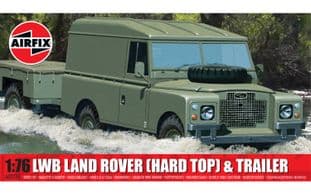
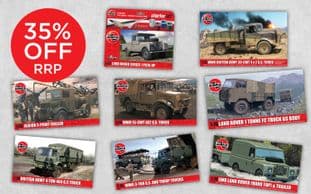
From an Airfix kit perspective, the Land Rover has long played a major role in various model ranges over the years, with several examples still currently available. The majority of current Land Rover kits are available in 1:76 scale, perfect projects for standalone builds, or as part of wider battlefield/airfield diorama projects. We also have the larger Series 1 Pick-up in our Starter Set range, a superb little kit which allows modellers of all ages and abilities to be introduced to an early version of this iconic vehicle.
When it comes to legacy Land Rover releases and kits which always found favour with the hobby, British Army ‘Operation Herrick’ subjects stand as some of the most popular Land Rover related kits we’ve ever produced and would surely be welcomed back with open arms if announced as a current range addition. These kit releases included the British Land Rover Patrol Gift Set release, our WMIK Land Rover and Snatch Land Rover pairing, and our British Forces Patrol and Support Group kit, which features a Westland Lynx, and are all kits produced in 1:48 scale.
Although the Land Rover will be sorely missed following its retirement, it undoubtedly managed to carve out an unmatched reputation for itself in British military service, meaning that its current descendants surely have a say in what vehicles will go on to replace them. With this news placing everyone on alert, we suspect a great many of these vehicles will soon find their way into civilian hands, where the affection in which they’ve always been held will see many becoming the subject of painstaking restoration projects in the years to come.
All that being said, surely the iconic Land Rover in British military service hasn’t had its day just yet!
Desperate times require desperate measures. During the Second World War, Britain’s commercial vehicle manufacturers were required to adapt existing designs for service in all theatres with the British Army.
In post war Britain, with the dark clouds of war now looming ominously, the British Government were acutely aware that their existing inventory of fire engines, casualty evacuation vehicles and general service trucks was sadly lacking and immediately set about a significant programme of expansion. Officially ‘encouraging’ many of the motor manufacturing companies of the day to return to the production of lorries in support of this programme, they were in desperate need of as many rugged and reliable, no frills commercial vehicles as they could get their hands on, proven existing designs with a reputation for effectiveness.
Using chassis designs which had already been in production and making only modest (if any) changes to cabin arrangements, the vehicles easily made the transition to military service and would therefore go on to become hard working general supply trucks with a multitude of uses, fire appliances and ambulances for use both on the home front and increasingly, on battlefields across Europe and the Mediterranean. The mechanical workhorses of commerce were about to provide the same supply service for war.
Despite the feverish production of transport vehicles right up until the start of the Second World War and through to the end of the so called Phoney War, it's generally accepted that Britain was still significantly under-equipped when it came to numbers of military vehicles of all types, a situation which was just about to get so much worse. Although the evacuation of almost 340,000 troops from the beaches of Dunkirk during the early summer of 1940 was nothing short of miraculous, the fact that the British Expeditionary Force had to leave the vast majority of its equipment behind on the beaches of northern France was a catastrophic setback to an already dire logistical situation, one which required immediate action.
As Britain was plunged into a second devastating war of the 20th century, it's interesting to note that almost thirty companies in the country were engaged in the manufacture of commercial vehicles, from household names such as Ford, Bedford and Morris, to lesser known specialist manufacturers, such as Scammell. Clearly, in order to address the supply issues facing Britain's military, these companies were going to have to come under the overall control of a central co-ordinating body and the establishment of the Ministry of Supply effectively provided this, immediately all but ending the production of vehicles for civilian applications, whilst at the same time also procuring the manufacture of vehicles from overseas manufacturers.
Rugged and reliable, these commercial trucks which were pressed into military service during WWII had a vital role to play, even though this was very much in the supply background.
It's generally accepted that almost 530,000 trucks and tractors were produced by Britain's various manufacturing companies during WWII, a figure which does not include production figures for cars, motorcycles or ambulances, and whilst this is rightly impressive, it wasn't achieved without experiencing some significant difficulties. Having so many different vehicles manufactured by a multitude of companies dictated that managing this, arranging for effective training and support and an adequate supply of spare part, proved to be a logistical nightmare. Not only were the British unable to standardise on a couple of vehicle types to make the logistics of supply easier to manage, but the inability to bring economies of scale to the operation meant that everything cost much more than it should and indeed, less vehicles could be produced.
Nevertheless, the situation was so serious that this make do and mend attitude had to be adopted and taking all factors into consideration, the British managed to keep their supply wheels turning. For those maintaining these supply lines, there was a distinct lack of protected mobility and even though they were invariably heading towards combat zones with their valuable cargoes, they did so in trucks which were nothing more than commercial vehicles sporting a military paint finish.
One of the many vehicles pressed into British military service during the Second World War, the British Army's 30-CWT 4X2 General Service series of trucks could trace their lineage to a line of successful commercial designs from the 1930s, where reliability and operability were unquestionably favoured over driver and passenger comfort. Initially, these 30-CWT trucks were simply diverted from civilian production and as the military required the vehicles to be manufactured to relatively tight costings, they actually removed some features of these already modestly equipped vehicles. This usually resulted in lorries featuring open cabs, canvas cab awning and canvas doors. Not surprisingly, these vehicles quickly became known as 'Flu or Pneumonia Wagons' by those assigned to operate them, because whilst these rather basic features didn't detract from the operability of the truck, conditions for the driver could be extremely uncomfortable at times.
Thankfully, their plight was quickly recognised and a new enclosed cab version made from pressed steel was soon introduced and whilst driver equipment in the cabin was still basic at best, at least conditions were a little more bearable when driving in most weather and temperatures. Significantly, these medium sized load luggers shared many components with other vehicles being manufactured by its parent company at that time, making mass-production less onerous and much more cost effective.
By their ubiquitous workman-like, yet vital nature, the General Service trucks used by the British Army during WWII are a fascinating and relatively little known subject and for the scale modeller, brings some really appealing subjects to the world of military vehicle modelling. Workmanlike and relatively simplistic by design, these vehicles are interesting in both their rugged, reliable nature and also how the application of military paint and markings completely transformed their appearance. In a supply numbers game, there would be many more service trucks close to any combat hotspot than the tanks and armoured vehicles most modellers are far more familiar with, even though they would usually be bringing up the rear and performing more of a direct support role. These load-luggers were absolutely crucial to military success.
In the configuration of vehicle we have decided to model with this new tooling, it's clear to see the commonality this truck shared with other vehicles produced by its parent company at that time. Whilst this lorry sports the General Service cargo body, loads carried on the rear bed could simply be left open, but if operating in poor weather or if the cargo was to be hidden from prying eyes, could always be covered with a lashed down tarpaulin. If greater loads were being carried, the crew had the option to mount the tarpaulin on a higher frame, something which gave the truck a very different appearance. Powered by a six cylinder 3462cc overhead valve petrol engine, which produced a reliable 63hp, the truck also featured a 4-speed gearbox, hydraulic brakes and fully sprung suspension which made operation over most types of terrain effective and more than bearable.
One of our models finished in this extremely distinctive Western Desert Caunter scheme.
A reliable small truck, these vehicles were the mechanical workhorses of the British Army's supply system and were consequently only earning their keep when they were on the move, lugging yet another load of supplies, equipment or troops. Production wise, although plenty of these vehicles were manufactured in Britain prior to the outbreak of war, the Ministry of Supply were soon of the opinion that as it was roughly the same cost to produce the larger 3 tonne trucks which had twice the load carrying capacity of these smaller vehicles, it made little sense to keep the smaller trucks in production. Switching production almost entirely to the 3 tonne truck variant, the 30-CWT variant would gradually be used in secondary roles, or made available to other nations engaged in fighting the Axis forces, including relatively large numbers sent to the Soviet Union.
The hostile environment of the deserts of North Africa witnessed some of the most savage fighting of the Second World War, lasting over three years from early June 1940. Initially, this fighting was between British and Italian forces, with the vast expanses of desert and the ebb and flow of combat gains and retreats placing a heavy burden on the machinery of war and of course the men operating the various vehicles. In this punishing environment, the robust qualities of the British Army's ubiquitous 30-CWT General Service supply truck really did prove to be invaluable, a hardworking vehicle which required a minimum of maintenance and was always ready to do its essential transport duties.
One feature of the vehicle which proved to be particularly noteworthy were its tyres, with the rubber compound used endowing these units with incredible durability and the ability to operate in both on and off-road conditions. Most vehicles were also equipped with a bespoke tyre inflation unit, however, in operation, these proved to be virtually redundant due to the robust qualities of the tyres themselves.
Another interesting fact regarding the production of these trucks is that each and every one of these vehicles was painted in British Army olive drab when they left the manufacturing plant, but could receive an additional coat of paint as their intended operational deployment required. The most dramatic presentation differences came on vehicles destined for use in the Western Desert and of these, the application of the Caunter or ‘Dazzle’ scheme was without doubt the most distinctive. The brainchild of Brigadier John Alan Lyde Caunter, the scheme was specifically for use on military vehicles of all types fighting in desert conditions, with Caunter having served in a senior role in the region since 1935 and as the Commanding Officer of the 4th Armoured Brigade from January 1940 onwards - clearly, he had the necessary experience in theatre.
The Caunter Scheme was a disruptive pattern of paintwork intended to break up the profile of the vehicles and was one which had been in development with the War Office since before the start of the war. In a similar manner to how warships were painted during the Great War, with zig-zag lines intended to confuse U-Boat commanders into making range finding miscalculations when selecting their targets, the Caunter scheme was intended to break up the angular profile of military vehicles in the Western Desert, particularly when operating in flat, open conditions. With the added benefit of heat haze assisting with this visual deception, it was thought that this scheme would assist in confusing gunners attempting to fire on the vehicles, buying them valuable time to either launch their own attack, or to seek whatever shelter they could find.
Several different permutations of the design were considered, with this particular variation being the most distinctive and the one which actually made it onto operational British Army vehicles in the desert. With painting instructions and paint stocks supplied to units training for desert deployment, the Caunter scheme adopted a three colour design and straight lines, which must have been quite the challenge to apply and presumably requiring the use of bespoke paint masks during the task.
Trials of the scheme took place in Egypt in May 1940, with the 7th Armoured Division taking the scheme into combat, and whilst the exact colour combinations used at that time are still the subject of some debate, it does appear that whilst it was initially used extensively, it actually proved to be less successful than anticipated. By the middle of the following year, most vehicles operating in a desert environment would be finished in a single overall khaki/linen colour and the dazzle scheme was an unusual Western Desert thing of the past.
This particularly attractive scheme was applied to an incredibly rare example of a restored 30-CWT truck, which was rescued after spending more than forty years left abandoned and unloved. With the restoration project beginning in 2016, it would take over three years for the truck to be returned to its former glory, when it would become one of only three such restored examples known to exist. Later offered for sale, the personalities behind the restoration project were disappointed that a UK buyer didn't come forward, with the truck now being on display in a Russian museum.
It’s clear to see that rugged and reliable former commercial vehicle designs have always played an important, if often unsung role in British military operations over the years, and it’s fitting that the scale modelling world sometimes makes the effort to recognise that contribution, and provide us with interesting and appealing model releases.
For every tank and heavy artillery piece, there were any number of militarised former commercial vehicles supporting them from the rear. When it comes to the British Army Land Rover though, these were never in the shadows, and could always be found where the action was.
We're afraid that's all we have for you in this latest edition of the Airfix blog, but we will be back next Friday with more project development updates and the very latest Airfix kit exclusives. In the meantime, we're always keen to hear your views on all things Airfix and in particular, any thoughts and opinions you may have regarding our Workbench blog. If you would like to drop us a quick line, could we please ask that you use our workbench@airfix.com email for all correspondence.
To re-visit any of the Airfix blogs we have produced over the past TEN years or so, please head to our main Workbench hub, where you'll find our entire blog back catalogue and all the Airfix design projects we have already covered.
All our dedicated official social media sites can be accessed by clicking the respective link icons at the foot of this page, or by heading to the Airfix homepage. Other useful Airfix links are:
Facebook, YouTube, Twitter and Instagram official sites
Please join us for more Airfix updates next week and thank you for your continued support.