

Welcome to this first edition of our Workbench blog for 2026, and all the news, updates, and modelling exclusives from the fascinating world of Airfix.
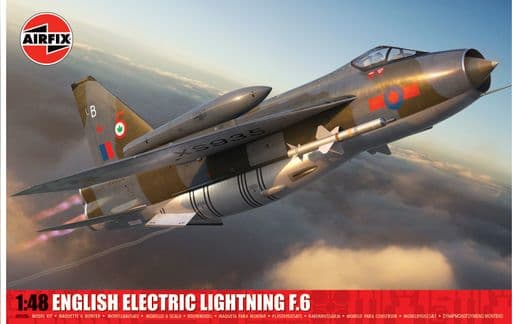
As we settle into the enjoyable business of introducing all the new 2026 range model kit release to our Workbench audience, we begin by featuring a kit which may have caught a few people by surprise when presenting itself on range launch day, but has underlined its incredible popularity in the days since, our 1/48th scale English Electric Lightning F.6. A kit which is extremely highly regarded within the hobby, this is our scale tribute to one of the most exciting jet aircraft to have ever taken to the skies, and those who were lucky enough to have seen one display at an Airshow or RAF airfield back in the day, will surely never forget the experience.
If we started the year by looking at our latest Airfix Club Kit offering and the Swedish Air Force’s most exciting Cold War jet fighter, the Lightning is perhaps the only aircraft of that era which eclipsed it in terms of speed and performance, and may even have provided inspiration for the aircraft’s designers back then. Whatever that particular case may have been, the Lightning unquestionably stands as one of the finest achievements of the British aviation industry, an aircraft which was such a leap forward in technological terms that it’s history and service heritage still continues to captivate millions of people to this day. Would be get away with calling its Britain’s jet powered Spitfire, even though it was only produced in a tiny fraction of the 20,351 Spitfires built? Many enthusiasts certainly think so.
In this latest edition of Workbench, prepare to strap on a Lightning and shoot towards the heavens like a homesick angel!
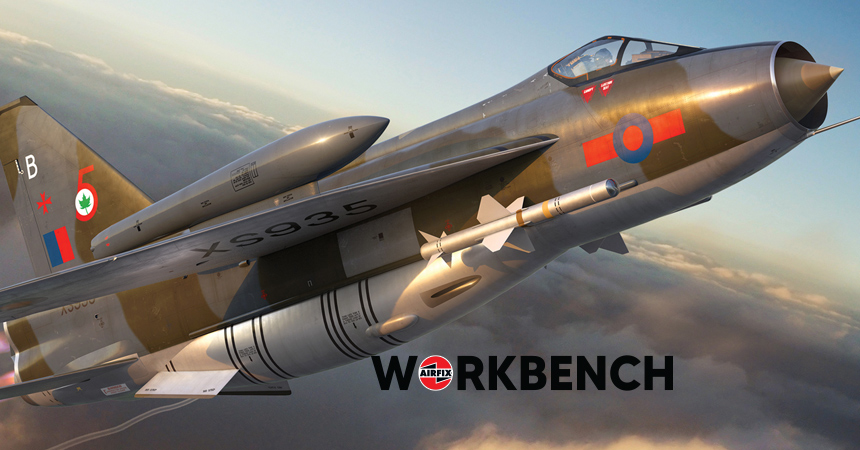
Airfix artwork featuring early variants of the English Electric Lightning. When looking at images such as this, it isn’t difficult to see why the Lightning became such an icon of the post war era.
Although the end of the Second World War and the discovery of Germany’s jet and rocket technology secrets came as something of a rude awakening for Allied commanders, with the realisation that they were lagging behind in almost every respect, however, with captured research material in hand, it wouldn’t take them long to catch up.
In the years which followed the end of WWII and with jet propulsion now becoming something of an international obsession, the race to build the world’s fastest and most capable interceptor was on, and an aircraft manufacturing company in the Northwest of England was about to start work on something very special indeed, something of a supersonic sensation. Work which would eventually lead to development aircraft in the Lightning programme actually began during the Second World War, but by the time it was resurrected in 1947, the design team behind this project were looking at a radical new type of aeroplane, one which would not only become the pride of Britain, but thrill the entire aviation world with its stellar performance capability.
Although the English Electric Company had built its industrial reputation on the manufacture of electrical equipment, heavy machinery, transformers, trams and railway locomotives during the early post war years, they diversified into the consumer electronics market and had growing influence in the worlds of both computer technology and aviation, initially manufacturing aircraft types designed by other companies.
When they took the plunge and established their own design team, they would astound the aviation world with their first aircraft project, as their Canberra jet bomber proved to be something of a revelation, one which presented the Royal Air Force with an aircraft which was the envy of the aviation world. An aircraft which was intended as the replacement for the famous de Havilland Mosquito, the Canberra proved to be that and much more, a magnificent aircraft which almost immediately started breaking aviation records for speed, distance and altitude, underlining its status as one of the most advanced and strategically capable aircraft in the world at that time.
In actual fact, the Canberra proved to be so good that it presented the RAF with an unexpected problem, as it highlighted clear deficiencies in the air defence capabilities of the nation. During annual air defence exercises, attacking Canberra bombers flew so high and at such great speeds that Gloster Meteor fighters attempting to intercept them had little chance of doing so, resulting in Canberra crews being instructed to fly at lower altitudes and at reduced speeds, just so the Meteors could finally affect an intercept.
The pace of aviation advancement continued at an astonishing rate during those times, and if Britain was to have an interceptor capable of performance to match the technological leap provided by the introduction of the Canberra, something had to be done. At that time, the aviation world could boast several excellent high subsonic fighter types, such as the American Sabre and Britain's new Hunter, however, the quest for ever greater speeds demanded an answer to the problem of high speed flight control and a very special aeroplane was going to be needed.
English Electric P.1A WG763 pictured at the now defunct aviation collection of the Manchester Science and Industry Museum. It is now part of the Boscombe Down Aviation Collection.
As Britain's aviation companies attempted to overcome the challenges associated with control during transition to high speed flight, they would be entering uncharted territory and therefore quite a dangerous period for test pilots. As new ideas and solutions were developed and tested, these men truly were pioneers in supersonic flight and would open the doors to the very future of aviation. With the stunning success of their Canberra bomber behind them, it seemed obvious that the English Electric Company would be well placed to take part in the development of a proposed British supersonic interceptor, and they did so in some style.
Even so, this experimental work was taking place at a time of severe financial hardship in the UK and as a consequence, competing companies had little room for error, and needed their proposal to succeed. English Electric's head of design William 'Teddy' Petter was a firm believer that Britain needed to develop a supersonic interceptor and approached the Ministry of Supply with a development proposal, coming away with authorisation to produce a high speed research aircraft capable of attaining a speed of Mach 1.5.
The English Electric Company went on to develop an aircraft the like of which had never been seen before, one which was as unique a performer as it was eye-catching. It's interesting to note, however, that when looking back at the side profile of their P.1 jet’s design, it does share more than a passing resemblance to the Soviet MiG-21 fighter.
The English Electric P.1 proved to be so radical that Britain's aviation officials were a little nervous about its design, even going so far as to ask a rival company to produce an aircraft using the more contemporary control surfaces they felt would be more appropriate (and less risky) incorporated into the P.1’s design. That being said, the potential offered by the English Electric project was undeniable, so they relented and allowed work to continue, watching with interest as the project progressed.
When the prototype P.1 took to the air on 4th August 1954 in the hands of celebrated wartime ace and English Electric test pilot Roland Beamont, the new aircraft was radically different to anything that had gone before it. Featuring a wing which was swept back by 60 degrees and low mounted horizontal stabilizers swept at a similar angle, the aircraft also adopted an innovative twin engine arrangement, with one mounted on top of the other at the rear of the airframe, providing lots of power whilst keeping drag to a minimum.
Lightning trio present and correct. All three scheme options included with this recent release gathered for our viewing pleasure. Which one will get your vote?
The P.1s spectacular appearance was mirrored by its performance, with the aircraft exceeding Mach 1 in level flight on just its third test flight, and with Beamont also becoming the first British pilot to achieve this feat in a British aircraft. As the aircraft’s test program progressed, the P.1 continued to set new records and English Electric began design work on a modified version of the aircraft, one which was intended to be the proposed production variant of the new interceptor destined for the Royal Air Force service.
Designated the P.1B, this later development took to the air for the first time on 4th April 1957, where it managed to exceed Mach 1 in level flight without the need to engage its engine afterburners. Three weeks later, the aircraft would capture the world speed record outright, and it now seemed certain that Britain was on course to be introducing its spectacular new supersonic fighter.
The aircraft embarked on a summer of intensive flight testing and evaluation, all of which was leading to a date with aviation history and the first British aircraft to exceed Mach 2, a mark which it achieved on 25th November 1957. Once again, for this significant achievement for both aircraft and pilot, as Roland Beamont was at the controls of the aircraft, ensuring that not only was he the first British pilot to fly at Mach 1 in level flight in an all British aircraft, but he was now also the first to fly at Mach 2. The aviation history books were gaining regular new entries from the industrial Northwest of England.
Further development of the English Electric Company's spectacular new supersonic interceptor continued apace, and in late 1958, the first production aircraft were finally presented to the Royal Air Force. They were quick to christen their new Mach 2 capable interceptor the 'Lightning' and they could hardly have chosen a more appropriate name. Not only had the English Electric Company presented the RAF with the most advanced jet bomber in the world, they had now also presented them with a world beating high speed interceptor, one capable of bringing down any bomber foolish enough to encroach into British sovereign airspace.
Only miles from where every Lightning was manufactured, models finished in all three scheme options available with this kit were displayed on the Airfix stand at last Sunday’s well attended Bolton Model Show.
The first operational variant of the Lightning interceptor was the F.1, an aircraft which presented the RAF with a cutting edge fighting aeroplane and one which was a huge technological leap ahead of any aircraft which had gone before it. A fully integrated air defence platform, the Lightning employed a powerful radar unit which allowed its pilot to detect and intercept a target by day and night and in all weathers, and once in range, could deal with the threat either using its 30mm Aden cannons or the new Firestreak air to air missile.
The unit which took the honour of ushering the RAF into the ‘Lightning Age’ was No.74 Squadron 'The Tigers' at Coltishall from July 1960, with the same airfield having previously played host to the Air Fighting Development Squadron and their important work in preparing the Lightning for squadron service. Their gleaming natural metal Lightnings must have made for a magnificent sight and certainly represented the very pinnacle of aviation achievement at that time - if you were selected to fly Lightnings, you must have felt more than a little pleased with yourself. Having said that, for those selected to attempt to tame the Lightning, the prospect must have been quite a daunting one, particularly as their first flight in this speedster would also be their first solo - there was no such thing as a two seat Lightning back in those days.
Only the nation’s very best pilots were selected for conversion to the Lightning, with this process starting with the presentation of a comprehensive guidance manual which needed to be studied from cover to cover. This was backed up by hours spent in the classroom, along with time on the new Lightning simulator, all the while knowing that a first flight in this beast of an aeroplane awaited them, an aircraft which some had already christened the 'Frightning'. Once all this had been safely negotiated, it was time for their Lightning solo and surely one of the most significant entries in their personal logbooks.
The Lightning may not have posed too many problems for most capable Royal Air Force pilots, however, it would have certainly required some getting used to. For those pilots coming from the Hawker Hunter, which in itself was an excellent aeroplane, they were in for quite a thrilling first flight. Although a stable aeroplane which was reportedly rather pleasant to fly in most phases of the flight envelope, the Lightning unquestionably represented a quantum leap forward in terms of performance, and thought processing had to be done much more quickly than in other aeroplanes - you certainly needed to have your wits about you.
To help illustrate the size of this challenge, the optimum landing approach speed for a Hawker Hunter was around 130 kts over the airfield threshold, however in a Lightning, that speed had increased to something closer to 165 kts, for touchdown at a spritely 155 kts.
More iconic previously released Airfix box artwork, this time featuring two RAF Germany Lightning F.2As in No.92 Squadron markings.
With its Firestreak missile system, the Lightning was also part of a cohesive, integrated air defence network, a complex machine which demanded much of its pilot, whilst at the same time being a real pilots aeroplane. The Lightning was fast and how the RAF’s pilots loved it!
The RAF's original Lightnings were very much point defence interceptors, with their mission profile being that of performing a 'supersonic dash' to their vectored target, firing their missiles, normally some distance from the target, before immediately returning to base for debrief, or to refuel and re-arm for a further sortie. Their main responsibility was to maintain the integrity of Britain's nuclear threat, protecting V-bomber bases from any potential offensive strike coming from behind the Iron Curtain. Taking off at high speed, the Lightning pilot would climb to interception height as quickly as possible to neutralise any potential threat, with these speedsters never really being designed to mount long and arduous standing patrols.
As far as the fuel hungry Lightning was concerned, range, or more specifically the constant lack of it, would always be something of a challenge for the aircraft, and would keep the design team at Warton busy looking for ways to increase capacity throughout its service life. Although clearly not part of the aircraft’s original design brief, as an Airshow performer, the fast and graceful Lightning was imperious, and anyone lucky enough to have ever seen one of these aircraft making its fast, final pass along the crowd line prior to pulling up in a vertical climb to 30,000 ft in full reheat, will probably hold this as an experience they will never forget. The English Electric Lightning was unquestionably the darling of the Airshow-going public.
As the technologically advanced Lightning settled into Royal Air Force service, designers and technicians at Warton continually worked to improve their speedy interceptor, with greater fuel carrying capacity made available to all subsequent variants of the aircraft. Essentially, the next two variants of the Lightning, the F1A and F.2 only featured relatively modest upgrades over their predecessors, with the F.2 introducing such improvements as fully variable afterburning Rolls Royce Avon Mk.210 engines, a steerable nose wheel and a more functional cockpit layout.
When it came to significant capability upgrade, the F.3 variant was a different bird altogether, and was an attempt to unleash the awesome potential of this magnificent aircraft still further. Featuring a larger, squared off fin, the F.3 also had improved radar technology, more powerful engines, greater fuel carrying capability and new Red Top air to air missiles. The only slight negative with this upgrade appeared to be the deletion of the aircraft’s Aden cannon armament, something pilots would soon come to lament and hope they could somehow get back.
They would eventually get their wish, but only with the subsequent introduction of the next, definitive variant of the Lightning, the F.6. This variant of the Lightning would become one of the most capable interceptor aircraft to ever see Royal Air Force service.
Samlesbury’s supersonic sensation. The Lightning F.6 really was a special aeroplane, one which has made the conversion to a 1/48th scale model kit with consummate ease.
The F.6 variant of the Lightning featured a much larger ventral fuel tank and a modified wing, which was larger and incorporated a distinctive 'kink' to its leading edge. The F.6 could also be equipped with over-wing external fuel tanks and to the delight of Lightning pilots everywhere, the return their gun armament. Whilst the use of the Aden gun pack did reduce the fuel carrying capability of the aircraft, use of the over wing fuel tanks did bring a welcome fuel boost, albeit at the expense of performance and a limit imposed on high ‘G’ manoeuvres
Historically, Lightning pilots appeared to be overjoyed at the return of their aircraft’s cannon armament, as this gave them the ability to fire a warning burst of fire at the start of any engagement, hopefully resolving the situation without the need to unleash a missile. Interestingly within Lightning antecedence, some earlier variants of the interceptor were later upgraded to as near to F.6 standard as possible, and this will be our next port of call in this supersonic story.
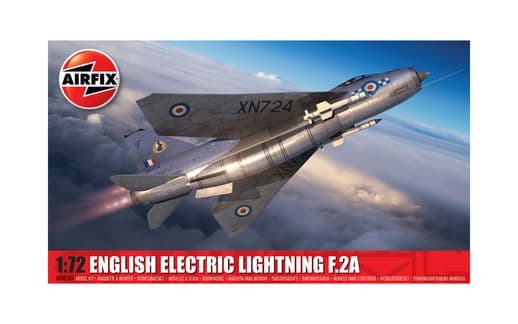
A rather surprising development in the history of the English Electric Lighting was the fact that the final variant of the aircraft in RAF service actually wasn’t the definitive F.6, but the reworked F.2A machines. Making its first flight after that of the thoroughbred F.6, the F.2A variant was an ingenious attempt to upgrade existing F.2 fighters to as near to F.6 configuration as possible. The F.6 undoubtedly resulted in the most effective variant of the Lightning entering Royal Air Force service, but rather than simply replacing all existing aircraft with these latest interceptors, a study was made to see if some earlier Lightnings might be capable of accepting quite radical modification, bringing them to as close to this new standard as possible.
Using the Lightning F.2 as their donor aircraft, these modifications saw aircraft receiving the impressive new cambered leading edge wing, the new larger squared fin and the much larger 610 Imperial gallon belly mounted ventral fuel tank. F.2A Lightnings did retain their radar, Firestreak missiles and Aden cannon, but also benefitted from the additional performance offered by modified Avon 211R engines.
Even though this upgraded variant of Lightning may have lacked the overall thrust of either the F.3 or F6 interceptors which preceded them, their engine and additional fuel carrying capability gave them the most impressive tactical range of all the Lightning variants and impressively, they would go on to enjoy an unmatched safety record during RAF service operations.
The return of our Lightning F.6 kit in this larger scale came as quite a surprise to many on range launch day, but as this highly regarded kit has been out of the range for a decade or so, it’s already proved to be something of an early modelling season highlight. Featuring appealing new box artwork and three new scheme/decal options, let’s take a closer look at what awaits us when attempting to tame our scale homage to this spectacular aircraft.
As far as the aviation enthusiasts community is concerned, the English Electric Lightning stands imperious as one of the most exciting aircraft to have ever represented the Royal Air Force, a real hot rod of an interceptor and one which many describe as the E-Type Jag of the skies. The much improved F.6 variant allowed the Lightning to enjoy an impressive 28 year RAF career, serving through some of the most volatile times in world history, but always doing so with style and speed.
Many of those who worked on the Lightning will probably tell you that they leaked fuel like a sieve, and how you could always tell where a Lightning had been stood by the number of full drip trays arranged on the hangar floor. They would also no doubt go on to tell you that it was the only aircraft they had ever worked on which had limiting equipment added to its controls, because its performance was so spectacular that the Lightning’s pilot was in very real danger of overstressing his aircraft without even realising it. They would also probably finish any conversation by telling you that the time they spent on Lightnings was the most exciting of their career, and how this magnificent aircraft was something really special.
That 28 year career saw RAF Lightnings wearing a number of different scheme presentations, some in natural metal and others in full camouflage, but with many others in various presentations in between. Representing the cream of RAF fighter units, enthusiasts will have difficulty selecting one scheme they regard as more appealing than another, however their selection may come down to a favourite squadron, or an aircraft possessing a particularly interesting back story.
This latest Lightning F.6 kit release comes complete with three very different scheme options available, all of which show that no matter what the scheme, a Lightning always looks spectacular.
This particular aircraft (c/n 95268) made its first flight from the English Electric/British Aerospace factory airfield at Samlesbury on 29th May 1967, with celebrated WWII war hero and English Electric test pilot Roland Beamont at the controls. The runway at Samlesbury was rather short, was situated between two large A roads and was also adjacent to farmland and residential homes, so many Lightnings making their first flights from this site would do so in a particularly ‘spirited’ manner.
It appears that Lightning XS935 spent much of her career with No.5 Squadron, the unit she was representing when attending a long camp deployment at RAF Luqa during 1977. No.5 Squadron were regular visitors to Malta and these incredibly popular deployments, where aircraft would engage in week’s of exercises and armament practice sorties. In the fine weather of Malta, they would practice interception of RAF bombers, honing their skills in case any Russian Tu-95 Bear’s came calling when they returned back at home.
This aircraft took part in No.5 Squadron’s final camp deployment to Malta in 1977, with the aircraft proudly wearing an eight-pointed Maltese Cross on either side of the aircraft’s fin, marking the proud association between this unit and the Mediterranean Island.
Underlining the point raised earlier in this feature about the scheme variety worn by RAF Lightnings during their service career, this aircraft, XP693, wears a smart all silver scheme, one which it would wear for the entirety of its service life, never to be sullied by the addition of camouflage markings. Making her first flight on 16th June 1962 as an F.3 variant, this aircraft would be retained by BAC/British Aerospace to take part in development flying, but would later undergo further upgrade to F.3A (interim F.6 standard), and subsequently to full F.6 configuration.
She would ultimately spend the majority of her flying career serving in a trials role, manly based at the BAe factory airfield at Warton in Lancashire, but also flying for a time at Boscombe Down in that same trials flying role. During this time, she would serve as a weapons firing aircraft and as a high speed target, as British Aerospace perfected the Foxhunter radar destined for the air defence variant of the Panavia Tornado.
In her smart silver scheme, this aircraft would also be extremely active on the UK circuit, always a popular visitor when arriving at an RAF airfield for a commemorative event, of just a flying visit, and particularly when attending an Airshow. A fine example of one of the RAF’s most famous aircraft, she would often be used to commemorate the aircraft’s association with various squadrons, and was seen wearing the markings of Nos.29, 56,65 and 74 Squadrons at one time or another.
The world’s biggest Airfix Lightning F.6 kit, 1 to 1 scale. These images were kindly sent to us by our friend Mr Ian Black on the day his new Lightning XP693 arrived at Binbrook in 2023.
As she was based only a few miles from the airfield at Woodford in Cheshire, several of their annual Airshows could boast the attendance of this beautiful aeroplane in their static display, and during her arrival and departure, you could be sure that every lens on the airfield would be trained in her direction.
In the markings covered by this scheme option, she was used as a chase aircraft as part of No.56 Squadron’s conversion programme to the Panavia Tornado, performing the role for which this aircraft had become well versed, but always at high speed. At the end of her service career, she was sold to a private owner based at Exeter, where she underwent a concerted period of maintenance and renovation, however, her future would be as one of several former UK Lightnings to be exported to Cape Town and operations with Thunder City.
Although facing something of an uncertain future in South Africa following the demise of Thunder City, the historic aviation world received some spectacular news about this aircraft, as famous former RAF Lightning pilot Ian Black announced that he had secured the aircraft, and it had arrived at the former RAF Binbrook. Arriving at the airfield by road, the shipping container which housed the aircraft was itself rather distinctive, and proudly commemorated the association between Airfix and the Lightning by marking this stunning acquisition as a spectacular 1:1 scale Airfix model kit.
Our good friend Mr Ian Black commented at the time, "The Lightning has been disassembled into 5-6 parts to fit inside the 40 foot container, and we think that this must qualify it as the world largest “Airfix Lightning F.6“ kit". We definitely wouldn’t take issue with that.
This third scheme option will prove difficult for many modellers to overlook, as this is one of the most famous examples of this aircraft currently on display in the country, one of the prized exhibits at the RAF Museum. Making her first flight from Samlesbury to Warton on 26th January 1967, again in the hands of test pilot Rolan Beamont, she would be delivered to the Royal Air Force at the end of February that same year, after completing six test flights in total.
She would initially be allocated to No. 5 Squadron at RAF Binbrook, where she would embark on a career protecting UK airspace against unauthorised aircraft incursion from this remote Lincolnshire airfield.
During an Airshow at the airfield the following year, XS925 suffered the ignominy of a public flying accident, requiring the use of the hydraulic barrier to come to a stop, resulting in a nosewheel collapse. This saw the aircraft returning to Warton for repairs, and following the completion of this work, she again flew to Shawbury to await return to her parent squadron.
Once back with No.5 Squadron at Binbrook, she continued to fly regularly, but once again found herself in trouble, this time after having suffered an engine bird strike. Following a major service, she returned to Binbrook in August 1975, this time joining No.11 Squadron – she would spend the rest of her career operating with either No.5 or No. 11 Squadron, mainly at Binbrook, but also for a time at RAF Leconfield, as the Lightnings were detached to this airfield whilst Binbrook’s runway was being resurfaced.
Whilst the aircraft was temporarily based at Leconfield, she went into the paint shop and emerged wearing a camouflage grey/green scheme, a scheme she would wear for the next eight years, when she would fly to RAF St Athan to be resprayed once again, this time emerging in a dark grey scheme.
A Lightning kit finished in the markings of one of the nation’s most famous Lightning F.6 airframes – XS925 is one of the magnificent exhibits at the Royal Air Force Museum London.
XS925 would be one of 35 RAF Lightning F.6 aircraft to be upgraded by British Aerospace to extend the flying life of these aircraft by a further 400 hours, once again returning to Binbrook for further periods representing both Nos. 5 and 11 Squadrons. Making her final flight at Binbrook on 21st July 1987, she was withdrawn as being time expired three days later and placed in storage, destined to be used for spares to keep other aircraft flying.
Placed on display at the Binbrook Open Day in August 1987, she was taken by road to the RAF Museum at Hendon, was re-assembled by Binbrook technicians and presented in the markings of No.11 Squadron aircraft BA, even though she actually served at Binbrook as BD. For those who have seen her at Hendon, she is a truly magnificent example of this spectacular aeroplane, and as you gaze admiringly upon her, it isn’t difficult for us to understand why the English Electric Lightning F.6 still occupies such a significant place in the hearts of many a UK aviation enthusiast.
With so many aviation accolades to its name, whether RAF Lightnings were intercepting USAF U2 Spy Planes at classified altitudes, or becoming one of the only aircraft capable of catching Concorde at supersonic speeds, the incredible Lightning remains only British designed and built fighter capable of Mach 2 performance, a thoroughbred speedster which must have been an incredible thrill to fly.
Perhaps the last world on the Lightning should go to someone who was fortunate enough to fly one. When asked how his first Lightning flight went, one particular pilot was said to have replied, 'It was excellent - I was with it all the way, until I let the brakes off!' For an aircraft which was only originally intended to have a service life of around eight years, the Lightning in all its incarnations would remain in RAF service for 28 years and even in its final days, could boast performance that could put more modern designs to shame.
Out of the Airfix range for a decade or so, this magnificent kit is certainly causing something of a stir in 2026, but importantly, is currently still available on the Airfix website.
We're afraid that's all we have for you in this latest edition of the Airfix blog, but we will be back next Friday with more project development updates and the very latest Airfix kit exclusives. In the meantime, we're always keen to hear your views on all things Airfix and in particular, any thoughts and opinions you may have regarding our Workbench blog. If you would like to drop us a quick line, could we please ask that you use our workbench@airfix.com email for all correspondence.
To re-visit any of the Airfix blogs we have produced over the past TEN years or so, please head to our main Workbench hub, where you'll find our entire blog back catalogue and all the Airfix design projects we have already covered.
All our dedicated official social media sites can be accessed by clicking the respective link icons at the foot of this page, or by heading to the Airfix homepage. Other useful Airfix links are:
Facebook, YouTube, Twitter and Instagram official sites
Please join us for more Airfix updates next week and thank you for your continued support.