
We’re pleased to be bringing you this latest edition of our regular Workbench blog, and all the news, updates, and modelling exclusives from the fascinating world of Airfix.
As this week’s title indicates, we will be venturing into the nostalgic hobby world of Vintage Classics in this latest edition of Workbench, as we feature two popular recent additions to this range which have so far managed to elude our update radar, our scale tributes to two overseas aircraft designs which served the Royal Air Force faithfully some 30 years apart. It could even be argued that the two aircraft in question were tasked with performing similar communications/support/utility roles, which makes this particular kit pairing all the more appropriate.
Before we get on to that, could we please just take a moment to thank everyone for their tremendous support of our previous McDonnell Douglas Phantom FG.1 introduction edition, which has posted some of the highest readership numbers of any edition for several years, something which we were really grateful for. It’s always humbling to realise just how many Airfix fans there are out there, and how many of you have been on this Workbench journey with us from the very start.
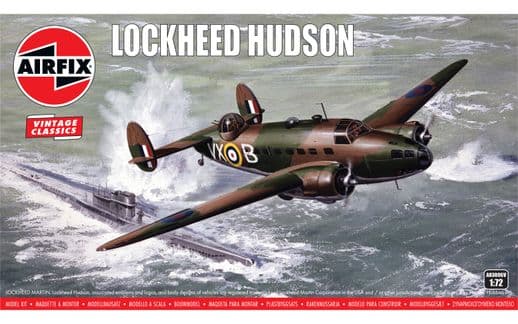
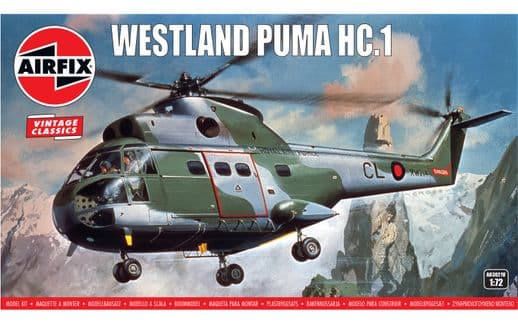
Without further ado though, let’s immerse ourselves in the satisfying nostalgia of the Airfix Vintage Classics range, as the Lockheed Hudson and Westland Puma HC.1 take centre stage, even though both are now very much on availability borrowed time.
Introduced in 2018, the Vintage Classics range has become a much loved category within the wider Airfix story, allowing modellers old and new to experience true modelling heritage.
For a hobby terminology that didn’t exist prior to 2018, the name Vintage Classics has certainly come a long way since then. Although the name Airfix unquestionably brings back happy memories for a great many people, and the kits we made during our formative years will always have a special place in our hearts, the Airfix teams over the past twelve years or so know only too well that it’s the latest new tooling projects that really capture the imagination of modellers everywhere, so that being the case, how would a range which screams nostalgia be received by our current Airfix audience?
These were the slight concerns some of the team had when the Brand Manager at the time was proposing the launch of our Vintage Classics range back in 2018, as there was some genuine uncertainty, despite the fact that we were only too aware that a large part of the enjoyment of the Airfix brand over the years has been the unrivalled heritage and nostalgia this famous name evokes for so many people.
From a modelling enthusiast’s perspective, even though we were not introducing new model tooling project to the latest range, the long overdue re-introduction of some Airfix classics still possessed real validity in hobby terms, and if we had any trepidations at launch, these were quickly dispelled once news got out there. From the very outset, Vintage Classics have been welcomed as a positive addition to the range, creating an enjoyable wave of modelling nostalgia that appealed to thousands of hobbyists.
Essentially, the Vintage Classics range is all about the joy of modelling, immediately taking us back to a time when getting hold of the latest Airfix catalogue was just about the biggest priority in our lives, and having a model kit build on the go gave us purpose and meaning.
Fuelling this nostalgia and cleverly helping to identify where individual kits in the range appear in the production timeline of Airfix heritage, the box presentation for each ‘Vintage Classics’ kit release also includes details regarding the year in which the respective model tooling was produced, along with the year when the style of artwork used to grace the box was first introduced. The Vintage Classics logo identifies these as a modern twist on a classic Airfix kit theme, but are an unashamed celebration of classic Airfix heritage, something that appears to have captured our imagination.
The sight of this classic Airfix artwork will bring back happy memories for thousands of modellers around the world.
Despite the fact that our Vintage Classics range allows some much-loved Airfix kit classics to have their day in our latest range of model kits once again, some of the re-introductions released over the past few years have actually required the use of modern design technologies to enable them to be enjoyed once more. Over the passage of time, kit moulds can suffer from damage and even the loss of smaller slide-mould sections of the tooling, and should such a thing be discovered, the model in question is at real risk of being prevented from taking its place in the Vintage Classics range.
In the vast majority of cases, the main part of the tooling, which is known as a Bolster, is relatively easy to locate, however, many of these kits can also include much smaller mould inserts for components such as accessories and clear parts, which is where some of our problems start. These metal tooling insert blocks can be as small as a lunch box and are therefore the components most likely to have been misplaced or suffered damage, and should that turn out to be the case, we have some serious questions to ask ourselves. Is it viable in terms of time, money and design capability for these lost parts to be redesigned/re-engineered, or will this just be a hobby bridge too far? If it’s the latter, the kit in question may never see production again, and will be consigned to the Airfix history books.
In what could actually be described as a fascinating hobby juxtaposition, in some cases, the very latest design and reverse engineering technologies have to be accessed in order to allow some of these classic Airfix model kits to take their place within an Airfix range once more, a definite case of a kit ‘classic’ needing contemporary design assistance.
Figure sets formed part of the initial 25 product range at the launch of the Vintage Classics range, and we have just released our latest selection of these sets, including Romans and Ancient Britons.
For many though, the mere sight of classic Airfix box artwork takes us back to enjoyable days where you could buy an Airfix model kit at any number of different shops in your hometown and how at that time, it really did seem as if we’d all have to live until at least receiving a telegram from the Queen, if we were going to work our way through the Airfix kit range. Using that same methodology, if we’re all going to work our way through our current kit stashes, we might have to trundle on until at least double that age, so let’s hope medical science also comes to our modelling party.
When the Vintage Classics range was initially announced, it comprised of a collection of twenty-five proposed releases and included both kits and figure sets, a tentative beginning for a range which has gone on to become such an important feature of any Airfix range launch event. It was fitting that scale figure sets featured right at the beginning, because these really did play an important role in our appreciation of the Airfix brand during our early modelling years, not only serving as valuable diorama props, but as play items prior to more serious modelling taking hold, items which truly gave us hours of fun.
The subject of scale with regard to these first figures and why Airfix elected to go with HO/OO scale (1/76th scale) back in the late 1950s continues to stimulate some debate, but was an entirely logical one at the time. Intended to serve as diorama accessories for OO gauge railway modellers, 1/76th scale gave these new figures an instant market and whilst not exactly matching their own existing 1/72nd scale kits, the scale difference was negligible to the naked eye. In any case, when first released, I think we are correct in saying that initial subject matter didn’t possess any 20th century military links in any case.
Full of Airfix nostalgia, a legendary story from British folklore can once again be played out on dining room tables and front room carpets everywhere, following the release of our Robin Hood and Sheriff of Nottingham figure sets.
Early figure sets included a collection of civilians and zoo animals, but also served to satisfy our insatiable appetite for history, with sets such as Ancient Britons and Romans, Cowboys and American Indians, British and French Horse Artillery and Waterloo Cavalry, all of which required minimal preparation and assembly, but offering maximum play opportunities.
This is an entirely appropriate place from where to move on to our main review subjects for this edition, as the Vintage Classics range has just welcomed four new figure sets into stock, sets which have been missing from an Airfix range for many a year and were therefore incredibly difficult to obtain in good order. The Airfix website can currently boast figure set availability of Roman, Ancient Briton, Robin Hood and Sheriff of Nottingham sets, but by the rate they’re currently being snapped up, they’re not going to be around for long.
There really is nothing like a classic Airfix kit or figure set to remind us just how much pleasure this fantastic hobby has brought us over the years.
We never turn down an opportunity to revel in the majesty of classic Roy Cross box artwork, a significant reason for many of us entering the hobby in the first place.
As proud members of the modelling community, if we were each asked to nominate our favourite Airfix kit from the past 70 years or so, there would undoubtedly be a wide variety of kit suggestions for us to be consider. If we were to be slightly more focussed with our question and ask for suggestions as to the most interesting kit subject from over that same time period, the subject of this first Vintage Classics model kit review will probably be high on the list of suggestions received, as the Lockheed Hudson is often remembered as a kit many modellers enjoyed building.
The aircraft itself began life as an advanced medium passenger aircraft, one which had already started to attract admiring glances from outside the US, and one which its parent company believed could be adapted for military service.
Desperate to get their hands on as many capable aircraft types to bolster their own rapidly re-equipping forces as possible, Britain sent a delegation of high-ranking officials to America with a remit to place significant orders for new aircraft, with several different roles needing to be filled. They were particularly looking to procure a modern light bomber/maritime patrol/reconnaissance and training aircraft, but would a single aircraft type with such capability actually exist?
Lockheed thought their latest design could be adapted to undertake these demanding roles, however, when the British Purchasing Commission arrived at their facility, they only had a Lockheed Model 14 ‘Super Electra’ passenger aircraft to show them. As impressive as this undoubtedly was, the British team wanted to see a military aeroplane, so what Lockheed did next was as ingenious as it was impressive. Over the next five days and nights, the Lockheed design and development team adapted their aircraft to produce a mock-up of a medium reconnaissance bomber variant of the Electra, one to capture the attention of the British.
Such an interesting aircraft to model, the Hudson has been a popular kit with modellers every time it was released, and its induction into the Vintage Classics Hall of Fame has been widely welcomed.
What they achieved must have impressed, because the visiting British delegation (which actually included a certain Wing Commander Arthur – soon to be known as ‘Bomber’ – Harris), because other than requesting modifications for the Anglicisation of systems, they already appeared ready to sign a contract. Those changes included a requirement to replace systems and flight equipment to British standards, and for the aircraft to accept turret armament, forward firing machine guns and a wide variety of offensive ordnance.
As the new aircraft was initially intended to equip Coastal Command units, it was given the name Hudson in British and Commonwealth service, in honour of the English naval explorer and navigator, with an order for 175 aircraft initially being bolstered with a further requirement to deliver as many aircraft as humanly possible by the end of 1939. The Lockheed Hudson was heading east across the Atlantic.
Work continued apace, with details of the military variant revisions being sent to Lockheed’s manufacturing facility at Burbank so production lines could be established immediately. The first flight of the Lockheed Hudson took place on 10th December 1938 and all of the RAF’s initial order of aircraft were completed ahead of schedule and prepared for shipment to Britain. Interestingly, due to America’s neutral position in the war at that time, these first aircraft were flown as far north as possible, and literally towed over the Canadian border, where they could then be loaded aboard ships for onward passage to Britain.
Those who have ever built the Hudson will remember this as a surprisingly interesting kit, which is why its introduction into the Vintage Classics range has been so welcome.
The first recipient of a Lockheed Hudson Mk.I was No.224 General Reconnaissance Squadron at Leuchars in Fife, and like so many units to follow, they prepared the new aircraft to replace the Avro Anson in a coastal patrol capacity. By the outbreak of the Second World War, the Royal Air Force had 78 Hudsons in service, predominantly in that same maritime patrol role.
Historically, the importance of the RAF’s Lockheed Hudsons can’t be overstated, as it would go on to become the first RAF aircraft type to attack a Luftwaffe aircraft on just the second day of the war. Two months later, a Coastal Command Hudson became the first RAF aircraft to claim an aerial victory in WWII, as a No.224 Squadron Hudson shot down a Dornier Do18 flying boat close to the Jutland peninsula.
In addition to these historic ‘firsts’, it also has to be stressed that whilst the Hudson may well be described as an unfashionable WWII type, one which doesn’t attract anything like the attention aircraft such as the Spitfire and Lancaster have over the years, it’s difficult to think of a more important aircraft type to Britain’s war effort during those early months of conflict. Britain’s ability to purchase modern American aircraft types to perform vital military roles at that critical time, essentially allowed Britain and her Commonwealth nations to stand defiant against Axis aggression, preventing them from having a free rein in Europe and across the globe.
Bolstering Britain’s indigenous aircraft production capacity, aircraft like the Hudson effectively allowed British and Commonwealth forces to hold the line, until the industrial might and fighting prowess of their American allies could be brought to bear.
RAF No.206 Squadron began the Second World War flying the Avro Anson in an anti-submarine role from RAF Bircham Newton, later moving to the coastal airfield at St. Eval in Cornwall. Exchanging their Ansons for Hudsons during the spring of 1940, they would use this aircraft type in several different variants until they were eventually replaced by Boeing Fortress II aircraft, machines which possessed much greater range and weapons carrying capabilities.
Providing vital support during the early months of the war, these aircraft were used to mount reconnaissance and anti-submarine patrols into the North Sea and off the German coast and Friesian Islands, No.206 Squadron Hudsons were also tasked with undertaking anti-shipping strike missions, where they did manage to post some significant successes, particularly during the early months of operation.
The squadron moved to Aldergrove in Northern Ireland from August 1941, where they would continue flying the vital, yet extremely hazardous long range maritime patrol and convoy protection missions out into the Atlantic and across the Irish Sea. Despite the Hudson being a successful aircraft in this role and more suitable than the Avro Ansons it generally replaced, it was still a relatively small aeroplane for the vast distances that needed to be covered, and during their time in Northern Ireland, several aircraft suffered low fuel emergencies at the end of their patrols, with their pilots being forced to make emergency landings in neutral Ireland, and the potential of having their aircraft impounded.
Full scheme details of an aircraft type which simply has to be included in any collection of British WWII aircraft.
Despite these operational challenges, the need to win the Battle of the Atlantic meant that Hudson crews continued to fly these vital missions until their aircraft were replaced by the much larger Boeing Fortress and Consolidated Liberator aircraft. Nevertheless, the squadron’s time operating the Hudson was regarded as a success, with this period underlining the operational importance of the role RAF Hudsons played during the early stages of the Second World War.
In addition to this, from a modelling perspective, isn’t the Hudson just an interesting looking aircraft, one which is surprisingly attractive, and well worth adding to any display of built models.
Although this kit has been in stock for some weeks now, we still do currently have stock of the Lockheed Hudson available, even though it’s now very much on borrowed time.
More box artwork magic from the hand of Mr Roy Cross, something which is a large part of the Vintage Classics modelling nostalgia.
Although the fastest and highest flying aeroplanes are usually the ones which capture the imagination of those with even a passing interest in aviation, the years which followed the end of the Second World War witnessed the emergence of an aircraft type which possessed unrivalled versatility potential, and seemingly endless application possibilities, both military and civilian - the helicopter.
It would be the Americans who made the real breakthrough in unleashing the full potential of helicopter technology, and they would take the honour of designing the world's first large scale, mass produced helicopter, in the shape of the Sikorski R-4. The aircraft, which was the brainchild of celebrated helicopter pioneer Igor Sikorski, would actually go on to see service with the US military during the Second World War, even though still a relatively primitive design. The R4 was blighted by the challenges which faced all those involved with early helicopter development, in that it was difficult to control, wasn't overly blessed with power and from a pilot's perspective, was a hands-on aircraft at all times.
These aircraft could only be tamed by the very best pilots in the world at that time, and there was even an in-service joke doing the rounds at the time which suggested that you could always tell a helicopter pilot apart from a fixed wing airman when in their company, because the helicopter pilot would be suffering from a permanent case of the shakes, due to the constant vibration such airmen were forced to endure.
Despite the many remaining challenges helicopter designers had to overcome, the concept had been proven, and the flexibility offered by the helicopter ensured that development efforts were given renewed impetus following the introduction of the Sikorski R-4. As rotary pilots continued to gain more flight experience, more capable machines were already waiting in the wings.
Puma models completed in both of the scheme options included with this popular kit.
Westland/Aerospatiale Pumas wearing RAF and Armée de l’Air plumage.
During those early years of helicopter development, it does have to be accepted those involved in that field struggled to overcome two particularly significant challenges, those of effective aircraft control, and engine power to weight ratio deficiencies. If they could overcome both, the helicopter would truly come of age, and they would have a machine which would provide operators with an aircraft type so flexible that it would be unique in the world of aviation, one possessing almost limitless military and civilian application possibilities.
Once these challenges were overcome, the skies opened up to the incredible versatility of the helicopter, and in many ways, it became the most important aircraft type in the world, and from supply, support, rescue and versatility perspectives, there were few situations where helicopters wouldn’t be the first port of call in a strategic sense – they could just do stuff other aircraft types couldn’t even attempt.
In Europe, the Aerospatiale 330/Westland Puma was a versatile medium lift helicopter that can trace its origins back to an innovative collaboration between the aviation industries of both Britain and France, in an attempt to produce a series of three different types for service with both countries military forces, the other two being the Gazelle and Lynx. Entering Royal Air Force service with No.33 Squadron in June 1971, the Westland Puma HC.1 proved to be an exceptional machine, possessing both impressive speed and agility, and was capable of carrying 16 passengers, 12 fully equipped troops, or 2 tonnes of cargo, either carried internally, as an underslung load, or via a combination of the two.
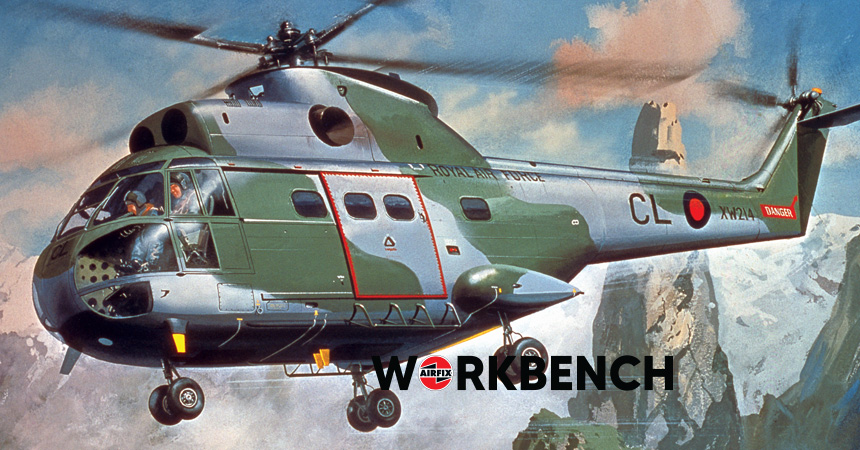
Full Puma Vintage Classics artwork presentation.
An incredibly versatile and reliable helicopter, the Puma quickly showed itself to be just what the RAF had been looking for, and as a consequence, wherever British troops were required to operate, be that in an offensive, peace keeping, or training role, the Puma would undoubtedly be there to support them. Despite being capable of carrying the loads detailed above, the Puma could do all this at speed, with its two Turbomeca Turmo turboshaft engines capable of powering this rotary marvel to speeds of around 192mph, with the aircraft also possessing impressive manoeuvrability. Crews would be only too happy to tell you that flying a Puma was like driving a sports car, it was that much fun.
For an aircraft which was in service for more than half the life of the Royal Air Force (at the time of its withdrawal), it will come as no surprise to learn that whenever the Royal Air Force has been required to support significant troop deployments at home, or around the world, the Puma was an important asset in allowing them to do so. Taking part in Exercise Lionheart in 1984, the largest British Army exercise since the end of the Second World War, the Puma would also see service during the Gulf and Iraq Wars, in Kosovo and Afghanistan, but significantly, would serve with distinction for 37 years supporting British Army operations in Northern Ireland.
It’s interesting to note that for an aircraft which served for an impressive 54 years, the Westland Puma only underwent one major upgrade program during that time, when the final and definitive HC.2 variant entered RAF service in 2014. This upgrade allowed this incredible aircraft to remain on tasking right up until the day it was finally withdrawn from RAF service.
RAF No.33 Squadron reformed at RAF Odiham on 14th June 1971, where it was to become the RAF’s first Westland Puma squadron, and association it would proudly maintain until the withdrawal of the HC.2 variant in March 2025. During that time, the Squadron’s Pumas would regularly be at the forefront of Britains response to international incidents, be they humanitarian, peace keeping, or indeed during times of conflict. Pumas would take part in the first Gulf War, see deployment during the Balkan crisis and during Operation Telic, the second Gulf War.
Perhaps the Puma’s most significant deployments though were a little closer to home, when No.33 Squadron’s Pumas operated out of Aldergrove in Northern Ireland during the Troubles.
Full scheme details for this classic RAF variant of the Westland Puma HC.I
An incredibly versatile machine, Puma helicopters used their manoeuvrability and load carrying capabilities whilst operating from and into fortified bases, using tactics to make targeting the aircraft extremely difficult for those who were motivated to do so. Arguably more useful than any other helicopter type available to troops stationed in Ireland in terms of agility and load carrying capability, these helicopters were used to support British Army, Ulster Defence Regiment and Royal Ulster Constabulary operations throughout the region, and were extremely highly regarded in this role.
With the possibility of ambush and roadside bomb attack becoming such a risk for policing forces travelling throughout Northern Ireland from the mid 1970s onwards, helicopters proved essential for the effective movement of troops, UDR and RUC personnel, with bases becoming vital locations for security and supply operations. RAF Puma crews would be involved in the daily movement of troops and supplies, would fly escort missions for larger helicopters flying with heavy cargo and underslung loads, but also turn their hand to medical evacuations, medical staff transportation and the movement of prisoners and detainees.
Pumas would also see heavy use in flying aerial patrols and reconnaissance gathering missions, all intended to disrupt and deter IRA operations in Northern Ireland, but also making them high profile targets for those with nationalistic views. Several aircraft came under small arms and heavy machine gun fire over the years, and the fact that military officials thought the IRA had access to SAM weapons made the work of the Puma crews in Northern Ireland all the more impressive.
Scheme B – Sud Aviation/Aérospatiale SA 330 Puma, Armée de l’Air, France 1973.
Developed in response to a French Army requirement for a modern medium transport/utility helicopter, the Sud Aviation SA 330 would become something of an operational mainstay of the European helicopter scene, attracting a great many orders both for home use, and from overseas operators. The Puma would become the backbone of French air forces during the 1970s and 80s, whilst also appealing to the military several other nations, the most significant of which was the United Kingdom.
In a deal which would see Britain becoming development partners, Sud Aviation would also benefit from technological support from the US and Italy during development of the helicopter, with Britain’s involvement also resulting in the French agreeing to purchase the Westland Lynx, in addition to Westlands also supplying components for the program, and assembling all the British Pumas.
An agile and extremely robust helicopter, French Pumas were configured in a similar manner to those aircraft operated by their British counterparts, being capable of carrying 16 passengers, 12 fully equipped troops, or 2 tonnes of cargo, either carried internally, as underslung loads, or by a combination of the two. An incredibly versatile and reliable helicopter, although the retirement of French Pumas has been on the cards for several years now, it’s thought that a handful of machines still remain in service, even though their days are now very much numbered. When they eventually retire, French Pumas will have been in service for almost 60 years, something which underlines just how effective these incredible machines have been.
Amis d'outre-Manche, cette édition Vintage Classics propose des options de décoration pour les hélicoptères militaires Puma britanniques et français.
Our Vintage Classics scale tribute to the Puma includes scheme options for helicopters operated in both British and French military service. In addition to this, as with this week’s aircraft blog pairing both spent time operating out of the airfield at Aldergrove in Northern Ireland, this interesting modelling coincidence could surely encourage an interesting dual build possibility, even though the two aircraft could hardly look more different from each other. Clearly, those with an interest in air power over Northern Ireland will have already made this connection and will probably have both types either in their display cabinets, or residing safely in their kit stash for future attention.
As was the case with the Hudson kit earlier, the Westland Puma HC.I has been available for a while now, and whilst it is still available on the Airfix website, it is now down to the last knockings, and won’t be around for long.
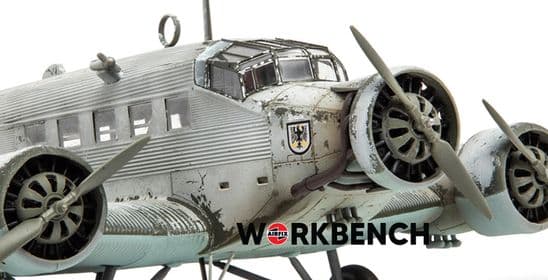
In the next edition of Workbench, we will be taking a detailed look at something of a modern Airfix classic, as our newly designed Junkers Ju52 kit will be lining up for blog review take off.
We're afraid that's all we have for you in this latest edition of the Airfix blog, but we will be back in two weeks' time with more project development updates and the very latest Airfix kit exclusives. In the meantime, we're always keen to hear your views on all things Airfix and in particular, any thoughts and opinions you may have regarding our Workbench blog. If you would like to drop us a quick line, could we please ask that you use our workbench@airfix.com email for all correspondence.
To re-visit any of the Airfix blogs we have produced over the past TEN years or so, please head to our main Workbench hub, where you'll find our entire blog back catalogue and all the Airfix design projects we have already covered.
All our dedicated official social media sites can be accessed by clicking the respective link icons at the foot of this page, or by heading to the Airfix homepage. Other useful Airfix links are:
Facebook, YouTube, Twitter and Instagram official sites
Please join us for more Airfix updates next week and thank you for your continued support.