
We’re pleased to be bringing you this latest edition of our regular Workbench blog, and all the news, updates, and modelling exclusives from the fascinating world of Airfix.
After the Phantom arrival extravaganza posted in our previous edition of Workbench, this latest edition finds us returning to the subject of new British naval aircraft kit releases in 1:48th scale, as the Fairey Gannet will be on our blog flightdeck. An extremely distinctive and incredibly capable fleet anti-submarine warfare aircraft, the Gannet occupies the historically significant position of being the only military aviation contract won by the famous Fairey Aviation company following the end of the Second World War, one which was charged with undertaking a particularly demanding role in a maritime world which was becoming increasingly dependent on advanced technologies.
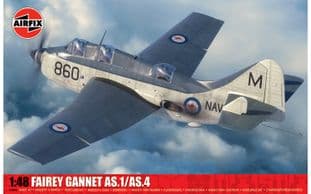
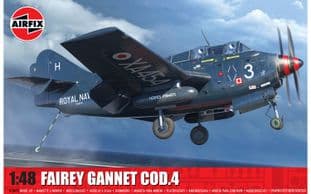
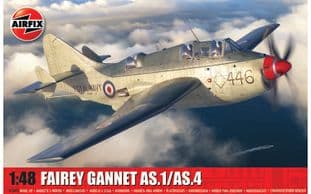
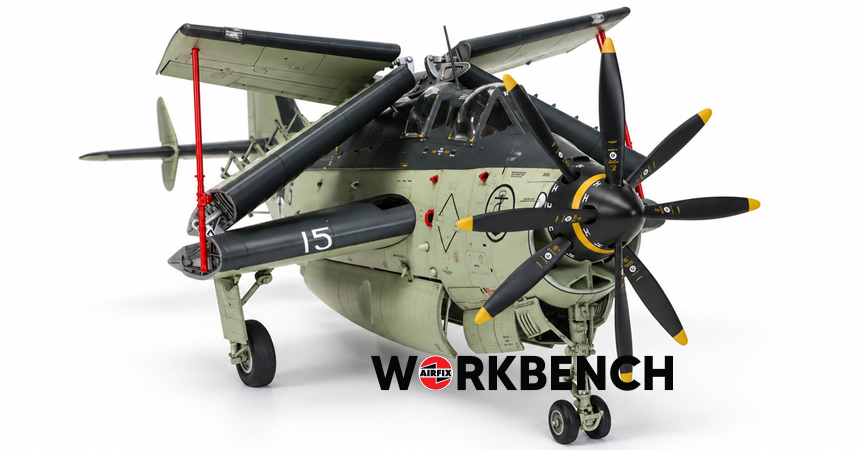
The unusual aesthetics of the Gannet make it completely captivating as a scale modelling subject, and since this impressive kit was announced as a new tooling project back at the beginning of 2023, it’s definitely gone on to become a firm enthusiast favourite, and is a regular sight amongst model competition entries up and down the country. In this latest edition, we will be taking the opportunity to welcome the third release from this impressive tooling to the current Airfix range, one which includes three scheme options featuring international operators of the Gannet.
We will be following this with a look at another recent addition to the current Airfix range, one which comes in an appealingly patriotic scheme for British people, and one which has been hugely popular throughout this year’s Airshow season – any clues on its identity?
It’s back to 1960s aviation for our main subject this week, and a subject which proves that aviation modelling beauty is without doubt, in the eye of the beholder.
Although the modelling hobby brings millions of people all over the world together in a shared interest, we will all have our own personal criteria when it comes to the selection of subjects, or the inspiration behind any build project. We could have a favourite aircraft, have served in a post war military vehicle, or an interest in the history of RAF Bomber Command, but whatever at inspiration might be, scale modelling allows our interest, some might say fascination, to be satisfied in some file.
Subjects such as the Supermarine Spitfire have an incredibly wide appeal across the entire hobby, as does something like the Shannon Class Lifeboat which was added to our Starter Set range over recent years, whilst something such as a Vickers Light Tank Mk.VI may expect to have a slightly more focused appeal. Nevertheless, the wider hobby is still managing to hold its own against the latest technological distractions for our attention, which really does underline just how significant the impact of the hobby has been and continues to be.
An aircraft type which many people would probably have placed in the ‘slightly more unusual’ subject category if invited to give an opinion, and was certainly one many of them didn’t see coming from an Airfix new tooling project perspective, the Fairey Gannet has gone on to reside on many a modeller workstation, mainly because it possesses character by the bucketload. Whilst a contra-rotating propeller, double gas turbine engined submarine hunter might not initially jump out of any model catalogue as a build project subject of note, once introduced to the Gannet, it’s incredibly difficult to refuse its many appealing aesthetic charms.
Gannet artwork produced in support of the first release from this popular addition to the Airfix range.
A post WWII aviation type which from an aesthetic perspective at least, has to be described as something of an acquired taste, the Fairey Gannet may not have qualified as the most attractive aircraft to have ever operated from the deck of a British aircraft carrier, but it was extremely effective in the role to which it was assigned and with it, was undeniably one of the most distinctive.
The Fairey Gannet has the distinction of being the first British designed aircraft in Fleet Air Arm history to combine both search and strike roles when it came to protecting the fleet from enemy submarine activities, developed in response to a 1945 Royal Navy requirement for an advanced carrier-based turbo prop powered anti-submarine hunter killer, one which was rugged enough to withstand the rigors of operation at sea. Intended to counter a worrying expansion of Soviet submarine fleet numbers at the start of the Cold War era, the Gannet was equipped with all manner of the latest electronic detection equipment and should it detect an enemy submarine, it could be marked, tracked and if necessary, destroyed, using a combination of bombs, depth charges, rockets and air-launched acoustic torpedoes.
Despite possessing something of a portly appearance, the Gannet was actually quite a manoeuvrable aircraft and when combined with the excellent visibility its pilot was afforded and the considerable power available from its unusual and innovative Armstrong Siddeley Double Mamba powerplant arrangement, it proved to be ideally suited to the harsh aviation environment operating from the deck of an aircraft carrier. Offensively, the Gannet was definitely not to be taken lightly, as its cavernous ordnance bay was able to carry around 30 different combinations of detection and attack stores, so if you were unlucky enough to attract the attention of a Gannet, you were unlikely to escape the encounter unscathed.
In strike configuration, the Gannet could be equipped with up to 36 rockets mounted on stations below each wing, which could be used against any number of potential targets, from ships to coastal defences. In much the same way as the famous Short Sunderland flying boat was regarded during the Second World War, the Fairey Gannet proved to be a particularly prickly aircraft if provoked.
A computer rendered CAD image showing how this most interesting of aeroplanes has made the easy transition to Airfix scale model kit.
A really impressive naval aircraft type which possessed a number of distinctive features, perhaps the most significant of these was its use of the innovative Armstrong Siddeley Double Mamba powerplant. This arrangement utilised two gas turbine engines mounted side by side in the nose of the Gannet, both sharing a common gearbox, but with both operating independently of each other, with each engine driving its own coaxially mounted, contra-rotating propeller.
Another significant feature was that the engines could run on kerosene and even diesel fuels, which were safer to handle and required less refinement than traditional aviation fuels. This arrangement provided Gannet crews with more than enough power for effective carrier operations, whilst also providing the reassurance of two engines when engaged in undertaking long ocean patrols, whilst engaged in protection of the fleet activities. Once in flight, the pilot could shut down one of the engines to conserve fuel and whilst this would reduce the Gannet's maximum speed, it would also extend its loitering capabilities considerably.
Usually, a pilot would alternate engine use during a long patrol, running each engine for around an hour, before swopping over and feathering the prop, minimising the potential for engine damage and keeping engine usage roughly equal. Providing all the benefits of twin engined operation, the fact that both propellors lay on the centreline of the Gannet, there were no control drawbacks from shutting down one engine in flight. The engine mounted on the port side of the Gannet drove the forward mounted propeller, with the starboard mounted engine driving the prop behind.
Another unique feature of the Gannet's design was its impressive bi-folding wing system, an innovation which was designed to allow this relatively large aircraft to operate safely from, and to be stored below deck on one of the Royal Navy's relatively small aircraft carriers. When a pilot engaged the wing unfold, this ingenious system not only prepared the wings for flight configuration, but also automatically engaged all flight control systems, hydraulic connections and fuel ducting to the main system, without any ground crew intervention in the majority of cases.
In operation, the Gannet endeared itself to both air and ground crews by virtue of its rugged effectiveness and how in one incredible incident, an aircraft managed to safely return to base after losing both outer sections of its wings. With its pilot performing some particularly violent manoeuvres during an attack operation, the aircraft lost the outer sections of both wings, however, despite the severity of the situation, the rugged Gannet brought its crew home safely and with it, increased its stock amongst Fleet Air Arm aircrews. As far as they were concerned, if you were going to serve operating aircraft at sea, you had a better chance of surviving the experience if your mount was a Fairey Gannet.
During the summer of 1950, a Fairey Gannet would become the first turboprop powered aircraft in the world to land on the deck of an aircraft carrier, and production deliveries of the most heavily produced AS.1 variant of the aircraft would begin in 1954. No.826 NAS would take the honour of being the first operational Fairey Gannet Squadron in the Royal Navy and around 348 Gannets would eventually be produced, marking this as a significant contributor to Fleet Air Arm post WWII operations.
An exclusive first look at alternative box artwork created to grace this third kit release from our Fairey Gannet tooling.
With its position as one of the most unusual, yet operationally effective aircraft of its kind to see Fleet Air Arm service, the Gannet has long been on the radar of the Airfix development team as the subject basis for new tooling consideration. They also had the reassurance of knowing that the Gannet had long occupied a prominent position on any list of enthusiast supplied new tooling suggestions, and as we are acutely aware, the modeller is always right! There’s always been something particularly appealing about aircraft which were operated from the decks of ships at sea, particularly if their looks positively demand our attention and that being the case, the Gannet ticks a great many modelling boxes.
Although an aircraft which is of great interest to modellers with an interest in post WWII aircraft types, and particularly those with a further leaning towards Fleet Air Arm types, the Fairey Gannet did attract overseas air arm interest once its many operational capabilities became apparent, even though the austerity conditions many nations were facing during the 1950s meant that its adoption wasn’t as widespread as those levels of interest shown.
A single example was sent to Canada for extensive evaluation, and whilst the aircraft was highly regarded, officials ultimately decided to hold off until an American sourced alternative could be secured. This left just three other nations to fly the Gannet operationally, with the navies of Australia, Germany and Indonesia joining the Fleet Air Arm in harnessing the capabilities of this most distinctive of aeroplanes, one which possessed more charisma than most other aircraft types could even dream of.
No matter which livery the Gannet wore, it was an aircraft which always demanded attention.
Production of the Fairey Gannet was shared between the company’s manufacturing facilities at Hayes in Middlesex, and Heaton Chapel, Stockport/Manchester Ringway Airport, with aircraft produced at Hayes being transported to White Waltham for flight testing. Those produced in Stockport were taken to Ringway airport for assembly and flight testing, a name which is now associated with the current Manchester International Airport site. As a young boy visiting Manchester Airport, I remember that you could still clearly see the old Fairey Aviation sheds when standing on the roof of the viewing piers, sheds which would have housed Gannets during their production and testing years.
Between 1936 and 1977, some of the most famous aircraft types designed by The Fairey Aviation Company were test flown from Ringway, such as the Battle, Swordfish, Fulmar, Firefly and Gannet, and I believe that even to this day, there is a certain section of the airport which is still referred to as the Fairey apron, despite the fact that most of the original historic buildings have long since disappeared.
Fairey Gannet AS.1 XA334 was produced at the Fairey Aviation factory at Stockport in early 1955, making its first flight from Ringway airport in the summer of that same year. Allocated to the Fleet Air Arm of the Royal Australian Navy, she was one of four RAN Gannets photographed flying over HMS Seahawk (Culdrose) on the occasion of RAN Squadron No.817s formation here in the UK, dated around the first week in August 1955.
The aircraft embarked on HMAS Melbourne in March the following year for the long voyage to her new home, resplendent in the markings if No.817 Squadron, and ready to provide a significant upgrade in Australia’s anti-submarine capabilities. A hard working aircraft, XA334 was damaged following a heavy landing on the deck of HMAS Melbourne during October 1957, with the damage being significant enough to require quite some time undergoing repairs.
She did return to service with her parent squadron prior to being transferred to No.816 Squadron in August 1960, a unit which has the distinction of being the one enjoying the longest period of continuous service in the Australian Fleet Air Arm.
Full scheme details for this most attractive Royal Australian Navy Gannet option.
After continued heavy service, the aircraft underwent overhaul towards the end of 1964, and on returning from these works, was once again allocated to its original unit and the continuation of its important work.
Whilst later performing catapult launch exercises aboard HMAS Melbourne, XA334 lost power from one of its engines as soon as it left the carrier’s deck, immediately causing the pilot to declare an emergency. The aircraft was equipped with a full complement of rockets, and knowing that he would have to make an immediate landing with reduced power, the pilot requested authorisation to fire the rockets into the sea to prevent a landing disaster, which was duly granted.
The blast back from the rockets damaged the aircraft’s flaps which didn’t help the pilot’s predicament, and whist the aircraft did land back on to the carrier, it did so at a higher speed that usual, which caused the arrestor wire to fail. The aircraft came to rest tangled in the barrier net, with visible damage being caused to the propeller and rear fuselage, damage which proved significant enough to see the aircraft categorised as uneconomical to repair.
Retired from service, she was initially placed into storage, but soon made available for disposal. She was subsequently secured by the Camden Aviation Museum of New South Wales, initially at their site at Camden Airport, but from 1976, at a new indoor museum facility at Harrington Park.
Although very similar to a British Fleet Air Arm Gannet scheme, the red kangaroo and RAN serial make this an appealing new option for any display of built Gannet models.
Ten years after the end of the Second World War, the decision to re-equip the Federal Republic of Germany saw the nation’s Bundesmarine looking to equip itself with advanced and capable maritime aircraft. Two Wings, or Marinefliegergeschwader, were established, each equipped with both a strike component and an anti-submarine patrol squadron, both operating from land bases, as they did not have any aircraft carriers. The aircraft selected for the anti-submarine role was Britain’s Fairey Gannet AS.4 and fifteen of these aircraft, plus a solitary T.5 four-man trainer.
The deal required an element of urgency to be employed and therefore saw the aircraft themselves being taken from existing Fleet Air Arm contracts, whilst also seeing German crews selected to serve on the new Gannets being sent to the UK for training. Pilot conversion work was carried out at White Waltham in Berkshire, whilst operational crew training was undertaken at RNAS Eglinton in Northern Ireland, where a single Gannet T.5 had been sent to support the operation. The Bundesmarine’s first Gannet squadron would subsequently be formed at Eglinton some weeks after the training program got underway.
After finally being commissioned, the new unit left Northern Ireland for their new home at Schleswig Air Base in July 1958, where it would be required to undertake anti-submarine patrol duties as part of Marinefliegergeschwader 1 (MFG 1). As a nation, Germany’s only maritime interests where in the north of the country, covering the North Sea and the Baltic, both vital areas for NATO. As a result, this new force was charged with the vital work of detecting, shadowing and if required, attacking Soviet submarines in the Baltic approaches to the North Sea, a Cold War struggle which NATO simply had to get to grips with.
Although the overall scheme presentation of this international Gannet is similar to one wearing Fleet Air Arm markings, there’s something strangely appealing about any post WWII aircraft in German Navy markings.
How could anyone resist this magnificent aircraft?
The unit would later move to Nordholz Air Base on Germany’s North Sea coast, where it would begin operations under the control of MFG 3 ‘Graf Zeppelin’, but still carrying on the important work these aircraft were secured to undertake. Unfortunately, these distinctive aircraft would have a relatively short service career, and by the winter of 1965, the first of the unit’s new Breguet Atlantic twin turboprop long range maritime patrol aircraft arrived at Nordholz. This would eventually see Germany’s Gannets operating from a new base at Kaufbeuren in Bavaria, one which was just about as far away from the country’s coastline as it was possible to get.
German Gannet UA+115 was in attendance at the 1958 Farnborough Airshow resplendent in her Bundesmarine markings, underlining this significant new international assignment for the aircraft. Tragically, as far as we can ascertain, she would become the only one of the German Gannets to be lost during operational service. Taking off from Kaufbeuren with three other Gannets on a navigational training flight to Nordholz, the aircraft was seen to get into difficulty almost as soon as it took to the air, and came down close to the airfield boundary.
This was an extremely dark day for the personnel of Marinefliegergeschwader 3.
Indonesia were looking to secure a capable maritime patrol and anti-submarine aircraft during the late 1950s, however, their initial approach to secure the French Bréguet Alizé was unsuccessful because the French were put under pressure not to supply the aircraft by their Dutch neighbours. They were concerned about ongoing unrest in the area and the potential for diplomatic challenges with their former colonial charge.
This situation forced the Indonesians to look across the English Channel and towards another of the world’s most capable anti-submarine aircraft, the Fairey Gannet. Having contacted the British company regarding their requirement, Fairey bought back twenty surplus Fleet Air Arm Gannet AS.1 aircraft and a pair of T.2 trainers to satisfy the Indonesian order which totalled eighteen AS.4 sub hunters, a handful of training variants and several aircraft to serve in a ground instructional role.
All the bought back Gannets received upgrade to AS.4 standard, and as was the case with the previously discussed German crews, Indonesian pilot training took place at White Waltham. As the Indonesians were engaged in some regional conflict, it was January 1962 before their new Gannets were released for shipping to the Far East, but once there, the aircraft would operate from Sourabaya Air Base, a port city facility on the Island of Java.
The Indonesians loved their Gannets, with the aircraft’s ability to switch off one of its engines to conserve fuel when cruising supporting greater endurance, something which was essential when patrolling the nation’s vast coastline and many island locations. Their use of the Gannet would subsequently be affected by ongoing conflict across the region, with their advance into Borneo challenging relations with Britain. These increased international tensions resulted in many of the Western nations withdrawing all trade support, which included spares for their Gannets, which consequently started to fail and adversely affect their maritime capabilities.
Full scheme details for this unusual Gannet option.
During this period, it’s likely that some of the Indonesian Gannets were involved during the Indonesian-Malaysian confrontation, and may have actually been used to hunt for Dutch submarine activity, something the Dutch were clearly worried about at the very start of this story.
With the spares situation becoming critical and the number of unserviceable aircraft growing, the Indonesians approached the Soviet Union to solve their maritime patrol woes, which ultimately saw their remaining Gannets surplus to requirements. Most aircraft were simply scrapped, however, one or two aircraft were presented to museums and at least one is thought to be still on display.
In stock and captivating modellers as we speak.
Always an interesting aeroplane, these international Gannets tell a fascinating story of one of the Cold War era’s most distinctive aeroplanes, and whilst the actual scheme presentation is very similar to their Fleet Air Arm cousins, the national insignia for all three are clearly very different.
If you find yourself looking for an engaging modelling project as we head into the impending longer nights, this could be worthy of consideration, particularly if you have yet to be seduced by the many charms of the Fairey Gannet.
This beautiful new model is available now.
When it comes to models which possess much greater appeal than traditional construction kits do, our Quickbuild range bring the joy and achievement of building something to everyone, whilst at the same time supporting the enjoyment of spending quality time with your family and friends. Occupying a unique and vitally important position in the current Airfix product range, our Quickbuild models allow people of all ages (but more specifically, younger, and less experienced modellers) to enjoy the simple pleasures of constructing a model kit, without the need to use either glue or paint, and without the need to have had prior modelling experience.
An enjoyable and engaging introduction to the world of Airfix, these kits use a simple brick-based method of construction, with the coloured plastic push together components complemented by the inclusion of clear parts for windscreen/windows and rubber tyres for that added little piece of realism, on subjects where this is required.
Brick build construction, yet still 100% Airfix, the Quickbuild range is intended to be enjoyed by the younger, less experienced modeller, but not exclusively so.
Although the brick-based construction method has been designed to ensure the secure fit of parts, once the model has been completed, it makes for a faithful representation of the machine which inspired its range inclusion, with the beautifully clean lines of the model effectively disguising the push fit nature of the kit beneath. Because of this, an assembled Quickbuild model kit definitely does not look out of place when added to any display of models, and we have recently added a model to the range which possible has wider appeal than any to have preceded it.
Although regarded as easier to assemble than a traditional model kit, the design of a Quickbuild kit can be far more challenging for an Airfix designer to work on. The tooling moulds themselves can be extremely complicated to both layout and manufacture, often incorporating additional ‘side actions’ to create the unique parts required for a Quickbuild kit. As a result, the tooling costs associated with these projects can often end up being significantly higher than with other Airfix kits, primarily because each Quickbuild kit usually requires the production of four or five separate moulds, because both different coloured parts and all clear components require their own separate tooling moulds to be produced.
Obviously, with all the design effort and tooling expense these kits demand, we want as many people as possible to discover the delights of our Quickbuild model range. From a marketing perspective, it’s interesting to note that we have always seen significant sales spikes for these kits in the run up to holiday periods here in the UK, with the weeks leading up to the Christmas holidays always proving to be the busiest period for this range. As these kits make for perfect gifts and the ideal way to spend a little quality family fun time, Christmas is the time when most people come into contact with a Quickbuild kit and discover that there is much more to them than you might initially think.
Whilst clearly aimed at the younger, less experienced and dare we say slightly heavier handed members of the modelling community, they can still be enjoyed by everyone and importantly, a Quickbuild kit is not just for Christmas!
This brings us nicely to our latest Quickbuild model release and one of the most distinctively presented British aircraft to have seen service during the post WWII era – ‘Blackjack’.
Is ‘Blackjack’ the most distinctive RAF aircraft of the post WWII era?
Although its main day job is protecting Britain’s airspace against unwanted air incursion, some RAF Typhoon multi-role jets have benefited from spectacular commemorative/special schemes over the years, thrilling Airshow audiences across the nation, and becoming some of the best loved aircraft to have ever seen Royal Air Force service.
The exciting RAF Typhoon ‘special scheme’ tradition which started with ZK349 ‘GINA’ in 2015, saw the display Typhoon baton being handed over to ZJ914 in 2021, an aircraft which was unashamedly patriotic in presentation, and one which would go on to serve for two full display seasons, and even provide work-up support for a third.
Because of her good looks and service longevity, in the eyes of many enthusiasts, ‘Blackjack’ was the best of the best when it came to presentation appeal and is still sorely missed by millions of people across the country.
As one of the world’s most capable multi-role combat aircraft, the Eurofighter Typhoon FGR4 is not only the current pride of the Royal Air Force, but also happens to be the consummate Airshow performer and as such, serves as an effective recruitment tool to encourage youngsters to consider a career in the force. As if a Typhoon display wasn’t appealing enough as an Airshow attraction, RAF officials further enhanced that appeal by sanctioning the ‘special presentation’ of their display jet for the 2021 Airshow season, a scheme which immediately ensured that Typhoon ZJ914 would go on to become the highest profile individual aircraft in Royal Air Force service at that time.
This Quickbuild model benefits from an impressive array of stickers with which to decorate your model.
The scheme was a real head-turner, taking its design inspiration from the Union Flag and the Royal Air Force roundel, applied over a smart all-over black ‘aggressor scheme’ and it didn’t take long before the aircraft worked its way into the hearts of the enthusiast and aviation photographer communities the length and breadth of the country. Colloquially referred to as ‘Blackjack’, the RAF’s display Typhoon was always a headline performer at any event it attended, and for the 2022 Airshow season, the aircraft was flown by Flt Lt Adam O’Hare, operating under the thrilling callsign of ‘Anarchy 1’.
Flight Lieutenant O’Hare took the stunning good looks of his unique Typhoon, and combined this with a dynamic display routine full of exciting high energy manoeuvres and high speed passes, making full use of the aircraft's responsive afterburners to leave spectators in awe of the spectacle before them, and desperate for more. Ensuring the RAF Typhoon was always the highlight of any display in which it appeared, Flt Lt ‘Paddy’ O’Hare used every ounce of power his Typhoon’s EJ200 engines could generate to demonstrate the incredible agility of the aircraft, ensuring that everyone went home with an appealing selection of photographs, along with a renewed appreciation of the Typhoon's impressive performance after every show.
The RAF Display Typhoon jet ZJ914 wore this popular scheme spanning three full display seasons, and even throughout the early months of work up for the approaching display season for the coming 2024 Airshow season. Although the RAF elected to mark the 80th Anniversary year of the D-Day landings in 2024 by presenting their display Typhoon in a new commemorative scheme, many enthusiasts still regard ‘Blackjack’ as the best looking of all the specially presented RAF Typhoon Display Team jets.
A most attractive addition to the Quickbuild range – are you ready for ‘Blackjack?’
In the eyes of modellers and aviation enthusiasts everywhere, ‘Blackjack’ was a very special jet indeed, and now Airfix Quickbuild fans can have their own example. Enjoy assembling your model and applying the impressive sticker selection it boasts, before either leaving your model out on display as a tribute to this incredible aircraft, or box it back up again to be assembled time and time again, one of the most enjoyable features of a Quickbuild model.
In stock and available now, our QUICKBUILD Eurofighter Typhoon – Blackjack is perfect for some family Christmas fun, and is already destined to be the most popular Airfix model of the year, by sales volume.
The perfect stocking filler for anyone with an interest in aeroplanes and modelling, make sure your home can boast a ‘Blackjack’ or two this coming festive period.
We're afraid that's all we have for you in this latest edition of the Airfix blog, but we will be back in two weeks' time with more project development updates and the very latest Airfix kit exclusives. In the meantime, we're always keen to hear your views on all things Airfix and in particular, any thoughts and opinions you may have regarding our Workbench blog. If you would like to drop us a quick line, could we please ask that you use our workbench@airfix.com email for all correspondence.
To re-visit any of the Airfix blogs we have produced over the past TEN years or so, please head to our main Workbench hub, where you'll find our entire blog back catalogue and all the Airfix design projects we have already covered.
All our dedicated official social media sites can be accessed by clicking the respective link icons at the foot of this page, or by heading to the Airfix homepage. Other useful Airfix links are:
Facebook, YouTube, Twitter and Instagram official sites
Please join us for more Airfix updates next week and thank you for your continued support.