
Welcome to this latest edition of our Workbench blog and all the news, updates, and modelling exclusives from the fascinating world of Airfix.
In this week’s edition of Workbench, we prepare to welcome another new tooling addition to the current Airfix range and the only 1/48th scale project announced with the launch of the new range back in January, the Bristol Bulldog Mk.II. A subject which may well have caught modellers a little off guard when it was first announced, it appears that once everyone got their heads round the unveiling, they simply couldn’t wait to get their hands on one, and we are delighted to confirm that that wait is almost over. As the new Bulldog now finds itself on the eve of release, we wanted to take this final opportunity to give this beautiful kit the welcome it deserves, as we take one final journey back to the inter war years of British aviation in a scale sense, a charismatic period where the Royal Air Force was carried on silvered wings and any number of classic aeroplane designs took to the skies.
As we enjoy this final pre-release look at our scale kit tribute to a British biplane fighter which proves that in aviation terms at least, class is timeless, we have a final selection of exclusive imagery to bring you, this time featuring built sample models finished in all three of the scheme options included with the initial release from this fabulous new kit. Once again revisiting the details behind each of these scheme options, we will be attempting to help you decide which one appeals to you most, in preparation for you getting your hands on the Bulldog in the very near future. Unfortunately, as each one is as appealing as the other, we may inadvertently end up confusing matters somewhat, but if in any doubt, we could always go for a triple build, creating a fitting 1/48th scale tribute to this most beautiful aeroplane in the process.
It's time for all those Jupiter engines to roar into life, as the new 1/48th scale Bristol Bulldog Mk.II is now on finals!
A trio of beautifully built Bulldogs. As our new Bristol Bulldog Mk.II kit nears release, we take this final opportunity to welcome this stunning new kit into the Airfix fold.
Fans of our slightly larger 1/48th scale range of kits may have been a little disappointed to see just a single newly tooled aviation subject announced with the January launch of our current 2024 range, however, they will have quickly come around once they realised what that subject was. Coming from a period which is regarded by many as one of the most flamboyant in the history of British aviation, when ever more capable aircraft were not only flown by the elite of the nation’s youth, but also represented their individual squadrons in an attractive, almost heraldic manner, the Bristol Bulldog came from a golden era for British aviation and would become one of the most important biplane fighters to be introduced between the two world wars.
During the 1920s, celebrated aircraft designer Frank Barnwell and his team at the Bristol Aeroplane Company, were engaged in the development of a series of fighter aircraft designs, initially proceeding as private ventures, but with the aim of securing lucrative military contracts issued to satisfy both RAF and Fleet Air Arm requirements. These designs were built around the latest engine technology of the day and incorporated all the aeronautical engineering advancements the industry had to offer at that time.
One design in particular showed much promise and when it was mated with their in-house Bristol Jupiter engine, appeared capable of satisfying an existing RAF requirement for a new fighter interceptor, one intended to replace both the Armstrong-Whitworth Siskin and Gloster Gamecock in that high-profile role. The Bristol company were able to call upon the talents of two heavyweights in the world of aviation, Frank Barnwell and his flair for aircraft design and Roy Fedden, a man who was responsible for designing most of the Bristol Engine Company’s successful piston powerplants throughout his long tenure.
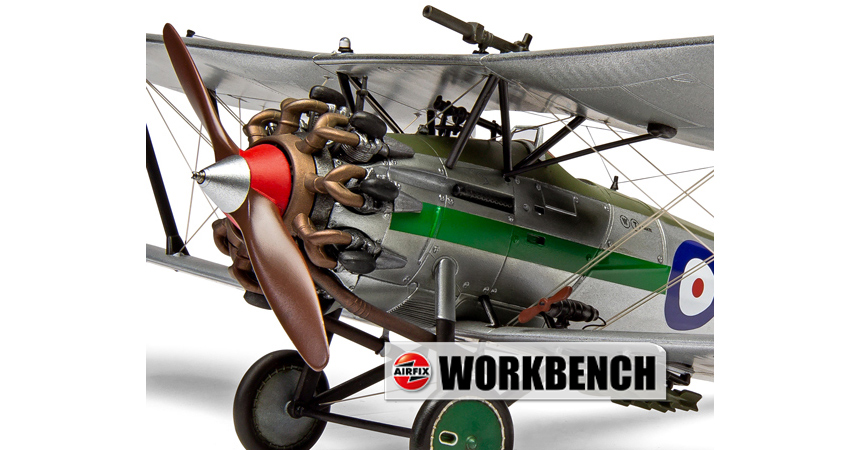
One of the most important aircraft powerplants of the inter war years, Matt has managed to perfectly replicate the Bristol Jupiter engine on all its scale glory within the design of this magnificent new kit.
The Bristol Jupiter powerplant was a masterpiece in aeronautical engine design and could even be considered as the most successful aero engine of the inter war period. An example of engineering excellence at its very best, the Jupiter earned a reputation for performance and reliability and was even colloquially christened the ‘Reliable Radial’ following its introduction, a reputation which allowed it to go on and secure significant sales success. With seventeen licence agreements signed to allow the powerplant to be manufactured around the globe, derivatives of this engine were manufactured in countries such as Italy, Germany, Japan and Russia, powering a great many different aircraft types during the 1930s.
The Bristol Bulldog was constructed using an advanced all-metal main framework structure with fabric covered wings and fuselage, and the new aircraft was evaluated alongside aircraft produced by other manufacturers, advancing to a further round of testing alongside the Hawker Hawfinch. In preparation for this, Bristol made some modifications to their original design, the most significant of which was lengthening the aircraft’s rear fuselage, with the aircraft now carrying the designation Bristol Type 105A (Bulldog Mk.II). This new configuration enabled the new Bristol fighter to win the fly-off contest, by virtue of its better overall serviceability record and crucially, following the receipt of input from pilots who had flown both competing types.
Following its success, an initial order for 25 aircraft was placed and the first of the RAF’s new Bristol Bulldog Mk.II fighters were delivered to No.3 Squadron at Upavon during the early summer of 1929, something which proved rather poetic considering the squadron’s motto was Tertius primus erit, meaning ‘The third shall be the first’. They certainly were when it came to the Bristol Bulldog.
A thing of beauty, the Bristol Bulldog proved to be an incredibly important fighter aircraft in the history of the RAF, equipping 10 of the 13 fighter squadrons defending Britain’s airspace during the early to mid 1930s.
The Bulldog was armed with a pair of forward firing Vickers 0.303 in machine guns mounted either side of the cockpit, however, it would ultimately never fire those guns in anger during a relatively short seven-year period serving with Fighter Command, even though it would go on to equip ten of the thirteen fighter squadrons defending Britain’s airspace at that time. Although it was the most capable fighter of the day, the Bulldog was more closely associated with challenging formation flying and spectacular aerobatics than it was with its prowess in aerial combat, with the Royal Air Force thrilling huge crowds at Airshows and pageants around the country, as they demonstrated the effectiveness of a modernising air force. What the Bulldog did do was help to advance Britain's aviation industry towards the production of the sleek, monoplane fighters which would contest the Second World War, as it highlighted the fact that biplane designs were fast approaching their zenith.
For many people, the most famous incident involving a Bristol Bulldog proved to be a rather unfortunate one, when a capable, but rather headstrong young RAF pilot performed unauthorised, low altitude aerobatics for a group of onlookers and a private civilian aerodrome in Berkshire. Flying so low that the wingtip of his fighter struck the ground during a manoeuvre, his Bulldog cartwheeled across the airfield, inflicting catastrophic injuries on the pilot, to the horror of the gathered onlookers. That pilot was future WWII RAF ace and inspirational national hero Douglas Bader.
Another important legacy of the design technology employed on the Bulldog is that it would influence aircraft which would go on to serve successfully throughout the Second World War, with machines such as the Swordfish and Hurricane all adopting similar construction techniques. In addition to this, from a company design perspective, it would also be an important steppingstone which ultimately led to the introduction of later successful Bristol designed aircraft, such as the Blenheim, Beaufort and Beaufighter.
Such an evocative image, how could we fail but to be captivated by an aviation sight appealing as this?
At one time or another in our individual modelling journeys, we’ve all felt the urge to take on a kit which could be described as being a little out of our comfort zones, a subject which isn’t our usual modelling fare, but can actually end up reinvigorating our passion for the hobby. As far as 1/48th scale subjects are concerned, everybody here at Airfix are hoping that the new Bristol Bulldog Mk.II will turn out to be one of those projects for many people, not just having the wide, instant appeal it undoubtedly possesses, but also proving enticing enough a subject to encourage others to attempt a biplane build for the first time.
Hopefully, the sight of the built model images we are including here will help to do just that, serving to excite those already intending to add this beautiful new kit to their build schedules over the coming few months, but also prove enticing enough to encourage others to spend a little quality time with an aircraft subject which emanates from a period of aviation much earlier that they would usually consider as a subject.
Looking at the new Bristol Bulldog Mk.II tooling from a wider Airfix heritage perspective, many of us will have probably built the Bulldog in 1/72nd scale, a kit which was initially introduced back in 1969 and has only recently been inducted into the Vintage Classics kit hall of fame. Indeed, biplane aircraft as kit subjects in this scale have always been popular with modellers and made available in some numbers, including such aircraft as the Bristol F2B Fighter of the Great War, to the Fairey Swordfish from WWII, however in the larger 1/48th scale, that’s quite a different story.
Replicating an aviation classic as a scale model kit - Airfix have earned an enviable reputation in perfecting this process, but may have just raised the bar higher still with the release of the new Bristol Bulldog Mk.II.
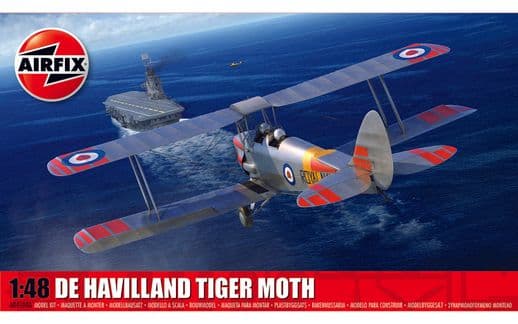
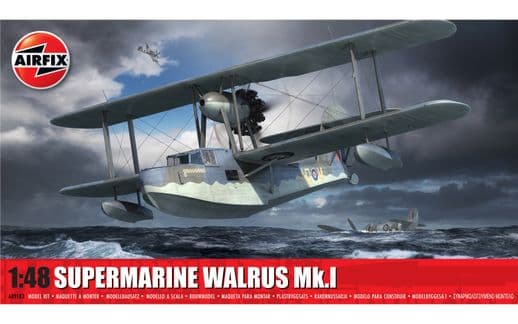
With its reputation for producing a much more appealing modelling representation of subjects such as single engined piston powered fighters from throughout the history of aviation, we have introduced examples of the Supermarine Walrus and de Havilland Tiger Moth in this scale over recent years, both of which come from a similar period in aviation history, however, we have to go all the way back to 1980 and the release of the Hawker Fury to find a classic RAF inter-war fighter type from Airfix in this scale.
It was against this background that our Design Manager Matthew Whiting took on the challenge of enabling this beautiful aircraft to take its place within an Airfix kit range, and with it, bringing some long overdue attention to an aircraft which despite its impressive aviation credentials, could definitely benefit from being brought to the attention of a wider audience. I know we’re a little biased here, but in this regard, we think Matt has achieved this particular brief in fine style.
Before moving on to look at the details behind the three scheme options included with the initial release of the new Bristol Bulldog Mk.II kit, if you would like to revisit our designer interview edition of Workbench, where Matt takes us through some of the finer points of the time he spent working on this project, then please use this New Bulldog link to be taken there.
Now, on with those scheme details .
In the years which followed the devastation of the Great War, the Royal Air Force was forced to endure a savage period of cuts and general contraction, however, a decade later, the arrival of the Bristol Bulldog into service would herald the beginning of a significant period of upgrade and restructuring for the force. Regarded by many as something of a golden era for aviation, the late 1920s and 1930s saw the introduction of some extremely capable new aeroplanes, many of which were adorned with flamboyant decoration inspired by individual Squadron colours.
On the 23rd of May 1929, a newly manufactured Bristol Bulldog Mk.II landed at RAF Upavon, having just made the short flight from the Bristol manufacturing facility at Filton, the first delivery of the type to the first RAF Squadron to be equipped with the new fighter, No.3 Squadron. This first aircraft would be followed by others at regular intervals over the next few months, with the unit finally being at Squadron strength by the end of September.
The airfield at Upavon was at that time one of the oldest active stations in the country and whilst it was home to one of the RAF’s most prestigious squadrons, it was actually a less than ideal location for an airfield. Situated on the edge of Salisbury Plain, the airfield site was originally chosen because of its remote location, because in those days of early flight training, accidents were commonplace, and the military didn’t want prying members of the press reporting anything negative about a life flying military aeroplanes. Unfortunately, the location also featured some challenging topographical features and being situated on a hill, with a steep valley falling away at one end, it regularly suffered from strong and unpredictable winds and even the most capable pilots referred to it as the ‘Airfield on the Hill’. Flying from the airfield was never without its challenges.
Images featuring a new Bulldog kit finished in the lead scheme option of three included with this stunning new kit.
No.3 Squadron shared the airfield with No.17(F) Squadron and its members must have looked on in envy as their colleagues across the airfield took delivery of their gleaming new Bulldog fighters from the summer of 1929 onwards, as they were still operating their ageing Armstrong Whitworth Siskin IIIA fighters at the time and were made to wait for their own Bulldogs to be allocated.
The motto of No.3 Squadron ‘Tertius primus erit’ proved to be rather apt when considering the unit’s historic position as the first to be equipped with the Bulldog, as it translates as ‘The third shall be first’. The airfield at Upavon also had several ‘firsts’ to its name, as it was the aerodrome at which an aircraft made the first night landing anywhere in England, as well as being the airfield used to develop an effective bomb sight for British aircraft, technology which was deployed during the Great War. The first unmanned aerial target aircraft was also developed and successfully tested at Upavon, however, despite its position in Royal Air Force heritage, the fact that it remained as a grass airfield meant that it wouldn’t be suitable for the operation of heavy or jet powered aircraft in the post WWII years.
Once No.3 Squadron had taken delivery of their new Bulldogs, both air and ground staff embarked on a feverish period of conversion training and flight training activity and whilst this would prove slightly monotonous as the weeks and months flew by, they did have the welcome annual distractions of several away days. These included the excitement of the annual Armament Training Camp at Sutton Bridge, attendance at the Hendon Air Pageant and the Air Defence of Great Britain Air Exercises, where the most capable RAF pilots and their aircraft were pitted against each other as the nation’s defences were probed and perfected.
Built in early 1929, Bristol Bulldog Mk.II J-9576 was delivered to RAF No.3 Squadron at Upavon in July 1929, about halfway through the unit’s conversion to the type. It was recorded that the fighter was damaged at Chipping Norton on 7th November the following year, when it overturned during a landing attempt and whilst sustaining quite significant damage, was subsequently recovered, repaired and returned to flying condition.
Having had to suffer the ignominy of being forced to watch the Squadron with which they shared the airfield at RAF Upavon becoming the first to be equipped with the RAF’s latest and most capable fighter aircraft, things were about to change for members of No.17(F) Squadron. By the time No.3 Squadron had returned to the airfield following their first Bulldog equipped attendance at the annual Sutton Bridge Air Gunnery and Bombing camp, they immediately noticed that No.17 Squadron had started taking deliveries of their own Bulldogs and their bragging rights were going to be diminished from that point forwards. Indeed, in the eyes of their opposing squadron at least, they also felt that they now claimed the bragging rights for operating the best-looking Bulldogs in the RAF, as their fighters featured attractive black double zig zag markings down the sides of their fuselage and on top of the wings – this was such an interesting time for RAF fighter squadron markings.
By the Spring of 1930, RAF Upavon was a fully equipped Bristol Bulldog station, the first such station in the Royal Air Force and flying activities at this Wiltshire airfield gained national recognition and even more impetus as a result.
A technological marvel, the Bulldog was the very pinnacle of world fighter technology when it entered Royal Air Force service in 1929.
As No.17 Squadron worked up on their new fighters, an incident occurred which really did highlight the priorities of the Royal Air Force at that time, as RAF Upavon recorded its first flying accident involving Bulldogs. A pair of the squadron’s aircraft were practicing close formation flying over their home airfield when a typically forceful gust of wind took hold of one of them and flung it towards the other. The two aircraft collided in mid-air, however, both pilots managed to regain control of their respective aircraft and land safely back at the airfield, both also avoiding any significant injury – a lucky escape for the squadron.
Things took a turn for the more unfortunate once the squadron engaged in night flying exercises some weeks later. Throughout the year, the squadron’s pilots would engage in night flying exercises and as communications at British airfields were rather rudimentary at that time, there was always a potential for drama when night flying was taking place. Men would use paraffin burning flares out on the airstrip to indicate the wind direction over the airfield for pilots rostered for night flying exercises, with the control tower communicating to them using signalling lamps.
One night in early 1934, four Bulldogs were in the night skies above RAF Upavon when the wind changed direction and required a change in the flare path to be made. This meant that their landing approach now brought them in over the station hangars and an area of high ground on the immediate approach to the airfield. The first two fighters landing without incident, probably causing everyone to come off their guard a little, however, things were about to take a turn for the worse.
The approach of the third fighter was far too low and it struck the hill on the airfield perimeter, ripping off its undercarriage and coming to rest in ignominious fashion on its nose at the edge of the airfield. Base personnel rushed to the scene to help the pilot, who thankfully had only suffered wounds to his pride, but with the sound of an engine in the night sky, everyone quickly realised that they still had an aircraft to recover.
A Bulldog finished in the markings of an RAF No.17(F) Squadron Bulldog, the second unit to be equipped with the type and a unit which shared its home airfield with the first Bulldog unit.
Quickly re-positioning the flare path to avoid the crashed fighter, they prepared to receive to last Bulldog. Unfortunately, this pilot was also approaching the airfield much too low and struck the same hill, again ripping the undercarriage off the aircraft and subsequently coming to rest on the airfield in predictably similar manner to the one earlier. On the same night, No.17 Squadron had lost two of its Bulldogs damaged in similar circumstances within the space of twenty minutes, not their finest hour and not something they were particularly proud of. The only positive was that everyone escaped the incident unharmed and able to fly another day.
Both Nos. 3 and 17 Squadrons left RAF Upavon in May 1934 to take up residence at RAF Kenley in Surrey, a move which presumably wouldn’t have come as a disappointment for many, as it brough with it the distractions offered by a trip into the London much closer for them. Despite their aircraft taking part in numerous pageants and formation flying demonstrations, the days of No.17 Squadron’s Bulldogs were now already numbered and after just six years of service, they were to be replaced. In August 1936, the pilots of No.17 Squadron took off from Kenley for the final time in their Bulldogs, ordered to fly up to RAF Waddington, where they were to pick up their new aircraft – Gloster Gauntlet II fighters.
Bristol Bulldog Mk.II K-1088 was produced at Bristol’s Filton facility as the 9th aircraft of the second production batch and delivered to RAF No.17 Squadron at Upavon during 1930. She would only have a short service life wearing the black double zig zag markings of the unit, because she is logged as having been struck off charge by the middle of February 1933, presumably as a result of a particularly heavy landing, or perhaps a flying accident.
As the RAF’s premier new fighter in squadron service, the Bulldog obviously attracted plenty of interest from several overseas suitors, with the Royal Australian Air Force becoming early customers. After the RAF had received a decent number of aircraft to equip their first squadrons and the Royal Siamese Air Force had been sent two aircraft for evaluation for their own new fighter contest, the next eight newly built Bulldogs were destined for Australia. With construction numbers 7389 to 7396, the new fighters would be allocated the serials A12-1 to A12-8 in RAAF service and were loaded aboard the freighter SS Fordsdale in February 1930 for the onward journey to Australia.
The Bulldogs arrived at Victoria Docks, Melbourne on 14th March 1930 and once unloaded, were transported to RAAF base Laverton where they were later assembled and tested by No.1 Aircraft Depot who were based there. Following acceptance, they were assigned to an un-numbered fighter squadron at No.1 Flying Training School at Point Cook, Melbourne and as they represented the absolute pinnacle of fighter technology in the country at that time, only elite pilots were allowed to fly them. As a consequence, the aircraft took on something of a mythical status, with those allowed to fly them being championed as aviation gods at the time.
A Bulldog kit finished in the scheme details of one of the RAAF Bulldogs which were so loved by pilots and the general public alike during their service in Australia.
The Bulldogs of the Royal Australian Air Force would be used extensively in performing flight demonstrations for the population of Australia and quickly became loved for their exciting displays of flair and daring. Initially only the preserve of the very best pilots the RAAF could call upon, wherever the Bulldogs were due to perform, huge crowds would gather in anticipation and if the pilots were due to land back at the venue following the completion of their displays, were treated like celebrities and mobbed wherever they went.
Bulldog A12-1 would prove to be rather prolific in performing those dashing aerial demonstrations in Australia, often piloted by Flt. Lt. Frederick R.W. Scherger, a man who was considered to be the Royal Australian Air Force’s most accomplished aerobatic pilot. This pairing would thrill audiences right across Australia, whilst at the same time also highlighting the excellent serviceability of the Bulldog, even though it was often required to operate in some relatively harsh and primitive conditions.
She would also be one of the aircraft to take part in a commemorative flypast for King George VI Coronation parade which took place in Melbourne in May 1937, however, by June 1939, had been withdrawn from service and allocated an instructional airframe number.
More Bulldog image delights, as we have this rear three-quarters shot of a fighter wearing Royal Australian Air Force markings.
During their service in Australia, the Bulldogs of the Royal Australian Air Force were revered by pilots and the general public alike and as they represented the most advanced fighting aeroplanes in the world at that time, it could be argued that they were loved and admired by the Australian public even more than they were back in the country of their manufacture.
Throughout the history of our Workbench blog, we have been privileged to be in a position to follow all the very latest Airfix kit projects from announcement, right through to initial release, bringing our readers plenty of exclusive content along the way. The new Bristol Bulldog Mk.II is just the latest project we have followed in this manner, and we are pleased to now be welcoming this appealing addition to current Airfix range into stock.
By the time this latest review is posted, the new Bulldog Mk.II should be in our warehouse and being prepared for onward shipment to their new owners, so we won’t have to wait long now before we can inspect the new kit for ourselves. Just as our Design Manager Matt will be excited to see how his latest project is received by the modelling community, everyone here at Airfix hope people enjoy spending some scale time with this beautiful aeroplane, one which is just about to receive a little more modelling recognition than it has historically enjoyed over the years.
A sight which is soon to be familiar in model shops the world over, our new Bristol Bulldog Mk.II kits is about to be unleashed on the modelling world.
Which scheme will you finish your Bulldog in? We don’t have much time left to make up our minds, so we’d better secure three kits and do the lot!
We are afraid that's all we have for you in this latest edition, but we will be back next Friday with more project development updates and the very latest Airfix kit exclusives. In the meantime, we are always keen to hear your views on all things Airfix and in particular, any thoughts and opinions you may have regarding our Workbench blog. If you would like to drop us a quick line, could we please ask that you use our workbench@airfix.com email for all correspondence.
To re-visit any of the Airfix blogs we have produced over the past seven years or so, please head to our main Workbench hub, where you will find our entire blog back catalogue and all the Airfix design projects we have already covered.
All our dedicated official social media sites can be accessed by clicking the respective link icons at the foot of this page, or by heading to the Airfix homepage. Other useful Airfix links are:
Facebook, YouTube, Twitter and Instagram official sites
Please join us for more Airfix updates next week and thank you for your continued support.