Welcome to this latest edition of our Workbench blog and all the news, updates, and modelling exclusives from the fascinating world of Airfix.
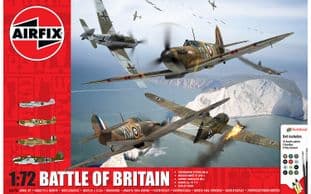
In our previous blog, we featured our Battle of Britain Gift Set release, which is intended to be an appropriate modelling tribute to this year’s 85th Anniversary commemorations of this aerial struggle. The kit features two of the most important aircraft Britain’s aviation industry ever created, in the Spitfire and Hurricane, however from a development of the Royal Air Force perspective, this week’s blog subject is unquestionably deserving of equal billing. When the Bristol type 142 made its first flight 90 years ago this weekend, it represented a significant leap forward in modern monoplane aircraft design, a twin engined aircraft which posted superior performance than any fighter aircraft in service at that time.
That aircraft would go on to be the Bristol Blenheim, an aircraft which also had the reputation for providing Britain with the stimulus for serious Royal Air Force modernisation, something which would prove vital during the summer of 1940 and the Battle of Britain. Indeed, the Blenheim would play a significant role during the Battle of Britain, be that in standard bomber guise, or as one of the 200 or so aircraft which were modified to become long range/heavy fighters and nightfighters, a variant which will be the main focus of our attentions here. As we prepare to welcome our 1/72nd scale tribute to the Blenheim heavy fighter into the current range, we very much find ourselves in the company of a true British aviation classic this Workbench weekend.
As we mark the 90th anniversary of the first flight of Lord Rothermere’s ‘Britain First’, we’re behind the controls of a scale Bristol Blenheim in this latest edition of Workbench.
The Bristol Blenheim occupies a lofty position within the annals of a modern Royal Air Force.
The period of time between the two world wars was truly fascinating from the perspective of the pace of aviation development throughout the world. The Great War had shown how the aeroplane would be playing a significant role in any future conflict, as they had developed from simple airborne observation platforms to deadly dominators of the skies in just a few short years. Although this development did continue into the 1920s, the pace had slowed somewhat as the world tried to forget about the horrors and losses of war, even though military planners were always mindful of the fact that a strong air force might help to prevent a repeat of this devastating conflict.
The decade which followed saw the clouds of war gathering ominously once more, and aircraft development taking on a renewed level of impetus for many nations. Existing biplane designs were perfected to produce the finest of their breed, resulting in fast, highly manoeuvrable aircraft entering service right across the world. Even as these gleaming new fighters were being adorned with the markings of their new squadrons, new aircraft shapes were beginning to come off the drawing boards of the world’s foremost aviation manufacturers to take to the skies for the first time, as the quest for ever increasing speed was prevalent.
It was within this environment that Lord Rothermere, influential owner of the Daily Mail Newspaper and keen observer of the aviation scene, grew increasingly frustrated at the number of records being set by nations other than his beloved Britain, and challenged the nation’s leading aircraft manufacturers to do something about this regrettable situation. As a private venture, and determined to capture the civilian aircraft world speed record for Britain, he offered to fund the development of an aircraft capable of achieving this, a program which would eventually result in the Bristol Type 142 taking to the air, a sleek, twin engined monoplane design whose profile was dominated by its two imposing Bristol Mercury radial engines. Capturing the world speed record for a civilian passenger aircraft, the new Bristol design gave Lord Rothermere what he’d desperately been hoping for, and he subsequently christened the spectacular new aircraft ‘Britain First’.
Flight trials of the new Bristol aircraft proved to be something of an embarrassment for the Royal Air Force of the day, who had just introduced their latest fighter into squadron service, the Gloster Gauntlet. Although the Gauntlet was undoubtedly an excellent aircraft in its own right, and a full 56 mph faster than the Bristol Bulldog it replaced (it was actually the fastest RAF aircraft in service between 1935 and 1937), it was bettered by Rothermere’s Bristol Type 142 by a significant 77 mph. Indeed, even the Gloster Gladiator, which is generally regarded as the pinnacle of biplane fighter design and was still under development at that time, was slower than the new Bristol passenger design by some 50 mph.
Airfix and stunning box artwork go hand in glove, so for an aircraft as significant as the Blenheim, we can call upon some absolute crackers from our back catalogue.
Hoping the impressive performance of the new Bristol design would shock the British aviation industry into action, Lord Rothermere gifted his ‘Britain First’ to the nation, with the Air Ministry immediately sending the aircraft for evaluation trials, and to assess its suitability for conversion to a fast attack bomber. Incorporating a host of advanced design features, such as all metal stressed skin construction, retractable undercarriage and flaps, and variable pitch propellers, the new aircraft represented a significant leap forward in aviation technology and impressed military officials so much that they placed an immediate order for a bomber variant of the Bristol Type 142.
With an official designation of the Bristol Type 142M, the new RAF bomber was soon to be given its now famous service name of Blenheim Mk.I and it heralded the arrival of a new breed of advanced RAF aircraft.
The first Bristol Blenheim Mk.I light bombers entered service in March 1937 with RAF No.114 Squadron, based at Wyton in Cambridgeshire. Replacing the squadron’s Hawker Hind biplane bombers, the new Blenheim immediately presented the RAF a welcome increase in offensive capability, as it was over 100 mph faster than the Hind and at that time, was the fastest light/medium bomber in the world. Significantly for the historic legacy of the Blenheim, this was now the aircraft against which all other fighters would be judged and whilst it was undoubtedly an extremely capable aircraft at the time of its service introduction, its performance was now a benchmark for all future designs – they had to be able to overcome a Blenheim. This significant fact would work against the Blenheim and over the course of the next few years, every aircraft currently under development, especially ones which may potentially be sent against it in combat, would have the opportunity to assess its capabilities and ensure they could overcome them.
Beautifully finished models wearing both the scheme options included with this impending 1/72nd scale Bristol Blenheim Mk.IF kit re-introduction.
In just a few short years, aviation technology advanced at such a rate that this record breaking aircraft from 1935 would prove to be extremely vulnerable to the latest breed of fighters it would engage in combat only four years later.
Although rarely regarded as one of Britain’s foremost aircraft of the Second World War, it really is difficult to think of a more important type in the history of a modernising Royal Air Force as the clouds of war gathered in late 1938. As one of the most advanced aircraft in widespread service in the lead-up to conflict, the Blenheim would be used extensively during preparations for war, whether that be training crews for both defensive and offensive operations, or flying to help establish a cohesive national ground based detection and observation network.
Even though most Blenheim crews would have been unaware of the tactical importance at the time, numerous sorties were flown to test the effectiveness of the Chain Home early warning radar network established to provide Britain with a viable ground controlled electronic interception system. They would also be employed in perfecting the ‘back-up system’ manned by the Royal Observer Corps, something which would also prove crucial during the Second World War, providing real-time air raid tracking once raids had moved inland.
Fighter Command could call on the services of seven squadrons of Blenheim long-range fighters just prior to the start of the Battle of Britain.
Significantly, at the outbreak of the Second World War, the Royal Air Force had more Bristol Blenheims in service than any other aircraft type, equipping both bomber and fighter squadrons, and they would see extensive service throughout the early months of the war. Indeed, just 63 minutes after Britain had declared war against Germany, a Blenheim of No.139 Squadron from RAF Wyton carried out the RAF’s first operational sortie of WWII, as it conducted a reconnaissance flight over the German naval base at Wilhelmshaven – the crew became the first airmen to cross the German coast in WWII.
The following day, Blenheims of Nos 107 and 110 Squadron attacked shipping at Wilhelmshaven, but were forced to make their attack run from an inland direction and flying back out towards the sea. This was because crews were required to avoid the possibility of inflicting civilian casualties, however, this also allowed ground defenses and the Luftwaffe additional time to target the raiders. Five Blenheims and three Vickers Wellingtons were shot down, becoming the first RAF aircraft casualties of the war and unfortunately for Blenheim crews, a sign of greater losses to come.
During the early months of the Second World War, Blenheim crews would carry a heavy burden of strike operations against enemy targets, both from bases in the UK and in France as part of the Advanced Air Striking Force and British Expeditionary Force. Being relatively lightly armed and with the constant weight of military equipment additions increasing the aircraft’s weight, the Blenheim was no match for the modern fighters of the Luftwaffe and despite the heroic actions of a great many Allied pilots, the RAF suffered significant losses during this period.
Blenheim crews were also tasked with flying lengthy missions over the vast expanses of the North Sea in support of the Norwegian Campaign, where the RAF lost as many Blenheims to weather and serviceability related issues, as they did to enemy action. Incredibly, even though these missions were being flown over vast expanses of inhospitable ocean, Blenheim crews were not equipped with life vests or life rafts – nevertheless, they still did their duty, mission after mission.
After a disastrous operation attacking harbour facilities at Waalhaven on the 10th May 1940, Blenheim heavy fighters were withdrawn to fight a nocturnal war.
Available to the Royal Air Force in large numbers, the Blenheim was also pressed into service as a long-range heavy fighter and specialist nightfighter, where the RAF’s Blenheims continued to ‘strike first’ in this role, as they performed Fighter Command’s first attack against German territory on 28th November 1939. Aircraft from Nos.25 and 601 Squadrons mounted a fighter sweep operation against the Luftwaffe sea plane base at Borkum, with several enemy aircraft damaged or destroyed during the raid.
The Wilhelmshaven area was also to witness another Blenheim first in March 1940, when an aircraft of No. 82 Squadron, piloted by Squadron Leader Miles V. Delap attacked and sank German U-boat U31. This proved to be particularly significant, as this was the first U-boat to be sunk by an aircraft attacking by itself and unaided by naval forces.
By the time of the Battle of Britain, the limitations of the Blenheim as a day fighter were already clearly apparent, in a similar way to how the German Messerschmitt Bf 110 Destroyers had proved disappointing when operating in contested airspace. Even though the Royal Air Force had nine operational squadrons equipped with the aircraft, heavy losses during daylight combat operations quickly saw them being withdrawn from this role, leaving Fighter Command’s Spitfires and Hurricanes to take the fight to the Luftwaffe.
Crews were re-trained to help establish a cohesive night fighting force in the night skies over Britain, with these airmen, along with countless Blenheim crews serving in many theatres of operation by both day and night, going on to make a significant contribution to the British & Commonwealth war effort throughout the duration of the Second World War. With over 4,400 aircraft built and with particularly large numbers being in service during the early months of the Second World War, the Blenheim was used extensively as Britain attempted to halt the advance of Axis forces across Europe, North Africa and the Mediterranean.
The Bristol Blenheim really must be considered one of the most important British aircraft types ever to enter Royal Air Force service.
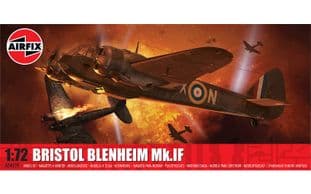
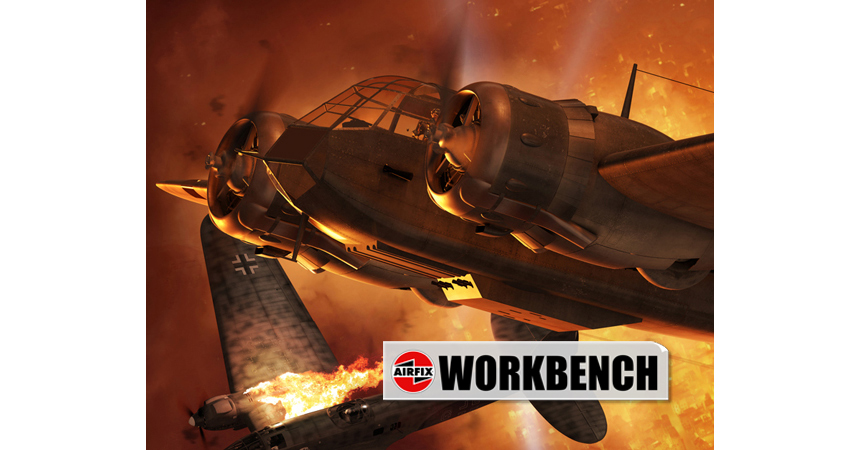
The stunning box artwork which adorns this latest impending Blenheim release featured a nightfighter hunting German bombers during the night blitz of 1940.
As one of Britain’s most important aircraft of the 1930s and early 1940s, the Bristol Blenheim has long been a popular subject with the Airfix modelling community since first appearing in the 1/72nd scale range back in 1968, particularly as its just such an interesting modelling subject. We wonder how many of our readers will remember spending time with the light blue plastic of a late 60s, early 70s release of this kit, one adorned with the glorious box artwork created by Roy Cross, the one showing a Free French Blenheim engaged in a coastal bombing mission? This kit seems to have had a profound impact on so many people who enjoy this hobby.
Although still regarded as a hobby classic, that original Blenheim kit was definitely of its time, and was in need of coming across the workstation of one of our talented designers, which it subsequently did back in 2014, and with that being the case, became one of the first newly tooled model kits to have appeared within the then new Workbench blog. Since then, the Blenheim has continued to be an incredibly popular subject within our hobby, and has even gone on to attract the attentions of our designers once more, as it is now also available in 1/48th scale.
Equally at home displayed with the Spitfires and Hurricanes of Fighter Command, as it is with the Hampdens, Wellingtons and Whitleys of Bomber Command, the Bristol Blenheim really is deserving far more attention than it usually receives, however, we have to say that we think we’re doing our bit. With two magnificent models of the aircraft available in two different scales, we have seen a renewed interest in the Blenheim as a result, interest which always sees this important aircraft occupying a significant position within the subject popularity charts each range.
Posting this latest update to coincide with the 90th anniversary of the first flight of the Bristol Type 142, we’re continuing to champion the magnificent Bristol Blenheim.
Equipping more Royal Air Force Squadrons than any other aircraft type at the outbreak of the Second World War, Blenheim crews would be called upon to perform many roles in defence of the nation, some of which were not initially apparent to them whilst engaged in their exhausting training schedule. Flying a great many practice sorties in formation with and in conjunction with RAF fighters as they prepared for war, Blenheim crews were also unwittingly helping to perfect the network of radar and Observer Corps stations across the country, as the British military prepared to repel the anticipated German attack which would surely come.
Initially being led to believe they were helping fighter crews to develop their attack strategies for dealing with the Luftwaffe, what they were actually doing was aiding radar ground controllers in detecting and vectoring Fighter Command’s response to simulated enemy air raids, something which would prove crucial in the air battles soon to come.
RAF Blenheim night fighter units would also be called upon to help perfect the relatively crude and rather unreliable early versions of airborne interception radar, which whilst initially proving to be of little help in stalking enemy raiders in the dark, underwent constant modification and improvement, which eventually allowed the later Beaufighter and Mosquito nocturnal hunters to become much more effective in their role. Despite many initial challenges, it would be a Blenheim night fighter which claimed the first RAF victory over a German aircraft using airborne night interception radar, yet another claim to fame for this magnificent aircraft.
Full scheme and built model images detailing this most attractive finish option.
The striking all- black nightfighter scheme available as our lead scheme presents Bristol Blenheim Mk.IF K7159, an aircraft which was assigned to No.54 Operational Training Unit based at RAF Church Fenton during late 1940. Following their heavy losses during the Battle of Britain, the Luftwaffe maintained their onslaught against Britain by mounting devastating night raids against cities, factories and airfields fight across the country, a switch which clearly highlighted Britain’s need for an effective night defence force of, one which was capable of shooting down night raiders in significant numbers.
Once again, the venerable old Bristol Blenheim was pressed into service, not only in helping to perfect the technology of night warfare, but also in training the crews who would be required to fight this specialised nocturnal battle. The airfield at Church Fenton, near Tadcaster in Yorkshire was just far enough north to allow night fighter crews to train effectively without too much disruption from visits by the Luftwaffe. Although Luftwaffe bombers were still a constant threat to the nation and raids in the north still took place, they were at the extreme range of German bomber operations and were therefore quite risky and as a consequence, relatively sporadic.
The work done by Blenheim nightfighter crews at the start of the Blitz would help to prepare the ground for the effective night defences Britain could call upon later in the war.
At the outbreak of war, whilst Blenheim bomber units outnumbered their long-range fighter counterparts, Fighter Command did have four regular squadrons and three Auxiliary units in service equipped with the Mk.IF, one of which was No.600 (City of London) Squadron. These were all classified as Day Fighter units at that time, although from the first operations mounted, they would all be re-classified as dual role day and night fighter units.
When Hugh Dowding was asked to create more fighter squadrons in the weeks leading up to the Battle of Britain, the only aircraft available to him that were not already allocated were Bristol Blenheims, and it’s interesting to note that at their operational zenith, Fighter Command had no fewer than Nineteen squadrons equipped with the Blenheim heavy fighter.
With Britain lacking a specifically designed heavy fighter, these Blenheim Mk.IF aircraft were actually incredibly useful, as they possessed the additional range required to mount long coastal patrols, something current single engined fighters simply couldn’t match. As much of the Phoney War was spent shadowing and protecting shipping around the British coastline, there would be plenty of opportunities for Blenheim crews to perfect their skills in this role. By the time of the Battle of Britain however, coastal partrols by Blenheim long-range fighters were proving too costly from a losses perspective, forcing RAF command to re-allocate the majority of their remaining force to night operations, to protect crews.
The Bristol Blenheim Mk.IF was the long-range/heavy fighter variant of this famous aircraft, and differed from the light bomber configuration in several ways. Perhaps the most significant difference came with the addition of a streamlined ventral gun pack, one which housed four .303 machine guns and packed quite a punch if all were brought to bear on a concentrated area of an enemy aircraft. These specialist gun packs and their mounting frames were still relatively basic pieces of engineering, with much of this work sub-contracted out to the Southern Railway workshops at Ashford, in Kent.
No Battle of Britain aircraft collection can be considered complete without at least a couple of Bristol Blenheims within it.
Attached to the underside of the aircraft over the standard bomb bay, Mk.IF aircraft also retained the single wing mounted Browning machine gun and the Vickers ‘K’ gun of the bomber aircraft, with the ‘K’ gun being mounted in a semi-retractable, hydraulically operated dorsal turret.
No.600 Squadron would be heavily committed to operations during the early stages of the Second World War, working closely with the Royal Navy in providing effective reconnaissance and shipping protection flights around the clock, but mainly during daylight hours. They would also be called upon to mount offensive strike operations into enemy occupied Europe, although these cruelly exposed the vulnerability of the aircraft when coming up against committed enemy opposition.
On 10th May 1940, six Blenheim Mk.IF aircraft from No.600 Squadron were sent to attack the Waalhaven harbour complex in Holland, however, German defences would claim five out of the sic attacking aircraft and their crews. This tragic loss brought about an almost overnight re-allocation of Blenheim fighters to a night operations role, in an attempt to prevent such horrendous losses being suffered in future.
Although this heavily armed variant of the Blenheim was deemed effectively incapable of defending itself if used on daylight operations, the poor Blenheim bomber crews would have to soldier on in their role for many months to come, underlining the bravery and heroism of RAF Blenheim crews who fought throughout the Second World War.
Our latest Bristol Blenheim kit offering looking resplendent in all its box presentation glory.
The aircraft covered by this scheme has a fascinating early war story to tell. Whist embarking on a defensive patrol off the coast of Ramsgate on the night of 9th August 1940, this Blenheim was thought to have suffered engine failure, with the crew subsequently bailing out into the Sea. There is some conjecture as to the actual cause of the incident, as some reports suggesting the aircraft fell victim to a marauding Messerschmitt Bf 109E fighter, one flown by Oberleutnant Karl-Heinz Metz of 8./JG.2. Other reports claim the Blenheim was the victim of a friendly fire incident, with a shore based Anti-Aircraft battery opening up on the RAF nightfighter, fearing it was an incoming raid. Thankfully, both crew members aboard the Blenheim survived the incident to fly again.
The Bristol Blenheim really is a landmark aircraft in the annals of Britain’s aviation heritage and is definitely one of those aircraft which hasn’t received the accolades and public affection it certainly deserves. With just one Blenheim remaining in airworthy condition to this day, isn’t it time we added a Blenheim or two to our collections, even if just to recognise how important this aircraft was to Britain at the start of the Second World War.
This beautiful little kit is expected in our warehouse next week.
An Airfix illustrator’s work may be enjoyable and rewarding, but is never done. Here we see the full branded presentation of the new Bristol Blenheim Mk.IF artwork files.
We are afraid that's all we have for you in this latest edition, but we will be back next Friday with more project development updates and the very latest Airfix kit exclusives. In the meantime, we are always keen to hear your views on all things Airfix and in particular, any thoughts and opinions you may have regarding our Workbench blog. If you would like to drop us a quick line, could we please ask that you use our workbench@airfix.com email for all correspondence.
To re-visit any of the Airfix blogs we have produced over the past seven years or so, please head to our main Workbench hub, where you will find our entire blog back catalogue and all the Airfix design projects we have already covered.
All our dedicated official social media sites can be accessed by clicking the respective link icons at the foot of this page, or by heading to the Airfix homepage. Other useful Airfix links are:
Facebook, YouTube, Twitter and Instagram official sites
Please join us for more Airfix updates next week and thank you for your continued support.