Welcome to this latest edition of our Workbench blog and all the news, updates, and modelling exclusives from the fascinating world of Airfix.
We’re back to just a single update for this week’s edition of Workbench, featuring a new and highly anticipated impending kit introduction to the current Airfix range. As any Airfix fan worth their salt will tell you, this famous hobby brand and the Supermarine Spitfire have become inextricably linked over the years, with our various kit representations of these aircraft always being the most popular in their respective ranges and have probably been responsible for starting more people off in this hobby that any other kit subject.
From the first Spitfires to enter service to charting the various upgrades and improvements this incredible aircraft was capable of accepting over its 16 year Royal Air Force career, nobody has paid respect to the Spitfire more effectively than Airfix over the years, a proud boast which shows no sign of abating any time soon, and reaffirmed by the recent announcement of our new 1:24 scale Spitfire Mk.VIII kit. For this latest update, our focus is on the aircraft which marked the swansong of the Spitfire’s proud operational service career, including the actual aircraft which made that final RAF Spitfire sortie in 1954, but went on to continue her career with another air force. These Spitfires may have been unarmed, only firing their cameras, but they represented the pinnacle of Spitfire performance and were very different machines to the ones which contested the Battle of Britain 14 years previously.
You can’t beat a Spitfire weekend, and this one will feature an exclusive new look at the box artwork produced in support of this impending release, along with pictures of models finished in both scheme options included with the new kit.
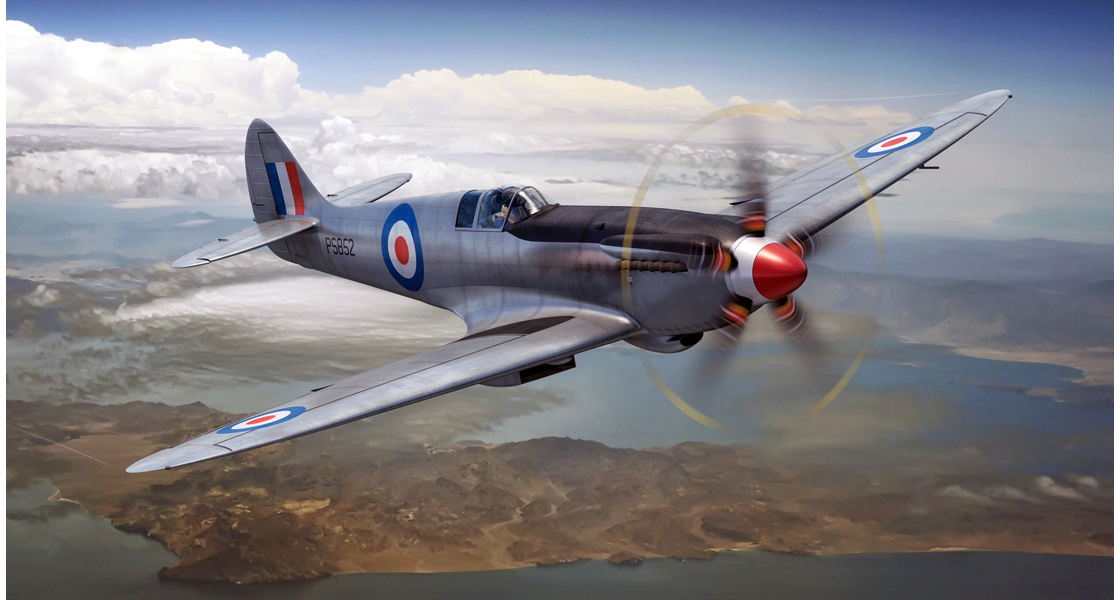
Unarmed photo reconnaissance Spitfires relied on speed, altitude and pilot ability to evade detection and interception by enemy aircraft, as they went about bringing back the vital imagery they had been sent to secure. This previously release box artwork featured on our 1:72 scale Spitfire PR.XIX kit.
It can be surprising to learn that despite the aircraft which served during the Second World War being some of the most famous machines in the history of aviation and still the subject of fascination for millions of people, these iconic machines weren’t built to last. Taking such factors as combat attrition rates, changing operational requirements and the need to constantly improve performance into consideration, the service life expectancy of most aircraft types during the war was assumed to be more a matter of months rather than years.
For that reason, the service longevity of their incredible new aircraft would not have been the highest of their priorities when the Vickers Supermarine project team watched with excitement as Chief Test Pilot Joseph ‘Mutt’ Summers lifted Spitfire prototype K5054 from the grass airstrip at Eastleigh Aerodrome and into the air on 5th March 1936 for the first time. Although everyone would have been delighted with the performance of the aircraft, and probably also with how stunning it looked, it’s unlikely that any would have been considering how long this new fighter would subsequently remain in RAF service. With war clouds looming, it was now all about making this promising prototype into a fighting, service aeroplane and providing the nation with an aerial means of defending itself.
If we could go back in time and tell those engineers and technicians that what they had created would still be in RAF service 18 years later, they would have probably thought we’d lost or minds, however, that was the Spitfire’s destiny. Indeed, if we include the aircraft of the Battle of Britain Memorial Flight and the many private operators still flying Spitfires to this day, we would be telling them that Spitfires would still be flying 88 years later, and that would certainly have seen us being chased around the airfield by somebody wielding a large micrometer.
The Spitfire’s service longevity and adaptability went hand-in-glove with constant developments taking place at Rolls Royce Aero Engines, where the engineers were obsessed with trying to wring every last horsepower of performance out of their engines. The arrival of the throaty and impressively powerful Griffon engine provided the Spitfire with a performance increase of over 100mph above that of the prototype, much appreciated by the photo reconnaissance pilots who were plying their trade deep into enemy territory, without the benefit of any armament for self-protection. For them, speed, height and piloting skill was their only protection.
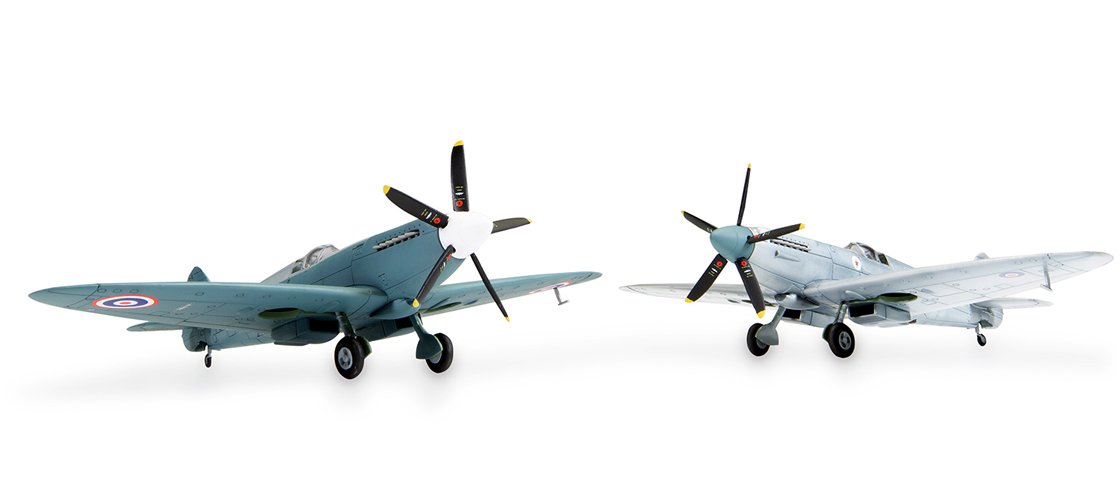
1:72 scale built model delights. This image features built examples of both scheme options included with this impending Spitfire addition to the current Airfix range.
As the Second World War progressed, the need for regular and reliable aerial reconnaissance imagery turned this kind of flying into an art form, with an impressive network of support behind it. Prior to the use of Spitfires in this role, larger aircraft types had been carrying out these missions from the very first days of the war with mixed results, and it quickly became apparent that the two most crucial factors in establishing an effective photo reconnaissance service were speed and altitude, along with specialist training. The RAF simply didn't have aircraft capable of consistently carrying out such missions at that time.
To make matters worse, the Germans knew exactly what these aircraft and their pilots were attempting to do, and they were steadfast in their determination to prevent them from returning home with the valuable imagery they had been sent to obtain, modifying their own aircraft to make them even more effective as PR killers.
As Britain’s search for an effective photo-reconnaissance aircraft continued, two standard Spitfire Mk.I fighters were modified specifically for these duties and whilst these were certainly an operational improvement over the Blenheims and Lysanders which had previously been performing such missions, the RAF still had work to do if their photo reconnaissance Spitfires were to prove successful in this highly specialized role.
Work continued in a bespoke manner until the introduction of more powerful variants of the Spitfire transformed the art of aerial reconnaissance, allowing missions to be flown at higher altitudes, at greater speeds and over longer distances. Now, all the lessons learned over previous years and months could be brought to bear in perfecting this service, and even though PR Spitfires would operate wherever British forces were deployed and their services were in great demand, it's always surprising to discover that relatively few aircraft were produced in this configuration.
The pinnacle of Spitfire photo reconnaissance capability arrived with the introduction of the Rolls Royce Griffon-powered variants of the aircraft, which made full use of the exceptional support network behind the gathering, examining and dissemination of photographic intelligence in Britain. Handling of the new aircraft was generally excellent and they were real 'speedbirds', something their pilots relied upon, as they were flying unarmed missions deep into enemy occupied territory.
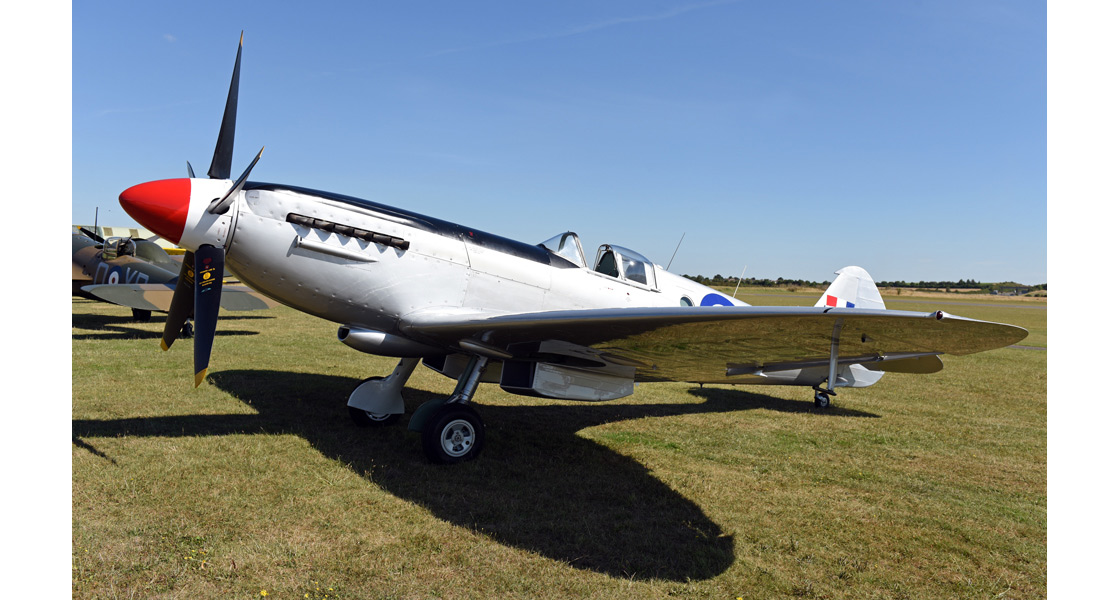
An aviation thing of beauty, the Griffon-powered Spitfire PR.XIX was as potent as it was attractive and it certainly was stunning!
Flying at altitudes of around 40,000ft, PR.XIX Spitfires were impervious to ground defences and interception by most piston-engined Luftwaffe fighters. Indeed, even the feared Messerschmitt Me 262 would have difficulty bringing down a Spitfire PR.XIX, even if one could be spared from anti-bomber duties. If a Spitfire was being stalked, the tactic used by most pilots was to enter a shallow dive, gradually building up more speed as they gently descended earthwards. A pilot also had the option of increasing altitude further and whilst there were reports of Spitfires flying above 40,000ft, this was actually an exercise fraught with danger.
Capable of maintaining a steady 370mph even at extreme altitude, these aircraft also carried the highest internal fuel load of any PR Spitfires, all attributes which made these the most effective clandestine, information-gathering variants of this famous aircraft. Clearly, when operating at these altitudes, the aircraft were usually only deployed on days when the weather was fine, as cloud cover and stormy conditions would preclude the taking of photographs.
If cloud cover was unimpededly obscuring any target, PR pilots had the option of descending to a lower altitude to secure the imagery they needed. However, this significantly increased the risk or interception, or sustaining damage inflicted by enemy flak batteries. Photo reconnaissance Spitfires would regularly be sent to provide raid effectiveness imagery following a bombing mission, arriving over the target area only minutes after the last bomb had been dropped, with their pictures determining it the bombers would have to return again in the days which followed.
So effective were these aircraft in carrying out this specialist role, that they continued to perform these duties in the years after the Second World War, not only being regarded as some of the fastest Spitfires in service, but also some of the last. Operating in the heat and humidity of the Far East, these Spitfires were in their element, soaring at speeds and altitudes that the first prototype aircraft could never have imagined attaining, the final custodians of an aviation legacy which remains undiminished by the passage of almost a century of aviation.
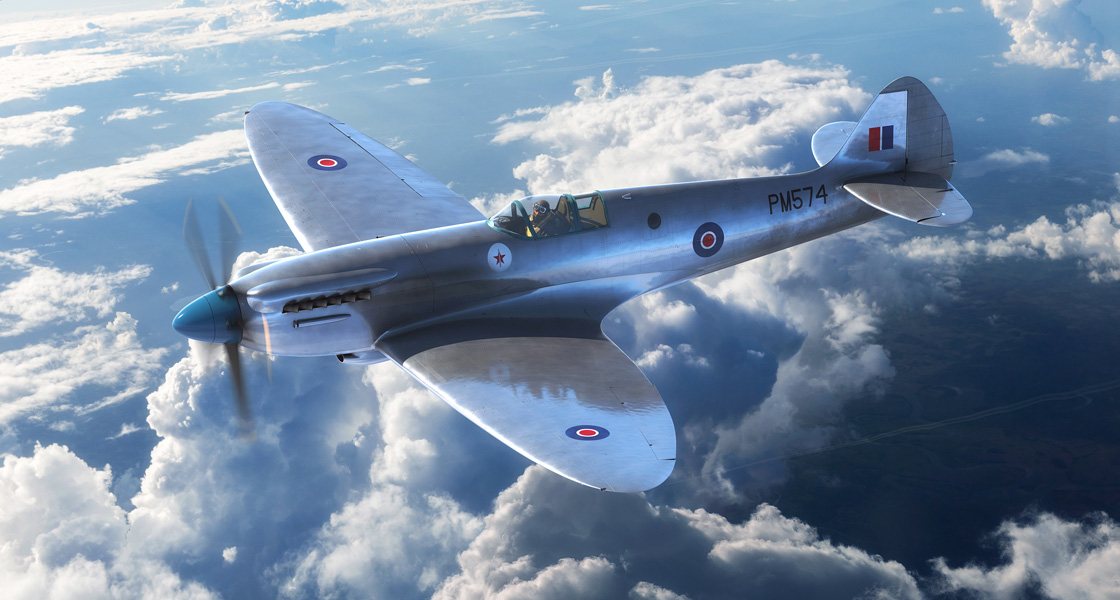
Rhapsody in natural metal, has a Spitfire scheme ever shown off the beautiful shape of this famous aircraft more effectively that this?
Supermarine’s snooping Spitfire pilots may not have been flying aircraft which would have allowed them to build up their personal victory tallies, but they were unquestionably some of the most potent piston-powered fighting aeroplanes ever conceived and as such, required some firm handling. With their only targets being photographic ones and with all armament removed for speed and the carrying of additional fuel, these aircraft were the scourge of the Wehrmacht, always watching what they were doing and ensuring all their secrets didn’t remain secrets for long.
With several PR.XIX Spitfires having served on the UK airshow circuit throughout the post-war years, these potent machines have become a firm favourite with enthusiasts and by association, also with modellers around the world. From an Airfix perspective, the powerful PR.XIX has been available in both 1:72 and 1:48 scale since 2009 and 2013 respectively, with both appearing rarely in subsequent ranges since those dates.
With regard to the 1:72 scale tooling which is the focus of our attentions this week, this lovely little kit has only been released twice as an individual standalone model release, so its impending return is something many modellers will be looking forward to. Marking two of the Spitfires which brought the RAF service legacy of this incredible aircraft to a close, the two scheme options included with this soon to be released new kit are:
The only dedicated Photo Reconnaissance variant of the Spitfire to be powered by the Rolls Royce Griffon engine, the PR.XIX may have been a hybrid aeroplane, constructed using components from several other variants of Spitfire, but it was an extremely potent performer nonetheless. Introduced during May 1944, these aircraft would be heavily involved in securing imagery in support of Operation Overlord, sorties which included trying to discover the German Vengeance weapon sites which started their indiscriminate campaign of destruction from 13th June onwards.
These aircraft could be fitted with up to three exceptionally high-quality camera units, one positioned in a bay behind the port-side cockpit in an oblique position, with two others positioned in the lower fuselage, facing downwards. Although it was clearly possible for the aircraft to operate with all three of its cameras installed, it was apparently rare for this to happen operationally, and on a normal reconnaissance sortie, usually two of the three camera bays would be utilised, providing some imaging redundancy should either of the units fail.
Once the aircraft had returned from a sortie, the cameras would be removed from the aircraft, which would almost always be allowed to cool down for a while, before being refuelled and prepared to go out again, with a new complement of cameras installed and a new target to be photographed. The previously installed cameras would be stripped of their exposed film, which was quickly developed and delivered to the boffins for inspection and report compiling. If a pilot had flown the correct flightpath over the target and conditions been clear, the incredible resolving power of the camera lenses would have allowed them to pick out details in amazing clarity, revealing all the secrets the Germans wanted to remain concealed and usually, serving as a prelude to an impending visit by the aircraft of Bomber Command, or the USAAF.
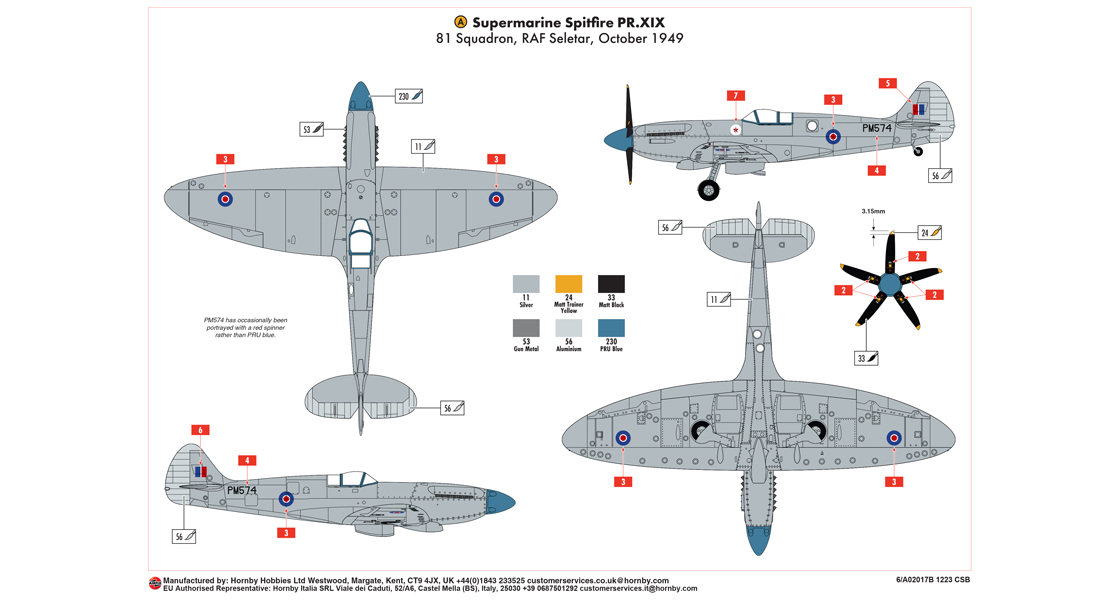
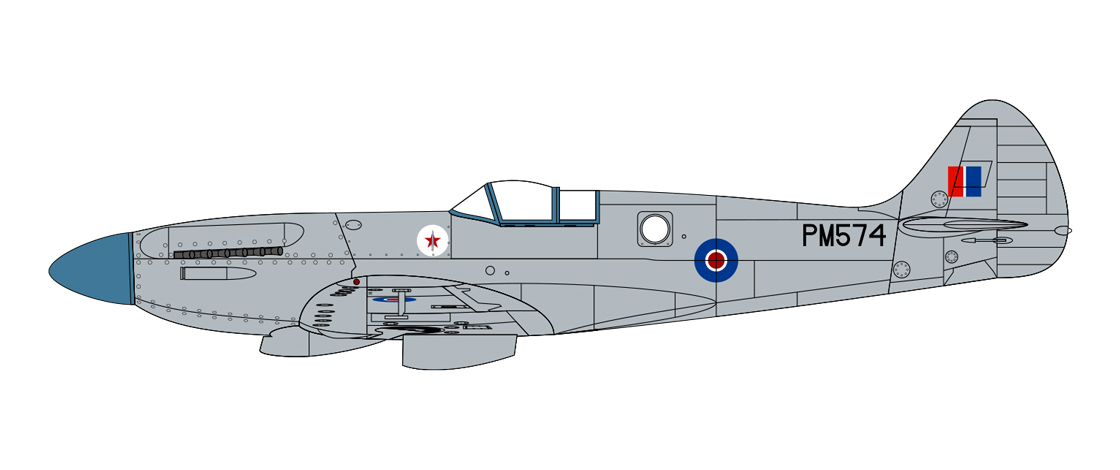
Full scheme details showcasing this most handsome of Spitfires.
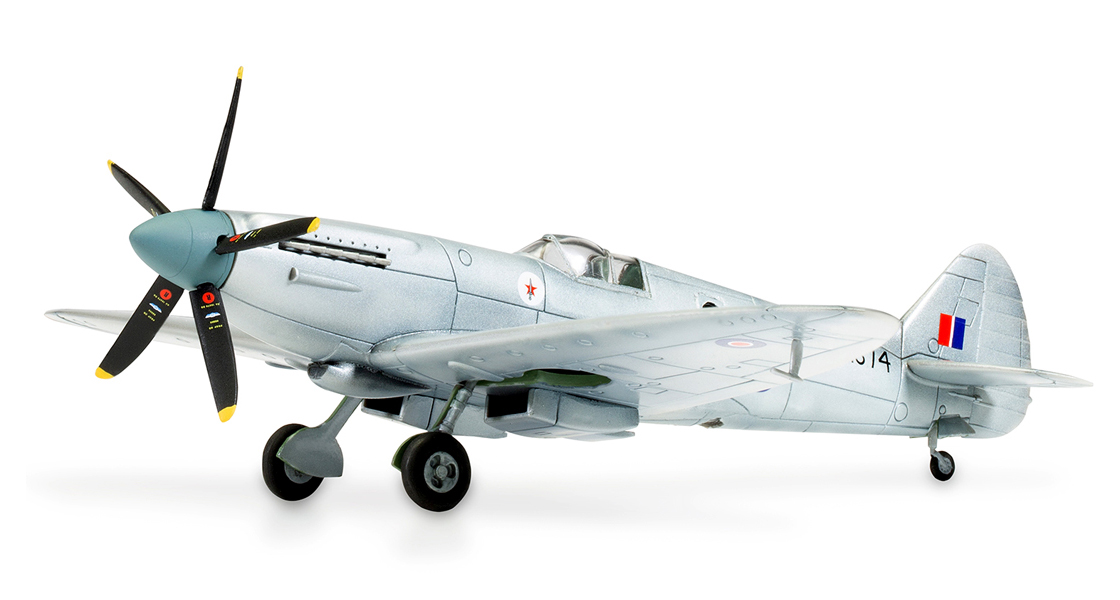
Built model example of this new kit finished in this very scheme.
Built at the Vickers Supermarine factory at Eastleigh during early 1945, Spitfire PM574 was allocated to No.1 PRU at Benson during July 1945, however, she ultimately spent the majority of her service career flying in skies much further to the East. Joining RAF No.81 Squadron following its reformation in September 1946, this aircraft is likely to have spent time flying out of several stations in the region, including Tengah, Seletar and Changi, as the area was quite ‘lively’ in the years after the Second World War.
This aircraft was photographed sometime after 20th October 1949, looking resplendent in her simple, yet beautifully striking natural metal finish, having shed the PRU blue the majority of these aircraft wore during their RAF careers. A conference chaired by the Air Ministry in late 1945 was convened to review the subject of aircraft camouflage, and one of the decisions made was that all photographic reconnaissance aircraft should be presented in a silver dope finish. This policy was brought into force through the following year and the remaining Spitfire PR.XIX were all subsequently painted in this manner, complete with ‘Night’ anti-glare panels.
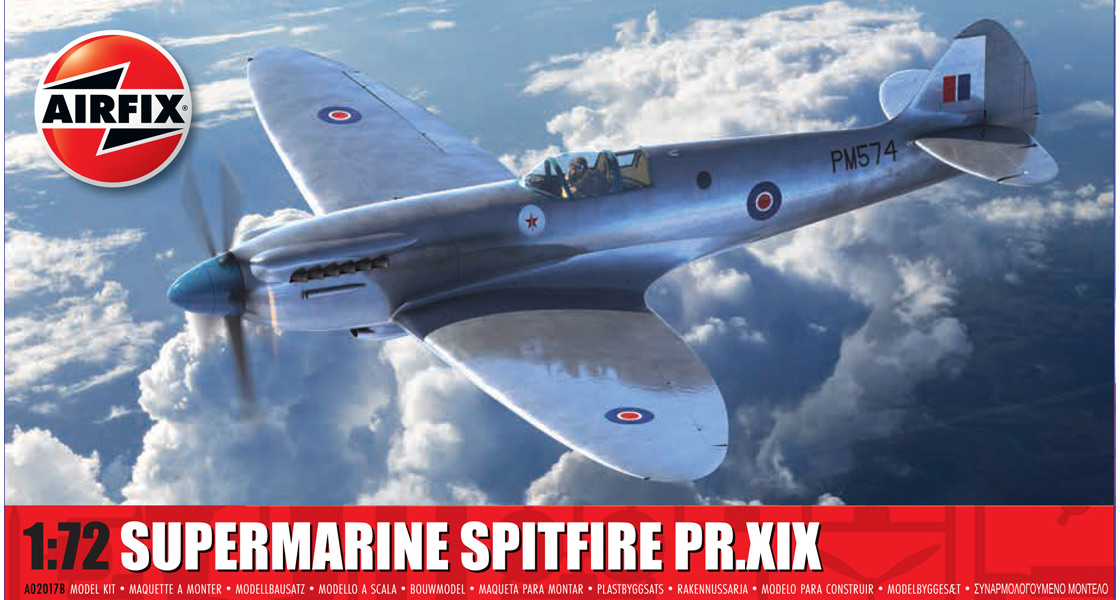
If you need a little additional inspiration, the new box artwork created in support of this new kit addition to the range features this very scheme, a snooping Spitfire resplendent in natural metal.
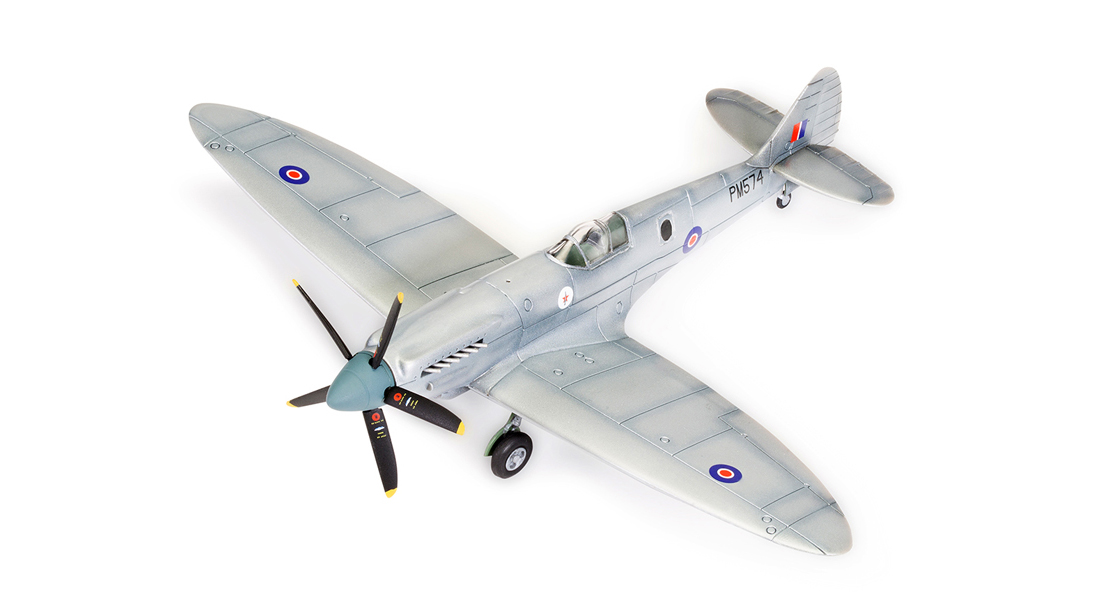
One of the Far East PR Spitfires appeared to be an exception to this official rule, however. Spitfire PR.XIX PM574 was seen at RAF Seletar wearing an all-over natural metal finish, with just the PRU blue spinner remaining of its previous scheme. The aircraft featured reduced size national insignia and carried the distinctive squadron ‘Dagger and Mullet’ (heraldic term for star) badge on the port side fuselage, just ahead of the cockpit canopy.
A really beautiful Spitfire, some reports describe this aircraft as having its spinner painted in red as opposed to blue, but as most of the photographs in which it appears are in black and white and the aircraft was previously presented in PRU blue, our opinion is that the spinner was most likely to have been finished in blue - we leave the final decision on spinner colour to you, the modeller. From the perspective of aesthetic appeal, you can’t go wrong whichever way you go.
Scheme B – Supermarine Spitfire PR.XIX PS888, Royal Thai Air Force, circa 1954 – an aircraft which occupies a prominent position in RAF history.
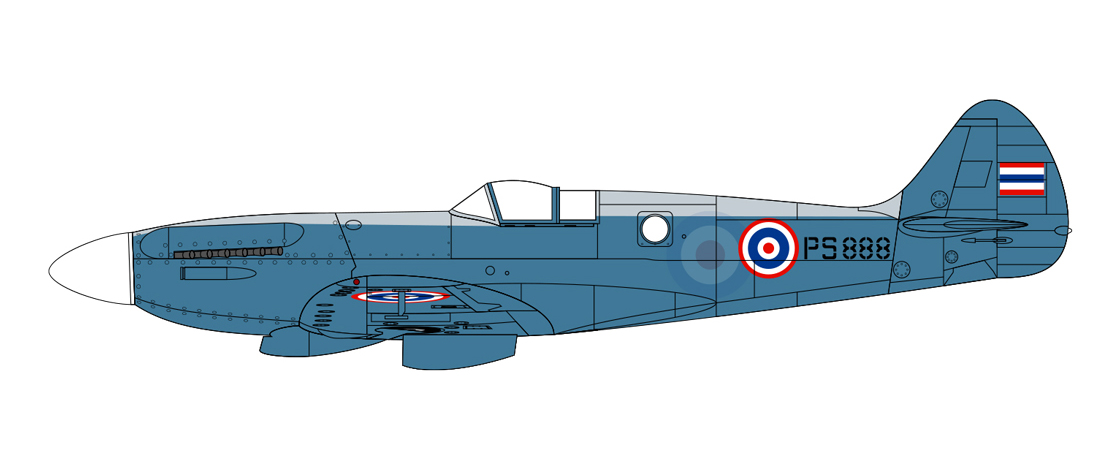
Before this aircraft became one of three former RAF No.81 Squadron Spitfire PR.XIX machines sold to the Royal Thai Air Force in 1954, she became one of the most famous Spitfires in the history of the Royal Air Force, wearing the marking ‘The Last’ on its forward fuselage and had its story immortalised as one of the aircraft operated by the Battle of Britain Memorial Flight.
On 1st April 1954, Squadron Leader W.P Swaby of No.81 Squadron took off from RAF Seletar in Singapore to conduct a photo reconnaissance mission to photograph a suspected bandit camp as part of ‘Operation Firedog’, the RAF’s contribution to actions in response to the Malayan Emergency. For that flight, or more likely some time soon after, the aircraft was adorned with the words ‘The Last’ on her port side front cowling, in commemoration of the fact that this aircraft had just completed the final operational sortie of a Spitfire in Royal Air Force service.
For the pilot and personnel of No.81 Squadron having just been involved in such a historic occasion, this was the beginning of a frustrating time for them, as they quickly learned that the accolade they thought they had just been forever connected with had actually been attributed to No 60 Squadron some years earlier and more than this, they had been presented with a commemorative trophy by Rolls Royce and Vickers Armstrong.
This proved too much for Squadron Leader Swaby and he set about putting the record straight. He contacted officials at RAF Headquarters Far East to complain that their 1029 operational sorties and 1875 hours in the air had not been correctly attributed and unless they intended to alter records and attribute these numbers to training command (which he knew they would never do), the passing on of the last flight Spitfire commemorative trophy should be transferred to its rightful owners from No.60 Squadron.
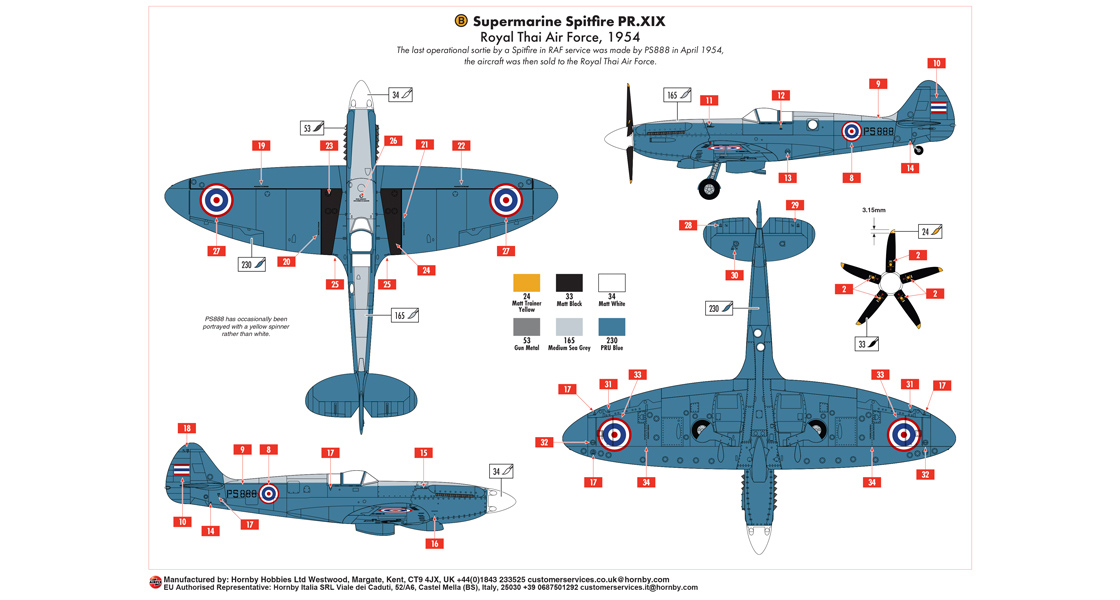
The second scheme option included with what will be just the third standalone release from this popular tooling.
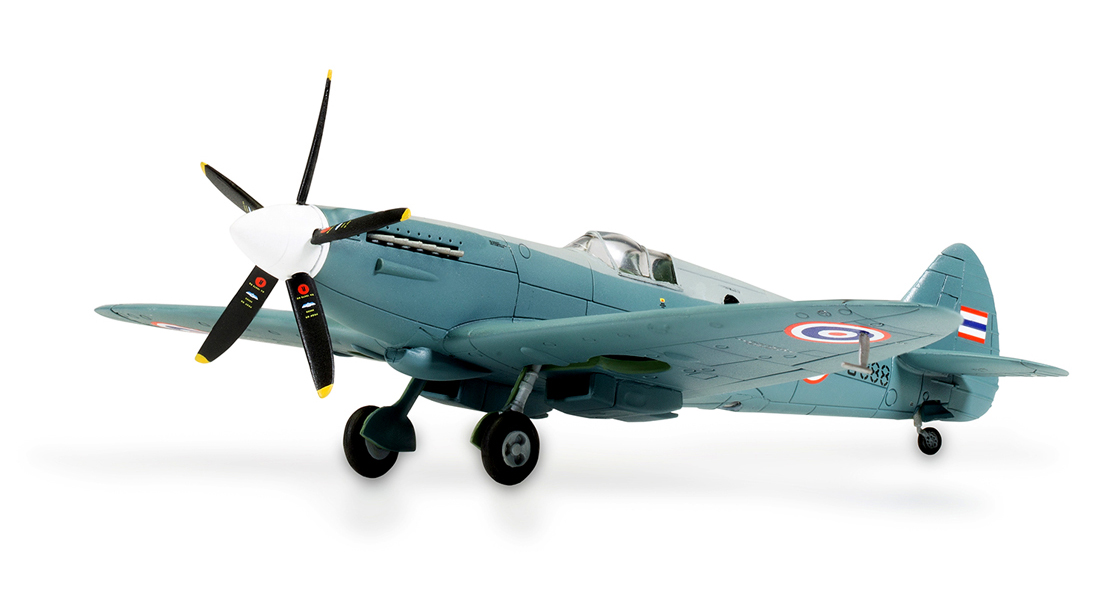
After taking its place in Royal Air Force history, Spitfire PR.XIX served with the Royal Thai Air Force.
The confusion in this situation lay in the fact that No.60 Squadron had completed a ground strike mission with Spitfires in 1951 and they were of the opinion that photo reconnaissance missions didn’t actually count as operational sorties, so therefore proclaimed themselves to be the rightful owners of this accolade. Unfortunately, as any photo reconnaissance pilot would have told them, their missions were no less dangerous than the ones they were flying and without their efforts, they wouldn’t have any identified targets to hit. As far as they were concerned, there was never any question regarding the rightful ownership of this title.
The request must have been dispatched in robust terms, because before the year was out, their own commemorative silver Spitfire trophy had been produced by Rolls Royce and Vickers Armstrong and was presented to them by none other than Jeffrey Quill, the famous former Supermarine Test Pilot and a man thought to have flown more individual Spitfires than any other pilot. With the correct order of things restored, No.81 Squadron and Spitfire PR.XIX PS888 could take their rightful place in aviation history and a place of pride within the glorious Spitfire heritage of the Royal Air Force.
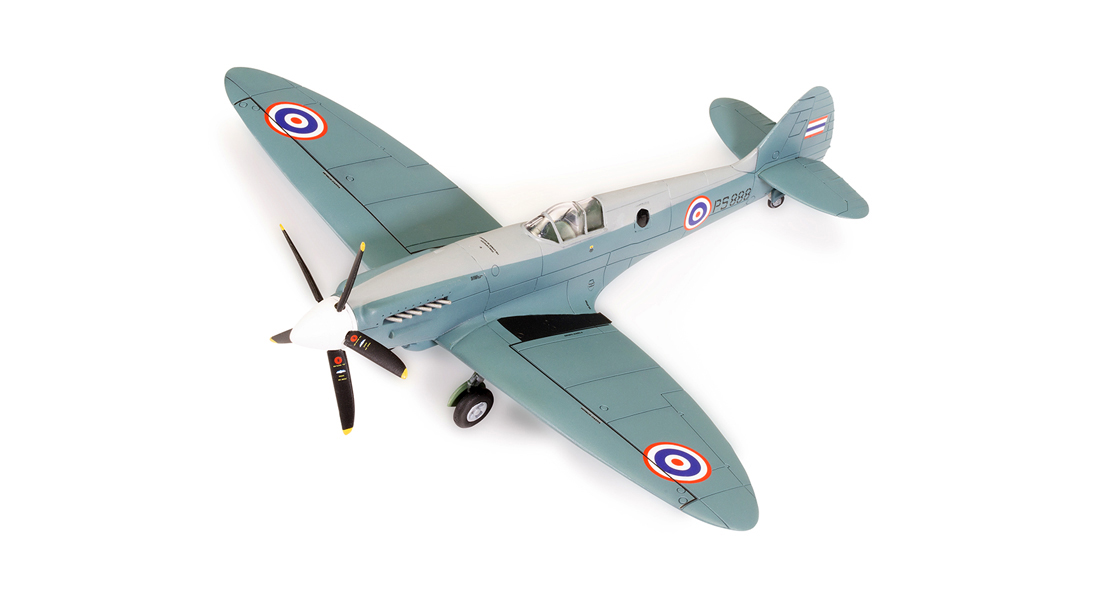
Although instantly recognisable as a Spitfire, I wonder how many people looking at your completed model in this scheme will recognise the national identity of these markings?
Probably even before the second silver Spitfire trophy had been presented to No.81 Squadron, their last remaining trio of Spitfire PR.XIX aircraft, PS888, PS836 and PS890 had been sold to the Royal Thai Air Force. A delegation of Thai top brass and future Spitfire PR.XIX pilots visited Seletar for ground instruction on these powerful aircraft and it was reported at the time that whilst their efforts to learn and convert to the aircraft were commendable, their bravery was not matched by their flying skills. One commentator at the time described how he feared none of their beloved Spitfires would ever arrive at their new home airfields in one piece.
The Spitfire PR.XIX was unquestionably one of the most potent piston-engined aircraft to ever see Royal Air Force service and to many people, also one of the most attractive. The release of this new kit will see this beautiful aeroplane joining the Airfix range for just the third time as a standalone kit in this scale, allowing us all to display one of these Griffon-powered beasts at the side of a classic Battle of Britain era Spitfires, something of a ‘first and last’ model Spitfire display.
With two fascinating scheme options included with a kit which is scheduled for release towards the end of this month, we have plenty of inspiration here when it comes to a build project, either an unusually presented Spitfire which is different to any other PR.XIX Spitfire most of us will have seen, or one which had been transferred to new international owners, but not before she had earned a unique position within the annals of British aviation history.
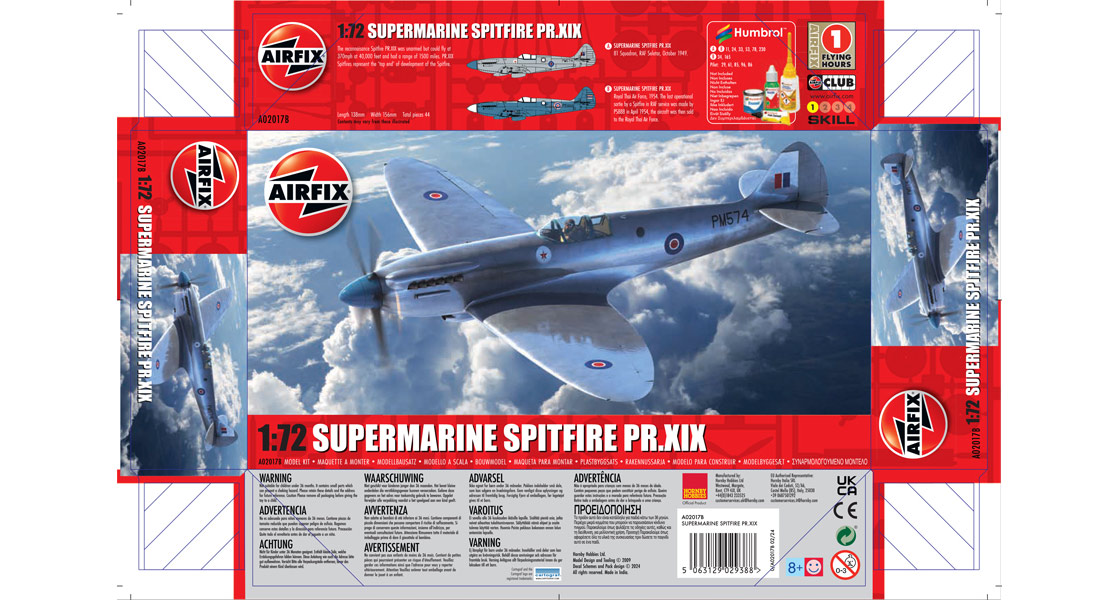
A continuation with our scale infatuation with the Spitfire, this latest 1:72 scale Spitfire PR.XIX kit will be in our warehouse by the end of this month.
This appealing little model is available to pre-order now and should be in our warehouse by the end of the month.
We are afraid that's all we have for you in this latest edition, but we will be back next Friday with more project development updates and the very latest Airfix kit exclusives. In the meantime, we are always keen to hear your views on all things Airfix and, in particular, any thoughts and opinions you may have regarding our Workbench blog. If you would like to drop us a quick line, could we please ask that you use our workbench@airfix.com email for all correspondence.
To revisit any of the Airfix blogs we have produced over the past seven years or so, please head to our main Workbench hub, where you will find our entire blog back catalogue and all the Airfix design projects we have already covered.
All our dedicated official social media sites can be accessed by clicking the respective link icons at the foot of this page, or by heading to the Airfix homepage. Other useful Airfix links are:
Facebook, YouTube, Twitter and Instagram official sites
Please join us for more Airfix updates next week and thank you for your continued support.