Welcome to the latest edition of our Workbench blog, and all the news, updates and modelling exclusives from the world of Airfix.
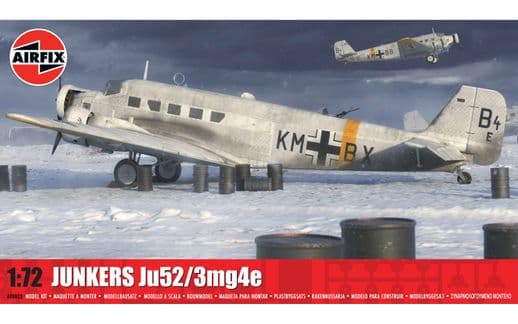
We have something rather special lined up for you this week, as we turn our attention to one of the most instantly recognisable aircraft ever to take to the skies, and a brand new addition to our 1:72 scale aircraft range. Few aeroplanes carry as much character as the three-engined Junkers Ju52, and we are absolutely delighted to be welcoming this corrugated classic to the workbenches of Airfix modellers everywhere with our new Junkers Ju52/3mg4e. She really is a beauty, and a kit we suspect a great many of you have been hoping to see for quite some time.
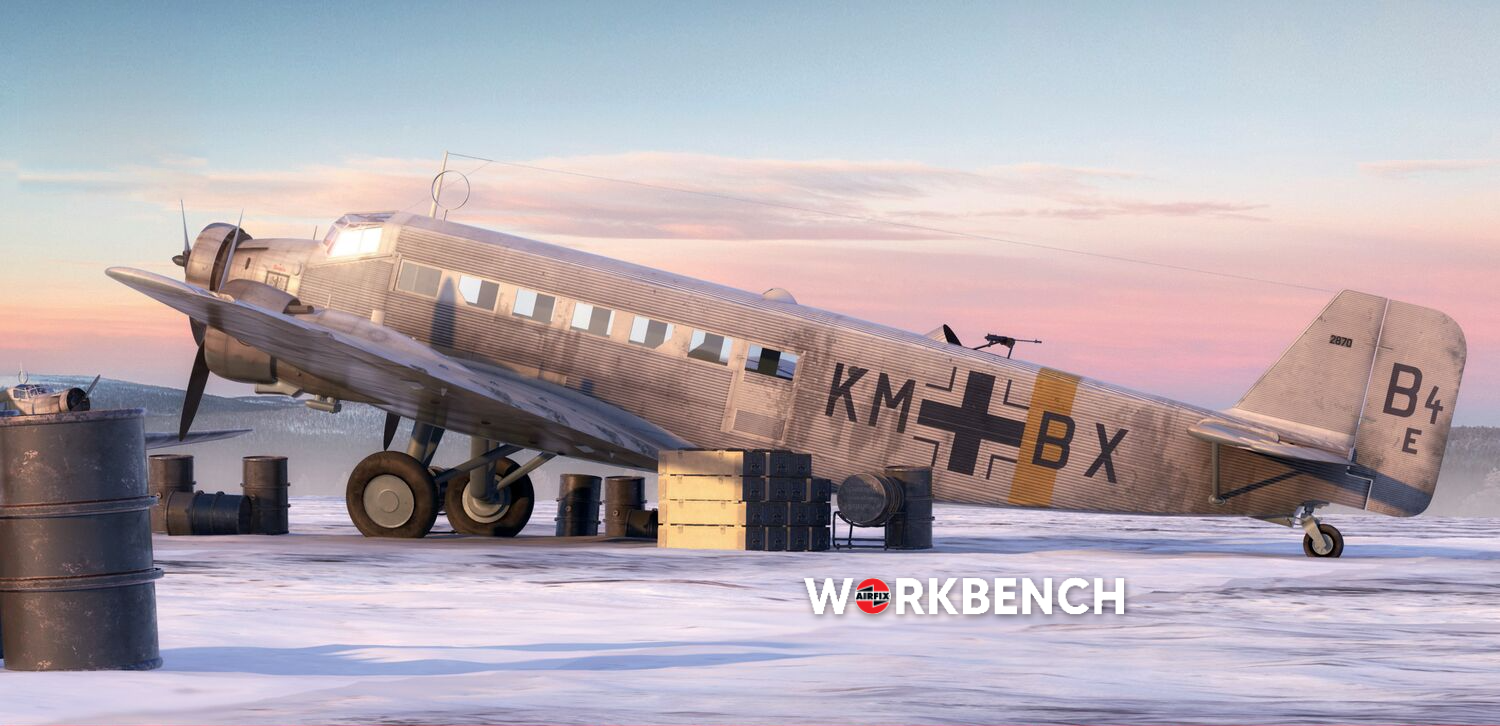
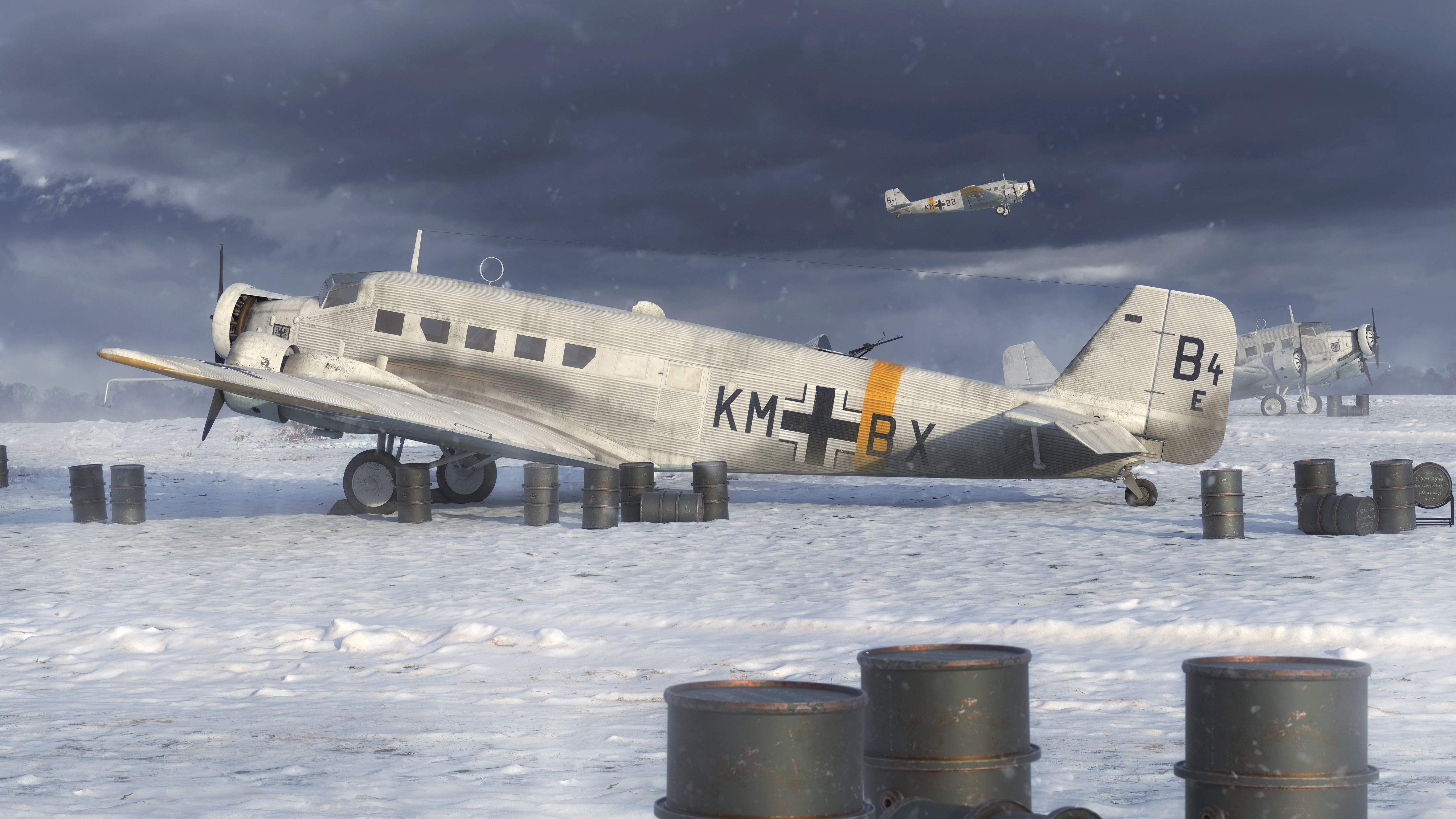
Affectionately known to the men who flew and serviced her as Tante Ju, or Auntie Ju, the Ju52 is one of those rare aircraft whose silhouette needs no introduction. That distinctive rippled metal skin, the trio of radial engines and the purposeful, slab-sided fuselage all combine to create a shape you would recognise anywhere. As we welcome this fascinating subject to the range, we thought we would take you through her remarkable history, the schemes you will be able to finish her in, and a few thoughts on getting the very best from that wonderful corrugated finish.
From single-engine freighter to three-motor icon
The Junkers story is one of pioneering all-metal aircraft design, and the Ju52 sits right at the heart of it. When the aircraft first took to the air in October 1930, it did so with just a single engine in the nose, conceived as a robust cargo carrier capable of hauling freight into the sort of rough, remote airstrips that defeated more delicate machines.
It was a sound design, but it was the decision to add two more engines that turned a useful freighter into a genuine icon. Barely six months after that first flight, the three-engined version appeared, and everything changed. The extra power transformed the aircraft's capabilities, and just as importantly, the additional engines offered a reassuring margin of safety for crews flying long distances over inhospitable terrain, where the loss of a single engine could otherwise prove catastrophic.
Built from the corrugated, light alloy sheet that had become a Junkers trademark, the Ju52 was tremendously strong and famously dependable. Airlines took notice, and none more so than Lufthansa, who used the type to help establish many of the early commercial air routes that began knitting Europe together. With room for seventeen passengers in what passed for comfort at the time, the Ju52 became a familiar and welcome sight at aerodromes right across the continent, and a genuine ambassador for civil aviation in the years between the wars.
Auntie Ju goes to war
As the 1930s drew to a close and Europe edged towards conflict, the Ju52 swapped its airline livery for military markings, and it was in this role that the type would truly earn its place in the history books. By the outbreak of the Second World War it had become the mainstay of the Luftwaffe's transport fleet, and it would remain so right through to 1945.
What is so striking about the Ju52 is just how many different tasks this one airframe was asked to perform. As well as its bread-and-butter role hauling troops and supplies, the aircraft served as a paratroop carrier, an air ambulance, a glider tug and even a floatplane, swapping its wheeled undercarriage for a pair of substantial floats. Wherever the German military needed something carrying, the dependable Ju52 was usually called upon to carry it.
Perhaps the most ingenious variant of all was the minesweeper. Fitted with an enormous metal degaussing ring slung beneath the fuselage, these specially equipped aircraft flew low and slow over the water, generating a powerful magnetic field designed to detonate Allied naval mines from a safe distance. It is exactly the sort of inventive, slightly improbable engineering that makes this period of aviation history so endlessly fascinating, and a reminder of just how adaptable this remarkable aircraft proved to be.
By the time production finally wound down, close to 5,000 examples had been built, and such was the soundness of the basic design that the type went on to serve in various guises long after the war had ended. Not bad at all for an aircraft that started life as a humble single-engined freight hauler.
Bringing that corrugated skin to life
Now, let us talk about the feature every modeller notices the moment they set eyes on a Ju52, because that corrugated skin is not just the aircraft's defining characteristic, it is also where this build becomes a real joy to finish.
Those countless ridges running the length of the fuselage and wings are, frankly, a gift to anyone who enjoys their weathering. Texture is what brings a finished model to life, and the Ju52 has it in abundance. A thinned, darker wash flowed gently into the recesses will settle naturally into every groove, and once you wipe back carefully along the run of the metal, you are left with subtle shadow and depth that makes the whole surface read as genuine, hard-working duralumin rather than smooth plastic. Follow that with a light dry-brush of a slightly brighter metallic tone across the high points of the ridges, and the effect really starts to sing. Our Humbrol paints and weathering range has everything you will need to achieve exactly that sort of finish.
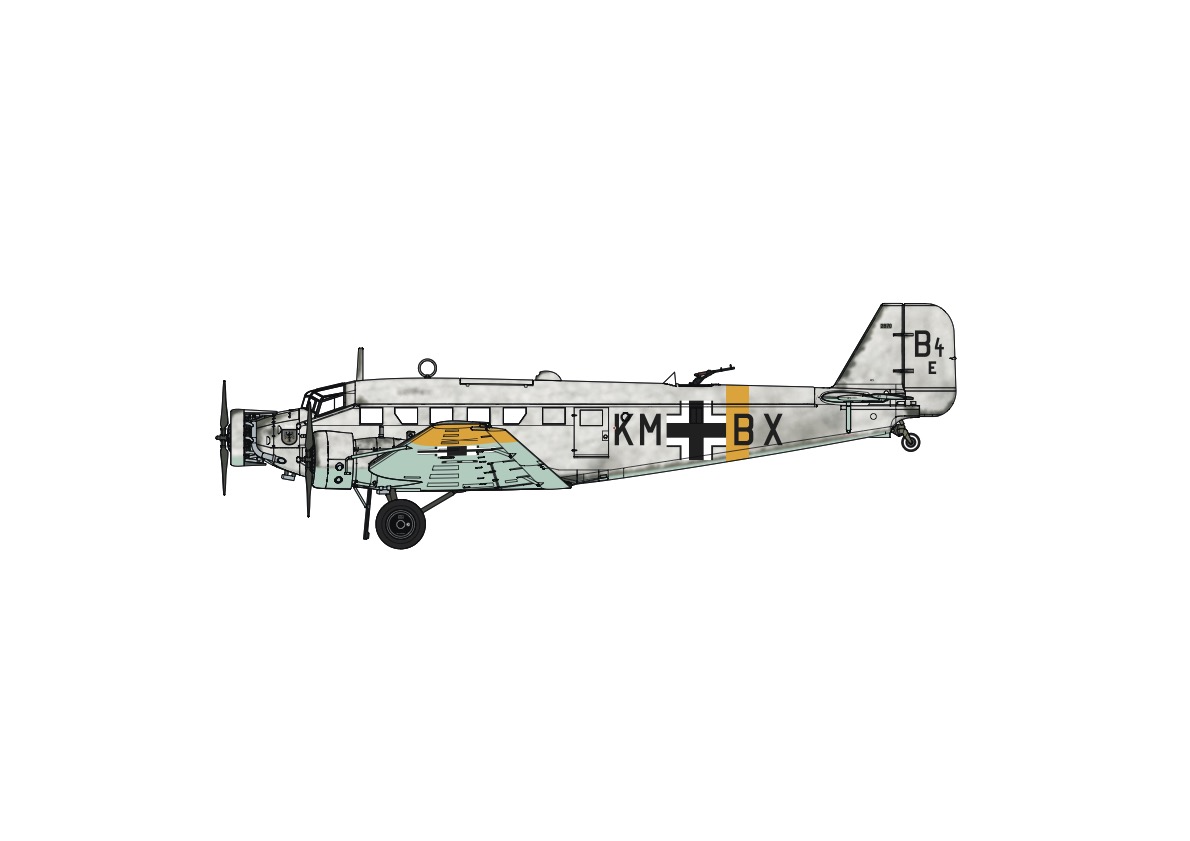
A friendly word to the wise, and one we suspect our more experienced builders are already nodding along to: do take your time around the seams. Sanding a join that crosses those corrugations is the quickest way to flatten detail you simply cannot replace easily, so work slowly, protect the ridges on either side of the join, and gently restore any you do lose with a scriber before you reach the painting stage. A little patience here really is the difference between a tidy Ju52 and an absolute showstopper.
The three radial engines and that sturdy, fixed undercarriage are two more areas that reward a little extra attention. The exposed cylinder detail takes a dry-brush beautifully, while the robust landing gear is a natural home for the dust, oil staining and general grime that any hard-working transport aircraft would have accumulated in short order.
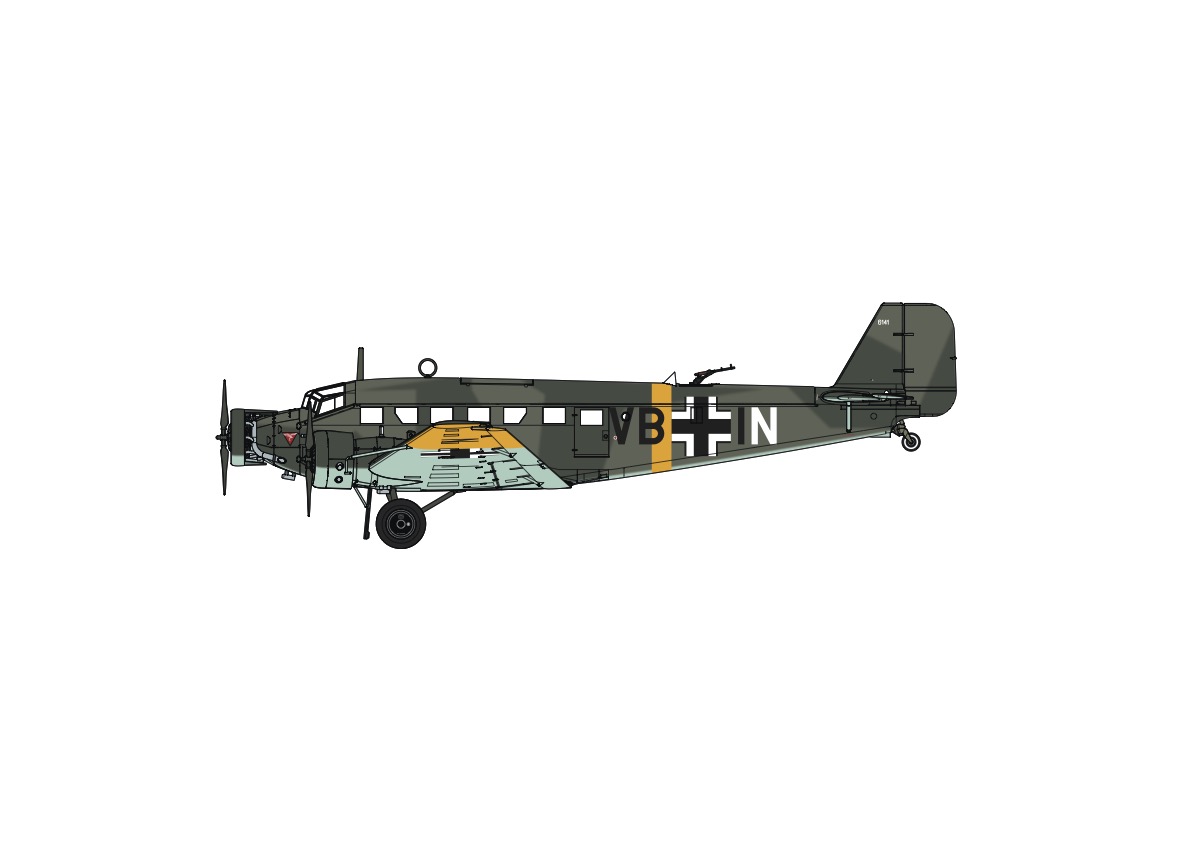
Three schemes to choose from
As you would expect, this first release of the Ju52 arrives with a choice of three authentic schemes, allowing you to finish your model to represent the aircraft across its varied and well-travelled career. Whichever finish you settle on, that corrugated skin remains the common thread, and the single best reason to slow right down and enjoy this one. Whether you are drawn to a workmanlike military transport or something a little more colourful from the type's civil career, there is plenty here to keep both the historian and the finisher in you thoroughly entertained.
If you would like to build your Ju52 alongside some of her contemporaries, she sits very naturally next to our Messerschmitt Bf109G, while 1:72 modellers will find no shortage of subjects to display her with, including the ever-popular Avro Lancaster B.III.
The new Junkers Ju52/3mg4e is a 1:72 scale kit comprising 218 parts, rated at skill level 3, with a finished wingspan of 444mm. She is available to pre-order now at £41.99, with deliveries expected in summer 2026.
As ever, we would love to hear from you. Did you have a favourite Ju52 scheme in mind, or perhaps a particular variant you are hoping we cover in a future edition? And once Auntie Ju lands on your workbench this summer, please do share your progress with the Airfix community, because there are few things we enjoy more here on Workbench than seeing how that wonderful corrugated finish turns out in your capable hands.
Until next time, happy modelling.