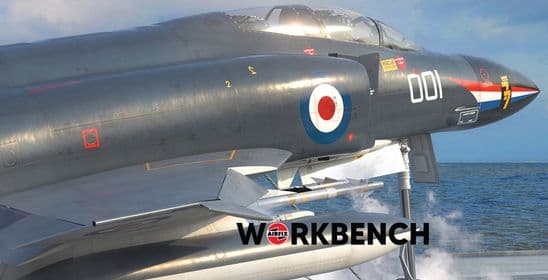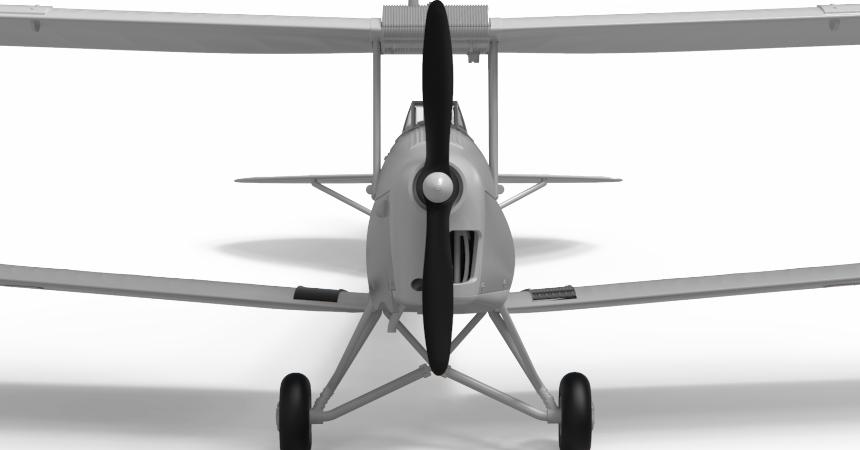
Welcome to this latest edition of Workbench and all the news, updates and exclusive announcements from the fascinating world of Airfix modelling. We have something really special for you in this 106th edition of our blog, as we focus on two aviation classics from the 20th century, each one representing a different era of flight technology. Firstly, we take a fascinating look at the development of the only 2019 new tooling announcement still to be covered in Workbench this year, a kit project which will immortalise one of the world’s most significant training aeroplanes in scale model form, the magnificent new De Havilland Tiger Moth. We follow this with a review of the two appealing Royal Air Force scheme options which will accompany the forthcoming third release from our incredibly popular 1/72nd scale British Phantom tooling, which has to be considered one of our most commercially successful new kits for many a year. With two stunning new kits to feature and a host of exclusive imagery to bring you, this is certainly one edition of Workbench you will not want to miss.

One of the many restored and airworthy Tiger Moths still flying in Britain today, some 88 years after the first flight of the prototype aircraft
Over the course of the past four years or so, the Airfix Workbench blog has been privileged to chart the progress of new Airfix kit projects from original announcement through to their eventual release and to see how some of the models we have featured have gone on to be incredibly popular with the world’s modelling community. Possessing the ability to view individual blog readership statistics from over this period, we are in no doubt as to the editions which have proved most popular with our massive worldwide readership and those are the ones which announce and feature early development of new model toolings. Of the latest group of new 2019 tooling announcements, just one project is still to receive the Workbench treatment and we are delighted to be in a position to put that matter straight in this 106th edition of our blog. Everyone will undoubtedly have their own favourite aircraft type and if this aircraft is not already part of the Airfix range, they will clearly be extremely keen to see it introduced as soon as possible. Usually, aircraft which have taken part in either the First or Second World Wars prove to have overwhelming appeal for many, with other classics such as the Hawker Sea Fury or McDonnell Douglas Phantom being high in the modeller popularity stakes, however, sometimes, both manufacturer and modeller are forced to consider the virtues of a slightly less obvious subject matter, but one which nevertheless possesses undeniable aviation credentials. As Geoffrey de Havilland attempted to put two slightly disappointing previous attempts to produce an effective light aircraft behind him during the late 1920s, his ultimate aim was to design an aircraft which would have widespread appeal for both civilian and military markets. As his new aircraft took to the skies for the first time in the Autumn of 1931, he could hardly have envisaged that his DH.82 Tiger Moth would prove to be one of the most important aircraft of the 20th century and astonishingly, would still be performing the flying training role for which it was designed some 88 years later.
Although sharing the same airspace as the famous Spitfires and Hurricanes which fought so valiantly during the Battle of Britain, most people would probably dismiss the De Havilland Tiger Moth as playing only a peripheral role in the struggles of the Second World War, even though in actual fact, nothing could be further from the truth. This rather basic looking biplane, which had a top speed of around 100 mph, was produced in great numbers and could be described as the aviation saviour of Britain and her Commonwealth, during their darkest hour. Throughout the war, these magnificent primary training aeroplanes provided the Royal Air Force with a constant stream of qualified pilots, who would go on to see service in almost every theatre of war and fly countless different aircraft types operationally – indeed, for a great many Allied airmen and women who earned their wings during this period of history, the cockpit of a Tiger Moth would have been a familiar environment for them. Although initially intending to be a commercially appealing aircraft for multiple aviation sectors, the flying qualities of this famous aircraft were immediately recognised by the RAF, who placed what was initially a rather modest first order, but followed this with several subsequent orders for an aircraft they knew would be of vital importance in the years to come. Indeed, the orders placed by the RAF were so significant that it would prove almost impossible to continue with the production of aircraft destined for the civilian market, with just a small number of Tiger Moths gaining a civilian registration during this period. As Europe descended into conflict and the RAF continued its rapid expansion, they could boast around 500 Tiger Moths on strength, with many additional aircraft which had been operated by flying clubs all over the country, also requisitioned and pressed into military service. With its growing reputation, the aircraft would also go on to secure many overseas orders, ensuring that the de Havilland production lines were fully committed in the production of this superb aircraft, one which didn’t have a gun or bomb in sight.

An exclusive first look at one of the final CAD assembly images produced during the development of the new 1/48th scale de Havilland Tiger Moth
From the perspective of a student pilot, the Tiger Moth was a relatively stable and forgiving aircraft to fly, with few handling vices and generally supportive of the odd silly mistake by a novice airman. It has since been described as an ‘easy aeroplane to fly, but a difficult one to fly well’, which seemed to have made this the ideal aircraft to serve as a primary/basic trainer for large numbers of future pilots destined to fly many different aircraft types operationally. As Britain prepared for invasion during the early summer of 1940, there were even advanced plans for the mild mannered Tiger Moth to show a much more aggressive side and support the Spitfire and Hurricane pilots they had previously trained by attacking any potential invasion force by all means at their disposal. ‘Operation Banquet’ called for the use of every available aircraft in the defence of Britain’s coastline, equipping even the most unlikely aircraft with bomb racks and giving them an offensive capability. Should a German invasion have been attempted, there would have been the very real possibility of seeing swarms of bomb laden Tiger Moths raining fury down on the enemy troops below, as Britain planned to hurl everything at any such cross channel incursion, ensuring it did not succeed. Thankfully, due in no small part to the contribution this effective ‘pilot maker’ made in training the heroic pilots of Fighter Command, Germany’s invasion plans for England were indefinitely postponed following the Luftwaffe’s inability to score a decisive aerial victory during the Battle of Britain.
For the Airfix design team, taking some of the world’s most famous aircraft and turning them into accurate scale kit representations for the world’s modellers to enjoy is both a challenge and a privilege and everyone who is currently, or has previously performed this demanding role takes this responsibility seriously. With continual advancement in the fields of computer aided design and the injection moulding process, Airfix product designers are always looking to ensure that their latest project is the most accurate representation of the particular subject they are working on, whilst at the same time wanting to make building the resultant model an enjoyable experience for everyone who attempts it. From the outsider looking in, being involved in the production of a modelling classic is something each individual Airfix designer can proudly take with them throughout their careers, whether they stay within this fascinating industry, or decide to take their skills elsewhere. Having said all that, the pressure facing designers at the outset of any new model tooling project must be considerable, especially when tackling one of the most famous aircraft in the history of flight and one which includes several significant design challenges. All these thoughts and many more must have been going through the mind of young Airfix Product Designer Thomas Alderman when he was asked to work on a new 1/48th scale kit of the De Havilland Tiger Moth, a project which would actually prove to be his first since joining the company from University. The Workbench blog has previously featured Tom’s design skills as we looked at the development of the new MiG-17 ‘Fresco’, so we will not be covering the same information in this review, however, it is fascinating to see how Airfix search for talented new designers to maintain the standards of this famous brand and it is still available for viewing HERE.

A selection of Tiger Moth images taken during a visit to Headcorn, where Tom and his colleagues were given the opportunity to inspect and airworthy example of this classic aircraft
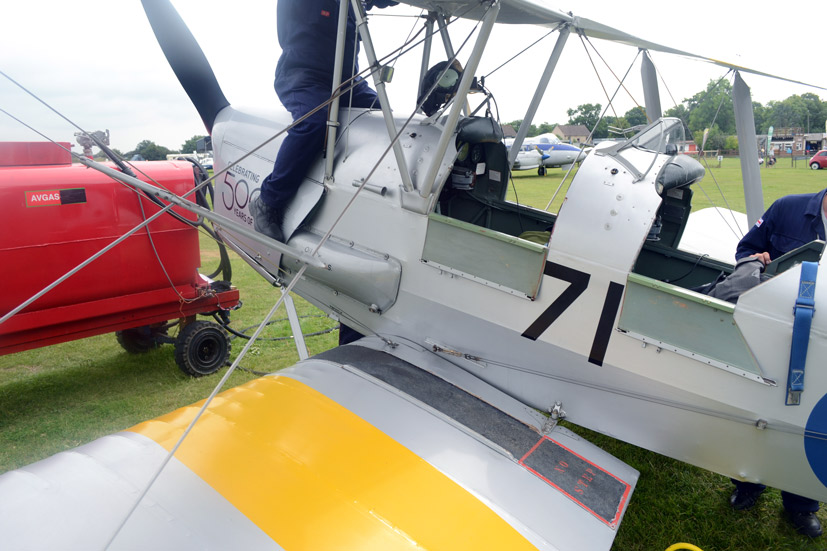


Knowing that working in this larger scale allows the designer to incorporate greater levels of detail during the models development, the opportunity to inspect a ‘live’ aircraft proved invaluable


A closer view of the engine cowling which proved such a challenge for Tom during the development of this fantastic new kit
Many Workbench readers will no doubt be familiar with the fact that the Airfix range benefitted from the addition of a newly tooled 1/72nd scale version of the De Havilland Tiger Moth in 2014, which replaced an original tooling which helped to establish the plastic modelling hobby back in 1957. This recent 1/72nd scale DH.82a Tiger Moth project would actually prove to be the starting point for this new larger scale version of the kit and whilst you might think this would hand Tom a distinct project advantage from the perspective of designing the new model, the process of ‘upscaling’ a kit is nowhere near as simple a process as it may appear. Tom did have the opportunity to inspect a mass of research data which had been gathered in support of the earlier project and even had access to all the CAD files and individual component drawing which had been produced in support of the earlier project, however, this is effectively where this advantage ended and a completely new project began. There are some significant challenges facing a product designer when inheriting existing development material and upscaling to a new, larger version of the same kit, but thankfully, the current development team have a wealth of prior experience in this process to call upon. For them, there is no magic upscaling programme on their computers which would turn a 1/72nd scale kit into a new larger alternative and they are understandably keen to point out your error should you ever suggest such a thing.
Although inheriting accurate base model data from the earlier Tiger Moth project, everything about the new 1/48th scale kit is different and requires much time consuming design work to effectively represent the greater levels of detail associated with models in this larger scale. This ‘base model’ is a complex series of mathematical calculations and design software plots, but only contains the basic shape of the subject aircraft and accurate placement of all its key design elements. The reassurance of having this accurate scale sizing data is incalculable, however, the real work starts now, as every aspect of the new kit has to be designed from scratch, paying close attention to the greater amount of detail and more accurately represented scale thicknesses which must be incorporated. When working at 1/72nd scale, the minimum component wall thickness achievable during the manufacturing process can often mean that some compromises have to be made on certain areas of the model, which can present problems when designing such areas as the trailing edge of the wing, but as this minimum achievable wall thickness stays the same regardless of scale, there is much less compromise needed when working in larger scales. Crucially, as the base model will have been designed with a specific scale in mind, wall thicknesses and radiuses will have been designed to the minimum possible values, values which may not translate when trying to increase the size of the files.
Once Tom was happy with the accuracy of his shapes and dimensions, he began working on individual sections of the model, trying to incorporate as much detail as possible, frustratingly, some of which would not be seen on the final constructed model kit. The skill here is trying to figure out what level of detail could be accurately represented in the design, whilst at the same time making the finished kit look right for the modeller. The Tiger Moth is such a familiar aeroplane to so many people and even in this slightly larger scale, it was still going to result in a comparatively small model – the design challenge on this project was always going to be just how much detail could be incorporated without spoiling the overall appearance of the model. This sounds like something of a dichotomy, but when considering the wing ribs and how the fabric attaches to them, this proved to be something of a nightmare to represent and required the combined experience of the entire design team to resolve. With access to all the original research data and engineering drawings, Tom and his colleagues were also granted access to an airworthy Tiger Moth at Headcorn aerodrome, an aircraft which is operated by Aero Legends, allowing members of the public to have flight experiences and trial flying lessons in this aviation classic. This visit gave them the opportunity to take plenty of photographs and to closely inspect various details of the aircraft’s design, comparing this against the modelling project which Tom had already started. Perhaps more than any other aircraft, this trip confirmed that this classic 1930s biplane is still very much in the public eye and one which hundreds, if not thousands of people will be extremely familiar with – no pressure there then, when producing a scale representation of one.
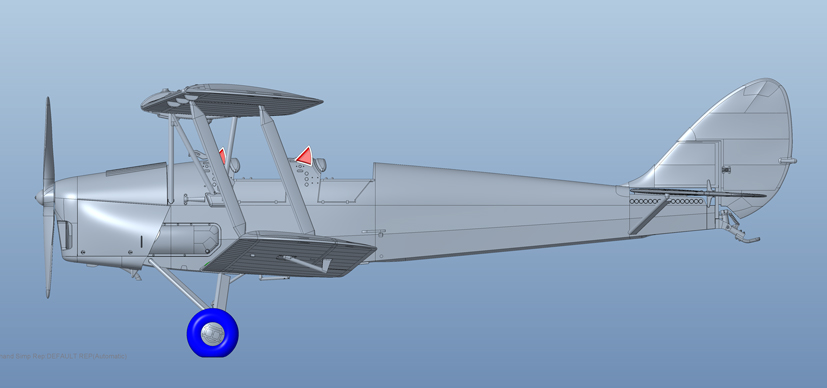
This exclusive series of development images was kindly supplied by Tom to illustrate this feature and show screenshots from the final CAD assembly of the new 1/48th scale Tiger Moth tooling at various angles, affording some appreciation of the detail levels he has managed to incorporate
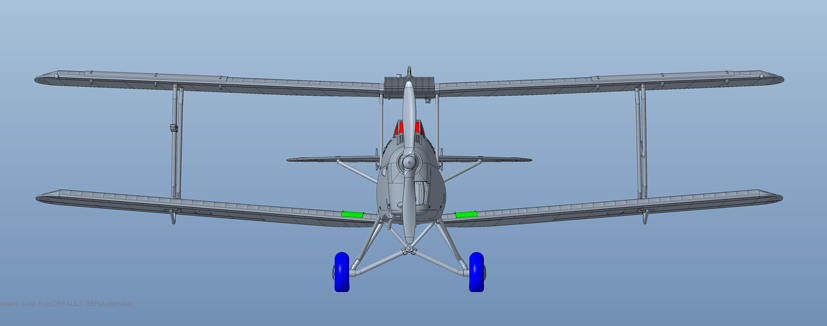
Although just a training aircraft, the Tiger Moth is unquestionably one of the most famous aircraft of the 20th century and will be a popular addition to our growing range of 1/48th scale kits
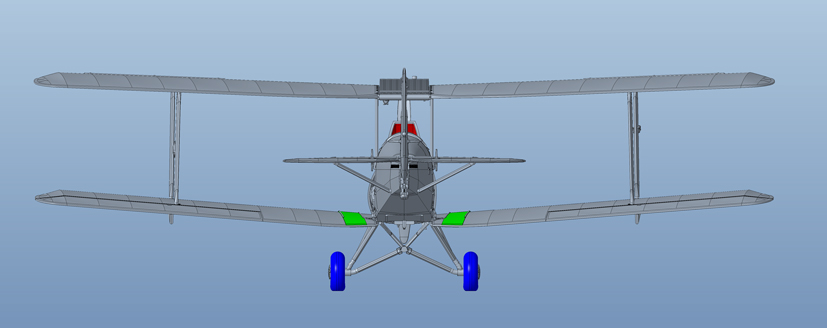
A similar view, but this time from the rear
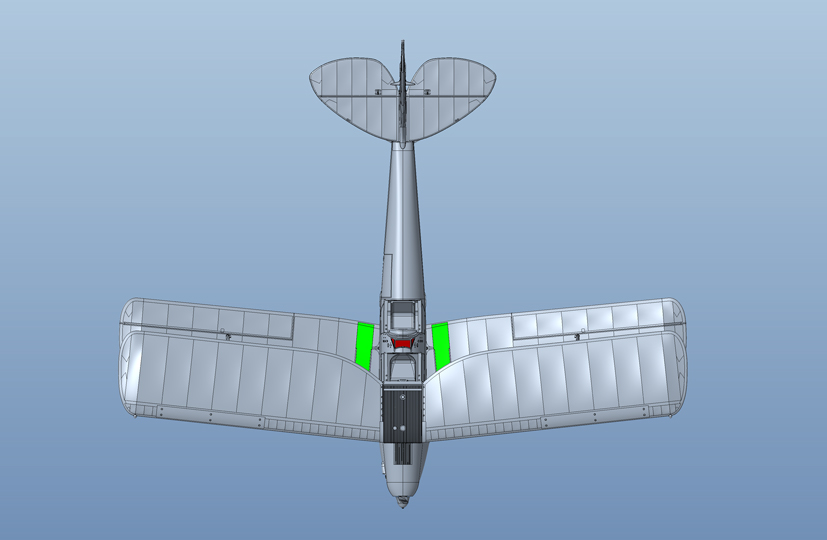
This fantastic image shows the distinctive staggered and swept wings which helped to make the Tiger Moth such an effective training aircraft, as well as the wing rib detail which will really add to the level of authenticity incorporated into the design of this kit
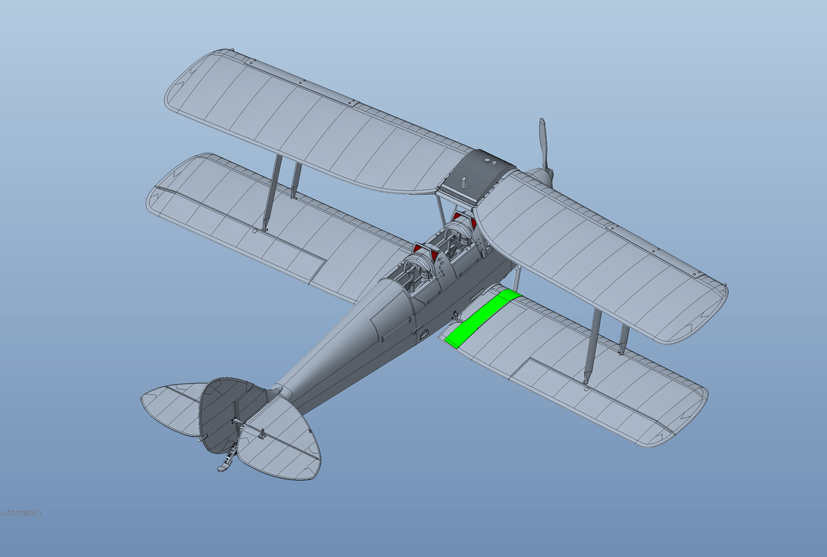
The beautiful Tiger Moth is still performing the job it was designed to do some 88 years after the maiden flight of the prototype aircraft
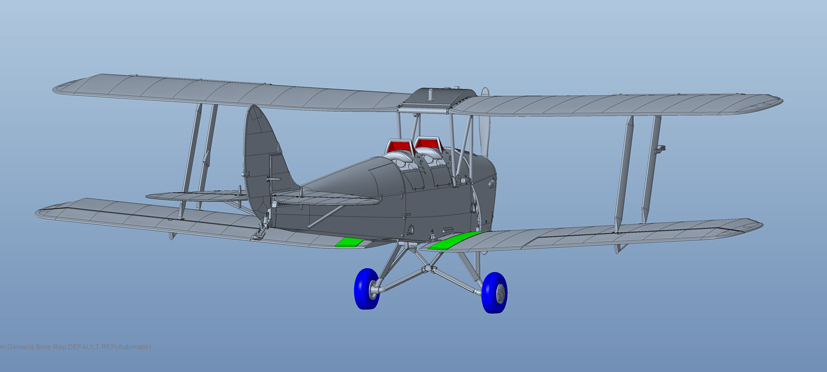
When looking at this screenshot, we can’t help but get a little excited about the arrival of this impressive looking new model
The new model design processes undertaken by the Airfix team are now extremely familiar to Workbench readers, so we will not go over similar ground again here, however, what we thought would be of significant interest was to ask Tom specific questions about how he will remember his first Airfix design project. Regarding the project as a whole, he described it as a steep learning curve, but one which was extremely rewarding. Always having the backing of the entire team, he was given the opportunity to use his skills in finding solutions to individual design problems, reviewing his progress regularly and able to call on their guidance and experience at any time, should he need it. Indeed, he is quick to describe this as a group achievement and one which proved to be more of a challenge than anyone had initially envisaged – the further the project advanced, the more design issues seemed to present themselves and it really seemed as if the Tiger Moth was fighting them at some stages. In what has turned out to be a rather fortuitous anniversary for us, Tom told us that this week marks two years since he was first given the Tiger Moth project, his first major design job for Airfix.
Determined that this new Tiger Moth kit was going to be as accurate as possible, improvements and re-designs have been a feature of the model, with early test shots revealing a number of areas which were in need of further refinement and therefore delaying its scheduled release date. One of the areas which posed particular challenges was the distinctive engine cowling, which did not lend itself at all well to upscaling and required input from several members of the Airfix team before the desired representation could be produced. Also, when the first test samples were received, the team were not entirely happy with how the fabric detail was represented on the kit and what had initially seemed like being a relatively minor design alteration turned out to be a significant and time consuming re-design. Tom was also forced to spend a lot of time considering how best to design the top wing assembly, retaining the same levels of accuracy adopted throughout the project, but also making this robust enough not to cause problems for modellers building the kit. The wings would also provide him with an opportunity to incorporate a clever design feature which will hopefully please anyone undertaking a build of this fantastic new kit, particularly those intending to fully rig their model. The wing internals have tiny and rather discrete indentations which serve as a guide to the placement of rigging holes, should you decide to go for total authenticity with your build, holes which are not visible if you elect not to rig the model – this feature has been designed so well that it cannot be seen on the computer rendered images which have been used to illustrate this review.

Representing the latest stage of the Tiger Moth’s development, these computer renders highlight the work which has gone into this new model and why we should all start to get a little excited about the arrival of this impressive new model
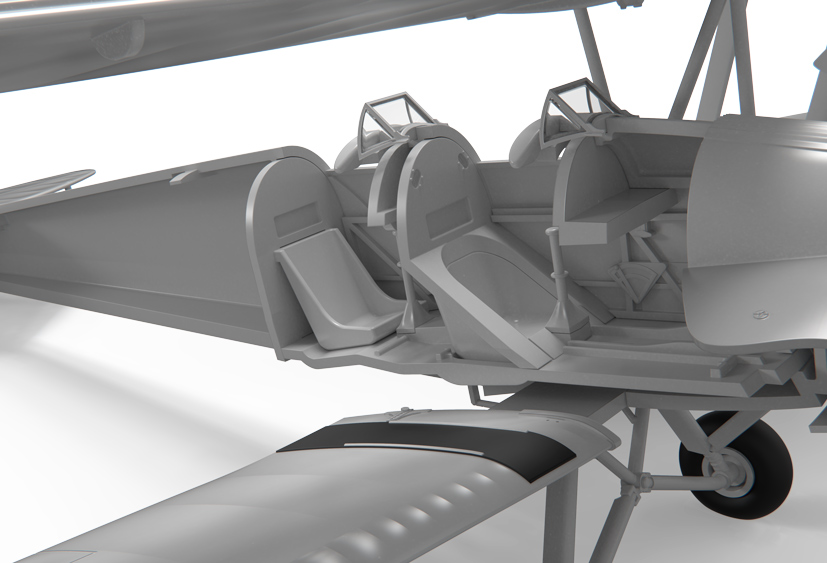
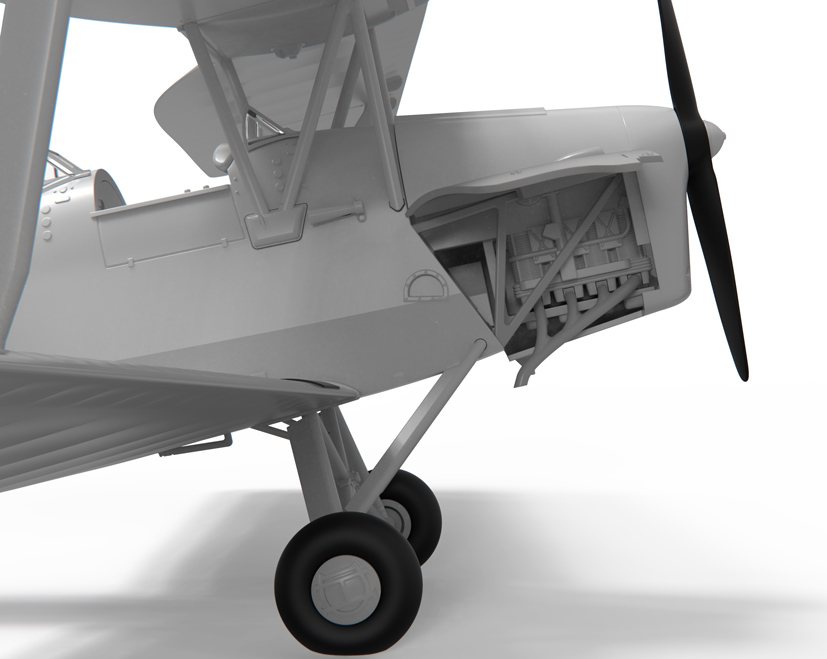
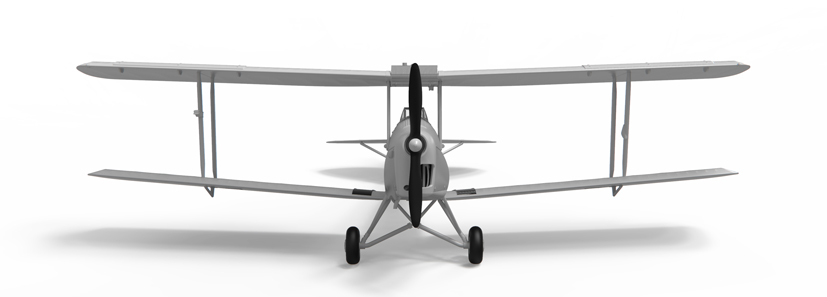
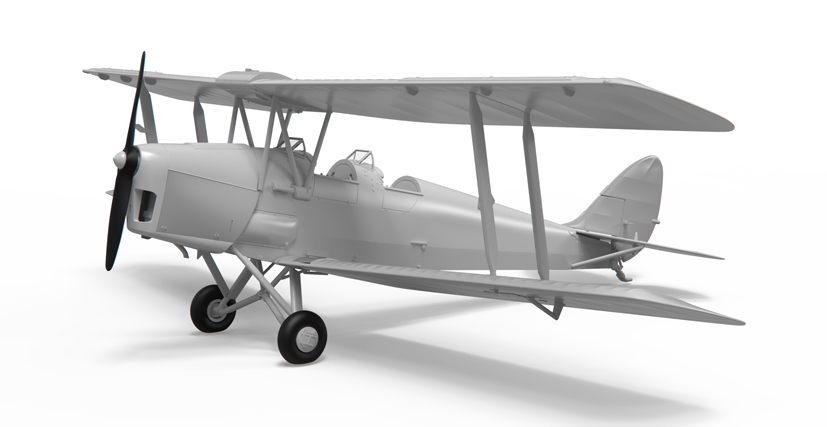
In Summary, Tom described his Tiger Moth experience as extremely rewarding, one which threw up plenty of challenges, but one which taught him much about the world of Airfix product design. Without doubt, the most enjoyable aspect of the entire project was working closely with his design colleagues and the collaborative nature of the models development, all of which has resulted in the production of a magnificent scale representation of this classic aeroplane. Despite being one of Britain’s most famous aircraft, the Tiger Moth is a relatively simple aeroplane and Tom wanted to reflect this in the design of the new kit, not overcomplicating its construction and making it an enjoyable build experience for everyone.
As an aircraft type which has been flying since the early 1930s, hundreds of thousands of people will have come into contact with this effective pilot trainer over the past 88 years and many will have a strong affinity with the venerable Tiger Moth. With future Warbird pilots still relying on the many virtues of this magnificent aircraft and several companies allowing members of the public to experience what it was like for the trainee wartime pilot as he progressed towards squadron service, we think this new 1/48th scale kit will have huge appeal for a great many people, especially as there will be no end of scheme options for modellers to consider finishing their models in. Tom and his colleagues have produced a beautifully accurate scale representation of this famous aeroplane and they are all very much looking forward to seeing if it meets with the approval of modellers all over the world. Our new 1/48th scale Tiger Moth (A04104) is scheduled to be released this Autumn and we look forward to bringing you further updates from this exciting kit in the next few editions of Workbench – this one looks like being a little cracker!
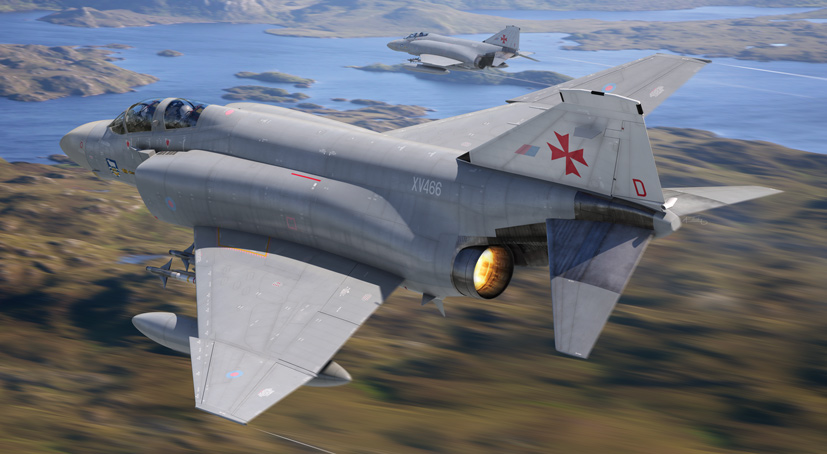
Box artwork produced in support of the second release from the new Phantom tooling, which has proved such a hit with modellers
Even though the history of aviation can boast many significant aircraft types over the years, there are some which stand head and shoulders above the rest and qualify for ‘classic’ status either by virtue of their notable achievements, or for the appealing aesthetics of their ground-breaking design. One aircraft which would certainly qualify on either of these counts is the McDonnell Douglas Phantom, a multi role jet which is unquestionably one of the most important aircraft types of the post war era and one which went on to see service with many of the world’s air forces. The enduring appeal of the Phantom guarantees that thousands of enthusiasts will still flock to any Airshow which can boast the appearance of one of the few aircraft which are still in service, desperate to catch one final glimpse of the ‘spook’ before these last examples are consigned to the aviation history books. A product of the American aviation industry, the qualities of the Phantom were coveted by many of the world’s air forces and it would go on to see service not only with the US Navy, Air Force and Marine Corps, but also with around a dozen overseas operators, which included the UK. Originally selected as the Royal Navy’s most capable fleet defender, the legacy of the Phantom in British service has captivated the aviation enthusiast over the years and has become an almost irresistible subject for modellers everywhere. This is hardly surprising, as there can surely be no more iconic aviation sight than that of a Royal Navy Phantom rearing up on its extended nose oleo in the seconds prior to launch from the deck of HMS Ark Royal - with steam from the ships catapult enveloping the aircraft and full afterburners engaged, could military aviation get any more appealing than this?
Phantoms destined for UK service would primarily be procured as a fleet defence fighter for the Royal Navy, replacing the distinctive, but outdated De Havilland Sea Vixen in this role. It was decided that the British machines would be powered by the Rolls Royce Spey engine for a number of reasons, not least because they would give a valuable power increase to these aircraft which would be operating from the relatively short decks of Britain’s carrier fleet. Although this sounds quite logical, the installation of these engines required some significant modifications to fuselage of the British Phantoms, including enlarged engine bays, a re-designed rear fuselage and larger air intakes at the front of the aircraft, all of which gave the British Phantoms a unique appearance. When taking into consideration the additional drag caused by these modifications, the extra power provided by the Rolls Royce engines had little beneficial impact on the overall performance of the aircraft, however they did result in the British machines being extremely distinctive from an aesthetics perspective.
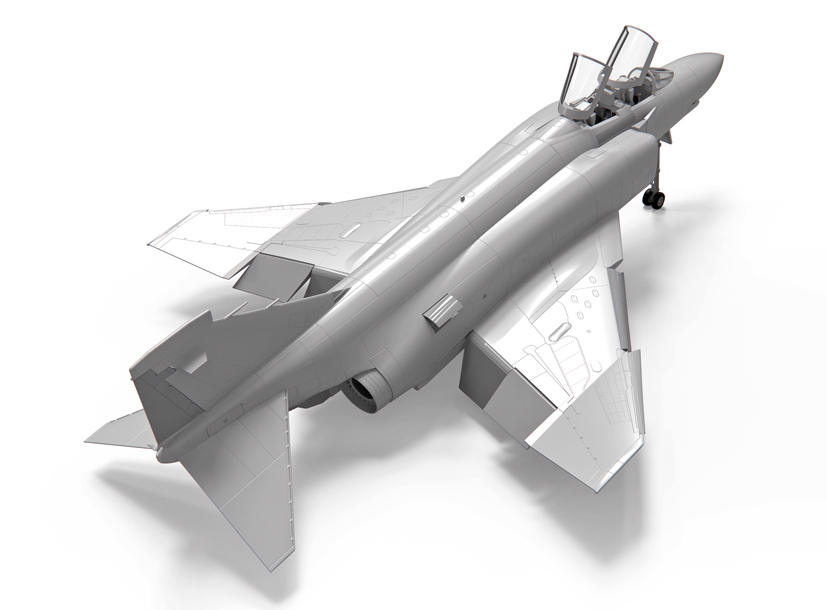
Although the Phantom was an American design, most of the UK operated machines were different enough to warrant the enduring fascination of aviation enthusiasts and modellers alike
Despite the fact that the Navy were delighted with their new Anglicised American fighter, the Royal Air Force were initially much less enthusiastic about the Phantom and essentially had the aircraft thrust upon them. With the Admiralty choosing the Phantom and with the lack of a suitable British built alternative for the RAF, the Government announced that it did not make financial sense to procure different aircraft types for both the Navy and the Air Force and consequently, the F-4 Phantom had been selected to equip both. The British Phantoms would also be distinctly different from their American counterparts, again as a result of Admiralty concerns and against the wishes of the Royal Air Force. Concerned about operating these mighty jets from the relatively confined decks of Britain’s diminutive aircraft carriers, the Navy wanted their Phantoms to have the extra thrust offered by the larger and more powerful Rolls-Royce Spey turbofan engine, which had been used so successfully on their Buccaneer strike aircraft. This resulted in British Phantoms requiring a re-design of the engine bays and rear fuselage, larger air intakes, auxiliary intake doors to the rear of the aircraft, larger flaps and a folding nose radome. The Navy’s Phantoms would also employ an extendable nose wheel oleo, which allowed it to have a greater angle of attack immediately prior to launch, helping the aircraft blast into the air and giving the Phantom a particularly aggressive profile.
The Royal Air Force would eventually go on to operate more than double the number of Phantoms procured for the Fleet Air Arm and following the withdrawal of HMS Ark Royal, would actually take over the operation of the former Royal Navy aircraft as well. With the aircraft going on to see 24 years of exceptional service whilst wearing the famous British roundel, the Phantom represents a particularly fascinating period in British aviation and whilst we decided to go American in this instance, this particular import is certainly viewed with great amount of affection, both by the people who operated the aircraft and by enthusiasts who really took it to their hearts. A Cold War warrior of some repute, the Airfix team were quietly confident that the announcement of our new 1/72nd scale Phantom tooling project at Telford 2016 would be met with overwhelming enthusiast approval and their optimism proved to be well founded. With the initial release selling out almost immediately and subsequent re-stocks disappearing off the shelves of model stores almost as quickly, it seems as if the world’s infatuation with the Phantom is showing no sign of abating, with the British variety proving to be particularly popular. The 2019 range included the third release from this successful tooling and as its release date is fast approaching, it is about time we took a closer look at the two scheme options which will accompany its release.


Full scheme details featuring one of the most attractively presented RAF aircraft of the post war years
Without doubt, one of the most attractively presented aircraft to ever wear the famous roundel of the Royal Air Force, McDonnell Douglas Phantom FG.1 XV582 ‘Black Mike’ has become something of an aviation enigma and has come to represent the era of the British Phantom. A long-time resident at the former Northern QRA airfield at Leuchars in Fife, ‘Black Mike’ enjoys such iconic status amongst the UK enthusiasts community that it was to play a prominent role in the RAF’s centenary commemorations at the 2018 Cosford Airshow, where it was the star of their impressive static display, even though it made its final flight many years ago. Phantom FG.1 XV582 saw service exclusively with the RAF, making its first flight in early 1969 and delivered to No.43 Squadron later the same year. In Royal Air Force service, this magnificent aircraft continued to build its operational reputation, eventually becoming one of the most famous of all the British Phantoms – her notable achievements include the fact that she was the only FG.1 to serve with No.228 Operational Conversion Unit and the first Phantom to exceed 5000 flying hours. XV582 was also the aircraft used in the record breaking ‘Lands End to John O’Groats Run’ on 1st April 1988, when this impressive fighter covered the 590 mile distance in just 46 minutes and 44 seconds. It posted an impressive average speed of over 757 mph.
The fateful decision which ensured Phantom XV582 would become one of the most famous aircraft to see RAF service occurred in the late 1980s, when she was selected as the aviation canvas for a striking official commemoration for Leuchars based No.111 ‘Treble One – the Tremblers’ Squadron. Intended as a high-profile acknowledgement of the illustrious history of this famous flying unit, which had previously displayed large formations of Hawker Hunters (The Black Arrows) and English Electric Lightnings during the classic jet era, the Phantom was given a handsome gloss black paint scheme and adorned with the famous yellow Squadron markings of ‘The Tremblers’. XV582 was selected because her extensive service dictated that she was categorised as a limited fatigue life remaining airframe and it was initially intended that this visual tribute would just be a short-term arrangement. The smart all black Phantom caused so much interest that she immediately became one of the most popular aircraft in the RAF and although initially only intended for static display duties, she continued to be flown for a short while, as it seemed anyone with the authority and capability to do so wanted some flight time in this beautiful aircraft. Retaining its ‘M’ code, it didn’t take long before XV582 was referred to as ‘Black Mike’, a name which has become synonymous with British Phantom operations and one of the most distinctive aircraft ever to see Royal Air Force service. From the enthusiasts’ perspective, her new found popularity and the decision to allow the aircraft to continue flying for a short while resulted in a number of stunning air to air pictures being taken, which now serve as a fitting tribute to the British Phantom and its years of exceptional service throughout the Cold War period.
Following the Phantom’s withdrawal from RAF service, its designation as an overseas aircraft type resulted in many being unceremoniously scrapped, with only a small number surviving for potential museum display. Due to her popularity XV582 would go on to serve as an unofficial gate guardian outside the Leuchars squadron headquarters of No.111 Squadron, but was later moved to a spare Hardened Aircraft Shelter as the aircraft which replaced the Phantom (the Tornado F.3) was itself replaced and an example of this aircraft took on the squadron guard duties. ‘Black Mike’ was kept in good condition and would regularly take its place in the static aircraft display at the annual Leuchars Airshow, but the decision to close the base in 2015 threw the future of this aircraft into serious doubt. Offered for tender, the future of ‘Black Mike’ was thankfully secured by a group of enthusiasts and former servicemen, who campaigned to save this magnificent aeroplane for the benefit of future generations. As all members were volunteers, they spent eleven months carefully dismantling the aircraft in one of the old aircraft shelters at Leuchars and prepared it for a long road journey to RAF Cosford and her starring role in the RAF’s centenary celebrations. She now has a new home at the former RAF St Athan, in South Wales and will hopefully be preserved for future generations to admire.


If an aircraft was ever made to wear the camouflage of the Royal Air Force, that aircraft has to be the handsome McDonnell Douglas Phantom, a classic Cold War jet fighter
If ‘Black Mike’ was arguably the most attractive ‘special scheme’ applied to an RAF Phantom, surely the most appealing standard scheme the aircraft wore during its service career was the camouflaged representation adopted throughout most of the 1970s. This period saw the RAF replace the previous gloss scheme with a more workmanlike matt finish, one which really seemed to suit the iconic shape of the Phantom and support its reputation as a highly proficient fighting machine. With the busy flying schedules operated by Britain’s Phantom force, the aircraft tended to look less than pristine almost as soon as they emerged from the paint shops, however, that did nothing the diminish the appeal of these magnificent aircraft. The 1980s would see an end to this period camouflaged Phantoms, as experimentation with low visibility grey schemes were deemed successful and gradually introduced across the Phantom force. Although these colours would be used until the aircraft were finally withdrawn from RAF service, the camouflaged Phantoms of the 1970s hold a particular fascination and will prove a popular finish option for this latest kit release.
Originally formed at Stirling in April 1916, No.43 Squadron has an enduring reputation as one of the RAF’s most famous fighter squadrons and during its illustrious history, flew such famous fighting aeroplanes as the Sopwith Camel, Hawker Fury, Hawker Hurricane and Supermarine Spitfire. As the RAF entered the jet age, 43 Squadron traded piston engined aircraft for Gloster Meteors in 1949 and the Hawker Hunter in 1954, but it was the arrival of the mighty McDonnell Douglas Phantom in 1969 which marked one of the most significant periods in its history. Serving throughout the Cold War period equipped with one of the world’s premier fighter/reconnaissance aircraft, the Phantoms of No.43 Squadron began a twenty year association with RAF Leuchars and the Northern sector Quick Reaction Alert in 1969 and would not relinquish these duties until replaced by the Panavia Tornado in September 1989. The squadron’s badge reflects the fighting reputation of the unit and features a fighting gamecock, a feature which led to the squadron being colloquially referred to as the ‘Fighting Cocks’.
McDonnell Douglas Phantom FG.1 XV573 made its first flight on 20th October 1968 and was delivered to RAF No.43 Squadron at Leuchars in March the following year. This Phantom only served with Royal Air Force units and only with Nos 43 and 111 squadrons at Leuchars - at the end of its service, Leuchars was again to be a significant location in the history of this aircraft, as a local scrap dealer was granted access to the base, in order to cut up and remove the aircraft. A rather distressing end which was to befall many of the former RAF Phantoms.
The third release from our new 1/72nd scale Phantom tooling (A06019) includes these two scheme options which will undoubtedly maintain the popularity of this kit and present modellers with a rather difficult decision on which scheme to finish their build in – not a particularly stressful problem to have, as both will be extremely appealing. This third Phantom release is scheduled for an Autumn release.
We are afraid that’s all we have for you in this latest edition of Workbench, however, we will be back as usual in two weeks’ time with a further selection of Airfix modelling delights for your enjoyment. In the meantime, if you have any suggestions for subjects you would like to see covered in a future edition of the blog, or ways in which we could enhance your enjoyment of Workbench, please do not hesitate in contacting us. We can be reached via our usual e-mail address workbench@airfix.com or by contributing to our Workbench thread over on the Airfix Forum. If social media is more your style, you could access either our Airfix Facebook page or Twitter channel, (using #airfixworkbench), where you will find plenty of modelling news, views and discussion taking place. Whichever medium is your preference, please do get in touch, as it is always interesting to hear from fellow modelling enthusiasts and the projects you have on the go at the moment.
As always, the Airfix website is the place to go for all the latest model release information, with our New Arrivals and Coming Soon sections both quickly accessed by clicking either of the links above. As updating the website is an ongoing process, a quick search through each section of the Airfix web pages will often reveal new information and updated images in many of the product sections and this is always an enjoyable way in which to spend a few spare minutes.
The next edition of Workbench is due to be published on Friday 30th August, when we will have more news and modelling features from the fascinating world of Airfix.
On behalf of the entire Workbench team, thank you for your continued support our Airfix blog.
The Airfix Workbench Team
© Hornby Hobbies Ltd. All rights reserved.