Since the first edition of Aerodrome was posted on both the Airfix and Corgi websites on 17th April 2015, we have attempted to bring our growing readership a regular insight into the fascinating world of aviation and have included Airshow reviews, reports from unusual aviation related events around the country, as well as museum and airfield/airport visit reviews during that time. Always illustrating the features with as many exclusive images as possible, we hope that these articles have been both enjoyable and informative, especially if we have covered an event that you were unable to attend yourself. Importantly, Aerodrome is produced with a love of aviation and all things aeroplanes at its heart and we are extremely grateful to the many readers who continue to join us on these regular aviation journeys.
For this latest 78th edition of Aerodrome, we are going to be trying something a little different for our aviation blog and bring you the first in a new series of features which will be looking a little more closely at the history of individual aircraft. We are calling this new series Aeroplane Profiles and we hope that it will become a regular and popular feature of Aerodrome in the future and include some of the world’s most famous aircraft, as well as some that may be a little more obscure. Calling on the extensive use of archive photography, these profiles will supplement the existing Aerodrome format and offer the opportunity to discover some interesting facts about some of the world’s most interesting aeroplanes. We begin by looking at a particularly famous WWII era aircraft and one which has a legitimate claim to being the longest serving aircraft in the Royal Air Force. Currently enduring an enforced period of hangar time, our first Aeroplane Profile looks at the Battle of Britain Memorial Flight’s Hawker Hurricane Mk.IIc LF363.
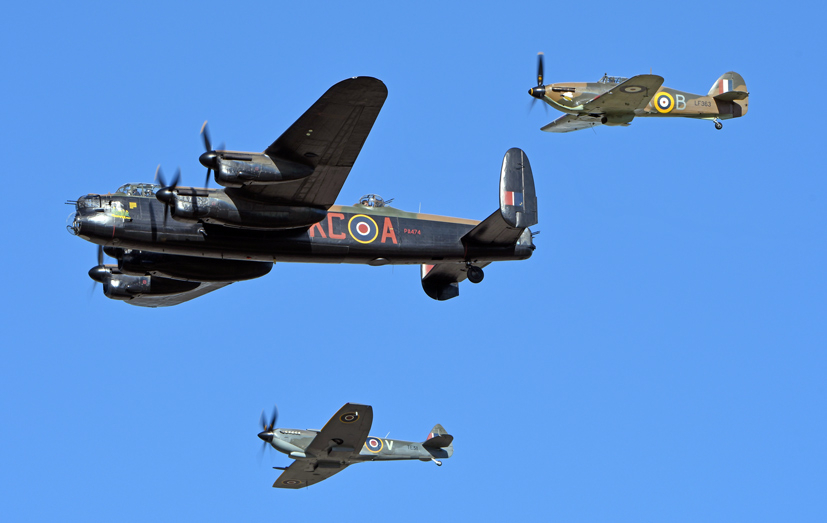
The evocative sight of the Battle of Britain Memorial Flight formation flypast
As one of the most popular display acts on any air display programme, the Battle of Britain Memorial Flight have been operating an ever-expanding fleet of historic aeroplanes since the original RAF Historic Aircraft Flight was formed in the years following the end of WWII. These magnificent aircraft are lovingly maintained and displayed by a committed and talented team of serving RAF personnel who are determined to preserve both the legacy of these historic aircraft and the sacrifice of the brave men and women who worked on and flew these aircraft during WWII. This current display season marks the auspicious occasion of the 60th Anniversary of the Battle of Britain Memorial Flight and it is somehow fitting that the first of our Aeroplane Profiles features one of the famous fighters of the flight and one of the most historic WWII era aircraft still flying in Britain today.
The business of keeping 1940’s era aircraft in airworthy condition can be both challenging and rather volatile and whilst we have just described how Hawker Hurricane Mk.IIc is one of the most famous WWII fighter aircraft still flying, most aviation enthusiasts will be fully aware that the BBMF are currently experiencing some technical issues with their Merlin engine powered aircraft and as a precautionary measure are temporality withdrawn from all flying activities. This is such a shame considering the significant anniversary year the Flight is currently celebrating, but safety and the longevity of these priceless items of aviation heritage will always be their primary concern. I am sure the aircraft of the BBMF will be back thrilling Airshow audiences all over the country very soon and rather than focus on their current difficulties, let’s take a closer look at one of their magnificent aviation gems.
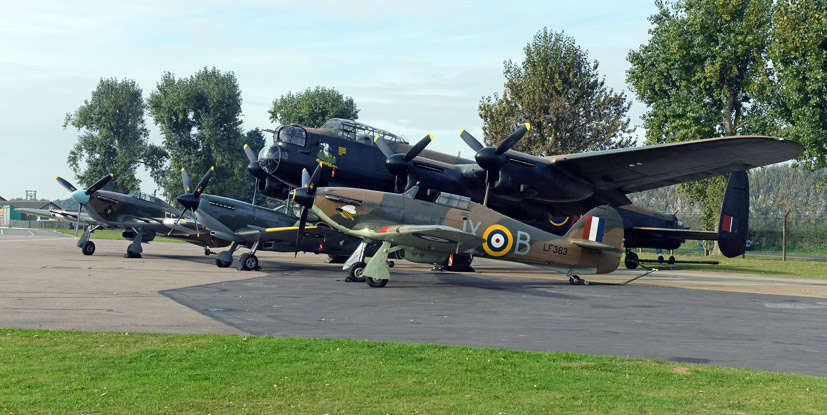
Celebrating their 60th Anniversary, the BBMF operate arguably the most popular aircraft in the Royal Air Force
As one of the most famous aircraft ever produced by the British aviation industry, the Hawker Hurricane occupied a space between the last of the classic biplane fighters of the inter-war years and the modern monoplane designs that would feature so heavily during WWII. Taking much of its design and construction techniques from the tried and trusted manufacturing methods perfected since the end of the Great War, the Hurricane was very much the ‘right aeroplane at the right time’ and provided the RAF with an effective, reliable and easy to maintain fighting aeroplane when it was needed most. Although always overshadowed by the more glamorous Spitfire, the Hurricane was easier and faster to construct, could be effectively repaired in the field and accounted for more enemy aircraft destroyed during the Battle of Britain than all of Britain’s other defences combined.
For pilots flying the Hurricane during the battles of France and Britain and into the Battle of the Atlantic, where the fighter carried a heavy combat burden for Fighter Command and the Fleet Air Arm, it has always been a source of frustration that the contribution of their incredibly effective aircraft is often overlooked in favour of the Spitfire. Indeed, when communities came together to raise tens of thousands of pounds to fund the much needed purchase of British aircraft during WWII, these were known as Spitfire Funds, with the poor Hurricane again lurking in the aviation shadows. Thankfully, the Hawker Hurricane has enjoyed something of a renaissance over recent years, with the number of airworthy examples increasing significantly and its historical importance receiving much more attention. It is also fitting that the Hurricane has always been a significant aircraft in the history of the Battle of Britain Memorial Flight, who continue to commemorate its historical importance.
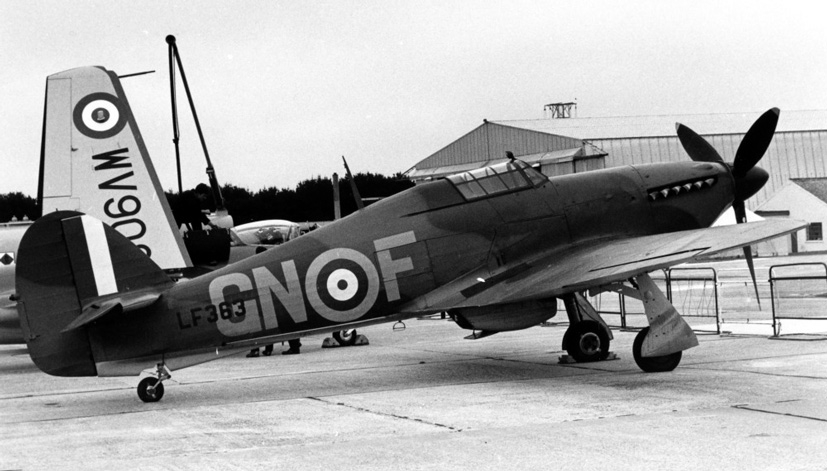
Hawker Hurricane Mk IIc LF363 was one of the founding aircraft of the original Historic Aircraft Flight
This classic British fighter has to be considered one of the most significant individual aircraft to ever see service with the Royal Air Force and possesses a rich history which continues with each passing year. Produced at Hawker’s Langley shadow factory in Buckinghamshire, LF363 made its first flight in January 1944 and is thought to have been the last Hawker Hurricane to enter RAF service. Delivered to No.5 Maintenance Unit at Kemble on 28th January, this aircraft is unique in RAF history, as it has been in continual service since that date, even though this includes periods of storage and restoration. Its wartime service was very much linked with Scotland and included operational flying with No.63 Squadron at Turnhouse and No.309 (Polish) Squadron at Drem, where it was used to fly shipping protection patrols.
Towards the end of the war, LF363 served with RAF No.26 Squadron, where it was engaged in performing naval artillery spotting and reconnaissance duties, skills the Squadron had perfected in preparation for the Normandy D-Day landings. Like so many wartime aircraft, the end of hostilities brought an uncertain future for our Hurricane and the very real threat of meeting the scrapman’s axe. LF363 was returned to Hawkers at Langley where it was stored in the open air and awaited its turn to be unceremoniously scrapped, as there was seemingly no longer any need for an old warhorse which utilised outdated technology. Thankfully, the aircraft was not to suffer this fate – she was spotted by a senior RAF official, who discovered the historical significance of the aircraft and secured its immediate future. The Hurricane received official clearance to undergo renovation to airworthy condition and later triumphantly emerged to lead the 1949 Battle of Britain flypast commemoration over London, in the hands of her saviour Air Vice-Marshal Stanley Vincent, who had himself flown Hurricanes from RAF Northolt during the Battle of Britain.
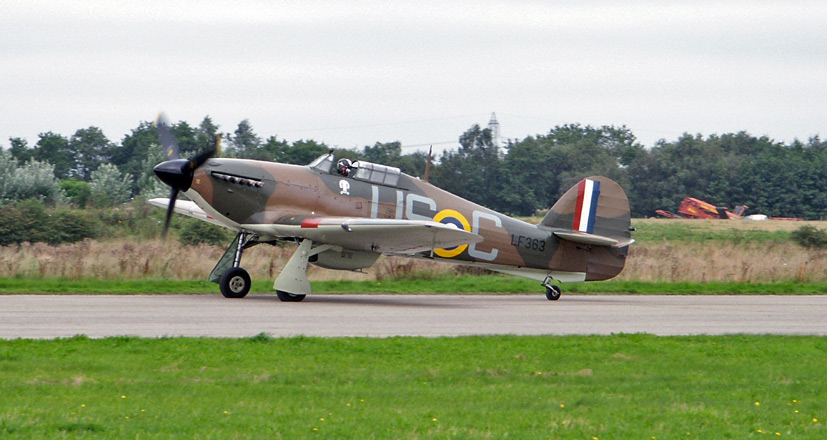
One of the first digital images of Hurricane LF363 I have in my collection - taken at Elvington Airshow in 2002
Saved from being scrapped and once again airworthy, Hawker Hurricane Mk.IIc LF363 would spend the next few years under the care of the Royal Air Force, receiving regular maintenance and flying on numerous ceremonial occasions. She was passed around a number of front-line squadrons during this time and also went on to star in a number of feature films and BBC productions during this period, including Angels one five in 1951, The war in the air during 1953 and Reach for the sky in 1955, before also playing a significant role during filming of the classic 1969 movie The Battle of Britain, adding to its impressive list of film credits. Following a return to Hawkers at Langley in 1956 for major re-fit and renovation, this most famous Hurricane was flown to RAF Biggin Hill, where it became one of the founding aircraft of the new RAF Historic Aircraft Flight.
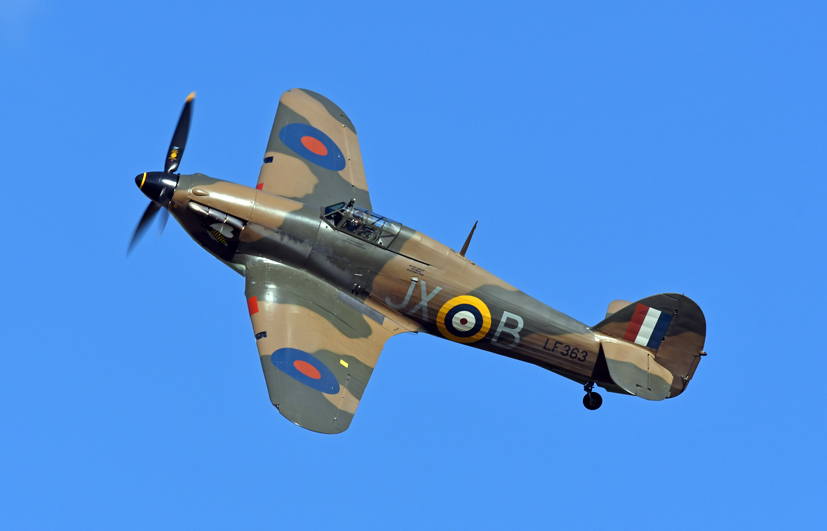
LF363 is one of the two Hawker Hurricanes currently operated by the BBMF
In the years following the end of the Second World War and as the RAF began the widespread adoption of jet powered aircraft, serving pilots and the general public still had a great affection for the fighters of the Battle of Britain and it was a popular feature of the annual Battle of Britain Victory Day flypasts to have either a Hurricane or Spitfire leading the formation. With many thousands of former wartime aircraft deemed surplus to requirements and scrapped, the idea of preserving a small number of historic aircraft for commemorative and ceremonial duties began to receive official recognition and eventually saw the formation of the Historic Aircraft Flight at Biggin Hill in 1957. Over the years, the flight operated a number of Spitfires and Hurricanes and was based at several different RAF stations around the country – whilst at RAF Coltishall, the flight received their largest and arguably most famous aircraft, in the shape of Avro Lancaster PA474 and changed their name to the Battle of Britain Memorial Flight.
The historic aircraft of the BBMF have performed thousands of displays over their 60 year history, with a punishing annual schedule of Airshow appearances, flypasts and commemoration requests. These continue to be some of the best-loved aircraft in the UK and consequently are in extremely high demand. Although all the Flight’s aircraft are maintained to an exceptionally high standard, the engineers and technicians are working with technology that was in RAF service over seventy years ago and the expertise needed for this type of work is now in short supply and high demand. To anyone fortunate enough to visit the BBMF hangar at RAF Coningsby, it seems a little strange that this facility preserves and maintains the oldest aircraft still in RAF service, but shares the site with the latest Eurofighter Typhoons, which currently protect Britain’s airspace from any unwanted airborne intruders.
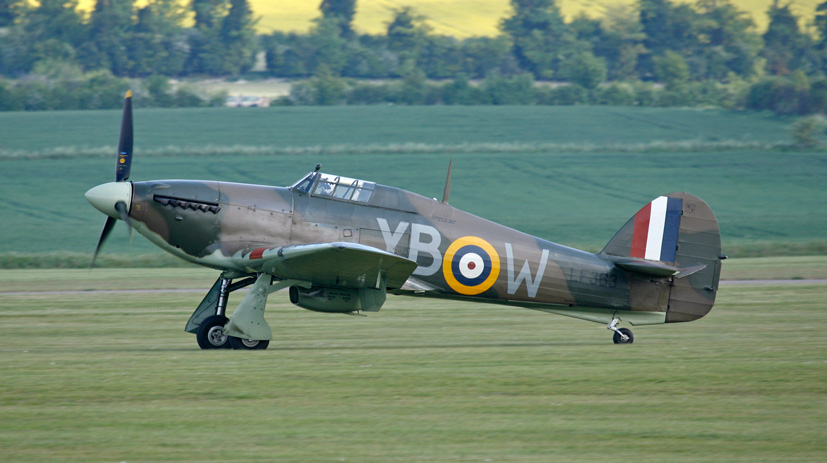
LF363 is still flying 73 years after making its maiden flight
Conscious of the priceless nature of their charges and the fact that these historic aircraft are some of the most famous aeroplanes in the history of the Royal Air Force, the aircraft of the BBMF are maintained to the highest possible standards by a talented and dedicated team of Flight Engineers. Whilst they strive to ensure as many people as possible have the opportunity to enjoy these aircraft throughout the year, everything must be done with safety as the primary consideration, which is the reason for the current cessation of flight operations for the Merlin powered aircraft within the Flight. Clearly, despite their best efforts, things can still go wrong - if working with aeroplanes were not challenging enough, these aircraft are from a previous era of aviation and pose very specific challenges for the team, who are working with technology which is now almost eighty years old.
Despite its undoubted aviation pedigree and the standard of care and maintenance it has always received, Hawker Hurricane LF363 was involved in the most serious incident to befall the BBMF in September 1991. Whilst en route to take part in an Airshow at Jersey in company with the Lancaster and a Spitfire from the Flight, LF363 developed a significant engine problem and was forced to divert to the nearest airfield, RAF Wittering. Unfortunately, during final approach to land, the engine failed completely, causing the aircraft to stall and crash heavily onto the end of the runway, with the undercarriage still retracted. The Hurricane burst into flames and suffered significant damage, but fortunately, the pilot managed to emerge relatively unscathed from the incident – there are a number of photographs on the internet which show the severity of this fire and how lucky the pilot was to walk away from the incident. The wreck was transported back to Coningsby, where it remained for the next few years awaiting a decision on its future.
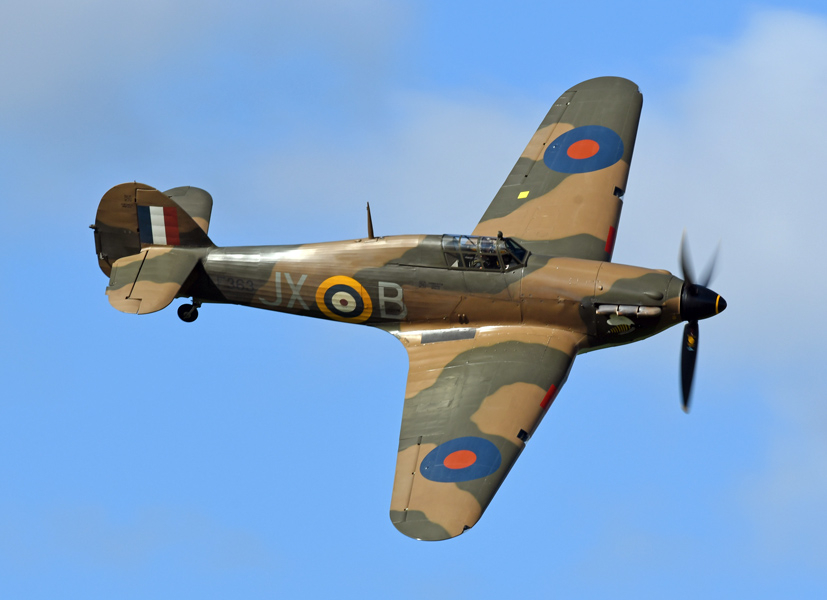
Our subject Hurricane wearing the colours of an RAF No.1 Squadron aircraft which saw service during the Battle of Britain
Due to the fact that this was such an important aircraft in the history of the Battle of Britain Memorial Flight and very few airworthy examples of the type were in existence at that time, the decision was finally taken to restore the aircraft to airworthy condition, but this would require one of the Flight’s Griffon powered Spitfires to be sold to help pay for the re-build. Undertaken by remounted Warbird restoration experts Historic Flying Limited at Audley End airfield, it would be four years before this magnificent aircraft would take to the skies once more.
Duxford airfield has a long and celebrated association with both the Spitfire and Hurricane and any display held here can usually boast several examples of these famous fighters on the programme. With large numbers of historic Warbirds operate from this Cambridgeshire airfield and even though the BBMF are regular performers at their shows, it is relatively unusual for the Flight’s aircraft to actually land at Duxford. For this reason, the 2004 D-Day 60th Anniversary Airshow proved to be an extremely popular event, with the prospect of several BBMF fighters operating from the airfield for the duration of the show, attracting large crowds to the airfield – little did they know that many of them would witness the worrying and extremely memorable arrival of Hawker Hurricane LF363.
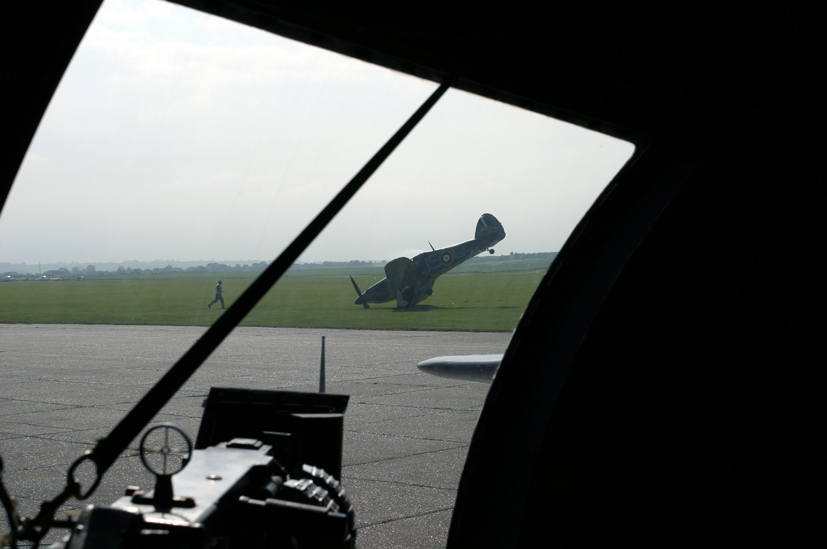
The Hurricane landing incident was viewed from an unusual and extremely memorable location
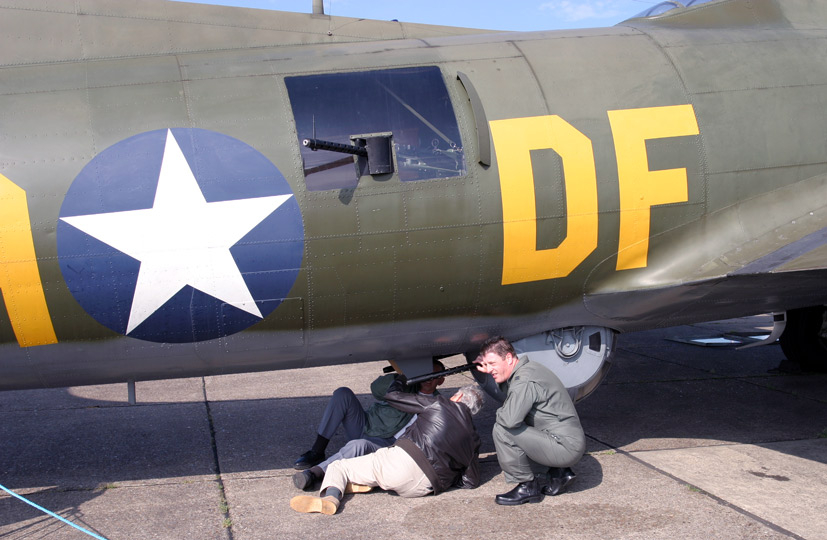
The Flying Fortress waist gunner's window through which I witnessed the Hurricane undercarriage collapse
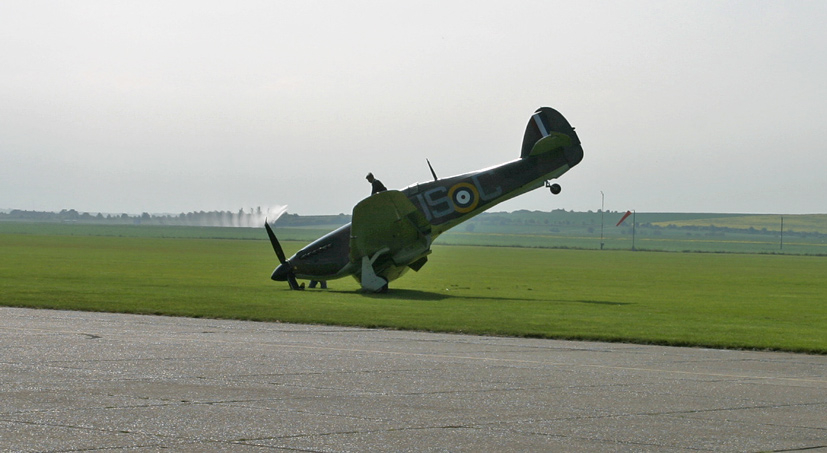
A grab shot of the immediate aftermath of the incident, with the pilot climbing out of the cockpit
During the morning of the first day of the show, I was fortunate enough to be allowed on board the famous B-17G Flying Fortress ‘Sally B’, courtesy of a friend who was one of the hard-working volunteers manning the aircraft over the weekend. We were sitting in the fuselage of the aircraft, near the waist gunners position, discussing how thin the skin of the aircraft was and trying to imagine how frightening it must have been for USAAF crews taking these mighty bombers into combat over occupied Europe. From my location sitting opposite the starboard waist gun position, I could see through the Perspex on to the airfield and noticed that the BBMF Hurricane which had just landed appeared to have a problem and was heading straight for us. Although it certainly seemed as if it was quite a close call at the time, in reality it was probably quite some distance from us and even though the Hurricane appeared to be on a collision course with the B-17, the heroic actions of the pilot of LF363 ensured the unfortunate incident did not become any more serious.
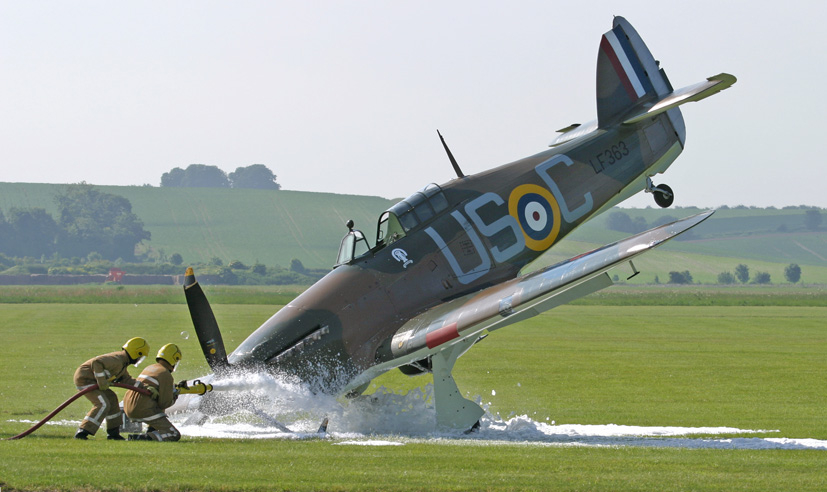
Fire services were quickly on the scene to prevent the incident becoming any worse
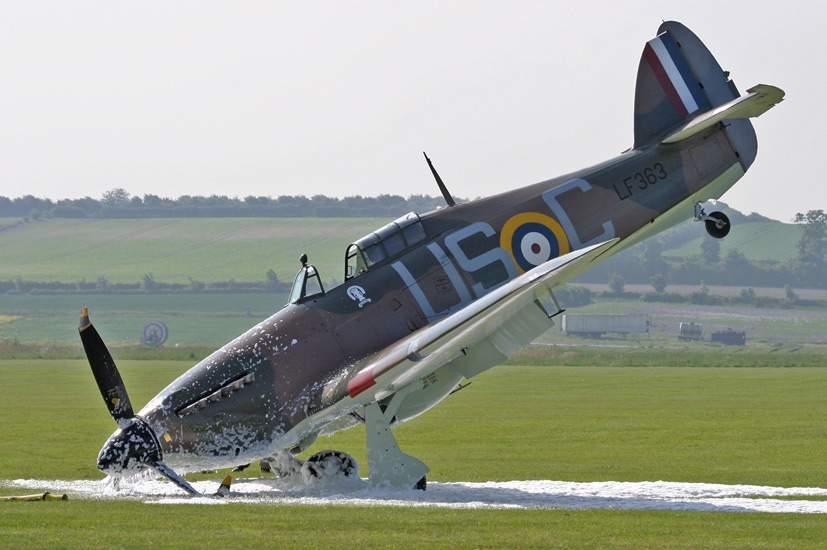
Although the incident could have been much worse, LF363 was left looking rather sorry for itself at Duxford
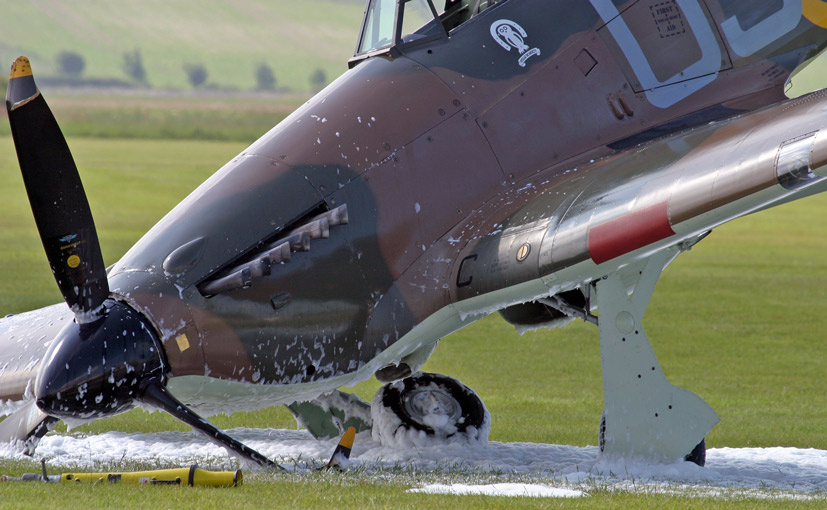
A close up image of the damage to the propeller and starboard undercarriage
From my recollections of the day and having subsequently seen video footage of the incident, it appears that the pilot of our subject Hurricane LF363 performed a textbook curved approach to the airfield and a gentle three-point landing, but almost as soon as the aircraft was on the ground, the starboard undercarriage leg began to slowly give way. Causing the starboard wing to gracefully dip and eventually scrape along the grass airfield, the drag caused the fighter to slew to the right, heading towards a number of aircraft which were parked in preparation for the days entertainment. As I am not a qualified pilot and can only describe what I saw, it appears that in a display of exceptional airmanship, the pilot, who was fully aware of the situation and determined to avoid the potential of a collision, turned his aircraft inside the arc of the slew, increasing the rate of turn away from other aircraft, but causing the propeller to strike the ground and bringing the aircraft to rest in a rather unflattering tail in the air attitude. The emergency services were quickly on the scene and gave the Hurricane a precautionary spray of fire retardant foam, but things did not get any worse and the pilot walked unscathed from the incident.
No aviation enthusiast ever wants to witness events such as these, but accidents do happen and in this case, the skill of the pilot ensured that LF363 was not facing another lengthy rebuild and an extended period away from the Airshow circuit. With visible damage to the propeller and assessments clearly needing to be carried out on the engine, wing and undercarriage, Hawker Hurricane LF363 would be flying again the following season, continuing to delight hundreds of thousands of Airshow spectators all over the country.
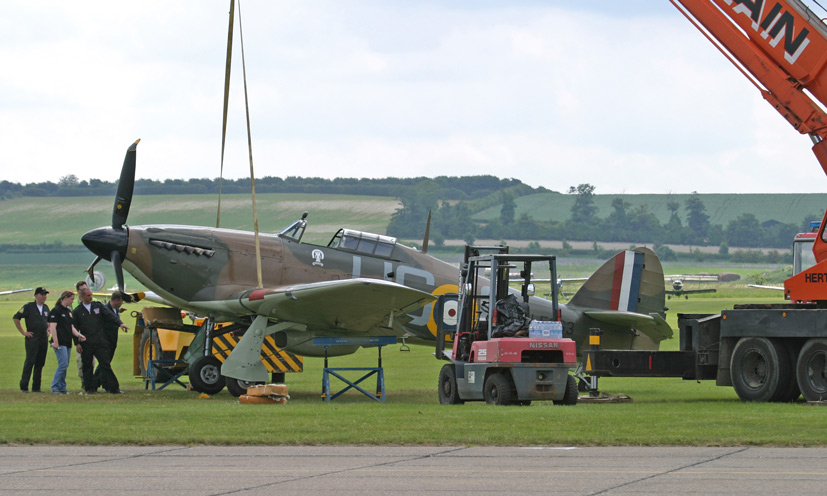
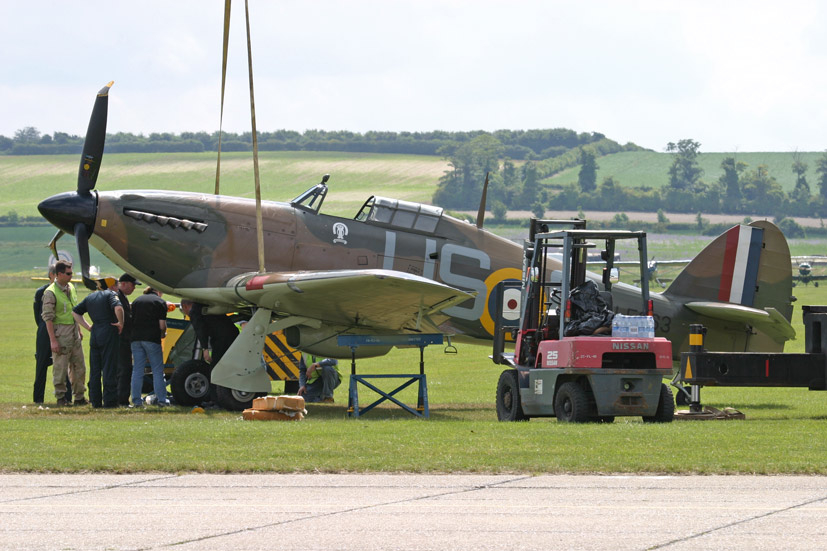
The Hurricane was coaxed back onto its undercarriage using a heavy crane and some flight engineers
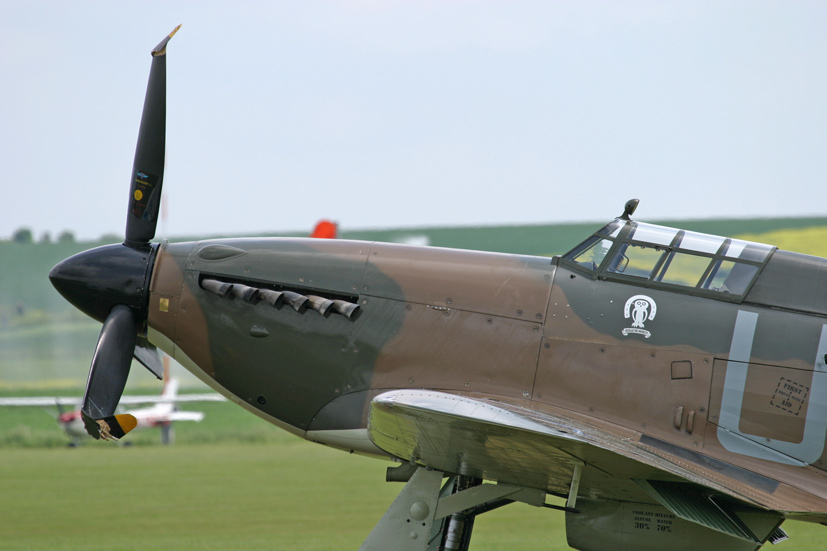
Close-up image of the damage to the wooden propeller of LF363
One of the most interesting aspects of BBMF aircraft operations over the years is how the Flight have regularly changed the liveries of their aircraft to reflect either famous pilots, individual aircraft or particular combat engagements in their continued commemoration of our aviation heritage. Since taking its place as one of the founding aircraft of the BBMF (Historic Aircraft Flight) sixty years ago, LF363 has been presented in several different liveries, which are usually changed when the aircraft undergoes a major servicing, but sometimes also in support of a significant anniversary or important display appearance. On the day of the Duxford landing incident, LF363 was wearing the colours of Hawker Hurricane Mk.I of No.56 Squadron who were based at North Weald during the Battle of Britain. Flown by Pilot Officer M.H Mounsdon, Hurricane R4197/US-C had been used in the destruction of several Luftwaffe aircraft, before itself being shot down by Messerschmitt Bf109 fighters over Colchester – although the pilot managed to bail out of his stricken fighter, he suffered burn injuries and became one of the pilots of the Guinea Pig Club, under the care of pioneering plastic surgeon Archibald McIndoe.
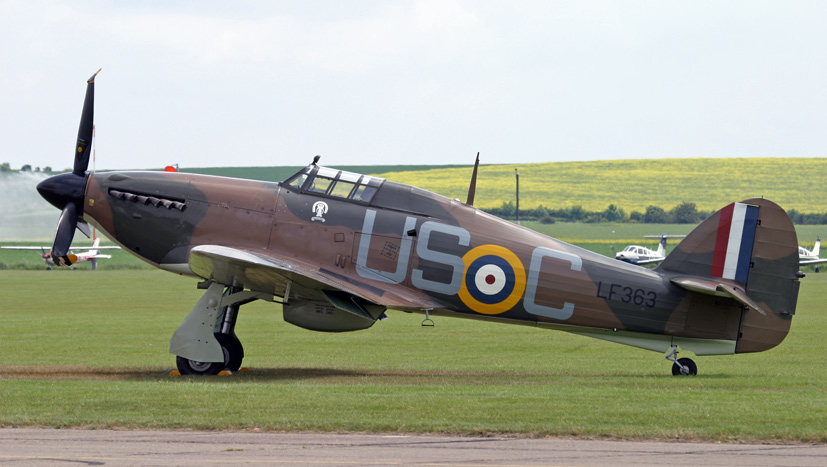
Back on its undercarriage and looking much happier
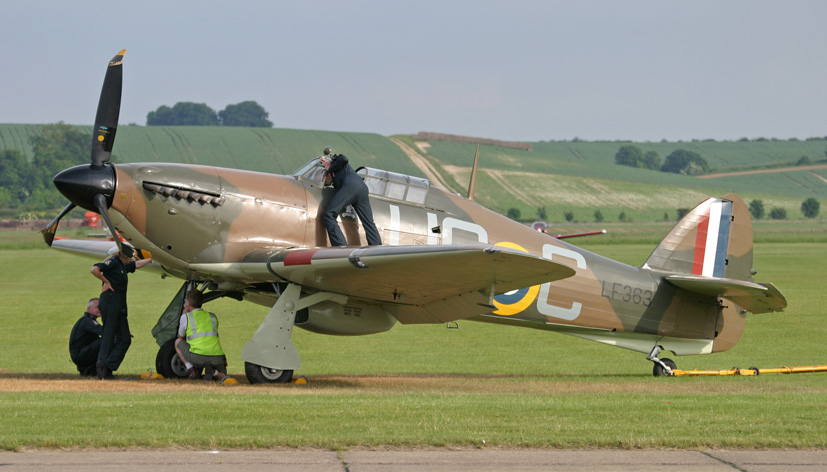
Members of the BBMF inspecting the damage to their Hurricane and discussing their next move
Hawker Hurricane Mk.IIc LF363 is without doubt one of the most famous aircraft to ever see service with the Royal Air Force and is a fitting first subject for our new Aeroplane Profiles feature. As one of the founding aircraft of the Historic Aircraft Flight, which was later renamed the Battle of Britain Memorial Flight, this magnificent Hawker fighter has been serving as a flying reminder of the sacrifices of the pilots of Fighter Command during WWII for many years, whilst also allowing enthusiasts and Airshow crowds the opportunity to experience the sight and sound of a historic WWII fighter for themselves. Almost destroyed following an engine seizure 26 years ago, the aircraft rose like a phoenix from the flames to continue thrilling Airshow audiences all over the UK and helping to preserve the legacy of the Hawker Hurricane, Britain’s forgotten fighter of the Battle of Britain, but arguably the aircraft we called on most in our hour of need.
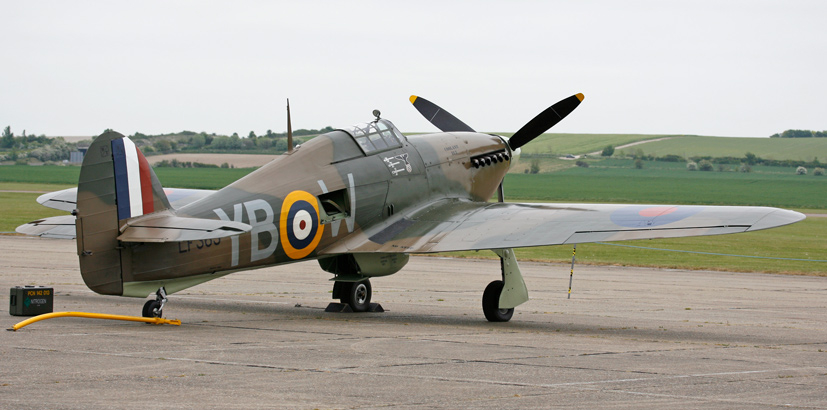
Hawker Hurricane Mk IIc LF363 back at Duxford three years after the landing incident and wearing a new colour scheme
I am afraid that is all we have for you in this latest edition of Aerodrome and the first of our Aeroplane Profile features. Regarding the changing liveries applied to Hurricane LF363 over the past 60 years, if any Aerodrome readers have pictures they may care to send in to us, please do so and we may well use them in a future BBMF 60th Anniversary tribute edition of our blog. If you can help, please send your pictures to our usual aerodrome@airfix.com or aerodrome@corgi.co.uk addresses.
If you would like to join in with all the latest social media discussions regarding Aerodrome and aviation matters in general, please head for either the Airfix Aerodrome Forum or our Corgi Aerodrome Forum and have your say. If you have any specific comments, questions or suggestions for future editions of Aerodrome, please do feel free to let us know by using either the Airfix Facebook or Corgi Facebook pages, or our Airfix Twitter or Corgi Twitter accounts, using #aerodrome – if you are Twitter regulars, you will know what this means! If good old fashioned e-mail is more your style, please use our usual addresses above where we will be only too pleased to hear from you.
We look forward to posting our next blog on Friday 22nd September – see you all then.
Thank you for continuing to support our Aerodrome blog and please share with anyone you think may enjoy the read. Please continue to send us your Airshow photographs from the year, as we are now planning our special Readers Pictures edition of Aerodrome.
Michael
© Hornby Hobbies Ltd. All rights reserved.

