
Welcome to this latest edition of Aerodrome and our regular look at the fascinating world of aeroplanes and the historic aviation scene around the UK.
Can it really only be a couple of months since we were enjoying some summer flying action at one of the country’s Airshow events – it already seems like ages ago! As we brace ourselves for another festive period and a long stretch of winter induced Airshow inactivity, we will be attempting to remain positive by looking back at one of last season’s most enjoyable events, which was held at a venue steeped in aviation history. Usually taking place over the weekend closest to Battle of Britain Day each year, Duxford’s Battle of Britain Airshow is unquestionably one of the highlight events of the UK Airshow calendar, particularly as this is one of the few places in the world where you can experience the sight of multiple Spitfires and Hurricanes taking off from a former Battle of Britain Sector Station – can you put a price on an aviation experience like that?
At this year’s show however, it wasn’t all about Spitfires, Hurricanes and Rolls Royce Merlin powered Messerschmitts, as a very special aviation visitor from Sweden was making only its second appearance at a UK Airshow, and as such, doubled the number of airworthy B-17s at Duxford for the duration of its stay. We will be looking at this rare visitor in a little more detail in this latest edition of Aerodrome, in addition to bringing you a photographic snapshot of what proved to be a memorable event and a real return to form for Duxford’s display organising team. As always, our review will be image heavy and brace yourselves, you might even see some blue skies! If nothing else, this will hopefully help to keep us ticking over until we can take our places at the first events of the coming 2025 Airshow season.
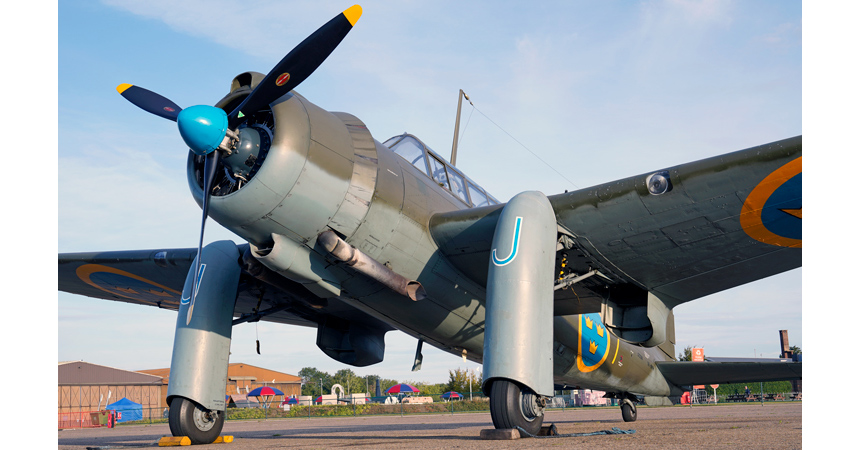
Sweden’s very own B-17 is squarely in our sights for this latest edition of Airfix and Corgi Aerodrome.
Duxford really is a special place, and when historic aeroplanes and re-enactors gather on Airshow day, something truly evocative happens.
For those of us with a love of all things aviation, the Imperial War Museum airfield site at Duxford is hallowed ground for us, not because of its historic links to the Spitfire and the Battle of Britain, but because this was probably the first place many of us ever got the chance to get up close to historic aeroplanes, in addition to also probably being the Airshow venue we’ve frequented most over the years. A trip to Duxford is always something to look forward to and even if you haven’t been for a while, once you set foot on this familiar ground, it’s as if you were only there yesterday.
The new military airfield at Duxford officially opened in September 1918, just two months before the cessation of hostilities in the Great War, a development which must have cast a shadow over the future of the airfield. Thankfully, the following year would see the welcome decision made to retain the airfield as a permanent RAF station and even resulted in a further period of development and expansion being authorised. Since those early years, there have been plenty of interesting developments throughout the history of Duxford airfield, but perhaps none as significant as the arrival of the RAF’s first Supermarine Spitfire fighter on 4th August 1938. With Duxford based No.19 Squadron taking the honour of introducing the Spitfire into Royal Air Force service, this also marked the start of an enduring association between the airfield and arguably the world’s most famous fighting aeroplane.
During the Second World War, the airfield would play a prominent role throughout the Battle of Britain, and towards the end of the battle, over sixty Spitfires and Hurricanes would be dispersed around Duxford and the nearby satellite airfield at Fowlmere. In the months which followed the end of the Battle of Britain, Duxford continued to be at the forefront of Fighter Command’s defensive capabilities, but would also prove significant as the RAF moved on to offensive operations into enemy occupied Europe.
Is there a finer venue in the world to see an early mark Spitfire display?
In this regard, the airfield would be home to one of the most interesting units of the war, the Air Fighting Development Unit. The AFDU were engaged in the assessment of aircraft and equipment prior to their potential service introduction and fascinatingly, also included the return to airworthy condition and evaluation of captured enemy aircraft within their operational remit. This work would probably have seen Messerschmitts sharing Duxford’s facilities with RAF Spitfires which were engaged in destroying as many Luftwaffe examples of the aircraft as they possibly could. AFDU were also influential in the development and introduction of the Hawker Typhoon, which proved to be such a devastatingly effective aircraft during the final months of the Second World War.
In April 1943, Duxford was handed over to the USAAF and would become known to them as Station 357 (DX), home to the famous 78th Fighter Group, amongst others. Their distinctive black and white chequerboard Thunderbolts and Mustangs would go on to become some of the most recognisable aircraft of the entire war and an enduring source of fascination for aviation enthusiasts all over the world ever since. This Anglo-US aviation link has endured to this day, with Duxford now being home to the impressive American Air Museum, an architecturally significant building which was awarded Grade II listed status, and the poignant ‘Counting the Cost’ engraved glass memorial wall, which includes the planforms of the 7,031 US aircraft which were lost whilst operating from British bases during WWII.
The end of the Second World War brought about a significant period of contraction for the Royal Air Force, but despite the many inevitable base closures which took place at that time, Duxford was one of the stations selected to remain operational. As the RAF was now very much in the jet age, Duxford would be home to such aircraft types as Meteors, Javelins and Hunters during this period, with other front-line aircraft such as RAF Germany Canadair Sabres using it as a temporary base whilst on exercise.
Pre-show briefing, but is in in 2024 or 1940?
In August 1961, a Gloster Meteor blasted off from Duxford’s runway to mark the end of the station’s service career and the beginning of a period of great uncertainty for the site. With the airfield now abandoned, it quickly started to fall into disrepair, but was to be transported back to its wartime glory once more during 1968, as it was used as a major filming location in the production of the now famous Guy Hamilton directed ‘Battle of Britain’ movie, and became temporary home to one of the most impressive collections of airworthy former WWII aircraft ever assembled since the end of the Second World War.
The final, extremely significant chapter in the history of the former RAF Duxford site occurred when the airfield was selected as a temporary home for the aircraft collection of the Imperial War Museum and the fact that the new custodians of the collection were also allowed to stage their first Airshow event in the Autumn of 1973. Possibly serving to prove the future viability of a museum at the Duxford site, the Imperial War Museum was given full use of the airfield and all its existing facilities in 1975 - the local council were also given a licence to administer its ongoing operation, with the airfield finally opening to the public on a daily basis the following summer.
This former RFC and Battle of Britain station would enjoy a new lease of life, helping to preserve the nations aviation heritage and allowing millions of people the opportunity to experience aeroplanes at close quarters and in authentic surroundings. The rest, as they say, is history. This place is special, a museum with a unique history and aviation heritage in every brick and wooden hangar door panel, somewhere to be experienced, not just visited. It’s also the focal point for thousands of visitors each and every year, with the area attracting aviation pilgrims from Britain, America and around the world, a significant tourist attraction for the area, preserving the memory of people who worked and served here, those who gave their tomorrows for our todays.
A gathering of B-17 types at Duxford’s Battle of Britain Airshow.
As one of the most popular airworthy historic aircraft in Europe over the past several decades, Boeing B-17G Flying Fortress ‘Sally B’ has called Duxford home for much of that time and as such, has been a big part of many an Airshow held at the airfield. For much of that time, ‘Sally B’ has been the only airworthy example of this famous American WWII bomber in Europe and as such, has become a huge draw for the tens of thousands of American visitors making the trip to Cambridgeshire every year.
Constructed as one of the last B-17Gs produced at the Lockheed Vega plant at Burbank in America, this bomber was allocated the USAAF serial 44-85784 in June 1945, but was too late to see service during the Second World War. She would go on to be used in training and research roles, but would later be sold to the French Government, where she served for many years in the role of geographic research aircraft, helping to produce maps and conduct aerial surveys all over the world.
After years of successful service, a general lack of available spares undermined the continued use of these aircraft and as a consequence, the B-17s were put up for disposal and former 44-85784 was purchased by a British businessman and pilot, Ted White. Mr White flew his new bomber to IWM Duxford in March 1975, an airfield which is still home to the aircraft more than 45 years later.
The bomber would later be named ‘Sally B’ in honour of Ted’s long-time companion Elly Sallingboe, a lady who is still the driving force behind ensuring Europe still has an airworthy example of this magnificent aircraft to call our own. The aircraft’s first Airshow appearance took place at the 1975 Biggin Hill Air Fair and since then, she has been a stalwart of the Airshow scene and one of the most popular display acts in the history of British Airshows.
One of the best loved Warbirds in Europe, B-17G Flying Fortress ‘Sally B’ is preparing for a dual celebration year in 2025.
A flying memorial to the many USAAF airmen who fought during the Second World War, particularly those who flew from bases in the UK, ‘Sally B’ not only performs at Airshows across the country, but also flies many commemorative and memorial flypasts, linked with groups and sites which are also dedicated to the preservation of the memory and sacrifice of US airmen based in Britain during WWII and the special relationship between our two nations. The starboard inner engine cowling of the bomber sports an unusual black and yellow chequered paint scheme, a tribute to Ted White, who was tragically killed in his Harvard aircraft in 1982 and is linked to this trainer which was presented with a similarly pained engine cowling.
Always a popular performer at any event where she displays, 2025 is going to be a hugely significant year for ‘Sally B’, the people who look after and display her, and her army of loyal supporters. In addition to being the year of her 80th birthday, she will also be marking 50 years since her arrival in the UK, both occasions we, as the UK Airshow going public, should celebrate with her in some style.
At this year’s show, ‘Sally B’ proved to be as popular as ever, but unusually, she did have some competition – there was another B-17 on the airfield, one which was also scheduled to be taking part in the flying display. The aircraft in question was not another Flying Fortress, but an extremely rare example of an indigenously designed and built Swedish dive bomber, a single engined aircraft which could hardly look more different to a Boeing B-17, an aircraft which was actually one of the Swedish Air Forces main attack aircraft during the Second World War.
Could two B-17s look so different? Check out those impressive undercarriage fairings!
During the mid 1930s, the Sweden’s air force could boast several overseas aircraft types within its ranks, but with the clouds of war looming large on the horizon, military planners thought it important they should begin developing their own home produced aircraft. On aircraft type they were particularly keen to develop was a multi-role aircraft capable of taking on the roles of strike/dive bomber and reconnaissance/forward air observer aircraft. In conjunction with the Douglas Aircraft Company of America, one of Sweden’s existing aircraft manufacturers took on the project, producing a wooden mock-up of the proposed new aircraft, one which proved impressive enough to see a prototype aircraft ordered.
It has to be remembered that this was all taking place at a time of great international upheaval and before the project could advance any further, the original manufacturers ceased trading, and the SAAB (Svenska Aeroplan AktieBolaget) Company stepped in to take the project forward. The resultant aircraft was referred to as the SAAB B-17 in its dive bomber configuration, and the S-17 for reconnaissance and spotting duties and whilst the aircraft may have had input from the Douglas Company, it was very much Grumman in its appearance.
A rather large aeroplane, without doubt the most distinctive design feature of the SAAB B-17 were the huge undercarriage fairings fitted to the robust main undercarriage, which look very much like a batsman’s cricket pads. These fairings were intentionally designed to be deployed prior to commencing a diving attack, limiting the speed of the aircraft’s dive, thus ensuring a more accurate attack, whilst at the same time helping the aircraft pull out of its 70 degree dive.
Despite its portly appearance, the SAAB B-17A is a surprisingly spritely performer once in the air.
Around 322 of these aircraft were built by SAAB in three different variants, which each one defined by the engine which powered them. Concerns about the ongoing availability of engines during wartime encouraged SAAB to design the aircraft to use one of three different engine types, with the respective variant letter denoting which engine type the aircraft was powered by. The B-17A variant was powered by a Pratt & Whitney Twin Wasp, the B-17B by a Bristol Pegasus engine and the B-17C by a Piaggio powerplant.
This particular aircraft (s/n17239) was built during the summer of 1943 and later assigned to No.7 Wing of the Swedish Air Force based at Såtenäs, where it would eventually receive its ‘Blue John’ nickname, with blue being the colour of the 2nd Squadron and ‘J’ being its individual aircraft identification letter. She would have a relatively uneventful service career, ending her days as a target tug, however, the discovery of a crack in one of the engine cylinder blocks effectively brought an end to it military service career. Immediately grounded, she was later transported to Linköping for storage, earmarked as one of the aircraft destined for display at a planned Swedish Air Force Museum at some point in the future.
During a meeting of Air Force officials in 1995, SAAB’s public relations manager at the time broached the subject of the feasibility of returning the stored SAAB B-17A back to airworthy condition, and specifically, to achieve this in time to commemorate his company’s impending 60th anniversary. He was of the opinion that the sight of this unusual looking indigenously designed aircraft in the air with contemporary types would be quite the spectacle and a source of pride for both SAAB and the Swedish nation.
Only the second time the SAAB B-17A had displayed here in the UK, with the previous occasion also being at Duxford, but in 2005.
Some influential people must have shared his vision, because a restoration program was authorised, and it received significant support in terms of both funding and manpower. After only 193 days, the 28 strong volunteer team achieved something truly spectacular and were ready to unveil the subject of their efforts on an expectant Swedish nation. Making its first post restoration test flight on 11th June 1997, this unique aircraft had made it back into the air and in time to take part in SAAB’s 60th Anniversary celebrations. She was an entirely fitting way in which to mark both this occasion and the nation’s wider aviation heritage.
This year’s visit of the SAAB B-17A to Duxford wasn’t the first time the aircraft had visited the UK, as it had been one of the star attractions at the 2005 Flying Legends Airshow, which was also held at Duxford. As a result, this meeting of different B-17 types was not in itself unique, if highly unusual and the historic airfield at Duxford was rather familiar to this Swedish aviation visitor.
Despite its rather robust appearance and extremely generous proportions, the SAAB B-17A is actually a surprisingly spritely performer, climbing to height in no time at all and displaying impressive agility once in the air. It isn’t difficult to imagine how these aircraft would have formed the backbone of Sweden’s wartime air striking force, as it was capable of outperforming contemporary aircraft such as the Junkers Ju-87B Stuka and Douglas Dauntless. Let’s hope this unusual, but strangely attractive aircraft remains in airworthy condition for many years to come, and that it isn’t another nineteen years before it graces UK skies once again.
Calm after the build challenge storm, the modelling team from the West Midlands Police Scale Model Club are joined by display pilot Clive Denney for their victory photo.
We’re taking a bit of a blog review diversion at this point, as we wanted to bring you details of an interesting project which was taking place inside Duxford’s Airspace Hangar at this year’s Battle of Britain Airshow. Whilst thousands of spectators were enjoying the thrilling aviation action taking place across the Imperial War Museum sight, a small team of modellers were glued to an aircraft of a different, slightly smaller kind, as they attempted to break a Spitfire build record.
Working in conjunction with the Polish Heritage Flight, a crack team from the West Midlands Police Scale Model Club were attempting to set a modelling record at this year’s show, something they were calling their 24 in 24 challenge. It centred around their four man team attempting to build an Airfix 1/24th scale Spitfire Mk.IX in 24 hours or less, with the intention of having the model finished by the time the last aircraft had landed back at Duxford following the end of Sunday’s show.
The attempt involved the team taking on the construction of the kit in relay shifts, with each member working on the kit for around an hour, before another member of the team took over to give them a well-earned rest. All this was taking place right next to the Airfix event team’s display set-up for the weekend and in the shadow of the make and paint tables which were usually full of people enjoying a spot of modelling, so you could say that this section of the Airspace hangar was a hive of modelling activity for the entire weekend.
The attempt did have a previous 1/24th scale Spitfire build to draw inspiration from, as one of the team members had been challenged to complete a 1/24th scale Spitfire kit in 24 hours by his wife, a modelling feat which he just about managed to do. That being the case, the team knew it could be done, but they could shave any time off that previous mark, and could they do it in the full glare of public scrutiny?
While the rest of us were enjoying a world-class Airshow, the build challenge team were hard at it in Airspace, with their Spitfire coming along nicely throughout the weekend.
Obviously, the teams model building exploits would be governed by the time they were allowed access to the airfield and hangar in which they were based for the weekend, however, they always appeared confident that the build attempt was going to be successful. Even though they came in for plenty of attention over show weekend and had to contend with plenty of visitor questions, they never wavered in that confidence.
By the end of the first day, the kit was already looking very Spitfire-like, although the colour the team elected to paint the underside of the kit was the subject of some enthusiast discussion. As this build was part of the wider Polish Heritage Flight activities over the show weekend, the team decided to finish their model as Supermarine Spitfire Mk.IX EN459/ZX-1, which was flown by Flt Lt Eugeniusz Horbaczewski of the Polish Fighting Team, an aircraft which was attached to RAF No.145 Squadron in Tunisia during early 1943.
With the build attempt receiving regular visits from members of both the Polish Heritage Flight and Airfix teams throughout the final day of the show, it certainly appeared that we were all the nervous ones, with the build team themselves simply getting on with the job at hand, without a care in the world. Impressively, they didn’t cut corners on any of the build, with the cockpit receiving their full attention and the quality of the overall finish being to an incredibly high standard indeed.
With a crowd of onlookers gathered for the big reveal, the team kept us waiting as they applied the finishing touches to what was a truly impressive build and in this Polish North African scheme, one which looked absolutely stunning. After a final dab of decal fixer and a bit of paint touch-up, the propeller was put in place and the build was completed – they had done it! But what about the all-important time?
Not only had the team produced a beautiful Spitfire build within the allotted 24 hours, but the actual build time proved to be an equally impressive 19 hours and 55 minutes, and a new Spitfire build record for them! With the team still maintaining the calm demeanour they had displayed all weekend, everyone in the hangar made a big fuss of them, congratulating them on what was an extremely impressive modelling achievement. After many photographs of the successful team had been taken, the record-breaking Spitfire was whisked away to one of the other hangars at Duxford, so the final picture of the day could be that of the model sitting imperiously on the wing of an actual Hawker Hurricane, an aircraft which itself was resplendent in its own RAF Polish Squadron markings.
A Spitfire build of distinction. One of the good things about having aviation friends in high places is that you get to display your scale Polish fighter on a real historic Warbird, and doesn’t it look a picture!
Congratulations once again to the team from the West Midlands Police Scale Model Club on their spectacular modelling achievement in completing their 1/24th scale Spitfire in less than 24 hours, in fact, in under 20 hours. We’re just sorry that you missed all the full size aviation action at what proved to be a superb Airshow.
Although we’ve taken an unusual detour in this show review, we hope you enjoyed reading about this unusual challenge taking place at this year’s show, but one which was certainly worthy of mention. We will finish with a further selection of images taken at this year’s show and will return for more Duxford Battle of Britain Airshow action in our first Aerodrome posting of 2025 in four week’s time.
Until then, may I please take this early opportunity to thank everyone for their continued support of the Aerodrome blog and to wish each and every one of you a happy, safe and enjoyable Christmas, with a prosperous New Year to come.
Let’s hope the festive period is filled with lovely aeroplanes!
Small but perfectly formed, the Grumman F8F Bearcat is one of the most potent piston engine powered fighters to ever enter service.
Britain’s claim as the world’s most potent piston engined fighter, the Hawker Fury is a beast of an aeroplane.
Boasting slightly more stately performance, the Fairey Swordfish possess wartime credentials which eclipse both the Bearcat and Fury.
Hopefully that’s one of ours!
Visitors to this year’s show would have been surprised to see Duxford’s impressive new Vickers Wellington.
Such a distinctive aircraft, the Westland Lysander has just been added to the Airfix range as a new tooling project.
Just as the Spitfire is inextricably linked to Duxford, so too are the Rolls Royce Merlin powered Hispano Buchons which were based at the airfield during the filming of the Battle of Britain movie in 1968.
Aviation highlights at every turn, this de Havilland DH.9 is the only original airworthy Great War bomber in the world.
I’m afraid that’s all we have for you this time, but we will be back again in four weeks’ time with more news and pictures from the world of aviation. Thank you for your continued support and as always, if you would like to comment on anything blog related or suggest a subject you would like to see covered in a future edition of Aerodrome, please do drop us a line at aerodrome@airfix.com, where we would be delighted to hear from you.
Should you wish to continue the aviation discussions between editions, you will always find something of interest over on the Airfix Aerodrome Forum and if social media is more your thing, please use the respective official social media icon links at the foot of the main Airfix and Corgi website homepages to access our official sites.
The next edition of Aerodrome is scheduled to be published on Friday 3rd January 2025, when we will be bringing you more news from the world of aviation.
I hope to see you all back here then.
Michael