

Welcome to this latest edition of Aerodrome and our regular look at the fascinating world of aeroplanes and the historic aviation scene around the UK.
We are delighted to confirm that the 2024 Airshow season is now off and running, with the honour of staging the year’s first Airshow event once again falling to the world famous Shuttleworth Collection at their Old Warden airfield base. Hopefully from this point forward, aviation enthusiasts will be able to spend many weekends indulging their passion for aeroplanes and you can be sure that your roving Aerodrome reporter will be out there gathering plenty of content for forthcoming editions of the blog.
The subject of this latest edition is intended to mark the start of the current UK Airshow season and will be reporting from a sunny Best of British Airshow at Old Warden a couple of weekends ago, but adopting something of a slightly different angle. For many in attendance at the show, the undoubted highlight and the thing which encouraged them to secure their ticket was the advertised appearance of a particularly striking historic aeroplane, one which would be making a highly anticipated display debut at Old Warden, the beautiful Hawker Fury. One of the most attractive aircraft to ever take to Britain’s skies, the Fury’s debut at Old Warden was such a significant development for the historic aviation scene in the UK that we intend to devote this entire edition to the occasion. In addition to looking a little more widely at the history of this magnificent aircraft and of this rare example in particular, we will also be including a selection of photographs taken on the day of the show, a day which will live long in the memories of those fortunate enough to be there.
We’re allowing ourselves to be captivated by silvered wings in this latest edition of Aerodrome.
Several aircraft types have claimed this particular aviation accolade, but surely the Hawker Fury has a more convincing claim than most.
For anyone with an interest in aviation, the period between the two world wars is arguably the most interesting from the perspective of aviation development, with the most capable biplane fighter designs sharing the skies with the first of the world’s new breed of fast monoplane fighters. With aeronautical engineering advances being supported by huge strides in powerplant development, the decade leading up to the start of the Second World War saw the performance of British aircraft types increase from the 142mph capable Handley Page Heyford bomber, to the 367mph capable Supermarine Spitfire.
Before the aviation world finally turned its back on biplane aircraft and accepted the fact that a new breed of monoplanes would be taking aviation technology forwards, the 1930’s witnessed the introduction of a series of aircraft which were all vying for the title of the ‘ultimate biplane fighter’, several of which have long been regarded as some of the most attractive aeroplanes to ever take to the skies. These beautiful aircraft came to represent the glamour and excitement of aviation, captivating the general population in their millions and still proving to be an enduring source of fascination almost a century later. With highly polished metal panels and brightly coloured flamboyant liveries, is it any wonder how Britain’s inter-war aircraft continue to fascinate aviation enthusiasts to this day, even though few of these aircraft types remain in flying condition.
A man who was responsible for designing some of the most important and indeed attractive aircraft of the inter war period, Sidney Camm was the chief designer of the Hawker Aircraft Company and during the time he was employed by the company, was involved in the design of an impressive 52 different aircraft types. Incredibly, this involvement would result in the production of 26,000 aircraft and at one point during the 1930s, Sidney Camm designed aircraft accounted for no fewer than 84 percent of the aircraft in service with the Royal Air Force.
During the golden era of the biplane, Camm earned a reputation for designing some of the world’s most capable fighting aeroplanes, with a string of aircraft such as the Hart, Demon and Nimrod all proving to be some of the most effective aircraft available to any air force at that time. He was also responsible for designing an aircraft which genuinely has a claim to being the absolute zenith of biplane fighter design, an aircraft which is still considered to be the ‘Ultimate biplane fighter’ by many aviation commentators and researchers, the Hawker Fury Mk.I.
All these pictures were taken at the recent Shuttleworth Best of British Airshow, the first time this, or any other Hawker Fury had performed at this iconic venue.
Once presented with the incredible statistics noted above, surely it could be argued that British aviation in the 1930’s belonged to the Hawker Aircraft Company and the constant stream of classic biplane designs they introduced. Even though Camm and his team had already started working with the concept of monoplane aircraft design, they weren’t quite ready to abandon the biplane just yet and left their mark on this era of aviation by producing an aircraft which could be described as the perfect biplane fighter, the ultimate combination of airframe design and powerful engine technology.
The Hawker Fury was originally referred to the Hawker Hornet and was a sleek, all metal fighter development of the highly successful Hawker light bomber series which were already in service with the Royal Air Force. Designed in response to an Air Ministry requirement for a new high-speed fighter for the Royal Air Force, the new aircraft was in competition with the equally attractive Fairey Firefly II, a competitor aircraft which was strikingly similar to the Hawker design in profile, and was even powered by the same engine, the recently introduced Rolls Royce Kestrel.
This impressive 700 horsepower, V-12 in-line engine was the first cast-block engine produced by Rolls Royce and was to be the design pattern on which the majority of their future piston engine development would be based. The Kestrel was an extremely powerful unit and marked very pinnacle of engine technology at that time. It’s also interesting to note that the Rolls Royce Kestrel would also be used to power several German prototype aircraft designs of that period, later variants of which would be pitched against the Royal Air Force following the start of the Second World War.
The public debut of the Hawker Hornet (later to become the Fury) took place at the Olympia Aero Show of 1929, where the new fighter was to be one of the highlight acts and would prove to be a resounding success. Early the following year, the aircraft was sent to Martlesham Heath for military flight-testing, where every aspect of its design and performance was exhaustively assessed. The aircraft impressed test pilots with its rapid rate of climb, high maximum speed and excellent manoeuvrability, and when these were combined with its impressive flight handling characteristics and the inherent strength of the Hawker design, the fighter showed itself to be an excellent performer. Even at this stage, officials were of the opinion that this may well be the most advanced fighter aircraft in the world at that time.
When looking at pictures of both the Hawker Hornet (Fury prototype) and its competitor aircraft the Fairey Firefly II, it can be surprising to see just how similar the two aircraft actually were. In profile, the two aircraft were almost identical, however when it came to their construction, the two were really quite different. Whilst the Firefly made use of traditional wooden construction methods, the Hawker aircraft utilised the company’s highly successful tubular steel construction method. This resulted in a very strong but relatively light aircraft, two critical attributes required by any successful fighter aircraft design.
During flight trials, the controls of the Hawker fighter were found to be significantly lighter and more responsive than those of the Firefly, which made the aircraft a much better handling aeroplane and giving it a distinct advantage in view of its intended operational role. Importantly, it was during the flight trials at Martlesham Heath that the Hawker Hornet achieved a speed of 207mph level flight, all factors which proved significant in encouraging the Air Ministry to select the Hawker Hornet for their new RAF interceptor fighter design.
During those days, the Air Ministry preferred their fighter aircraft to have names which reflected the aggressiveness of their nature, serving as a warning of how they would defend Britain’s airspace ferociously if provoked, so it was decided that the name of the new fighter would be changed from Hornet to Fury. The Hawker Fury was to become the first interceptor aircraft in Royal Air Force service capable of speeds in excess of 200mph.
Elegant on the ground and in the air, the Hawker Fury was flown by the most capable pilots in the Royal Air Force during the length of its service.
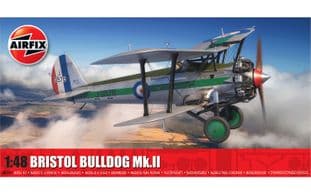
When the Hawker Fury entered RAF service as the fastest fighter in their history, you might think that they would have wanted to take every opportunity to promote the impressive performance of their new aircraft. What actually happened was that the Fury proved to be something of an embarrassment to the Air Ministry, even though it should have actually been viewed as something of a technological face-saver. The recent squadron introduction of the Hawker Hart light bomber highlighted a major deficiency in Britain’s air defence capabilities, as this aircraft was actually faster than the Bristol Bulldog fighter which had only recently entered service in relatively large numbers.
The Hart was capable of 184mph in level flight, whilst the RAF’s latest front-line interceptor, the Bristol Bulldog, had a top speed which was 10mph slower. To make matters worse, the first large scale bombing exercise to take place featuring the new Hawker Hart, saw the attacking aircraft completing their missions virtually unopposed by the fighter squadrons sent to challenge them, a situation the RAF certainly didn’t want making public.
Following the introduction of the 200mph capable Hawker Fury, the RAF had one of the most capable fighter aircraft in the world at that time within their ranks, and therefore you could be forgiven for thinking that the Fury would subsequently go on to become the standard interceptor fighter of the period. Unfortunately, this didn’t prove to be the case, because these were strange times in the world of aviation. As already mentioned, this was a period of astonishing technological advancement in the field of aviation but played out at a time of severe economic austerity. Even though the Hawker Fury was a significant improvement over the Bristol Bulldog fighter which was already in widespread use by the RAF, the Hawker fighter was significantly more expensive to produce and as a consequence, the number of aircraft ordered would be relatively modest.
The Fury entered RAF service with No.43 Squadron ‘The Fighting Cocks’ at Tangmere in 1931, where it would go on to serve until the unit replaced them with the new Hawker Hurricane eight-gun monoplane in 1938. The Fury was regarded as something of a hotrod fighter at the time and only the finest pilots in the RAF could hope to stand a chance of getting behind the controls of this magnificent aeroplane. Consequently, some of the elite RAF fighter squadrons of the day were linked with the Hawker Fury, with the type also going on to serve with No.1 and No.25 fighter squadrons. Indeed, whilst serving with No.1 Squadron, this unit was to earn a reputation for aerobatic prowess flying their gleaming Hawker biplane fighters, performing displays at venues all over the world to the delight of many thousands of captivated onlookers, a demonstration of the skill and professionalism of a modern Royal Air Force.
In addition to being a highly advanced, highly capable combat aircraft, the Hawker Fury was without doubt one of the most attractive aeroplanes ever to take to the skies, almost too beautiful to be considered a warplane. Everything about the Fury was cultured ….. sleek, sophisticated and a real treat for the eyes, surely the Hawker Fury was too handsome to be sullied by the horrors of war! Even the Fury’s adversaries might find it too distasteful to fire at something so beautiful, and instead choose to allow it to slip into the clouds and continue entertaining the gods.
Despite its good looks and impressive aviation credentials, the clouds of war were already casting an ominous shadow over the polished metal panels of the Hawker Fury and the fighter would ultimately not be used on combat operations by the RAF during the coming Second World War, having already been relegated to secondary roles. Serving through a very specific period in Royal Air Force history, the Hawker Fury was one of those advanced biplane fighters which fell victim to the pace of technological advancement, the finest aircraft of its type, quickly superseded by a new breed of advanced monoplane fighter. Historically, due to its relatively short period of service, only 118 Hawker Fury fighters would be produced for the Royal Air Force, making this quite the rare bird.
Although the Hawker Fury didn’t see service with the RAF during the Second World War, it would serve with several overseas air forces and would be involved in combat operations against Axis forces. Although the fighter did claim limited combat success, the Fury was effectively obsolete by the time of the Second World War and the majority of these engagements were to end in a rather predictable manner, with the gallant Fury pilots ultimately falling to the guns of a more advanced enemy aircraft. For this reason, allied to the fact that very few aircraft were retained by the RAF during those first tumultuous months of conflict, almost all of the remaining aircraft were either destroyed, used as decoys or unceremoniously scrapped. Today, there is just a solitary example of the beautiful Hawker Fury in existence, however astonishingly, this incredibly historic aeroplane is maintained in airworthy condition, a unique flying link to Britain’s glorious inter-war aviation heritage.
When talking about historic British aeroplanes, there can be few which can claim to be as rare, as captivating and as beautiful as Hawker Fury K5674. The only surviving example of its type to be found anywhere in the world, not only has it been restored to an incredibly high standard, but the owners of this unique piece of aviation history restored it to airworthy condition, allowing UK based enthusiasts to experience this unique link to a golden era of British aviation.
Historically, with no surviving examples of the Hawker Fury thought to exist, this handsome biplane fighter appeared lost to the post WWII world forever, until the chance discovery of a derelict airframe was made in South Africa. Following a tip off from RAF museum staff, a team from the Duxford based Historic Aircraft Collection headed for a small farm in South Africa, where they were delighted to discover the extremely rare remains of a Hawker Fury fighter. Negotiations to purchase the parts commenced immediately and plans set in motion to have everything transported back to the UK, where the intention was to use them as the basis for an ambitious restoration project.
This particular Hawker Fury Mk.I was initially taken on charge with the RAF in 1935 and allocated the serial number K5674. Delivered to No.2 Aircraft Storage Unit at Cardington in Bedfordshire, she subsequently moved to her first operational squadron, No.43 Squadron ‘The Fighting Cocks’ at Tangmere in Sussex. Whilst at Tangmere, this aircraft became the personal mount of Flying Officer Frederick Rosier, who had it noted in his logbook as being his aircraft whilst he was Officer Commanding ‘B Flight’, between December 1936 and January 1939.
It was also noted in his logbook that this Fury carried the name ‘Queen of the North and South’, although it’s never actually been confirmed whether this was just a name Rosier referred to his aircraft by, or if it carried the name anywhere on its fuselage. Although no photographic evidence has ever been uncovered to prove the aircraft had the name painted on its fuselage, if you do have such a picture, the Historic Aircraft Collection would be delighted to hear from you.
A jewel in the crown of the UK historic aviation scene, Hawker Fury K5674 is the only airworthy example of this beautiful aeroplane to be found anywhere in the world.
The final time Flying Officer Rosier took Hawker Fury K5674 into the air was on 22nd February 1939. His logbook entry for that day read ‘Last fling in Queen of the North and South - Perfect!’ It’s also thought that just before he ended his association with this beautiful aeroplane, he had to endure the distressing sight of the aircraft’s beautifully flamboyant ‘Fighting Cocks’ paint scheme replaced with a standard RAF day fighter camouflage scheme of the immediate pre-WWII era, a high-profile sign of the challenging times to come. After spending time stored at the RAF maintenance units at Kemble and Sealand, the K5674 was eventually struck off charge in August 1940.
The next chapter of this aircraft’s story was to be a new career flying in much sunnier skies and service with the South African Air Force. Dismantled and transported aboard the vessel merchant M.V. Clan Mathieso, she was unloaded at Durban in late 1940 and re-assembled for service with No.13 Squadron, SAAF, based at Swartkop. Unfortunately, her flying career in South African career was to be a short one and the pilots assigned to fly her were to discover that this high-performance fighter could be a bit of a handful.
On 31st March 1941, whilst being flown by pilot 2nd/Lt. Peter M Hedley, the aircraft ran out of fuel, with her pilot having to attempt a forced landing in a field at Pitsani, close to the town of Krugerdorp. Thankfully, the pilot escaped unhurt from the incident, however, his aircraft suffered Cat 2 level damage and was transported to No.2 Air Depot, Kimberley, where it was later scrapped. From that date, the aircraft’s whereabouts remain something of a mystery, that is until the wreckage was discovered on farmland in 1992 and identified as what was left of a former Royal Air Force Hawker Fury.
We are extremely fortunate to still have an example of this historic fighter for us to admire and it’s all down to the good people at HAC and Retrotec.
Once the team from HAC had acquired the remains of Hawker Fury K5674, the incredibly challenging task of bringing her back to the UK and assessing her as the basis for a unique restoration project began in earnest. From the outset, the team were only interested in embarking on this project if they were attempting to restore the aircraft back to as close to its service condition as possible, making an already difficult task even more challenging. With few original parts available to the restoration team and the complex manufacturing processes used in its construction back in the mid 1930s having long since disappeared, this was clearly going to be a very challenging, costly and time-consuming project.
Retrotec Ltd are a specialist historic aviation restoration company based in East Sussex, who over the years, have established a unique reputation for engineering excellence in the restoration of rare and vintage aeroplane types. Already having several high-profile aviation projects to their name, the company has become expert in working with classic Hawker biplane aircraft from the inter-war years, however despite these impressive credentials, would still be counting the Fury as their most challenging project to date.
Aviation manufacturing processes from an era long since passed would have to be resurrected if this project was going to be successful and parts for this highly complex aeroplane would have to be re-manufactured, even reverse engineered if their Hawker Fury was going to take to the skies once more. Despite facing some rather daunting challenges, the Retrotec engineers took to their task with enthusiasm, determined that they were going to achieve something very special within the world of historic aviation!
From the outset of this project, it was clear that this was going to be a long-term undertaking and as the enthusiast movement became aware of this Fury project, excitement levels were understandably through the roof, however, they were sensible enough to realise that this project was going to take time. Having accepted the complexities of bringing old aeroplanes back to life, they also knew that much of the work undertaken by restoration companies such as Retrotec were rightly kept out of the public domain and with the passage of time, projects such as these have a habit of falling off the radar somewhat.
The Hawker Fury was to remain in the workshop for eighteen long years, but what the Retrotec team eventually managed to achieve was nothing short of astonishing. Undoubtedly, every historic aviation restoration project will have its particular merits and will have plenty of fascinating stories to tell, but this one is just a little bit special. Notwithstanding the fact that enthusiasts will all have their own favourite aircraft and projects they are particularly passionate about, within the world of historic aviation, the Hawker Fury project has to be regarded as one of, if not the finest example of restoration work ever completed in the UK. The Fury is a restoration masterpiece and the team at Retrotec must be so proud of their stunning achievement.
In keeping with the authentic nature of this project, the aircraft was finished in the scheme she wore during the time she was the personal aircraft of Flying Officer Frederick Rosier of No.43 Sqn at Tangmere, during the 1930’s. The restoration team were fortunate enough to have made contact with the son of F.O Frederick Rosier, who was able to provide them with a period photograph of the aircraft, evidence which helped them research the accuracy of the paint finish they were intending to use. Fury K5674 is an aviation time capsule without equal and a real jewel in the crown for the UK’s historic aviation scene.
Following the culmination of their mammoth eighteen-year restoration of Fury K5674, the aircraft was unveiled to an excited historic aviation world at the Imperial War Museum airfield site at Duxford in June 2011. Later that same year, the aircraft was placed on static display at the Goodwood Revival meeting, where she was awarded first place in the Spirit of Aviation section, a fitting and worthy accolade marking the incredible achievement of the Retrotec engineers. The aviation world was starting to get a little excited by now, hoping that a first post restoration test flight for the Fury was only days away. Unfortunately, that didn’t prove to be the case and it would be almost twelve months before that momentous event could take place. For a restoration of this magnitude, the aviation authorities were rightly thorough with their checking of every stage of the project, but this process proved both time consuming and costly.
Thankfully, at the end of this authorisation process, the restoration was signed off and a permit to begin the testing program was issued – perhaps the world would see a Hawker Fury take to the skies once again after all.
On 30th July 2012, in the hands of experienced Warbird pilot Flt. Lt. Charlie Brown, Hawker Fury Mk.I K5674 took off from the grass runway at Goodwood, and roared into the air in majestic fashion, the triumphant culmination of a unique and lengthy restoration project. The decision to make that first flight from Goodwood was an intentional one, as it was as close to the aircraft’s original Tangmere home airfield as the team could get, further maintaining the authentic nature of this project.
That first flight was undertaken in private, out of the gaze of spectators, as was usual practice for the HAC team. For an aircraft this age and rarity, the success of this first post restoration flight relied solely on the experience and professionalism of the aircraft’s test pilot and under such circumstances, did he really need the pressure of the nation’s media documenting his every move?
As the team would have hoped, that first flight went extremely well and other than the usual technical niggles associated with the first post restoration flight of a classic aeroplane, the occasion was considered a resounding success. A second flight took place on 6th August and on that occasion, in addition to teams from HAC and Retrotec being in attendance, David Rosier, the son of Flying Officer Frederick Rosier who flew this aircraft many times during the 1930s, was there to see his father’s aircraft take to the skies once more. He brought his father’s flight logbook with him on the day, which he entrusted to pilot Charlie Brown for the duration of the flight. Once again, that flight was made from Goodwood and saw the aircraft flying in the same airspace she used to do back in the 1930s.
After these successes, there followed a further frustrating period where the aircraft was confined to its hangar and indeed, she would not take to the air again until 22nd April 2015. By this time though, the team were confident enough to publicise their intention to introduce this magnificent aircraft to an Airshow crowd for the first time at Duxford’s VE Day Anniversary Airshow scheduled for the following month. If the show wasn’t already appealing enough to enthusiasts, it had just taken on a new level of significance and had become a ‘must attend’ event for thousands – all we needed now was good weather and a serviceable aeroplane.
On to the historic aspect of this image selection. Hawker Fury approached the grass runway at Old Warden for the very first time.
The Fury did make her display debut at Duxford in May 2015 and since that date, has become a regular and much-loved feature of the UK historic aircraft scene, if not displaying quite as often as enthusiasts would have liked. Operating and maintaining vintage aeroplanes of this calibre is incredibly expensive and can be frustratingly challenging at times and there have been periods over the past decade where this beautiful aeroplane has been forced to spend long periods residing in her hangar and not thrilling Airshow crowds with her stunning good looks in the air.
This was the backdrop to the recent announcement that the Shuttleworth Collection’s first Airshow event of the season would include a display by Hawker Fury K5674 for the very first time and even more than this, the aircraft would be landing at Old Warden and operating from the airfield on the day of the show. For many enthusiasts, this was reason alone to have them securing their tickets and making plans to head down to Bedfordshire, not only to catch their latest glimpse of this magnificent aircraft, but also to be present at its first ever display at Old Warden.
Promising to be a truly historic occasion, Fury K5674 would not only be displaying at Old Warden for the very first time, but this would also be the first time that her wheels had ever set down on the hallowed turf of the runway at this famous old airfield. As far as we have been able to ascertain, we think this was actually the first time a Hawker Fury had ever visited Old Warden and unless someone can prove otherwise, we’re going to stick our necks out with this understanding.
With the throaty growl of her Rolls Royce Kestrel engine announcing the impending arrival of the aeroplane, the Fury was expertly brought in for a landing at Old Warden by experienced Warbird pilot Clive Denney and even though there was an embarrassment of aviation riches gathered together on the airfield that day, the Hawker Fury was the undoubted start of the show for many. It could be argued that the intimate surroundings of Old Warden make for an ideal venue from where to enjoy a display by the Hawker Fury and the aircraft really did seem right at home in these historic surroundings. The display itself was excellent and befitting of an aeroplane which possesses such class – elegant and cultured, and not resorting to violent aerobatic manoeuvres and distant loops.
Touchdown – A Hawker Fury lands at Old Warden for the very first time.
Pilot Clive Denney has a quick look to check everyone is aware of the historic display he’s about to perform.
With the Rolls Royce Kestrel engine announcing the start of the Fury’s take-off run, Clive expertly encourages his historic mount into the air.
First pass. We had to wait a long time to witness this spectacle, but thankfully neither Clive, nor the weather disappointed on the day.
Rhapsody in natural metal. Hawker Fury Mk.I K5674 is the only airworthy example of this beautiful aircraft to be found anywhere in the world and the airfield at Old Warden is surely the most fitting venue to enjoy such an aviation spectacle as this.
Pilot Clive Denney really did serve up a treat for those in attendance and even though the world had to wait 2024 years to witness such an aviation spectacle, Clive ensured that our wait had not been in vain. The only thing is that he left us wanting much more of this magnificent sight and I’m sure I speak for thousands of aviation enthusiasts when I say that I hope the Hawker Fury returns to this most fitting of Airshow display venues in the very near future. In an ideal world, it would be nice to think that the aircraft might make Old Warden something of a second home, but whatever happens in the future, we thank everyone who helped to make this historic Hawker Fury first visit such a memorable aviation occasion. Have we already witnessed the highlight of the 2024 Airshow season?
I’m afraid that’s all we have for you this time, but we will be back again in four weeks’ time with more news and pictures from the world of aviation. Thank you for your continued support and as always, if you would like to comment on anything blog related or suggest a subject you would like to see covered in a future edition of Aerodrome, please do drop us a line at aerodrome@airfix.com, where we would be delighted to hear from you.
Should you wish to continue the aviation discussions between editions, you will always find something of interest over on the Airfix Aerodrome Forum and if social media is more your thing, please use the respective official social media icon links at the foot of the main Airfix and Corgi website homepages to access our official sites.
The next edition of Aerodrome is scheduled to be published on Friday 21st June, where we will hope to be bringing you another feature linked to the fascinating world of historic aviation.
See you all back here then.
Michael