We are pleased to bring you the latest edition of Aerodrome and our fortnightly look at the fascinating world of aviation. In the previous edition, we looked at the history behind the annual Flying Legends Airshow, which is held over the second weekend of July each year at the Imperial War Museum’s Duxford airfield site and continues to attract thousands of enthusiasts from all over the world. We saw how two extremely rare US based Mustangs made a special effort to take part in this year’s show and how operating classic WWII era aircraft can be both expensive and a constant challenge to keep them in the air.
In this latest edition, we are returning to Flying Legends, where this time we will be looking at some of the other highlights on display at Duxford, including a number of Warbird debut appearances, a new look for one of the Airshow circuits favourite adversarial aircraft and the rare opportunity to meet a former Luftwaffe ace pilot. We will also be featuring several of aircraft that starred in the recently released movie blockbuster Dunkirk and end with a final photographic overview of the 2017 show. We have a lot to get through, so let’s head back to Duxford and Flying Legends 2017.
The historic surroundings of Duxford airfield are arguably amongst the world’s most significant and atmospheric venues for anyone to witness the display of restored WWII era aeroplanes. With Duxford based squadrons seeing action throughout the Second World War and many famous aviators having walked this same patch of Cambridgeshire earth during that time, visitors to Flying Legends Airshows are not only sharing in this rich aviation history, they are helping to create it. With 25 shows now already in the history books, Flying Legends shows can boast the attendance of many aircraft types that would have used the runways at Duxford during WWII and it is somehow fitting that this most famous Warbird show calls upon this rich history each July. Even for many of the world’s most famous and revered display pilots taking part in the show, Flying Legends must have a special significance for them, as they are flying rare and historic aeroplanes from the same airfield where young pilots went to war over 70 years ago.
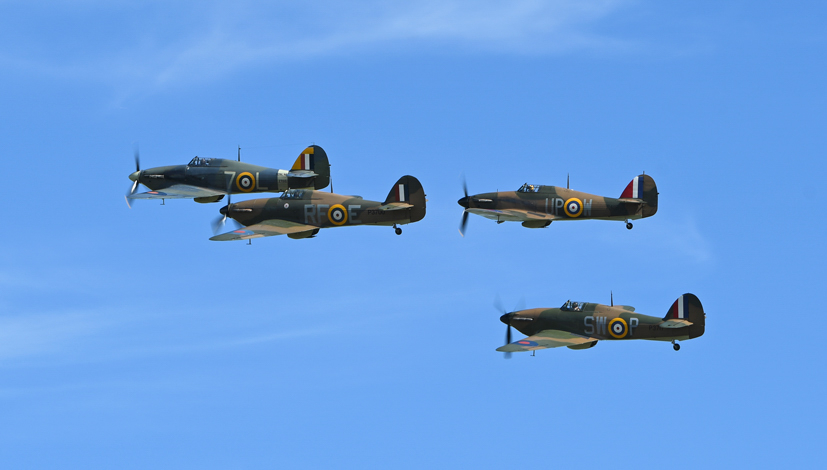
The rare sight of four Hawker Hurricanes flying in formation
In more recent times, Duxford has become synonymous with its association with the Supermarine Spitfire, partly due to the fact that No.19 Squadron based at the airfield were the first to receive production Spitfires in 1938, but also because Duxford has always been home to many restored examples of the aircraft in post war years. Many previous Airshows held here have celebrated this association with the sight of large formations of Spitfires thrilling spectators and helping to ensure that huge crowds regularly flock to the airfield, however the Spitfire is not the only WWII aircraft with a strong Duxford connection. Britain’s other famous wartime fighter, the Hawker Hurricane, operated from Duxford both during the Second World War and with Warbird operators in post war years and the 2017 edition of the Flying Legends show would prove to be a significant one for this famous aircraft.
The summer of 1940 would see large numbers of Hawker Hurricane fighters operating from the grass airfield at Duxford, with the Czech pilots of RAF No.310 Squadron arriving first, quickly followed by Douglas Bader’s 242 Squadron during the Battle of Britain. With its satellite station at nearby Fowlmere, there would typically be around sixty Spitfires and Hurricanes available for operations dispersed between the two sites during the summer of 1940, as Duxford’s ‘Big Wing’ began to take an increasing toll of Luftwaffe aircraft.
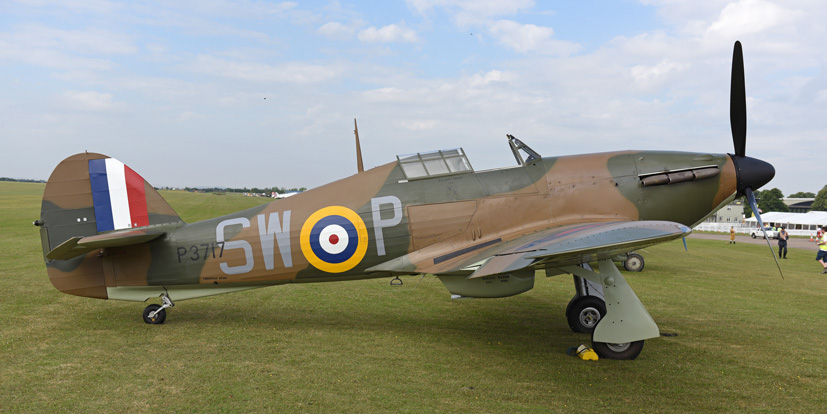
Hawker Hurricane Mk.I P3717 flew for the first time in 70 years this March
As one of the highlights of the 2017 show, the Hawker Hurricane was extremely well represented, with three relatively established Airshow performers joined by two recently restored examples, which were both making their Flying Legends debut appearances. This also heralded the possibility of the enigmatic sight of five Hurricanes flying in formation together – the first time for many a year at Duxford. The first of these new aircraft was Hawker Hurricane Mk.I P3717, a genuine Battle of Britain veteran and one that only returned to flying condition in March this year, some 70 years after it had last taken to the skies. Operating during the Battle of Britain with No.253 Squadron flying from Kenley, this Hurricane went on to serve in Russia and whilst its overseas service is not fully documented, we do know that it suffered a crash landing and lay undiscovered for many years.
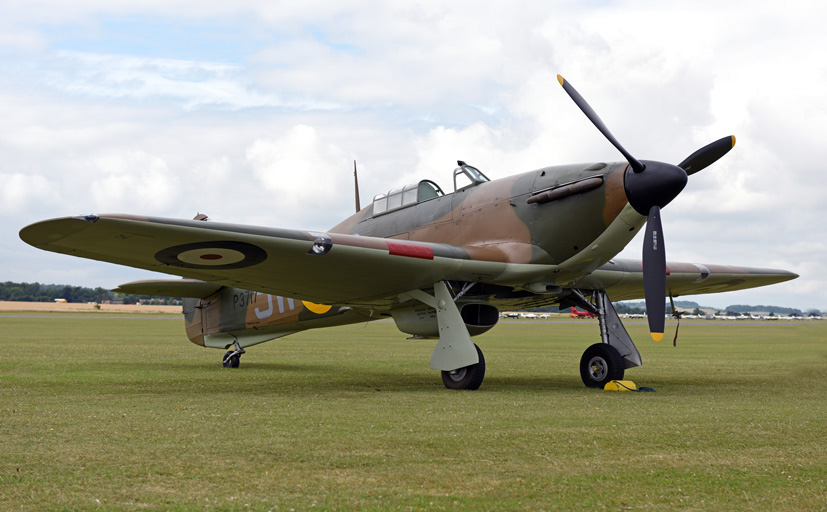
Beautifully restored, this magnificent machine is now based at Old Warden
The Warbird business is now extremely lucrative and once the wreckage was discovered and plotted, it was recovered to the UK by a collector and restoration expert, who was determined to return the fighter to the air once more. As the aircraft neared the end of a lengthy and painstaking restoration, the owners decided to honour the aircraft’s Battle of Britain service and finish it in the colours it wore during its time with No.253 Squadron in the summer of 1940 – wearing the codes SW-P, the aircraft made its triumphant first post restoration flight earlier this year. This beautiful Hurricane is now based at Old Warden, home of the famous Shuttleworth Collection, where visitors now have the opportunity to see three restored examples of Hawker’s famous fighter. Having only made its first flight earlier this year, Flying Legends 2017 saw the first appearance of this classic British fighter.
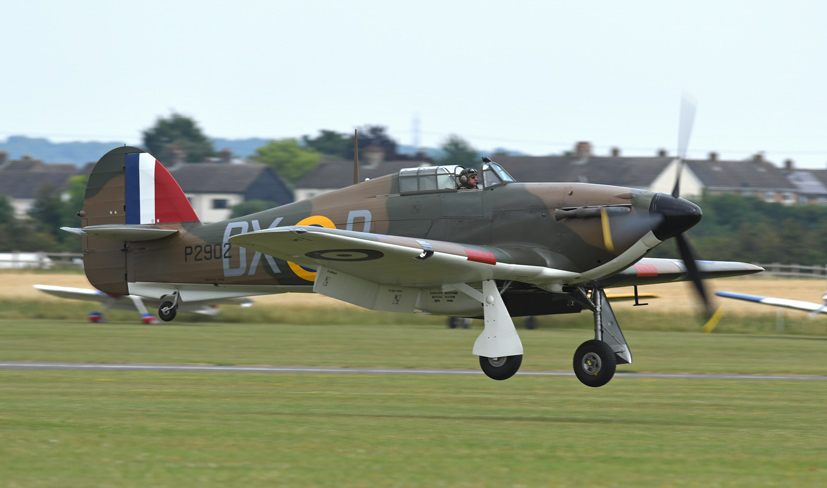
One of the most recent Warbird restorations in the world lands at Duxford
Not content with one new Hurricane debutante at Legends 2017, the show organisers must have been thrilled to announce the expected attendance of a second recently restored example, which brought the compliment of Hurricanes at this year’s show to an impressive five. Hawker Hurricane Mk.I P2902 was allocated to No.245 Squadron in May 1940 and given the codes DX-R - flying from RAF Hawkinge, the aircraft was used in operations to support the evacuation of the BEF from the beaches of Dunkirk during Operation Dynamo when it was bounced by a flight of Luftwaffe Bf 109s. Although the pilot managed to evade their attentions by rolling into a steep dive, the Hurricane was damaged during the combat and he was forced to make a belly landing on a stretch of beach, just north of Dunkirk. Quickly leaving the scene, he managed to avoid capture and was later picked up by Allied troops, before joining the thousands of soldiers waiting to be rescued from the besieged port area at Dunkirk. He safely made the journey back to England and was with his Squadron at Hawkinge in a matter of days and back into action – his Hurricane was less fortunate and was looted by Wehrmacht troops looking for a trophy of their latest victory. It quickly disappeared beneath the shifting sands of the Northern French coast.
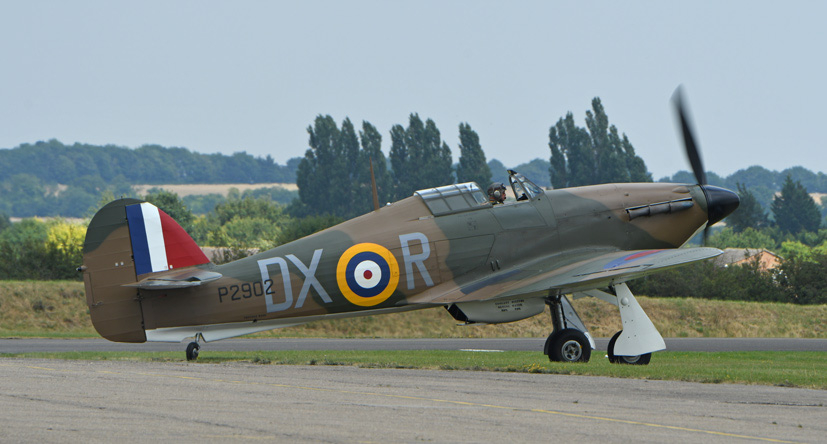
Hurricane P2902 was an exciting addition to the Flying Legends programme
Laying undisturbed for many years, the constantly moving sands finally revealed their aviation secret in 1989, allowing a local aero club to launch a recovery attempt. The wreckage was displayed as the centrepiece of a Dunkirk exhibition in a local museum, from where it was purchased by a renowned Warbird restoration expert in 1994 and returned to the UK. Following a detailed assessment of its condition, the decision was taken to undertake an extensive long-term restoration project which only came to an end in the past few months. Wearing the same No.245 Squadron markings the aircraft wore on its fateful final flight over Dunkirk in 1940, Hurricane P2902 only made its first post restoration flight on 19th June and its attendance at this year’s Flying Legends Airshow was definitely a significant bonus for everyone who saw it. It should hopefully become a popular performer at future Duxford shows, as the owners intend to have the Hurricane based at the airfield and with the world’s number of airworthy Hurricanes seemingly increasing by the year, the possibility of seeing several early examples of the aircraft in the air at the same time is a tantalising future prospect.
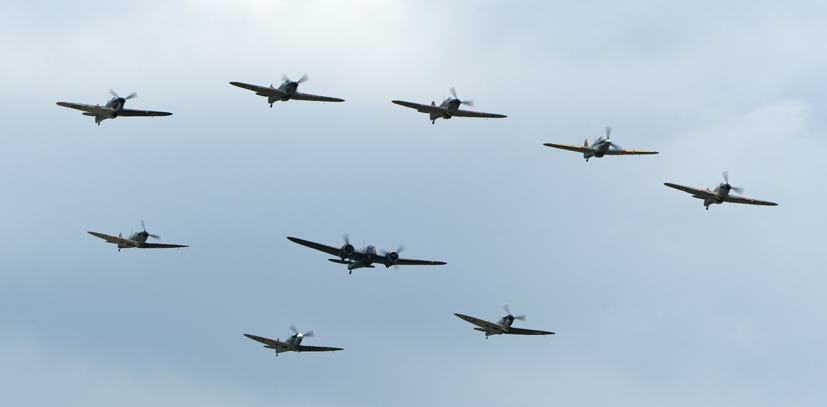
The memorable sight of five Hurricanes at the head of the formation
Amongst the many aviation delights in attendance at this year’s Flying Legends show, the sight of five Hawker Hurricane fighters parked side by side was an undoubted highlight for many and ensured large crowds of admiring enthusiasts congregated at this end of the airfield for the duration of the show, all trying to get a picture of this magnificent sight – 2017 will certainly be remembered as a good year for fans of the Hawker Hurricane.
It may just be a personal thing, but I have to say that I find restored German aircraft to be even more fascinating than their Allied counterparts. This is certainly due in part to the fact that very few examples of German WWII aircraft have performed on the UK Airshow circuit over the years, but also because they just look so much more sinister than Spitfires and Mustangs. Many enthusiasts will probably have spent their formative years reading things like Commando action adventure comics and being enthralled by the stories of gallant Allied pilots battling against the feared Luftwaffe in their deadly Messerschmitt fighters, with evocative artwork capturing the excitement of these aerial duels. Although the reality of actual combat was far more sinister than these adolescent glorifications, these comics made a lasting impression on many young people and certainly helped to forge my passion for aviation and military history.
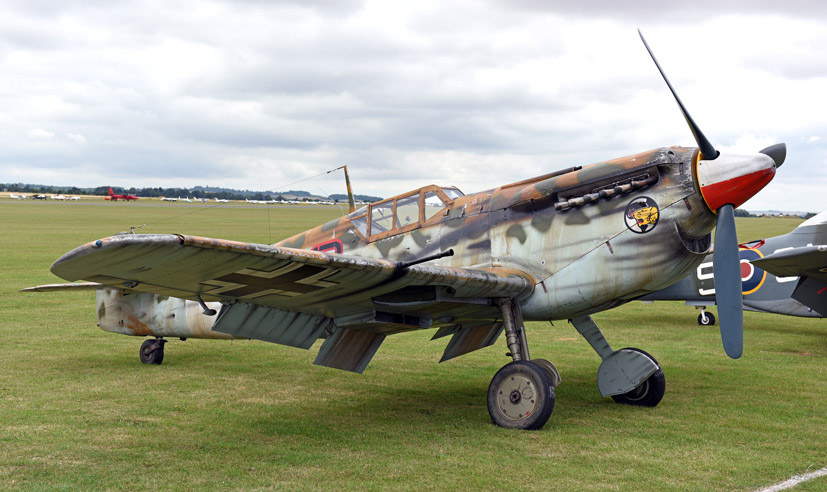
Hispano Buchon G-AWHK was wearing a special scheme for Legends 2017
With so few former Axis aircraft surviving in airworthy condition, it is hardly surprising that the ones that have made it to the Airshow circuit have become incredibly popular and hold a particular fascination with enthusiasts – after all, every self-respecting restored Spitfire and Hurricane needs a Messerschmitt to chase. One aircraft that has become an extremely popular performer at UK shows over recent years and has represented the ‘enemy’ on numerous occasions is Hispano Buchon G-AWHK and whilst it cannot claim to be a genuine WWII Axis veteran, it does have a fascinating history all of its own. Based around the fuselage of a Messerschmitt Bf 109G-2, the Buchon was a Spanish licence built version of the fighter developed during and after the Second World War, but looks distinctly different from its Luftwaffe counterparts as it replaced the usual Daimler Benz engine with a Rolls Royce Merlin. Despite this major difference, the Buchon does play its Luftwaffe role extremely well and has become a popular UK Warbird performer in its own right.
This particular Buchon was one of the aircraft purchased from the Spanish government in 1968 and was used during the filming of the famous Battle of Britain movie released the following year, where it played the part of a Luftwaffe Bf 109E. On completion of the filming work, the aircraft was sent to a new owner in the US in lieu of payment for work on the Battle of Britain film, which is where it would stay until arriving back in Britain during the mid 1990s. A concerted effort to restore the aircraft to flying condition began in 1998 with the Real Aeroplane Company at Breighton, in North Yorkshire, resulting in the Buchon making its first post restoration flight in May 2006. Since that date, the aircraft has become an extremely popular flying adversary at Airshows all over the UK and recently expanded its growing film repertoire by featuring in the hugely successful Dunkirk movie which is currently enjoying such rave reviews at the box office.
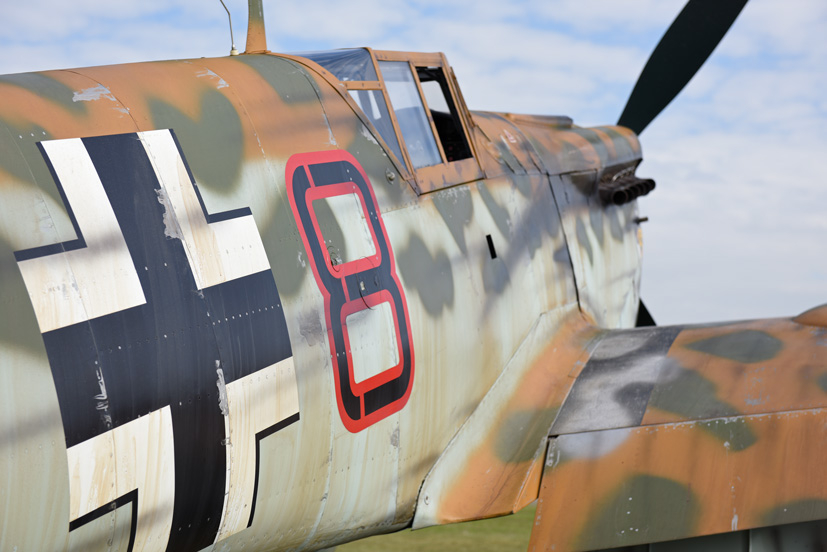
A closer look at the weathered finish applied to the Buchon
Not allowing all the Allied aircraft at Flying Legends to steal the limelight this year, Buchon G-AWHK was given a striking new paint scheme specially for the show and even though it was only a temporary arrangement, it gave this already attractive aircraft a stunning new appearance. Presented as Bf 109E-7/Trop ‘Black 8’ of JG.27 and wearing the colours of famous Luftwaffe ace Werner Schroer, the Buchon was painted to represent an aircraft that flew from Ain el Gazala airfield in Libya during the early summer of 1941, as the Luftwaffe fought daily battles with the RAFs Desert Air Force for control of the skies of North Africa. Wearing an early mottled desert camouflage scheme, the real ‘Black 8’ was the subject of some famous wartime publicity photographs, a number of which were unusually taken using colour film stocks. They are clearly taken from another aircraft flying along-side the Messerschmitt and show just how effective the aircraft’s camouflage application was for operations above this terrain – you can hardly make out the Messerschmitt against the desert floor when viewing it from above.
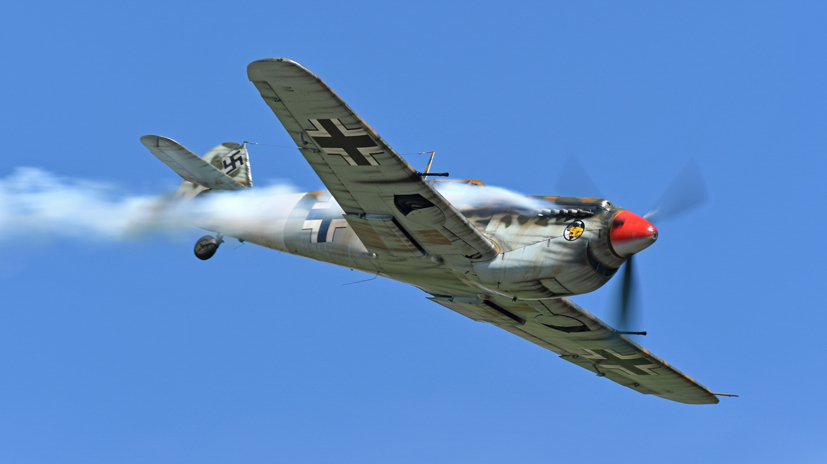
Despite being something of a crowd pleaser, the Buchon strayed too close to an RAF Spitfire
To add an extra level of interest to this temporary scheme, it was applied to intentionally have a ‘weathered’ appearance due to operations flown under the baking sun of the North African desert and the frantic nature of combat in this theatre. It also sports exhaust and cordite stains on the wings and fuselage, as well as numerous simulated oil stains across the airframe, all of which were applied using an easily removable water-wash paint, suggesting that the Buchon is unlikely to retain this scheme beyond 2017 – this makes its appearance at Flying Legends all the more noteworthy. Werner Schroer went on to become one of the Luftwaffe’s most prolific aces with 114 aerial victories, 61 of which were claimed during his time in North Africa, a figure only bettered by the famous ‘Star of Afrika’, Hans Joachim Marseille – unlike Marseille, Schroer went on to see service throughout WWII and to have a successful business career in the years following the end of the war.
In our previous Flying Legends 2017 review, we included a photograph taken in front of P-51B Mustang ‘Berlin Express’ which featured world famous Warbird pilot and leader of the Horsemen team Steve Hinton who I was lucky enough to meet on the Saturday morning of the show. Luckily for me, Mr Hinton was not the only aviation celebrity I came across at Legends 2017, as I also had the honour of meeting a genuine WWII Luftwaffe veteran, who became quite the celebrity over the weekend of the show. Born in 1923, Erich Brunotte is now one of the last surviving German pilots who flew operations during the final months of WWII and must have found the secret of eternal youth as he looks much younger than his 94 years of age.
After successfully completing his flying training in Germany, Erich was posted to the Eastern Front, attached to a Junkers Ju-52 transport unit charged with flying supplies to German troops in the besieged city of Stalingrad. Initially, these flights were flown by the regular pilots of the unit, with Erich acting as a defensive gunner in the rear of the aircraft, but he soon worked his way up to the cockpit, where he gained valuable experience. Later returning to Germany, he converted to fighter aircraft and went on to fly most later versions of the Bf 109, the Focke Wulf Fw190 and ended the war flying the impressive Focke Wulf ‘Dora 9’ in defence of the Reich. In describing the various fighters he flew, he said the Bf 109 was a thoroughbred and very much a pilot’s aircraft – light and responsive, if you treated it correctly, it would give you few problems. The FW190 on the other hand was a brute of a machine and much more industrial in nature. It was all about speed, power and ruggedness, with each landing feeling like you were slamming the aircraft into the ground in an inglorious manner – it was a good job the undercarriage was constructed to be so robust.
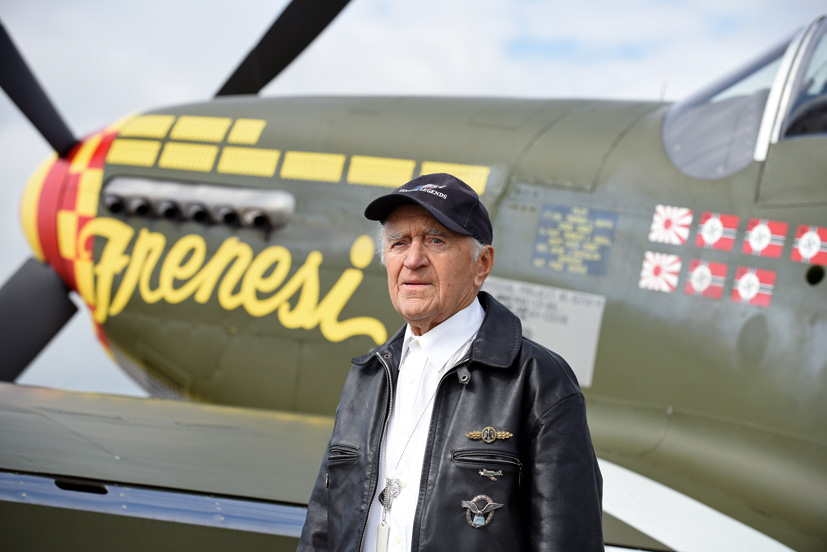
Former Luftwaffe ace Erich Brunotte in front of P-51D Mustang ‘Frenesi’
Of all the aircraft he flew, he describes the Focke Wulf FW190D-9 as being by far the most capable. Flying this aircraft during the last weeks of WWII, he describes it as being one of the finest fighter aircraft of the war and the equal of any aircraft the Allies had in service at the time. Able to out-turn the best American fighters and possessing great speed and firepower, the war was already lost by the time he was flying this magnificent aircraft and with so few available, it was really a question of trying to stay alive until the inevitable order to surrender was given. During 500 hours of combat flying, Erich Brunotte claimed 33 aerial victories, most whilst flying with IV/JG51 ‘Molders’. He is pictured beside North American P-51D Mustang ‘Frenesi’, one of the USAAF fighters he would have been in combat with during the final months of WWII.
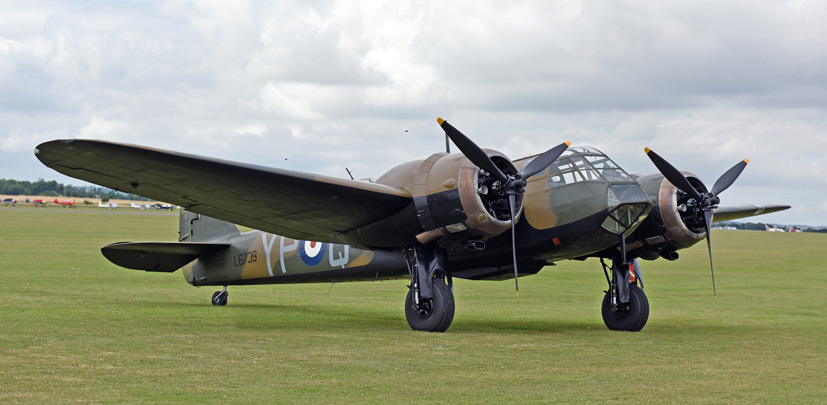
Bristol Blenheim Mk.I L6739 was the largest aircraft to take part in filming
There is nothing like a blockbuster war movie to bring aeroplanes to the attention of a much wider audience and that is exactly what has happened with the recent release of ‘Dunkirk’. Set around the incredible evacuation of Allied troops from the besieged beaches of Dunkirk in 1940, when hundreds of ships large and small managed to save Britain from a military catastrophe, the film looks at this significant action from the early months of WWII and just weeks before the beginning of the Battle of Britain. Rightly focusing on Operation Dynamo and the historic repatriation of over 330,000 Allied soldiers, the film also includes some spectacular aerial footage showing the savage fighting that took place in the skies above the evacuation beaches. Using a combination of restored historic aircraft and accurate scale models, the film will bring the subject of WWII aviation to the movie going public in what is already proving to be an extremely successful film, whilst also making the aircraft that took part in the filming even more famous than they already are.
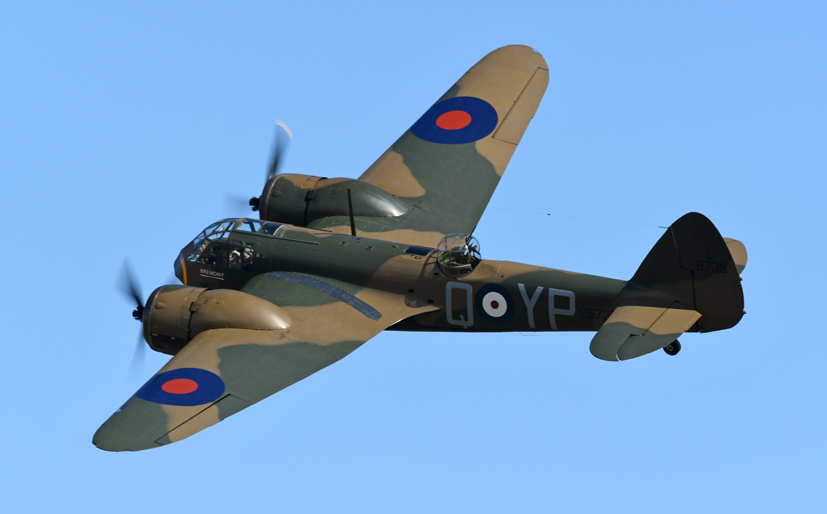
The Blenheim was available in large numbers at the time of the Dunkirk evacuation. Unfortunately, this is now the only airworthy example in the world
Using airworthy historic aircraft for thrilling wartime action scenes for film and TV productions will inevitably require the use of aircraft that are also regulars on the UK Airshow circuit and Dunkirk was no exception, using five aircraft to achieve much more realistic flying sequences as opposed to computer generated imagery. Flying Legends 2017 saw a number of the aviation stars of the Dunkirk movie taking part in the show, including Bristol Blenheim Mk.I L6739, which is the only airworthy example of this important British aircraft in the world. Operated by the Duxford based Aircraft Restoration Company, this twin engined aircraft was available to the RAF in more numbers than any other aircraft type at this stage of the war, serving as both a fighter and bomber, although it was quickly outclassed as a fighter when coming up against the agile Messerschmitts of the Luftwaffe. The ARCo Blenheim configured as a fighter version of this famous RAF aircraft and was the largest of the airworthy Warbirds to appear in the film.

Playing the part of a Bf 109E, the Buchon was one of the bad guys
No story that features the air battles taking place above the beaches of Dunkirk can be told without an effective Luftwaffe presence and one of the aircraft we have already included in this review was called upon to play this part. Taking on the Spitfires of the Royal Air Force, Hispano Buchon G-AWHK added to its already impressive list of film credits by masquerading as a Messerschmitt Bf 109E and with its bright yellow nose, does a great job in illustrating just what the British airmen were up against. Another of the aircraft operated by ARCo at Duxford, the Buchon was painted in a scheme that represented a Luftwaffe fighter from this period of the war, the scheme which is currently residing beneath the aircraft’s temporary Flying Legends applied JG27 ‘Black 8’ desert camouflage.
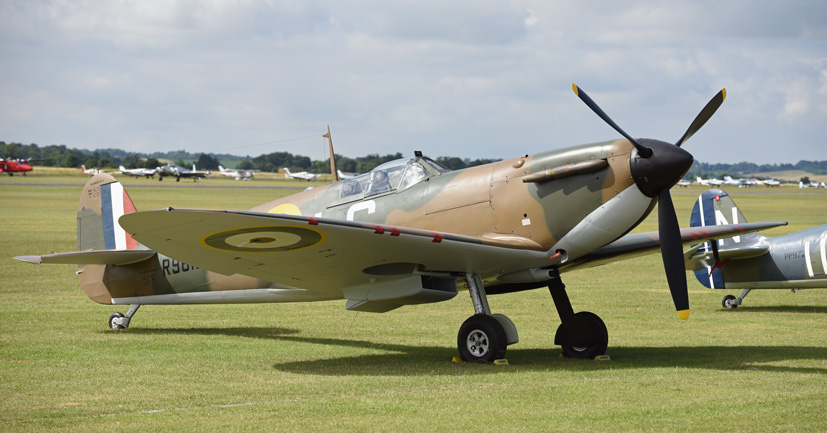
The Spitfires used in the Dunkirk film wore LC squadron codes
With regard to aircraft type recognition from the Second World War, you certainly don’t have to be an avid aviation enthusiast to identify the unmistakable profile of the Supermarine Spitfire. Thought by many to be not only the saviour of the Battle of Britain, but also one of the most famous aircraft ever produced, the Spitfire enjoys almost universal recognition around the world and if people are asked to identify any Second World War aircraft wearing RAF roundels, they will invariably answer ‘Spitfire’. The producers of Dunkirk were fortunate enough to have access to three Spitfires during filming of the aerial action sequences for their movie and whilst I have yet to see the film for myself, I have to say that the promotional trailers featuring the aerial combat scenes look particularly spectacular.
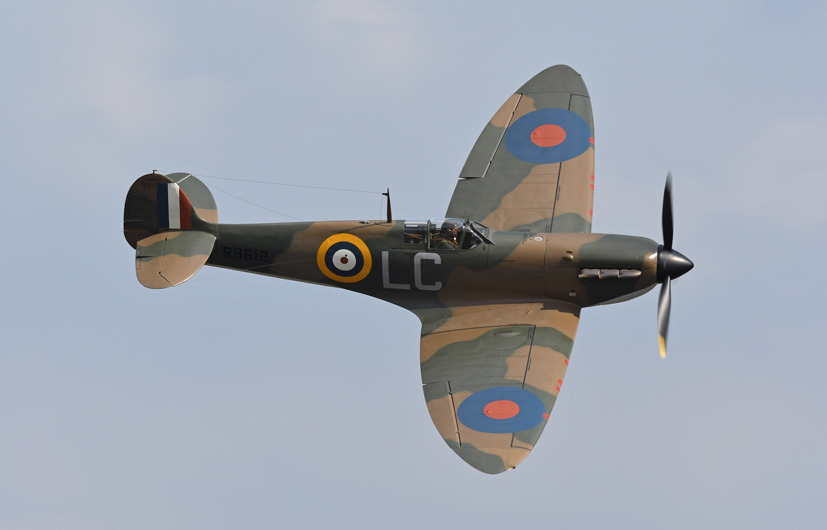
Supermarine Spitfire Mk.I R9612 is one of the aircraft used in the Dunkirk movie
Certain to reaffirm everyone’s love affair with the Spitfire, the movie has produced some unique schemes for a number of Airshow regulars and as more people see the film, these aircraft are destined to become even more popular throughout the remainder of the 2017 Airshow season. The Dunkirk film Spitfires can be identified by their ‘LC’ squadron codes and over the past twelve months, some of these Spitfires have taken part in Duxford shows wearing these newly applied Dunkirk schemes, with many people not actually realising their significance. With filming now over and the movie already at cinemas all over the country, it remains to be seen how long the Spitfires will retain the Dunkirk schemes, but they will certainly be a talking point when we all review our Flying Legends photographs in the years to come.
If someone was cruel enough to force me to choose just one Airshow to attend each year, it would always be Flying Legends without any hesitation. Although you can always rely on the organisers to gather the finest collection of historic Warbirds at Duxford for your delectation each year, this atmospheric event is as much about how it makes you feel as it is about the aircraft you can see. With so many aviation highlights and unique photographic opportunities all over this historic airfield, it is difficult for any show review to do justice to this fantastic event, but I hope over the past two editions of Aerodrome we have managed to capture some of its undeniable charm. Like many in attendance this year, I am already looking forward to attending next year’s show and the latest instalment of this magnificent Warbird spectacular.
Here is a final selection of images from this year’s Flying Legends Airshow.
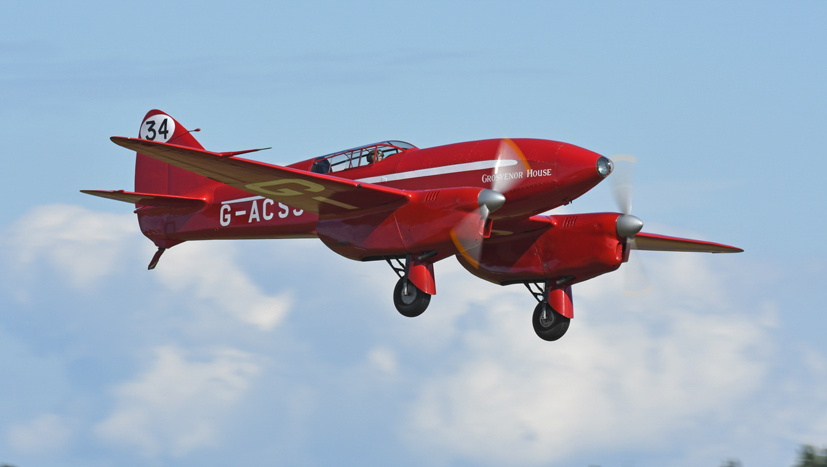
The De Havilland DH 88 Comet racer was a colourful addition to the programme
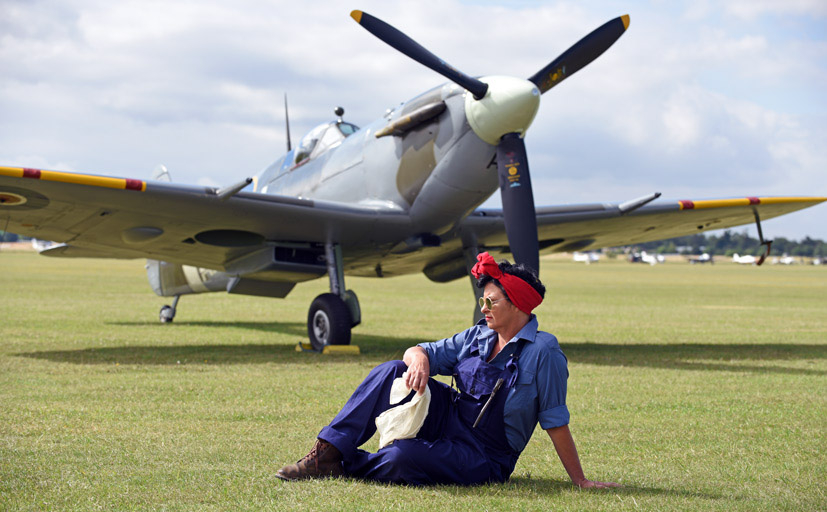
All this Flying Legends stuff really takes it out of you!
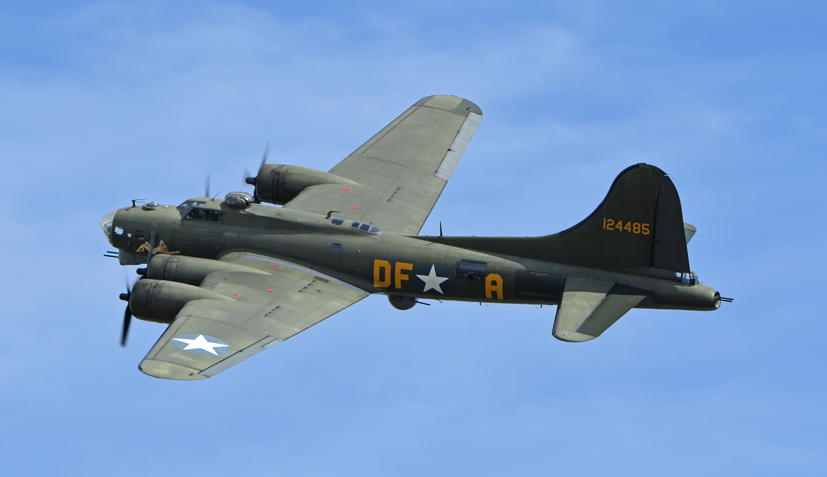
Duxford resident Boeing B-17G Flying Fortress is always a popular performer
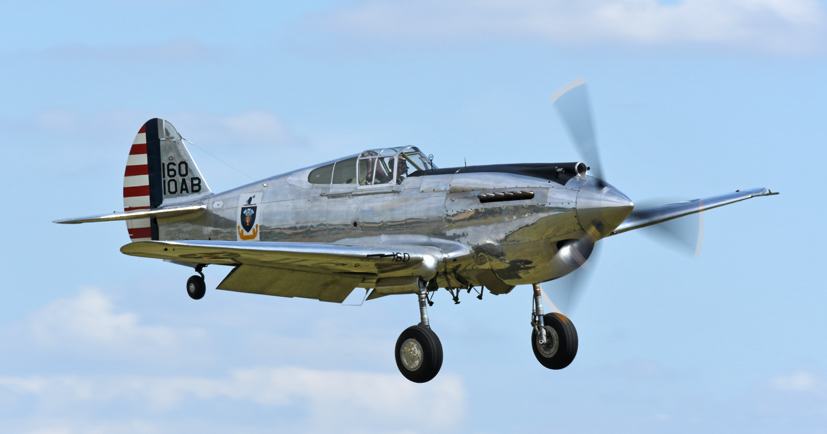
The Fighter Collection displayed their stunning P-40C Warhawk
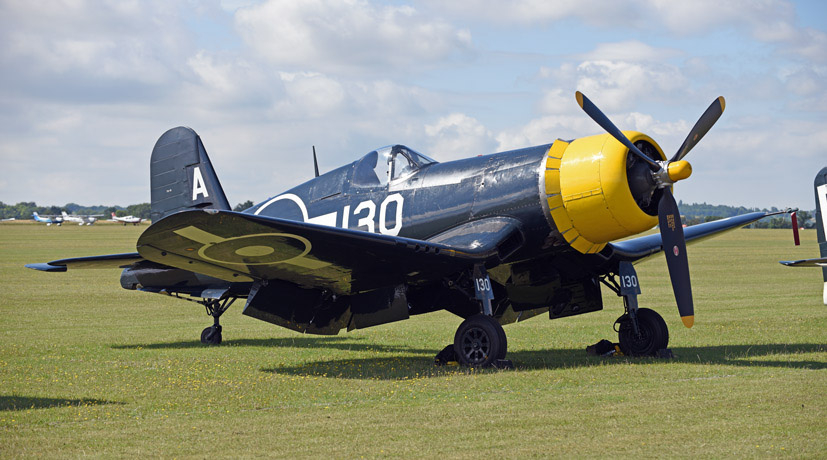
The impressive Vought FG-1D Corsair is a real muscle aeroplane
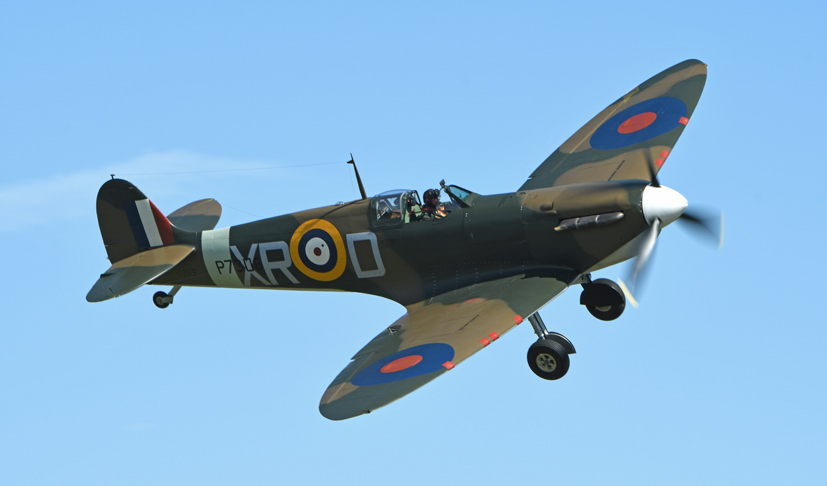
A steep landing approach for this Spitfire Mk.IIa
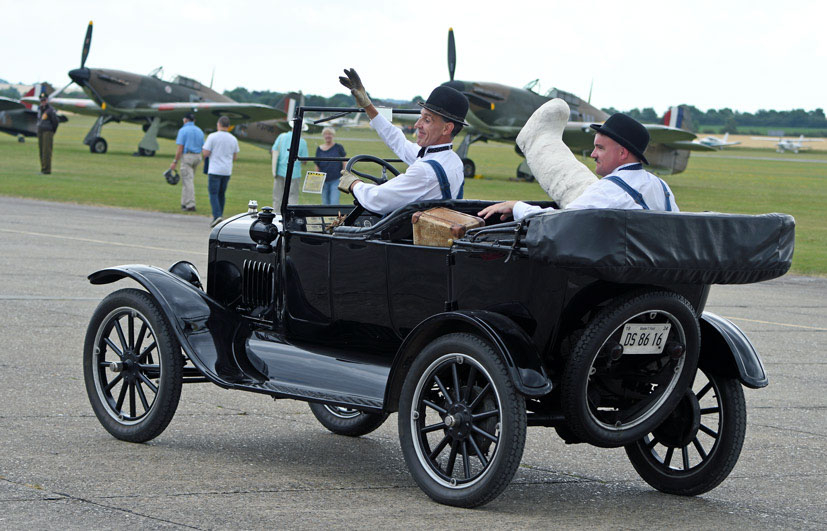
Goodbye for another year!
I hope you have enjoyed our reviews of this year’s Flying Legends Airshow over the past two editions of Aerodrome. We will hopefully be back at Duxford later in the year to attend the Battle of Britain Airshow, which holds the prospect of a massed formation flypast by an impressively large number of Spitfires – certainly a sight worth travelling to Cambridgeshire for and one we look forward to sharing with you.
As usual, if you would like to join in with all the latest social media discussions regarding Aerodrome and aviation matters in general, please head for either the Airfix Aerodrome Forum or our Corgi Aerodrome Forum and have your say. If you have any specific comments, questions or suggestions for future editions of Aerodrome, please do feel free to let us know by using either the Airfix Facebook or Corgi Facebook pages, or our Airfix Twitter or Corgi Twitter accounts, using #aerodrome – if you are Twitter regulars, you will know what this means! If good old fashioned e-mail is more your style, please use our usual addresses at aerodrome@airfix.com or aerodrome@corgi.co.uk where we will be only too pleased to hear from you.
We look forward to posting our next blog on Friday 25th August – see you all then.
Michael
© Hornby Hobbies Ltd. All rights reserved

