
Welcome to this latest edition of Aerodrome and our regular look at the fascinating world of aeroplanes and the historic aviation scene around the UK.
As this year really does seem to be crammed full of significant anniversaries from both the early years of the Second World War, and the end of war in both Europe and Japan, we are in some danger of suffering from anniversary overload, whilst at the same time being guilty of overlooking other, slightly less significant, but no less important anniversaries in the process. In this latest edition of Aerodrome, we’re going to take this opportunity to mark a particularly significant anniversary in the history of an aircraft which would go on to become arguably the most famous fighting aeroplane the world has ever seen, one which would come to the rescue of Britain during its darkest hours, and be on duty in some numbers when Allied forces made a final push for victory five years later.
In an attempt to stimulate some healthy aviation discussion, we will also be making some bold, even controversial suggestions regarding our selection of the two most significant variants of this aircraft from within its long service life, and how it continues to be relevant eighty-nine years after the first flight of the prototype aircraft.
We will be slipping the surly bonds of earth and dancing the skies on laughter-silvered wings in this latest edition of Aerodrome.
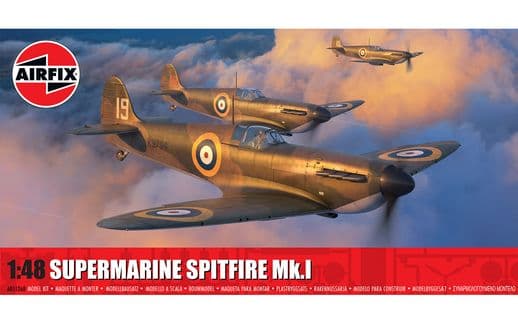
An image borrowed from Airfix which shows a trio of early Spitfire Mk.I aircraft on patrol over southern Britain.
Although many of the aviation anniversaries the world celebrates every five years of so are now commemorating events which took place around 85 years ago when looking at WWII, and 110 years ago when considering the Great War, despite this, aviation could be described as relatively recent history for mankind, when you consider that the Wright Brothers only made their significant first flight 121 years ago. Since that date, man has gained a mastery of the skies, producing ever more capable aircraft for use in wartime, and during times of peace, with the most fearsome examples actually serving to protect that peace by virtue of the destructive capabilities they possess.
During those 121 years of aviation advancement, there have been many aircraft which could be described as being ‘significant’ in furthering the importance of aviation, and just one or two which became much more than just aeroplane designs, almost coming to stand for the very identity of the nation responsible for creating it. That being our criteria for this latest blog, most of you will have already gathered that we’re going to be featuring the Supermarine Spitfire, but more specifically, at a significant date in the history of the aircraft, and one aircraft in particular.
This year marks the 90th anniversary of construction starting on a new British ‘Killer-fighter’ project, the Supermarine Type 300, at the Vickers Supermarine works at Woolston, near Southampton, and whilst next year will see the nation commemorating the 90th anniversary of the first flight of prototype Spitfire K5054, we are of the opinion that the actual birth of this historic aircraft was equally worthy of celebrating.
The British Air Ministry actually signed a contract for the production of a single prototype aircraft in December 1934, however the actual start of construction didn’t take place until the following year, which is where our 90th anniversary timeline is taken from. The new aircraft was to be powered by the recently developed Rolls-Royce PV-XII V-12 engine (a Merlin by any other name) with aircraft and powerplant becoming inextricably linked for the next 90 years, and by claiming that, we are including restored aircraft which continue to take to the skies to this day.
With the R.J Mitchell and the Supermarine design team gaining international recognition for their work in producing their successful series of Schneider Trophy winning high speed seaplanes, it seemed almost inevitable that they would ultimately turn their expertise towards the production of an advanced, high speed interceptor for the Royal Air Force. Despite their stellar successes during the 1920s and 30s, the development journey from the S.6B to the Spitfire would not be without its challenges, however, just as Mitchell had been convinced about this design philosophies when challenging for the Schneider Trophy, so he was equally convinced about his advanced fighter design for the Royal Air Force.
A racing seaplane of distinction. Some of the technology used to develop the Supermarine S.6B would help guide the team responsible for producing the later Type 300, which was essentially a Spitfire prototype.
When the team charged with designing and producing a cutting-edge new fighter aircraft to defend Britain’s airspace during the mid 1930s set about their task, none of them could have imagined that they would also be playing their part in creating an aviation phenomenon which would still be a familiar sight to millions of people almost a century later. They did have access to extensive knowledge in the design and production of world leading racing aeroplanes to draw on, but what they were working on was a new monoplane fighter the like of which had never previously been seen, a genuine technological leap forward in aviation terms.
Despite all the many accolades the Supermarine Spitfire would subsequently go on to earn, its development was essentially born out of the failure of its immediate predecessor, an aircraft which does possess more than a few visual similarities to the Spitfire, but ultimately served only as a technological stepping stone on the way to aviation greatness, the Supermarine Type 224. Developed in response to an RAF specification requirement for a new day fighter, the Type 224 may have been powered by the latest Rolls-Royce Goshawk II engine, however, its ungainly looking fixed spatted undercarriage and gull wing arrangement only allowed the aircraft to post relatively modest performance marks during trials.
Ultimately, the Type 224 would be overlooked in favour of the Gloster Gladiator when it came to the new fighter contract, however, this failure only served to re-double the efforts of the Supermarine design team, who broke away from the constraints of Air Ministry requirements, and started work as a private project on a fighter design they were confident could present the RAF with a world leading new aircraft, one which would turn the very pages of aviation history in the process.
Design work for the new Supermarine Type 300 fighter had started towards the end of 1934, however, as that design made use of advanced materials and construction techniques, this was very much going to be a hand-made, one-off machine. When the new fighter (F37/34) was rolled out of the Supermarine factory airfield at Eastleigh prior to making its first flight, it looked truly magnificent, a sleek monoplane fighter which could have hardly looked more different from the Gauntlet and Gladiator fighters which were in service with the Royal Air Force at that time. Initially, the aircraft was unpainted, other than the application of RAF roundels and the serial K5054, with the various shades of natural metal panelling giving the aircraft something of an unfinished appearance – the undercarriage doors had not even been attached at that stage.
When Supermarine's chief test pilot Joseph 'Mutt' Summers took off from Eastleigh Aerodrome at 4.35 in the afternoon on Thursday 5th March 1936 in the company's new Type 300 fighter (the fledgling Spitfire), he not only captured the undivided attention of the nation’s media gathered on the airfield that day, but he was also embarking on his own association with an aircraft which at that time, he could have hardly known would not only become a spectacular commercial success for his company, but also one of the greatest fighting aeroplanes of all time.
A momentous day in the history of British aviation, the Supermarine Type 300 represented a remarkable achievement for its parent company, but could they even begin to imagine just how significant this aircraft would become? Image credit Air Historical Branch-RAF/MOD.
A sleek and powerful new monoplane fighter, the Supermarine Type 300 represented the pinnacle of British aviation prowess at that time, featuring thin elliptical wings, retractable undercarriage and enclosed cockpit. Powered by the latest Rolls Royce aero engine, the Supermarine fighter was bred for speed, but whilst slipping through the air at these impressive speeds, had also been designed to allow multiple machine guns to be fitted within that thin wing, making this a deadly dominator of the skies. Similar to the Hawker Hurricane in many respects, where the Hurricane incorporated many traditional techniques in its design and construction, the all-metal Type 300 was unquestionably cutting edge, however, during the summer of 1940, Britain was glad they could rely on the capabilities of both.
During a brief eight-minute maiden flight, where the main undercarriage wasn’t even retracted, and under the full gaze of the nation’s media, when test pilot Mutt Summers landed back at Eastleigh and taxied back to his handling team, it was reputed that he barked, ‘I don’t want anything touched’, so pleased was he with the performance of the aircraft, or so history would have us believe. It’s never been definitively ascertained what he actually meant by this now famous statement, but as the Spitfire went on to become such an aviation icon and possessed such stellar performance, should we even allow the truth to get in the way of a great Spitfire story?
What followed over the next few months was an exhaustive period of testing, perfecting and refining of the new aircraft, where the Supermarine team not only attempted to coax every ounce of performance from their new fighter, but also prepare it for mass production and its subsequent acceptance into Royal Air Force service. This would see K5054 change significantly over the next months, as she was not only fine-tuned, but also prepared for life as a front line fighter aircraft, with the installation of guns, ammunition and other military equipment.
Actually, it’s as good job the Spitfire managed to live up to the high expectations placed upon it, because the RAF placed an order for 310 fighters prior to the first flight of the prototype aircraft, so desperate was their need for the new fighter. Prior to her official presentation, prototype K5054 would be painted in a smart high-gloss blue/green finish, one which was subsequently replaced with the high-gloss ‘French Grey’ scheme which is so famously associated with this historic aircraft. As the Spitfire neared service entry, she received a further paint presentation change, this time to the standard RAF camouflage of the day, a very different look for this hardworking aircraft.
This single Spitfire prototype would eventually be developed to near operational fighter configuration, but would be written off in an unfortunate fatal accident on 4th September 1939 at RAE Farnborough, the day after Britain had declared war against Germany. By this time though, eleven squadrons of Spitfires were in service with the Royal Air Force.
Just to complete the story of the Spitfire’s initial entry into service, the Air Ministry were so frustrated by the initial pedestrian rate of production of their new fighter, that they actually considered halting the program and just building more Hurricanes. Thankfully, Supermarine officials managed to convince them otherwise, with the promise of new production facilities and a streamlined production process.
The rest, as they say, is simply the stuff of aviation legend.
The Shuttleworth Collection’s beautifully original Mk.V AR501 landing back at its Old Warden airfield home.
Perhaps by virtue of its stunning good looks, or simply the fact that the aircraft served the nation with distinction during its darkest hours, the Spitfire’s story continues to this day, and it could even be argued that this incredible aeroplane has actually managed to transcend the realms of aviation, and has become a symbol of defiance and perseverance in the face of adversity, something for us all to rally around when our backs are against the wall.
Incredibly, if you were to ask any youngster with even the slightest interest in aviation to name their favourite aircraft, the vast majority would still say ‘Spitfire’, despite the fact that the first aircraft entered service eighty-seven years ago. Thankfully, today’s youngsters can still enjoy the sight and sound of a Spitfire blasting into the air, thanks to the enduring affection in which this fighter is still held, and that fact that those in a position to do so, restore, preserve and operate these magnificent aircraft for their own pleasure, and the enjoyment of those attending Airshows and other events – long may this continue.
Let’s chart the chronological development of the Spitfire through the medium of restored, airworthy examples of the aircraft, and suggest our two most significant variants along the way.
A truly historic aircraft which marks the start of the Spitfire’s service career, N3200 was constructed at the Vickers Armstrong works at Eastleigh, near Southampton during 1939, making her first flight on 29th November that year. After undergoing service acceptance checks at No.8 MU RAF Little Rissington, she was subsequently delivered to No.19 Squadron at Duxford in April the following year. Wearing the codes QV and the distinctive black and white underside recognition markings synonymous with RAF fighters of the day, the aircraft embarked on its first operational sortie from Duxford on 27th May 1940, in the hands of Squadron Leader Geoffrey Stephenson, as part of the significant RAF response to the emergency situation at Dunkirk and the evacuation of the stranded British Expeditionary Force.
During a day of savage dogfighting, Stephenson managed to down a Luftwaffe Junkers Ju-87 Stuka, before his Spitfire sustained damage to its engine, causing the unit to seize almost immediately. The pilot skilfully managed to put his aircraft down on a beach at Sangatte, to the west of Calais, and was able to exit the downed fighter without sustaining injury, only to be immediately captured by German forces stationed in the vicinity. The stricken Spitfire lay damaged and partly buried in the sand at Sangatte, becoming something of a victory attraction for German troops stationed in the area, with many posing for pictures with the vanquished British fighter. The Spitfire slowly disappeared beneath the shifting sands, but not before German souvenir hunters had stripped her of a great many parts.
The ever shifting sands on the beach at Sangatte would hold on to their Spitfire secret for many years after the end of WWII, lost from sight and becoming just a tale recounted by those who were aware of its story. Following a particularly violent storm in 1986, parts of the Spitfire wreckage broke through the sands, becoming visible once more, a development which obviously attracted plenty of local interest and ultimately resulted in plans being drawn up to launch a recovery attempt. Later that same year, the remains of Supermarine Spitfire Mk.1a N3200 were removed from the beach and placed on display in a French military museum, exactly as recovered, where it would remain for the next ten years.
Restored to as close to her 1940 configuration as possible, is Spitfire Mk.I N3220 the most authentic airworthy Spitfire currently flying?
Attracted by the provenance of this famous Spitfire, and having seen wartime photographs of it lying in a forlorn state on the beach at Sangatte, with German troops clambering all over it, the wreckage was subsequently acquired by a UK based group in 2000 and earmarked to be the subject of an ambitious restoration project. Once returned to the UK, this complex and lengthy restoration would be placed in the capable hands of Historic Flying Limited and in March 2014, marking the end of an ambitious 14 year project, Spitfire N3200 took to the skies once more.
To add even greater significance to this occasion, her first post restoration flight took place at Duxford airfield, the same airfield where this famous Spitfire had operated from some 74 years earlier, when she embarked on that first fateful combat mission.
Now an incredibly popular aircraft on the UK Airshow circuit, N3200 was one of the guest aircraft appearing at this year’s Shuttleworth Military Airshow this May, appearing almost 85 years to the day since she was lost during that mission to cover the evacuation beaches at Dunkirk.
As the purest form of Spitfire to see RAF service, and the one which was most closely related to prototype aircraft K5054, we’re nominating the Mk.I as the first of our most significant variants of Spitfire. We also believe that this was the variant which galvanised a nation during its darkest hours, providing salvation from the air when all seemed hopeless, all of which surely served to vindicate the genius of the Supermarine design team, and the faith shown by the Air Ministry in placing a sizeable blind order for the fighter.
Surely, the nations love affair with the Spitfire started with this earliest variant of the fighter.
An aircraft which has to be regarded as an absolute stalwart of the UK Airshow scene, the Historic Aircraft Collection's Spitfire is a rare example of a Mk.Vb variant of Britain's most famous fighting aeroplane, and one which for many years has endeavoured to pay tribute to the significant contribution made by Polish airmen flying with the Royal Air Force during the Second World War. A combat veteran aircraft, BM597 was built at the famous Castle Bromwich shadow factory, delivered to No.37 MU at Burtonwood on 26th February 1942, before going on to serve with Nos. 315 and 317 Squadrons at RAF Woodvale.
On the 1st February 1943, she sustained damage following a ground accident, when she overturned as a result of losing brake pressure as the pilot taxied from the runway and whilst the aircraft was subsequently sent for repair, it would be late November before she returned to operational flying again. Interestingly, this period also included a return to Vickers Armstrong, for reasons HAC researchers have not been able to ascertain to this point, so if any Aerodrome reader can shed some light on this, please do drop them a line.
Spitfire BM597 would spend the next few months being placed in the care of various RAF Maintenance Units, and even spending some time in storage, before finally being assigned to her final operational posting, with No.58 Operational Training Unit. The aircraft was officially retired on 16th October 1945 and sent to RAF St Athan, where she would be used as an instructional airframe for engineering apprentices.
This Spitfire's longest service role during its time with the Royal Air Force would be that serving as a station gate guardian, a role which it would perform with distinction for almost forty years from 1950 onwards. She stood guard first at RAF Hednesford, before later serving in the same role at both Bridgenorth and Church Fenton, but not before she would play a significant role in one of the most famous war films ever produced.
This next series of images serve as a fascinating record of the impressive project which saw this aircraft flying over Grand Harbour in Valletta in 2005, the first time a Spitfire had done so since 1952.
The aircraft is given a temporary blue paint wash, similar to the colour the Spitfires bound for Malta were given aboard USS Wasp in 1942.
Operation Merlins over Malta – a Spitfire does look particularly attractive when wearing blue!
Normal service resumed – what went on had to come off again!
On 23rd January 1967, having temporarily been moved from Church Fenton to RAF Henlow, BM597 was on the move once again, this time down to Pinewood Studios, where she was used as a master mould for the production of fibreglass replica Spitfires to be used during the filming of the classic ‘Battle of Britain’ film. In addition to this, it’s understood that she actually appeared as a static airframe during filming, becoming quite the aviation star really.
In 1989, Spitfire BM597 was purchased by a leading figure in the historic aviation world, who later sell it on to the Historic Aircraft Collection in 1993. In their care, the aircraft embarked on a meticulous restoration to flying condition, with the intention of returning the aircraft to as near to her original service specification as was possible, obviously embracing current regulations at that time. Making her first post restoration flight on 18th July 1997, she would go on to become a regular performer on the UK Airshow scene, and a much loved sight to anyone making a visit to the Imperial War Museum's Duxford airfield site.
For everyone connected with the Historic Aircraft Collection, perhaps the most significant sortie this Spitfire ever undertook was when she flew over the historic surroundings of Malta's Grand Harbour, the triumphant culmination of their 'Merlins over Malta - the Defenders Return' project back in 2005. An incredible achievement for all concerned, this was the first time a Spitfire had flown over the Island since the filming of ‘The Malta Story’ back in the early 1950s.
For her Maltese adventure, BM597 wore a distinctive temporary blue livery, a stunning tribute to the aircraft which flew from the deck of the USS Wasp in defence of the Island in April 1942.
Bringing the story of this popular Spitfire right up to date, news has circulated recently that the aircraft has been disassembled and crated at Duxford, prior to starting her delivery journey to a new owner in Australia. Although she will definitely be gathering a new legion of admirers once she takes her place on the Australian Airshow scene, she will be sorely missed here in the UK, and especially at Duxford, where she has been resident for so long. Farewell BM597 and thank you.
When it comes to the subject of airworthy Spitfires currently gracing the world’s skies, there is one aircraft which stands above all others, an aircraft which whilst possessing an impressive wartime service career, would also go on to do more in preserving the legacy of this most famous of British aircraft than perhaps any other single aircraft, and continues to do so to this day.
Supermarine Spitfire LF Mk.IXb MH434 was produced at the Vickers Supermarine Castle Bromwich factory during the summer of 1943, making its first flight in the hands of famous Supermarine Test Pilot Alex Henshaw on 7th August 1943. Just six days later, she was delivered to her first operational squadron, No.222 (Natal) Squadron based at Hornchurch, a new replacement machine as the unit was in the process of upgrading their existing Spitfire fighters.
During an active service career, MH434 would regularly be flown by South African pilot Flt Lt Henry Lardner-Burke DFC, who would use this aircraft successfully in combat with the Luftwaffe. She can claim to have several aerial combat victories to her name, in addition to several more shared and probable victories, which mark her as an aircraft possessing real wartime combat provenance.
After completing 79 operational sorties during WWII, MH434 was retired in March 1945 and sent to No.9 MU at Cosford, where she was stored awaiting disposal, however, this was not to be the end of her operational flying career. She would later form part of a consignment of 25 Spitfires destined for the Royal Netherlands Air Force, but whilst some were shipped and unloaded in Holland, the majority remained on board their transport ship bound for the Dutch East Indies, and operations against Indonesian pro-independence guerrillas. Flying fighter bomber missions during her time in Southeast Asia, she would go on to fly a further 165 operational sorties in this role.
Following the withdrawal of Dutch forces from the region, MH434 arrived back in Holland during the summer of 1950 and to something of an uncertain future, however, would later be one of several aircraft sold to the Belgian Air Force, a rather short lived period in Belgian markings. For MH434, a much more active future was just around the corner.
In March 1956, this Spitfire was purchased by a young airline pilot who had always dreamed of flying a Spitfire – he brought the aircraft back to the UK, where she underwent inspection and maintenance at Elstree aerodrome. She would carry the civilian registration G-ASJV and would be flown recreationally by her owner pilot who could hardly believe his good fortune - under his ownership, she would also make her film debut in the 1965 movie 'Operation Crossbow'.
Her silver screen credentials would also go on to include the now legendary Battle of Britain movie, by which time her owner had decided to sell his Spitfire to the production company following a change in his personal circumstances. Following the end of filming, MH434 was sold once more, this time to Cathay Pacific Airways board member and millionaire businessman Sir Adrian Swire, who having purchased the Spitfire, released it for service as part of the growing Airshow circuit here in the UK, with the aircraft regularly being displayed in the hands of former Red Arrows leader Ray Hanna.
The star of many a UK Airshow, MH434 carries the name of wartime pilot Henry Lardner-Burke's wife 'Mylcraine' on the port side fuselage, complete with his impressive victory tally.
Flown for the first time by Ray Hanna in 1970, he would go on to become inextricably linked with this magnificent machine, with his thrilling displays doing much to present the Spitfire to a new generation of admirers. Everyone fortunate enough to have enjoyed one of his Spitfire displays in MH434 will probably have described the experience as one which saw them marvelling at man and machine in perfect harmony, and always so much more than just a flying display. In fact, Mr Hanna would become so attached to this Spitfire that when an opportunity to purchase her presented itself in 1983, he simply had to have her – she would become the founding aircraft of the famous Old Flying Machine Company.
During her time with OFMC, MH434 would become a much loved component of the UK's growing Warbird scene, with Ray Hanna's stunning displays leading many to describe him as the finest Spitfire pilot in the world. Displays which created a legend all of their own, Ray's show closing displays at the annual Biggin Hill Airshow would become one of the highlights of many a display season, where he and MH434 would hold the crowd spellbound as this magnificent machine graced the skies of Kent in a way only this special pairing could do, a unique aviation experience at this former RAF fighter station. There was something very special about a Ray Hanna Spitfire display at Biggin Hill and is an experience greatly missed, but always cherished by those who were fortunate enough to have seen one.
Over the years, MH434 went on to star in numerous TV, film and commercial productions, whilst at the same time entertaining millions of Airshow enthusiasts at shows up and down the country. As such, she has arguably done more than any other Spitfire in maintaining the legacy of this iconic aircraft, re-affirming the affection in which this aircraft is held by those who consider themselves already converted, whilst at the same time introducing new legions of admirers to this aviation classic, with every display routine she performed.
Still the star of many an Airshow event and residing at her long term IWM Duxford home, a venue which many consider to be the spiritual home of the Spitfire, MH434 has created an aviation legacy all of its own, a combat veteran aircraft with aerial victories to its name and one which had never been fully rebuilt since leaving the Castle Bromwich factory in 1943.
Truly a piece of aviation history the British public are able to experience on an annual basis, surely MH434 has to be considered the most famous Spitfire of them all - the greatest of the few. If you have a more worthy suggestion for such a prestigious accolade, we’d would love to hear about such a machine. MH434 is unquestionably Spitfire royalty.
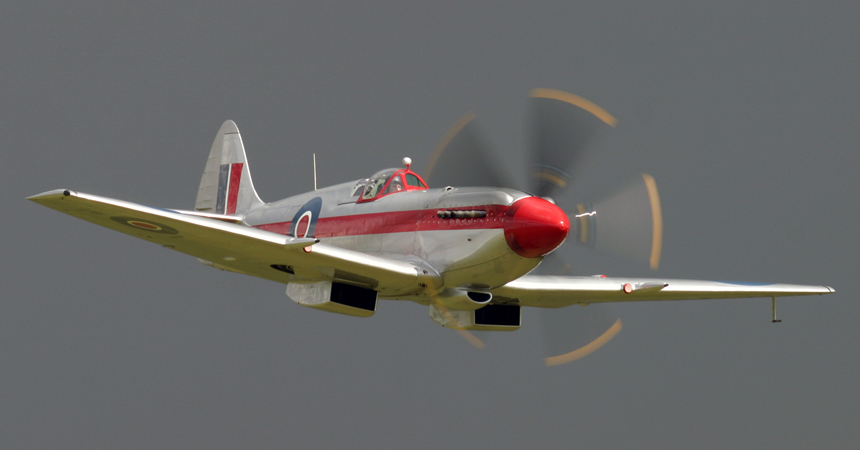
Moving on towards later variants of the Spitfire, before the aircraft was prepared to let other types take its place on the front line, as the search for ever greater speeds continued unabated, the adoption of the Rolls Royce Griffon engine gave the Spitfire a further performance boost, allowing the aircraft to posts speeds well in excess of 400 mph.
Yet another popular display aircraft on the nation’s active historic aviation scene, Supermarine Spitfire PR.XIX PS 853 is an example of one of the highly specialized Spitfires which served with distinction during the latter stages of the Second World War, securing detailed intelligence imagery for Allied commanders in their preparations for D-Day. A genuine Second World War veteran, PS853 was one of 79 Spitfire PR.XIX aircraft built by Vickers Supermarine at their Southampton factory towards the end of 1944, and subsequently being delivered to the Central Photographic Reconnaissance Unit at RAF Benson on 13th January 1945.
She would go on to fly operationally with RAF Nos. 16 and 268 Squadrons from bases at Melsbroek and Eindhoven in Holland, sorties which included nine information gathering mission against suspected German V-Weapon sites across northern Europe.
Following the end of the war, PS853 would serve for a time with the Meteorological Research Flight, before going on to earn a reputation for undertaking commemorative flypasts at various events across Britain. Significantly, she would also become one of the first aircraft to be allocated to the RAF’s new Historic Flight at Biggin Hill in 1957, a unit we now know as the Battle of Britain Memorial Flight. An eventful few years for the aircraft followed this development, and she would go on to serve in the Station Flight of several RAF airfields, spend some time serving as a gate guardian, before officially joining the Battle of Britain Flight in 1964.
The Flight would elect to sell PS853 thirty years later, as they needed to raise funds for the restoration of their Hurricane LF363, which had been badly damaged in a crash landing at RAF Wittering, however, following the tragic death of her new owner, she was subsequently acquired by the Heritage Department of Rolls Royce in September 1996.
Since that date, Supermarine Spitfire PR.XIX has thrilled millions of enthusiasts and spectators at Airshows and commemorative events right across the country, with her displays of grace and power all taking place to the distinctive throaty growl of her mighty Rolls Royce Griffon engine, a sound which positively demands that every eye in her vicinity be glued to her every display move. A fitting flying tribute to the work of Photographic Reconnaissance Units during the Second World War, PS853 also proudly represents the rich heritage Rolls Royce possesses in the field of aero engine technology and is a much-loved focal point of their impressive Heritage Flight activities, which call East Midlands Airport home.
She is currently one of two airworthy Spitfire PR.XIX aircraft displaying on the UK Airshow scene.
The opportunity to attend the superb Sywell Airshow in 2024 also allowed enthusiasts to not only experience a world class aviation event, but also the chance to see a Spitfire which almost rivals MH434 in the popularity stakes at its home airfield. Operated by Ultimate Warbird Flights/Air Leasing from this Northamptonshire airfield, Supermarine Spitfire Tr.9 ML407 has to be regarded as one of the most famous historic aircraft on the UK Airshow scene, one which is simply referred to as the ‘Grace Spitfire’ and an aircraft possessing a rich and fascinating history.
This aircraft became something of a passion project for engineer Nick Grace, who bought the aircraft when it was in a fairly dilapidated condition, restoring it back to flying condition at the former military airfield at St Merryn in Cornwall, making its first post restoration flight back in 1985. Like all two seat Spitfires, this aircraft started out as a single seat Mk.IX fighter, but one which could boast rather significant history and documented D-Day provenance.
Of all the privately owned Spitfires which have thrilled Airshow audiences over the past 40 years or so, there's one which not only boasts heritage as rich as any currently airworthy Spitfire, but also happens to possess genuine, documented combat provenance, an aircraft which has a unique D-Day claim to fame - Spitfire ML407. Constructed as a Mk IXc variant at the famous Castle Bromwich 'Shadow Factory' in early 1944, ML407 would go on to write her name in history as the first Allied fighter to claim a Luftwaffe aircraft shot down following the Allied amphibious landings on D-Day, not to mention going on to have an impressive post war flying career which continues to this day.
ML407 would fly operationally throughout the final months of the Second World War, serving with six different squadrons of the RAF's 2nd Tactical Air Force, and amassing 176 combat sorties and 319 hours of combat flying in the process. She was delivered to No.485 (New Zealand) Squadron on 29th April 1944, where she would become the aircraft assigned to Flying Officer Johnnie Houlton in preparation for operations covering the D-Day landings. No.485 Squadron would move to operate from the advanced landing airfield at RAF Selsey, as this was the closes UK mainland airfield to the landing beaches the squadron's aircraft would have to protect on 6th June 1944.
With temporary D-Day stripes and the application of wartime pilot Johnnie Houlton’s personal emblem, Spitfire ML407 was looking rather special for the Sywell show.
On D-Day itself, the squadron was tasked with flying 4 patrols to protect the Allied landings, however, Spitfire ML407 suffered damage to her propeller the previous day, so was unable to take part until the afternoon on D-Day. With Houlton at the controls, he and his wingman decided to patrol an area south of the Omaha beachhead, partly due to the sheer number of Allied aircraft operating in a relatively small piece of sky on the day, but also due to the complete lack of Luftwaffe opposition in their airspace.
Almost immediately, Houlton caught sight of a Junkers Ju-88 attempting to find cover in the clouds and having adjusted his new gyroscopic gunsight for a longer distance shot, gave the Luftwaffe aircraft an accurate short burst from around 500 yards. With bullets striking the aircraft's engine, the Ju-88 burst into flames, causing the crew to immediately take to their parachutes as their stricken aircraft plummeted earthwards - Houlton and Spitfire ML407 had just become the first Allied pilot/aircraft combination to shoot down an enemy aircraft following the D-Day landings.
The pair would almost immediately share in the destruction of a second Ju-88 and over the course of the next few days, would account for two Messerschmitt Bf 109 fighters and the damaging of another, all at a time when the Luftwaffe rarely ventured up to challenge the overwhelming aerial superiority of the Allied air forces.
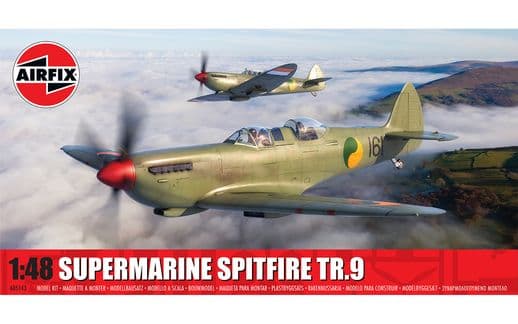
Having already secured its place in aviation history, ML407 appeared determined that her post war career would be equally significant as her wartime exploits and she would be one of the Spitfires bought back by Vickers Supermarine after the war for conversion to two seat T.9 configuration for the Irish Air Corps. Arriving in Ireland on 30th July 1951, she would go on to wear the fuselage identification number 162 in Irish Air Corps service, and amass a further 762 hours in the air, training IAC pilots how to fly this powerful and extremely capable piston engined aircraft.
With her airframe hours now almost expired, ML407 was later allocated for use by the apprentice training section at Baldonnel as a ground instructional airframe, however, she was still determined this would not be the end of her story.
No longer required by the school, the aircraft was made available for sale and shipped back to the UK for her new owner in March 1968, passing on to a famous Warbird collector two years later and subsequently on to engineer and pilot Nick Grace in 1979. Nick had always had a fascination with Spitfires and dreamt that he might one day own one, so once this famous aircraft was in his possession, he embarked on a painstaking restoration of ML407 to return her to flying condition, a project which would take five years to complete.
Spitfire ML407 triumphantly took to the skies once more on 16th April 1985, in her later two-seat trainer configuration, but with the rear cockpit sporting what would become known as the 'Grace canopy conversion', as Nick preferred a sleeker look to his Spitfire, as opposed to the rather more blown, or bulbous appearance of standard T.9 Spitfire rear canopies. Since that date, this incredibly historic aircraft has been a regular sight in Britain's skies, not to mention the star of many an Airshow, often with Nick's wife Carolyn at the controls, following her husband's tragic death in 1988.
Two seat Spitfires are currently doing a sterling job in preserving and enhancing the legacy of the Spitfire, introducing this magnificent aircraft to a new generation of admirers.
The aircraft is now under the care of Ultimate Warbird Flights/Air Leasing at Sywell Aerodrome and in addition to performing at Airshows across the country each year, also allows extremely fortunate passengers the opportunity to fly in this genuine D-Day veteran, a thrilling once in a lifetime flight opportunity for those in a position to do so. If you’d always dreamt of flying in a Spitfire, surely you would want to have the Spitfire which actually claimed the first Allied aerial combat victory of D-Day in your personal logbook.
Supermarine Spitfire ML407 continues to remain airworthy to this day and was one of the stars of last year’s Sywell show. In commemoration of the 80th anniversary of D-Day last year, the aircraft sported recently applied ‘invasion stripes’, along with a further historic addition, the application of Johnnie Houlton’s personal pink elephant emblem under the port-side windscreen, something which was appreciated by all in attendance.
We’ve purposely left our most controversial and debate worthy suggestion for our second most significant variant of Spitfire until last, but please hear us out before passing judgement. Of the 22,500 Spitfires and Seafires produced, the T.9s may not have possessed the combat pedigree of the earlier variants (although some most definitely did in a pervious life), however, they have done sterling work in helping to preserve and enhance the legacy of this famous aircraft over the past 20 years or so.
With a great many of the recent Spitfire additions to the ranks of airworthy examples having been produced as T.9s, they not only help to keep this magnificent aircraft’s story alive, but they’re also the only variant of Spitfire most people will ever stand a chance of flying in.
For these reasons, the T.9 is our second suggestion as the most significant variant of Spitfire.
Right, that’s definitely me going off to find my tin hat, as I feel a comment email raid may be incoming. Remember, these are just opinions shared with fellow enthusiasts, and we’re all entitled to our opinions, aren’t we?
I’m afraid that’s all we have for you in this latest edition of Aerodrome, however, we’ll be back again in four weeks’ time with more news and pictures from the fascinating world of aviation. Thank you for your continued support and as always, if you would like to comment on anything blog related or suggest a subject you would like to see covered in a future edition of Aerodrome, please do drop us a line at aerodrome@airfix.com, where we would be delighted to hear from you.
Should you wish to continue the aviation discussions between editions, you will always find something of interest over on the Airfix Aerodrome Forum and if social media is more your thing, please use the respective official social media icon links at the foot of the main Airfix and Corgi website homepages to access our official sites.
The next edition of Aerodrome is scheduled to be published on Friday 12th September, and we look forward to sharing more aviation inspired content with you then.
I hope to see you all back here in four weeks.
Michael