We are pleased to let you know that the latest edition of Aerodrome is now available, bringing your regular instalment of news, reviews and nostalgia from the fascinating world of aviation. Unfortunately, we now have to accept the fact that the British Summer Time is now well and truly behind us and even though our next Airshow may well be many months away, this is no time to get depressed – aeroplanes will always brighten our spirits.
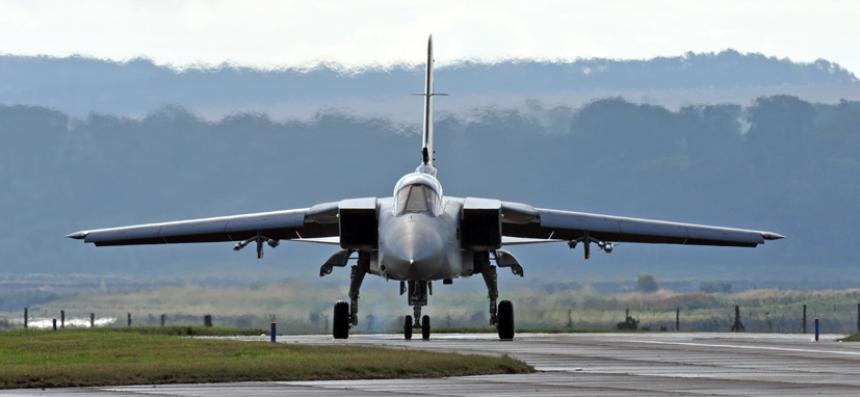
In this latest instalment of our Aerodrome blog, we are going to be taking a trip back into our archives and heading for Bonnie Scotland and Royal Air Force Leuchars. We will be taking a look at a rather poignant Airshow where the station and tens of thousands of visitors were paying a final homage to the distinctive and much-loved variable geometry Panavia Tornado F.3, the long-range interceptor variant of this powerful jet. As the aircraft was scheduled to be withdrawn from RAF service in 2011, the 2010 Leuchars show allowed enthusiasts one final opportunity to see the home-based No.111 Squadron blasting around Scottish skies in this uniquely British fighter jet, before air defence responsibilities were passed to the Eurofighter Typhoon. We will see how this turned out to be a particularly memorable show, but one which ended in sombre tone for most in attendance. Without further ado, let’s head for the beautiful county of Fife and some classic RAF jet action.
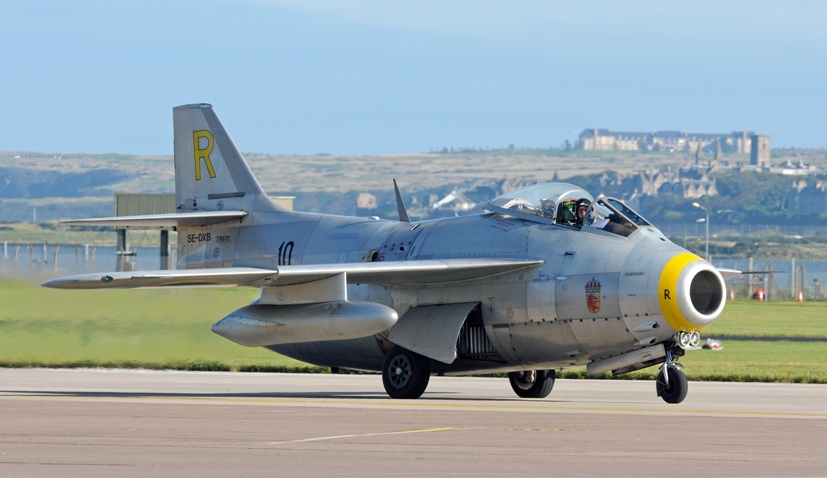
SAAB J29 Tunnan at Leuchars with the beautiful backdrop of St Andrews behind it
There can be no doubting that most aviation enthusiasts would probably describe themselves as being strange beasts. Every one of us will have a different combination of favourite aircraft, favourite aviation venue and most memorable aviation experience, with some, or all of them changing on a regular basis. Having attended hundreds of Airshows and aeroplane related events during my own aviation infatuation, I certainly have some venues that I look forward to visiting year after year, but with the number of events diminishing rapidly over recent times and operational RAF bases now down to just a handful, many of these experiences are beginning to fade into distant memories. Perhaps above all other shows I was fortunate enough to regularly attend, my annual trip north of the border to RAF Leuchars Airshow was the one I looked forward to the most and classed as a real aviation treat to myself. This may have been down to the idyllic location of the Airfield on the beautiful Eden Estuary, the warmth of the Scottish people I was lucky enough to meet, or the simple fact that I knew there would be lots of fantastic aeroplanes waiting for me when I got there, but when I drove across the Forth Road Bridge each September, I have to admit to being just a little excited.
My infatuation with RAF Leuchars came at a relatively early age and was largely down to the RAF Phantom squadrons that were based there, which performed Northern QRA duties using these captivating aeroplanes. On passing my driving test and somehow managing to persuade my father to help me to buy a car, my first trip of any note was to Leuchars Airshow, in the days when you had to plan your journey and use the family Readers Digest road map to find your way. On the journey up there, I remember thinking that I had never seen so many trees in my life and whilst trying to grab a few minutes rest in the middle of nowhere, having something of an ‘American Werewolf in London’ moment after hearing some of the strangest and most disconcerting noises coming from just outside the car – I didn’t hang around long. All the effort was worth it when I eventually arrived at the base, which was to become a regular destination from this point forwards, returning just a few years later to witness the retirement of the Leuchars Phantoms and becoming a regular participant on the annual Airshow Enthusiasts Day, which afforded some special access to the aircraft taking part in this fantastic show.
As the second most northerly air defence station in the UK, RAF Leuchars can trace its history back to 1911 and the establishment of a balloon squadron on this coastal site. Construction on a more permanent establishment began in 1916, but as the airfield was situated so far north in the British Isles, it was designated a ‘Temporary Mobilisation Station’ and intended to allow aircraft and aircrews to gain valuable experience in their build up to operational status and deployment to front line squadrons. The location of the airfield also dictated that many operations were undertaken in cooperation with the Royal Navy, either conducting maritime reconnaissance sorties, or practicing gunnery observation for large warships. With work still continuing on the base when the armistice was signed, Leuchars would maintain these strong naval ties for many years to come.
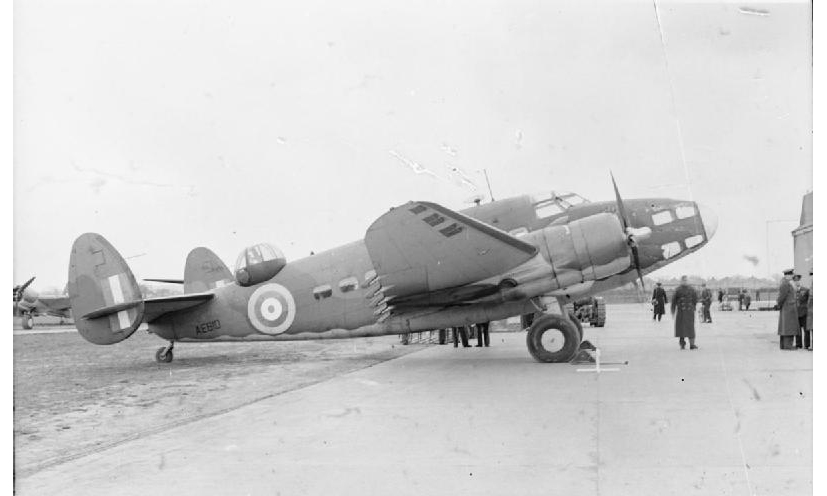
The Lockheed Hudson was a somewhat unlikely aircraft to launch Britain’s first air engagement of WWII
Training and naval cooperation duties would give way to operational flying, in the months leading up to the beginning of WWII with the location of the airfield making it an idea station from which to mount maritime patrols deep into the North Sea. On 4th September 1939, a Leuchars based Lockheed Hudson coastal reconnaissance aircraft came across and attacked a Luftwaffe Dornier Do18 flying boat over the North Sea and whilst the incident did not result in significant damage to either aircraft, it would prove to be significant as the first British aircraft to engage a German aircraft in aerial combat during the Second World War. Later in the war, RAF Leuchars would also become synonymous with civilian registered Mosquitos making regular trips to Sweden and bringing back cargoes of ball-bearings (and other more clandestine cargoes) back to the UK.
The Cold War era would bring jet powered aviation to the airfield, as the need to protect British airspace from encroaching Soviet aircraft became a priority. Operating such iconic aircraft as the Lightning, Phantom, Tornado and Typhoon, Leuchars would stand ready to challenge any Soviet aircraft incursion at very short notice, becoming one of Britain’s most important air defence stations for the next half a century and mounting round the clock QRA readiness for much of this time.
The impending closure of the base saw the final RAF Leuchars Airshow take place in 2013, when around 45,000 spectators attended a display which had been held as one of the highlights of the UK Airshow calendar for a great many years. Transferring from RAF to Army control in 2015, many enthusiasts and Fife residents still lament the relocation of the Leuchars based squadrons and the end of their popular annual Airshow.
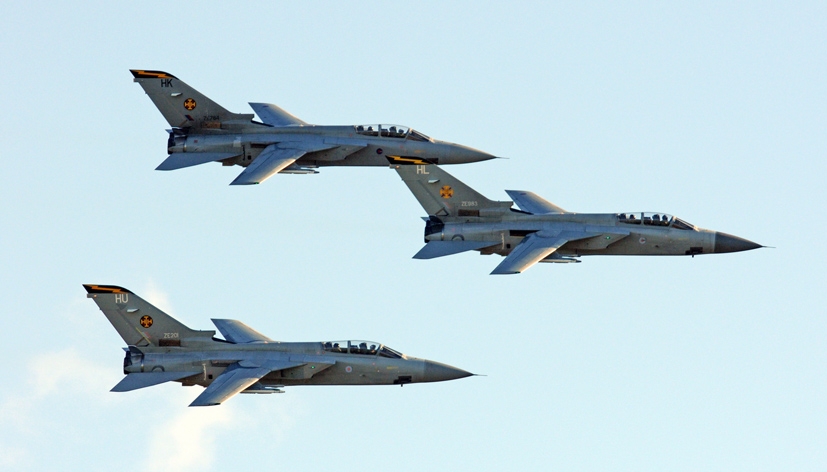
Tornado F.3 trio at Leuchars Airshow 2010
For the aviation enthusiast, perhaps the most significant indicator that we are all getting older is the number of Royal Air Force aircraft we have witnessed being withdrawn from service. For people born in the 1960s, we can unfortunately remember many RAF aircraft that have now been consigned to museums and have long since disappeared from the Airshow programmes of our youth, a fact that can be rather depressing and leading us to think that our best aviation days are likely to be behind us. Personally, RAF Leuchars has a particular significance, not only because it has always been one of my highlight events of the year, but also because I had been present at shows which marked the service withdrawal and final displays by home based squadrons of not one, but two different RAF fighter aircraft. One of my earliest trips to the airfield was to be present at the final display of Leuchars based RAF Phantoms, as this mighty Cold War warrior was due to be replaced in the air defence role by the new Panavia Tornado F.3. My trip to the 2010 show would be doubly significant, in that I would be witnessing the withdrawal from service of the Phantoms replacement – a real indicator of the passage of time.
In the months leading up to the 2010 show, it was clear that this would be a final opportunity to see home based Tornado F.3s taking their place in the display programme and many intending to make the trip to Leuchars would certainly have been hoping they would witness something of a spectacular send off. By the time final preparations were being made, only one Squadron was still operational at the base, the famous No.111 Fighter Squadron, known colloquially as Treble One or The Tremblers, with their aircraft due to be replaced by the highly capable Eurofighter Typhoon the following March. With its distinctive lightning flash motif adorning these uniquely British fighter aircraft, it somehow seemed fitting that Treble One Squadron should have the honour of displaying this Cold War sentinel in front of a home crowd one final time, showing everyone in attendance what they would be missing in the Airshow years to come.
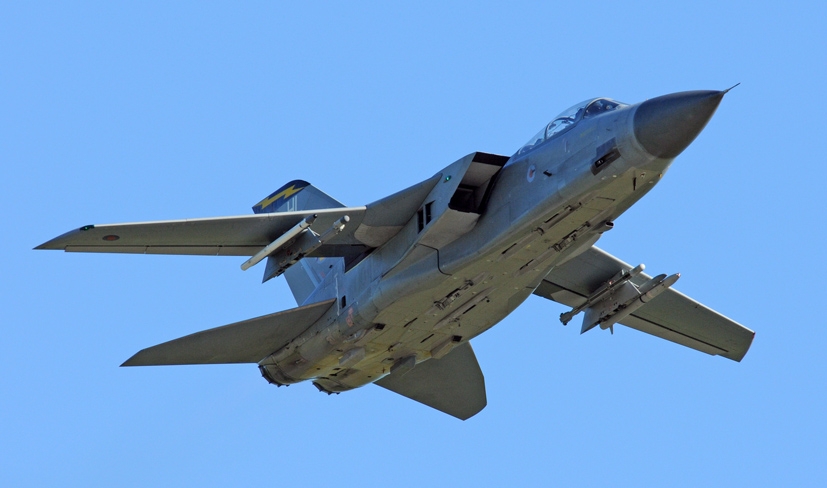
The Panavia Tornado F.3 was one of the UK Airshow scenes most popular performers
To the delight of the gathered masses, show organisers had cleverly arranged a series of display items featuring the soon to be replaced Tornados, allowing the crowds both to commemorate the passing of the distinctive Tornado F.3 which had protected British airspace for over 20 years and to herald the arrival of the latest residents of RAF Leuchars, the Eurofighter Typhoons of No.6 Squadron. Although the Typhoon was clearly both the future of RAF air defence and of fighter operations at this famous Scottish airfield, this cutting-edge fighter would have to play second fiddle to the old master on this occasion, as the vast majority of the crowd were here to experience one final display by the Leuchars Tornados. As the drawdown of the remaining RAF Tornado F.3 fleet was already at an advanced stage, Treble One Squadron would only have a small number of aircraft available to take part in the display, leaving enthusiasts hoping to see a massed formation of Leuchars F.3s one final time disappointed. However, as a Tornado display is all about speed, power and noise, the aircraft which were available for the show would certainly make their presence felt.
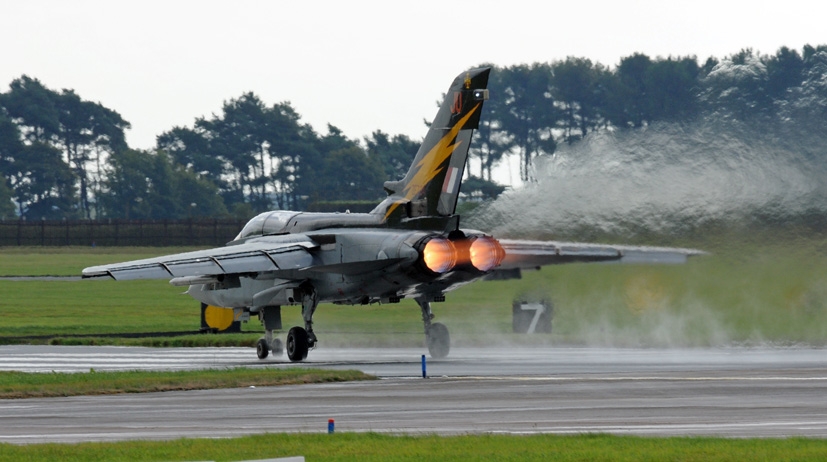
Treble One Squadron’s 90th Anniversary jet blasting down the runway at Leuchars
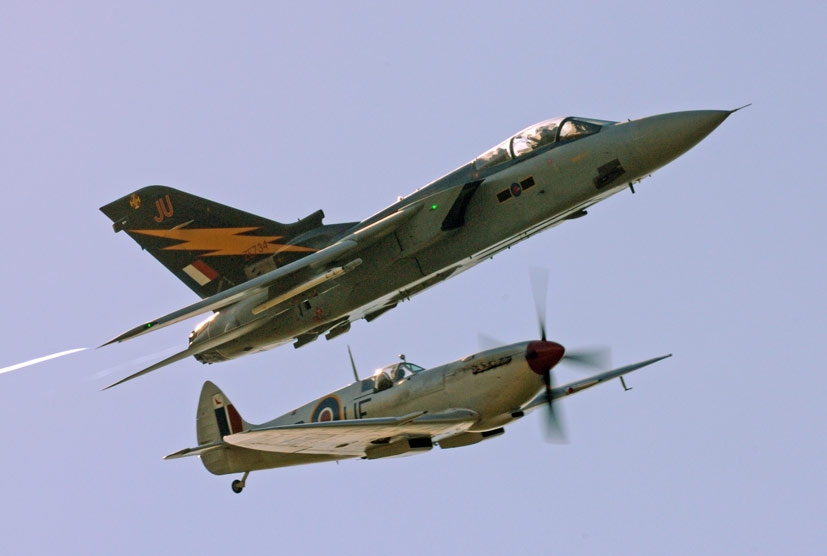
RAF fighter heritage – ZE734 with Spitfire LF IXe of the Battle of Britain Memorial Flight
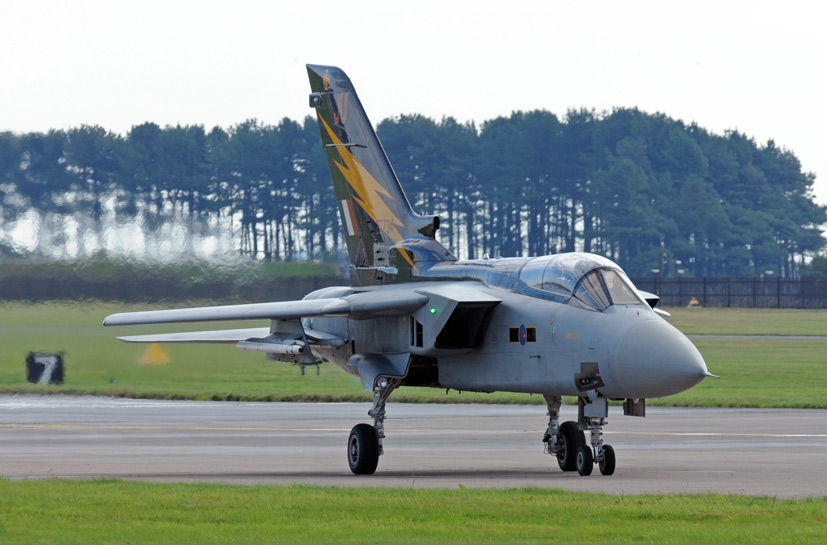
Safely back on the ground, one of the stars of Leuchars 2010
The Tornado F.3 section of the display began with Treble One Squadron’s beautifully presented 90th Anniversary jet ZE734 (JU) making its way from the hardened aircraft shelters on the far side of the airfield, to the 09 end of the runway and lining up for a typically spirited take-off, using full afterburner – exactly what the crowds had turned up to see. In the first of a series of memorable formation flypasts, the Tornado returned in company with a Typhoon and the silver Spitfire LF IXe (MK356) of the BBMF, in a dramatic display sequence intended to represent 70 years of RAF fighter technology. Just a single pass was made by all three aircraft, before the Tornado accelerated into the hazy blue skies, leaving the Typhoon and Spitfire to perform an extremely polished pairs routine. As enjoyable as this was, the returning 90th Anniversary Tornado was the aircraft which had all the camera shutters firing, once it recovered to the airfield and rolled majestically down the length of the runway.
The highlight of the show for many was the sight (and sound) of four Tornado F.3s powering their engines at the end of the runway, before blasting into the air one after another, with a token Typhoon following in their wake. This was the finale most in the crowd had been hoping to see and a fitting way to say goodbye to these magnificent aircraft. The first evocative formation flypast saw all four of the Tornados in a tight diamond, passing down the length of the runway, before one aircraft broke away leaving the other three to make a sedate arc across the far side of the airfield. They returned for a three ship Vic formation pass, before disappearing into the distance, leaving the stage free for the Typhoon and remaining Tornado. To the haunting sound of the bagpipes, the Typhoon flew in straight and level from the sea, with the remaining Tornado flying much faster and beneath it, pulling up into a spectacular zoom climb at the airfield boundary, in a symbolic and rather defiant display of its capabilities. The Typhoon and single Tornado recovered to the airfield, leaving just the final trio of aircraft to land back at Leuchars and bring this fantastic show and the era of the Tornado to a close.
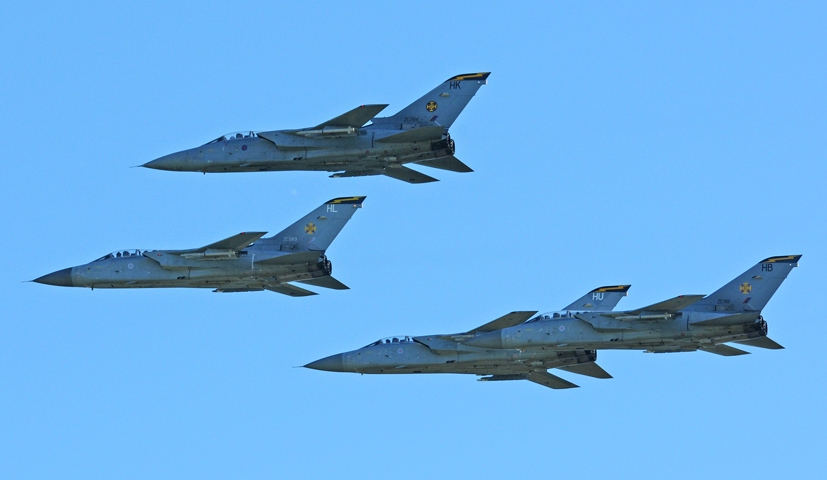
Four ship formation flypast by Leuchars based Tornado F.3s
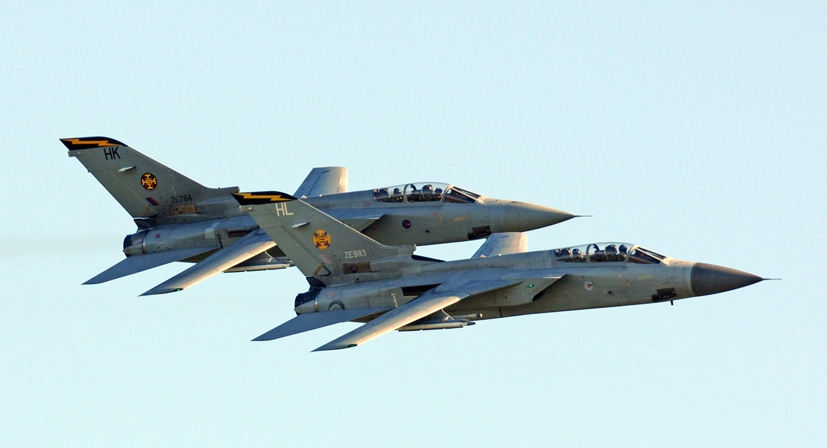
The occasion demanded some close formation flying by the home based pilots
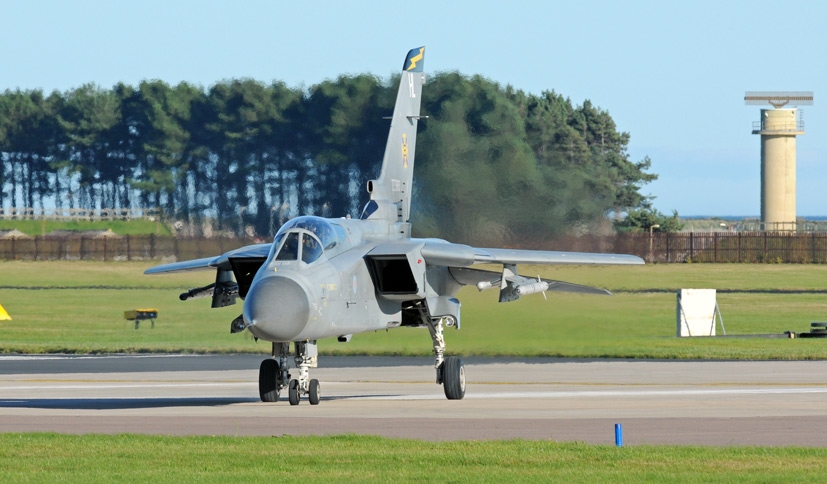
Acknowledging the crowd at a Leuchars Airshow one final time
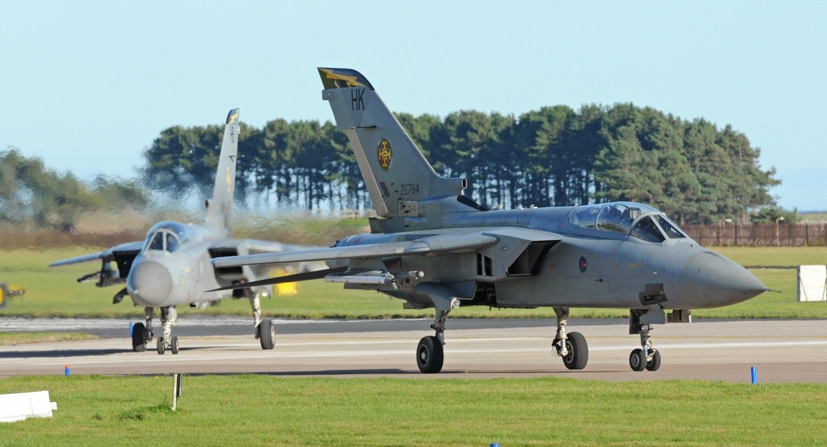
A sad sight for many at the show – all three aircraft slowly back-tracked down the runway and into Leuchars history
Once again coming in from the direction of the sea, the Tornado formation headed down the runway, before each one broke away and into the circuit for landing. Once on the ground, the gathered masses were in for one final treat, as the pilots brought the aircraft down the entire length of the runway, with each aircraft displaying the variable geometry wings of the Tornado in different positions from fully swept backwards, to fully forwards, taking the cheers and applause of the crowd as they went. In what turned out to be the most poignant display of the entire occasion, rather than turn off the runway and back to the Treble One dispersal area on the far side of the airfield, all three aircraft turned around at the 09 end of the runway and trundled back down the entire length of the runway, giving the crowds one final opportunity to say their goodbyes. I have to say that I found this to be quite a sad sight and one that seemed to signify these magnificent aircraft finally accepting their fate and disappearing into RAF history. I don’t think I was on my own with this feeling, as this really did turn into a sombre occasion, with people just silently staring at the aircraft disappearing down the runway, the last time we would see a Tornado F.3 performing at a major UK Airshow. Once the aircraft had finally gone and the sound of their engines began to subside, people just gathered up their things and quietly made their way back to their vehicles – a really strange atmosphere and one I will never forget.
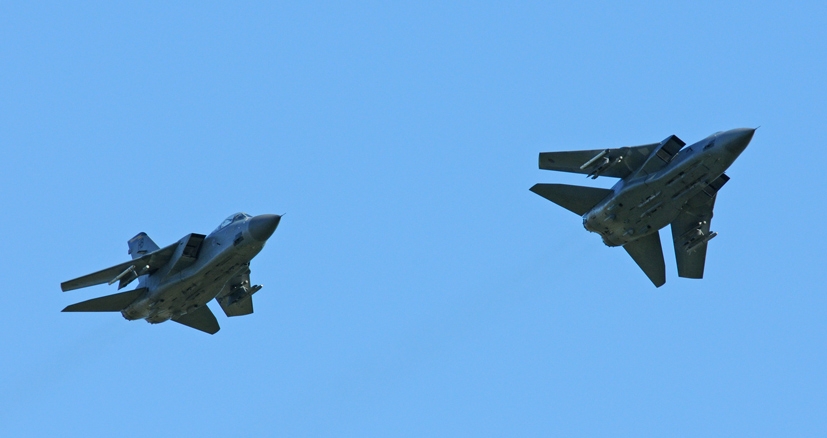
Tornado break to land
Although the 2010 Leuchars Airshow will undoubtedly be remembered as the final Tornado F.3 show, this event has always been one of the highlights of the annual display calendar and there were plenty of other exciting aircraft in attendance, helping to pay their own aviation tributes to the passing of one of their own. A truly international affair, both in terms of the flying and static displays, a Leuchars show had a reputation to maintain and as one of Scotland’s best attended events, the 2010 show was always going to be more than just an opportunity to lament the passing of yet another RAF aircraft type. In the following section, we will include a selection of photographs featuring some of the other aircraft taking part in the show, including several of the interesting overseas visitors that helped to make this such a memorable occasion.
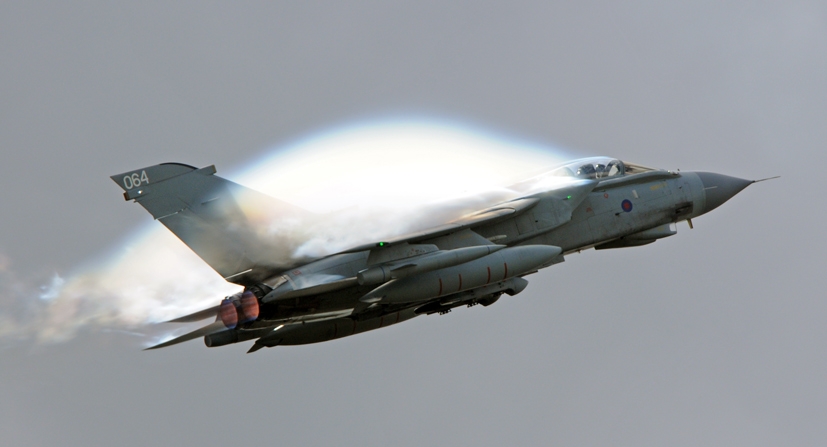
Not to be outdone, the ground attack variant of the Tornado creates a bit of atmosphere
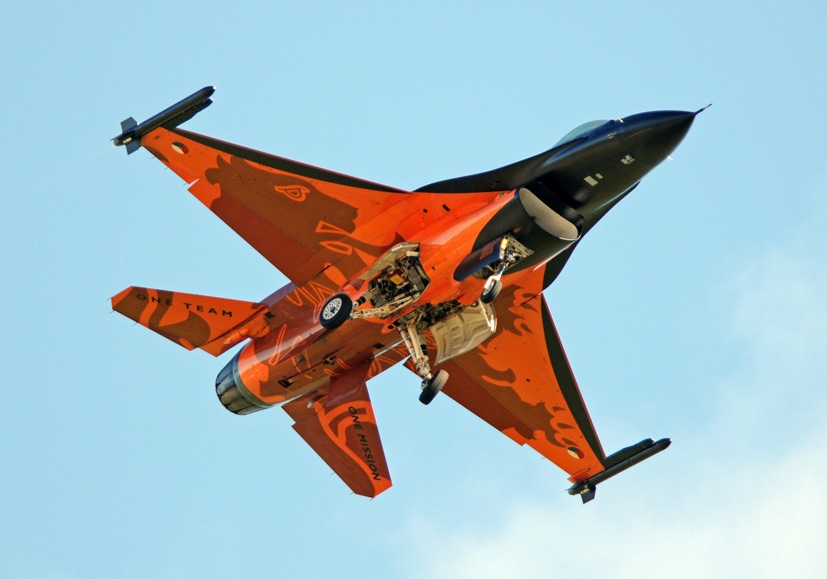
Leuchars Airshow is very much an international event
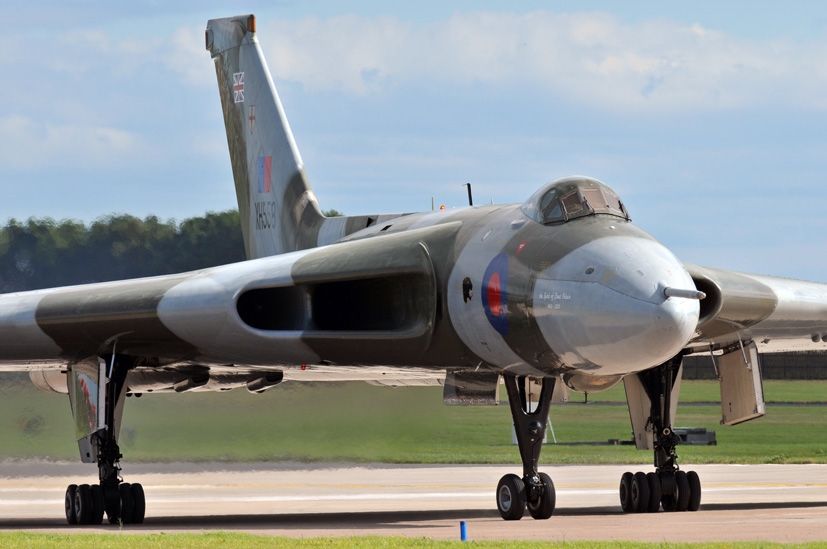
Much missed on the UK Airshow circuit, Avro Vulcan B.2 XH558
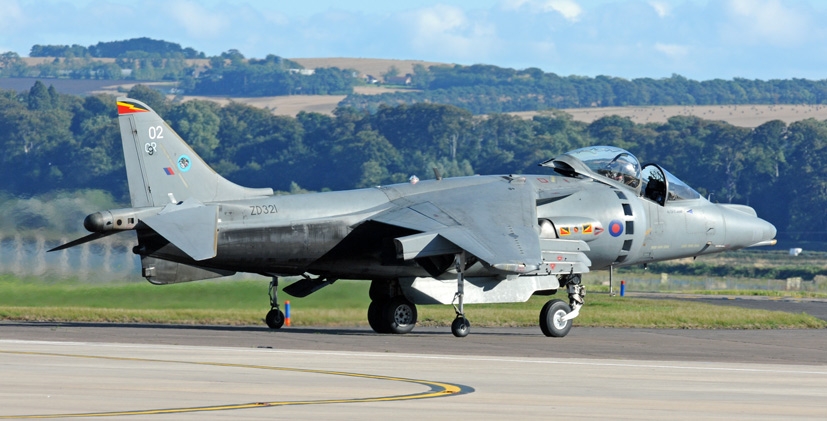
Another classic Airshow performer now consigned to history, the magnificent Harrier
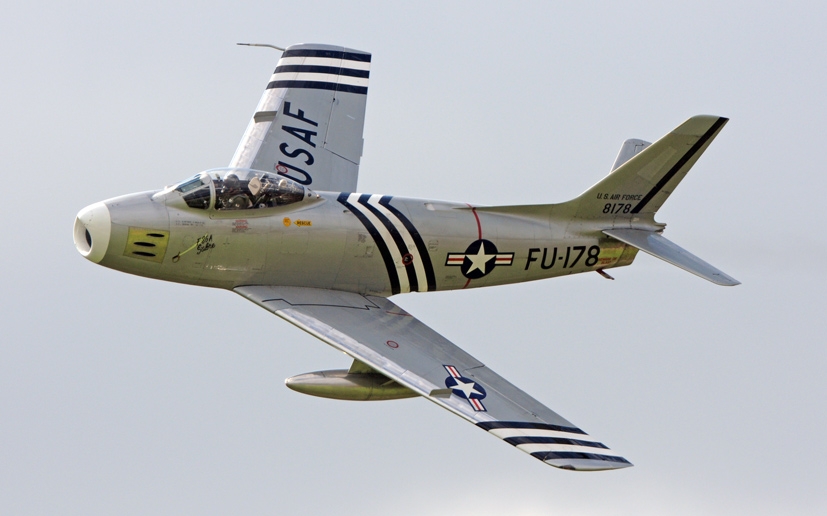
Classic jets were well catered for at the show – F-86A Sabre
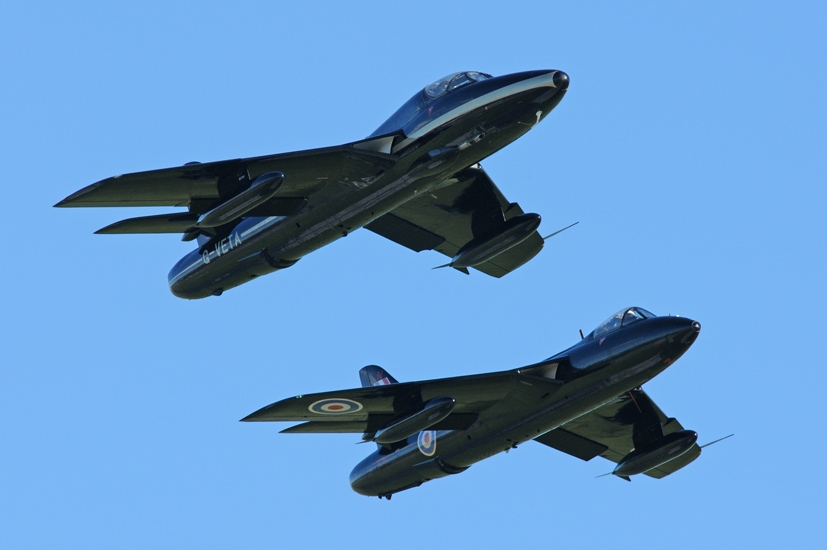
Hawker Hunter pair paid their own close formation tribute to the retiring Tornados
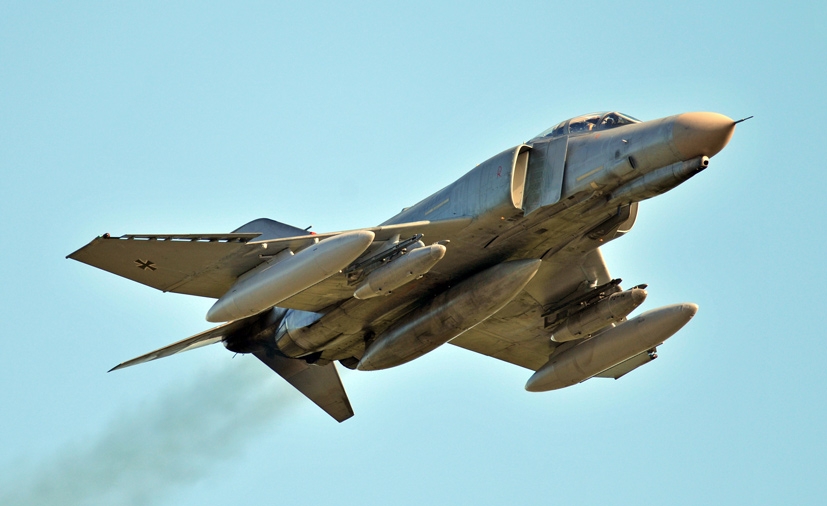
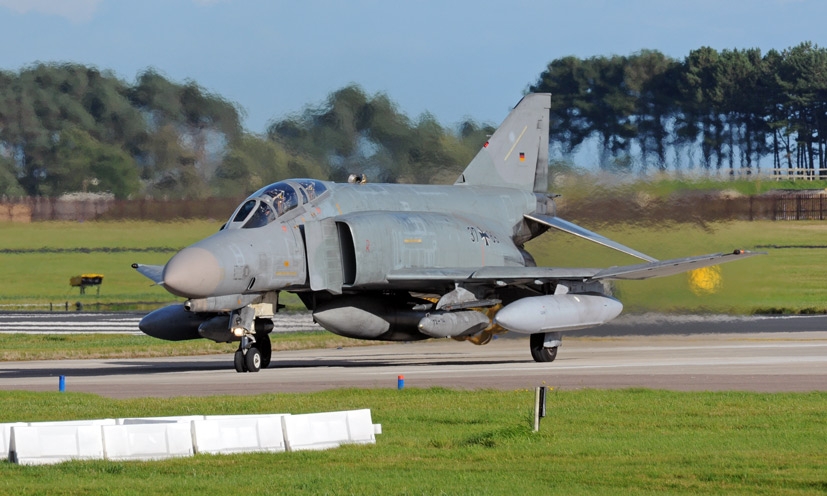
One of the most popular overseas visitors to the show, a German F-4F Phantom
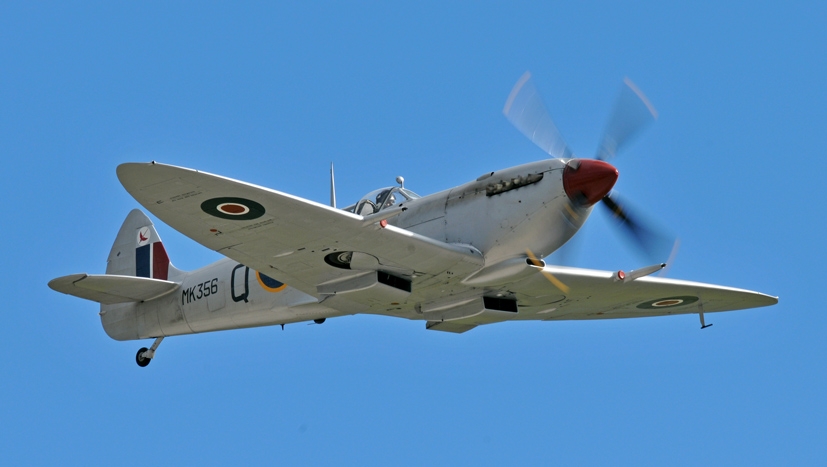
Always popular performers wherever they display, Spitfire Lf IXe MK356 of the BBMF
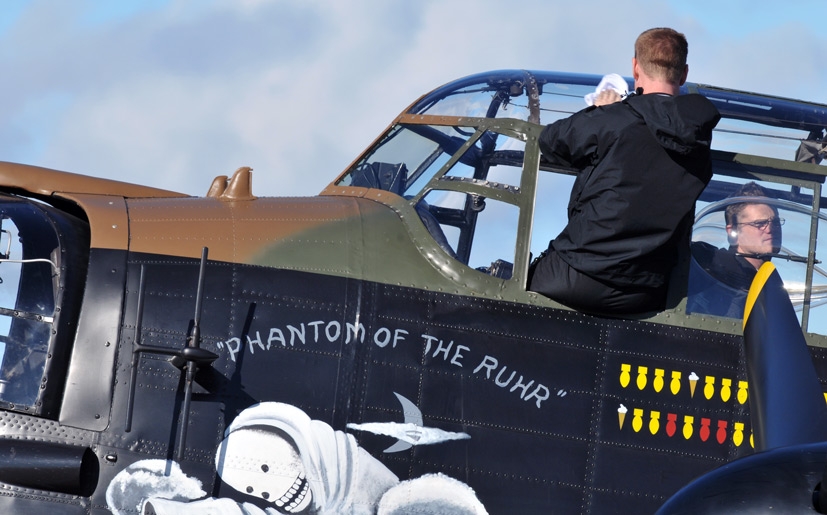
It is important to be well turned out on occasions such as this
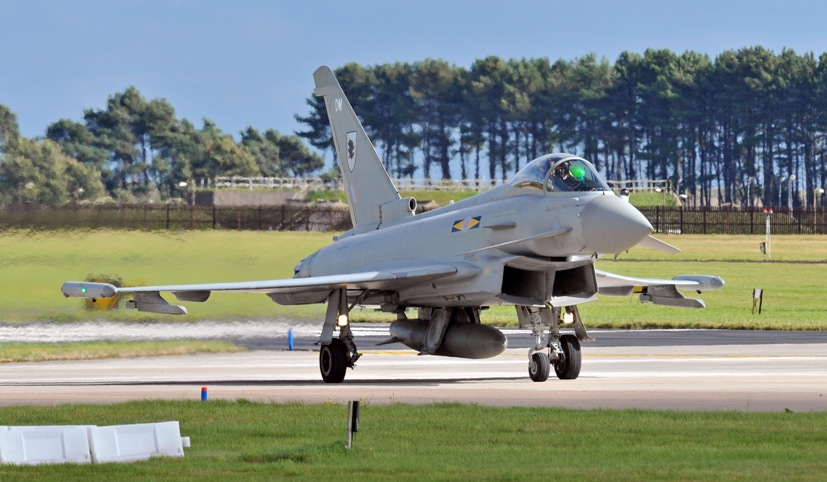
The Eurofighter Typhoon would replace the Tornado in the hardened aircraft shelters at Leuchars
Leuchars Airshow 2010 will be remembered as a classic RAF display and one which will stand as one of the most significant in the event’s long and illustrious history. It could be argued that an even more poignant occasion was held at the airfield just three years later, when the 2013 show seemed likely to be the final time a major Airshow would be held at this popular and historic venue. In a future edition of Aerodrome, we will take a look at this final Leuchars show, which marked yet another low point in the history of the great British Airshow.
The end of the latest Airshow season is no time for resting on our laurels and lamenting the fact that it could be six months before we wield our cameras in anger once more. Now is the time for looking at all those fantastic pictures we took during 2017 and making sure everything is backed-up for posterity and sharing our best picture with fellow Aerodrome readers. What could be more disheartening than leaving all those fantastic pictures languishing on hard drives all over the world and not letting your photographic talents see the light of day? With just a few weeks to go before we publish the next in our popular series of Reader's Pictures editions of Aerodrome, this is your final opportunity of 2017 to send in your favourite aviation related photographs from the past twelve months and stand a chance of having your work admired by thousands of Aerodrome readers all over the world.
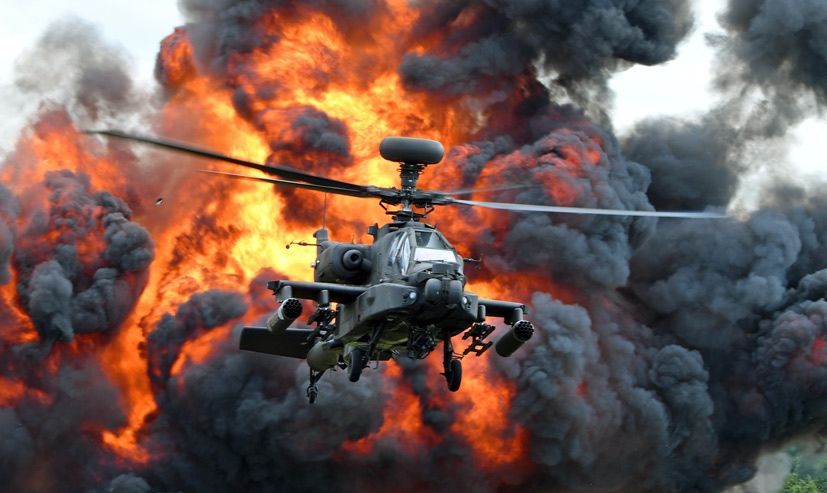
All the fun of the Airshow. Please send in your favourite aviation pictures of 2017
Our Reader's Pictures editions of Aerodrome are always amongst our most popular blogs of the year, as they not only showcase the photographic talents of our loyal supporters, but also allow us all to see pictures from shows we were not able to attend ourselves. They are also a great opportunity for our overseas readers, or enthusiasts who were lucky enough to attend any of the world’s more exotic shows and museums to show some of the aviation delights most of us would never normally have the chance to see. Importantly for anyone who makes it into our latest Reader's Pictures edition, your pictures will be fully credited and will remain on the Airfix and Corgi websites for posterity, allowing friends, family and the wider aviation community to admire your handiwork. As usual, please send your images to either aerodrome@airfix.com or aerodrome@corgi.co.uk and please limit your submissions to no more than three images per person, to allow as many people as possible to be in with a chance of making the final selection and to avoid our mail servers becoming clogged with aeroplane pictures. We very much look forward to seeing your pictures and bringing you the latest instalment in this popular feature.
I am afraid that is all we have for you in this latest edition of Aerodrome, but sincerely hope you found our look at the 2010 Leuchars Airshow an interesting one. As well as sending us your submissions for the next Reader's Pictures edition, if you have any interesting aviation related articles you would like to send us, or make suggestions for a future edition of Aerodrome, our usual aerodrome@airfix.com and aerodrome@corgi.co.uk e-mail addresses are always available to receive your ideas.
All the latest social media discussions regarding Aerodrome and aviation related matters in general are taking place on both the Airfix Aerodrome Forum and Corgi Aerodrome Forum, so why not consider contributing – as always, if you have any specific comments, questions or suggestions for future editions of Aerodrome, please do feel free to drop us a line and let us know. We also have our vibrant Airfix Facebook and Corgi Facebook pages, along with Airfix Twitter or Corgi Twitter accounts – please use #aerodrome when posting about an aerodrome topic.
We look forward to bringing you the next edition of Aerodrome, which is due to be posted on Friday 17th November – and we look forward to seeing you all then.
Thank you for your continued support of our Aerodrome blog.
Michael
© Hornby Hobbies Ltd. All rights reserved.

