
Welcome to the latest edition of Airfix Workbench, taking you behind-the-scenes of the Airfix Development department. So, what could we possibly have lined up for you in Workbench 4? Two more new 2016 model tooling announcements plus updates on two other new models of course!
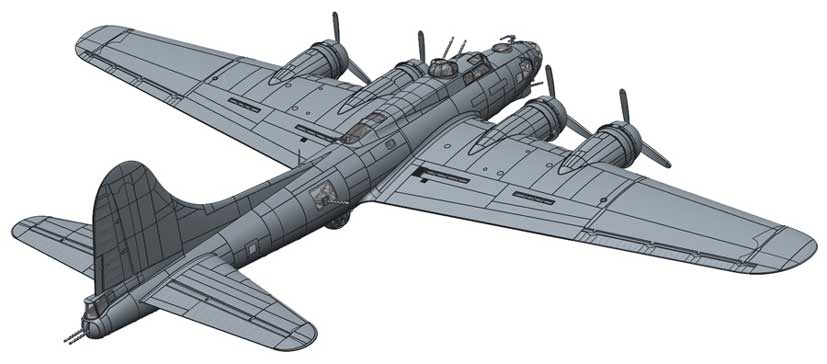
3D CAD screenshot of the new 1/72nd scale Boeing B-17G
Arguably the most visible manifestation of American military might in the Second World War was the Boeing B-17 Flying Fortress four engine bomber. Operating in massed formations, these distinctive aircraft were designed to conduct daylight precision bombing missions, against strategic enemy targets, with the ultimate aim of literally pounding them into submission. As its name suggests, the Flying Fortress was bristling with defensive armament and it was intended that formations of B-17s could throw so much lead into the air that any attacking enemy aircraft would either be shot down, or simply fly away from their certain demise – although this thinking did not actually materialise in combat, it did help to give the B-17 a fearsome reputation.
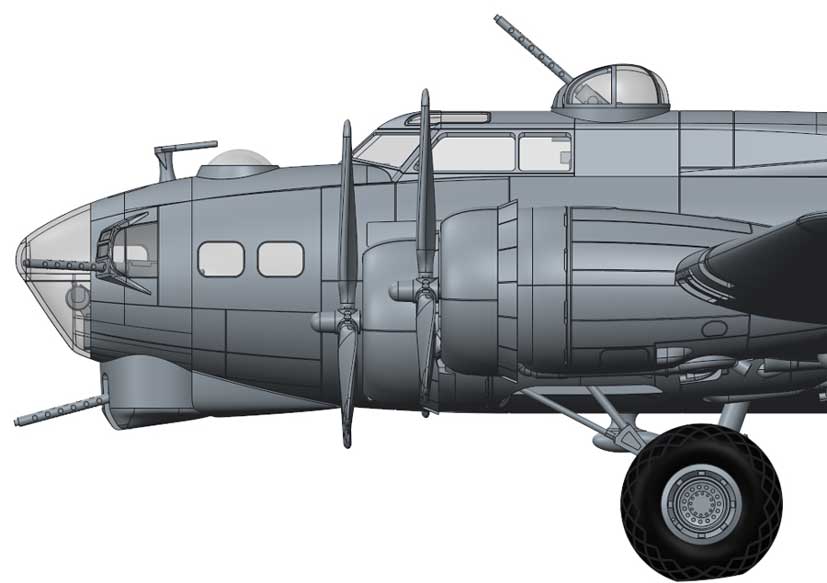
Without doubt, the definitive version of the Flying Fortress was the B-17G and this last mass-produced version of the aircraft was manufactured in more numbers than all previous versions combined – the B-17G was a magnificent fighting aeroplane. Addressing all the shortcomings of the previous combat variants, the B-17G incorporated a number of significant improvements, specifically around the placement and upgrading of defensive armament. The combat experiences of crews flying the earlier versions of the B-17 were crucial in producing this definitive US heavy bomber.
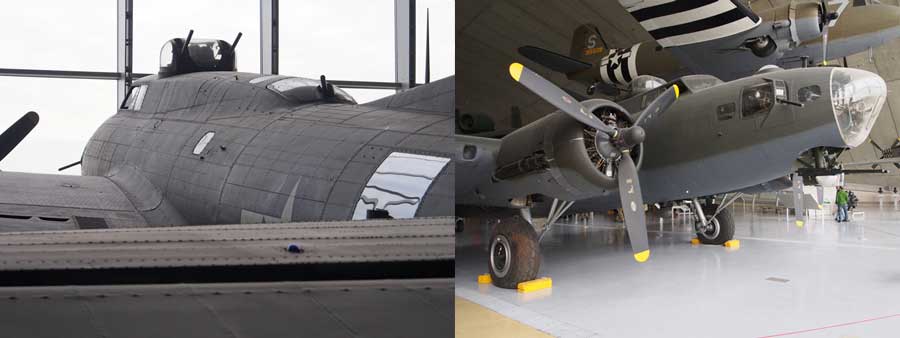
Boeing B-17G ‘Mary Alice’ can be seen at the Imperial War Museum Duxford
If you have read previous editions of Workbench, you already know how important the research aspect of any new model project actually is and we will not be going over the same ground in each new blog, but as you would expect, an aircraft as iconic as the B-17G Flying Fortress needed significant research preparation. Once the decision to produce the B-17G had been taken, a research trip to the Imperial War Museum Duxford was arranged, where a restored Flying Fortress is available for detailed inspection.
Boeing B-17G 23-1983 ‘Mary Alice’ is displayed in the magnificent American Air Museum at Duxford and is an excellent example of the B-17 Flying Fortress. At the current time, the American Air Museum is undergoing significant renovation work and there is the opportunity to see some of the aircraft usually housed here, in unique locations around the airfield. Of great interest to the Airfix team, ‘Mary Alice’ can currently be seen with the turret cover of the Bendix nose gun removed, allowing a really interesting detailed view of the gun unit itself. The opportunity to view this aircraft at Duxford allowed the Airfix team to obtain detailed photographic references for inclusion in the research files.
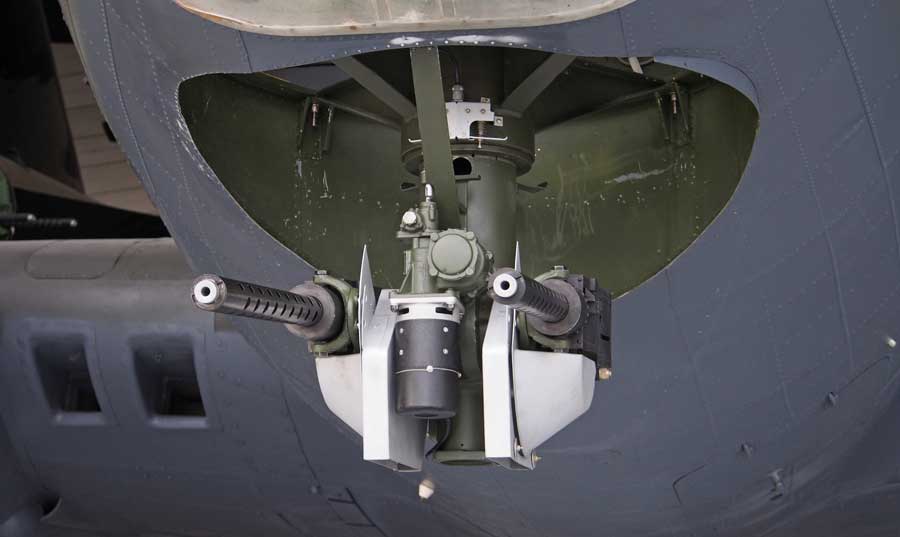
At the moment, Duxford visitors can see the Bendix nose gun installation of the B-17 without the turret attached
As an American aviation classic and one of the most famous aircraft of WWII, it was critical that the right information should be obtained for a late model Boeing B-17G, which incorporated all the armament improvements associated with this late war version of the aircraft. The Airfix research team approached the Smithsonian Institute in the hope of gaining access to technical drawings and official Boeing information, which thankfully they kindly provided. All this information was incorporated into the research files, which by this time contained a huge amount of highly detailed information on the subject aircraft for the Airfix design team to access.
All this data was then converted into a series of digital files, to form the basis of this new model project. Information from technical drawings was used directly as trace sketches, from which a base model file could be created. Co-ordinates from the B-17’s fuselage and wings were plotted on this base model, which was then be used as a template from which each individual part was developed. This was where the expertise of the Airfix designers came to the fore, as they now prepared these individual parts for manufacture, incorporating all the tolerances and manufacturing peculiarities specific to the plastic injection moulding industry.
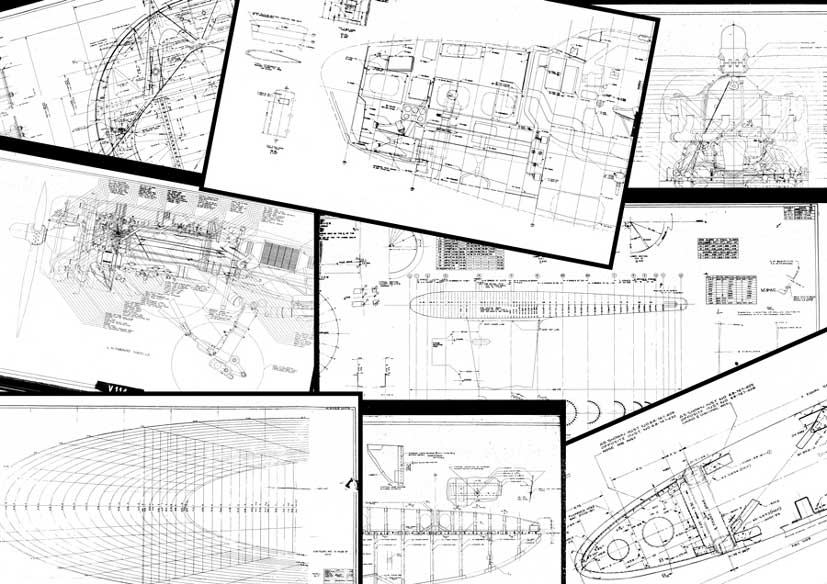
Original Boeing drawings supplied by the Smithsonian Institute
During this stage of the process, much of the work done on the computer is absolutely fascinating and if you were lucky enough to be looking over the shoulders of the design engineers you would see a Boeing B-17G in various stages of deconstruction. Each and every part of the scaled down aircraft is worked on in extreme detail, with a view to producing the most accurate model possible. Some of the files will show what appears to be a ‘sliced open’ aircraft fuselage, which allows all the internal details to be viewed – again, the amount of detail incorporated here is extremely impressive and fascinating for the modeller, or aviation enthusiast to see.
This series of 3D renders illustrates some of the impressive detail that will be incorporated into this fantastic new model.
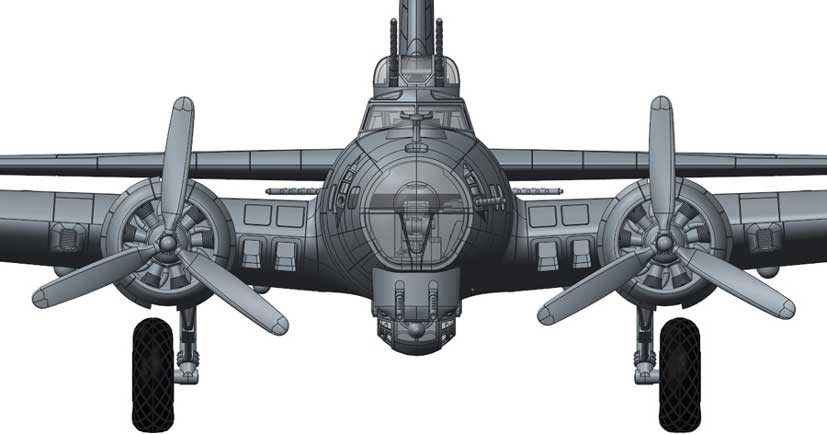
Impressive levels of detail come as standard with the new Flying Fortress
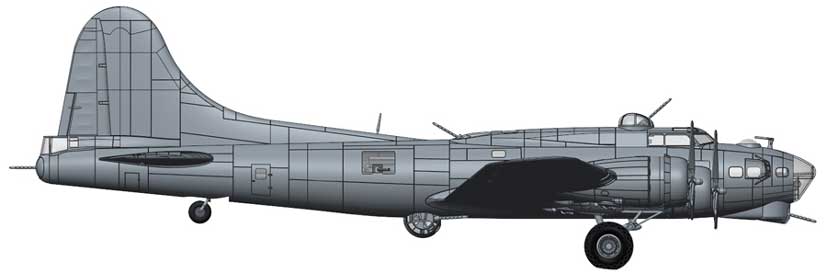
The new model will feature the ‘Cheyenne tail’ upgrade
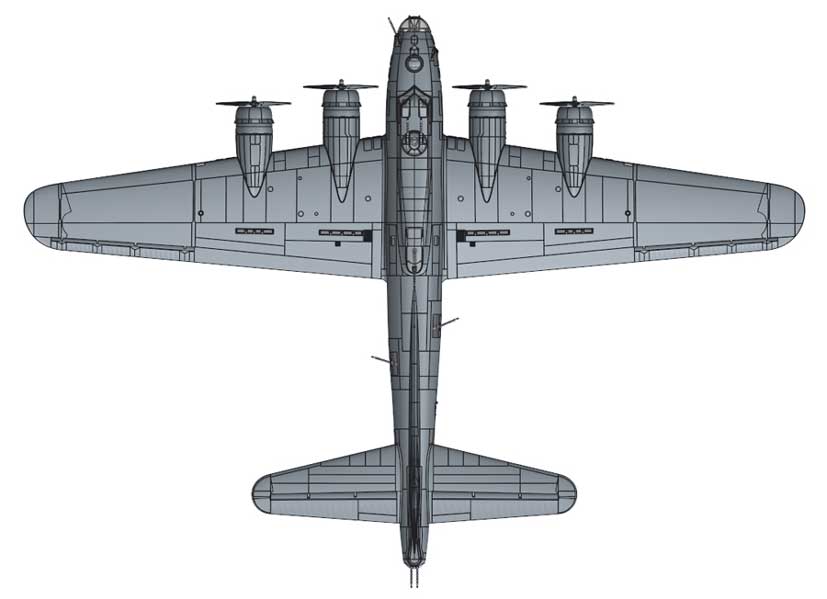
Plan view, which illustrates the staggered waist gunners' positions
Even though we are announcing the future release of this magnificent model today, it is still quite early in the production process and we will not be seeing the new model released for sale until the final quarter of 2016. Look out for further news on the development of the B-17G in future editions of Workbench.

The new model will be completed as a late model B-17G and will include the significant modifications associated with this version of the aircraft. The kit will feature the Bendix chin turret, staggered nose and waist gunner’s positions, with the waist guns also benefitting from enclosed windows. During combat in earlier versions of the B-17, the waist gunners could often obstruct each other, as the gun positions were on opposite sides of the fuselage and they were fighting back-to-back, so staggering the gun positions certainly made operational sense.

The addition of the waist-gun windows would certainly have made the endeavours of the waist gunners a little less arduous and the general comfort of the crew a little more bearable. The final improvement was the addition of the ‘Cheyenne tail’, which was a much more capable defensive tail turret unit – this also had a very different profile from the previous ‘Stinger’ unit of the earlier B-17 versions and is extremely distinctive.
There is no doubting that this new B-17G tooling will be one of the most popular models in the entire Airfix range and many people will be very much looking forward to its arrival next year.
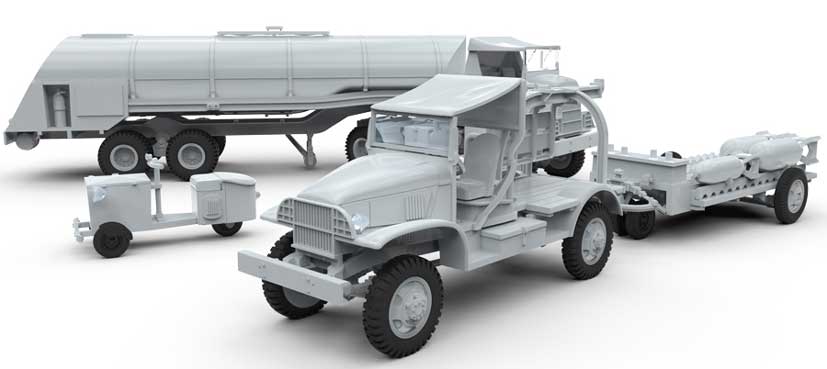 Computer rendered 3D image of the USAAF resupply set
We are delighted to announce that the new 1/72nd scale Boeing B-17G will be joined by a fantastic new diorama set, which will definitely bring any display of WWII US bomber aircraft to life. Again produced in 1/72nd scale, this new set will include vehicles that would have been commonplace on US Eighth Air Force bases all over Europe during the Second World War, as aircraft were prepared for their latest mission into enemy occupied territory. The new bomber resupply set will include the following vehicles:
Autocar U-7144-T 4X4 tractor unit and F-1 fuel trailer. The U-7144-T was used extensively by the US military from 1942 onwards and was certainly found on most, if not all USAAF airfields in Britain, particularly in conjunction with the standard F-1 fuel trailer. With many aircraft requiring refuelling on a daily basis, it was usual for each base to have numerous examples of the U-7144-T available at any one time.
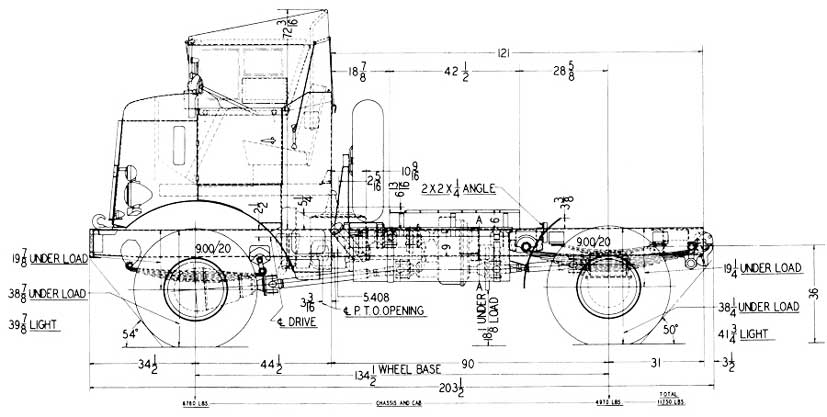
Original drawing of the Autocar U-7144-T 4X4 tractor unit
Chevrolet M6 bomb service truck. This utility 4X4 truck was capable of carrying a small number of bombs in its own right, but was more commonly used in conjunction with the M5 bomb trailer. Indeed, it was capable of towing up to five fully loaded M5 bomb trailers, which was just as well considering the number of missions USAAF bomber crews were required to undertake. The new set will also include the M5 bomb trailer.
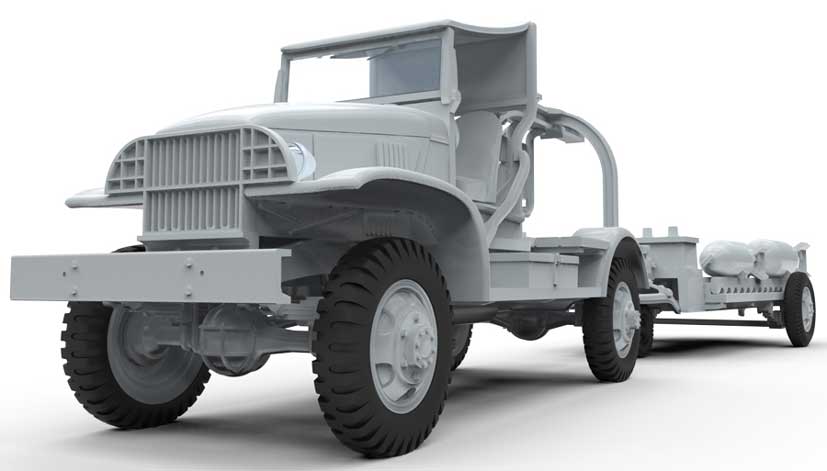
3D CAD render of the Chevrolet M6 bomb truck and M5 trailer
Cushman Model 39 Package Car. This light, three wheeled utility vehicle will have been used for a multitude of light duties on USAAF bases. A development of a motor scooter design, the single wheel at the back provided the power for the vehicle, which allowed a small cargo box to be fitted at the front. Again, the Cushman would have been a regular feature on a USAAF airfield.
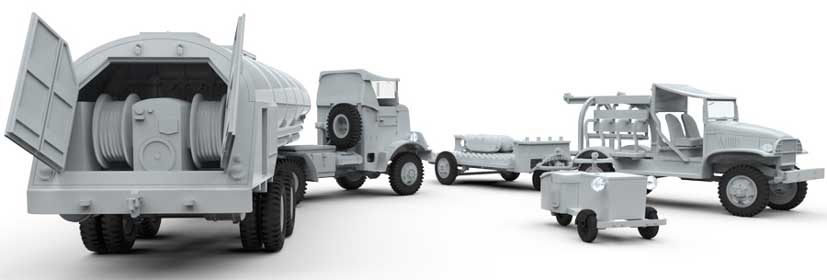
Computer rendered 3D CAD image of the USAAF resupply set
This new bomber resupply set will also include a selection of 500lb and 1000lb bombs, which would have been towed on the M5 bomb trailers behind the M6 Chevy and delivered to its recipient bomber, before the aircraft took off on its latest mission. With a release date scheduled for the middle of 2016, there will a great many modellers looking forward to building this new set and adding it to their diorama displays.
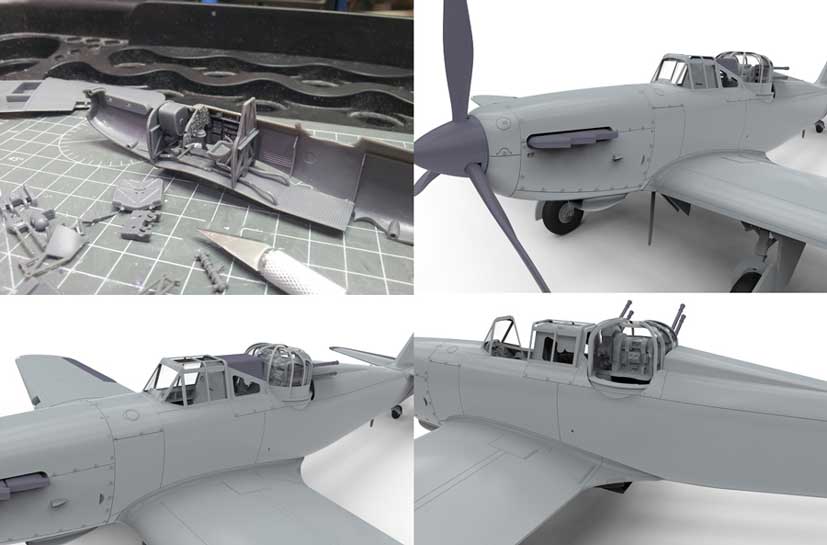
The fantastic new 1/48th scale Defiant
One of the main benefits of producing the Workbench blog is that we can keep you all updated on the future model projects we are all looking forward to being released. In our second blog, we announced the fantastic 1/48th scale Boulton Paul Defiant Mk.I, and from the feedback we have received it seems as if this model is going to be particularly popular. The tooling work has now been completed and this model is entering the next stage of production – we also have some additional images to share with you. The montage above shows the partial assembly of a pre-production sample, with a further collection of computer rendered 3D CAD images, which illustrate the detail levels that will feature on this impressive new model.
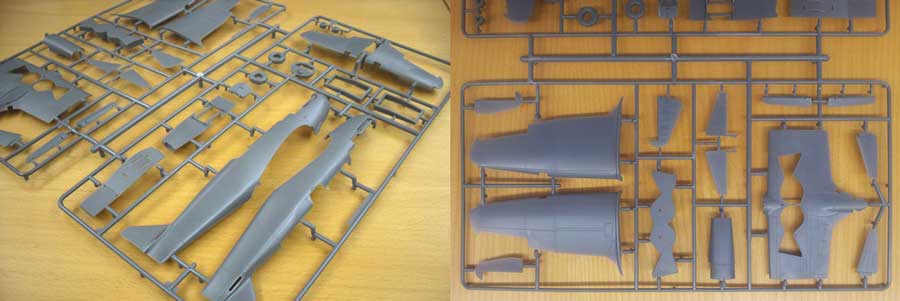
The image below is a computer rendered 3D CAD image of the full model and will serve to whet the appetite of many a modeller – it really does look spectacular and is rightly receiving some complimentary attention. The model is expected to be available in February next year.
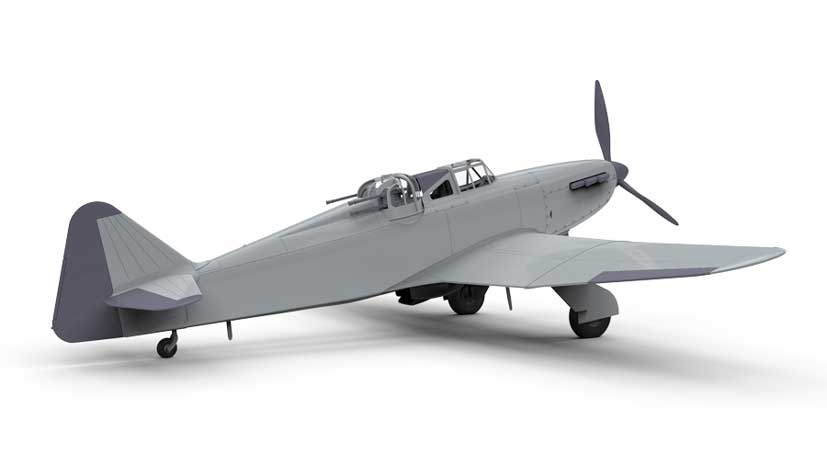
Computer rendered 3D CAD image of the new 1/48th scale Defiant
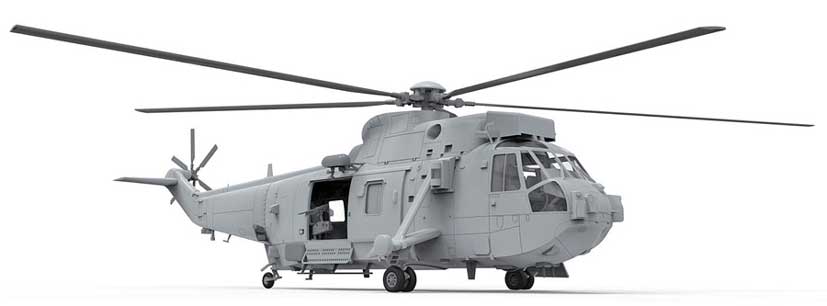
Rendered CAD image of the Sea King HC.4 Commando
Not previously featured on Workbench, but announced earlier in the year as part of the current Airfix catalogue, the new 1/72nd scale Westland Sea King HC.4 ‘Commando’ is also a step nearer to release this week. The HC.4 Commando is one of the most extensively modified versions of the much-loved Sea King and anyone who has experienced the show finale at a Yeovilton Air Day will know just how imposing these large helicopters actually are. This is a totally new model, which incorporates all of the impressive technological production advances we have been discussing recently, and allowing the modeller a number of display options during construction. This model is scheduled for release in December and we end this latest Workbench with an exclusive look at the fantastic box artwork, which has only just been completed.

An exclusive look at the new Sea King HC.4 artwork
That's it for this edition. We now have a dedicated Workbench thread on the Airfix Forum, for you to get involved with all the latest developments. Alternatively, you could drop us a line on either Facebook or Twitter using #airfixworkbench.
We hope that you have enjoyed Workbench 4 and all the latest updates we have for you – be assured that we will have more for you in our next edition! Until then, thank you very much indeed for reading and don’t forget to keep modelling!
The Airfix Workbench Team
© Hornby Hobbies Ltd. All rights reserved.