Welcome to this latest edition of Workbench and all the news, updates and exclusive announcements from the fascinating world of Airfix modelling. The launch of any new model range is a time of feverish activity for everyone in the Airfix team and even though this year’s announcement seems like it only took place just a couple of weeks ago, it is hard to believe that we already find ourselves a quarter of the way through the year, with so much exclusive new product information still to bring you. Whilst the team are still fully occupied negotiating the various development stages of the models announced in the 2019 range, work is already well underway on new projects which will not be announced until 2020, ensuring that their busy schedules are always exciting, to say the least. Whilst we very much look forward to informing our readership of all these product development updates when in a position to do so, we can sometimes be guilty of neglecting models which have already been released and have proved to be incredibly popular with modellers. A number of these new releases sell out almost as soon as they arrive in model shops all over the world, leaving many people still looking to secure their own example, or having to postpone the reassurance of acquiring an additional back-up kit to bolster their model stash. In this latest edition of Workbench, we intend to feature several classic re-releases of popular models from over the past few months, models which sold out extremely quickly and have now either been released once more, or are scheduled for imminent re-release. The selection includes two Supermarine aviation classics, a Korean War Mustang, a snooping Meteor and a Dakota wearing what has to be considered one of the types most attractive liveries. We also mark the welcome return of maritime models to the Airfix range by featuring a reader supplied article all the way from New Zealand and how a classic Airfix ship model tempted a lapsed modeller out of a lengthy period of build inactivity. Without further delay, lets start by looking at the legendary Supermarine Spitfire and how this already capable interceptor was continually improved and upgraded throughout its long RAF service career.
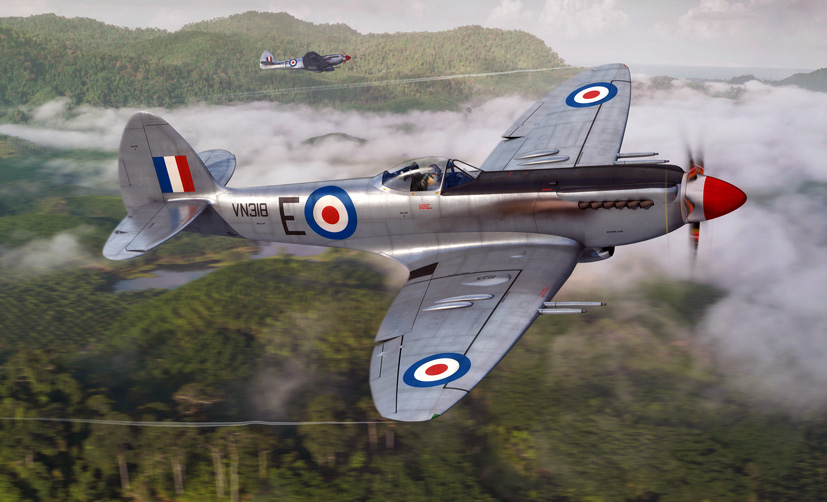
As if we ever need an excuse to build a Spitfire, the box artwork produced in support of the 1/48th scale Mk.22/24 makes this kit almost irresistible and resulted in a quick sell through of the initial production run
Although the maiden flight of the Supermarine Spitfire took place eighty-three years ago this month, this classic fighter is still regarded as one of the most famous aircraft in the history of flight and without doubt, the most famous British aircraft ever to take to the skies. With the single prototype aircraft K5054 taking to the air on 5th March 1936, Britain now had the world’s most capable fighting aeroplane within their grasp, one which also just happened to be arguably the most aesthetically aircraft ever to take to the skies. The Spitfire captivated a world which was reluctantly bracing itself for war. Designed and built by a team lead by R.J Mitchell, the famous Spitfire could have been known as something completely different, had Mitchell been given the overriding authority in assigning a name to the aircraft, preferring to christen his beautiful new fighter either ‘Shrew’ or ‘Scarab’. Thankfully, this historic responsibility fell upon one of the directors of the Vickers-Armstrong company, who preferred the name ‘Spitfire’, reputedly in reference to one of his daughters who was described as being of spirited character and a bit of a ‘Spitfire’ – you get on the wrong side of this young lady at your peril. In fact, recently discovered boardroom transcripts highlighted how these naming discussions actually became a little heated at the time and how Mitchell thought it was a 'damn stupid name', however, the name Spitfire emerged victorious from these discussions and the rest, as they say, is aviation history. The Luftwaffe would have undoubtedly come to respect the fighting prowess of the mighty Supermarine Shrew, but would history have been quite so infatuated with a fighting aeroplane which possessed such an uninspiring name?
Entering RAF service in 1938, the Spitfire was in production throughout WWII, with the basic aircraft undergoing significant development during this period, enabling the Spitfire to maintain its status as one of the most effective fighting aeroplanes in the world, throughout its service career. As a result of these capability upgrades, the last Mk.24 Spitfires to enter RAF service were very different from the machines which arrived at Duxford during the summer of 1938, even though outwardly, they still retained the distinctive lineage of the aircraft. With a wingspan only 1 inch greater than the Mk.IA, the Mk.24’s fuselage was 3 ft longer, due to the adoption of a Rolls Royce Griffon 85 engine and larger fin and rudder. Significantly though, the top speed of this ultimate Spitfire was almost 90 mph faster than the already speedy Mk.IA and it possessed much greater firepower than its predecessor – the eight 0.303 browning machine guns had been replaced by four 20mm Hispano V cannons and the ability to carry bombs and rocket projectiles. The Mk.24 may well have been every inch a Spitfire, but it was definitely the muscular big brother of the aircraft which had proved so decisive during the Battle of Britain.
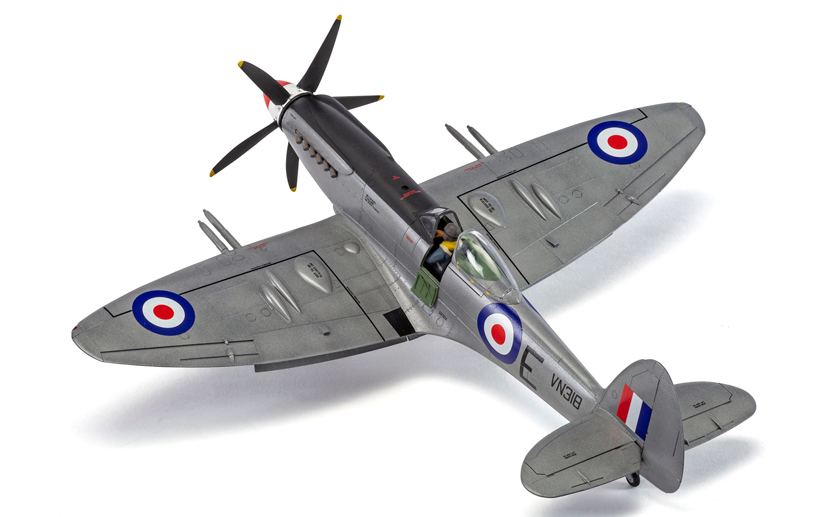
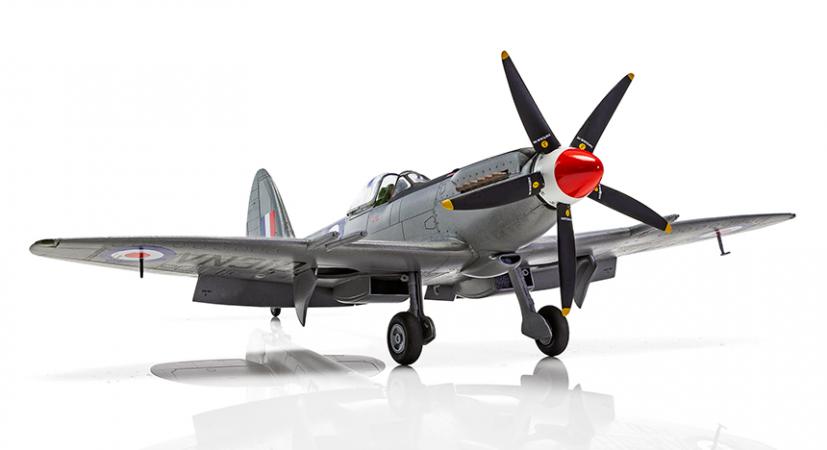
A magnificent selection of build images, featuring a model finished in the lead scheme option included with this kit. In 1/48th scale, you really do get a greater appreciation of the awesome power of this mighty fighter
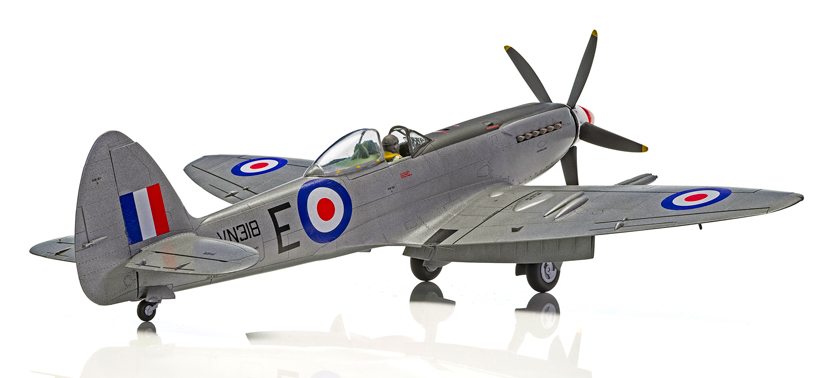
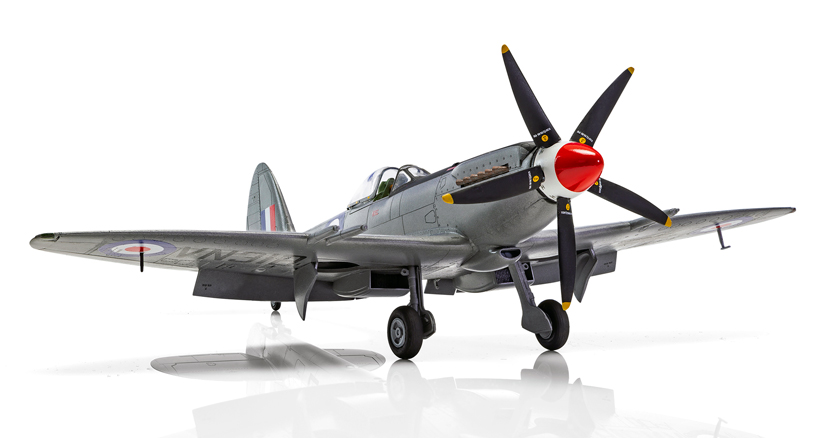
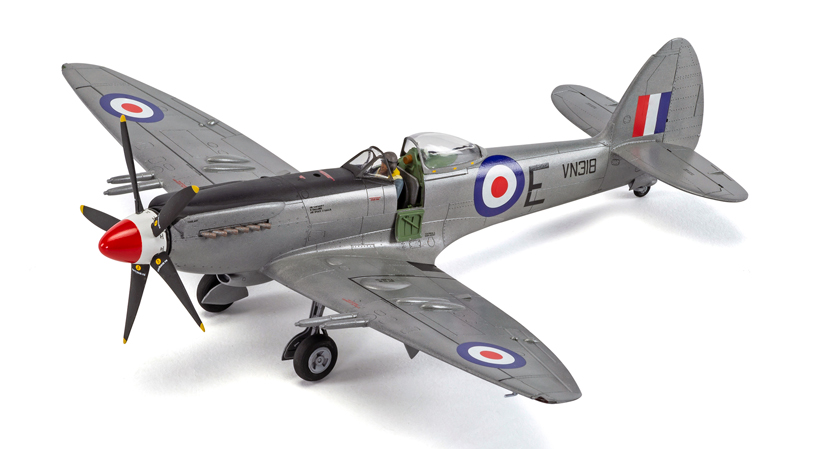
Released during 2018, our Spitfire F Mk.22/24 (A06101A) is a beautiful 1/48th scale representation of this ultimate incarnation of the Spitfire and as the exclusive build images featured above clearly illustrate, it allows the modeller to create an extremely accurate scale homage to this famous fighting aeroplane. Although still retaining something of the overall appearance of earlier Spitfires, the Mk.24 was twice as powerful and double the weight of the first machines, primarily due to the adoption of a Rolls Royce Griffon 85 engine, which drove a huge five bladed propeller. An extremely muscular aircraft, the additional size associated with 1/48th scale kits certainly helps to convey a sense of the power and majesty of this mighty fighter much more effectively than smaller scales and was undoubtedly one of the reasons why this superb kit was only available for a relatively short period. Its arrival back in stock not only helps to retain the enduring link between Airfix and the Spitfire (which began back in 1955), but will also allow people who were unable to add this kit to their build schedules last year, to hopefully secure an example this time around. In support of its re-release, let’s take a closer look at the two scheme options which are included with this impressive kit.
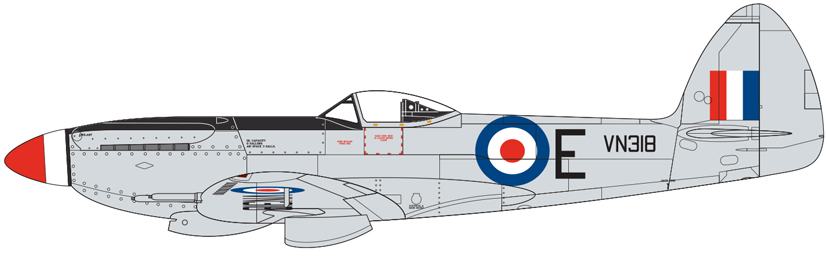
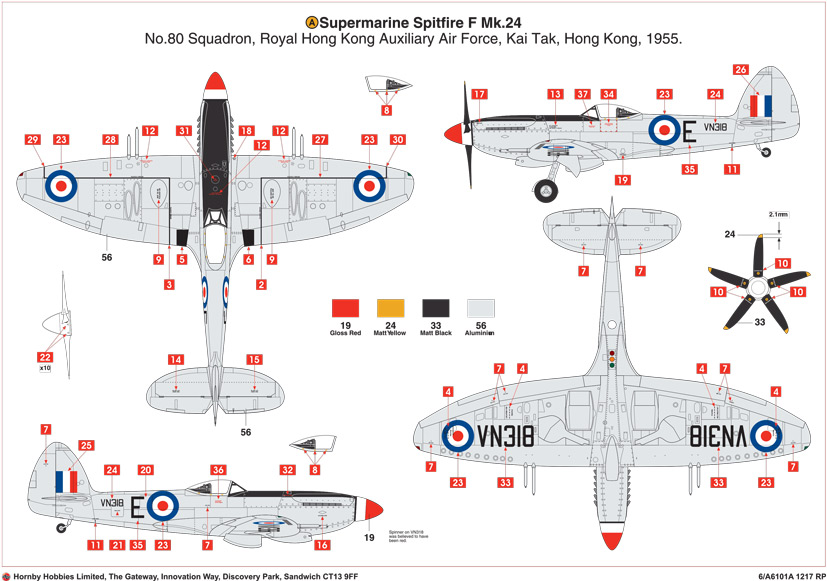
Full details of the lead scheme and decal options included with this extremely popular 1/48th scale Spitfire kit
The Mark 24 was the final variant of the Spitfire and was a very different beast from the aircraft which took part in the Battle of Britain. With almost double the available power from the latest Rolls Royce Griffon engine, these machines did not purr and whistle like the cultured Merlin III engine of its predecessor, but growled menacingly and demanded its intrepid pilot unleash it. With a top speed of around 454mph and incorporating the larger tail from the Supermarine Spiteful, these Spitfires were the ultimate performers, with an exceptional rate of climb and excellent performance at altitude, easily matching the best contemporary piston powered designs in service at that time. Although the dawning of the jet age was closing in on the Spitfire, these mighty machines ensured that R.J. Mitchell’s classic fighter did not pass into aviation history quietly.
Supermarine Spitfire Mk.24 VN318 was produced at Castle Bromwich in early 1946 and issued to RAF No.80 Squadron, where it would fly patrol and reconnaissance missions from Wunstorf in Germany as part of the British Air Force of Occupation. The Squadron was later posted to the Far East, which saw the Spitfire shipped to Hong Kong, where it would fly air defence sorties from Kai Tak airfield – this must have been quite a challenge for the pilots, as the airfield was always extremely busy and is notoriously difficult to operate from. Situated at the base of a particularly mountainous region, landing this powerful Spitfire, with its long nose and massive propeller must have been a hair-raising experience. Following the disbandment of RAF No.80 Squadron, VN318 was transferred to the Hong Kong Auxiliary Air Force, giving them a huge upgrade in both their offensive and defensive capabilities. It is reported that this Spitfire was forced to make a wheels up landing at Kai Tak in April 1955, although a definitive record of its eventual fate is not known to us at this time.
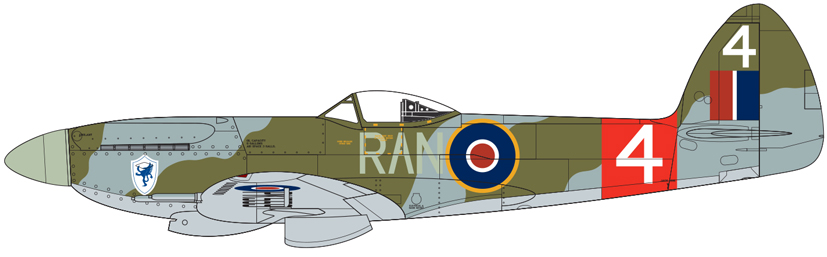
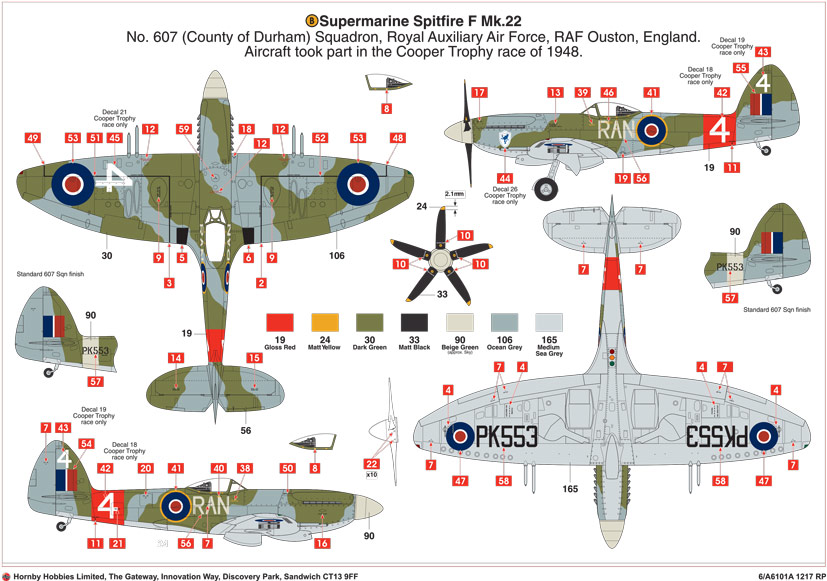
The second scheme option provided the modeller with details to complete their kit as a purposeful looking RAF No.607 Squadron Spitfire F Mk.22 which took part in the 1948 Cooper Trophy air race
This late version of the Spitfire can be identified from the earlier Mk.21 by virtue of its shallower rear fuselage and teardrop canopy, with most also benefitting from larger fin, rudder and tail surfaces, similar to those used on the Supermarine Spiteful and in an attempt to tame the power from the mighty Griffon engine. Spitfire PK553 was produced at the Castle Bromwich factory as part of contract B981687/39 and issued to No.607 Squadron, Royal Auxiliary Air Force. The RAuxAF was a force of paid volunteers who acted as a reinforcement reserve force for the Royal Air Force, giving up their evenings, weekends and holidays to train and serve in this essential force, following the end of the Second World War. RAF No 607 Squadron reformed on 10th May 1946 as a RAuxAF day fighter squadron at Ouston, in Northumberland, initially flying the Spitfire Mk.XIV and later the Mk.22, before eventually entering the jet age with the de Havilland Vampire.
This scheme option allows the modeller to produce Spitfire PK553 in one of two guises, either wearing her standard No.607 Squadron colours, or those she wore during her participation in the 1948 Cooper Trophy air race. In the years following the end of the Second World War, there was an attempt made to revive the incredibly popular air race scene in the UK, which had regularly seen huge crowds flocking to events during the 1930s. The Cooper Trophy was a competition arranged for Royal Auxiliary Air Force units to contest and would have resulted in the sight of some of the world’s most powerful piston engined fighters blasting around the skies of Britain, as they attempted to claim glory for their parent squadron. Unfortunately, the toils of war appeared to leave the British public a little apathetic to the prospect of Griffon powered Spitfires racing each other (perish the thought) and they did not turn out in sufficient numbers to see a return of the glory days of air racing. In its Copper Trophy livery, Spitfire PK553 carried a red rear fuselage band and its racing number 4 – it also had a representation of the squadron crest on the front port side of the fuselage, positioned underneath the exhaust stack.
We are pleased to inform readers that Supermarine Spitfire F.Mk.22/24 (A06101A) is now available once more, however, as the release run will be well below that of the initial 2018 release, you may have to fly quicker than a Griffon powered Spitfire at full tilt to secure your example. Hopefully, the exclusive build images featured above will provide the only inspiration many will need to include this kit in their 2019 build programme.
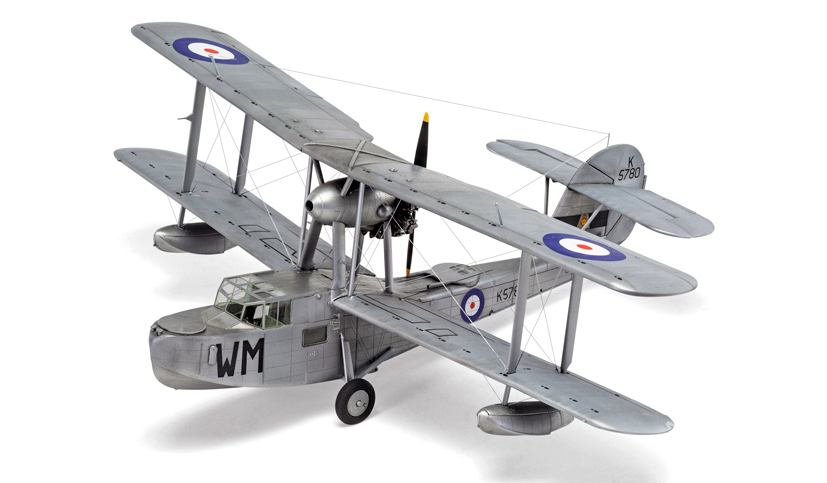
Although it was also a product of the successful Supermarine design department, the appearance of the Walrus amphibian could hardly have contrasted more to the sleek, cutting-edge lines of the famous Spitfire. Seemingly from an earlier generation of aircraft development, the Walrus was designed specifically for the demanding environment in which it was tasked to operate and rather than being something of a Supermarine embarrassment, it was an extremely rugged and capable performer, providing invaluable support to both their parent Royal Navy ship and to the hundreds of downed airmen the aircraft rescued from the sea. Our relatively new 1/48th scale tooling of this distinctive aircraft has proved to be a resounding success following its original release back in 2017 and builds into one of the most interesting models many modellers will have attempted over the past couple of years. The most recent release from this popular tooling included three scheme options featuring the Walrus in different silver liveries, which certainly lend themselves to the unusual appearance of the aircraft and ensured that this particular kit has been unavailable on the Airfix website for some time.
The lead scheme option included with Supermarine Walrus A09187 features Walrus Mk.I K5780, of No.715 Flight HMS Cumberland, in 1937. Trading their Hawker Osprey III float planes for the more capable Supermarine Walrus, No.715 flight was a catapult unit of the Fleet Air Arm of the Royal Air Force, with a responsibility to supply aircraft to the County Class heavy cruisers, Cornwall, Cumberland and Suffolk. This particular Walrus was built at the famous Supermarine factory at Woolston, Southampton, before being transported to Eastleigh aerodrome to undertake its first test flight. This Mk.I carried the hull codes ‘Black WM’ and was one of three aircraft assigned to HMS Cumberland in the years prior to the start of WWII and is wearing the striking all-over aluminium dope and natural metal finish associated with this period. The aircraft would provide the heavy cruiser with spotter and reconnaissance support, whilst also possessing the ability to perform air-sea rescue and light attack duties.
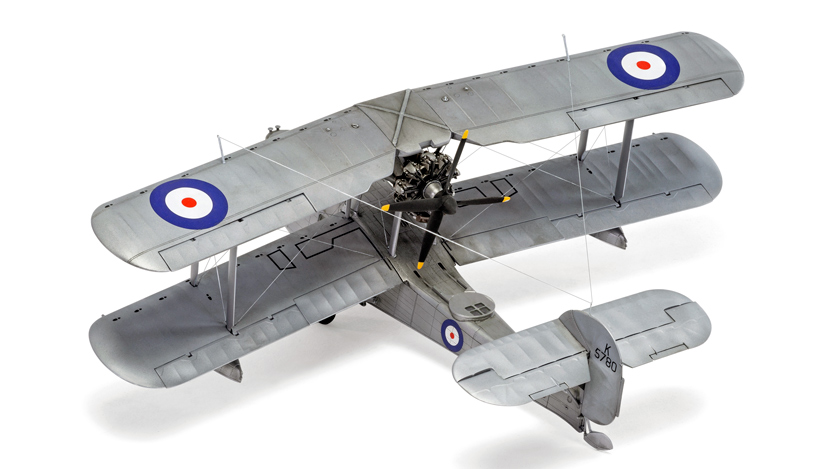
An exclusive selection of build images featuring the soon to be re-released Supermarine Walrus Mk.I ‘Silver Wings’ A09187, in No.715 Flight, HMS Cumberland livery
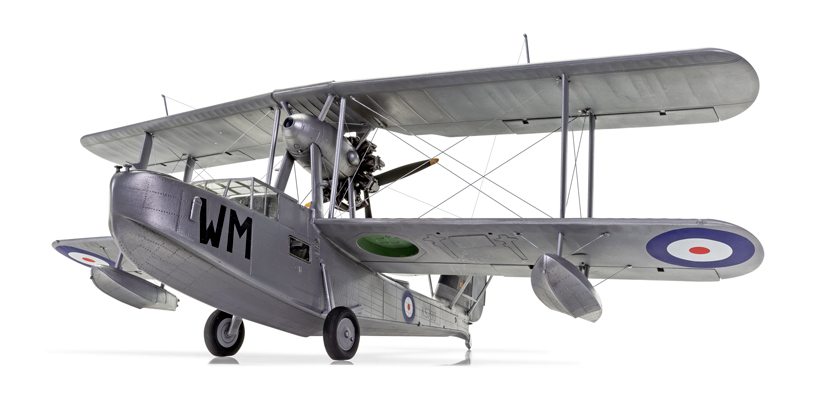
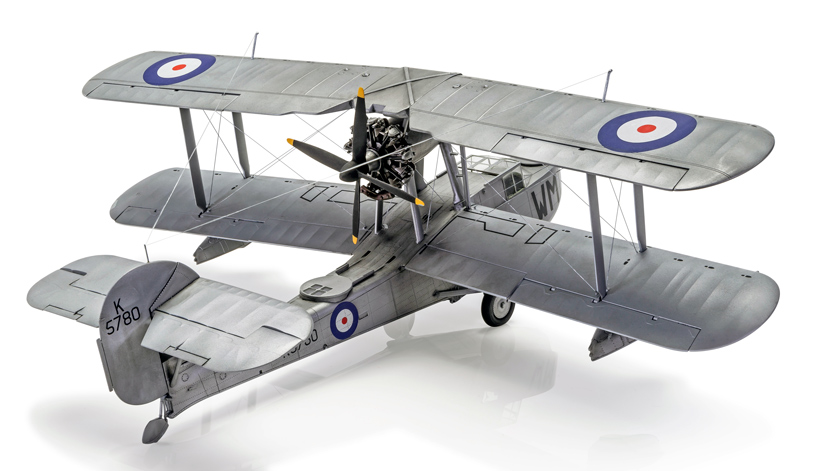
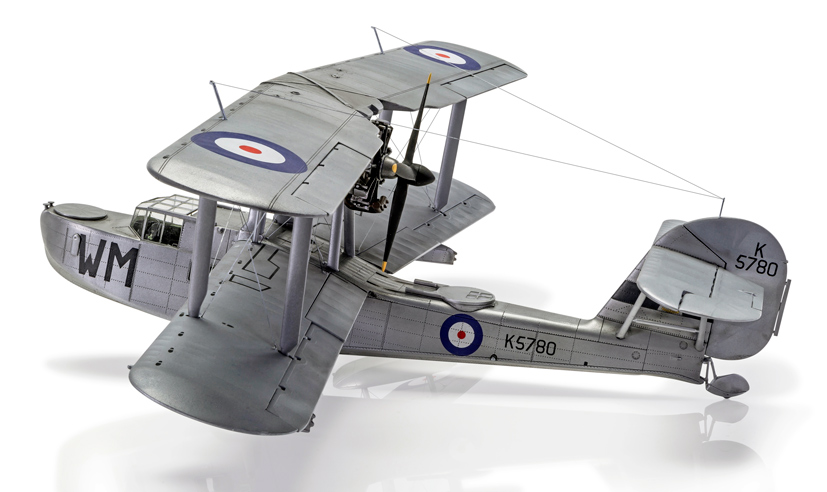
Launching from the ship’s single catapult, Cumberland had the capacity to take up to three Walrus aircraft, which would all be required to operate in some of the most demanding conditions imaginable for an aeroplane. The decal option includes the distinctive walkway markings on the leading edge of the top and bottom wings, which were essential when the crew were engaged in securing the aircraft for winching back aboard HMS Cumberland. The ship saw service in South Atlantic, Far East and South African waters, before going on to serve with distinction protecting Arctic convoys, as part of the 1st Cruiser Squadron, Home Fleet.
This handsome Walrus kit is due for imminent release and is currently still available for pre-order on the Airfix website.
One of the most successful fighter aircraft of the Second World War, the North American Mustang may have only entered combat during the final months of the conflict, however, it was to have a significant impact on the outcome of the air war. Following the end of the conflict, the USAAF would go on to select the Mustang as their primary fighter aircraft, condemning most other types to either secondary support roles or to the scrap yard. With the US Army Air Force becoming an independent service in 1947, some slight changes to the aircraft designation system it used were initiated the following year, with P for Pursuit being replaced with F for Fighter, thus turning the P-51D into the F-51D Mustang. The outbreak of the Korean War in 1950 saw Mustang Squadrons returning to combat once more, but this time in a strike/fighter-bomber capacity, where its celebrated attributes would be called upon again, as the early jets in service at that time were not suited to the task.
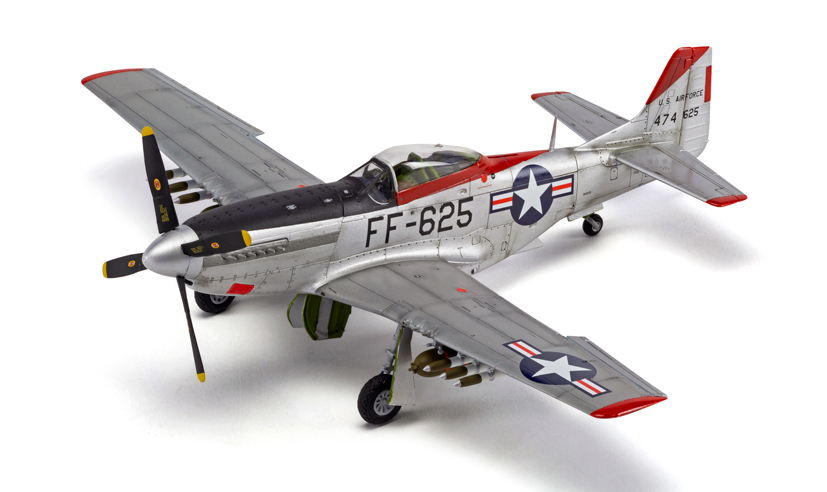
As one of the most famous aircraft in the history of aviation, the North American Mustang has long been a favourite with the modeller. This attractive Korean War scheme ensured that A05136 sold out in super quick time and many will be looking forward to its re-release
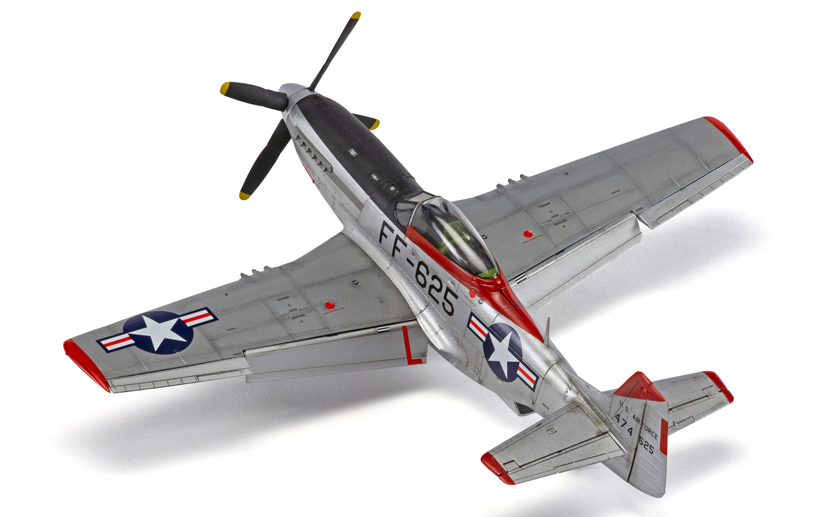
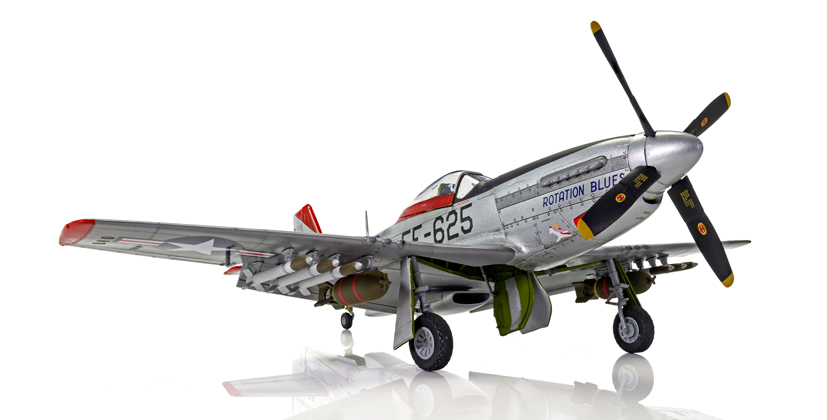
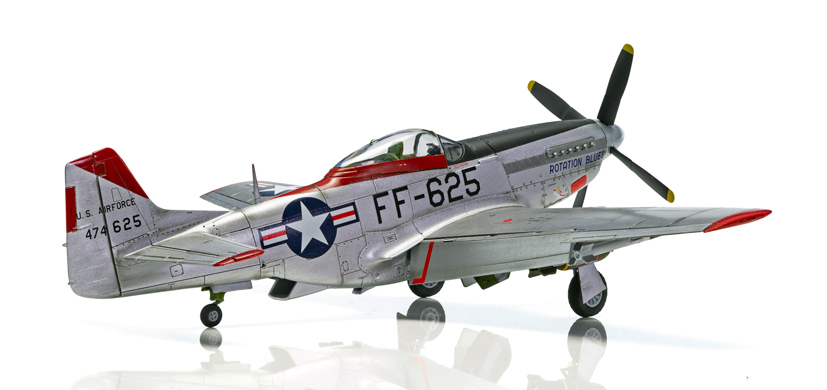
By the time of the Korean War and the arrival of the jet age, the North American Mustang was deemed to be almost obsolete at a fighter, however its proven attributes of range, firepower and manoeuvrability dictated that it was much more suitable than the early US jets for strike missions from American bases in Japan. The urgency of the situation saw the Americans gathering as many usable Mustang airframes together from home based units and loading them aboard USS Boxer for transportation to the Korean war zone. Once in theatre, the Mustangs were immediately pressed into action, attacking North Korean armoured columns and troop concentrations with a combination of machine guns, rockets, bombs and Napalm. The aircraft helped to stem the tide and played a pivotal role, but at a heavy price – the Mustang pilots were vulnerable to the accurate enemy anti-aircraft fire at these low altitudes and hundreds of aircraft would be lost in this manner during the conflict.
Unusually, the pilots of the 67th Fighter Bomber Squadron, US Air Force would be required to trade in their new Lockheed F-80 Shooting Star jet fighters for propeller driven F-51D Mustangs, as they prepared to take on North Korean forces in savage ground attack sorties. Operating from bases in South Korea, which were challenging at best and dangerous at times, the Mustangs were often required to fly several sorties a day, helping to stem the tide of North Korean forces which were flooding south. By the end of the war, these hard working Mustang pilots had flown tens of thousands of combat sorties over Korea. This particular Mustang 44-74625/FF-625 was used by many of the squadron’s pilots whilst it was stationed at the South Korean forward operating base at Hoengsong, many of whom had experience of flying Mustangs during the Second World War. The aircraft features the nose markings ‘ROTATION BLUES’ on the starboard side cowling, presumably after the record of the same name which was popular in the US at that time. The aircraft has been reported in various modelling publications as being fitted with a fixed tail wheel, possibly as a result of the often difficult operating conditions at its home airfield, not to mention the punishing daily mission schedules these Mustangs were required to fly. Following her USAF service, this aircraft remained in the region and was passed to the care of No.1 Squadron RoKAF, only to be destroyed in a crash during February 1954.
This 1/48th scale F-51D Mustang kit was one of the fastest selling models of 2018 and news of its impending re-release will have many people scrambling to secure an example, particularly as this was the high profile kit which featured our caricature competition winner in its instructions. A magnificent release which includes three appealing scheme options.
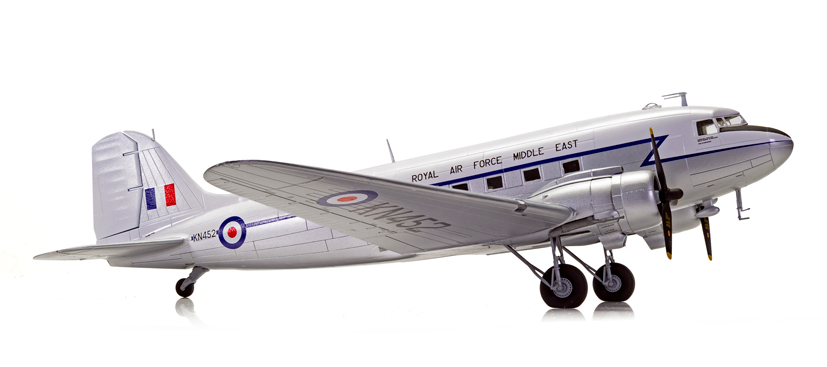
As one of the most important aircraft of WWII and one which proved decisive during Operation Overlord and the actions which followed, the Douglas C-47 Skytrain/Dakota took one of the world’s most successful early airliners and turned it into a real war winner. This year’s 75th Anniversary of D-Day commemorations will ensure the C-47 is once again thrust into the aviation spotlight, with large numbers of airworthy aircraft scheduled to arrive at Duxford airfield in advance of an evocative formation flypast over the Normandy beaches and modellers will undoubtedly be keen to make their own scale tributes to this anniversary. Although wearing a scheme not connected to D-Day operations, the latest 1/72nd RAF Dakota Mk.III kit includes a decoration option which presents this famous aircraft in arguably one of its most appealing incarnations and one which again resulted in this kit proving incredibly popular with modellers. Now back in stock once more, let’s take a closer look at why the RAF transport scheme worn by this beautiful built sample model has appealed to so many.
Of all the many schemes worn by the famous Douglas DC-3/C-47/Dakota during its long service career, surely the aircraft of Royal Air Force Transport Command were the most attractive. Wearing this striking silver and white scheme, with blue cheat line and black anti-glare panel on the nose, it is as if the Dakota was built for these colours and makes the already attractive lines of the aircraft seem even more appealing. Operating with the Middle East Air Force Communications Flight, out of Khormaksar airfield in Yemen, Dakota Mk.III KN452 was the oldest aircraft in their fleet and one of two Dakotas they operated, both of which were maintained by civilian DC3 engineers employed by Aden Airways and usually parked on the civilian side of the airfield. As the main base operated by RAF Middle East Command, Khormaksar was a busy place and home to three quarters of the RAF and Fleet Air Arm aircraft in the region, as well as being a civilian airport. Its main military responsibilities revolved around providing tactical and transport support in the region, protecting the area from potential attack and supporting the movement and deployment of troops and supplies.
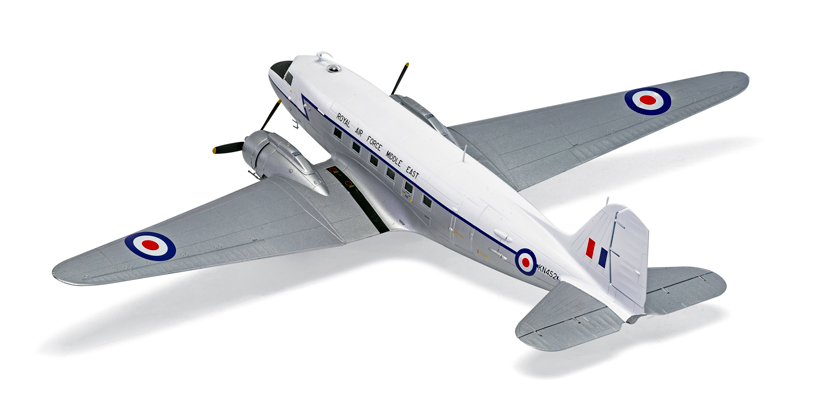
Has a Douglas C-47 Skytrain/Dakota ever looked so good? This beautiful RAF scheme is surely the reason why we quickly had to arrange for an additional supply of this model to be produced
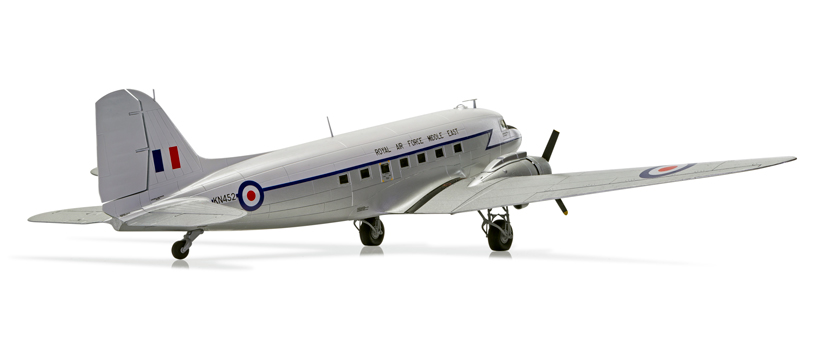
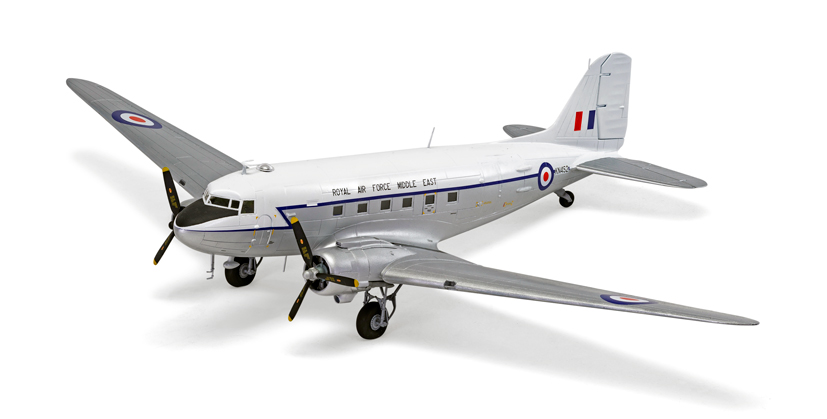
This particular aircraft was constructed as C-47B-30 by Douglas at their Oklahoma City plant. It was taken on charge with the USAAF (s/n 44-76591), before being transferred to the Royal Air Force in March 1945 – given the serial number KN452, it entered RAF service at Montreal, in Canada. In a long and distinguished RAF career, this Dakota spent much of its time in the Far and Middle East, serving notably with the Coastal Command Communications Flight at RAF Gibraltar in the 1950s and as the oldest of the MEAF Communications Flight aircraft flying out of Aden in the mid 1960s. Following the end of its military service, it was bought by Shackleton Aviation and given the civilian registration G-AXJU, only to be sold to the Kenyan Police the following year, who operated it until October 1974. Having spent much of its service life in the Far and Middle East, it would once again find itself back in the region with Airfast Freight Services in Singapore, before eventually having its civil registration cancelled and being broken up for spares at Seletar airfield, with the remaining hulk scrapped – such an ignominious end for a hardworking and well-travelled aircraft.
As stated previously, Douglas Dakota Mk.III A08015A is available once more and makes an attractive option with which to make a modelling tribute to one of the most important aircraft of WWII, many examples of which remain in airworthy condition to this day.
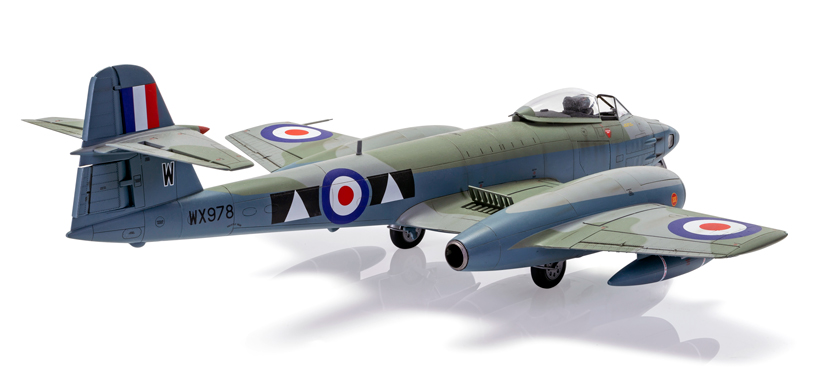
Certainly not wanting to suggest that we may have saved the best re-release notification until last, but this selection of built 1/48th scale Gloster Meteor FR.9 images are quite simply magnificent. Although not held in the same regard as the internationally recognised Spitfire, the Meteor has an equally important place in the history of British aviation – as the first jet powered aircraft to enter RAF service and the only Allied jet to see service during WWII, it proved to be something of an aviation pioneer. Despite the fact that this was Britain’s first operational jet powered aircraft, the technology employed proved to be so robust that Meteors were still operating with the RAF into the 1980s and two famous jets still fly with Martin-Baker as ejection seat testbeds to this day. If it were not for the Spitfires still operated by the Battle of Britain Memorial Flight, the Meteor could be accurately described as posting a significantly longer RAF service record than that of its famous piston powered predecessor. Without doubt, both the Spitfire and Meteor have significant aviation pedigree, which has ensured both have become incredibly popular with modellers all over the world.
Back in 2015, our Workbench blog announced that the Airfix development team were working on a new 1/48th scale kit of the Gloster Meteor F8 to be released the following year, news which obviously causing quite a stir within the modelling hobby at that time. This model has since gone on to be both a popular addition to our 1/48th scale range and a fine representation of this famous aeroplane, with three different releases in the series to date. The latest Meteor kit presented the aircraft as an FR.9 armed reconnaissance variant of the jet, an aircraft which was employed in obtaining vital intelligence information using its nose mounted camera cluster. The art of aerial reconnaissance has been an essential military requirement since the early days of powered flight and relies on a number of significant factors – a stable photographic platform, speed and stealth. Possessing all these required attributes and more, the Meteor was an ideal candidate to improve the reconnaissance capabilities of the RAF and the Gloster design team had several attempts at producing a suitable variant, before finally succeeding with the Meteor FR.9. Equipping the aircraft with a modified nose section which housed three remotely controlled Williamson F.24 cameras, each one took pictures through one of three window positions, allowing the pilot to obtain the best possible images of his intended target. Significantly, the aircraft retained the cannon armament of the F.8 variant of the Meteor and was able to switch from the reconnaissance to attack role at any time, also capable of defending itself from enemy attack should the need arise. Operated extensively from overseas RAF bases, the FR.9 was also equipped with additional fuel capacity in the form of external underwing and ventral fuel tanks, greatly increasing the range and loiter times over which these aircraft could operate.
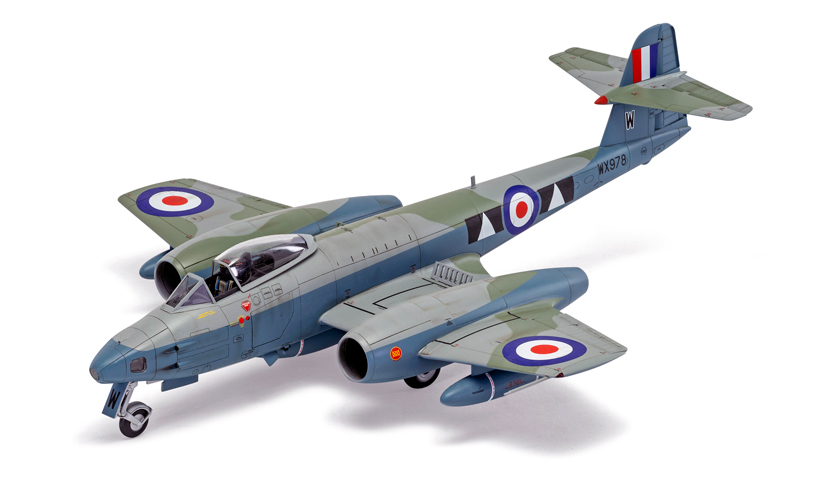
With its long nose and unusual colour scheme, this Meteor FR.9 is a particularly good looking model build and a great addition to any collection of 1/48th scale models
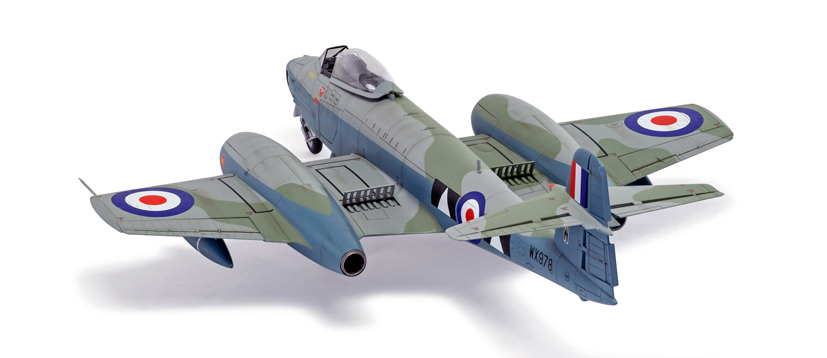
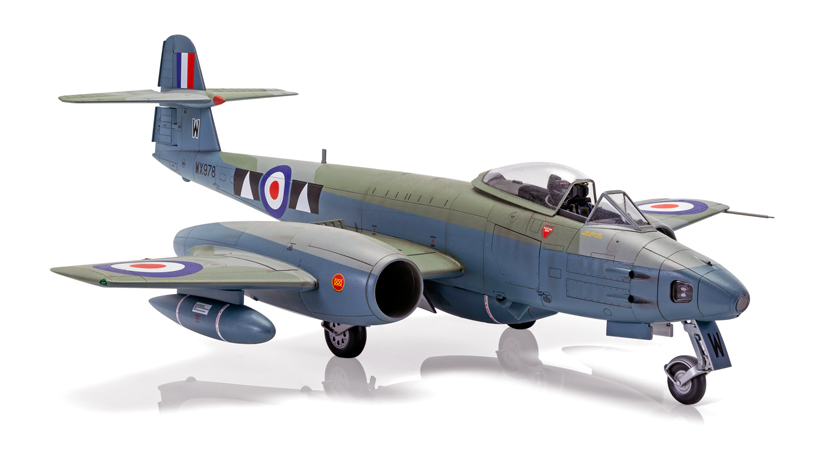
With its capability to undertake high speed armed reconnaissance operations, the Gloster Meteor FR.9 would see much of its service operating with squadrons stationed away from the UK. As well as the Far and Middle East, the 2nd Tactical Air Force in Germany would make full use of the capabilities of the aircraft, receiving its first examples in December 1950. Flying in the colours of No.2 Squadron (and later No.79 Squadron), these aircraft would be regularly employed patrolling the West German border, photographing areas of particular interest and attempting to deter any Soviet incursion which may lead to potential conflict.
Once again adopting an attractive, if rather unusual colour scheme for an RAF Meteor, WX978 would go on to end its flying career in Aden, where so many RAF photo reconnaissance Meteors would ply their trade. It was written off following an incident in January 1959, where it ran off the runway at RAF Khormaksar at speed – during its take-off run, the aircraft suffered a port main wheel tyre burst, which caused the Meteor to veer off the runway and bury itself into sand at the side of the runway. As was the case with the previous aircraft, the resourceful RAF engineers at the base would have ensured anything that could be used on another aircraft would have been removed from the wreckage prior to the Meteor either being scrapped or left to rot on a remote area of the airfield.
A popular addition to the range, the magnificent Meteor FR.9 (A09188) is now available once again and is the final subject of our kit re-release review, which hopefully some Workbench readers will have found informative.
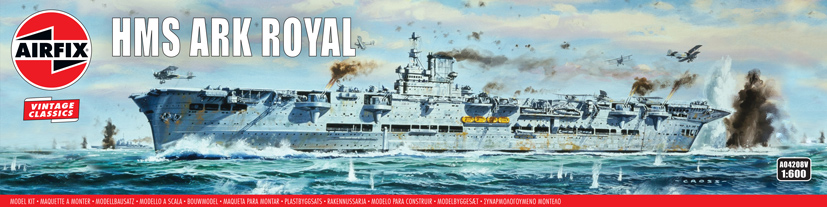
Classic box artwork for a classic Airfix model release. HMS Ark Royal is steaming towards a summer release
For millions of people around the world, modelling continues to be an enjoyable and engaging hobby, with a vibrant programme of shows and exhibitions confirming that it is enjoying something of a participation renaissance at the moment. Even for people who would no longer describe themselves as active modellers, their previous enjoyment of the hobby will usually bring back happy memories when they are reminded of the many hours they used to devote to modelling and the classic kits which inspired and captivated them in their youth. In many cases, people return to the hobby after a break, the length of which could be as short as a few months or as long as several years, but once this hobby is in your blood, it doesn’t take much encouragement to bring you back into the fold. A recent submission from Workbench reader Dave Fish described his own return to modelling after a significant hiatus and as the model which served as his homecoming project is scheduled to return to the Airfix range once again as part of our Vintage Classic range in the summer, we thought you might like to hear about this rather poignant story – over to Dave.
I have recently started making models again after a 15 year gap, following a move to Auckland, New Zealand in 2003 from Southampton in the UK. My stash of unmade models and modelling gear also came with me but had remained in boxes in the garage for years, as I had very little time to get back into the hobby. Circumstances have a habit of changing and last November, I dusted off the airbrush and looked for something to get back into the swing of things. I was amazed to find just about all my paints were still useable, which saved me the expense of having to start again completely from scratch.
My model of choice would usually be a 1:48 aircraft, of which I have more than a few ‘stashed’, with the occasional 1:35 armour kit thrown in for good measure. For some unknown reason, I found myself drawn to a ship for my first build back, but not any old ship, a model I believe first came out of a mould in 1969, so about the time man first walked on the moon. The ship kit in question was HMS Ark Royal from Airfix in 1:600 scale. I had also at the time of purchasing, obtained the White Ensign Models etched brass detail set (WEM PE632) to replace some of the more clunky details supplied within the kit itself.
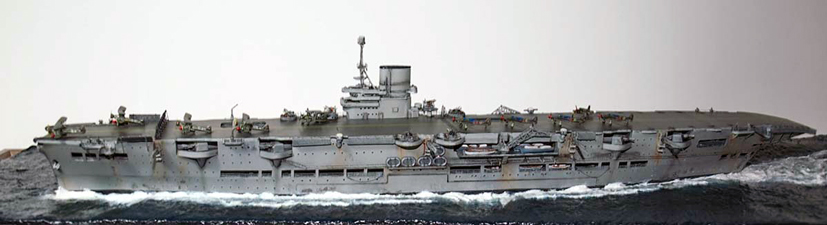
Not a bad way to get back in the game. Dave’s HMS Ark Royal build is something which many fellow modellers will admire
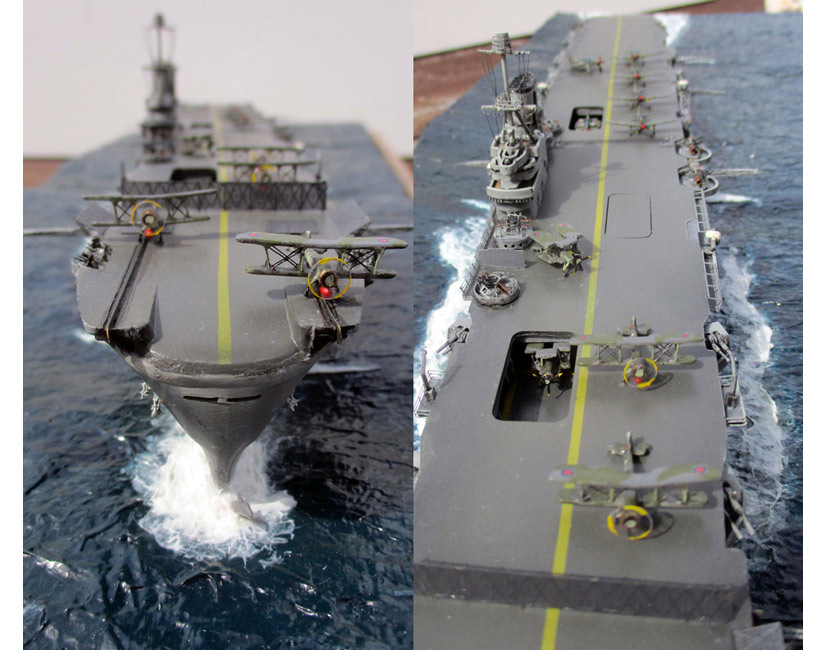
Building the kit proved to be only half of this impressive project
After a clean-up of the inevitable flash on a model of this age (actually not as much as I’d expected), I began by drilling out all the port holes with a .5mm drill and added two holes at the bow for fairleads that are not depicted in the kit. Also added was an armour belt from sheet styrene. The two hull halves were joined together and the fore and quarter decks installed. The moulded anchor chain was ground off and an etched chain alternative installed. Bulkheads were constructed for both decks and detailed with bulkhead doors and representations of pipes etc - details were also added to the various hull inserts along the sides. I was to find out later that most of this detail isn’t actually clearly visible once the model is completely built, however, that doesn’t really matter because I know it’s there! At this point, I also added what looks like reinforcing to the ships fantail.
I decided to paint the model’s hull at this stage, so I could fit the hull inserts after painting, thus saving the arduous task of masking them all off first - this meant leaving the flight deck off completely, so that this could also be painted separately. I had the idea of painting the hull in a heavily weathered representation, as I had seen in reference pictures of the Ark after she had been torpedoed. The kit was initially painted a medium grey AP 507B and later over painted with a lighter AP 507C. Looking at the pictures, the AP 507C was pretty much all worn off at the time of her sinking.
I sprayed the hull with Tamiya XF-54 Dark Sea Grey and then gave it a coat of hair spray before a coat of XF-80 Royal Light Grey - I then began removing the XF-80 with the aid of a stiff brush and water, but it wasn’t long before it looked bloody awful. I replaced the XF-80 and decided upon a less weathered appearance. At this scale, the heavy weathering just didn’t look right. I also painted the etched brass fret XF-80 at this time, so I could add the finer details once the main assembly was complete, as I was less likely to break bits off this way.
The flight deck was later painted in Dark Slate Grey (sorry, I mixed this colour years ago and am a little unsure of its make-up, but mainly consisting of XF-22 RLM Grey), as I couldn’t believe this should be the bright green as indicated on the old Airfix paint guide. The line down the deck was painted XF-4 yellow green – common consensus seems to be that this line was white, however, most pictures of the Ark seem to show no line at all - I had heard that these original pictures were taken with orthochromatic film, which causes the colour yellow to appear dark – well that’s my excuse and I am sticking with it. Before the flight deck was attached, I installed a piece of sheet styrene below the forward aircraft lift to represent the hanger deck. The two lowered lifts were cut out and etched brass replacements fitted. Finally the flight deck was attached and luckily, it fitted quite well, minimising the work required on the joint of the freshly painted components. The upper superstructure was fitted and the numerous etched brass details also installed, including rails, cranes, AA guns, walkways, deck fittings, boat davits and mast platforms etc. The WEM set is very comprehensive and very time consuming to install.
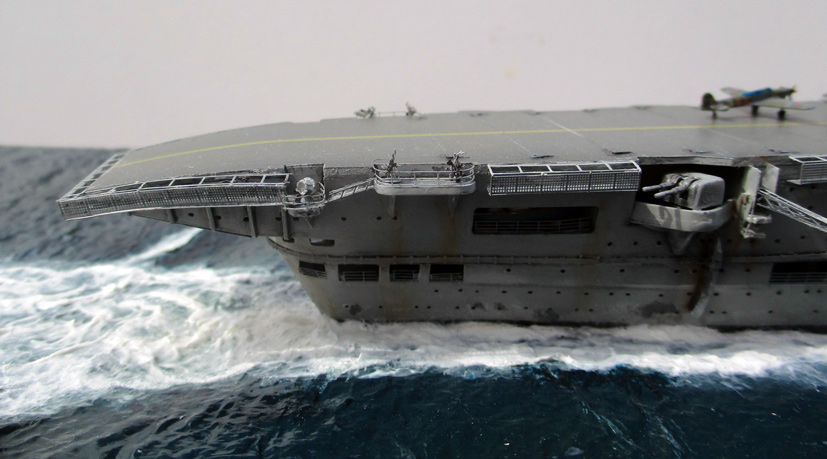
A further selection of Dave’s build images, showing the impressive levels of detail he incorporated into this build
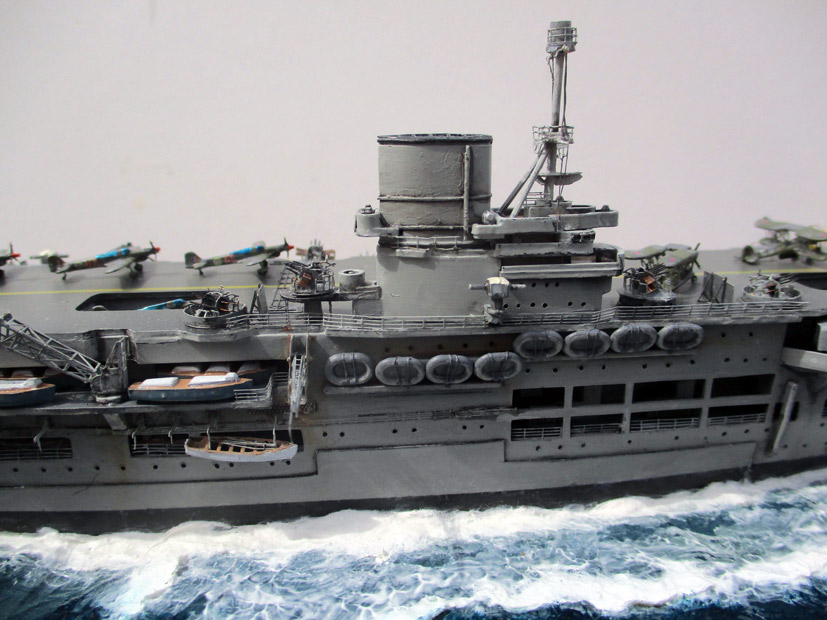
The way Dave has managed to model the wake of the carrier is particularly impressive
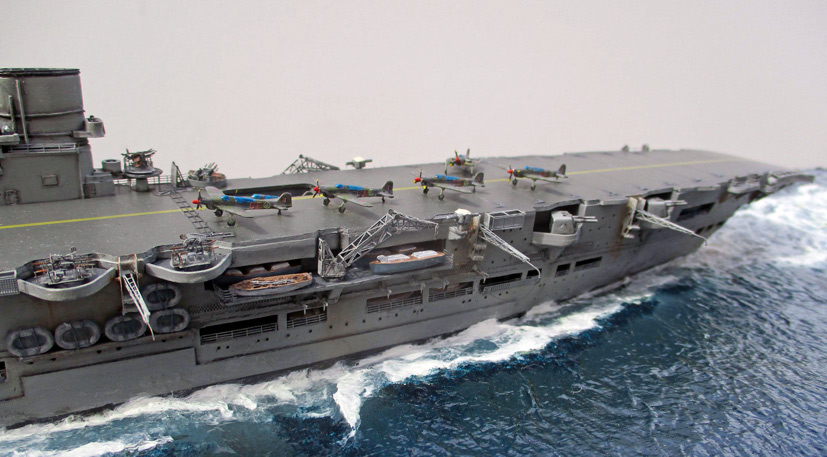
Fairey Fulmars ready to protect the ship against any scale skirmish
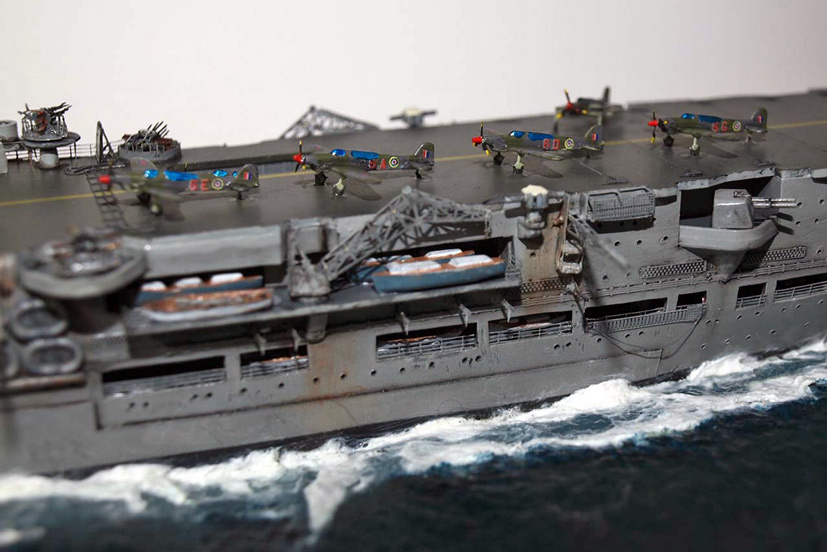
A closer look at the fleet fighters and the individual codes applied to each one
Now we move on to the carrier’s air wing. The kit supplies the modeller with 6 Fairey Swordfish biplanes and 6 Fairey Fulmars - their shape is roughly correct but they are in truth, a bit basic. The WEM detail set provides items to detail them but they are very fiddly - undercarriages, propellers and struts are supplied, but the fitting of a 1:600th scale tailwheel can be a bit of a mission. I obtained a set of 1:600 Fleet Air Arm markings from Starfighter Decals, which also present you with letters for the individual aircraft, resulting in yet another lesson in patience. I decided to depict the Swordfish with engines running and therefore replaced the etched propellers with a circle of clear plastic, taken from a clear blister pack which I simply put into a paper punch, as this proved to be just about the same diameter as the scale prop. Final weathering was carried out using diluted oil paints, black and grey to bring out details and burnt sienna to represent the rust streaks. I found this amount of weathering to be more than adequate.
Rather than simply place the finished model on a stand, I decided to have a go at producing a seascape diorama, using a combination of different ideas I’d discovered during a web search on the subject. The main base was simply a piece of plastic foam packing material, which I slowly passed over a lighted candle, causing it to begin to soften and retract from the heat. Doing this 2 or 3 times along the length of the foam results in producing a slight undulating appearance, however, this again had to be done with care, so as to avoid making the desired scale swell appearing too excessive. I then cut out the shape of the hull in the foam so the ship sits at the desired height. After this, I covered the foam with a couple of sheets of kitchen roll, which were held in place with diluted wood glue. There was no need to rip it into pieces, just lay it down, making sure you get all the pattern out before leaving it to set. Once the kitchen roll had set, I painted it with a couple of coats of Phthalo blue, with Compose blue later added alongside the hull and the ships wake. I then randomly airbrushed XF-17 sea blue and xf-26 deep green onto my ocean representation, to try and accentuate the troughs of the waves. At this point, I also fixed the seascape into a photo frame and the HMS Ark Royal model build to the base minus its rudder and propellers. The bow wave and churned water was achieved by mixing gel medium with white paint and also mixing in and shaping cotton wool to resemble the white water.
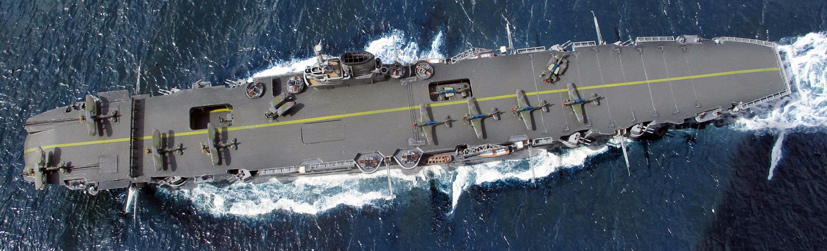
Aerial view of HMS Ark Royal, a position the ship’s commander would hope a scale enemy would never be able to be in
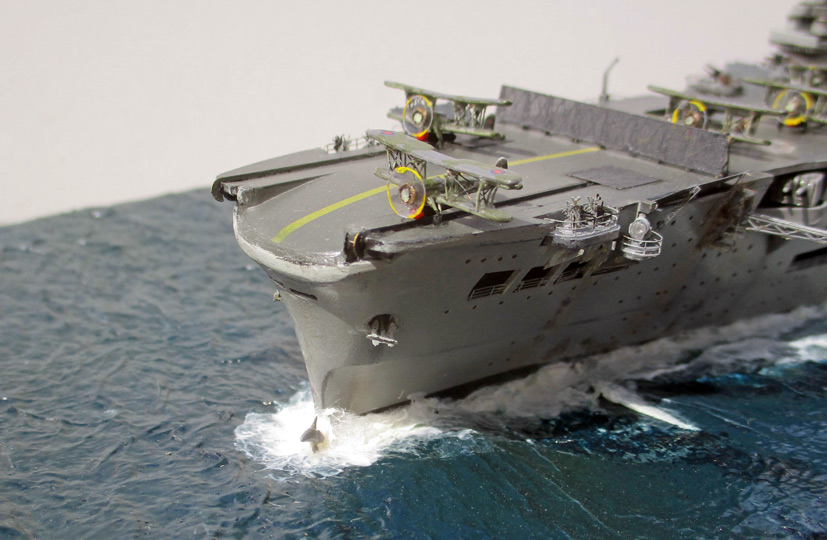
Spot the dolphin! Talk about adding interesting detail and authenticity to your model build – not bad to say it started life as a grain of rice
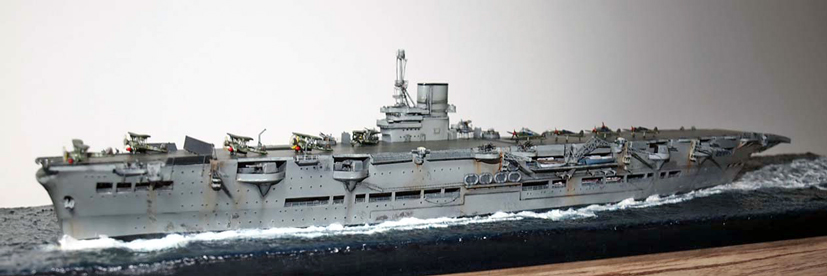
The completed model is certainly something to be proud of and shows that a 15 year break has done nothing to diminish Dave’s modelling prowess
As a slightly more unusual finishing touch, I added a dolphin surfing the bow wave of the aircraft carrier, made from a grain of rice and a sliver of etched brass cut from the fret. I have to say that the model looks ok to me at a normal viewing distance but when you see close up shots from the camera, there are still things that I think could be improved upon. The deck/hull attachment on the bow definitely could be better and some of the rigging on the cranes and aerials has also been omitted. Never mind, I’ll get round to doing this sometime.
We would like to thank Dave for allowing us to include his build feature. It is really interesting to see how imagination and modelling go hand in hand and how some builds require as much time and effort to be invested in the diorama as it is in the kit build itself. We look forward to including more readers build features in future editions of the blog. HMS Ark Royal forms part of the Vintage Classics range and is scheduled for a June release.
That’s all we have for you in this latest edition of Workbench, however, we will be back as usual in two weeks’ time with a further selection of Airfix modelling delights for your enjoyment. In the meantime, if you have any suggestions for subjects you would like to see covered in a future edition of the blog, or ways in which we could enhance your enjoyment of Workbench, please do not hesitate in contacting us. We can be reached via our usual e-mail address workbench@airfix.com or by contributing to our Workbench thread over on the Airfix Forum. If social media is more your style, you could access either our Airfix Facebook page or Twitter channel, (using #airfixworkbench), where you will find plenty of modelling news, views and discussion taking place. Whichever medium is your preference, please do get in touch, as it is always interesting to hear from fellow modelling enthusiasts and the projects you have on the go at the moment.
As always, the Airfix website is the place to go for all the latest model release information, with our New Arrivals and Coming Soon sections both quickly accessed by clicking either of the links above. As updating the website is an ongoing process, a quick search through each section of the Airfix web pages will often reveal new information and updated images in many of the product sections and this is always an enjoyable way in which to spend a few spare minutes.
The next edition of Workbench is due to be published on Friday 12th April, when we will have more news and modelling features from the fascinating world of Airfix.
On behalf of the entire Workbench team, thank you for your continued support our Airfix blog.
The Airfix Workbench Team
© Hornby Hobbies Ltd. All rights reserved.