Welcome to the latest edition of Workbench and your regular update from the fascinating world of Airfix modelling. We have plenty to bring you in this edition, including a 1/48th scale project update and the latest announcement in our ever popular exclusive box artwork reveals. In addition, to mark the final month of the UK Airshow season, we take a look at a pre-Workbench 1/72nd scale tooling that marks one of the most famous aircraft to ever fly with the Royal Air Force and one of the most popular Airfix models in the entire range. We will see how the determination to produce the most accurate version of this classic aircraft would pose significant challenges for the Airfix design team and how the model they produced delighted modellers all over the world. To help illustrate this particular feature, we look at the modelling talents of our Airfix forum contributors and some of the magnificent models they have produced over recent months. As you can see, there is a lot to fit in to Workbench Edition 28, so we had better get stuck in.

Computer rendered 3D CAD image of the 2013 Lancaster project
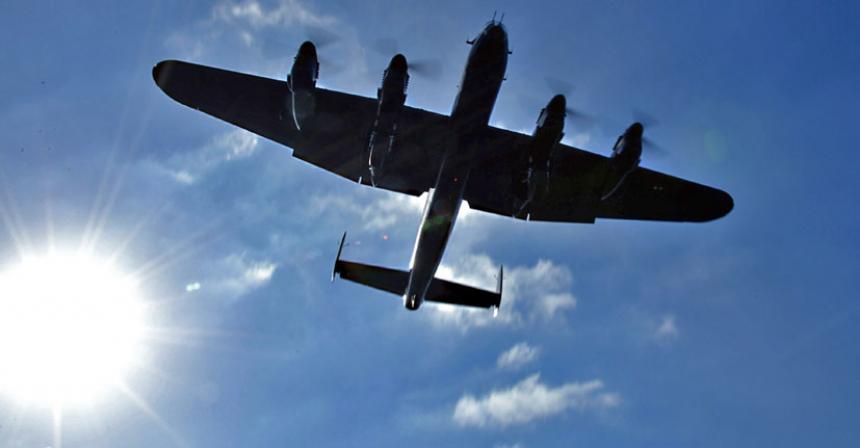
There can be no doubting that the Avro Lancaster was one of the most important British aircraft of the Second World War and arguably the finest bomber ever produced. Over the years, modellers all over the world have built millions of scale examples of Avro’s celebrated bomber, which has always been amongst the most popular subjects in the hobby. The original Airfix Lancaster B.1 was released way back in 1958, with a further B.III version arriving in 1980, but other than a number of tooling modifications over the years, the classic Airfix Avro Lancaster tooling was very much in need of updating.
For members of the Airfix design team, the decision to start working on a completely new Lancaster tooling in 2012 must have been quite a daunting prospect. Aside from the significant work that a tooling of this size would require, they would be working on a much loved classic of the range and one which would be extremely high profile and very much attracting the attention of modellers everywhere. They had the opportunity to produce something really special and were determined to do so, but to add to the already significant workload this project would place on them, they would also have to work to a specific deadline – the new Lancaster would have to be available for the 70th Anniversary of the Dambusters Raid, on 17th May 2013. This anniversary would be marked by a series of high profile events during 2013, which would attract national media coverage and commemorate both the audacious raid itself and the sacrifice of Bomber Command crews during WWII. The new model simply had to be available whilst these commemorations were taking place.

The distinctive Bristol Hercules engines are shown on this computer rendered 3D CAD image
Taking on such a classic as the Avro Lancaster would have brought excitement and just a little trepidation to the Airfix design office. This would be a totally new project, which would essentially be starting with a blank sheet of paper and producing a model that benefited from all the latest technologies available to them. The significant costs associated with model tooling production of this size dictated that the designers would have to incorporate a number of version options in their work, as these models are commercial enterprises and have to bring value for this investment. The new model would include options to construct a Lancaster B.I, including the ‘Tiger Force’ Far East version, the rather unusual Bristol Hercules powered B.II and the B.III (Special) used by No.617 Squadron to conduct the famous Dambusters raid.
Since the original release of the 1/72nd scale Airfix Lancaster B.I in 1958, much had changed in the world of injection moulding technology and significantly greater levels of detail could be incorporated into the design of the new kit. Using highly detailed technical drawings used during the production of wartime Lancasters, the Airfix designers managed to amass an incredible amount of research material, determined that their new Lancaster would be as accurate as they could possibly make it. This material included a huge photographic library, which detailed every aspect of Lancaster production and operation, including access to some of the few surviving machines in the UK. The team were fortunate to be allowed access to Avro Lancaster B.VII NX611 ‘Just Jane’ of the Lincolnshire Aviation Heritage Centre at East Kirkby and Lancaster B.I PA474 ‘The City of Lincoln’, operated by the Battle of Britain Memorial Flight. They were also able to get close to the museum examples on display at both Hendon and Duxford, as they attempted to obtain as much information as possible to help with their Lancaster research.


Just some of the many technical drawings used in creating the Lancaster digital data files
Equally as important as the strength of the research files, converting all this information into usable digital data is very much at the heart of any new model tooling project, but as we have covered this process in previous editions of Workbench we will not do so again in this section. However, for a project of this size the development of these digital design files will take something in the region of six months to produce, before the designers can move on to the production of the model tooling itself. This process usually takes a further four or five months of work, before the final model can be released for production, which again will usually account for a further two or three months. All this work on the Lancaster project would have to be achieved inside the deadline of the Dambusters 70th Anniversary, so the pressure would really be on.
On enquiring whether the project caused any particular headaches for the team, it was apparent that the Airfix designers are pretty used to overcoming design challenges and take them very much in their stride – they are pretty cool guys. They did, however, describe a couple of difficulties that did have them scratching their heads – The Barnes Wallis modifications to the B.III (Special) Lancasters did pose some problems, as much of the work carried out in preparation for Operation Chastise was highly classified and definitive technical information is extremely difficult to come by. Using references from as many photographs as they could lay their hands on, the team were able to construct a 3D CAD version of the information they gathered, which could then be used to make the new Lancaster as accurate as possible.

The cavernous bomb bay was a significant feature of the Avro Lancaster
In addition to this, the 301 Lancaster B.II bombers constructed were all powered by Bristol Hercules engines, and as no examples of this variant are still in existence this would pose a number of challenges. The use of the Bristol air cooled radial engines gave this version of the Lancaster an extremely unusual profile and was suggested to offset a perceived future shortage of Merlin engines, which never actually materialised. Proving to be something of a disappointment operationally, only 301 out of a total production run of 7377 Lancasters built were B.II variants, although the type did include some interesting design modifications. As well as the four radial engines, the B.II was the first production Lancaster to feature bulged bomb bay doors, which allowed the large 8,000lb ‘blockbuster’ bombs to be carried. Some of the early B.IIs (and some B.Is) were equipped with a belly mounted Fraser-Nash 64 turret, which housed a pair of .303 machine guns and was remotely operated from the main fuselage by use of a periscope – these proved to be a disappointment in action and were not widely adopted.

Computer rendered 3D CAD detail of the Barnes Wallis developed ‘Upkeep’ bouncing bomb
The Avro Lancaster B.II is a fascinating version of the Lancaster family and is also an important chapter in the Lancaster story – although not currently available on the Airfix website, there may still be the odd example available in hobby stores around the country and we can surely look forward to a re-release in the not too distant future. As for the main project, the Avro Lancaster B.III (Special) Dambusters kit was released in April 2013 and made it in time for the 70th Anniversary of this famous raid on 17th May. The new kit received great acclaim from modellers who were eager to start building a version of the mighty Lancaster that had been developed using the latest design and manufacturing techniques, which would assemble into a highly accurate scale representation of this famous aircraft. A triumph for the Airfix designers, the 2013 Avro Lancaster tooling is something they should be extremely proud of and will surely go on to be one of the most popular Airfix kits of the modern modelling era.

The finished article – the 2013 release of the Dambusters Lancaster
We are extremely grateful to Matt from the Airfix design team for his time and invaluable assistance in producing this Lancaster feature.
Over the past few years, the Airfix kit range has benefited from a number of newly tooled 1/48th scale models that mark some of the most famous aircraft to take part in the Second World War. Allowing the design team to incorporate incredible levels of detail into these slightly larger kits, this expanding range has found favour with modellers all over the world as they build into display models that beautifully illustrate the power and majesty of these popular aircraft. As 2015 saw the UK commemorating the 75th Anniversary of the Battle of Britain, the range benefited from the addition of a number of aircraft that took part in this monumental aerial struggle, which had all been developed using the very latest design and manufacturing technologies available to the Airfix team. The first to appear was the new Supermarine Spitfire Mk.I, which arrived in early 2015 – this was joined by a Hawker Hurricane Mk.I later in the year and more recently, the stunning Boulton Paul Defiant Mk.I. This magnificent trio of RAF day fighters needed something to chase and although an excellent 1/48th scale kit of the Messerschmitt Bf 109E was already in the range, modellers and enthusiasts were keen for more Luftwaffe subject matter to be covered. With this in mind, many will have been delighted to hear the announcement made in the ninth edition of Workbench that one of the Luftwaffe’s most famous aircraft would soon be joining the growing 1/48th scale kit line-up - we are extremely pleased to be in a position to bring you the latest update on this beautiful new kit.

Computer rendered 3D CAD image of the business end of the Ju-87B-1
As Europe braced itself for conflict at the end of the 1930s, few could have imagined how air power would become the dominant force in future conflicts and that aircraft would become instantly recognisable by both military personnel and civilian populations alike. Arguably, the aircraft that best illustrates this fact is the Junkers Ju-87 Stuka, which in the early months of WWII came to symbolise the strength and invincibility of the Luftwaffe, as it supported Wehrmacht advances through Europe and heralded the coming of war. With its inverted gull-winged design and the almost vertical bombing runs carried out by their well-trained crews, it seemed to a watching world that the German war machine was almost unstoppable and the Stuka dive-bomber was always at the head of the latest advance.
The Junkers Ju-87 Stuka was designed as a precision dive-bomber and close air support aircraft for the German Luftwaffe and saw its combat introduction during the Condor Legion deployment during the Spanish Civil War. It was cleverly integrated into the close air support role, using its precision bombing ability to surgically destroy strategic targets that were holding up advancing Wehrmacht units, proving to be a devastatingly effective weapon. The German propaganda machine quickly seized upon the opportunity to ensure that the Stuka was also successful in spreading terror and confusion amongst their enemies who were on the receiving end of the latest attack. They bolted air-speed driven sirens to the undercarriage spats of their Stukas, which produced a terrifying wail during the near vertical attack dive of the aircraft and as the wailing stopped, the bombs began to explode. Not content with this, the bombs themselves could even be equipped with cardboard sirens, which continued the terror even further. With the distinctive profile of the Stuka and the fact that its very presence announced that war was coming, it is little wonder that the Stuka was considered by many Western Europeans as the manifestation of Blitzkrieg!

Although usually associated with Blitzkrieg and the astonishing German advances in the early months of WWII, the Stuka proved to be equally effective in attacking Allied shipping throughout the war and actually proved to be one of the most successful aircraft of the entire war in this role. From the evacuation beaches of Dunkirk, to the weeks of shipping attacks prior to the start of the Battle of Britain, Stuka units would perfect their dive-bombing techniques at sea, to take a worrying toll of British shipping in the English Channel.
One of the main reasons for the success of the Stuka was that it was designed for this specific task at the outset and incorporated a number of technologically advanced features to help crews fulfil their missions. With a relatively thick and incredibly strong wing, which was designed to withstand the rigors of the steep bombing dive, the Stuka featured a number of automatic features that helped the pilot concentrate on his attack run. These included automatically operated dive brakes, which limited the speed of the dive attack and allowed some stability during this relatively violent manoeuvre, along with an automatic dive pull-out system that prevented the aircraft from crashing into the ground (or the sea) as a result of g induced blackout. Significantly, once a Stuka crew had managed to position themselves for an attack and started their attack sequence, it was almost impossible to defend against this almost vertical attack.
From a crew’s perspective, a Stuka attack run must have been something of a wild ride and was certainly not for the faint hearted. It would usually commence from an altitude of around 15,000 feet, with the pilot locating his target through a small bombsight window in the floor of the aircraft. Moving the dive lever to the rear would restrict the movement of the control column and automatically trim the Stuka for the attack - similar automation would set the engine speed and propeller pitch for the dive. The Stuka would now perform a leisurely roll onto its back, before commencing its dive attack – the dive brakes would limit the speed to around 350mph with an angle of attack anywhere from 60 to 90 degrees. Approximately 30 seconds from the start of the dive and with the ‘Trumpets of Jericho’ wailing, the pilot initiated the automatic dive pull-out system, which also released the bomb load at the correct moment. The large centrally mounted bomb would be deployed by the use of a long metal cradle sling, which cleared the bomb from the arc of the spinning propeller and sent it on the way to the target.
After the automatic dive pull-out system had done its invaluable work, the pilot would attempt to regain control of the aircraft by disengaging all the automatic features and powering the aircraft for a swift getaway. For the Stuka crew, this would prove to be the time when they were at their most vulnerable – trying to regain their senses following the severe manoeuvre they had just performed, they were in real danger of being hit by shrapnel from the exploding bombs, failing to regain control sufficiently, or falling prey to enemy fighter aircraft. Indeed, once allied fighter crews became accustomed to the attack procedure of the Stuka, they knew that their best chance of destroying them was as they attempted to recover from their diving attack and many aircraft were lost during this vulnerable phase of their attack.

Profile artwork of the II./StG.2 Ju-87B-1 Stuka scheme included with the kit
With a two-man crew, the early B-1 variant of the Stuka had two forward firing machine guns in the wings, with a third gun operated by the gunner/radio operator for defensive purposes. Offensively, the Stuka B-1 would carry a single 500kg bomb under the fuselage and a further four 50kg bombs under the wings – it was rather a large aeroplane to be powered by a single V-12 Junkers Jumo engine, especially as the maximum take-off weight of a bombed up Stuka was over four tonnes. As a result of these factors, the aircraft was rather slow and suffered from relatively poor manoeuvrability and very much relied on either close fighter support, or almost complete air superiority, for its effective use. When it was operated in favourable conditions, it proved to be a devastatingly effective weapon, being both accurate and extremely reliable. During the first few months of WWII, the Stuka was unparalleled as a strategic strike weapon, however the Battle of Britain proved to be something of a rude awakening for the previously all-conquering Stuka crews of the Luftwaffe.
With an aircraft as famous (or infamous) as the Junkers Ju-87 Stuka (A07114), there was always going to be a great deal of interest in this new 1/48th scale model, which already seems destined to become one of the most popular models in the range. Currently scheduled for a November release, if recent new tooling releases are anything to go by, initial supplies of the new Stuka will sell out almost immediately and unless modellers either pre-order their example on the Airfix website, or via their usual model supplier, it could be some months before they manage to get their hands on one. The detailed CAD rendered images we have included above show that the model is progressing nicely and we can all start to get a little excited about its actual release, but as appealing as these images are, we have even more Stuka news for you!

The magnificent box artwork that will accompany the release of the 1/48th scale Stuka
The release of new box artwork always meets with the approval of Workbench readers and is also a good indicator that some of the most anticipated new model projects are moving nicely towards their proposed release date. In a final update of the 1/48th scale Ju-87B-1 Stuka project, we are pleased to be able to bring you this exclusive first look at the magnificent artwork that will adorn the box of this highly anticipated new tooling release. The artwork that accompanies new Airfix releases has an aesthetic appeal all of its own and certainly helps to inspire modellers of all abilities on their next model build project. They definitely manage to capture the drama of aviation and play right into the hands of enthusiasts – they are fascinating to look at.

How the new box will look on the shelves - the new 1/48th scale Stuka in all its glory
The artwork that will accompany the new Stuka release is a scene from the Battle of France and appears to show retreating elements of the British Expeditionary Force coming under attack from a pair of II./StG.2 Ju-87B-1 Stukas. Both aircraft have released their bombs and are trying to make good their escape, although the lead aircraft has a French Air Force Curtiss H-75 on its tail. Closer inspection of the image also reveals a number of Matilda I tanks amongst the British vehicles under attack – these two-man infantry tanks were used quite extensively during the Battle of France, but their exposed running gear and light armament dictated that they were quickly relegated to training duties following the evacuations at Dunkirk. This artwork effectively portrays the confusion that must have reigned during the Battle of France, which was arguably the high point of the operational effectiveness of the Luftwaffe’s Stuka squadrons. Clearly, this new release of the distinctive Junkers Ju-87B-1 Stuka is going to be a valued addition to the growing 1/48th scale range of aircraft kits and many modellers will be hoping to pick up an example as soon as they are released later in the year.

Magnificent Avro Lancaster B.I diorama built by David Lean
In support of our lead Avro Lancaster tooling feature, we include some beautiful build pictures posted recently on the Customer Images pages of the Airfix website. They feature the work of David Lean and his superb Lancaster diorama, the subject of which is one of the RAF’s most famous bombers – R5868 ‘S for Sugar’. This particular Lancaster was the first RAF heavy bomber to complete 100 operational missions and went on to survive the war with an impressive 137 mission markings painted on the side of her fuselage. She is now the oldest surviving Avro Lancaster and is one of the prized exhibits at the RAF Museum, Hendon, where she can be admired to this day. For his impressive diorama build, David used the 1/72nd scale Airfix Avro Lancaster B.I(F.E)/B.III kit A08013 and the RAF WWII Bomber re-supply set A05330.
Wherever possible, we do like to speak to our modelling contributors before we feature their work in Workbench, which also gives us an opportunity to discuss the story behind the build – we certainly got a little more than we bargained for in David’s case. Following receipt of our request e-mail, David kindly contacted us from his home in Australia and sent us a fantastic selection of images from his special Lancaster diorama build. He also gave us the fascinating story behind this project and who the intended recipient of the model was – Mr. Steven G Flood of Stanthorpe, Queensland, who was a former RAAF air gunner, who flew in ‘S for Sugar’ on operations in WWII.


A close up view of the impressive finish on David’s Lancaster build
David is clearly an accomplished modeller and was asked by a friend if he would help to produce a special model for one of their relatives, who has flown operationally in the RAF Museum's famous Avro Lancaster B.I during WWII. From the outset, David wanted to produce something special – a model that would not only be a fitting tribute to Mr. Flood, but also to the many Bomber Command airmen who paid the ultimate price for their devotion to duty. Meticulously planning the project, David started with the diorama base, which was a piece of plywood, covered in modelling paste – as can be seen from the pictures, this was expertly worked to produce an authentic looking bomber dispersal area, before he started work on the Lancaster itself. As we have already seen, the aircraft to be modelled was Avro Lancaster B.I R5868 ‘S for Sugar’, based at RAF Waddington in July 1944. The following paragraph was sent by David to describe the details behind the decision to build this particular aircraft.
Avro Lancaster B.I 'S for Sugar’ (R5868) of No. 467 Squadron RAAF being readied for the night raid on the railway yards at Revigny-sur-Ornain in Northern France which took place on the night of 18/19th July 1944. The attack was the third to target the German-held yard in as many days, which led to an elevated Luftwaffe presence over the target area – this in turn resulted in extremely heavy losses for Bomber Command. ‘S for Sugar’ herself sustained significant damage whilst maneuvering over the target, but of the 105 Lancasters taking part in the raid that night, no fewer than 24 aircraft were lost, including 4 out of 6 aircraft from No. 467 Squadron. Tragically, more than 100 airmen were to lose their lives during this raid.
The plaque for this model was signed by Steven G. Flood (now aged 92) who was serving as air gunner on ‘S for Sugar' on the night of the Revigny raid. Mr. Flood took part in over 30 missions during World War II including several sorties to Berlin, but he describes this particular mission to north-eastern France as one of the worst. This build is dedicated to him and to the men who did not return that night.

Steven G Flood was an air gunner on board Lancaster ‘S for Sugar’ during the Revigny-sur-Ornain raid

David’s superb diorama was presented to Steven Flood following its completion and was later presented to the local Returned and Services League of Australia Club. Incidentally, Steven Flood was re-united with his former Lancaster, when he made what must have been an emotional visit to the RAF Museum in 2012. Sometimes, it is important to remember that the model aircraft we all love to build have some very human stories behind them. We would like to sincerely thank David for allowing us to include these images of his ‘S for Sugar’ Lancaster diorama in our latest blog and for sending us the incredible story behind the project.

A fitting tribute to a brave man and one of the most famous aircraft of Bomber Command
If you have not already done so, please do take a look at the Customer Images section of the Airfix website, where you will find a host of impressive model builds by fellow Airfix modellers and Workbench readers.
We are afraid that is it for this latest edition of Airfix Workbench and we certainly hope that we managed to include something that was of interest to you. If there is anything you would like to see covered in a future edition or you would like to send us details of your latest model build project, please do drop us a line with your suggestion.
There are now many ways for our readers to get involved in all the latest Airfix modelling chat and sharing ideas with other modellers. You can always e-mail us directly by using our workbench@airfix.com address, or there is our dedicated Workbench thread on the Airfix Forum. If social media is more your style, you could either access the Airfix Facebook page or our Twitter channel, using #airfixworkbench. Whichever medium you decide to use, please do get in touch with us, as it is always great to hear from fellow modellers.
With regard to all the latest model release information. please check the New Arrivals and Back In Stock sections of the Airfix website, which can be accessed by clicking the shop section at the top of the webpage. With updating and improvement work going on all the time, a quick search through the Airfix website will usually reveal new information and images on many of the product pages, so this is always time well spent.
Until next time, we hope you are enjoying your latest modelling project and please don’t forget to send us pictures of your completed kits.
The Airfix Workbench Team
© Hornby Hobbies Ltd. All rights reserved.