Welcome to this latest edition of our Workbench blog and all the news, updates, and modelling exclusives from the fascinating world of Airfix.
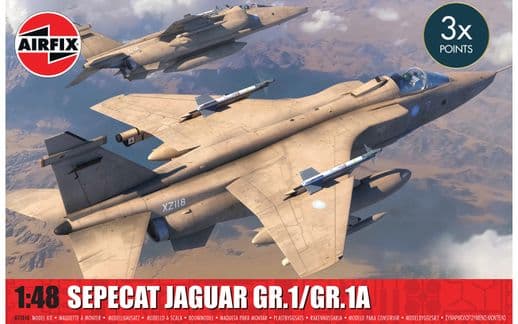
As arguably the most heavily requested modelling enthusiast new tooling addition to the Airfix range of recent years, when our team started work on our new 1/48th scale SEPECAT Jaguar tooling last year, we knew that when it was eventually announced, it would come as a pleasant surprise for many, if also presenting one of our designers with a significant challenge in the meantime. As the ‘BIG Cat’ is now literally out of its new tooling bag, we’re delighted to be making this our first designer interview feature for 2025, the first instalment of a two-part special, where we will be following the development of this exciting new model through the eyes of its designer.
Not only can you look forward to hearing about the travails of a scale Jaguar model kit designer, but we will also have an impressive selection of appealing development imagery to share with you, just so we can help raise those pre-release excitement levels ever onward towards fever pitch. In this first instalment, we will be looking at the initial stages of the Jaguar’s development, from delivery of the project brief, to starting to replicate this Cold War aviation classic into a highly detailed scale model kit. In a second, follow up feature, we will be taking a more focused look at some of the challenges faced and design successes achieved, all backed up by the development images we all find so fascinating.
This is the one you’ve all been waiting for, so we’d be delighted if you would join us for a spot of Big Cat stalking, Airfix style.
The unmistakable profile of the SEPECAT Jaguar, an extremely handsome aeroplane from any angle. The following images all feature computer rendered Jaguar images created using the newly designed CAD files and an extremely powerful computer.
Although UK aviation enthusiasts definitely lament the passing of the Jaguar in Royal Air Force service and have done since they retired back in 2007, the heading above isn’t exactly accurate if we’re being honest, because if you live in India, you will still see military Jaguars flying and will for several years to come. Anyway, I digress. When the RAF retired their Jaguars, they did so without much of the media attention the Harrier received just over three years later, even though the Jaguar was still an incredibly capable strike and reconnaissance asset at the time. Although enthusiasts will always have their affections, we have to trust that the military have their reasons for such decisions, and therefore have to accept them as being correct.
For an aircraft which looks every inch the Cold War strike warrior, it can be surprising to learn that the project which eventually led to the introduction of the SEPECAT Jaguar began as one looking to design a high-performance training aircraft. During the 1960s, Britain’s aviation industry was going through a period of great change, as the Royal Air Force were considering their needs for an uncertain future. There were some exciting projects in development at that time, such as the BAC TSR.2 and the P.1154 and in support, they were in need of an advanced new training aircraft to produce pilots to fly them. Looking for an aircraft to replace the diminutive Folland Gnat and ultimately, the Hawker Hunter, it was clear such a project would be expensive and place further strain on the nation’s finances.
Across the English Channel, the French found themselves with a similar need for a new training aircraft, but one which also possessed a light strike and battlefield support capability, and whilst both projects progressed independently at first, they did appear to be very closely aligned. With several projects later falling victim to cancellation and worries about spiralling costs being the most pressing concern, it appeared that the only way the RAF were going to get their new trainer was if they embraced the cost saving potential of a collaborative project. In a similar arrangement to several recent collaborations which had gone before it, BAC in the UK and Breguet in France came together to form the company SEPECAT.
This arrangement really did appear to suit both parties with regard to their aircraft requirement, and clearly from an affordability perspective, however, it soon became apparent that the British and French had some differing requirements for the new aircraft. As development got underway, five different variants were being proposed, with the French looking for single seat strike, trainer and naval variants, whilst the British needed a trainer and light strike variant. Running concurrently with this, Rolls Royce in the UK and Turbomeca in France were jointly developing the Adour engine which would power the new aircraft, something which would create its own problems and result in some protracted delays. This situation wouldn’t be helped when the British insisted the aircraft possess supersonic capability.
Big Cat stare-down. Never turn your back on a Jaguar, especially one destined to secure a place on your modelling workstation.
Nevertheless, both Britain and France placed sizeable orders for the new aircraft, with both committing to 200 aircraft each, with Britain’s order being weighted in favour of 110 trainer aircraft and 90 light strike variants.
The aircraft would endure a relatively long period in development and even as the first prototype aircraft was unveiled in April 1968, the operational landscape the aircraft was heading into was already beginning to change, and the RAF were about to change their order requirements. In 1970, they decided to abandon the trainer requirement for the new aircraft, other than for trainer variants destined to provide conversion support for the Jaguar in service, and subsequently modified their order requirements to 165 strike jets and just 35 two seat trainers. A separate project would be placed with Hawker Siddeley to develop a new training jet, one which would eventually result in the introduction of the highly successful Hawk.
Entering Royal Air Force service in 1973, the Jaguar GR.1 (Ground Attack/Reconnaissance Mk.I) would prove to be a more sophisticated and technologically advanced aircraft than their French counterparts, and immediately showed itself to be a potent performer. It would become one of the most important British aircraft throughout the Cold War era, with pilots always training for a role at the spearhead of any future military engagement and therefore, serving as a significant deterrent to possible Eastern Bloc aggression. A vital component of RAF Germany’s offensive inventory, they maintained four squadrons of Jaguars for strike and battlefield support operations, with a further squadron performing the tactical reconnaissance role. Further squadrons were based in the UK, and served as a deployment ready mobile force, should their services be required.
Allowed to slip from RAF service without too much fanfare, let’s hope the release of our new 1/48th scale Jaguar kit will bring the aircraft some long overdue recognition.
From a design perspective, the Jaguar’s distinctive undercarriage was specifically developed to allow this capable performer to operate from damaged airfields, roughly prepared grass strips and even larger roads, as the RAF assumed that in times of war, any first strike by the enemy would be directed towards known operational airfields. This ability was regarded as a valuable deterrent asset and was ably demonstrated to the nation’s media on 26th April 1975, when the second production development Jaguar GR.1 XX109 made a parachute assisted landing on the carriageway of the soon to be opened M55 motorway near Blackpool. Pushed under a bridge over the carriageway, the aircraft was fitted with bombs, before taking off again, demonstrating the impressive operability of the Jaguar.
The Jaguar would go on to enjoy an impressive 34 year service career with the Royal Air Force, undergoing regular upgrades to improve and perfect its operational capabilities during that time. It would earn a reputation as a hard working and reliable strike and reconnaissance platform, something which was illustrated by its performance during the first Gulf War. The twelve Jaguars deployed during Operation Granby flew 612 combat sorties, with one Jaguar flying 47 missions, the most of any aircraft in theatre.
Although starting out as an Anglo-French training aircraft project, the RAF’s Big Cats certainly went on to live up to their name, proving these were aircraft not to be messed with. If the Jaguar showed its offensive claws, you were in big trouble.
Probably the most requested new tooling project addition to the Airfix range over recent years, many Workbench readers will no doubt be looking forward to getting their hands on this magnificent new Jaguar kit.
As we all know only too well, there are some absolute certainties in life, such as night always follows day and how Christmas comes but once a year, however, were you aware that there are also some certainties within the world of modelling, such as how Airfix fans are desperate for a SEPECAT Jaguar model kit in 1/48th scale to join the range?
Over the years, our fantastic and often vociferous enthusiast base hasn’t been shy when it comes to letting us know which subjects they would like to see covered as new tooling projects, and over recent years, there’s been one subject requested far more than any other – a Jaguar in 1/48th scale. Although the team have to direct their attentions across the entire Airfix product range in any given year, with different scales and different ranges all having to be serviced, we knew that Jaguar was a high priority project and one we were determined to deliver in some style.
That being the case, the announcement of our latest range earlier this month confirmed to the modelling world that that time was now, and we are therefore delighted to be taking this Workbench opportunity to make our new 1/48th scale Jaguar the first of our Designer Interview features, where we delve a little deeper into the skilled and highly technical world of designing and developing the latest Airfix model kit projects. In fact, Jaguar is such a significant project for us that we’ve decided to make this a two part review, with this initial overview looking at the earlier stages of Airfix Jaguar development, with a second follow-on edition taking a more focussed viewpoint and probably coming next week, but don’t hold us to that just yet.
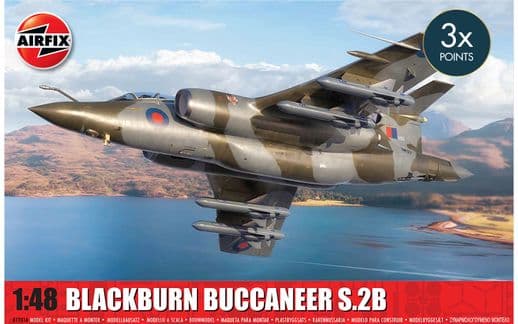
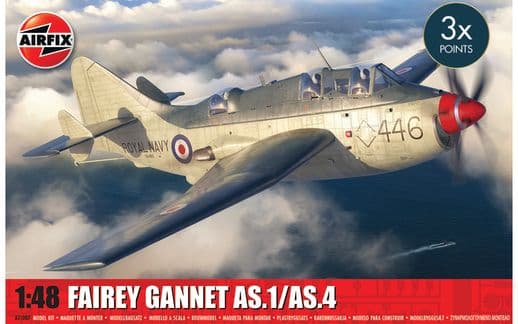
So then, for a project as heavily requested by modellers over recent years as the Jaguar has been, which of our lucky designers was going to have the honour of making all their scale model kit dreams come true – well, that would be our Paramjit. With such projects as the Buccaneer and Gannet in the same scale already to his name, our new Jaguar project was in safe hands, but as all our designers will tell you, each and every project brings with it its own set of unique challenges, and until you get into the design phase, you don’t know where these issues will show themselves. Having said that, there’s no substitute for experience, and we were going to one of the best in this regard.
We always like to start by asking our designers, What information did you receive in your project brief, at the start of these reviews, and we’re delighted to say that Paramjit was able to shine new light on this subject.
He told us that when he sat down with our Researcher to discuss the Jaguar project, it was just those two in one of our meeting rooms with a large display screen and lots of detailed information to go through. The researcher had done an incredible job in providing all the information the designer was going to need, not only to make a start on the project, but also every aspect of the entire design phase.
Paramjit was presented with two robust pieces of work, which he did share with us just to give us a clearer idea, but can’t be shared here at this point, because it includes some sensitive project information. The project brief is an impressive document, one which summarises the project and what the researcher thinks should be achievable as a wider project, is crammed full of detailed information, but is also something which can also be used to introduce the project to the wider Airfix team and indeed, across management level across the company.
Images of scanned Jaguars in the brief files presented to Paramjit at the start of this project.
The actual Jaguar scan data Paramjit was able to import into his design software at the start of this project.
This is backed up by a much more robust project proposal document which truly is an impressive piece of work. This is almost like a Jaguar bible and quite literally contains everything the designer could possibly need when embarking on a new project, so thorough that it must have taken weeks to prepare. In addition to detailing which variants, stores options and even operators he thinks the project could support, it also goes on to suggest which features the researcher thinks the new kit’s design should incorporate, however, these decisions will always ultimately be the domain of the designer themselves.
Working through the document, it goes on to highlight every vent, fairing, antenna, access panel and equipment bay in some detail, all fully illustrated, and all intended to provide his colleague with every scrap of information he could possibly need, but to the rest of us is tantamount to being very much a case of Jaguar information overload.
This seems like an appropriate point to extend our sincere gratitude to our friends at Cosford and the RAF’s No.1 School of Technical Training, who were instrumental in providing much of the photographic detail and technical support during the information gathering phase of this project. We will hopefully be producing something a little more robust about the work they do and the support they gave us a little later in the year, so we’ll keep you informed about that.
Delivery of this document and the project discussions between researcher and designer initially take place a few weeks in advance of taking on the project, but as Paramjit confirmed, would not actually get underway until the designer had completed any existing project work – ‘You need to be completely committed to every project you undertake’.
An interesting image showing how Paramjit started to overlay his design over the top of the correctly scaled and orientated Jaguar scan files.
A different kind of Jaguar skeleton. This one will be a sight for modelling sore eyes as far as Workbench readers are concerned.
Once Paramjit was in a position to get started on the Jaguar project, by far the most important job he has to undertake is to configure the scan data. Although his research files include scan data from a full size Jaguar, the scanned information is not in a format he can use, so first has to be configured and imported into his design software. Once this has been achieved, he told us that his work really does start in earnest, with the next stage being the absolute foundation of the entire project.
Once the scan data is in the design software, Paramjit has to correctly scale and orientate the data before he can do anything else, something which is so critical to the project, that it takes all his experience and many hours of concentration and data manipulation to complete to his satisfaction. Until this is achieved, the new Jaguar project is going nowhere!
Our second question just had to make reference to the popularity of the subject matter. As you would have been fully aware of just how heavily requested the Jaguar was as a new tooling project, did this create any additional/unusual pressures?
I suppose we should have been prepared for the answer Paramjit gave us, but it’s always better to hear it from the designer’s own mouth, so to speak. He told us that every project requires the full attention of the designer, and in each and every case, they want to deliver a model kit which will meet the brief they’ve been given, enhance the Airfix brand, and be an enjoyable build project for any modeller to undertake.
Being a modeller himself, Paramjit is only too aware of what modellers are looking for when it comes to a kit build project, and no matter how popular the subject, if a kit fights you every step of the way, it isn’t going to be remembered with any particular fondness. Should that prove to be the case, his view is that the designer has failed to achieve their original project brief, which is nothing to be proud of. In addition to this, he’s clearly aware of what other kits of the same subject are out there, and if he’s built one himself, where he would have done things differently had he been involved in the design of the kit.
Another fascinating design image showing scan data and the overlayed design starting to take shape. This one shows an early development RAF ‘Tin Nose’ Jaguar.
With his growing industry experience and a real love of his profession, he does always like to incorporate innovation within each design he undertakes, something that little bit different for the hobby, and something to enhance his latest kit design. Always looking to create the most accurate scale representation of the subject aircraft (in this case) that he can, this can’t come at the expense of compromising assembly integrity, or modeller build enjoyment. Where tooling manufacture creates an unavoidable assembly issue, he will always draw the modellers attention to it and provide guidance and as much support as possible to work us all through the issue.
So, in summary, Paramjit knew we all wanted the Jaguar, and he was determined to deliver.
Did you have the opportunity to inspect a Jaguar first hand?
Paramjit informed us that when he received the project brief document, it was so detailed that he really did have extreme confidence in getting stuck in straight away, but how experience tells him that no matter how detailed the files are, a designer will always be looking to inspect some aspects of the subject first hand a little further down the line.
The researcher had gone to great lengths to provide Paramjit with all the references he would need in support of the Jaguar project, making multiple visits to preserved aircraft in the UK and creating a huge bank of photographic records at the same time. Despite this, his project brief also included time for the designer to visit a suitable airframe during the design phase, and the appropriate official clearances this would require.
From a designer’s perspective, when working in this larger scale, the additional detail this design can incorporate and the sheer amount of detail provided can be a little overwhelming, and in some cases, the opportunity to inspect the real thing ‘in the metal’ really can help them to understand how everything needs to come together. In addition to this, access to handheld scanners has now opened up a whole world of opportunities for researchers and designers, and if Paramjit is struggling with any aspect of Jaguar detail during the design phase, he can always ask for further scan data of that aera to be secured.
Spending time in Jaguar sanctuaries. The left hand picture looks as if the team benefitted from a Red Arrows flypast during their visit to Manston.
In order to allow him to understand the many design complexities he was facing with this particular project, Paramjit actually had the opportunity to spend quite some time in the company of the RAF’s former Big Cat. Visiting the aircraft on display at the RAF Manston History Museum on several occasions (it’s quite close to our offices) and also travelling to inspect Jaguars at the City of Norwich Aviation Museum and the Bentwaters Cold War Museum, he was able to take measurements and obtain further reference photographs of detailed areas of the aircraft, particularly specific probes, panels and vents, and their exact positioning on the airframe.
The team would like to extend their gratitude to all of the museums mentioned above, who were all both supportive and influential in allowing this exciting to project to proceed through its development phase. If you would like to embark on your own RAF Jaguar hunt, all these museums will be more than happy to help you achieve that, just head for their individual websites to check opening and access information.
We knew that our next question was a little contentious, and may include Paramjit having to withhold information, however, we decided to ask it anyway. How much of the Jaguar’s service life were you able to incorporate into the design of this new kit?
Due to the pause before answering, we knew this was going to be delivered on a ‘need to know and towing the company line’ basis. Paramjit told us that as we had already seen when looking at the project brief documents at the start of this interview, the information contained in those files included everything the Airfix development team thought this project should include from a Jaguar genealogy perspective, along with what they were hoping the design of the kit could include. Although things can always change when it come to the design nuances of any project, the Airfix team have an incredible amount of combined experience to call upon in these circumstances, so usually, if they think something can be done, it usually gets done.
Taking a business perspective for a moment, every new tooling project undertaken represents a significant investment for the company and as such, the maximum release potential for any new project is of paramount importance. Clearly, the tooling integrity of a subject can never be compromised by attempting to do too much in the design phase, but if a tooling will support the inclusion of variant ‘options’ then it really does have to. The more complex a kit’s design, the more time a designer will have to spend on it, something which will also impact on the overall financials of the project, and in some cases, actually dictate whether a project proceeds or not.
From a designer’s perspective, all variant requirements in the project are clear to them right from the outset and if new/alternative components are to be designed, it will be part of the initial brief which ones have to be designed and if these need to be incorporated into their own separate component frames. These ‘optional extras’ are an important aspect of any new tooling project, and form part of the researcher’s justification presentation, when explaining it to senior management and attempting to get it through all the various channels well before the project designer is briefed.
A thing of aviation beauty. Paramjit’s latest kit creation is surely destined to become something of an Airfix classic.
For obvious reasons, Paramjit was somewhat tight lipped when it came to putting a little modelling meat on these particular bones, but Airfix modelling enthusiasts will be aware of how previous post war aircraft new tooling releases in this scale have been handles, so we’ll just leave this to your imaginations.
One interesting detail Paramjit was prepared to share with us was how he was able to use aspects of previous designs on the Jaguar project, exporting design elements from one, and importing it into his current project. With some armament and stores commonality between the Blackburn Buccaneer tooling design and the new Jaguar, he was able to isolate some elements of the Buccaneer’s design and import them into his current project, and having the ability to modify them if required once there. This provided a time saving during this part of the design, whilst also allowing detailed design work previously undertaken to benefit a new project.
When we speak to our designers in situations like these, they always have a habit of making things such as this sound much easier to do than they probably are, so we have to be careful not to fall into that trap during future dealings.
The final question we asked Paramjit in this first section of our Jaguar interview was this. We know you like to innovate with your design projects, so what can we all look forward to seeing in the new Jaguar kit?
We might have known this question was going to be the source of some interest, and it appears Paramjit has been at it once again with his latest design project. He described how throughout the design phase, he went to great lengths to design the Jaguar so that assembly of the kit would match how the real aircraft was manufactured as closely as possible – if it works on the real thing, it certainly will on a scale replication of it. He also said that assembly integrity was also a paramount concern for him at design stage, as he had plenty of less than enjoyable modelling experiences of his own when building kits which featured larger fuselage components.
With these slightly larger kits, if care is not taken during the design and tooling stage, there can be problems when attempting to join larger components such fuselage halves together, leading to modeller challenges and often the potential for frustration. Having experienced this several times himself, Paramjit was determined that his Jaguar wasn’t going to suffer with the same issue, and designed some ingenious internal wall components which feature interlocking sections. With the same parts on the opposing fuselage half featuring a reversal of the interlocking design, when the two halves are offered together, not only do they locate securely in the correct position, the entire assembly has a rigidity to it that provides reassurance to the modeller and gives the kit a robustness that will surely enhance the overall build experience.
Innovative design has been incorporated into the new Jaguar, all intended to make the build experience more enjoyable.
To help with the air intake assembly, Paramjit designed a jig to provide the modeller with the additional support he felt they might need, even though it later transpired that it wasn’t actually necessary.
Another area where Paramjit incorporated something just that little bit different in his design was regarding the assembly of the air intake boxes on each side of the fuselage. He designed both these distinctive features to be made up of two parts, however, when the Jaguar was at the prototype stage, he was concerned that modellers may have some difficulty with this part of the kit’s assembly. To help with this, he went on to design an air intake assembly jig, a separate component within the part frame to allow the parts in question to be seated correctly and held in the correct position whilst they adhered together.
If you look at the design image of the intake assembly jig Paramjit kindly sent us, you will notice it features two little cutout reservoirs at opposite ends top and bottom, which are intended to allow excess adhesive to run into, so the parts don’t stick to the jig during assembly – these guys really do think of everything! As it turns out, once the Jaguar progressed to tooling, and the first test shots were received, the problem Paramjit thought he was going to have with these parts proved to be nothing like what he was fearing and indeed, most modellers will probably not even use the jig system during assembly. Nevertheless, this situation does show how modeller enjoyment is a real concern to our designers and if they can design a solution to a problem they come across, they certainly will.
One of the items included in the initial brief requirement was how the design should include two different types of ejection seats used during the service life of the Jaguar, in addition to some cockpit equipment positioning which any Jaguar jockey will be only too familiar with. Early RAF Jaguars were equipped with the Martin Baker Type 9B Mk.2 ejector seat, a highly advanced seat which provided crews with the reassurance they needed when flying operationally. This was later upgraded to the Type 9B Mk.3 variant, an even more capable unit, but one which featured differences which needed Paramjit’s design attentions. Both seat types are included in the new Jaguar tooling and interestingly, when looking on the Martin Baker website, 141 of these seats are still in service worldwide.
Paramjit designed two versions of the Martin Baker Type 9B ejection seat as part of the new SEPECAT Jaguar project.
Another design feature of the new Jaguar which was created as a direct result of Paramjit’s extensive modelling experience relates to the assembly of the incredibly distinctive main undercarriage. When he had made model kits of this subject in the past, he recalls the fitting of the undercarriage as being something of a headache and having to be attempted somewhat out of sequence. He was determined this would not be the case with his design and modellers will be pleased to learn that the Airfix Jaguar kit allows the landing gear components to be worked on after the fuselage has been assembled, something which will come as a relief to many.
The undercarriage of the Jaguar is a fascinating subject all of its own and the subject for a future blog, so this is where we’re going to leave this first part of our Jaguar designer interview. Clearly, we wouldn’t be able to produce this without Paramjit’s support, so we would like to thank him for kindly giving up his time this week, when he should have been working on the new …………………. We almost slipped up there, but we can confirm that when that particular design secret is out, there are going to be some very happy modellers out there.
After the intensity of a new project designer interview, I think we could all do with a cuppa and some time to reflect. The Airfix team are always thinking of new ways to enhance the modeller experience when spending time with our kits, something which has seen several new initiatives appearing on the Airfix website over recent weeks. Now firmly established as some of the most popular items with website visitors, our range of web exclusive Bundle offerings all come with attractive savings and even more attractive model kits, with the bundle featured above joining the range over the past couple of days.
As we all know, modelling and our time spent doing it is serious business, and before we settle down to some quality modelling time, we really do need to set our stall out accordingly. Airfixising our workstations provides the reassuring aesthetics we need prior to a couple of pleasant hours modelling, and central to that enjoyment is a great kit, a good brew and a branded mug and coaster with which to bring a certain style to any workbench.
Our new Workbench Brew Bundle consists of an Airfix mug (and we all know that everyone needs one of those), a branded coaster and a bag of 80 tea bags produced by our friends over at the Warbird Coffee Co. With hot brew in hand, it's time to inspect the supplied 1/72nd scale de Havilland Mosquito PR.XVI, a delightful kit which builds into a truly spectacular little display piece. Of course, before starting the Mosquito, you’re going to be needing at least one more brew to focus the mind on the task ahead.
This and all the other current Bundle Offers can be viewed using this link, or by heading for the Airfix website.
We are afraid that's all we have for you in this latest edition, but we will be back next Friday with more project development updates and the very latest Airfix kit exclusives. In the meantime, we are always keen to hear your views on all things Airfix and in particular, any thoughts and opinions you may have regarding our Workbench blog. If you would like to drop us a quick line, could we please ask that you use our workbench@airfix.com email for all correspondence.
To re-visit any of the Airfix blogs we have produced over the past seven years or so, please head to our main Workbench hub, where you will find our entire blog back catalogue and all the Airfix design projects we have already covered.
All our dedicated official social media sites can be accessed by clicking the respective link icons at the foot of this page, or by heading to the Airfix homepage. Other useful Airfix links are:
Facebook, YouTube, Twitter and Instagram official sites
Please join us for more Airfix updates next week and thank you for your continued support.