

Welcome to this latest edition of our Workbench blog and all the news, updates, and modelling exclusives from the fascinating world of Airfix.
As the nation marks the 80th Anniversary of VE Day, this latest edition of Workbench will be joining in with all the commemorations, but by taking something of a slightly alternative position. As we all enjoy the moving commentaries articulated by people who actually experienced the announcement of the end of the war in Europe on 8th May 1945, and marvel at the pictures of the thousands of people who packed central London and the area surrounding Buckingham Palace in an outpouring of national relief and celebration, we will be toning things down just a little. The focus of our attention will not only be remembering those who paid a heavy price to ensure that this day, and the 80 years of peace which followed, could happen, but also by remembering that it wasn’t cake and street parties for everyone. For Allied service personnel, and for millions of civilians across Europe, the guns may have fallen silent for them, but there was still much to be done, and significantly, a war still raging in the Far East.
In this latest edition of Workbench, we will be taking a look at four different stories relating to both Allied and Axis aircraft, two closely linked, but all taking place during the final days of the war in Europe, and around VE Day. As the national media rightly concentrates on street parties and events arranged to commemorate this momentous occasion, we will be using the medium of Airfix box artwork to commemorate some of the less celebrated, but no less important military activities which were all taking place on or around VE Day 1945.
Our destinations for Workbench this weekend are airfields in Britain and across Europe, as we focus on humanitarian efforts from the air, the race to secure advanced technology and aircrews who made dangerous flights to surrender their aircraft to Allied forces, during the final days of WWII.
After almost six years of devastating conflict, Germany’s unconditional surrender brought about an end to the war in Europe, and across Britain, it was a time of huge relief and spontaneous celebration. Finally, the air raid sirens would scream no more, and the population could look forward to putting years of hardship, sacrifice and loss behind them, but would the world ever be the same again? At 3pm on 8th May 1945 – VE Day, Prime Minister Winston Churchill addressed the nation, and the huge crowds which had gathered in London. He spoke about how the population could allow themselves a brief period of celebration, but how there was still work to be done, and a war still to be won.
The nation took him at his word, and whilst the newsreel footage of the time showed the wild celebrations taking place in the nation’s capital, communities all over the country came together to celebrate together, still at a time of national rationing, but sharing whatever they had with their friends and neighbours. For children who had only known war, this must have been an incredible occasion, something which would stay with them for the rest of their lives, but for others, it must have been a time of mixed emotions. The war had touched so many lives over the previous years, and many people will have lost loved ones, either fighting with the services, or through enemy actions at home. It also has to be remembered that the war was still raging in the Far East, and at that time, prisoners of war were still far from home – when would their fighting loved ones finally make it home?
Churchill addresses the throngs in London, as VE Day became a day of national celebration. Both of these historic images are in the public domain.
For the Allied troops stationed across Europe and further afield, the German surrender was something they had been fighting to achieve for such a long time, so must have been greeted with absolute joy, but also the sadness of losing so many friends along the way. It was also a dangerous time, as Europe was devastated and there were still pockets of enemy resistance – not all enemy troops were aware of their surrender, and this remained a perilous time for Allied troops. How tragic would it have been to have lost your life after the surrender was in place …. it hardly bears thinking about.
With the fighting still raging in the Far East, and with news of Japanese forces mounting stubborn and determined resistance, the reality for many Allied units would be that they should begin preparing for redeployment to the Pacific Theatre, and potentially, an amphibious invasion of the Japanese home islands, a sobering realisation indeed.
For the purposes of this feature however, we’re going to be staying in Europe, one which had suffered terribly from almost six years of conflict. With ruined cities, displaced people and populations in need of help, military personnel now needed to turn their attentions to providing humanitarian aid, although the future of a post war Europe was already being decided at the very highest levels of government. Clearly, matters of military importance would clearly still be required to take precedence.
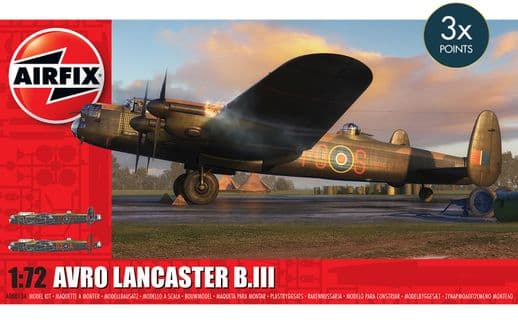
The Avro Lancaster proved to be one of the most effective heavy bombers ever produced, but how would it cope with dropping tons of supplies for a starving nation?
Like many other nations, the people of Holland had suffered terribly at the hands of occupying German forces during WWII, but as the war in Europe moved towards its inevitable conclusion and an unconditional German surrender was surely only days away, the entire nation was on the verge of a humanitarian catastrophe – they were starving. Plans were immediately put in place for both RAF and USAAF bombers to air drop food supplies into Holland, however, there were many problems facing those assigned to the task, and very little time to overcome them.
Firstly, Allied bombers were not designed to deliver this kind of payload, and significantly, crews had absolutely no experience in attempting such a thing. In addition to this, Europe was still technically at war, so if the bombers did arrive over Holland laden with food and supplies, would they be fired upon by German flak units in the area, at altitudes which would make the aircraft completely defenceless. Could this plan deliver the relief in time and if they did, could the Dutch authorities arrange for the organised distribution of the dropped supplies? There were so many questions, but little time to find the answers – the aid was needed, and it was needed now!
Air Commodore Andrew Geddis was given the task of putting these plans into motion to effectively feed millions of Dutch people from the air, and immediately assigned delivery of the plan to Bomber Command’s Nos.1 and 3 Groups and their Avro Lancaster bombers. The aircraft would have to be used in normal configuration, undergoing no mechanical modifications whatsoever – that being said, they had to ensure that the supplies were delivered intact, with little risk of the air-dropped items being destroyed when hitting the ground. This would clearly require a low altitude delivery method during daylight hours, something Lancaster crews had not been trained to perform. They were going to have to learn fast!
As crews began an intensive period of training for the task, and supplies started arriving at RAF airfields all over Lincolnshire and Cambridgeshire, the Dutch authorities were informed of the plan, and instructed to start making their own preparations. Drop zones were identified and communicated back to the Allies, and the administration behind the distribution of the supplies was put in place, ensuring the most needy received what they were so desperate for first, but in an organised, orderly manner, avoiding the potential for a chaotic free-for-all.
The cavernous, unobstructed bomb bay of the Lancaster proved more than capable of effectively air dropping thousands of tons of supplies at low altitude during the final days of the Second World War.
Crucially, a ceasefire had to be negotiated with the German forces who remained in the country and particularly within the air drop corridors the Allied bombers intended to utilise. Allied bomber crews had some serious reservations about flying their aircraft at low altitude and at relatively low speeds, because in such situations, they would be incredibly vulnerable to ground fire, with even small arms having the potential to injure crews, or even bring down a bomber. Despite the fact that Germany’s surrender was now inevitable, would the remaining troops in Holland honour any agreed ceasefire?
Whilst all this was taking place, two Lancasters from No.101 Squadron were being prepared at RAF Ludford Magna to mount an air aid delivery feasibility flight. With their bomb bays packed with supplies, both aircraft flew at low level over the North Sea, dropping to just 50 ft above the ground when passing over the Dutch coast, delivering their humanitarian loads directly on target, which was a racetrack close to The Hague.
The method of delivery was a simple one, where the Lancaster’s huge bomb bay doors opened, and the supplies fell to the ground. With the starving population in desperate need of the food items dropped, it was essential that the items were retrieved intact, which must have placed immense pressure on bomber crews at the time, and ensured an extremely low altitude delivery run for them, but also allowed the crews to clearly see the very people they were hoping to help.
These two Lancasters essentially acted as airborne humanitarian pathfinders, and later that day, the supply floodgates were quite literally opened. At 2pm on 29th April 1945, a force of 239 Bomber Command Lancasters followed the same route to drop 535 tons of food and supplied at five different locations across Holland, flying at the same low altitude, with each crew still being fearful of coming under enemy ground fire, but desperate to do their duty.
As it would turn out, other than a few aircraft reporting holes in their aircraft as a result of extremely light small arms fire, the German forces did as they were instructed and allowed the bombers to pass unopposed. On 30th April, the bombers returned to deliver a further 1021 tons of supplies, with further sorties taking place between the 1st and 8th May, during which time the Royal Air Force dropped a further 5586 tons of food and supplies to a grateful Dutch population.
Still wearing their standard Bomber Command camouflage, the Lancasters of Operation Manna emerged from the dark of night to bring hope to millions of starving people in Holland.
When talking about the efforts of Bomber Command during Operation Manna, we are, of course, talking about airmen who hailed from many parts of the world, not just Britain and the Home Nations – this was a truly international force. With airmen from the UK, the Commonwealth and from across Europe all taking part, there were even reports of Dutch airmen looking out of the windows of their bomber, as the bomb bay doors opened, and they could see their countrymen waving back at their airborne saviours.
So, what did the Lancasters of Operation Manna actually drop for their Dutch allies? As you would expect, the supplies definitely didn’t include any luxury items, even though their plight was so desperate that a mouthful of food must have seemed like a luxury to them. The supplies were made up of food staples, things needed to allow people to feed themselves, and were initially made up of the pre-packed combat rations which were issued to Allied troops. This quickly moved on to sacks containing individual commodities, such as flour, tinned meats, sugar, dried egg powder and chocolate – can you imagine how good that would have tasted!
The air drops were enough to provide immediate relief, but also served to reassure the people of Holland that help was at hand and that the end of the war was near. Although Operation Manna was never going to be enough to feed an entire nation indefinitely, this incredible humanitarian effort gave hope to a nation, when hope was fast running out.
Exchanging bombs for the ingredients to make bread, 33 Royal Air Force Squadrons took part during the ten days of Operation Manna, with 3,181 individual Lancaster sorties being flown, supported by 147 flown by de Havilland Mosquitos. The supplies were dropped at heights of between 300 and 50 feet, and 6,680 tons of supplies were eventually dropped.
For crews who had previously been required to unleash their deadly payloads on targets right across enemy occupied Europe, taking part in Operation Manna must have been a particularly rewarding way for them to end their war.
During the final months of the Second World War, Allied airmen had become aware of the Luftwaffe’s wonder weapons, but how had the Germans developed them, and how many more did they have?
One of the most fascinating features of the latter stages of the Second World War was how Germany attempted to overcome the overwhelming Allied superiority they were facing, by introducing technologically advanced weapons. The most famous of these weapons were the aircraft which did, or were destined to see service with the Luftwaffe, aircraft such as the Dornier Do335 Pfeil, the He 162 Volksjäger, the Bachem Ba 349 Natter, and the Arado Ar 234 Blitz. Other aircraft such as the Messerschmitt Me 163 Komet and Messerschmitt Me 262 Schwalbe regularly came into contact with Allied aircraft over Germany, and represented such a technological leap forward, that the Allies were desperate to secure and evaluate these aircraft.
Other terrifying weapons were unleashed against Britain during the later stages of the war, Germany’s so-called Vergeltungswaffen, or reprisal weapons. These included the V-3 ‘Super Guns’, the terrifying V-1 Doodlebugs, and the V-2 rockets against which there was absolutely no defence once they were in the air. How had Germany managed to develop and introduce these weapons when they were under the constant pressure of Allied attack, and significantly, why were they so much better than the weapons the Allies had in development?
As the war moved into its final stages, and Allied troops were closing in on the German capital, taking control of former German occupied sites started revealing some of these secrets, and the major Allied nations all established specialist teams to secure both machines and technical information. Although the official line was that such war prizes were only secured as former German sites fell into Allied hands, the truth of the matter was that the race was on to both understand and obtain as much information as possible, and all the Allied nations were taking part.
This might sound a little selfish and egotistical, however, this race was very much a sign of the times back then. There is no doubt that German military technological superiority had come as an unwelcome surprise to the Allies, but as the German nation was crumbling, they knew these secrets would be available, and needed to be secured both to understand, and to emulate. In addition to this, even the most optimistic of observers could see the mistrust developing between the Soviet Union and the rest of the Allies, and with that being the case, it would be a huge strategic blunder let them secure all this information, as a new order in Europe was looming large.
More immediately, had the Germans shared their technology with their own Allies in the Far East? Japan would have to be defeated before the world could settle into a period of peace, but if they had access to Germany’s wonder weapons, the Allies had to know what they might be facing during any future operations.
The Messerschmitt Me262 Schwalbe was a quantum leap in terms of aviation performance, and the Allied powers had to find out the details behind this fearsome new technology.
The Americans launched a formal expedition project to secure as much of this technology as possible, which they christened ‘Operation Lusty’, a simple acronym of Luftwaffe Secret Technology, and employed two teams of specially trained USAAF intelligence service personnel for this important task. Although the task of securing German technology had begun soon after the D-Day landings, Operation Lusty was initiated on 22nd April 1945, just two weeks prior to the war in Europe ending. One team was tasked with securing physical examples of advanced German aircraft and were initially dispatched to Lechfeld airfield, and a cache of Messerschmitt Me 262 jet fighters which were under armed guard by US service personnel.
The other team were charged with securing documents, research material and German scientists involved in this work, all with a view to transporting them back to America for use in their own weapons (and later Space) programs. All the acquired equipment and research material was sent to Cherbourg, where two vessels were waiting to transport this eagerly anticipated technological bounty back to the US, and of course, an operation of this importance needed yet another codename, which was ‘Operation Seahorse’.
The captured German aircraft were loaded aboard the Escort Carrier HMS Reaper in early July 1945, being wrapped in a protective coating, before being lashed to the open deck of the carrier for the voyage across the Atlantic. The ships also carried the search teams and intelligence staff back with what they had managed to locate, sailing from Cherbourg on July 19th and arriving in New York harbour on 31st July.
The information the Lusty team secured would prove significant in projects would take place in the years following the end of the Second World War, resulting in the introduction of some of the world’s most capable aircraft, America’s intercontinental ballistic missile program, and America’s space exploration programs. Perhaps of equal importance to the Lusty teams, was the fact that whatever they managed to secure, they were preventing the Soviets from getting their hands on, so something of a double win for them there.
Here are the details behind one of the schemes available with our currently available Messerschmitt Me 262 kit release, serving as a link to the fascinating ‘Operation Lusty’ project story.
Despite Germany embarking on its jet programme well before the start of the Second World War, the first operational Messerschmitt Me262 jet fighters would not enter combat with Allied aircraft until July 1944, which was after the Allied forces had gained a foothold in France following the Normandy landings and at a time when they had also secured a hard won aerial superiority over Europe. This delay was for several significant reasons, which included Hitler's persistent interference in the project and his insistence that the aircraft be developed as a 'blitz bomber', in addition to the difficulty in obtaining enough of the rare metals needed in the production of the Junkers Jumo 004 turbojet engine. Add to this the fact that the Luftwaffe were attempting to introduce this radical new technology during wartime conditions and the effectiveness of the Allied air offensive by 1944 and you can see why the Me262's impact was limited. Despite these factors, once the Messerschmitt jet fighter managed to get into the air, it proved to be a devastatingly effective weapon and undoubtedly the most capable fighter aircraft the world had ever seen.
Allied pilots first began reporting the appearance of a strange new enemy aircraft in the skies above Germany during the early summer of 1944, much to the dismay of Allied military planners - placing their aerial supremacy at risk, had the German's finally managed to introduce the wonder fighter the Allies had been fearing? The Luftwaffe’s new fighter was reported to be capable of astonishing speed, far in excess of even the latest Allied fighters and yet did not appear to have a propeller. As those early contacts usually ended with the strange German aircraft diving away at high speed, with their pilots at that time forbidden from contact with the enemy, missions were immediately launched to investigate these reports, with reconnaissance aircraft searching for signs of unusual aircraft activity at Luftwaffe airfields deep into occupied Europe and Germany itself.
They would not have to wait long for confirmation of this fearsome new foe, as the first combat missions of the new Messerschmitt Me 262 jet fighter were mounted in August 1944 and the technological superiority of this astonishing aircraft were clear for all to see. Heavily armed and capable of speeds far in excess of the latest Allied fighters and reconnaissance aircraft, military planners must have been fearful of the terrible devastation these new aircraft could potentially wreak on their bombing offensive and continued supremacy in the air. The question was, how many of these new fighters did the Luftwaffe have and more importantly, how could they be stopped?
Heinz Bär was one of the premier aces of the Luftwaffe during the Second World War, a pilot who served throughout the entire conflict with over 1000 combat sorties in his flight logbook. His incredible total of 220 victories marks him as the eighth most successful fighter ace in history, a total which included sixteen victories achieved whilst flying the Messerschmitt Me 262 jet fighter, a figure which places him as the second most successful Luftwaffe jet ace.
In February 1945, Bär was given command of the jet fighter training unit No. III Gruppe Ergänzungs-Jagdgeschwader 2, with their new Messerschmitt Me 262 jet fighters arriving at their Lechfeld base the following month. Already an ace pilot, Bär was straight into the action, and during his short time with the unit would score at least thirteen aerial victories against Allied aircraft, the majority of which were against USAAF fighters, however, by the end of April, the unit was forced to abandon its home airfield due to the constant Allied air attacks they were being subjected to, and the close proximity of advancing US ground forces.
Bär and some of his senior pilots flew their aircraft to München-Riem airfield to report to the commander of JV44, Adolf Galland, where they were incorporated into this 'Expert' unit. During his time with JV44, Bär would score at least two more victories and would take command of the unit following Galland's hospitalisation. In a final show of loyalty to Galland and defiance of a regime which was continuing to send Luftwaffe pilots to their end, he risked being executed by refusing to obey orders to fly the unit's aircraft deeper into Germany to continue fighting, stating that he only carried out orders given by his commander Galland. He later instructed ground crews to destroy their aircraft, before surrendering to US forces.
Allied teams were sent to secure the secrets of Germany’s wonder weapons, so that they could be evaluated and used to support British and American projects in the post war years.
The distinctive aircraft shown here was flown by Bär during a hectic period of combat flying with III./EJG2 at Lechfeld and is thought to be the aircraft in which he scored the majority of his jet victories. The white 'S' on the tail and in the centre of the fuselage cross identify this aircraft as being a Schulemachine, which is basically a trainer, or schooling aircraft, however, this didn't stop it from also being a deadly aerial hunter.
The aircraft is also equipped with underwing mounted R4M unguided rocket projectiles, a weapon intended to be used to break up the tight formations of attacking USAAF bombers, reducing the effectiveness of their return fire and making smaller groups easier to target. A relatively crude, but potentially devastating weapon, twelve rockets were mounted on a rudimentary wooden rack attached under each wing, with the pilot having the option to fire all the rockets in a single devastating salvo, or to ripple fire smaller numbers for a more sustained attack.
Although the operational impact of the technologically superior Messerschmitt Me 262 jet could not turn the tide of the air war over Europe, this particular machine and its experienced pilot did show the devastating potential the aircraft could have had, if circumstances had been a little different.
During the final days of the Second World War, those with the ability to do so tried to avoid being captured by Soviet forces.
Despite facing overwhelming odds and shortages of everything from fuel to spare parts, Luftwaffe pilots continued to fly operational missions and perform their duties right through until the final days of the Second World War, in the clear knowledge that every time their aircraft left the ground, it may well be the last time they did so. With Soviet forces closing in from the East, and the Americans moving in from the West, Luftwaffe airmen had a choice to make, to sit and wait to be captured by one or the other force, or to fly their aircraft to a British or American operated airfield, but risk being shot down in attempting to do so.
One thing which was almost universally prevalent amongst German forces still fighting, was a desire to avoid capture at the hands of the Soviets, as they were of the opinion that a bad situation would take a turn for the worse very quickly. In those final fateful days, doing nothing just wasn’t an option, and as Allied advances were not taking place at breakneck speed, many Luftwaffe aircrews had to now commit to a surrender plan.
Ideally, airfield officials would attempt to make contact with US or British forces, and a deal to arrange safe passage for aircraft and aircrews agreed, with the Luftwaffe aircraft subsequently making their way to an assigned Allied airfield, and surrender. Even if such an arrangement could be made, there was absolutely no guarantee that Allied air defence units wouldn’t open fire on the enemy formation, or that a victory-hungry Allied fighter pilot wouldn’t take the opportunity to score an easy victory or two, but these were dangerous times, and as we all know, fortune favours the brave (and the desperate).
A great many former Luftwaffe aircraft would arrive at Allied controlled airfields in this manner, many in airworthy condition, but some intentionally crash landed in a last ditch display of defiance by their German pilots. Even if a pristine example of a Luftwaffe fighter did fall into Allied hands, there was little benefit at that time, as they would face the same serviceability problems the Germans had been facing, and they were still at war with Axis forces. Nevertheless, at least their former custodians had avoided becoming guests of the Soviets.
A recent release which helps to illustrate these frantic final days of operation for the Luftwaffe was our latest Focke Wulf Fw190 kit, with the first scheme option featuring an aircraft and pilot who had an escape and surrender flight decision to make in the days immediately prior to the end of war in Europe.
Schlachtgeschwader 2 (SG2) Immelmann was a close air support unit formed in October 1943, bringing together former Stukageschwader units on the Eastern Front. The constituent units had initially transferred to the Eastern Front in June 1941, so members of the unit had already been heavily involved in many of the major actions in the Soviet Union, either supporting ground actions, or acting strategically as an autonomous air unit.
In addition to flying the feared Junkers Ju-87 Stuka, this unit was one of only two ground attack units on the Eastern Front to operate the Focke-Wulf Fw190, making them of interest to researchers and modellers alike. When they were not flying top cover protection for ground attacking Stukas, or Kanonenvogel anti-tank Bordkanone equipped Stukas, they were either assigned to fly standalone air combat sorties, or fighter bomber missions themselves, and as the situation in the East began to deteriorate, they would see their mission count start to rise significantly.
The unit was heavily committed to the Crimean campaign during 1944, during which time they flew numerous interception sorties against a resurgent Red Air Force, in addition to their ground attack duties. The unit’s Focke-Wulf pilots claimed at least 250 Soviet aircraft destroyed during this time, albeit whilst fighting an increasingly defensive battle by then.
By the end of the first week in May 1945 and with the end of the war now in sight, the unit’s home airfield at Kummer was in danger of becoming overrun by Soviet forces and fearing what might happen to them in Soviet captivity, senior commanders decided to fly all serviceable aircraft west, and to surrender to either US or British forces. To this end, they made radio contact with American US XIX Tactical Air Command officials on the 8th May, and were instructed to fly their aircraft to Kitzingen Airfield in Bavaria.
II./SG2 had been supporting German ground operations right up until the impending cessation of hostilities and as such, only a few aircraft remained serviceable on the day of the surrender flight. As these took off and headed west, the majority of remaining staff left their home airfield in whatever vehicles they could muster, but were attacked by the Soviets soon after leaving, with many being killed or injured. Those who survived the incident faced many years in captivity in the Soviet Union, the very thing they had been hoping to avoid.
The base at Kitzingen was home to the P-47 Thunderbolts of the 405th Fighter Group, and all local anti-aircraft units were informed of the incoming surrender flight that day, and how they should refrain from shooting at the Luftwaffe aircraft, unless they themselves started firing. During the two-hour flight from Kummer, the German formation of seven aircraft, which included Ju-87 Stukas and Focke-Wulf Fw190s, did attract the attentions of the Soviet Air Force, however, for some reason, they were not attacked.
After circling the American held airfield, the German aircraft proceeded to land one after the other, with US troops excitedly running out to meet the enemy aircraft. Many of the aircraft were carrying passengers, including one which was carrying the pilot’s girlfriend, however, three pilots deliberately damaged their aircraft in a final show of defiance. Amongst those pilots landing at Kitzingen that day were famous Stuka ace Hans-Ulrich Rudel and Major Karl Kennel, a celebrated Fw190 ace pilot.
Major Karl Kennel was born in the town of Pirmasens, Germany (close to the French border) in January 1914 and by the start of the Second World War, was already a pilot in the Luftwaffe. Initially serving in a Messerschmitt Bf 110 heavy fighter unit, then transferring to fly nightfighters, he was later promoted to the position of Staffelkapitan of a Schlachtgeschwader unit on the Eastern Front in September 1943, after having displayed exceptional bravery and commendable flying skill in supporting ground operations in theatre.
One of the most highly decorated Luftwaffe airmen of the Luftwaffe during the Second World War, Kennel would eventually fly at least 957 combat sorties, the majority of which were over the Eastern Front, and mainly in support of, or actually engaged in ground attack missions. Despite this, he was an ‘Ace’ pilot, with 34 aerial victories to his name, with at least three of these being claimed over the Western Front.
His final mission of the war came on 8th May 1945 (VE-Day), when he piloted the aircraft featured above on a surrender flight to the American operated airfield at Kitzingen, and on landing, deliberately damaged his FW190. It was claimed that he heavily crash landed his aircraft, shearing off both the main undercarriage legs and warping the starboard wing in the process.
He would avoid captivity with the Soviets and pass away at the age of 85 in his birth town of Pirmasens.
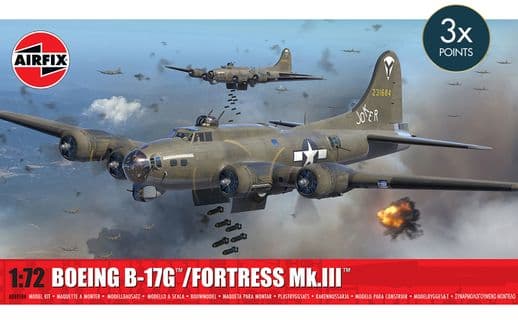
The Flying Fortresses of the USAAF were well versed in delivering their bombs on target, but could their aircraft be adapted to drop K-rations from extremely low altitude.
As we saw at the beginning of this article, the task of ensuring food was air dropped to the people of Holland in a quick and effective manner was assigned to Air Commodore Andrew Geddis, a man who had been instrumental in the operational planning of the British 2nd Tactical Air Force, someone with a reputation for getting things done – things needed to move and move fast! During negotiations with the Germans who were still occupying Holland at the time of the drops, it was reputed that Geddis simply told the German representative at their meeting what would be happening and when, and rather than ask for their cooperation, told the German officials what was expected of them – do not get involved.
The situation was so pressing that not only were the Royal Air Force tasked with providing the essential humanitarian aid, so were the USAAF, with their 3rd Air Division allocating ten bomb groups to the task, including the famous 100th Bomb Group, who were known as the ‘Bloody Hundredth’, as a result of their early bombing campaign experiences over Europe. Their incredible contribution to the Allied war effort was documented in the book Masters of the Air, but reach new audiences with the airing of a spectacular Spielberg/Hanks produced TV mini-series for Apple TV.
For the US bomber crews assigned to this operation, they had good reason to fear what they might face when flying at low altitude over enemy occupied territory. Their previous bombing missions had been flown during daylight hours, and they will have all witnessed the carnage German flak and fighter aircraft had wreaked on their massed formations over the past three years, and as far as they were concerned, the promises of German troops counted for nothing.
Even though they had confirmation from their mission planners that the Germans had given assurances that no aircraft in the assigned flight corridors would be fired upon, they knew that a flak strike taken as the low delivery altitudes of a Chowhound mission would mean almost certain death. There would be no time for the pilot to react and no time for the crew to take to their parachutes, so their survival would be very much in the lap of the gods. For these reasons, US crew would have been nervous all the time they were in Dutch airspace, but didn’t for one second think about letting their concerns delay the vital aid they would be providing. For many crews involved, the Operation Chowhound sorties were the most important they flew during the Second World War.
The Dutch people on the ground described the Chowhound B-17 Flying Fortresses as ‘Silver birds bringing joy’.
American bomber crews faced the same problems their Royal Air Force counterparts did when preparing for these humanitarian missions, as their aircraft had been designed to drop bombs, not food parcels. Time was very much of the essence here, and there was certainly no time or resources available to modify the aircraft for the task. It was simply a case of loading the supplies into the bombers, and successfully delivering them at their assigned drop zones.
Initially, the USAAF Chowhound drops consisted of standard US K-rations, something which was probably the perfect solution to the pressing problem the people of Holland were facing, and hundreds of tons of these parcels were dropped, beginning on 1st May 1945, a couple of days after the RAF had started dropping their aid. A Boeing B-17G couldn’t carry as much aid cargo as a Lancaster, but that didn’t matter, they were coming, and that was everything. In fact, with their shiny natural metal fuselages, the American B-17s were probably more visible than the night operations camouflaged Lancasters, and the Dutch people described them as ‘Silver birds bringing joy’.
Other commodities dropped by the American Chowhound relief flights were flour, dried beans, chocolate, dried eggs, tinned bacon, dehydrated meat, dried yeast, butter, cigarettes and chewing gum, enough to hopefully keep the population alive until the ground relief corridors were in full operation.
As for the missions themselves, Chowhound flights were quite well documented, and as well as a spectacular collection of photographs taken from both in the air and on the ground at the time, there is also film footage of the drops taken from onboard aircraft taking part. They make for a fascinating record of this incredible air relief effort which took place in the days immediately prior to VE Day in 1945, allowing us a truly humbling insight into what has to be described as a miracle from the air.
Chowhound crews described how on the run into their drop zones, it was rare for any of them to speak. They were flying so low that they could make out individual people on the ground, all waving at them, with many holding flags and what appeared to be sheets. Some people had taken up high vantage points, and with the aircraft flying so low, they must have felt like they could reach up and touch them. Nobody was running for the aid packages, as this was being handled by assigned teams – the majority of the population were simply waving their thanks.
Although crews may have had many operational sorties in their logbooks, the Operation Chowhound humanitarian flights were unquestionably their most memorable, being flown at such low altitudes that they could see the Dutch people on the ground, and read their messages of gratitude.
Some of the film footage shows the Flying Fortresses releasing their relief payloads, flying at incredibly low altitudes and with their undercarriage and flaps lowered. In the days which followed, discarded sacks were used to create messages for the Allied airmen to see, spelling out ‘Thank you Boys’ and ‘Thank You’ in English, letting the airmen know just how much their efforts were appreciated. In the years which followed, airmen who took part in these missions recalled how these were the best, most important missions they ever flew, but how they never got credit for it – they certainly did from the Dutch people.
The Operation Chowhound missions delivered 4,155 tonnes of food and supplies between 1st and 7th May 1945, with around 400 B-17 bombers completing 2,268 individual sorties. Around 10% of that relief supply total was delivered by the men and machines of the ‘Bloody Hundredth’.
We can’t end this story of humanitarian aid without also including the significant contribution made by ‘Operation Faust’, which was a massive ground supply operation undertaken by Canadian and British troops in conjunction with Manna/Chowhound, a supply operation which finally helped to end the food crisis in the Netherlands at the end of the war in Europe.
Although this week has rightly been about commemorating the end of the war in Europe 80 years ago, and remembering what it took for that historic day to arrive, this year also marks the 80th Anniversary of Operations Manna and Chowhound, and how the bombers which had previously been employed in bringing devastation to targets across enemy occupied Europe, ended their war by coming to the aid of a starving nation, quite literally bringing manna from heaven.
We are afraid that's all we have for you in this latest edition, but we will be back next Friday with more project development updates and the very latest Airfix kit exclusives. In the meantime, we are always keen to hear your views on all things Airfix and in particular, any thoughts and opinions you may have regarding our Workbench blog. If you would like to drop us a quick line, could we please ask that you use our workbench@airfix.com email for all correspondence.
To re-visit any of the Airfix blogs we have produced over the past seven years or so, please head to our main Workbench hub, where you will find our entire blog back catalogue and all the Airfix design projects we have already covered.
All our dedicated official social media sites can be accessed by clicking the respective link icons at the foot of this page, or by heading to the Airfix homepage. Other useful Airfix links are:
Facebook, YouTube, Twitter and Instagram official sites
Please join us for more Airfix updates next week and thank you for your continued support.