
Welcome to this latest edition of Aerodrome and our regular look at the fascinating world of aeroplanes and the historic aviation scene around the UK.
We embark on a new year of Aerodrome blog postings by looking back at one of the standout events of last year’s Airshow season, as we return to Duxford’s excellent Battle of Britain Airshow for our second review instalment. This time, our intention is to help remove those pesky winter blues for just a few pleasant minutes by taking a slightly wider look at the display element of the show, beginning with Duxford’s enduring link with the Supermarine Spitfire, before moving on to look at the show displays by two current Royal Air Force airspace dominators.
As we head on through the year, we intend to bring you new review posts from the de Havilland Aircraft Museum and from both of the Royal Air Force Museum sites, along with a selection of Airshow reports from current events and those taken from our extensive archives. With several photoshoot events already added to the diary, if there is anything planned where aeroplanes are involved, there’s a strong chance Aerodrome will be there to document proceedings.
Right then, let’s dive into 2025 by consoling ourselves with the fact that it’s only 18 weeks until the start of this year’s Airshow season.
With its links to the Spitfire and the Battle of Britain, there’s something a little bit special about a visit to Duxford.
When it comes to the subject of aviation heritage, enthusiasts living here in the UK really do have to count ourselves incredibly fortunate, because for a great many years now, we’ve had access to a spectacular number of preserved and restored aircraft either in museums, or on our vibrant Airshow circuit. Because this has been the case for several decades now, we’ve even been running the risk of taking this good fortune a little for granted, however, we do so at our peril, because as we all know, when it comes to the world of Warbirds and historic aviation, things can change very quickly.
Clearly, owning and operating historic aeroplanes is an expensive business and if it wasn’t for the enthusiasm and generosity of a number of wealthy and highly motivated individuals who share our passion for aeroplanes and allow us to enjoy theirs, the UK aviation scene could quickly become a very different place. Thankfully, even though the Warbird movement has a reputation for being notoriously ‘fluid’, our good fortune has continued to hold, and as we head into another year, we have much to look forward to, along with several superb sites around the country which are dedicated to helping us satisfy our aircraft addiction.
Although the Imperial War Museum airfield site at Duxford isn’t unique in offering a world class collection of aircraft for visitors to admire on Airshow day come rain or shine, it does offer this in the historic surroundings of a former wartime fighter station, one which was also the first operational airfield in Britain to accept a production Supermarine Spitfire for squadron service. Since then, the airfield has continued to be a haven for Spitfires, not only offering a home for aircraft saved from the scrapman’s axe to be preserved for the benefit of the nation, but in more recent times, has also become a world-renowned centre for the restoration, operation and maintenance of an ever increasing number of airworthy Spitfires.
On any given day, a visit to this magnificent venue could have you filling your senses with the symphonic overtures of a Rolls Royce Merlin engine, or marvelling at the sight of a Spitfire’s iconic elliptical wings, as one dances between the clouds in Cambridgeshire skies, as one of the home-based aircraft conducts an air test.
Even taking a stroll through the Duxford site isn’t without its visual treats, as the buildings which house the vast number of exhibits are equally impressive. Flanked by the more modern American Air Museum and Airspace facility at either ends of the site, the central section of the airfield is dominated by three historic Belfast truss hangars, buildings which have watched over proceedings at the site for many a decade, but with a further hangar which appears to have gone AWOL. Providing accommodation for many of the famous and historic aircraft which call Duxford home, the large open space to the left of the control tower as you look towards the A505, used to be dominated by a fourth hangar, one which is probably sorely missed by museum officials these days, but one which is famous by the part it played during the filming of the 1969 movie ‘Battle of Britain’.
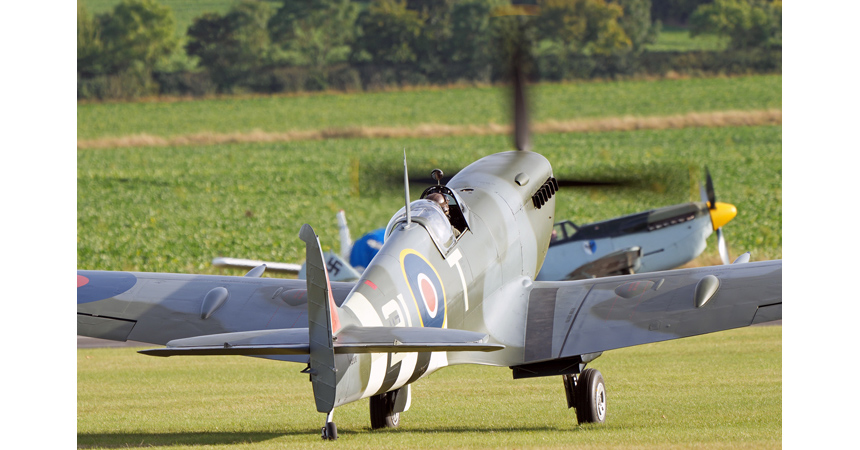
Is there a finer sight and sound than Spitfires taking off at the start of a display routine?
Fortunately for us, what goes out, has to come back in!
During an intense period of filming the previous year, and in a dramatic attempt to simulate the airfield coming under Luftwaffe bomber attack, the hangar was blown up in spectacular fashion, with the remnants presumably being demolished and cleared once the cameras had stopped rolling. To this day, as Duxford has become such a hallowed venue for so many people, I’m sure I’m not the only one who gives a little grimace every time I watch that particular scene in the film.
Today, all that remains of that hangar is a large concrete expanse which now usually serves as convenient additional display space on Airshow day, or a shortcut to the restaurant if you’re in need of a little sustenance. Perversely, due to its role in the Battle of Britain movie, this missing hangar is possibly the most famous of the buildings (or former buildings) at Duxford, and you’ll always see people standing on the spot where it used to be prior to that fateful explosion in 1968, with a smile on their faces, as they experience one of the many highlights of a visit to Duxford.
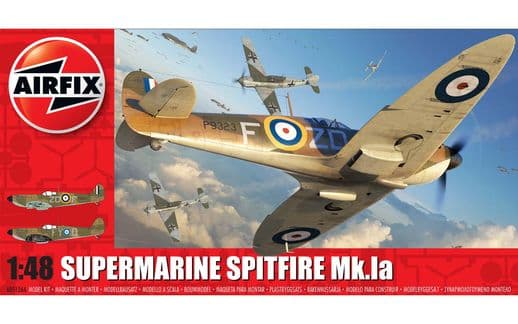
Going back to the start of Duxford’s long association with the Spitfire, when the then Royal Air Force Station Duxford took delivery of the first production Spitfire on 4th August 1938, the airfield was unquestionably the centre of an excited nation’s attention, however, spare a thought for the pilots who were about to become acquainted with this incredible new aeroplane. Receiving additional Spitfires at a rate of around one new aircraft each week, home based No.19 Squadron would take the honour of becoming the first unit to be equipped with what they and the British public must have considered the most formidable fighting aeroplane the world had ever seen.
Those young men had previously been operating the Gloster Gauntlet biplane fighter and whilst this was an extremely capable fighting aeroplane in its own right, it was certainly no Spitfire. This biplane fighter featured an open cockpit, fixed undercarriage and a radial engine which propelled the fighter to an impressive 230 mph, however, they were trading this for a very different aviation proposition altogether. The new Spitfire was a sleek, fast monoplane design, with a fully enclosed cockpit, retractable undercarriage and eight wing mounted machine guns. Of greatest significance, the Spitfire was over 130 mph faster than their previous mount, which represented nothing short of a quantum leap in aviation performance terms.
Spitfire evolution. Spitfires powered by the Rolls Royce Griffon engine were almost 100 mph faster than the first Spitfires which arrived at Duxford back in 1938.
As you might well imagine, without the existence of any two-seat training variants of the fighter, and with your first flight in a Spitfire therefore actually being your first solo, conversion to this technological marvel didn’t go without its challenges, along with the odd mishap. Although some of the RAF’s best pilots had been invited to fly the Spitfire prior to the first aircraft arriving at Duxford, for the pilots of No.19 Squadron, jumping from a Gloster Gauntlet into a Spitfire must have been a daunting experience for them, and a steep learning curve if they were going to be able to tame this aviation beast.
With a host of new technology, completely different flying characteristics and all that additional speed and power to master, some pilots later admitted to being frightened of the new fighter, feeling that it was trying to kill them at every opportunity, particularly during landing and take off. Several aircraft would be damaged in landing accidents during those first months, with pilots having the added pressure of knowing they would have to fight in their new Spitfires, even if they managed to tame them.
Once the press had been invited to Duxford to see No.19 Squadron ‘At home’ with their new Spitfires during 1939, many pilots had successfully made the conversion to their new fighter and their initial reservations had been replaced by feelings of exhilaration, having the privilege of flying this thrilling aeroplane. One reporter at the time described the Spitfire as a ‘Poem of speed and precision’, and even though he was right, this was no time for admiration – the RAF needed as many Spitfires as possible, and they needed them now!
Duxford’s ‘Big Wing’ is worth travelling the length of the country to experience – quite magnificent!
A legend amongst its peers. Is Spitfire Mk.IX MH434 the most famous Spitfire the world has ever known?
As we now know, the Spitfire would go on to be regarded as the saviour of the nation, not only Britain’s most famous fighting aeroplane, but probably the most famous aircraft to have ever taken to the skies, a legacy which endures to this day. Helping to maintain that legacy, the fact that Duxford is still an active airfield and is open to the public on most days, is there a finer venue in the world from where to admire restored examples of this famous fighter, either on the ground, or in the air? The link between aircraft and airfield is arguably the greatest asset that Duxford possesses and is one of the main reasons why people return to this famous location year after year, possibly multiple times if they’re Airshow regulars.
As for the show organisers, they’re fully aware of this Spitfire link and the affection in which this magnificent aircraft is still held. For this reason, the Spitfire continues to play a significant role in their event planning and to be fair, they always serve up a Spitfire treat for visitors on show day. For the Battle of Britain Airshow, as you would imagine, the Spitfire is front and centre and the absolute highlight of both days of the show. For anyone with even the slightest interest in aviation, the sight and sound of the massed take-off of twelve Spitfires and three Hawker Hurricanes from a former Battle of Britain station is an experience money shouldn’t be able to buy in this day and age, especially when it’s followed by several formation passes overhead the airfield, prior to the aircraft making their run and breaks for landing and recovery.
In truth, this is something Duxford does extremely well, and if an experience such as this doesn’t get the hairs standing up on the back of your neck, it’s time to make an appointment with your G.P – it’s truly awe inspiring. Oh, and the not insignificant fact that this was all taking place on Battle of Britain day – well done Duxford!
Something of a coup for the Duxford show organisers – these two classic WWII bombers are rarely seen flying this close together in the same airspace.
An opportunity which is available to every Airshow display organiser, and one which is always incredibly popular with those in attendance, is to arrange display aircraft in unusual formations, which always makes for some valuable photo and video opportunities. These formations can be created using various themes, be that aircraft type, the engines used by those aircraft, or something a little more tenuous, however, the rarer the aircraft gathering, the better and may often result in the highlight display sequence of any Airshow.
At this year’s Duxford show, the display organisers arranged for two titans of the UK Aviation scene to be in the same piece of Cambridgeshire airspace at the same time, two four-engined heavy bombers which are the only airworthy examples of their types in Europe and aircraft which are such priceless artefacts that they are rarely flown in close proximity to each other. The Battle of Britain Memorial Flight’s Avro Lancaster PA474 and Boeing B-17G Flying Fortress ‘Sally B’ are both much loved aircraft of the UK Airshow scheme in their own rights, both headline acts at any display in which they’re scheduled to appear, but rarely perform as a pair, but at Duxford’s September show last year, we were treated to something very special.
Although clearly not an aircraft associated with the actual Battle of Britain, Avro Lancaster PA474 is arguably the most famous aircraft of the Battle of Britain Memorial Flight, and is one of the most significant airworthy historic aircraft in the world today. Constructed at the Vickers Armstrong factory at Hawarden in May 1945, this Lancaster was destined to fight the Japanese as part of Britain’s ‘Tiger Force’, but the end of WWII dictated that she never saw action. After serving as a reconnaissance aircraft and pilotless drone, the aircraft was eventually earmarked for museum display, but not before starring in the feature films ‘Operation Crossbow’ and ‘The Guns of Navarone’.
In 1965, the Commander of No.44 Squadron at RAF Waddington (the first Squadron to receive Lancasters back in 1941) requested that the Lancaster be placed under his care and following the arrival of PA474, the aircraft embarked a period of maintenance and restoration, flying on a number of occasions whilst this work continued.
After operating under the stewardship of RAF No.44 Squadron for several years, the Lancaster was passed over to the Battle of Britain Memorial Flight in November 1973, as it was felt the Flight had the time and necessary expertise to keep this important aircraft serviceable and to continue with her restoration to as close to wartime configuration as possible. Over the years, the Flight have a history of presenting their aircraft in different liveries, each one depicting a famous aircraft or action involving a Bomber Command Lancaster, but always commemorating the effort and sacrifice of the men flying and preparing these aircraft for operations during WWII.
Following the completion of her winter deep maintenance schedule in 2006, Lancaster PA474 was repainted in the markings of Lancaster EE139 ‘Phantom of the Ruhr’, in commemoration of a famous ‘Centurion’ aircraft, which survived no less that 121 operational missions during its wartime service career with Nos 100 and 550 Squadrons. This proved to be one of the most popular liveries ever worn by the BBMF’s Lancaster, by virtue of its sinister looking nose artwork.
Since 2017, PA474 has been wearing the same livery, one which gives her a dual identity, with different markings being carried of either side of the aircraft. The port side markings depict Lancaster W5005 AR-L ‘Leader of No.460 (RAAF) Squadron, and sports impressive artwork which features a bagpipe playing kangaroo. This was a visual representation of the multinational make-up of this aircraft’s wartime crew, something which was a feature of Bomber Command during WWII.
The starboard side wears the markings of a No.50 Squadron Lancaster, with LL922 being the aircraft in which the grandfather of the officer commanding the BBMF at that time had served during the war. The aircraft is probably due another making change at some point in the not-too-distant future and as this magnificent aircraft is one of the most popular on the UK Airshow circuit, we await news of developments with some interest.
Duxford show weekend was the only place where two airworthy Gloster Gladiators could be seen on the same airfield.
An aircraft which marked the pinnacle of biplane fighter technology when it first entered service, but also heralded the dawn of the monoplane era, the Gloster Gladiator is a truly beautiful aeroplane, cultured and aesthetically pleasing, whilst being ground-breaking in so many ways. For one glorious Airshow in September last year, Duxford airfield was able to boast the attendance of the only two airworthy Gloster Gladiators in the world, and for many enthusiasts, despite the plethora of Spitfires and Hurricanes on show, these beautiful little biplanes were the undoubted stars of the event.
Duxford resident Gladiator II N5903 was one of the latest aircraft to join The Fighter Collection fleet, but despite being one of the most interesting aircraft on the UK Airshow circuit, she had underlined the challenges owning and operating a historic aeroplane can create, as her time in the air has been limited over the years. After undergoing a long and painstaking programme of restoration, the aircraft has been beset with a succession of engine related problems, all of which have restricted this Gladiator’s ability to thrill Airshow audiences as a consequence.
It's thought that Gladiator N5903 was one of the final aircraft of its type to be delivered to the Royal Air Force in 1939 and is believed to have served operationally with No.141 Squadron at Grangemouth in Scotland. After a subsequent period where she was held in storage, she was earmarked for conversion to fly meteorological survey flights in early 1944, however, this work was never completed, as other, more modern aircraft were allocated to this task. She was eventually used as a donor airframe during the restoration and ongoing operation of Gladiator L8032, but we’ll come on to that in a moment.
She joined the Fighter Collection fleet in 1994 and after a lengthy period where she received attention in the TFC hangar at Duxford, would make its first post restoration flight in the days just prior to the 2008 Flying Legends Airshow. This magnificent aircraft has been finished in the colours of an RAF No.72 Squadron Gladiator, one which operated from RAF Hornchurch during 1937. The striking blue fin and forward stabilisers of the aircraft mark it as the personal Gladiator of the ‘B Flight’ commander and beautifully illustrates the flamboyant nature of inter-war military flying in Britain. She has only relatively rarely performed with the world’s only other airworthy Gladiator, which made this such a significant feature of the Duxford show.
Both the Gladiator and Lysander are powered by the Bristol Mercury radial engine.
TFC’s beautiful Gloster Gladiator has been a relatively elusive performer over the years.
The other airworthy Gloster Gladiator in attendance at Duxford is a real UK Airshow stalwart and one which is based at nearby Old Warden airfield. It is difficult to believe that the Shuttleworth Collection’s Gloster Gladiator Mk.I L8032 (G-AMRK) has been thrilling UK Airshow audiences for over 64 years now and for many of those years, she has been the only flying example of the ultimate biplane fighter to be found anywhere in the world.
Constructed as the last Mk.I airframe from the initial Royal Air Force order, this aircraft was not actually fully assembled until 1938, which really does illustrate the wider development story of the Gladiator and its historic positioning. By the time she was assembled, the new Spitfire and Hurricane monoplane fighters were very much the order of the day and Gladiator airframes were no longer needed for use by home based Squadrons. With many aircraft being sent overseas, or relegated to secondary duties in home skies, aircraft which suffered damage or were no longer required were either scrapped or simply left to rot on the airfields where they sat. As the Gladiator represented older technology and Britain was now very much at war, it’s a wonder any of these magnificent aircraft managed to survive, let alone for us to have two airworthy examples today.
This magnificent aircraft has been thrilling Airshow audiences for over 60 years.
Gladiator Mk.I L8032 arrived with the Shuttleworth Collection at Old Warden airfield for safe keeping in 1960, following the closure of the Gloster Aviation Company. She was already in flying condition, and it was thought that the collection would be the best home for this extremely rare aircraft, which at the time was the only flying example in the world – The Shuttleworth Collection not only possessed the expertise required to maintain and operate this classic aeroplane, but their home airfield was also open to the public on most days, allowing anyone interested to marvel at this beautiful aeroplane.
This aircraft has previously been presented in the camouflage markings of RAF No.247 Squadron machine, which was significant as they were the only RAF Gladiator unit to take part in the Battle of Britain. She’s also worn the unusual markings of a Norwegian Air Force Gladiator, however, she’s currently resplendent in the colourful flashes of an RAF No.73 Squadron aircraft, one which was flown at the 1937 Hendon Air Pageant by future WWII fighter ace Edgar James ‘Cobber’ Kain. Although an extremely rare aeroplane, she continues to be one of the longest serving display aircraft on the UK Airshow circuit, possessing a unique history, and maintaining the legacy of this ultimate biplane fighter.
Another rare sight at Duxford, this pair of Westland Lysanders are currently the only airworthy examples to be found anywhere in the world.
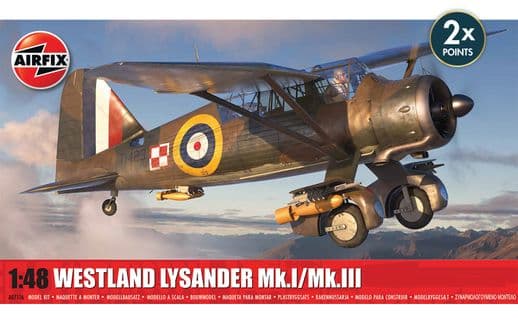
Another rare aircraft type which was in attendance ‘at the double’ at this year’s show was the Westland Lysander, a reconnaissance, observation and artillery spotting aircraft which was undoubtedly one of the most distinctive to see service with the Royal Air Force during the Second World War. Powered by the same Bristol Mercury radial engine family used on the Gloster Gladiator, the Lysander has a reputation for being a STOL capable aeroplane which served as an agent taxi during the Second World War, however, it was really quite a challenging aeroplane to fly and was used extensively during the early months of WWII.
A long-time resident on the UK Airshow circuit and another aircraft owned and operated by the Shuttleworth Collection, Westland Lysander V9552 was originally built for the RAF in 1938, but was subsequently sent to Canada, where it served as a target tug for the Royal Canadian Air Force. Following the end of the Second World War, the aircraft was sold to a private collector, then on to the famous Strathallan Collection in Scotland, where it was returned to flying condition in 1979.
The aircraft was purchased by the Shuttleworth Veteran Aeroplane Society in the late 1990s, where it joined the UK Airshow circuit wearing a standard RAF scheme, but one which paid tribute to No.309 Polish Squadron, a unit which operated the aircraft for two years from 1940 from bases in Scotland.
Following receipt of a donation and subsequent request from a former Special Duties Lysander pilot, the aircraft was repainted to represent a No.161 Squadron (Special Duties) Lysander operating out of Tempsford and Tangmere during the latter stages of the war, delivering and recovering agents from fields in occupied Europe, some of the most dangerous missions of the Second World War. These aircraft were painted for nocturnal operations, and this livery is significant as the former RAF Tempsford is only a few miles from both Old Warden and Duxford.
This fine restoration project has previously been seen at Duxford with the distinctive wheel spat mounted bomb racks attached.
The other Lysander on display at Duxford last September was the home based V9312 (G-CCOM), an aircraft which has the distinction of being the only British built example of this aircraft type flying in the world today. Indeed, just as was the case with the Gladiator pair, Duxford was the only place in the country where the nation’s airworthy fleet of Lysanders could be seen over that weekend – both would also be flown in a formation flypast together.
Quite an advanced aircraft when it entered RAF service just prior to the start of the Second World War, the Lysander was initially intended as an Army cooperation aircraft performing such tasks as artillery spotting duties, however the impressive performance of the aircraft would later result in the Lysander being fitted with undercarriage spat bomb racks and it being used in a light bomber role. In fact, although this aircraft wasn’t wearing them at this show, it has previously been seen at Duxford with its wheel spat bomb racks fitted.
This aircraft was built at Westland’s Yeovil factory in 1940 and initially taken on charge with the RAF at No.33 Maintenance Unit at Lyneham. She would go on to serve with Nos.225, 4 and 613 Squadrons, before later being converted to target tug configuration and sent to Canada as part of the Commonwealth Air Training Plan, flying for the final time in this role in October 1944. She was later sold to a Canadian aircraft collector, before coming into the hands of famous aviation personality Kermit Weeks, who held the aircraft in storage for many years.
This Lysander came into the possession of the Aircraft Restoration Company in 2003, where it was immediately assessed, before embarking on a mammoth 15 year restoration programme, making its first flight in over 74 years at the end of August 2018. A stunning example of this distinctive wartime aircraft, if you are in a position to do so, ARCo’s Aerial Collective operation will allow fortunate passengers to take a flight in this beautiful aeroplane, perhaps taking a flight over the nearby former Special Duties airfield at Tempsford.
Will the RAF’s Lockheed Martin F-35B Lightning ever be held in the same regard as the much-loved Harrier by the Airshow-going public? Only time will tell.
Despite this year’s Battle of Britain Airshow hosting an embarrassment of classic British aviation riches, the current Royal Air Force were determined to play their part in proceedings, sending two of their most formidable airspace dominators to provide a contemporary demonstration of their fighting capabilities. Marking an interesting change in the capabilities of the Lockheed Martin F-35B Lightning II in British service, this season has seen the emergence of the aircraft flying role demonstration performances at several events, where the aircraft has been flown in a much more spirited manner, allowing us all to see just why this is regarded as one of the most capable combat aircraft in service today.
Unquestionably the most capable fighting aeroplane in current Royal Air Force service, the Lightning II is almost like a ‘Super Harrier’ on steroids, and even though this incredible aircraft can even do things the Harrier couldn’t even dream of doing, it has yet to eclipse the Harrier in the affections of the UK Airshow going public. We simply loved the Harrier and did since the first aircraft entered RAF service back in 1969, but perhaps with the F-35B now taking on much more dynamic displays, perhaps we’re about to see the aircraft take its rightful place in the hearts of the UK public – lord knows, we paid enough for them.
As the RAF’s current Spitfire, the Eurofighter Typhoon has long been an Airshow favourite, a fact which hasn’t been lost on either the RAF or their Typhoon Display Team. In commemoration of this year’s 80th Anniversary of D-Day, this year’s display jet was presented in a beautifully distinctive WWII era scheme, one which was resplendent in D-Day identification markings.
Contemporary Royal Air Force brothers in arms – the spectacular F-35B and the ever-evolving Typhoon FGR.4.
Intended to be a representation of the No.257 Squadron Hawker Typhoon flown by Squadron Leader Denzil Jenkins in support of the D-Day landings during the summer of 1944, Eurofighter Typhoon FGR4 ZJ913 impressively took on this aviation persona throughout the 2024 Airshow season, delighting audiences as a consequence wherever she displayed. The aircraft on which these markings were based was flown many times by Squadron Leader Denzil Jenkins in the weeks leading up to D-Day, including a raid against enemy radar sites across the northern French coast immediately prior to invasion, effectively blinding the Germans and keeping the approaching armada secret for a few vital minutes longer.
It will come as no surprise whatsoever to learn that this uniquely presented Typhoon was given a nickname almost before the paint was dry and throughout the 2024 season, ‘Moggy’ was impressively flown by this year’s Typhoon display pilot Flight Lieutenant David ‘Turbo’ Turnbull, who did his level best to show why the Typhoon has developed into one of the most capable multi-role aircraft in service today.
Unfortunately, Moggy’s performance at Duxford proved to be one of her final display appearances of the year, with this distinctive aircraft already hanging up her display wings. She has now flown to RAF Lossiemouth where she is to serve as a ground instructional aircraft, helping to train the next generation of RAF engineers. We will definitely miss Moggy and her dynamic displays.
Airshow regulars will no doubt have fond memories of classic Duxford Airshows from years past and if they happened to be in the audience at last year’s Battle of Britain Airshow, they might also share my opinion that the show was a welcome return to form for this much-loved venue, and hopefully, a sign of good things to come. Presenting an impressive collection of aircraft and a display programme which had something for everyone, both days were well attended and extremely enjoyable, something which will have us all returning for more of the same in 2025.
As we look back at some of the most enjoyable events of the previous twelve months, we’re always filled with optimism for what we might get to see in the coming year – will any new classic aircraft be joining the UK Airshow scene in 2025 and what will the next RAF Typhoon Display Team aircraft look like? Whatever happens, I’m sure many Aerodrome readers will be there to witness proceedings, and you can be sure that your blog reporter will be there with camera in hand.
Here is a final selection of show images for your enjoyment.
A selection of Great War aviation classics on display at Duxford this year, starting with the de Havilland DH9, the only airworthy WWI bomber aircraft to be found anywhere in the world.
Showing its aviation lineage, this Royal Aircraft Factory BE2 looks for all the world like a man-made crane fly!
There’s something captivating about enemy aircraft, particularly if they’re as iconic as this magnificent full size replica Great War Albatros fighter.
Always popular when playing the enemy at Airshows across the country, this Hispano HA-1112 Buchon (Messerschmitt Bf 109G by any other name) also has Battle of Britain credentials, if you include the filming of the 1969 movie!
Another Duxford rarity, this Hurricane is made for two! She is the only airworthy two-seat Hurricane in the world.
Always a popular performer at any UK Airshow, Mustangs also operated from Duxford during the Second World War.
As this is a Duxford show review, we simply had to sign off with a picture of an airworthy Spitfire. Roll on Airshow 2025.
I’m afraid that’s all we have for you this time, but we will be back again in four weeks’ time with more news and pictures from the world of aviation. Thank you for your continued support and as always, if you would like to comment on anything blog related or suggest a subject you would like to see covered in a future edition of Aerodrome, please do drop us a line at aerodrome@airfix.com, where we would be delighted to hear from you.
Should you wish to continue the aviation discussions between editions, you will always find something of interest over on the Airfix Aerodrome Forum and if social media is more your thing, please use the respective official social media icon links at the foot of the main Airfix and Corgi website homepages to access our official sites.
The next edition of Aerodrome is scheduled to be published on Friday 31st January, when we will be bringing you more news from the fascinating world of aviation.
I hope to see you all back here then.
Michael