
Welcome to this latest edition of Workbench and all the news, updates and exclusive announcements from the fascinating world of Airfix modelling.
We are delighted to announce that this 128th edition of Workbench is devoted entirely to one major subject, one which will be of huge interest to Airfix fans all over the world – the launch of the 2020 Airfix Club. Throughout this edition, we will be bringing you a fascinating selection of exclusive images which are all linked to the Airfix Club, including artwork produced for club literature and details of the exclusive Club kit which will be supplied to Airfix Club Plus members. As a special treat for Workbench readers, we will also have scheme detail reviews of the two incredibly interesting new decal options which will accompany the Club kit, in addition to showing built sample models of both new build options, which are both as interesting as they are attractive.
Importantly, we are pleased to inform readers that the dedicated Club page on the Airfix website is now LIVE and the Airfix Club 2020 is open for business. We will attempt to give you all the information you need regarding club membership and benefits, but for further information and to take your place amongst the first 2020 club members, please use this Airfix Club 2020 page link.
It’s fantastic Airfix news all the way in this latest edition of Workbench.
There are some editions of our Workbench blog which simply have to be devoted to a single subject and this just happens to be one such edition. We are delighted to announce that the Airfix Club 2020 is now live and awaiting its first members – timed to coincide with the publication of this latest blog, the new Airfix Club webpages are now live on the Airfix website and include all the information you might need for those thinking about joining. If you would like a little more information before heading over there, this edition of Workbench will attempt to provide you with a club benefits overview, before moving on to discuss the details behind the 2020 Club Model selection. With our usual selection of exclusive imagery throughout, prepare for something of an Airfix Clubfest edition.
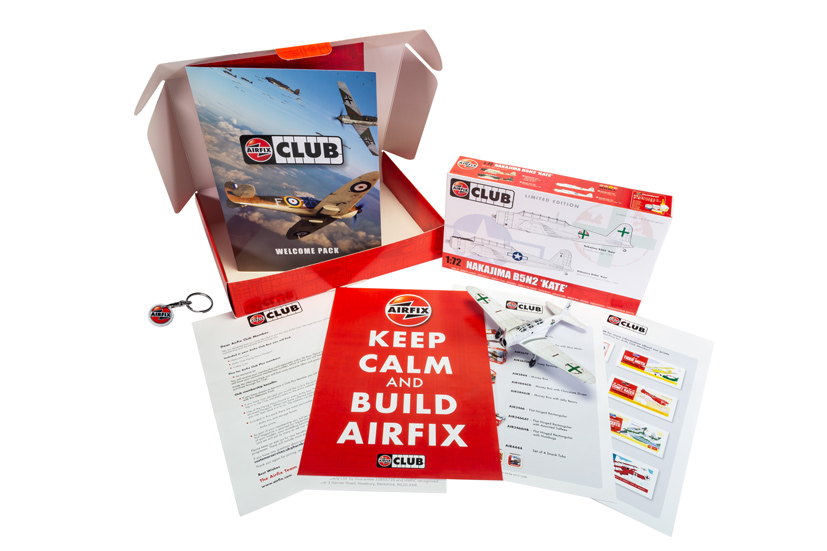
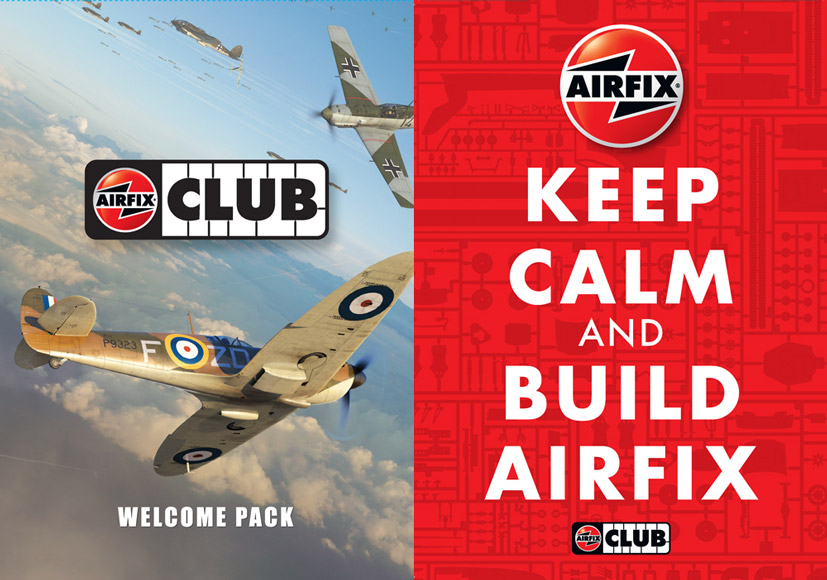
The image above features a sight which will soon be familiar to Airfix devotees the world over, our latest Airfix Club welcome pack – this is actually the one you will receive if you choose our Airfix Club Plus membership option, as there are two options available, Airfix Club and Airfix Club Plus. Both options are available to UK and overseas members and are priced accordingly.
Let’s take a closer look at what members will receive in their club box once they have selected their preferred membership package:
Airfix Club Membership
When you receive your Airfix Club box, it will contain:
• Welcome Pack
• Airfix Club ‘Trolley Coin’
• Airfix Club ‘Flying Hours Passport’
The cost of this membership option is
RRP UK £14.99
RRP International £34.99
Airfix Club PLUS Membership
When you receive your Airfix Club box, it will contain:
• Welcome Pack
• Airfix Club ‘Trolley Coin’
• Airfix Club ‘Flying Hours Passport’
• The exclusive Limited Edition Airfix Club kit (Surrender/Evaluation Kate)
The cost of this membership option is
RRP UK £24.99
RRP International £39.99
The membership packs are now ready for dispatch and our Customer Service team are waiting to get them sent out to members straight away. The new credit card style Membership Card will be sent on separately within 28 days of sign up, as this will be embossed with your unique member number and will be important when securing membership benefits in the future - please do keep this card safe.
Club membership benefits
• If you elect to become a Club Plus Member, your Welcome Pack will also contain the exclusive Limited Edition Club Kit.
• If you decide at a later date that you would like to buy the exclusive club kit or wish to obtain a further example, simply log into the exclusive Club Members Area of the Airfix website, where you will be able to place your orders (as long as we still have available stock).
• Use of Flying Hours tokens. These tokens can be found on most Airfix kit boxes and must be cut out and attached to the Flying Hours Passport you received in your Welcome Pack. When you have collected enough Flying Hours for the model kit series you wish to redeem them for, simply fill in the back of your Passport, list your preferred kits and send it in. Our address details and all instructions can be found on the back of your Passport.
• Your Welcome Pack will also Include details of a range of appealing Airfix related products which will either be exclusively available to club members, or made available at discounted prices. The launch range includes Airfix tins, a money box and a set of 4 snack tubs, each one featuring iconic Airfix box artwork. This range of products will continue to grow over time, so a quick visit to the members section of the Airfix Club webpage will always be time well spent.
• Your Airfix Club membership also includes delivery of our Club Magazine, which will be published in printed format with three new editions each year – we will also send members an Airfix calendar at the beginning of the year. The first Club magazine is planned for September publication.
• Additional Club benefits may be added throughout the year, so it is important that members continue to check the dedicated Members area. Additions may include additional exclusive kit offers, more Airfix branded goodies and interesting Airfix member experiences.
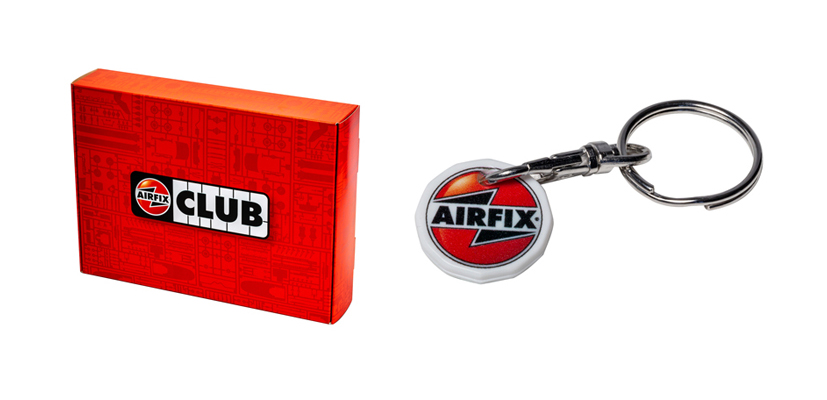
Ready for immediate dispatch, members of the Airfix Club will soon be receiving their welcome packs, which will include one of these Airfix Club trolley coins
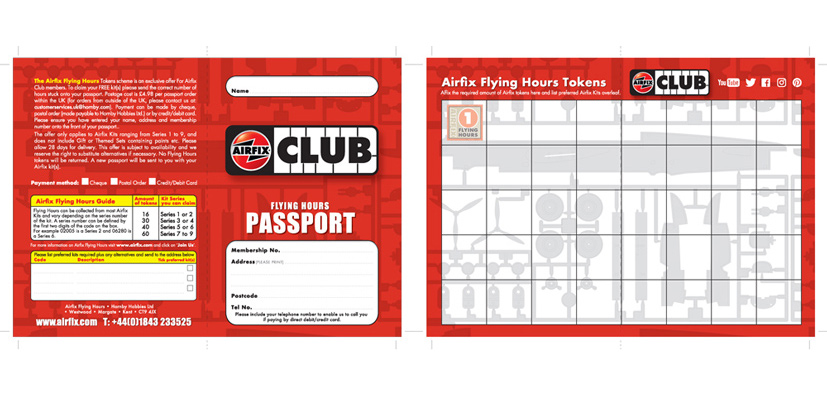
Airfix Club regulars will be familiar with the Flying Hours Passport and will have been saving up their tokens for a raid on our kit stock levels
Our Assistant Brand Manager Sally has asked if we would mention to prospective Airfix Club members that they also have the opportunity to have their modelling talents, current projects or interesting Airfix related stories featured in a future edition of the Club Magazine, which will be read by thousands of Airfix modelling enthusiasts all over the world. If you do have something which you feel may be of interest, please drop her a line using this marketing@airfix.com link.
Be one of the 'first 1000'
As an added bonus for the first 1000 members joining the Airfix Club in 2020, they will receive a printed copy of the Complete Airfix artist and kit list (6th Edition). Compiled by our good friend and font of all Airfix knowledge Jeremy Brook, this fascinating compendium of expertly researched information will be of great interest to anyone who has enjoyed building Airfix kits over the years and links the production of our iconic box artwork with over 70 years of Airfix kit production. This recently revised publication will be included in the welcome pack of the first 1000 members signing up for the 2020 Airfix Club and we are certain that it will make for fascinating reading and an invaluable Airfix aide memoire for years to come.
We would like to thank Jeremy for his kind assistance in making this publication available to our ‘First 1000’ and for all the hours of work spent compiling such a concise record. His Constant Scale magazine will be familiar to many modellers as a continued source of fascinating Airfix kit related information.
Now that all the membership formalities are out of the way, let’s take some time to look at the fascinating stories behind the two exclusive scheme options which make the 2020 Club Model such an interesting subject choice and future modelling project for new club members.
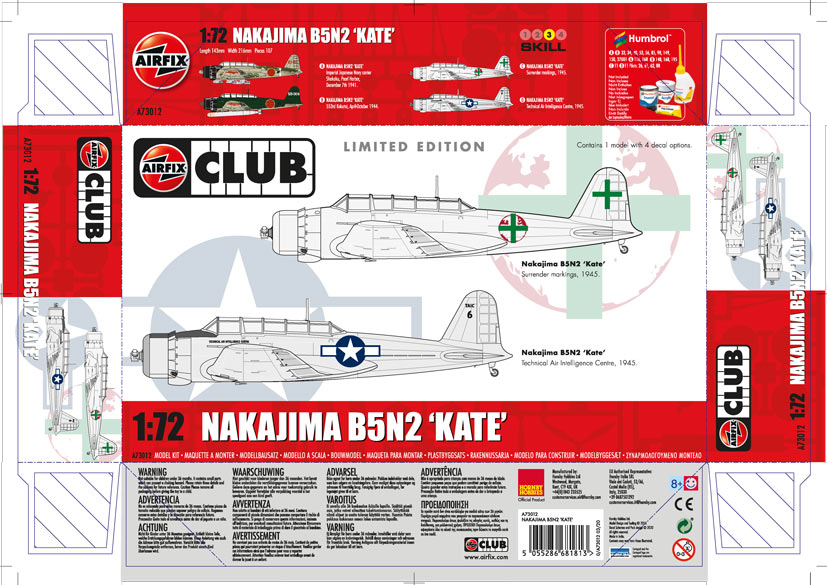
An exclusive first look at the box artwork design which will be used in association with the 2020 Airfix Club kit, two new unusual scheme options for the famous Nakajima B5N2 Kate attack aircraft
As the world descended inexorably towards conflict during the latter half of the 1930s, Japan engaged in a massive expansion of its military capabilities, knowing that the need for an effective mobile strike force would be crucial if their expansionist plans were to be realised. The Japanese Empire had made no secret of the desire to increase its empire into East Asia and the greater Pacific region, providing security for its population and the raw materials for its continued industrial growth. Many in Japan felt that the only way to protect the nation was to expand away from the home islands and protect Japanese interests by force, claiming territory as their own and occupying other regions. This expansion would also provide a welcome boost to food availability and raw materials for this rapidly developing nation.
Central to the success of such a policy would be a strong naval force and included the need to develop air power capable of striking with deadly force over great distances, with the ability to operate effectively from the Japanese Navy’s rather modest force of aircraft carriers. The naval aircraft developed during this period were some of the most advanced in the world and would go on to allow Japanese military planners to secure vast areas of Pacific territory, whilst at the same time showing Allied navies the latest aviation technologies they were up against.
One of the highly capable aircraft in service with the Imperial Japanese Navy at that time, the Nakajima B5N ‘Kate’ was a sleek and rather elegant looking carrier capable torpedo attack bomber, one which incorporated many highly advanced design features. Making its first flight in January 1937, the Type 97 Carrier Attack Bomber had a crew of three and was a relatively large aircraft to be powered by the single 800hp Hikari 3, 9 cylinder radial engine, something which would result in a major upgrade programme in the months prior to the Pearl Harbor attack.
Operational experience gained during the Second Sino-Japanese War revealed that the aircraft offered little protection for crews during combat, with the fuel tanks being particularly vulnerable to enemy fire. As military planners wanted to retain the speed and agility of the aircraft, extra armour was rejected in favour of simply installing a more powerful engine and the hope that the slightly faster variant of the aircraft would be able to outpace any potential adversaries – their aircrews must have been delighted with this development.
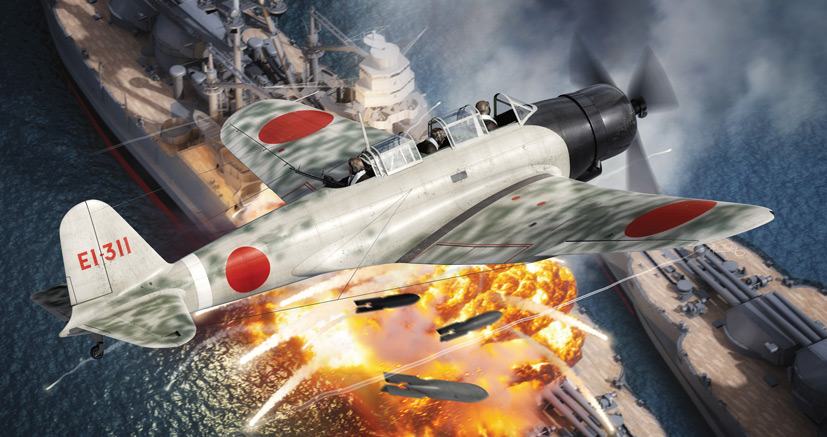
When the Nakajima B5N first took to the skies in January 1937, it was arguably the most advanced naval strike aircraft the world had ever seen and the standard by which all similar aircraft would now be judged. Updated versions of the aircraft were used heavily during the Pearl Harbor attack and will always be associated with this infamous raid
By the time of the infamous Pearl Harbor attack, the Nakajima Kate was coming towards the end of a major upgrade programme to the more powerful B5N2 version of the aircraft and as a consequence, none of the earlier models were to see action during the raid. Equipped with the more powerful 1000 hp Nakajima Sakae 11 fourteen cylinder radial engine, the increased diameter of the unit required a re-engineering of the B5N2’s engine cowling, which would obstruct the pilot’s forward vision when compared with the original variant. Despite making his job more difficult, the skill and tenacity of the well trained IJN Kate crews would earn the respect of their adversaries, as they pressed home their attacks using either iron bombs or a single Type 91 torpedo, often in the face of heavy defensive fire.
Despite being an advanced aircraft when it first entered service, by the time hostilities began at the start of the Second World War, the B5N2 Kate was already regarded as an obsolete type, however despite this, due to spectacular early successes and the continued lack of a more capable replacement, the aircraft would be forced to soldier on for the duration of the war. In the face of ever greater numbers of the latest, highly capable US navy fighter aircraft, the fate of many Nakajima B5N2 Kates and their crews became increasingly inevitable. Indeed, attrition rates in the final few months of the war proved to be so severe that not one original Type 97 Kate remains in airworthy condition today, just the partially restored sections of two crashed aircraft.
The Nakajima B5N2 Kate may not be one of the Second World War’s most instantly familiar aircraft to many people, however, it is most certainly one of the most important naval strike aircraft of the WWII era and one which clearly illustrates the lead Japan had in naval aviation technology at the outset of war. With no complete examples of the aircraft in existence today, the B5N2 makes for an excellent choice as the 2020 Airfix Club model, particularly as the two new schemes offered represent two of the only intact airframes to survive the final weeks of the Second World War. Let’s take a closer look at both of the new Nakajima B5N2 Kate schemes now.
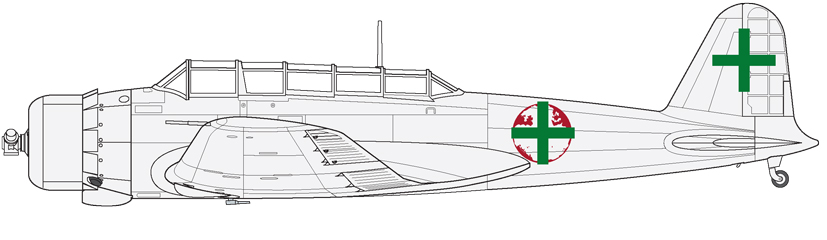
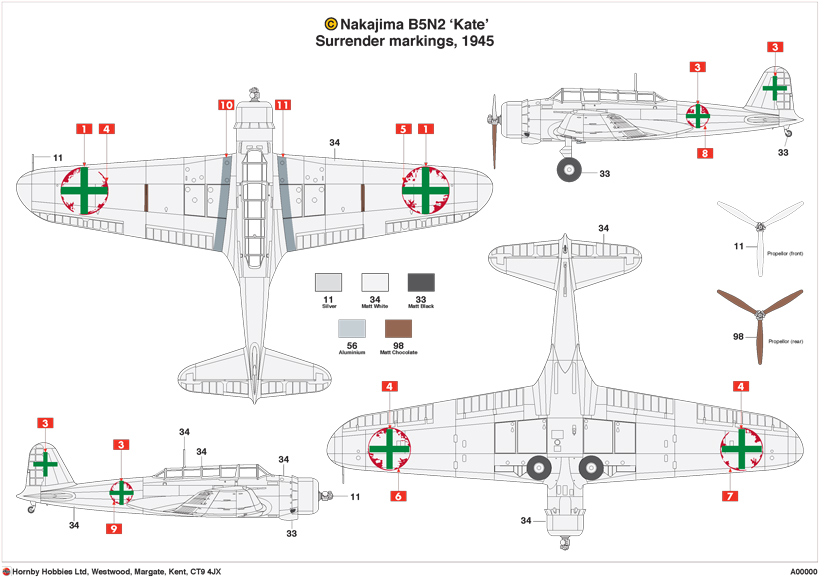
A relatively obscure, yet completely fascinating period in world history occurred in the weeks which followed the Japanese surrender at the end of the Second World War. With the vast open expanses of ocean which dominated the Pacific Theatre creating a logistical nightmare when it came to completing the formalities of surrender and bringing about the timely cessation of hostilities, it was clear that the use of aircraft would be essential in putting an end to further loss of life. Unfortunately, US officials were worried how patriotic Japanese troops would take the instruction to surrender and remained fearful of widespread kamikaze attacks continuing to cost American lives. With this in mind, they issued a directive to Japanese officials that aircraft carrying surrender delegations must be clearly marked to avoid being shot down.
To signify their intention of surrender, all such aircraft must be painted white and the once feared ‘Rising Sun’ Hinomaru had to be completely overpainted and replaced by green crosses. This marking was chosen as it was felt it could not be mis-identified for any other air force’s national insignia in the Pacific Theatre and even though escorting Allied aircraft would still be armed and vigilant, it was hoped these measures would allow the surrender process to proceed without delay. Performing the essential task of bringing an end to the fighting, these aircraft were quickly referred to as the ‘Green Cross Flight’, aircraft which proved to be quite active in the period immediately following Japan’s surrender.
With offensive forces scattered widely across the Pacific region, once the official surrender documents had been signed at the US airfield at Le Shima on the Island of Okinawa on 19th August 1945, the surrender instructions had to be delivered the length and breadth of the Japanese empire. Over the course of the next month, ‘Green Cross Flight’ aircraft would head to airfields across the region, instructing Japanese forces to lay down their arms. It is thought that as many as 27 Japanese aircraft of various types were involved in this important work, each one helping to mark a fascinating end to air operations during the Pacific war.
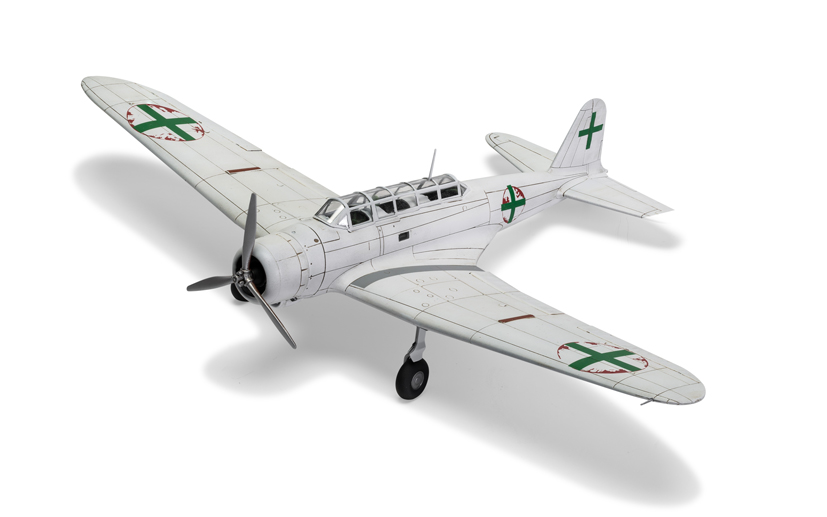
Our talented Product Designer Paramjit Sembhi as been at it once again and having completed his design duties for the day, he has been busy working on the two scheme options offered by the exclusive Limited Edition Airfix Club kit for 2020. These exclusive images show just how interesting a subject this is and how great this kit will look in any model display
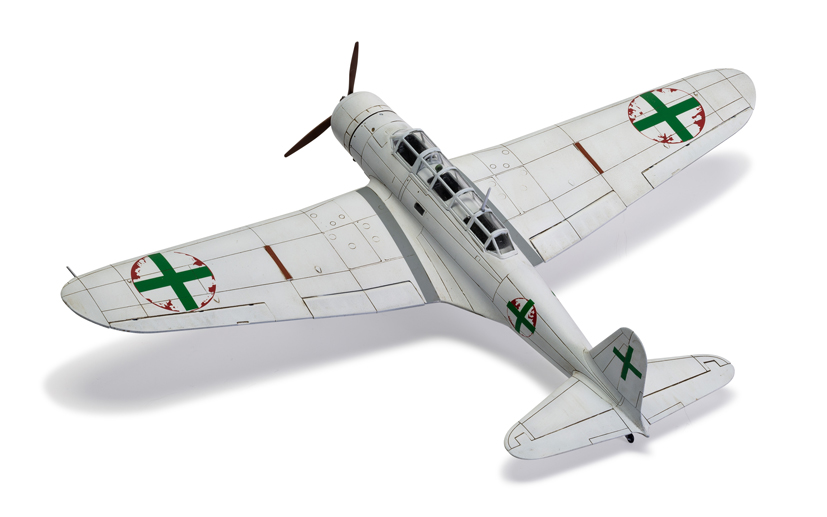
Despite delivering clear instructions on how the Japanese surrender aircraft should be presented, it appears that not all aircraft were as immaculately finished as the two demilitarised Mitsubishi G4M Betty bombers which arrived at Le Shima with the surrender envoys on 19th August 1945. Even though some aircraft were less enthusiastically painted, it is unsure whether any patrolling US Navy pilots enforced the letter of the law and actually shot down aircraft supposedly performing surrender duties. The surrender markings applied to this Nakajima B5N2 Kate appear to already be wearing away, with the distinctive red Hinomaru disc below starting to reveal itself once more – would this have caused twitchy trigger fingers amongst US Navy fighter pilots who saw it?
It is thought that this particular Kate was one of the last remaining airworthy Japanese aircraft following their surrender in mid-August 1945. When the former Japanese airfield at Rabul was occupied by Australian troops, they found this complete B5N2 (wearing tail number 302), along with a collection of other Japanese types and their crews awaiting their arrival, with the surrender instructions clearly being followed. There are some fascinating accounts of how four RNZAF No.16 Squadron F4U Corsairs escorted the Kate from Vunakanau airfield the relatively short distance to Jacquinot Bay in New Britain, on 14th October 1945. The lead escort pilot reported that he immediately thought the Kate was heading in the wrong direction and had to fly alongside the aircraft, giving hand signals to indicate the correct direction of flight. At this point, he did admit to having doubts as the whether the Japanese pilot’s intentions might be hostile.
The situation quickly became less tense as the other three escorting Corsairs began weaving low overhead the pair, so low in fact that the Japanese pilot appeared to sink in his seat and was visibly shaking – the lead pilot decided to allow him the benefit of the doubt. All five aircraft arrived safely at Jacquinot Bay, where the Kate would spend the next several decades simply rusting away where she sat. In the 1980s, the remaining hulk was dismantled and removed to where it could be displayed, but this period also resulted in the significant scavenging of parts by local souvenir hunters.
Although yet to be definitively confirmed, it is thought that what remains of this famous aircraft is now on display at the Pacific Aircraft Museum at Pearl Harbor, quite a fitting home for the wreck of a former Japanese Nakajima B5N2 Kate torpedo bomber.
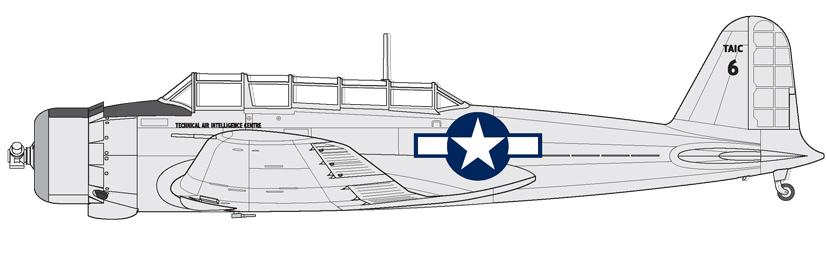
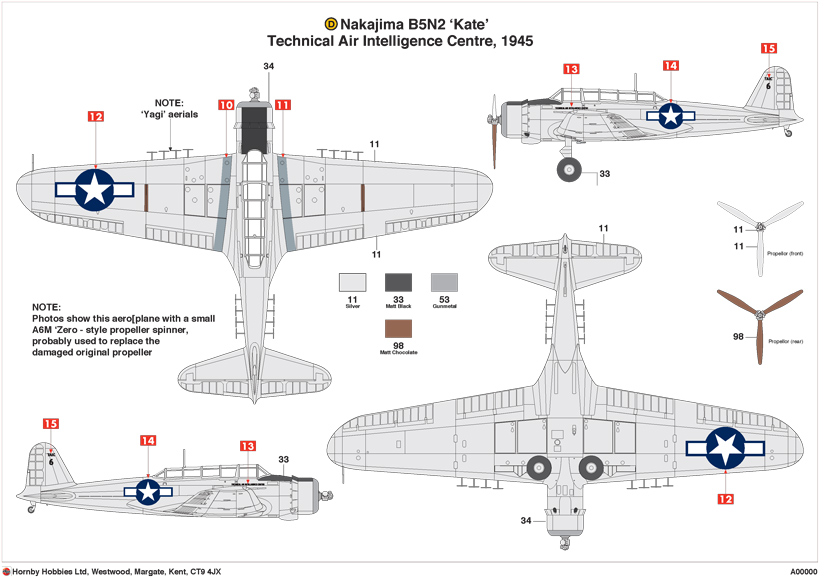
With the US Navy able to call upon the services of such magnificent fighting aeroplanes as the F6F Hellcat and F4U Corsair, it’s no wonder that many of the remaining Nakajima B5N2 Kates still in service during the final year of war were assigned to support roles, or carried out their attacks under the cloak of darkness. As American successes in the Pacific began to gather momentum, more and more Japanese aircraft began to come into their possession and it was the job of the Technical Air Intelligence Unit to locate, secure and in some cases repair captured enemy aircraft. These machines were later sent back to the US for assessment and evaluation.
Following the capture of Saipan Island in June 1944, the abandoned airfield at Aslito was to yield quite a number of Japanese aircraft in various states of repair, including this Nakajima B5N2 Kate (tail code KEB-306), which was in surprisingly good condition. This proved to be the first intact Kate to fall into American hands and was joined by the first Mitsubishi A6M5 ‘Zeke 52’ on the same airfield, quite a fortuitous discovery for the Americans. The aircraft were prepared for transportation back to the US onboard the escort carrier USS Copahee, which left Saipan on 8th July 1944 laden with its priceless cargo of 15 Japanese aircraft, including this rare Kate.
Once back in the US, the aircraft was made airworthy by the Technical Air Intelligence Centre at NAS Anacostia, where it was later flown extensively to evaluate its capabilities. It is thought that following the conclusion of its flight trials, the aircraft appeared at several airfields in the surrounding area and during open day events, but was to be unceremoniously scrapped only months after its arrival in the US.
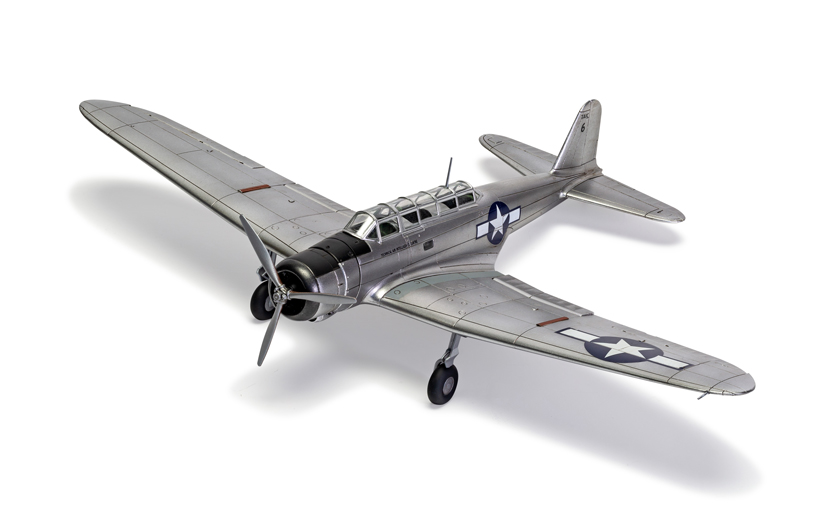
More exclusive Paramjit modelling delights, this time featuring the TAIC Kate wearing its US test and evaluation markings. This model would look fabulous displayed next to a wartime Japanese liveried Nakajima N5B2
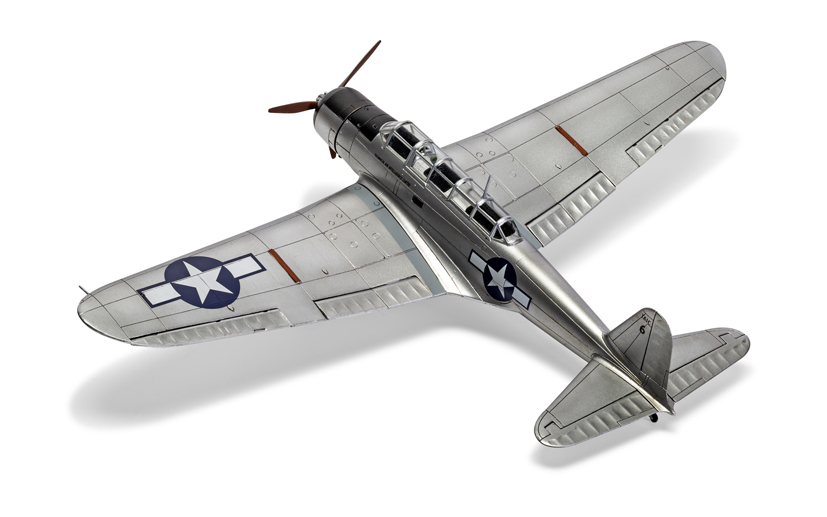
This particular variant of the aircraft was assigned to perform convoy protection duties and was equipped with Magnetic Airborne Detection equipment, which allowed the Kate to detect the presence of enemy submarine activity. The equipment was so heavy that the aircraft may have been able to detect the submarine, but was unable to carry any offensive weapons with which to attack it – it was left to other aircraft or support destroyers to deal with the identified threat. Being a rather basic system, several aircraft would be required to fly sweeps in line abreast formation ahead of the convoy to stand a chance of detection, however with results proving to be disappointing, it was not long before the Japanese Navy lost faith with the technology and allowed many convoys to sail without the security of these MAD equipped aircraft. It is now thought that no more than 50 of these detection sets were installed in Kate airframes and even though the US Navy were keen to evaluate this captured technology, they were quickly of the opinion that it was inferior to equipment installed in their own aircraft.
The work of the TAIU-POA (Technical Air Intelligence Unit – Pacific Ocean Areas) was seen as vital as the war was still raging, but by wars end, the need to secure multiple examples of enemy aircraft types for flight evaluation quickly evaporated. As surrender brought occupation forces to airfields all over the Pacific, hundreds of Japanese aircraft came into American hands and even though they were still of great interest as war prizes, their collection for return to the US was much less pressing. Despite the fact that around 115 further Japanese aircraft of various types arrived in the US during December 1945, both the funding and therefore the desire to undertake an intensive program of evaluation was no longer there and only 4 of these aircraft would actually go on to fly in US skies.
Out of this total of 115 new aircraft and including the original 11 machines already tested, 46 were to find new homes at museums around the country, whilst the rest were either scrapped or simply left to rot where they stood. Even though these spoils of war were a fascinating end to the air battles which raged in Pacific skies, the attention of the aviation world had already turned in the direction of jet power and the desire to achieve ever greater speeds.
There is no doubting that the selection of any Airfix Club kit can be something of a challenge for our Brand Manager, because even though the kit will be of interest to many, it will be a disappointment to some and that will usually be the case. The rationale behind Club Model selection is to always try and choose something which would be unlikely to make it into the main range as a standalone release and thus, providing club members with something just that little bit different. With the selection of these surrender/captured Nakajima B5N2 Kate options, we have presented schemes which both tell a fascinating story from the final months of the Second World War and will make a striking addition to any collection of built models. Looking at the fantastic images above (and below), it seems as if the relatively obscure Japanese Kate is going to be receiving some welcome attention over the coming months.
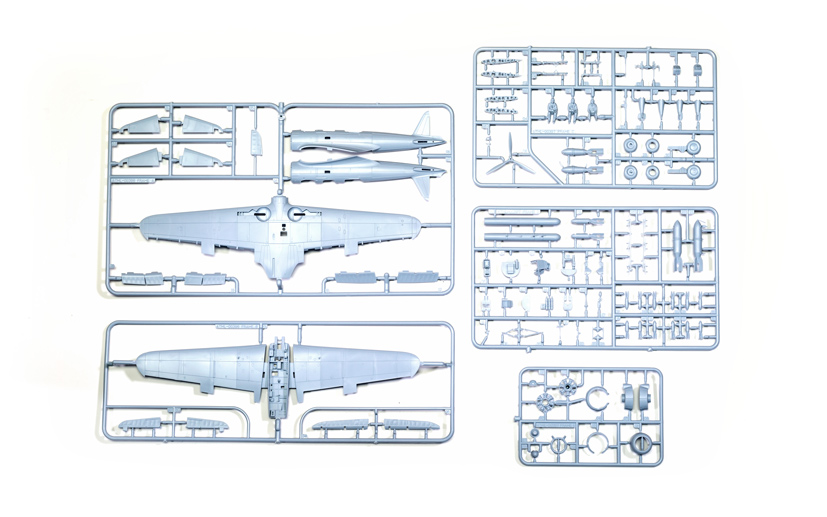
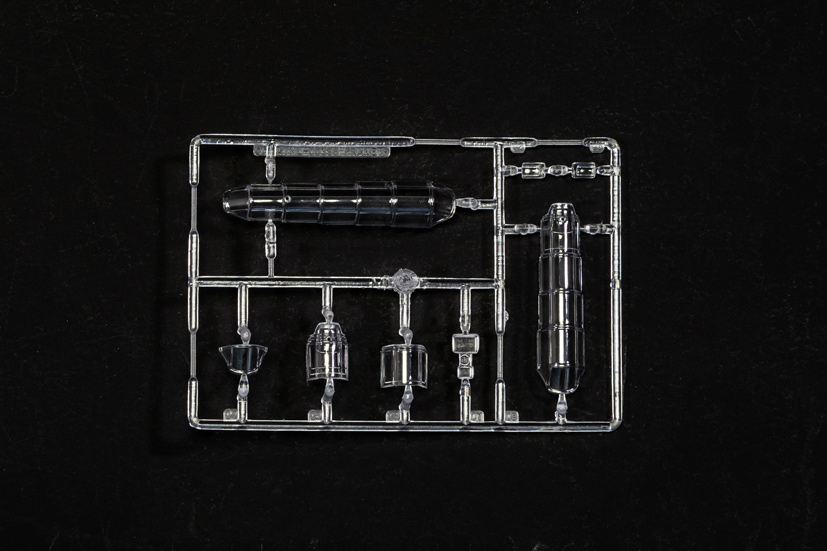
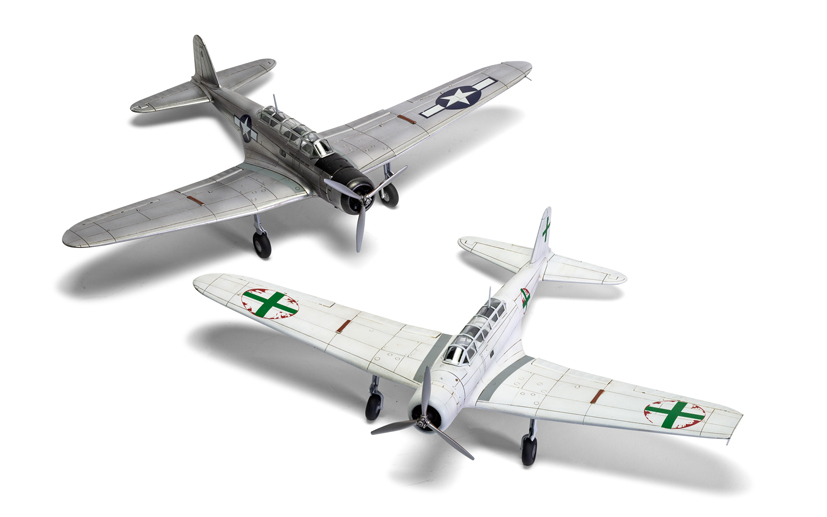
This final selection of images feature the sprue frames produced from our popular 1/72nd scale Nakajima B5N2 Kate tooling and both of Paramjit’s recent builds using the Airfix Club member’s kit exclusive for 2020 – don’t they look fantastic! On behalf of all Workbench readers, we would like to thank Paramjit for going above and beyond to have these models finished in time for launch weekend
The most important thing to say now and the ideal way to bring this latest blog to a close is to confirm that the Airfix Club is now LIVE and is awaiting its latest membership group.
We are afraid that’s all we have for you in this latest edition of Workbench, but we will be back as usual in two weeks’ time with a further selection of Airfix modelling delights for your enjoyment. If you have any suggestions for subjects you would like to see covered in a future edition, please use this workbench@airfix.com link to contact us.
In between new editions of our blog, the Airfix conversation continues over on our Airfix Forum Worbench thread, with further discussions taking place on both the official Airfix Facebook page and the Airfix Twitter channel - please do get involved in the discussions and let us know what you think about Workbench.
Whenever you decide to visit, the Airfix website is always the place to be for all the latest model availability information, previous editions of our blog, a selection of modelling tips and much more.
The next edition of Workbench is due to be published on Friday 10th July, when we will have more interesting features from the world of modelling.
On behalf of the entire Workbench team, thank you for your continued support our Airfix blog.
The Airfix Workbench Team
© Hornby Hobbies Ltd. All rights reserved.