
Welcome to this latest edition of our Workbench blog and all the news, updates and modelling exclusives from the fascinating world of Airfix.
Our second update blog for this week is staying in the world of recent kit additions to the ever expanding Vintage Classics range, but this time focusing on our 1/72nd scale representation of one of the most unusual aircraft of the Second World War, a stubby little interceptor fighter destined to take on the mighty Japanese Zero. Designed and produced in record time, the Commonwealth Aircraft Corporation CA-13 Boomerang may not have been the most capable or aesthetically pleasing aeroplane ever to take to the skies, however, it was born out of necessity and the story behind its production is quite fascinating. We will be discovering why the return of the Boomerang gives us all an opportunity to reacquaint ourselves with a really appealing little kit and an aircraft type which will probably be unfamiliar to a great many Workbench readers.
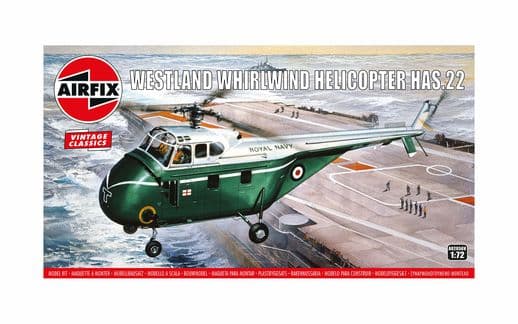
Please don't forget that we have two blog updates for you this weekend and as the darker nights now have us firmly in modelling time, we wouldn't want you to miss out on all the latest release developments. Our Westland Whirlwind HAS.22 feature can be accessed using the link above and all previous editions of Workbench can be found via the main blog hub, in the Community area of the Airfix website.
Right then, it's off to Australia to hear about their first home produced monoplane interceptor fighter.
They say that beauty is in the eye of the beholder and as far as the Commonwealth Aircraft Corporation Boomerang is concerned, as many people will probably think it unappealing as will find it strangely attractive. Whichever side of this particular aesthetics fence you are one, there can be no denying the fact that the story behind Australia's only indigenously designed and produced interceptor fighter is a fascinating one.
Although Europe had been consumed by the flames of war for over two years by the start of December 1941, the fighting must have seemed another world away for the majority of the Australian population, despite the fact that their servicemen had been fighting overseas since the very beginning. That situation would change significantly during a historic and frightening ten day period at the start of December 1941, as a Japanese nation which had long since posed a potential expansionist military threat in the region struck two decisive blows which brought the war to Australia's shores. Firstly, their devastating surprise attack against American forces stationed at Pearl Harbor would effectively make this a global conflict, but perhaps of even greater immediate significance, just three days later, the sinking of the British warships Prince of Wales and Repulse off the Malayan coast now left Australia dangerously exposed.
With these mighty ships effectively acting as a last line of defence against Japanese aggression in the region, their destruction was clearly a catastrophe for Britain, but also for a terrified Australian population. Not only had this development highlighted how the technology of war had moved on significantly and how the once mighty Battleship could no longer defend itself against air power, the loss of the British ships now allowed Japan to expand its empire across the entire Southeast Asia region virtually unopposed and Australia was now right in their firing line.
With another war looking increasingly certain during the mid 1930s, Australia's heavy manufacturing industries, particularly those involved in the production of aeroplanes, lagged well behind those of its counterparts in the US, Europe and Japan. With these nations busy producing a new generation of fighting machines to bolster their own forces, relying on overseas suppliers for things like modern aircraft might leave Australia incredibly vulnerable and something had to be done. To this end, several of the country's largest and most progressive companies joined together to form the Commonwealth Aircraft Corporation and signed a licence agreement to produce the US North American NA-16 trainer and the Pratt & Whitney R-1340 Wasp engine it used. Importantly, the agreement allowed CAC to modify the licensed designs in line with Australian requirements, with the resultant aircraft being the CAC Wirraway trainer/general purpose aircraft.
The establishment of the CAC facility and indeed the production of the Wirraway trainer would be instrumental in the decision to later produce a new indigenous fighter aircraft for the Royal Australian Air Force and would even influence its design. In the immediate aftermath of the sinking of Repulse and the Prince of Wales, officials at the CAC factory instructed their design team to start work on the development of a new fighter aircraft as a super priority project and as the situation was so pressing, their design must incorporate as many manufacturing components from the Wirraway production line as possible. This would see the new fighter utilising the undercarriage, wing centre sections and fuselage sections of the trainer in its construction, in addition to using the licence built Pratt & Whitney R-1830 Twin Wasp as its powerplant.
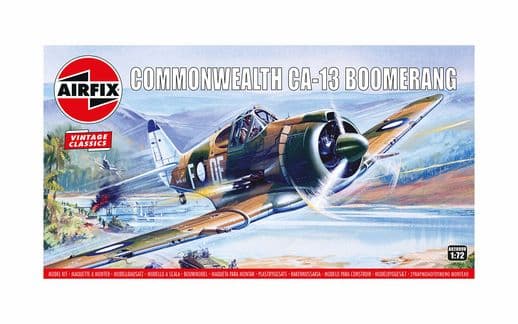
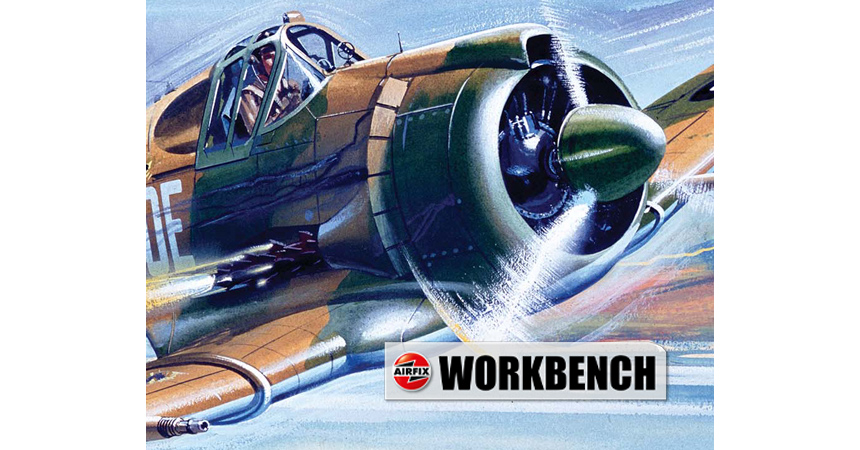
Hang on to your hats, Roy Cross is working his artwork magic once again and will no doubt have us all adding the CAC Boomerang to our winter build schedules.
It has to be understood that Australia did not have a home defence fighter in service at that time and with the threat of Japanese aerial attack now a very real one, this situation had to be rectified without delay. The production of an indigenous design offered the potential that hundreds of fighters could be produced for the defence of Australian territory, without having to wait for help from their Allies, even if this new aircraft was only something of a stopgap until more modern, foreign aircraft types could be procured.
The Boomerang fighter project proceeded at breakneck pace, with the design work proceeding directly to production without a prototype aircraft first being manufactured and evaluated in the usual manner, such was Australia's need. It has to be noted that at that time and with the Japanese threatening the entire Pacific region, Australia was without a front-line home defence fighter and as they could be facing the legendary Mitsubishi Zero at any moment, they did not have the luxury of time when it came to developing the Boomerang. In what proved to be an incredible feat of engineering and manufacturing prowess, the first Boomerang fighter took to the air on 29th May 1942, only around three months since the order to proceed was given and just 173 days since the Japanese attack on Pearl Harbour.
With the pretty strict design and timing parameters placed upon the team working to produce Australia's first indigenously designed and manufactured interceptor fighter, it is perhaps not surprising that the aircraft was not exactly a world-beater from a performance perspective and looked rather different to other fighters of the era. Potentially having to face the deadly Japanese Mitsubishi Zero in combat, an unkind, but not altogether inaccurate description of the Australian fighter was that it was a less refined and much more chunky version of the Zero and whilst it would not be able to match the nimble Zero in aerial combat, it did have several extremely impressive features to call upon.
It has to be remembered that the Boomerang was designed and built in extremely short order and had to make use of exiting components and engine right from the outset, compromises few other aircraft would have imposed on them. It was armed with two 20mm cannons (which were apparently reverse engineered from a gun in the collection of a private individual) and four .303 calibre machine guns, quite heavy firepower for this little fighter. In a strike role, it could also be fitted with a modest bomb load and unlike the Japanese aircraft it could face in combat, provided protection for the pilot and other vital components with the use of armour plating. The licence built Pratt & Whitney engine could propel the Boomerang to speeds of around 310mph and at lower altitudes, the fighter possessed impressively manoeuvrability.
The beautiful Roy Cross Boomerang artwork as it is now represented as a contemporary Vintage Classics release.
From a pilot's perspective, the Boomerang was a delight to fly, with its short, thick wing endowing it with great performance below 15,000 feet and the general stability of the aircraft providing a sense of security for pilots flying the aircraft operationally. As a combat fighter however, it has to be said that the Boomerang was something of a disappointment, with its poor high altitude performance making the fighter almost useless against high flying enemy bombers. Nevertheless, Australia had their first fighter to be designed and produced at home and they now had many more aircraft with which to challenge Japanese forces. During a production period which lasted from the middle of 1942 until early 1945, 249 of these diminutive little fighters would be produced by the Commonwealth Aircraft Corporation for use in both a defensive and offensive operations across the Pacific Theatre.
For an aircraft which has to be considered one of the more obscure types of the Second World War, it is perhaps surprising to learn that the Boomerang joined the Airfix kit range way back in 1965, at a time when the world's modellers were avariciously snapping up every new kit the company produced. Although very different from something like a Spitfire or Messerschmitt, once the Boomerang had been modelled, it became a firm favourite with a great many people, chunky and unusual in appearance, this was a really appealing model. Little did we know at that time that what we were building was a scale representation of a truly historic little aeroplane and one which provided Australia with their first home designed and produced fighter aircraft, one which gave them a sense of security and autonomy for the battles to come.
It also didn't do the new kit any harm that it was released in conjunction with striking new box artwork, another creation from the artistic mind of Roy Cross, a development which basically assured this new kit of modelling success. Interestingly, the research information supplied to Mr Cross at the time included some paint details which were interpretations of black and white photographs, interpretations which have since turned out to be incorrect. For the purposes of this Vintage Classics release, we have stayed faithful to the box artwork so many of us will know and love, but have incorporated this updated painting information in the corresponding scheme layout, just in the interest of accuracy. Let's take a closer look at the kit's two scheme options in a little more detail now.
The first production Boomerang fighters were supplied to No.2 Operational Training Unit, with the intention of training new pilots who were destined to fly the new fighter once posted to operational squadrons. Many of those pilots would have just qualified flying the CAC Wirraway trainer and as the two aircraft shared quite a number of common construction components, it was hoped that this conversion between types would be relatively trouble free. Unfortunately, that proved not to be the case and students complained about the poor forward visibility from the cockpit of the Boomerang, something which was made worse by the positioning of the fighter's gunsight. The repositioning of this unit proved to be a quick and relatively painless solution, however, there was little that could be done about the engine!
The Boomerang proved to be rather an exhilarating aeroplane to fly, particularly at lower altitudes, where its excellent manoeuvrability and heavy armament gave pilots the feeling that they would be able to hold their own against any enemy aircraft they faced. That confidence quickly evaporated when combat operations took them to higher altitudes, where the aircraft was simply outclassed - former Boomerang pilots went so far as to describe its performance above 20,000 feet as useless, something which quickly called in to question its 'interceptor' title. Once Japanese bomber pilots worked out the limitations of Australia's new fighters, they simply flew bombing sorties at altitudes above which the Boomerang could operate and whilst the fighters were in the same airspace, their pilots could do nothing more than watch the enemy bombers proceed on towards their assigned targets.
Full scheme details for this No.4 Squadron RAAF Boomerang.
No.4 Squadron Royal Australian Air Force reformed in June 1940 and was assigned to perform close air support, reconnaissance and Army co-operation duties, initially flying the Hawker Demon and de Havilland DH.60 Moth biplanes, but later exchanging these for the Commonwealth Aircraft Corporation Wirraway trainers in December of the same year. Relocating from the Australian mainland to New Guinea in November 1942, the unit was charged with supporting US and Australian ground forces fighting Japanese invaders during the Battle of Buna-Gona. During the hectic fighting, the Squadron's pilots perfected the art of effective close air support over the challenging New Guinea terrain and when required, also took on reconnaissance and artillery spotting.
From May 1943, the squadron was re-equipped once more, this time with the new Boomerang fighter, an aircraft which proved to be ideally suited to the low altitude support sorties being flown by the pilots of this unit. The rugged little Boomerang was an excellent low altitude performer, heavily armed and with short, relatively thick wings, a design feature which allowed it to perform tight, aggressive turns, so that aircraft could continually pound their assigned ground target. The aircraft's fire support capabilities would earn the Boomerang the respect of both pilots and ground troops alike, as Australia's first and only indigenously designed and produced fighter aircraft appeared to have found its operational niche.
During performance trials, the Boomerang was found to be largely comparable with the Brewster Buffalo which had been in widescale service throughout the Pacific Theatre to that point and with which it shared many visual similarities. One Buffalo was even stripped down and had its centre of gravity altered, in an attempt to simulate the performance of the Japanese Zero and during mock combat trials, the Boomerang was able to just about hold its own below altitudes of 15,000 feet, but any higher than this and its performance fell away dramatically - indeed, it was found to be inferior to most modern fighting aeroplanes in combat performance terms.
The Boomerang would continue to be developed throughout the war and later, more powerful variants were 'officially' classified as comparing favourably with the Spitfire Mk.V and Republic Thunderbolt in performance terms. Thankfully, by this stage of the war, Australia had access to large numbers of Spitfires and they had Mustangs on order, so this theoretical parity in CAC Boomerang performance was never put to the test operationally.
No.5 Squadron Royal Australian Air Force reformed on 9th January 1941 in an Army co-operation role, equipped with the CAC Wirraway. The unit's personnel would be required to be relatively flexible during the first few months of service, as they would operate from several different locations around the country over a relatively short period of time. The unit would re-equip with the new Boomerang fighter in late 1943 and became extremely proficient in operating the aircraft prior to their deployment to Piva Airfield on Bougainville twelve months later. In their close air support role, they would fly in conjunction with the Corsair fighter bombers of the Royal New Zealand Air Force, providing ground attack support for Australian troops engaged in fighting the Japanese.
The Boomerangs of the RAAF excelled in the close air support role, where this rugged and manoeuvrable fighter was in its element.
With their excellent low altitude performance, the Boomerangs would often be used to mark targets for the Royal New Zealand Air Force ground attack Corsairs, a role which would earn this distinctive little aircraft the affectionate nickname ‘Smoky Joe’. With the aircraft now proving invaluable in this crucial role, the Boomerangs of No.5 Squadron RAAF would also be sent to support operations in New Britain and New Guinea during the latter stages of the Second World War.
The Commonwealth Aircraft Corporation Boomerang is certainly an interesting subject from a modelling point of view and as is so different in appearance to many of the other fighter types which contested the air war during WWII, it makes for a fascinating visual contrast in any display of completed models. When we understand just how important the aircraft was to the Australian people and the conditions under which it was designed and manufactured, we are left with a much greater appreciation for an aircraft which generally receives very little enthusiast recognition, particularly here in Europe. Thankfully, the re-introduction of this handsome new kit into the Vintage Classics range will allow modellers the opportunity to discover the story behind this diminutive little fighter, one which may have been unfairly described as 'Australia's panic fighter', but one which went on to excel in the close air support role.
Our 1/72nd scale Commonwealth Aircraft Corporation CA-13 Boomerang kit is now available once more.
That’s another weekend of blogs done and dusted, However, please don't forget to check out our other Westland Whirlwind HAS.22 related update which has also been posted today. We will be back as usual next Friday with more Airfix project updates for your information and enjoyment.
As ever, we are always keen to hear your views on all things Airfix and in particular, our Workbench blog, so if you would like to drop us a line, please use workbench@airfix.com for all correspondence. To re-visit any of the Airfix blogs produced over the past seven years, please head to our main Workbench hub and scroll through the available pages.
All our dedicated official social media sites can be accessed by clicking the respective link icons at the foot of this page, or by heading to the Airfix homepage. Other useful Airfix links are:
Facebook, YouTube, Twitter and Instagram official sites
Airfix Workbench Forum
Please join us for more Airfix updates next week and thank you for your continued support.