In this latest edition of Airfix Workbench we are looking forward to bringing readers an update from one of the highly anticipated 2017 new tooling projects we have on the go at the moment, along with a slightly unorthodox look at an existing 1/48th scale kit which marks one of the finest aircraft ever produced by the British aviation industry. Before we begin, could we please take a moment to thank everyone for their incredible support of our previous blog – the proud occasion of our 50th edition. Thanks to you, this became one of our most popular blogs yet and saw many regular readers sharing the content with other friends and associates, as well as featuring widely on social media. We are also pleased to report that a great many of you are keen to become the caricature pilot in a forthcoming Airfix instruction booklet and this unique opportunity really does seem to have captured everyone’s imagination. You still have time to enter our competition if you have yet to do so, which is running until Thursday 20th July - we will bring you full details a little later in this blog.
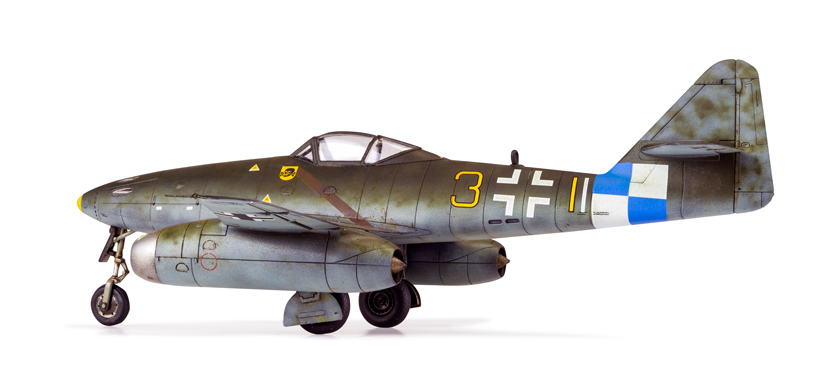
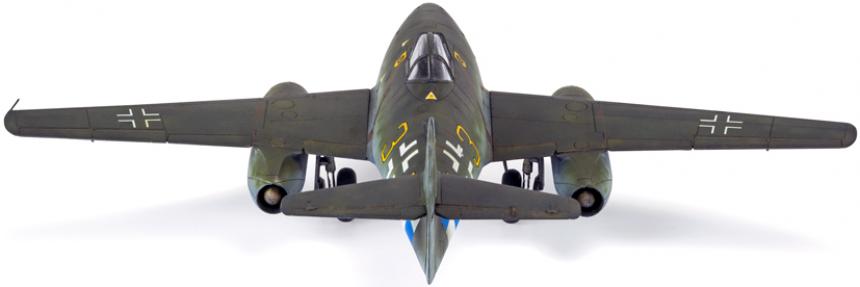
A beautifully finished example of the new Airfix 1/72nd scale Messerschmitt Me262A-1a (A03088)
As far as iconic aircraft of the Second World War are concerned, there can be few that had such a significant impact of the future of aerial warfare as the Messerschmitt Me 262 jet fighter. As the overwhelming might of Allied air power began to strangle remaining Luftwaffe units into submission, Germany unleashed a series of highly advanced weapons its leaders hoped would, at worst, buy them some extra time and potentially even force the Allies to consider their current strategies. Despite Germany’s undoubted technological and manufacturing prowess, history showed their efforts were a case of too little, too late, but not before they had given Allied military planners the fright of their lives.
Without doubt, the most accomplished of the Luftwaffe’s new breed of fighter aircraft was the sinister looking Messerschmitt Me262 jet fighter – the world’s first operational jet powered fighter. Possessing significantly superior performance to any aircraft that had gone before it, the Me262 has to be considered as one of the most important aircraft of WWII and certainly one that would influence the future of aviation design long after the end of the Second World War. Perhaps the most telling assessment of the capabilities of the Me262 did not come from the pilots who either flew or faced the aircraft in combat, but from celebrated navy test pilot Captain Eric ‘Winkle’ Brown, who had the opportunity to evaluate the Messerschmitt jet fighter.
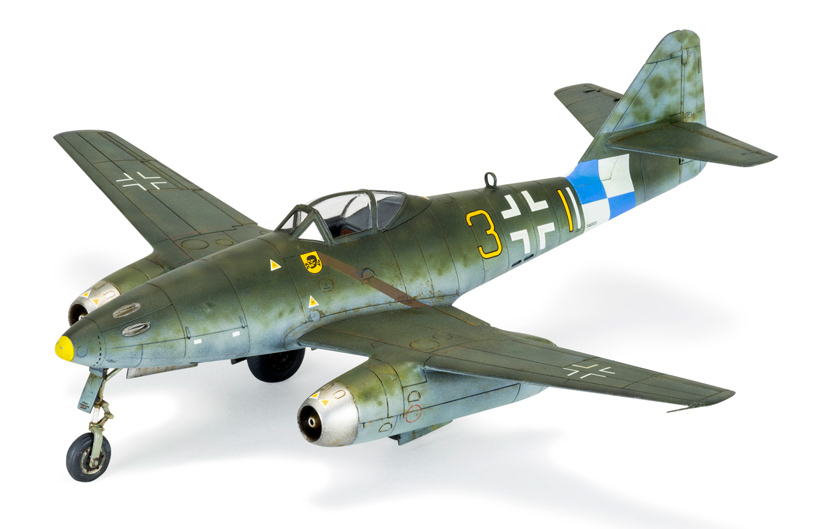
More images of the latest built sample of the impending 1/72nd scale Me262 jet fighter
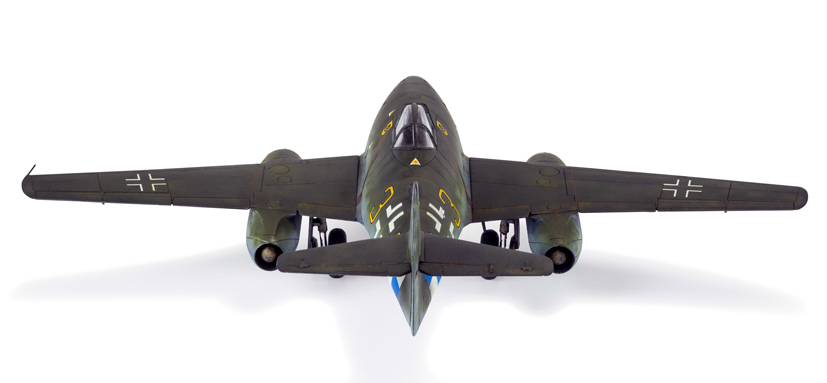
As one of the most important aircraft of all time, the Me262 will be a popular addition to the Airfix kit line up
Attached to a unit responsible for securing captured Luftwaffe aircraft and ensuring their safe passage back to the UK for evaluation, Captain Brown became extremely knowledgeable regarding the operation of German aeroplanes and how they compared to their Allied contemporaries. When he flew the Messerschmitt Me 262, he described his shock at just how far ahead the Germans had managed to get with aviation technology. The aircraft was a quantum jump ahead of anything the Allies currently had and was approximately 125mph faster than the best of the contemporary Allied fighters in service. Writing after the war, Captain Brown also described how he saw the effect of the devastating firepower the aircraft could bring to bear, as he witnessed the destruction of a USAAF B-26 Marauder in just a matter of seconds.
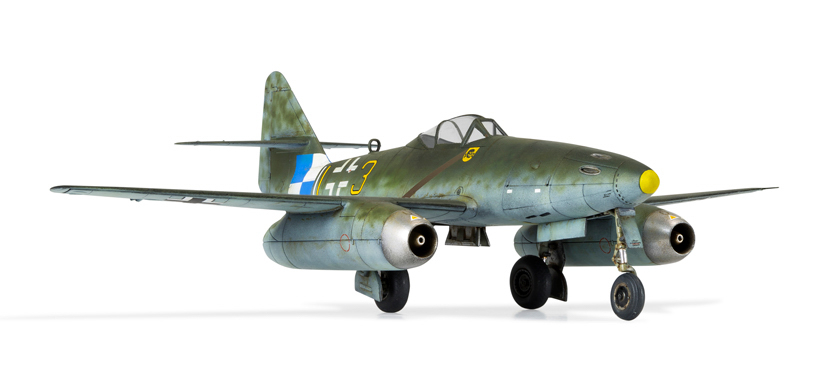
The Messerschmitt Me262 is without doubt one of the most distinctive aircraft of the Second World War
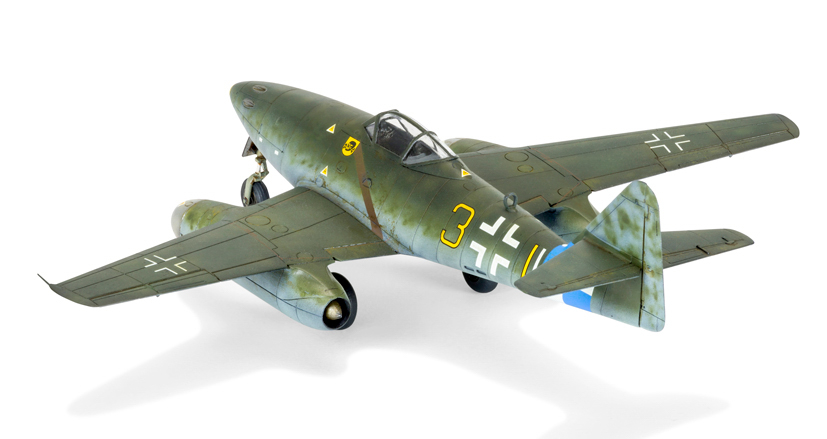
In the view of Eric Brown, arguably the most accomplished pilot the British Isles has ever produced, the Messerschmitt Me262 was the finest fighter aircraft of the Second World War and one he described as causing shock and consternation amongst Allied military planners. Had the Germans been able to field these aircraft in any significant numbers, or had they been introduced slightly earlier in the war, they could have caused absolute mayhem in the skies above occupied Europe and taken a heavy toll on Allied airmen. As it was, with experienced pilots and fuel both in extremely short supply, and the rush to get this new technology into service with all the associated problems this brought, the Me 262 played only a peripheral role in the air battles of WWII, even if they pointed the way towards the future of aviation development.
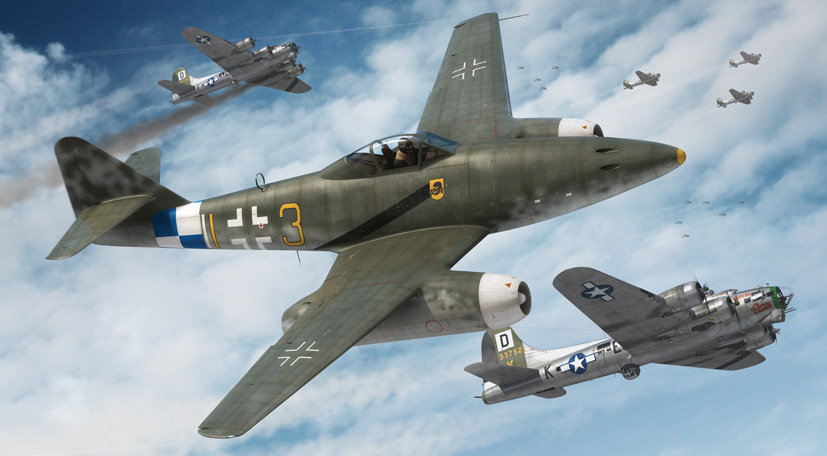
The stunning box artwork pits the new Me262 against one of the schemes presented in the new 1/72nd scale B-17G kit (A08017)
The impending release of our new 1/72nd scale Messerschmitt Me262A-1a (A03088) presents the modeller with a highly accurate kit of this historic aircraft, which was regarded as the most formidable aircraft of WWII in the opinion of Captain Eric ‘Winkle’ Brown. As this beautiful new model streaks towards its scheduled August release date, we are pleased to bring you this collection of exclusive kit build images, which show how the Airfix team have faithfully recreated this iconic aircraft and produced something special for the modeller. The scheme in which the model is finished marks a Luftwaffe 9./KG(J)54 aircraft, which was involved in operations to defend Germany from devastating aerial attacks during the final weeks of WWII. Interestingly, the stunning artwork which adorns the box of this new model also features Boeing B-17G 43-37521 ‘Skyway Chariot’, which is one of the two scheme options included with the new B-17 release (A08017).
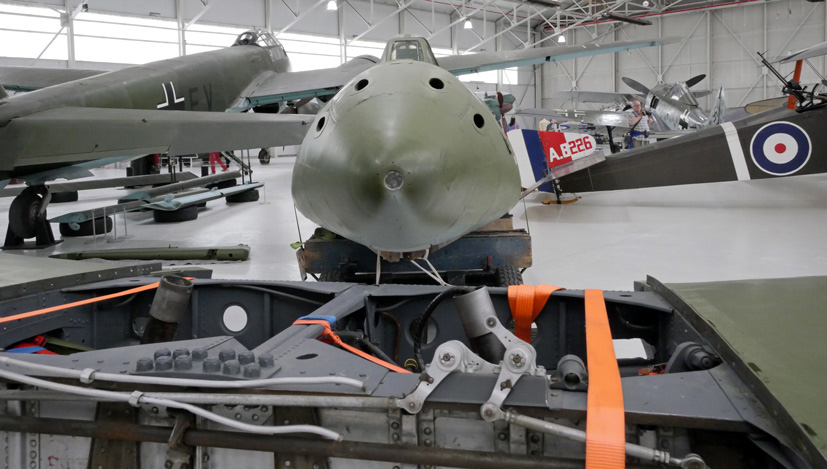
The RAF Museum’s Messerschmitt Me262A-2a was an unexpected sight at Cosford
In an interesting Messerschmitt development, the recent Cosford Airshow offered visitors a unique opportunity to see the RAF Museum’s rare Me262A-2a as it was preparing to go on display in its new home. As RAF Museum Hendon prepares for their significant Royal Air Force centenary commemorations, the relocation of airframe exhibits has continued to benefit the magnificent museum at Cosford. Now surely one of the finest venues for admiring Axis air power from the Second World War, Cosford welcomed back Messerschmitt Me262A-2a ‘Yellow 4’ after 14 years of it being on display at the Hendon site. Aviation enthusiasts in the Midlands will be delighted to see this famous aircraft returning home and further enhancing the credentials of this world class aviation museum.
Following in the footsteps of several former Hendon exhibits that have made the recent relocation trip to Cosford, ‘Yellow 4’ must have been dismantled for a road journey north earlier this year, but its arrival in the Midlands will certainly have come as quite a surprise for many people. Arriving quite some time after several new high-profile exhibits were unveiled at Cosford, this historically important aircraft is one of Britain’s most popular museum exhibits and will further ensure that Cosford’s ‘War in the Air’ hangar display will surely be amongst the most popular enthusiast destinations in the country. For anyone with even the slightest interest in Axis air power of the Second World War, Cosford now has one of the finest collections to be found anywhere in the world.
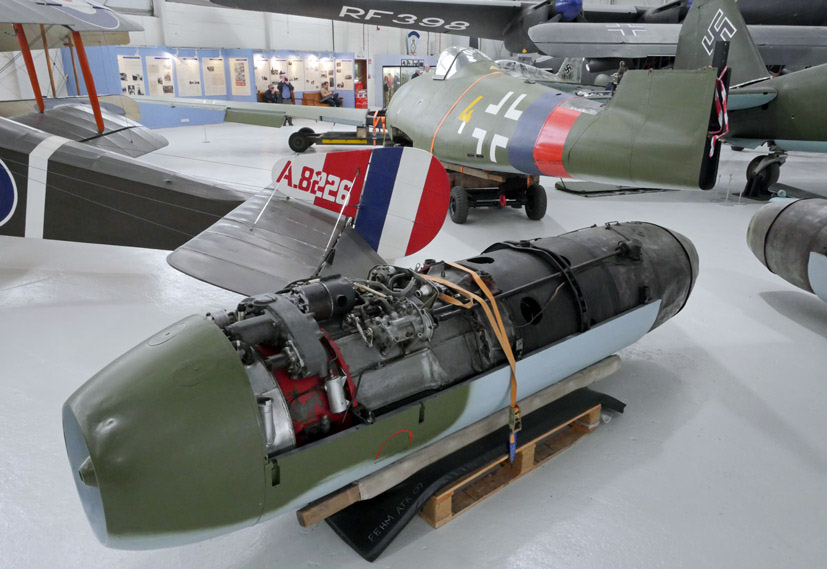
A selection of images showing the Messerschmitt prior to re-assembly at Cosford
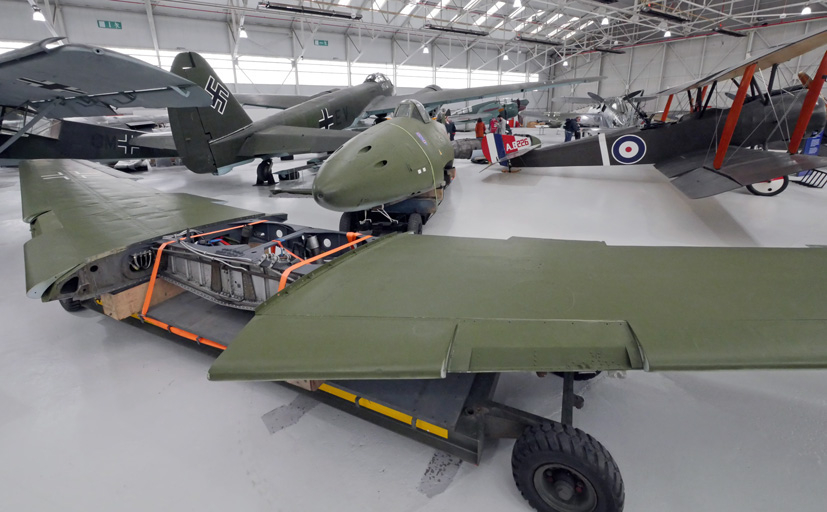
The annual Cosford Airshow not only allows visitors the opportunity to enjoy a world class display of aerial delights, but also the opportunity to see some of the rare museum exhibits allowed outdoors for the duration of the show and therefore some unique photographic opportunities. This year, however, one of the highlights was surely the opportunity to see Messerschmitt Me262A-2a on display in a dismantled state, prior to its re-assembly to display standard. This is a relatively unusual occurrence as most aircraft tend to be prepared for display by museum technicians before they can be viewed by the public, particularly if the aircraft is of such historical importance as this. Obviously, the dismantled Me262 proved to be of great interest to the people who strayed from the many attractions at the Cosford show and found themselves in the aircraft exhibit hangar furthest away from the Airshow crowd line – their efforts will have been rewarded with some very interesting photographs.
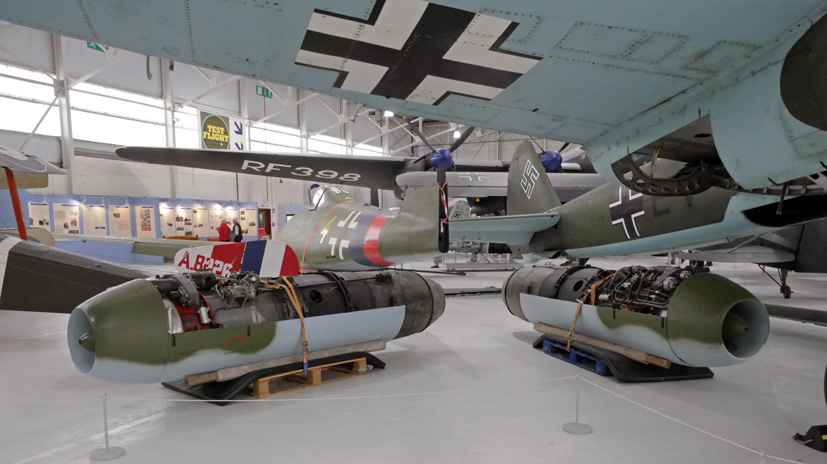
A pair of Junkers Jumo 004 engines sheltering under the wing of a rare Ju88 R-1 nightfighter until they can be reunited with their owner
The images shown above were all taken during this year’s Cosford Airshow and give a fascinating alternative modeller's perspective on this famous German jet fighter. The aircraft is certain to feel extremely comfortable returning to the familiar surroundings of its former Midlands home, particularly as it is in the company of so many other rare Axis airframes. Like many other aviation enthusiasts, we at Airfix are looking forward to a future visit to the RAF Museum Cosford, when we can see the re-assembled Messerschmitt Me262 taking its place amongst this impressive collection of German aircraft.
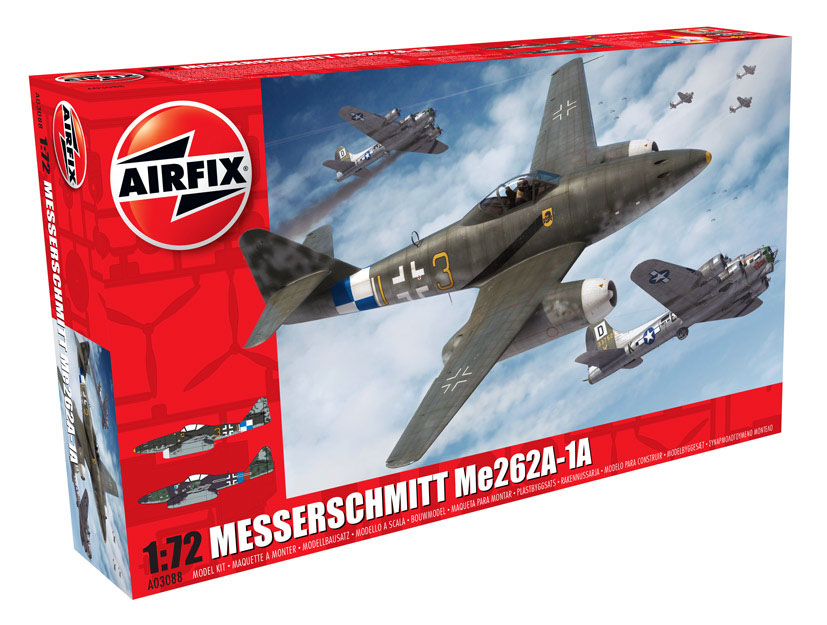
Be the first person to have one of these magnificent new Messerschmitt Me262 models – fully authenticated by Airfix officials
How would you like to be the first modeller in the world to own an example of the new Airfix 1/72nd scale Messerschmitt Me262A-1a kit? The Airfix team have kindly allowed us to offer one lucky Workbench reader the chance to do just that – we have been given their only remaining advanced sample of this exciting new kit, which will be authenticated by the Airfix team, before being sent to our winner. Looking at the images above, it will be a tough decision as to whether you go straight ahead and build the model before anyone else gets their hands on one, or preserve its unique status and keep it for posterity.
To be in with a chance of winning this fantastic Messerschmitt prize, please head for our Airfix Competitions page, where you will find a topical, yet relatively simple Messerschmitt Me262 related question to answer. Good luck to one and all.
The Canberra must be considered as one of the most successful British aircraft of all time
The fascinating subject of aviation history is a celebration of the aircraft and personalities that conquered man’s fascination for powered heavier than air flight. From the Wright Brothers on Kill Devil Hills to the test pilots working on the service introduction of the Lockheed Martin F-35 Lightning II, each individual aircraft design has its own story to tell, but amongst the many aircraft that have taken to the air over the past 113 years, only a handful can truly be described as ground-breaking. Without doubt, one of Britain’s most significant contributions to this celebrated list of aircraft is the English Electric Canberra, a first-generation medium jet powered bomber which provided the RAF with a world-beater of an aircraft and the British aviation industry with a talisman for their talents.
The Canberra was first conceived during the latter stages of the Second World War and would be required to fill some very significant aviation shoes indeed – it was to be the intended replacement for the incredibly successful De Havilland Mosquito. Needing to fly higher and faster than any British aircraft had done previously, the design team at English Electric knew they would be heading into uncharted aviation territory with their new aircraft, but it would certainly require the use of jet technology for propulsion and would need to be a compact, aerodynamic design. Making its first flight in May 1949, the new jet bomber showed enough promise to encourage the Air Ministry to place an advanced order for 132 aircraft and as they started to enter RAF service just two years later, they already knew they had a winner on their hands.
The English Electric Canberra proved to be a great source national pride for Britain, particularly as it was coveted by almost every air force in the world. The aircraft possessed incredible performance and almost immediately began breaking aviation records for speed, distance and altitude, underlining its status as one of the most advanced and capable aircraft in the world. It would also be true to say that the Canberra created a few problems for both bomber crews converting to the new aircraft, as well as fighter pilots attempting to intercept them. The aircraft the Canberra was mainly replacing in RAF service was the mighty Avro Lincoln and bomber pilots converting to the new jet were facing a huge challenge – they were coming from a large, fairly sedate four-engined bomber to an aircraft that was the fastest in the RAF, possessing jet fighter performance. Also, it was reported that in military exercises, the Canberra was so fast and could fly at such high altitudes that the Meteor fighters of the RAF simply could not intercept it, which was a cause of some embarrassment. This resulted in Canberra pilots being forced to fly their aircraft in a restricted manner, allowing the Meteors to get close enough to simulate interception.
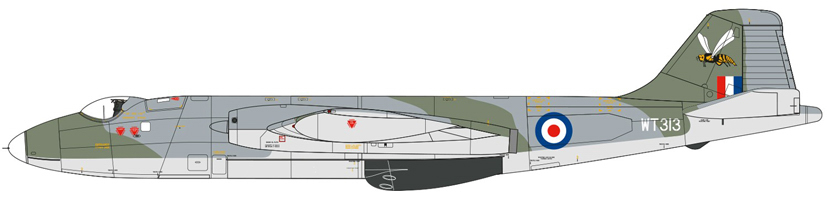
Profile artwork for one of the schemes included in the impressive Airfix 1/48th scale Canberra kit A10101A
Rather than focus on the prowess of the Canberra and the many records and service achievements it had to its name, we are going to focus on an incredible incident when one British built jet aircraft, an English Electric Canberra, was shot down by another British built type. During the Suez Crisis of 1956, a detachment of RAF photo reconnaissance Canberra PR.7 aircraft were based at Akrotiri on Cyprus and were engaged in obtaining intelligence information across the region. For identification purposes, the aircraft had yellow and black bands painted around the wings and rear fuselage, similar to the markings applied to aircraft during D-Day operations.
Although Syria was not directly involved in the conflict, they were closely allied to Egypt and many of their pilots had been trained at establishments there. The British military were concerned at reports of Soviet built MiG.15 fighters arriving at Syrian air bases and Canberra PR.7 WH799 was sent to investigate. This unarmed aircraft had been assigned a mission to overfly Syrian air bases of interest, looking for any sign of MiG activity and relying on its speed and agility to avoid interception – no supporting fighter cover was assigned for the mission.
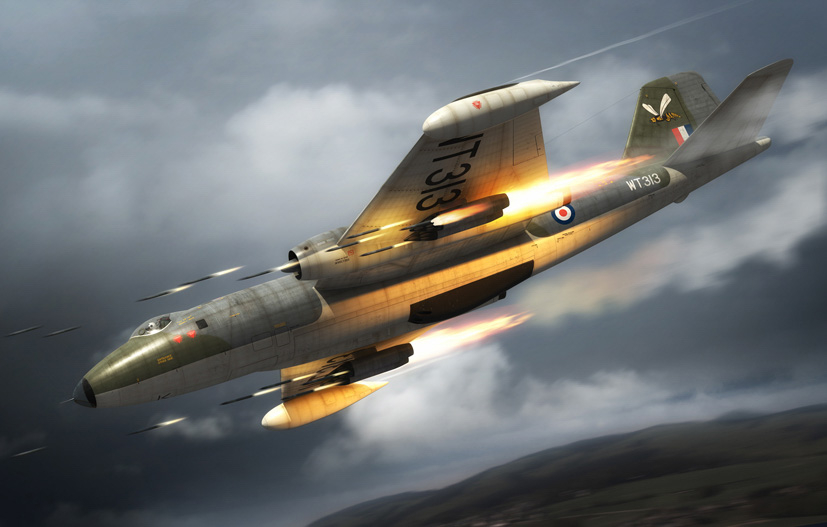
Despite the fact that the Syrian air defence network was basic to say the least, Canberra WH799 was intercepted by a pair of Syrian Air Force Gloster Meteors, ironically only supplied to the Syrians by Britain during the previous year. Attacking from above the Canberra, one of the Meteors saw cannon strikes hit the starboard engine of the British aircraft, which quickly began to lose altitude and make little attempt to execute evasive manoeuvres. With his aircraft clearly stricken by the attack, the captain informed his two crew mates to evacuate the aircraft and whilst two of the three men did so successfully, the observer on this flight was tragically killed.
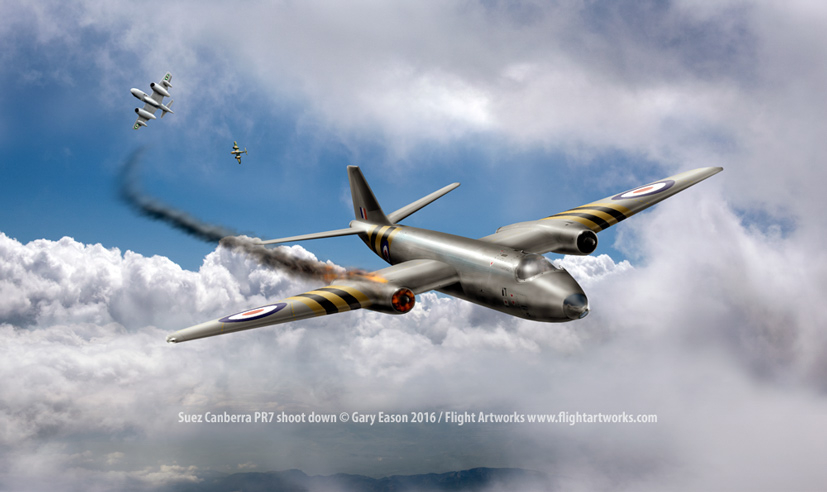
This beautiful artwork depicting the Canberra/Meteor showdown during the Suez Crisis is shown with the kind permission of digital artist Gary Eason
It is sobering to think that the last time a British aircraft was shot down during aerial combat (even though the aircraft was un-armed and engaged in a reconnaissance mission), it was at the hands of another British built aircraft. The Canberra went on to serve the RAF faithfully, with 900 aircraft produced and the final aircraft only retiring after 55 years of magnificent service – Britain’s first jet powered bomber proved to be an exceptional aircraft in every respect.
We are extremely grateful to digital artist Gary Eason for allowing us to use his dramatic picture of the shooting down of Canberra WH799 during the Suez crisis. His website includes a more detailed account of this incident, which he researched prior to producing this fantastic picture. Building into one of the most impressive models in the current Airfix line-up, our 1/48th scale version of the beautiful Canberra B(i)6/B.20 (A10101A) is available on the Airfix website now and at all good model suppliers across the world.
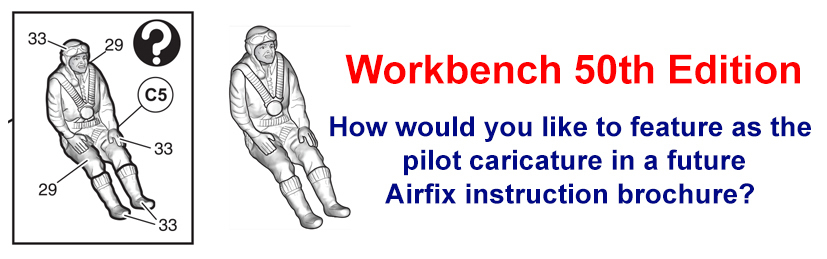
We are extremely pleased to report that a great many Workbench readers are interested in obtaining Airfix immortality and have entered our competition to become the caricature pilot face in a forthcoming Airfix instruction booklet. This competition has been an overwhelming success and we are looking forward to revealing the lucky reader who will take their place in Airfix history in the very near future. If you have yet to enter this unique competition, you still have time – head over to the Airfix Competitions page where you will find all the information you need to possibly become the caricature face of Airfix and the talk of the modelling world. Whilst there, you can also enter our new Messerschmitt Me262 competition at the same time!
The prize awaiting our lucky winner is quite simply a place in Airfix modelling history. You will have a caricature representation of your face included in the official Airfix instruction booklet of a forthcoming kit release – your face could be the pilot in the next Airfix new tooling announcement instruction booklet! This is a fantastic prize and one that is unique in the modelling hobby. It will be a high-profile prize for anyone interested in modelling and will receive wide exposure across multiple media channels, bringing modelling fame and recognition to our lucky winner – it has clearly already captured the imagination of modellers everywhere.
How would you like to be the caricature pilot in the instruction booklet of a forthcoming Airfix kit release?
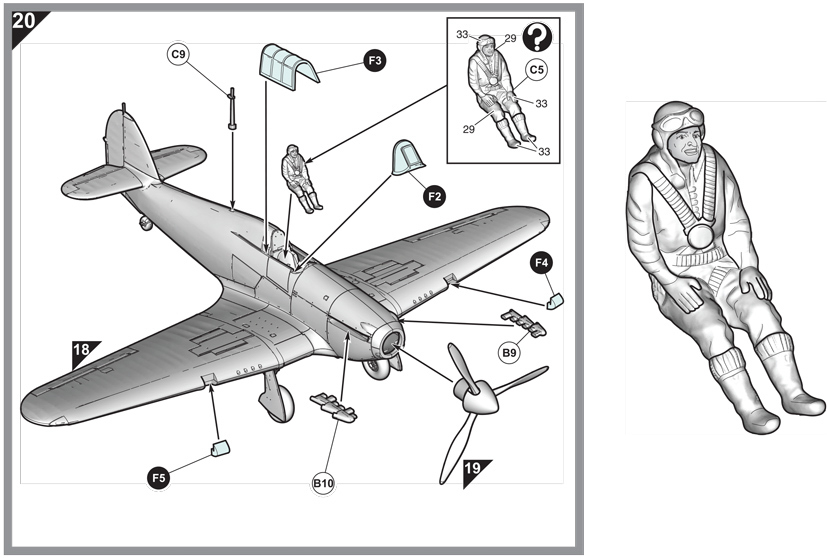
Just to clarify what is on offer to our lucky winner, a caricature representation of your face will be used in the iconic Airfix instruction booklet of a future Airfix kit release (not the plastic pilot figure in the kit itself). The story of the winning entrants transformation to caricature pilot will be covered extensively by Workbench, our social media and other channels as we document this unique event for other readers to enjoy. This unique prize guarantees instant modelling fame for our competition winner.
That’s it for another edition of Workbench. As usual, we are always interested to hear what our readers have to say and are grateful for any modelling features or build pictures you send to us. There are several ways you can contact us, including our dedicated e-mail address workbench@airfix.com and of course the Workbench thread over on the Airfix Forum.
If social media is more your style, you could access either the Airfix Facebook page or our Twitter channel, using #airfixworkbench where you will find plenty of modelling news, views and discussion. Whichever medium you decide to use, please do get in touch, as it is always interesting to hear from fellow modelling enthusiasts.
Finally, the Airfix website is the place where you can find all the latest model release information, with our New Arrivals, Coming Soon and Last Chance to Buy sections. As updating the website is a constant process, a quick search through each section of the Airfix web pages will reveal new information and updated images in many of the product sections and it's always an enjoyable and rewarding way to spend a few minutes!
We look forward to bringing you the next edition of Workbench on 21st July - see you then.
The Airfix Workbench Team
Hornby Hobbies Ltd. All rights reserved.