
Welcome to this latest edition of our Workbench blog and all the news, updates and modelling exclusives from the fascinating world of Airfix.
For this second of our new weekly Workbench blogs, we are going BIG and will be featuring not only one of the 1/24th scale Airfix ‘Super Kits’ which occupy such a prominent position within the modelling hobby, but also the impressive build talents of one of our readers, someone who has taken the kit ‘canvas’ Airfix produced and turned it into a scale aviation work of art. Featuring a selection of stunning pictures which highlight this beautiful build, if you have ever taken on the build challenge of one of our 1/24th scale aircraft kits, this is one edition of Workbench you will definitely not want to miss.
Michael Scott was inspired to produce this magnificent 1/24th scale Hawker Hurricane Mk.I build after learning about ‘Paddy’ Hemingway and the fact that he is now the only surviving Battle of Britain pilot veteran.
There can be absolutely no doubt that for the vast majority of Workbench readers, the model kit scale which first attracted us into this fantastic hobby were the 1/72nd scale kits which seemed to be available in almost every shop during our formative years and were conveniently priced at around what we would hope to receive each week in pocket money. As the hobby really took a hold of us, we would all probably admit to buying a new model every week if we possibly could, offering the dual benefits of quickly increasing our built model collections, at the same time as giving us greater modelling experience along the way. The huge benefit of modelling subjects in the same scale is that when placed in your display cabinet, it allows an appreciation of the size differences between different aircraft types and with the Airfix range being so vast and increasing all the time, it didn’t take long before we moved on from single engined types such as Spitfires and Hurricanes, to larger subjects such as Mosquitos and Lancasters.
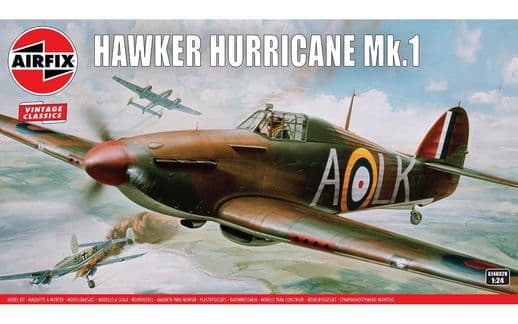
As our model collections grew and we became more proficient at our craft, it didn’t take long before we started thinking about incorporating greater levels of detail into our modelling, producing more faithful scale representations of the aircraft which provided us with such inspiration and from 1970 onwards, Airfix had just the thing. With the Supermarine Spitfire once again leading the way in modelling subject terms for Airfix, their first 1/24th scale ‘Superkit’ was a modeller’s dream and something we all desperately wanted to get our hands on. A real impact product, this large scale model featured lots of impressive detail, a myriad of optional and moving parts and was challenging enough to keep us occupied for several weeks. Purely from a size perspective, being three times as large as the 1/72nd scale Spitfire kits we were used to building, one half of the wing of this new Spitfire behemoth was actually larger than a fully built 1/72nd scale alternative.
Airfix ‘Superkits’ have always been something very special in the world of modelling and projects by which our modelling talents are judged by our peers.
Although from a pricing perspective, these new ‘Superkits’ were out of reach for many young modellers back then, it never stopped our desire to get hold of one and Father Christmas must have been inundated with requests to find one of these beauties in many a pressie pile from 1970 onwards. Proving to be a hugely successful addition to the Airfix range, it wasn’t long before the Spitfire was joined by other Superkit offerings, first the Messerschmitt Bf 109E in 1971 and the even more impressive Hawker Hurricane Mk.I following in 1973, a kit which once again pushed the very boundaries of what could be achieved by the plastic injection moulding industry at that time and one which presented modellers with the most accurate scale representation of this famous WWII fighter available. From a company commitment perspective, the cost of the Hurricane tooling was an eye-watering £51,053, twice the cost of the Messerschmitt Bf 109E and equating to an investment of over £500,000 in current terms.
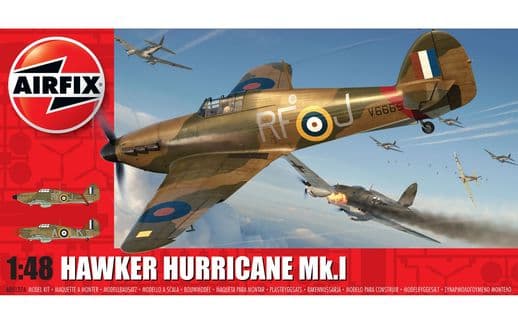
With all three of the Battle of Britain ‘Superkit’ fighter models making a triumphant reappearance in the Vintage Classics range during 2021 and the Hurricane still (just about) being available, we were fascinated to hear about a build project which used this historic kit as its starting point, but one which deviated somewhat from the scheme options included with the kit, to produce a modelling tribute to a WWII pilot who remains an inspiration to many who come across his story. How could we not investigate further?
The Airfix team have been aware of the prestigious modelling talents of Mr Michael Scott for some time now, as he has helped us with several projects over the years, with some mutual acquaintances also introducing us to the standard of his modelling, as he is definitely too modest to do so himself. Michael loves to immerse himself in his modelling projects, combining meticulous research with an undoubted talent for the hobby, with these projects often taking an already highly detailed kit and transforming them to another level of authenticity. These builds are often the result of him being inspired by a news article, something he came across in a book, or perhaps a historic photograph, all of which came into play for this recent 1/24th scale Hawker Hurricane Mk.I project, something we were desperate to learn more about.
Speaking to Michael about the inspiration behind this particular build project, he told us that like many modellers of a certain age, he was desperate to get his hands on one of the new 1/24th scale Airfix Hurricanes when he was a young man, but could never afford one himself and was never fortunate enough to receive one as a gift. Life and a career would get in the way of modelling before long, however, his desire to build a big Hurricane at some point has always stayed with him.
Fast forward to an episode of the Antiques Roadshow which aired in 2020 and was in commemoration of the 80th Anniversary of the Battle of Britain and his interest was rekindled once more. The programme featured a number of Battle of Britain related features, but one in particular which captured Michael’s imagination. The programme included an interview with former WWII pilot John ‘Paddy’ Hemingway who described his recollections of the air fighting during the summer of 1940 and who was presented with the control column of Hawker Hurricane Mk.I P3966, which had recently been recovered from a crash site at Fobbing Marshes, in Essex the very aircraft he had been flying when shot down by Luftwaffe Messerschmitts on 26th August 1940. Mr Hemingway also now happens to be the last surviving pilot known to have taken part in both the Battle of France and the Battle of Britain.
When looking more closely at the wartime flying career of Pilot Officer John ‘Paddy’ Hemingway, it is both fascinating and quite sobering to hear his experiences of a time most of us have only read about in books. He described how he didn’t believe he would live through the frantic air battles of the summer of 1940, let alone now be known as the last surviving pilot who served during the Battle of Britain. He lost so many friends during that time and describes how you really did need lots of luck to get through it. He knew friends and fellow airmen who were exceptionally gifted pilots and were absolutely ‘as one’ with their aeroplanes, but didn’t have much luck and consequently unfortunately didn’t last long. He always felt that he was a good pilot, but also a lucky man and when this was combined with his Irish heritage, this is probably why he is still around today - he had the benefit of double luck!
This next series of images feature Michael’s stunning Hurricane build and were taken for him by his friend Adam Osborne, to whom we are particularly indebted.
Paddy Hemingway joined the Royal Air Force on 7th March 1938 and successfully attained the rank of Pilot Officer the following year. Assigned to No.85 Squadron and to fly the Hawker Hurricane fighter, he was sent to France as part of the Air Component of the British Expeditionary Force, where he would be credited with victories against a Luftwaffe Heinkel He-111 on 10th May 1940 and a Dornier Do17 the following day. With the squadron suffering heavily during its deployment to France, Hemingway would later fly operations covering the Dunkirk evacuations, before preparing with the rest of the Royal Air Force to face the might of the Luftwaffe once more, but this time over home territory.
During the Battle of Britain, Hemingway would be shot down twice in August, first whilst engaged in combat with Junkers Ju-88s off the Essex coast and later when flying Hurricane P3966 against Dornier Do17 bombers over Kent. Incredibly, he would actually be forced to take to his parachute four times during his wartime flying career and having served throughout the frantic early stages of the Second World War, would suffer with severe combat fatigue in the months which followed. He would be forced to spend quite some time performing light duties, before re-joining the fighting later in the war, having fully recovered.
Interestingly, Hemingway’s Hurricane P3966 which crashed at Fobbing Marshes in Essex on 26th August 1940 was located by a recovery team in 1987 and was later the subject of a major excavation, which attracted the attention of the national media. The combat report Hemingway filed after the incident described how he broke off his attack on the Luftwaffe bombers to engage the Messerschmitt Bf 109 fighters protecting them, but how his Hurricane was hit by cannon fire. With the engine seriously overheating and the aircraft unresponsive, he decided to bale out, however, as he had heard reports that some British pilots taking to their parachutes had been fired upon by enemy pilots, he delayed pulling the ripcord until he was well below the cloud layer, with his sinuses paying the price. He landed at Pitsea Marshes at around 15.30 and walked to the nearest police station, where he presented himself. He was back with his unit by 22.30 the same evening.
A proud Irishman, Hemingway did spend a number of years in Canada after the war, but couldn’t settle and longed to be back home in his beloved Ireland. John ‘Paddy’ Hemingway is thought to be the last surviving pilot from both the Battle of France and the Battle of Britain, celebrating his 102nd birthday earlier this year.
With his interest now aroused, Michael immediately placed his order for a 1/24th scale Airfix Hurricane kit and started researching the details behind this fascinating story, paying particular attention to the serial number and fuselage codes carried by the RAF No. 85 Squadron Hurricane Paddy Hemingway was forced to bale out of on 26th August 1940. He also told us that he had always had a real affinity with the Hurricane and thinks it gets something of a raw deal historically, as everyone, including Luftwaffe pilots at the time, couldn’t see past the Spitfire when it came to Battle of Britain effectiveness. Research has since shown that Hurricane pilots actually claimed more victories during the battle than all of Britain’s other defences combined, statistics which include victories scored by the much vaunted Spitfire.
When it comes to the subject of the pilot himself, Michael believes that the time Paddy Hemingway spent in Canada allowed his story to slip under the radar somewhat and the fact that he is now back home in his beloved Ireland and that he is now the last remaining Battle of Britain pilot, is bringing him some long overdue media attention. As far as inspirational aviation related modelling projects are concerned, could there possibly be one more appealing than this?
His research did provide the detail information about the aircraft he was looking for, so the build could now begin in earnest. The code letters were sized and printed on Michael’s computer, with individual masks then printed and cut out using a machine his wife uses for her own hobby. These masks were then used to spray paint the codes on the model, just as they would have been applied on the real aircraft back in 1940, adding that extra bit of scale realism to the project.
Michael’s research also unearthed a fascinating picture of P/O John Hemingway during his Battle of Britain service and he wanted to try and replicate this as part of his build. Having scoured the internet for a suitable model figure, he came across a 1/24th scale US trucker figure which was really quite a good match and he set about altering it to replicate the picture pose and facial features of Paddy Hemingway. He scratch built an RAF ‘Mae West’ life jacket and made a parachute and harnesses, again following period photographs and simply using Blu Tack as the packed parachute itself. The effect was completed with a chair, something which was often a feature of photographs taken on RAF airfields during the Battle of Britain, with this scale version being a dolls house accessory and one which was finished to look as if it had just been commandeered from the mess hall.
This final selection of images show just how impressively Michael has managed to capture the story of Paddy Hemingway, the ‘Last of the Few’ and tell it in stunning model form. His Hurricane really is a thing of modelling beauty.
The effect Michael was looking to achieve was a build and diorama display which was reminiscent of a Battle of Britain scene, but clearly, the Hurricane fighter itself was always going to be the main attraction. Building the model with the inclusion of many additional touches of fine detail, he included wiring and piping in the engine compartment, extra detail in the gun and undercarriage bays, along with additional detail in the fighter’s cockpit. With the model displayed with many of its panels removed, the overall appearance is quite magnificent and looks for all the world as if this is a stunning scale representation of a combat aircraft, not one which has just been delivered from the manufacturing plant - it really is beautiful to look at. The project is without doubt a fitting tribute to Pilot Officer John ‘Paddy’ Hemingway in his 103rd year ‘The last of the Few’ and a pilot who enjoyed ‘The Luck of the Irish’ during his wartime flying career.
In all, this build project took Michael around a year to complete, but this was mainly down to the fact that he is suffering with quite a severe medical condition at the moment, one which affects his eyesight and will only allow him to model for around half an hour at a time, before being forced to take a lengthy break. Knowing how this condition has affected him, it is quite astonishing that he managed to produce such an impressive model build, not to mention his resilience in completing the project in such challenging circumstances and in this lengthy ‘little and often’ manner. The completed model is currently on display in Michael’s study, but it will probably end up as one of the impressive displays at the Ulster Aviation Society museum, where several of his previous model builds can already be admired.
The finished model on its display base and with a label detailing the fascinating subject of the build - great work Michael!
A truly stunning model build, we would like to thank Michael for allowing us to feature his fascinating Hurricane project, for sending us this selection of photographs and for allowing us to contact him to discuss the details behind the build. As a parting shot, Michael told us that his 1/24th scale Hurricane kit experience was definitely worth the wait and that he has already bought himself another kit to be used on a future project. With a couple of ideas regarding his next project already in mind, we are sure that many Workbench readers would be keen to see the result of his next Hurricane ‘Superkit’ build.
We are afraid that’s all we have for you in this latest edition of Workbench, but we will be back next week with more modelling news from the wonderful world of Airfix. As always, if you have any comments about the blog or would like to suggest a subject you would like to see covered in a future edition, please do drop us a quick line at our usual workbench@airfix.com address.
To catch up with all the latest Airfix news, please check our various official social media sites, or head for the Airfix website.
Thank you for continuing to support our Airfix Workbench blog.