
Welcome to this latest edition of our Workbench blog and all the news, updates and modelling exclusives from the fascinating world of Airfix.
There were so many titles we could have chosen for this latest edition of Workbench, particularly as our subject this week is as important to British history as it is to the heritage of the Airfix kit range, our scale tribute to the talents of a man who could be described as the nation's greatest engineer and inventor, Isambard Kingdom Brunel. Once again delving into the fascinating world of our Vintage Classics range, this latest update features a kit which was first introduced back in the 1960s, but is now preparing to take its place in an Airfix range once again, a kit which will allow us all to create our own scale tribute to an icon of the maritime world, the Great Western.
In addition to discovering why this ship was so significant in the history of seafaring, we will also be looking a little more widely at the subject of classic ships and how they've been such an important part of the Airfix story over the years, furthering the discussions of last week, where we looked at how modelling in general is an extension of and the preservation of history. Taking a slightly different angle on the re-introduction of the Great Western, we will be talking to our talented graphic designer Mark, looking at the steps he has to take in support of a Vintage Classics reintroduction, steps which often involve the restoration of iconic pieces of hobby artwork. We are also delighted to confirm that we have images of a beautifully finished sample of the Great Western kit to share as well, bringing everything together as we prepare to welcome this impressive kit to the current Airfix range.
It's time to batten down the hatches and clear the decks, as we go overboard on a nautical edition of Workbench, our latest blog attempt to valiantly stave off a case of the weekend Doldrums!
A right of passage. These Airfix galleon kits not only allowed modellers to recreate some of the most fascinating ships in history, they also produced some of the most striking modelling creations the hobby has to offer.
In the previous edition of Workbench, we looked at how Airfix played a significant role during the formative years of so many young people due to one particular reason, how it helped feed our insatiable passion for history and the craft/machines which made it. Allowing us all to create accurate scale representations of the ships, cars, aircraft, spacecraft and military vehicles we had been learning about at school, only served to engage us further and fuel that passion for knowledge discovery. We also looked at how companies harnessed this thirst for historic knowledge within their marketing strategies, making free collectable items available in order to give their products that little commercial edge - where they led, others soon followed.
One of the most significant sources of these collectable items during the 19th and 20th centuries would definitely be frowned upon today, but back then was the widespread availability of collectable cigarette cards. These desirable items presented subjects which not only included historical figures, but also the great machines and inventions created by mankind over the years. At the head of this subject matter, ships and naval history always proved particularly fascinating, as images of ships throughout the ages and maritime scenes in general have, and continue to be, simply captivating to many people. I wonder how many of us received hand-downs from a relative which included a collection of cards featuring the golden age of sail and how these images were just so appealing to us, even though our modelling preference at the time might have been the great warships of the Second World War?
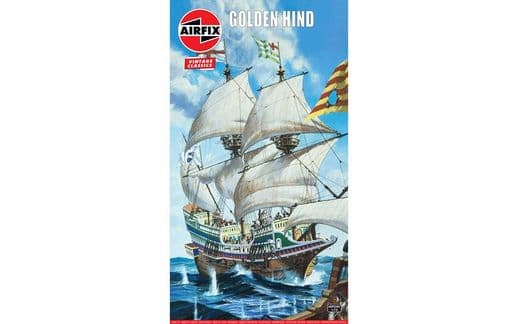
Historically, mankind has always had a fascination with the sea and how it not only provided the opportunity for trade and conquest, but also the ability to discover. This is why the vessels we have used to cross oceans over the years have become the subject of such enduring fascination, and why it's therefore not surprising that Airfix decided to make a classic galleon as the subject of the very first model kit release intended for the mass market back in the early 1950s. Sir Francis Drake's Golden Hind heralded the start of a hobby phenomenon which thankfully continues to this day.
Do you remember seeing built Airfix galleon models displayed in the front room windows of your neighbours in your youth?
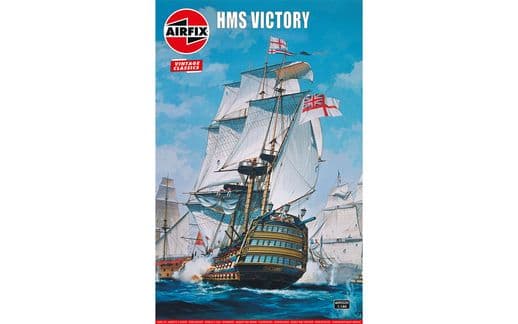
An altogether more impressive representation of a classic galleon would appear in 1965, with the release of HMS Victory and our opportunity to give life to a ship which until that point had resided mainly within the pages of history text books. This, and the kits which followed it, were truly splendid, but in truth, were probably beyond the capabilities of novice modellers at that time, leaving big brothers and dads to be pressed into service.
These kits were not only an opportunity for us to bring history to life, but also a chance for us to display our modelling skills to our communities. I wonder how many Workbench readers remember seeing beautifully finished Airfix galleon models being proudly displayed in the front room windows of houses in our youth and how this clearly identified that home as one belonging to a fellow modeller? Perhaps more than this, the sight of these beautifully finished models served to spur us on in our own modelling journeys, encouraging us to keep improving our skills and to gradually take on more ambitious modelling projects.
Bringing this story right up to date, the success of our Vintage Classics range has allowed modellers who remember these classic sailing ship kits being so memorable in their youth, to consider adding them to their current build schedules, by way of an enjoyable modelling trip down memory lane. Of course, this also allows us to gauge how far we've come on our own modelling journeys, from an acquired skills perspective, whilst at the same time allowing a new generation of modellers to experience these classic kits and to immerse themselves in the captivating world of scale naval history.
We simply couldn't wait any longer - it's time for some iconic Airfix nostalgia created by the hand of Mr Roy Cross.
Although the historic Great Western ship is definitely the subject of this latest update, we can't really get on to that without first looking at the man responsible for its creation, a giant in the world of engineering excellence, Isambard Kingdom Brunel. Born in 1806, Brunel was proficient in drawing and geometry from an early age and would go on to benefit from a first class university education in France. By the time he became the chief engineer on the Great Western Railway project, he already had a string of impressive civil engineering achievements to his name, but this didn't stop him personally surveying the entire proposed London to Bristol route.
Once the project got underway, Brunel's brilliance would result in the construction of many impressive civil engineering projects and the adoption of systems which are still in use to this day. The size of these achievements was truly ground breaking, however, the enormity of the task and all associated financial outlay was regularly challenged by the press of the day and well before completion, questions regarding the sense behind such a long distance project were being publicly asked. Fortunately, when Brunel was pressed on this very question, he had the perfect answer - on the contrary, it's not long enough! Why should we stop at Bristol? We should carry on to New York!
Although his response shocked those in attendance, this wasn't an idle boast, because Brunel had already embarked on his next ambitious project, one which would see his talents going transatlantic.
With his engineering interests and influence knowing no bounds, Brunel applied his brilliant mind to the challenges of establishing regular and reliable passenger services across the Atlantic and how such a service could be provided in as short a time as possible. Even whilst the Great Western Railway was still under construction, he embarked on a study of existing shipbuilding technologies and specifically, the theories behind ship displacement and motion resistance, essentially how efficiently a ship moved through water.
A selection of images featuring a built sample model of Great Western having been processed by our photography team and out on display in our Head Office showroom.
His calculations suggested that powering a larger ship through water would require proportionately less fuel than would be required by a smaller vessel and in order to prove these theories, he offered his services free of charge to the newly formed Great Western Steamship Company. In this position, he was handed the responsibility of designing and constructing a very special ship for a very specific task. Once again however, Brunel continued to be challenged, mainly because at that time, the proposed vessel was going to be one of the largest passenger vessels the world had ever seen.
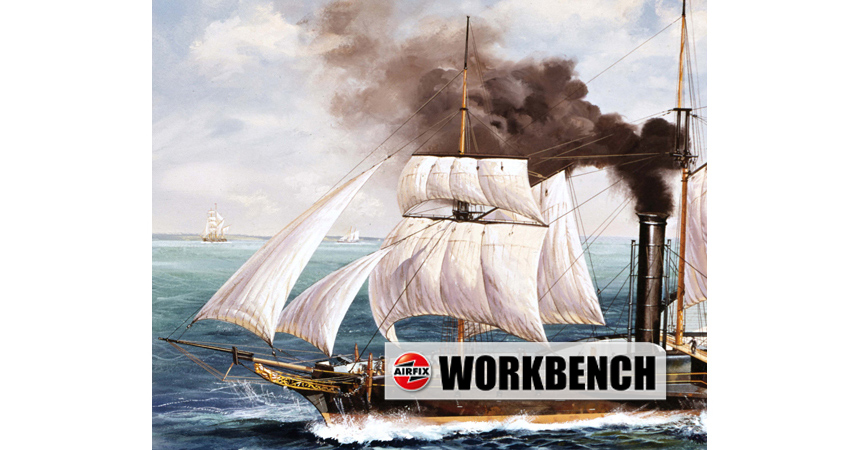
The ship was designed and built as a sidewheel paddle steamer, one capable of making regular and reliable Atlantic crossings between Bristol and New York and all in record times. Brunel's design was a relatively traditional oak built, iron-strapped vessel, with steam powered paddles on either side of the hull, but a design which still featured masts and sails. Although steam provided the main propulsion for the vessel, Brunel cleverly retained four masts, complete with their sails, as his calculations indicated that this would not only provide the vessel with additional speed with favourable prevailing winds, but how this would also insure the steam paddles worked at maximum efficiency and drive the ship in a straight line, particularly when seas were a little more choppy.
Built in Bristol, the Great Western was launched on 19th July 1837 and immediately sailed to London for the fitting of her two steam engines. On completion of this work and in preparation for her maiden Atlantic crossing, she sailed back to Bristol. At that time, she was not only the largest passenger ship in the world, but was also one packed with technologies and innovations which would be used in ship design for many years to come.
As such a historic development, these transatlantic shipping exploits had clearly captured the imagination of the entire nation, not least because this was now developing into a high-profile steam powered race. With Brunel's stunning Great Western attracting much of this attention, rival company the British and American Steam Navigation Company was planning their own service and were determined to be the first to make this historic crossing.
Unfortunately for them, their new steamer was still some way off being ready, so in an attempt to prevent their rivals from taking the crossing limelight and a place in history, they chartered an Irish steam ship for their service, the Sirius. As the world watched on, the Sirius set off from Cork harbour fully four days before the Great Western left Bristol, but would ultimately only beat Brunel's steam ship by less than 24 hours. It was reported at the time that this smaller ship only made it to New York by burning furniture and wooden fittings having run out of coal, however, it has also been suggested that this was simply a story which made for good newspaper copy at the time. More considered accounts simply note the crew as supplementing their dwindling coal stock by burning several barrels of resin.
When the Great Western arrived in New York only hours later, she still had over 200 tons of coal still aboard. It does have to be said that the Great Western was the larger ship, with her 235 ft long hull besting the Sirius by a good 57 ft, figures which certainly appear to support Brunel's original calculations.
A spectacular maritime success for Brunel and the Great Western, the ship would set the standard against which all future Transatlantic liners would be judged and she would stand as the largest passenger ship in the world for fully two years from 1837. Her average crossing time would be recorded as 16 days on the outbound leg and a shorter 13 days and 9 hours on the return journey.
The Great Western was the first steamship designed from the outset to provide a regular Atlantic crossing service and would proudly become the holder of many Blue Riband crossing records during her time in service. This historic and innovative ship would provide her Atlantic crossing service for an impressive eight year period, completing at least 45 crossings during that time.
The Great Western built model spending a little time in the bowels of the HQ warehouse - how very Brunel!
Over the course of the past couple of years, we have been allowed an insight into what steps the Airfix team have to take in order to allow a classic Airfix kit to take its place in the Vintage Classics range and how not everything is as straightforward as we might assume. Once the tooling components have been located, everything has to be assessed for integrity and completeness, before any decision on potential manufacture can be taken.
Sometimes, the loss of, or damage to components can render a particular kit unsuitable for range inclusion and in other cases, a little bit of design ingenuity and some new tooling investment can prevent some kits with missing parts from being consigned to the modelling history books forever. As we have seen with such projects as the recently released Bond Bug and previously released Auster Antarctic and Beagle Basset, missing components (usually clear parts) can be reverse engineered by our designers, creating new design files. This allows these missing parts to be added to the tooling suite once more, allowing that particular kit to be produced once more, a fascinating convergence of old meets new, from a model design perspective.
One aspect of a kits inclusion as a Vintage Classic we have yet to consider is that of its overall presentation and specifically the box artwork used to grace these releases. It goes without saying that a major factor in the appeal of these kits is their nostalgic charm and how they bring back happy modelling memories for so many people and without question, the original artwork has a significant role to play in this experience. Just as the model tooling has to undergo detailed inspection, so the original artwork has to be located and assessed, with the same levels of precision and accuracy.
Every Vintage Classics release to this point has benefitted from the use of its original artwork and we have not yet had to face the situation where the tooling is in good order, but the original artwork is missing or damaged. Clearly, this would create another problem for the Airfix team which would require some innovative thinking.
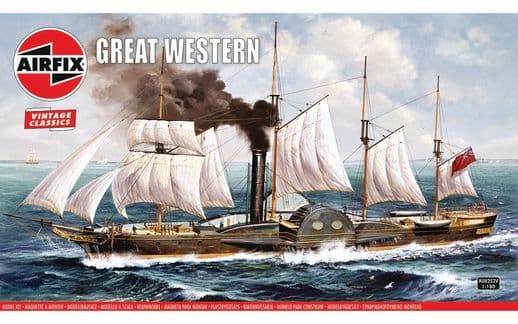
Preparing an original box artwork image for inclusion in the Vintage Classics range. This first image features the transparency copy of Roy Cross' original painting, with the version below being the one prepared by Mark prior to receiving its Vintage Classics branding.
Speaking with Airfix graphic designer Mark Holihan, he informed us that some Vintage Classics artwork projects can prove to be much more challenging than others to work with and can lead to many hours of restorative toil. Mark told us that whilst the tooling assessment work is ongoing, he and other members of the Airfix team are attempting to locate and assess the condition of the supporting artwork files, in preparation for its Vintage Calssificationing - I think we might have just invented a new word here!
The majority of these files are held on large glass transparencies, which feature images of the original artwork and even if they are in good condition, will still require quite a bit of work to be done. Preparatory work will include the removal of any colour cast, correcting any damage or imperfections and often extending certain sections of the image, as they will be used across so many different channels in announcing the kit's arrival in the range. Once the image has been prepared, it can be inducted into the Vintage Classics presentation hall of fame, but again only after spending time on Mark's workstation. Irresistible Airfix nostalgia with a contemporary presentation twist, is it any wonder why the Vintage Classics range continues to be so popular.
Mark went on to inform us that his graphics work on this Great Western addition to the range was actually quite easy, with the artwork transparency being in particularly good order, with detail and colour rendition all being to a high standard. He did kindly allow us to include an image of the original transparency artwork within this feature, which not only shows us the starting point for his work, but also the opportunity to compare this original with its final Vintage Classics presentation form. It also allows us yet another fascinating insight into what it takes to bring one of these classic kits back to the Airfix range, allowing the kits of our youth to charm modellers old and new, accomplished and novice.
The magnificent Great Western Roy Cross original, finally now inducted into the Vintage Classics hall of fame.
A beautiful addition to the Vintage Classics range, this scale tribute to Brunel's magnificent Great Western is now scheduled for imminent release. Surely, this is a blue riband modelling project for anyone to enjoy over the coming winter months - all aboard for some enjoyable maritime modelling nostalgia.
We are afraid that's all we have for you in this latest edition, but we will be back next Friday with more project development updates and the very latest Airfix kit exclusives. In the meantime, we are always keen to hear your views on all things Airfix and in particular, any thoughts and opinions you may have regarding our Workbench blog. If you would like to drop us a quick line, could we please ask that you use our workbench@airfix.com email for all correspondence.
To re-visit any of the Airfix blogs we have produced over the past seven years or so, please head to our main Workbench hub, where you will find our entire blog back catalogue and all the Airfix design projects we have already covered.
All our dedicated official social media sites can be accessed by clicking the respective link icons at the foot of this page, or by heading to the Airfix homepage. Other useful Airfix links are:
Facebook, YouTube, Twitter and Instagram official sites
Please join us for more Airfix updates next week and thank you for your continued support.