
Welcome to this latest edition of our Workbench blog and all the news, updates, and modelling exclusives from the fascinating world of Airfix.
As the Airfix team are engaged in making final preparations for our attendance at this year’s Royal International Air Tattoo, our latest Workbench update features our latest scale tribute to an aircraft which has to be described as one of the most significant of the post war era, the current RAF incarnation of which is scheduled to be thrilling the crowds at Fairford in just a few days’ time, the mighty Boeing Chinook. This twin rotor behemoth is a heavy lift helicopter phenomenon, an aircraft whose everyday routine taskings are anything but routine, and a helicopter the world has come to rely on over the past 63 years or so.
As the second release from our newly tooled Boeing Chinook HC.1 kit is just about to arrive in our warehouse, and is surely destined to prove as popular as the inaugural release, we’re devoting this edition to the wonderful world of the Wokka, looking at why both the aviation world and modelling/enthusiast communities just can’t get enough of this magnificent and historic aircraft. In addition to taking a little historic overview of the Chinook’s service life with the Royal Air force, we will be looking in a little more detail at the two scheme options which are included with this second release, with the added benefit of having eye’s on a selection of built model images, featuring kits finished in both of those scheme options.
With both schemes possessing incredibly strong appeal, whilst both looking very different from each other, it’s a case of ‘which Wokka wins’ in this latest edition of your Workbench blog.
New Chinook kids on the block – Built sample models finished in both of the new scheme options on offer with this second release from this beautiful kit.
For those of us who enjoy attending Airshows over the summer months, there are some aircraft which make such a lasting impression on us, that they have remained firm favourites over the years, despite the fact that earlier variants of those same aircraft may have entered Royal Air Force service almost a lifetime ago for many of us. An aircraft which is always guaranteed to demand the attentions of any Airshow audience, the Boeing Chinook is as capable a performer as it is impressive to look at, and when combining this with the unique sound of its arrival, is it any wonder that it enjoys an unrivalled reputation as an Airshow performer?
During the course of an RAF Chinook display routine, no matter how many times you have seen one performing previously, prepare to be completely captivated by what this incredible helicopter can do, as such manoeuvres as pedal turns, the rollercoaster, and insane wingovers will all be coming as standard. If you’re lucky, even a massive pair of foam dayglo hands will appear on the rear ramp of the helicopter, as the crew acknowledge the appreciation of the masses gathered beneath them. In short, a Chinook display is nothing short of astonishing. The things crews manage to do with these 12 ton heavy-lift helicopters is quite simply breathtaking, as they don’t appear to have to conform to the same laws of gravity the rest of us are governed by, but after putting their Chinook through its paces, we’re definitely all left with a better understanding of why this is regarded by many as the most capable helicopter the world has ever known.
Of course, when the RAF decided to procure the Chinook back in 1978, being the consummate Airshow performer wouldn’t have been high on their list of specification priorities, what they were actually looking to buy was the world’s most advanced, battlefield tested heavy-lift helicopter available at that time. They knew that in a changing world, the Chinook would present them with an impressive upgrade in capability, a helicopter where the routine is anything but routine, and one which could turn its hand to any number of taskings, be they military or humanitarian.
As we currently find ourselves commemorating the 85th Anniversaries of the Dunkirk evacuations and the Battle of Britain, it’s interesting to appreciate that whilst helicopter technology advanced significantly during the ten years prior to the end of the Second World War, it would be the years which immediately followed the end of WWII that would the most dramatic developments taking place, particularly in the production of effective, capable and reliable machines.
During the 1950s, the first reliable helicopter types started to enter service across the world, and immediately highlight the versatility which would make them invaluable in performing a multitude of military and civilian tasks. Proving equally effective in delivering troops and supplies into areas which were simply inaccessible to other aircraft types, as they were at rescuing grateful holiday makers from the sea when getting themselves into a spot of trouble, the helicopter would go on to establish itself in so many ways, and whether operating in a military or a humanitarian role, really has no equal in the world of aviation.
The first release from this tooling included scheme options to build Falklands veteran Chinook Bravo November, and aircraft which might well be the most famous individual British aircraft of the post war era.
An aircraft which possibly underlines the qualities of the modern helicopter more effectively than any other type, the mighty Boeing CH-47 Chinook has already been in military service for over sixty years and shows no sign of disappearing from our skies any time soon. The distinctive tandem twin rotor configuration of this heavy lift helicopter cleverly counteracts the effects of engine torque by having each of its huge rotor blade stacks turning in opposite directions, thus negating the need for the tail rotor we traditionally associate with helicopters.
An extremely impressive machine, the Chinook made its first flight back in 1961 and since that date, has gone on to become one of the most effective aircraft designs of the post war era, one which can operate in almost any environment, no matter how inhospitable the terrain. Clearly, this has made the Chinook invaluable when performing a great many roles and certainly when it comes to British military operations where troops are on the ground, they won’t go unless Chinooks are there to support them.
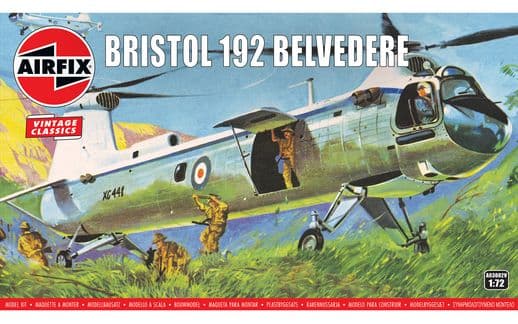
Britain’s links with this magnificent machine go all the way back to 1967, as the RAF’s admiration for America’s impressive new heavy lift helicopter led to an order being placed for 15 new aircraft to replace their own Bristol Belvedere tandem rotor military helicopters. As it transpired, this order would later be cancelled as a result of ongoing defence spending cutbacks, and it would be a further ten years before this interest could be revived.
Now looking to replace, or upgrade the capabilities of the RAF’s Westland Wessex fleet, the British Government approached Boeing again in the late 1970s and this time, placed an order for 33 new Chinook aircraft, machines which were essentially equivalent to the US CH-47C variant. The honour of being the first Royal Air Force Squadron to operate the new Chinook was No.18 Squadron at Odiham, with British aircraft carrying the designation HC.1 (Helicopter Cargo Mk.1), and they would soon start to show the British public just what this incredible machine was capable of.
Airfix designers have no fear in tackling some of the most iconic subjects in aviation, when embarking on their latest design project.
No sooner had Britain’s Chinooks entered service, that events on the other side of the world would result in an early overseas deployment for the helicopter, one which would be the start of an incredible story for one particular aircraft and indeed, the wider reputation of the Chinook as a military aircraft. Five of the RAF’s new Chinooks were loaded aboard the requisitioned container ship Atlantic Conveyor for the Task Force voyage down to the South Atlantic, each one stored on the deck of the ship and wrapped in Driclad PVC covers as a protective measure. Chinook ZA707 was offloaded at Ascension Island prior to continuing the voyage to the Falkland Islands and famous ‘Survivor’ ZA718 was in the air when the Atlantic Conveyor was struck by Exocet missiles and destroyed, with the remaining Chinooks lost. ZA718 ‘Bravo November’ would be the only Chinook subsequently available to the British Task force, but her historic exploits are certainly the subject of a future edition of Workbench.
An indication of just how successful the RAF’s Chinook force had proved to be over the years, the fleet has benefitted from almost constant upgrade and additional procurement, with the aircraft unquestionably becoming an essential component of Britain’s military capabilities. This upgrading of capabilities has kept the Chinook at the forefront of world helicopter technology, and currently, it appears the only aircraft capable of replacing a Chinook is another Chinook, a situation which doesn’t seem likely to change for many years to come.
The procurement of new Chinooks allows their incredibly hard working predecessors to finally hang up their rotor blades, however, the latest variant of Chinook are unquestionably some of the most advanced aircraft in current Royal Air Force inventory. Despite the fact that that this aircraft type has already been in British service for 45 years, the Chinook Sustainment Programme will ensure these magnificent aircraft can continue serving the nation in a way only a Chinook can, for the next 20 years or so, at least.
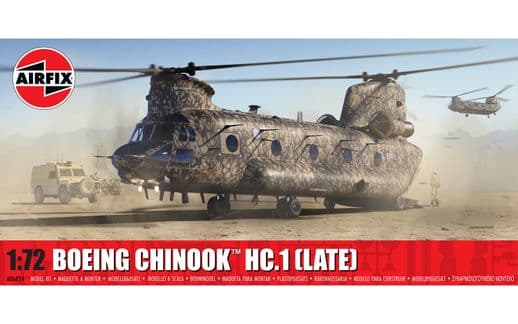
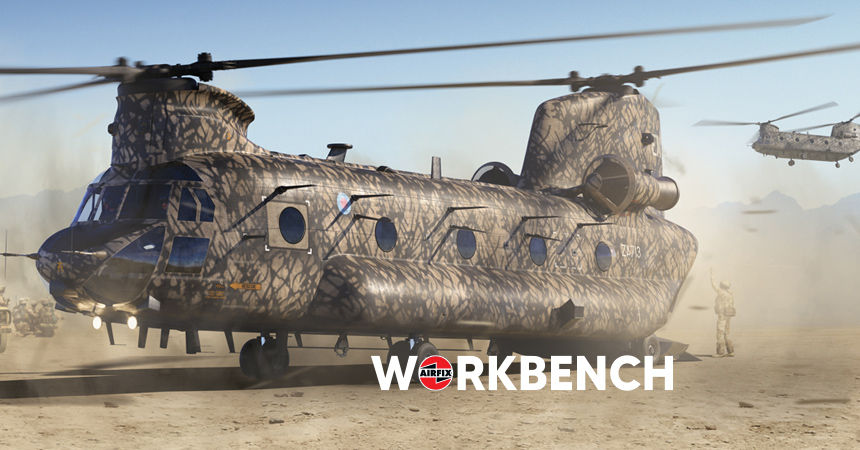
Gulf War Special Operations transport. This latest Chinook release box artwork features the lead scheme from this second kit release, one which benefits from some rather rudimentary, yet incredibly effective camouflage markings.
Since our project to introduce a newly designed model kit of the early British Boeing Chinook HC.1 was announced with the launch of last year’s range in January 2024, to say there was great interest in this kit would be the understatement of almost half a century of RAF Chinook service. When we attended last year’s RIAT show, the demand for this impressive kit was such that we couldn’t take any with us at all, because every single example had already left our warehouse. The only one we did have with us was a built sample gracing our display cabinet, and if we’d had a pound for every offer we received to take that one off our hands, we could have funded the Hornby Christmas party last year. Even members of that year’s RAF Chinook display team dropped by to see what all the fuss was about, and we had to send them away with anything but an Airfix Chinook.
The challenge of tackling this significant project was handed to talented product designer Paramjit Sembhi, a young man who now has a stellar list of new Airfix tooling projects on his design CV, and a man who has a passion for modelling flowing through his veins. If you would like to re-visit our Chinook Designer Interview edition of Workbench, you can do so by using this Airfix Chinook link.
When doing so, you will discover some of the many challenges he faced in bringing this superb new kit to the Airfix range, along with some of the design elements he was most pleased with. You will read how he found the offset detailing down the dorsal spine of the aircraft to be quite difficult to get his head around, but once he’d managed to figure this out, how he was particularly pleased with how it turned out. The detail Paramjit managed to incorporate into the area around the loading ramp and also at the back of the cockpit also proved to be particularly pleasing for him, and more widely, how the kit assembled in a logical and enjoyable manner for the modeller are all rewarding aspects of the design he is particularly proud of.
It really is a fascinating insight into the work of an Airfix product designer, and is definitely worthy of a revisit.
This second release from this impressive tooling presents two incredibly appealing, but quite different Royal Air Force schemes for late variant HC.1 Chinook aircraft, with one wearing a particularly spectacular Gulf War camouflage scheme, whilst the other wears an anniversary scheme to celebrate the 75th anniversary of its parent squadron.
Let’s take a closer look at both of the new schemes now.
With the legendary exploits of ‘The Survivor’ Bravo November during the Falklands War setting the tone for Chinook operations in Royal Air Force service, when British troops were required to support an international effort to oust Iraqi troops from Kuwait in 1990, its services would be required once again. Following the Iraqi invasion of Kuwait in 1990 the international condemnation which followed saw a mighty coalition military force amassing in Saudi Arabia, the size of which had not been seen since the end of the Second World War. The initial phase of the coalition response was to secure the airspace in the region, before striking at opposing military facilities and infrastructure. This was all intended to neutralise the threat posed by Iraqi forces, and whilst this work was carried out by coalition fast jets, RAF Chinooks began their own operations which were perhaps less glamorous, but no less vital.
During this first Gulf War, RAF No.7 Squadron sent three of their Special Forces Flight Chinook helicopters to operate from Al Jouf, Saudi Arabia, in support of highly dangerous, but absolutely vital ‘special operations’. These missions included the insertion, support, supply and extraction of SAS and SBS units engaged in specialist missions, which included the delivery of SAS troops into western Iraq, the resupply of SAS fighting columns in the desert, and the insertion of SBS sabotage teams close to Baghdad itself, with orders to locate and destroy communications cables, thus throwing Iraqi missile operations into disarray.
Special Forces Chinooks were also used during the famous and widely documented re-taking of the British Embassy in Kuwait, when SAS and SBS troops fast dropped using ropes from helicopters hovering above the embassy compound. It’s also thought that these specially equipped helicopters were also used in the delivery of the controversial and ultimately tragic SAS operation Bravo Two Zero, when a team was dropped behind enemy lines and ordered to find a suitable lying up place from where they could observe the movement of Scud missiles, and report their findings back to command.
The helicopters were prepared for these clandestine missions by having their standard grey and green camouflage areas sprayed over with a Desert Pink paint, which when dry, was given a rather distinctive addition. The black undersides were left as they were, however, the new lighter, uniform colour applied to the upper surfaces of the helicopters was ‘disrupted’ by the liberal application of short black lines or squiggles, all applied by brush, and all in a random manner. No areas of desert pink were left un-covered, and it seemed that the more random the strokes applied, the more effective the desired effect.
Scheme details and built sample models finished in this spectacular Gulf War Special Forces scheme.
Due to the highly manual nature of this application process, none of the Chinooks decorated in this manner were finished in an identical manner, and there is clearly a significant amount of artistic licence available to the modeller when attempting this unusual, yet strangely attractive scheme. There are, however, a large number of photographs available online which serve as invaluable references for a project such as this, taken both in the Gulf and once the aircraft returned home, the majority of which feature this very aircraft, Chinook ZA713.
Once the fighting in the Iraq was over, Chinook operations showed no sign of reducing, with these superb aircraft simply adding to their growing reputation by turning their hands to even more tasks, transporting prisoners of war and delivering aid and supplies to the thousands of displaced refugees in the Gulf region. Perhaps the sentiment which best describes the continuing service reputation of this mighty heavy lift helicopter is the fact that the only aircraft crews and troops thought capable of replacing a Chinook was another Chinook.
ZA713 was originally constructed as a CH-47 (352) by the Boeing Vertol Company of Philadelphia during 1981 and given the civilian registration N37048. This registration was subsequently cancelled, and the aircraft was exported to the UK for service with the Royal Air Force under the designation HC.1, and delivered on the 30th December 1981. Underlining just how important these aircraft were to the RAF and how they were destined to have long and active service careers, this aircraft underwent a series of rather significant upgrades, in a career which would last an impressive 43 years.
In September 1994, she would undergo upgrade to HC.2 standard, and almost 18 years later, would be back with the manufacturers for upgrade to HC.4 configuration. By 2019, she was in need of further upgrade, when she received her final upgrade to HC.6A standard, but was categorised as being withdrawn from use at Fleetlands in 2024. The Royal Air Force certainly got their money’s worth when it came to their Chinooks.
Throughout the post war era, one phenomenon which has become a proud tradition for individual Royal Air Force Squadrons, has also become revered by enthusiasts and photographers all over the country, that of commemorating squadron anniversaries. With current squadron members proud the commemorate the achievements of their forebears, some of the oldest squadrons in the Royal Air Force can trace their heritage to the days before heavier than air flying, however, it’s usually conflict which brings the most cherished heritage for these units.
Usually drawing inspiration from the unit’s squadron badge, an impending anniversary usually gives artistic members of the current squadron the opportunity to submit anniversary proposals to their commanders, and just sometimes, this can lead to one aircraft being wheeled into the paint shop to receive a rather striking and sometimes spectacular presentation update. If your squadron operates the mighty Boeing Chinook helicopter, then the painting team will have plenty of aircraft real estate to work with and as a consequence, can produce something quite magnificent.
Originally formed at RAF Northolt in 1915, the RAF No.18 squadron has a rich service heritage, which includes claiming more than 200 enemy aircraft destroyed by the end of the Great War and later during WWII, mounting the operation to drop a replacement artificial leg for famous RAF ace pilot Douglas Bader, following his capture in the summer of 1941. During more than 55 years as a helicopter unit, No.18 Squadron famously provided the only Chinook support during the Falklands War, as ZA718 ‘Bravo November’ was the only one of four of these mighty helicopters to survive the Argentine double Exocet missile attack on the Atlantic Conveyor container ship, requisitioned by the Ministry of Defence in support of the conflict.
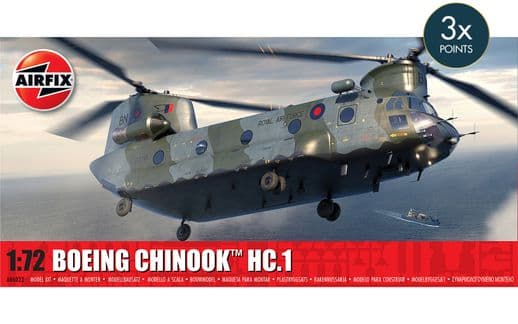
Commemorating the Squadron’s 75th Anniversary in 1990, Chinook HC.1 ZD980 was presented in this magnificent red and black scheme, and whilst it was dominated by the unit’s ‘Pegasus Rampant’ motif, the design also made reference to other aircraft operated throughout its proud history, including periods where it operated the Hawker Hart and English Electric Canberra. The Pegasus Rampant which dominates the unit’s badge emanates from the Great War, and how the squadron’s aircraft worked in close conjunction with cavalry units, developing tactics to capitalise on any ground breakthrough by bringing air power to bear.
Despite being one of the most attractively presented of all the RAF’s 75th Anniversary aircraft that year, it seems as if ZD980 was a little more elusive than most specially painted RAF aircraft in 1990, and other than a few official pictures taken at its home base at Gütersloh, enthusiast photographers would have been lucky to have grabbed a selection of pictures for their archives.
Another incredibly long-serving and hard flying aircraft ZD980 was constructed as Boeing Vertol CH-47 (353) MA037 in 1985 and allocated the civilian registration N37082. Later transferred to the Royal Air Force with the serial number ZD980, during her long career, she is known to have operated in the colours of Nos. 7 and 18 Squadrons, and as part of No.240 OCU, in addition to wearing a smart all-over white scheme whilst serving on UN peace keeping duties.
Squadron anniversary commemoration time, as this second scheme marks the 75th anniversary of RAF No.18 Squadron in 1990 - Pegasus Rampant!
Once again, she was originally supplied as an HC.1 variant aircraft, later receiving the composite rotor blade replacement upgrade, and later still being sent back to Boeing for full upgrade to HC.2 standard. She would be upgraded to HC.4 standard by July 2014 and further upgraded to HC.6A standard by May 2018. Having already been in service for 33 years at that point, she would return to service and continue plying her trade from that point onwards, and is still thought to be one of the aircraft on strength with the Royal Air Force.
The RAF are currently in the process of modernising and upgrading their Chinook fleet and whilst the number of aircraft on strength is set to reduce from 60 to 51 aircraft before long, this will ultimately include 14 new Extended Range Chinook helicopters, which will greatly enhance capabilities, particularly in the Special Forces role, where the range over most existing Chinook models will be doubled. The current RAF fleet consists of a combination of HC.5, HC.6 and HC.6A aircraft, and as the new ER Chinooks are delivered and come online, the oldest aircraft will be retired, taking the force down to a total figure of 51 aircraft.
We’re gonna find it hard to choose between these two appealing scheme options.
From the Falklands War to the present day, the RAF’s Chinook force has been at the forefront of British military and humanitarian operations over the years, proving itself to be an invaluable asset in all situations and an aircraft we simply can’t do without. The only aircraft seemingly capable of replacing a Chinook is the latest variant of Chinook, a situation which doesn’t look like changing anytime soon.
With its impressive Airshow demonstrations and distinctive blade slap sound, is it any wonder that the Chinook has become one of the most recognised aircraft the world over, and in RAF service, has achieved almost legendary status, with certain individual aircraft appearing to take on their own identities. This latest release is just the second kit produced from this impressive new tooling, one which is our 1/72nd scale tribute to one of the most important British aircraft of the post war era.
The two scheme options available with this new release have to be described as simply stunning, each with their own appeal and interesting story to tell, but both being very different from each other. Although spending time with this kit will be an absolute joy, the stress of choosing one scheme over the other will undoubtedly be a little less pleasurable, but whichever one does get our vote, the finished model will look magnificent in our display cabinets.
A future Airfix kit classic, this second 1/72nd scale Boeing Chinook HC.1 release is surely destined to become a popular build project for many over the coming weeks and months.
By the time this latest update is published, this second Boeing Chinook HC.1 kit should be in our warehouse and marked as being ‘in stock’ on the Airfix website.
It’s nearly Wokka Time!
We are afraid that's all we have for you in this latest edition, but we will be back next Friday with more project development updates and the very latest Airfix kit exclusives. In the meantime, we are always keen to hear your views on all things Airfix and in particular, any thoughts and opinions you may have regarding our Workbench blog. If you would like to drop us a quick line, could we please ask that you use our workbench@airfix.com email for all correspondence.
To re-visit any of the Airfix blogs we have produced over the past seven years or so, please head to our main Workbench hub, where you will find our entire blog back catalogue and all the Airfix design projects we have already covered.
All our dedicated official social media sites can be accessed by clicking the respective link icons at the foot of this page, or by heading to the Airfix homepage. Other useful Airfix links are:
Facebook, YouTube, Twitter and Instagram official sites
Please join us for more Airfix updates next week and thank you for your continued support.