Welcome to the latest edition of our weekly Workbench blog, and all the news, updates, and modelling exclusives from the fascinating world of Airfix.
The title of this week’s edition of Workbench leaves us in no doubt whatsoever that we have something rather special in mind this time around, and will see us delving into the inspirational world of one of Britain’s favourite sons, a man who helped galvanise a nation to its task during some of its darkest days. As the past few days have seen history marking the 116th birthday of Douglas Bader, and particularly because goodness knows we could all use a little inspiration at this moment in time, we couldn’t think of a finer subject to stir our modelling passions this weekend. That being said, the main focus of our attentions is going to be the flying career of this incredible man.
To those who knew him, Douglas Bader was often described as being reckless, headstrong and often difficult, but for a nation who came to know him through his spirit and deeds, they saw him as inspirational, determined and fiercely patriotic, just the sort of man you needed when facing a threat to your very way of life. Douglas Bader was an ordinary man who achieved extraordinary things, but more than anything else, was an inspirational leader of men, in the days when leaders needed to do so from the front.
A man who overcame incredible physical adversity to do his duty, we’re entering the world of a very British hero in this latest edition of Workbench.
In the face of seemingly insurmountable odds, the Royal Air Force needed their pilots to become heroes on the eve of the Battle of Britain.
For anyone with even the slightest interest in the Second World War, the period which followed the Dunkirk evacuations and the eventual fall of France is both fascinating and terrifying in equal measure. As the German war machine blitzkrieged its way across western Europe, and gathered at the northern Channel towns of France, it was surely just a matter of time before this might force marched against Britain. As it had done for centuries, the English Channel stood as a significant natural barrier against invasion, and if the German’s were going to have any chance of mounting a successful seaborne assault against Britain, they would first have to secure control of the skies.
With a well-trained, well equipped and combat confident air force which significantly outnumbered their Royal Air Force opposition, the watching world already feared what the outcome might be, but in Britain, Prime Minister Winston Churchill was in no mood for defeatist talk, telling Herr Hitler in no uncertain terms that he and his forces were in for the fight of their lives.
The only thing standing between defeat and invasion were the young men and women of the Royal Air Force and in particular, Fighter Command, a heroic number of young fighter pilots who would have to battle against fearful odds in the hope they could stem the impending aerial armada they would be facing, in an attempt to buy Britain time. Courage alone would not be enough, it would prove to be nothing more than a pure numbers game – they would have to shoot down many more enemy aircraft than losses experienced to their own number, and that was it.
Whilst Churchill’s ‘Few’ served to inspire Britain, the Commonwealth and the free world to what lay ahead, who would inspire the few to be steadfast in their vital task and to keep going in the face of incredible adversity? Well, that would be men like Douglas Bader.
Looking at the early life of Douglas Robert Steuart Bader, it wasn’t exactly the start you would expect for a youngster who would become a national inspiration. Born on 21st February 1910 in St John’s Wood, London, Douglas the second son of Major Frederick Roberts Bader and his wife Jessie MacKenzie, who was 20 years her husband’s junior. The family had returned from their work in India for the birth, and before the month was out, both mother and baby had been struck down with measles.
Once both had recovered, the family went back to their life in India, but left baby Douglas with relatives on the Isle of Man, because they thought the climate back home would be too harsh for him back home – it would be two years before he was reunited with his parents and brother. Not long after eventually arriving in India, his father decided to pursue a different career path, so eventually brought the family back to London, even though it wasn’t described as a happy household. All the time, Douglas was growing, and was always at odds with his brother, but no matter what, would never allow him to think he’d managed to hurt him during their scuffles, even though he was bigger.
This young boy who only met his parents and older brother when he was two, would become one of Britain’s most famous sons.
The outbreak of the Great War saw Bader’s father serving in France, and whilst he did survive the conflict, complications with an old injury would result in his death in 1922, when the young Douglas was just eleven years old. His mother later remarried a clergyman, who was described as a kind and gentle man, but unfortunately, not the father figure a boisterous and unruly childlike Douglas Bader needed.
In many ways, Bader was forced to make his own way during his formative years, left to his own devices and fortunate to benefit from the patronage of some wealthy supporters and scholarships, as his family could not fund his educational aspirations. Thankfully, this would not hold him back in the end. A keen sportsman, Bader found all manner of sporting pursuits to be the perfect outlet for his energetic exuberance, becoming particularly proficient at rugby, cricket and athletics. Rugby was his favourite where he could orchestrate the team with precise attacks, but also get involved in the rough and tumble he enjoyed so much.
Whilst still in his early teens, Bader was sent to stay with his aunt and her new husband in Lincolnshire, a man who was the adjutant at RAF Cranwell, and who introduced him to aviation and the idea of a career in the Royal Air Force. Whilst the young Douglas certainly had an interest in aviation, his real passion at that time was still sport, and he just wanted to be on the playing field, even to the detriment of his studies. That isn’t to say he wasn’t a bright student, it’s just that he channelled all his energies towards sporting endeavours, only buckling down to study when forced to do so by the threat of impending examinations.
A few years hence and Bader would be accepted as a cadet at RAF Cranwell, having turned round his studying after receiving guidance from one of his trusted school wardens. He would even be offered a place at Oxford University, but turned this down as he preferred Cambridge – unfortunately for him, neither was an option financially, as his mother refused to pay the fees. Thankfully, through his contacts at Cranwell, he became aware of an annual cadetship scheme which supported six students every year through their studies at the college, which he duly applied for. Out of hundreds of hopeful applicants, Bader was one of the successful six, and prepared for his next adventure, one with the Royal Air Force.
College Hall and Officer’s Mess at Cranwell
For a young man who was a thrill seeker with something of a devil-may-care attitude, a life in the Royal Air Force was just about perfect for him. In those days, aeroplanes were more powerful than they had ever been, but were still relatively primitive and therefore extremely dangerous to fly. Accidents were commonplace and a life in the RAF was not for the feint hearted, but as far as the general public were concerned, these were the most exciting machines ever conceived by man, and were flown by fearless young men, the most impressive human beings the nation had to offer. How could something like this not appeal to a young Douglas Bader!
Steeped in tradition and still subject to the class structure which placed emphasis on breeding and wealth, the RAF College Cranwell must have been a magnificent place to spend time at for those able to be considered, spectacular in its opulence and steeped in service tradition. The beautiful buildings were set in equally stunning countryside and when students weren’t at study or under tuition, there were no end of activities they could enjoy, from sports to walking, horse riding and art classes, with most usually being planned and run by the students themselves.
Bader was embarking on a two year course which if he completed it successfully, would be the absolute making of him, from both career and life perspectives. Clearly not all students were studying to be aircrew, but those who were, could look forward to flying training in Avro 504 biplanes in the first year, progressing on to the more modern Armstrong Whitworth Atlas in year two. Those students who displayed an aptitude for, and desire to stream towards becoming fighter pilots, could also hope to spend time at the controls of an Armstrong Whitworth Siskin III, an aircraft which possessed legendary manoeuvrability which made it perfect of aerobatics.
Classic Airfix artwork showing an Avro 504 biplane trainer, similar to the type of aircraft Bader and his fellow students would have flown during their first year at Cranwell.
Quickly showing himself to be an exceptionally gifted pilot, Bader enjoyed his time at Cranwell, continuing his flair for sport and developing a real passion for boxing. Having said that, it would probably be true to say that Rugby was always his first love. Despite making a name for himself both on the ground and in the air, the end of first year exams proved sobering for Bader, who seemed to have slipped back into his bad old ways, finishing nineteenth out of twenty-one in his class. Given a severe reprimand by the college Commandant, Bader knew this was his last chance, and decided to mend his ways, buckling down to a year of hard work and committed study.
Douglas Bader successfully completed the course in July 1930, with his flying logbook entry endorsed with the classification ‘Above Average’. He was only beaten to the intake Sword of Honour by his good friend Paddy Coote, and was subsequently posted to RAF No.23 Squadron at Kenley, a unit which was under the command of celebrated Great War air ace Henry Winslow Wollett, the man ultimately responsible for Bader’s RAF assimilation.
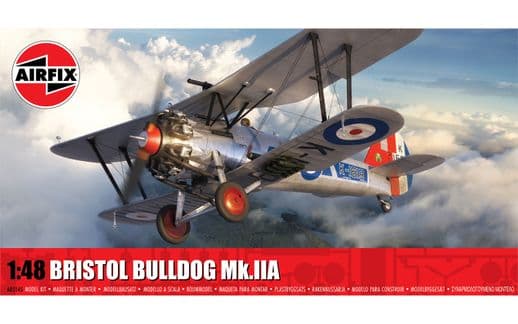
The airfield at Kenley was originally constructed for use by the Royal Flying Corps during the Great war, and by the time No.23 Squadron took up residence with their Gloster Gamecock aircraft in February 1927, it had already established a reputation as being a modern fighter station. By July 1931, No.23(F) Squadron were in the process of exchanging their Gamecocks for new Bristol Bulldog Mk.IIA fighters, although the squadron would effectively be used as a test unit, never fully relinquishing their Gloster fighters, and only finally doing so when exchanging them for Hawker Harts, with the unit operating both types.
Douglas Bader, Harry Day and Geoffrey Stephenson are pictured in front of a 23 Squadron Gloster Gamecock during practice for the impending RAF Hendon Airshow.
When No.23 Squadron arrived at Kenley, they joined the already resident No.32 Squadron and their Bristol Bulldogs, a move which proved rather significant for both units, as it was the first time they had operated from the same airfield since they had done so in France during the Spring of 1917.
No.23 Squadron had earned a proud reputation for aerobatic excellence, and in their responsive and brightly coloured Gloster Gamecock fighters had represented the Squadron at several high profile flying events, including the Hendon Air Display of June 1931. For that event, ‘C Flight’ commander F/L Harry Day had been instructed to recruit and train another pilot to thrill the near 200,000 crowds at Hendon with a display of precision, synchronised aerobatics, which he set about doing by recruiting a talented, yet headstrong 21 year old pilot officer named Douglas Bader.
After weeks of intensive training, their display proved to be a spectacular success, with the pair giving a good account of their Squadron, and highlighting the skill and professionalism of the modern Royal Air Force. In fact, at that time, many who had seen him fly were of the opinion that Bader was the finest aerobatic pilot in the RAF at that time. In addition to this, his prowess on the rugby field had seen him receive a callup to the full England squad – was there nothing this boy couldn’t do.
The more powerful Bristol Bulldog was also significantly heavier than the Gloster Gamecock it replaced.
Back at their Kenley home base, officials were facing a growing problem with some of its pilots engaging in unauthorised low flying and aerobatic exuberance, something the young Douglas Bader was guilty of partaking in. On several previous occasions, he and his fellow pilots had been admonished by their Flight Commander on the perils of such activities, but the headstrong Bader simply couldn’t stop himself once in the cockpit of his fighter.
On converting to the new Bristol Bulldog Mk.IIA, Bader was allocated aircraft serial number K1676, an aircraft with which he would become inextricably linked, unfortunately so. Although a more powerful aircraft than the Gamecock he was used to flying so impressively during his aerobatic demonstrations, it was at least 600lb heavier, a factor which would have dire consequences just a few weeks later.
On the morning of 14th December 1931, Bader took his recently allocated Bulldog fighter up for its latest flight, and after putting it through its paces over the surrounding countryside, which included performing some of the enthusiastically executed aerobatic manoeuvres he was warned not to do, flew his fighter back towards Kenley.
On approaching the airfield, he noticed two other Bulldogs climbing away from Kenley’s runway in the distance, and remembered that one of his squadron mates was flying over to Woodley Aerodrome for a lunch appointment with his brother that day, as he was a flying instructor at the Reading Aero Club which was based there. Bader decided to join them, immediately increasing speed to join the pair.
With his reputation for aerobatic excellence in thrilling the crowds at Hendon clearly preceding him, and with his upcoming appointment with the England rugby squad also bag in the, Bader proved to be quite the celebrity, and during some boisterous after dinner banter, it was likely he was challenged to perform some low altitude aerobatics over the airfield clubhouse prior to leaving. This was just the sort of challenge he would find hard to resist, even though his commanding officer’s order not to perform low altitude aerobatics in the Bulldog would still have been ringing in his ears.
The challenge must have been accepted, because as the three aircraft took off from Woodley to head back to Kenley, Bader’s machine was seen to leave the formation and head back towards the aerodrome.
The group which had gathered expectantly outside the clubhouse saw Bader’s Bulldog pass low over the airfield threshold and start a slow roll at an incredibly low altitude, however, before the manoeuvre could be completed, allowing the aircraft right itself once more, one of its wings struck the ground, sending the speeding aircraft cartwheeling across the grass in a catastrophic crash.
Profile artwork of the Bulldog in which Bader had his catastrophic accident on 14th December 1931.
The engine was ripped off, and the fuselage became a twisted ball of metal, with the reckless pilot still trapped inside. Thankfully, there was no fire, and onlookers rushed to free the injured pilot, who on that day, had just 33 hours of Bulldog flying experience in his logbook. Later, Bader updated his logbook with the somewhat ironic entry – Crashed slow rolling near the ground – bad show.
Gravely injured, Bader was rushed to the Royal Berkshire Hospital with both of his legs in a terrible state, bleeding profusely and suffering from the effects of shock. The initial examination didn’t hold out too much hope for the prospects of the young airman, however, a brilliant orthopaedic surgeon happened to be on duty at the hospital that day, something which undoubtedly saved Bader’s life. Once his condition had stabilised, the surgeon operated on Bader’s right leg, but there was nothing that could be done to save it, and amputation was required.
The resultant post operative shock almost killed the pilot in the hours which followed, however, there was still hope that the left leg could be saved at that time. Unfortunately, septicaemia set in and that leg would also require amputation a few days later, as the full impact of the accident and the patient’s condition became clear. The care Bader received at the Royal Berkshire Hospital was exemplary and undoubtedly saved his life, but life would clearly never be the same again for one of the RAF’s most accomplished young pilots, or would it?
After surviving the trauma of the operations, Bader spent the following year recuperating and trying to come to terms with the situation he now found himself in. Transferred to the service hospital at RAF Uxbridge, he was in familiar surroundings, with people he had much in common with, both of which helped with his physical and mental wellbeing. Whilst there, he was fitted with a set of artificial legs and worked tirelessly to shape and modify them to meet his specific requirements, helping him regain his mobility and his independence.
On regaining his wings, Bader was posted to No.19 Squadron at Duxford to fly the Supermarine Spitfire.
Indeed, as was his nature, Bader ensured that he was the best physical version of himself that he could possibly be, under the circumstances, learning to drive a car again (although one adapted for his particular needs), and becoming a more than proficient golfer. During the summer of 1932, he was even given the opportunity to fly again, when he took control of an Avro 504 aircraft, landing it without any issues. Despite this huge development, and having previously been assessed fit for active duty, an RAF medical board ordered his discharge him from the service, sending him back into civilian life.
Despite spending much of the second half of the 1930s lobbying the RAF to allow him back into the force, Bader was unsuccessful, until the looming clouds of war offered him one final opportunity. Invited before a medical board to discuss his case, he was disappointed to learn that he was only being considered for a ground based administerial position, which was clearly not what he was looking for. Thankfully, he could still count on the support of a few friends and acquaintances in high places, and his former commander at Cranwell cajoled the Central Flying School to formally assess his flying capabilities.
Confident of those abilities, Bader didn’t let himself down and subsequently regained a full medical pilot classification, and subsequent posting to the Central Flying School in November 1939. On 27th November 1939, eight years after his catastrophic flying accident, Douglas Bader flew solo in an RAF aircraft once more.
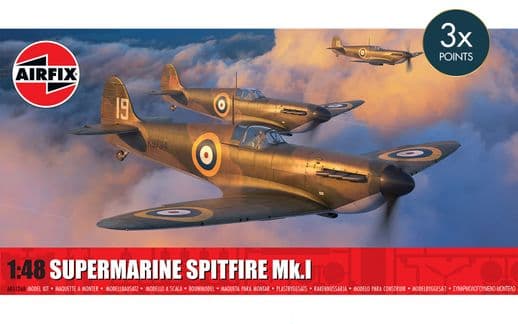
In January 1940, Bader was posted to No.19 Squadron at Duxford airfield, where he would fly the new Supermarine Spitfire. As the RAF prepared for war, he and his new unit attempted to tame their Spitfires and spent their time formation flying and learning air combat tactics in advance of the expected onslaught to come. As you might expect, Bader was never backwards at coming forwards when it came to voicing his opinion on the validity of those tactics, knowing instinctively that attacking from height, and out of the sun should be the preferred method of approaching the enemy.
When taking command of No.242 Squadron at Coltishall, Bader exchanged his Spitfire for a Hawker Hurricane, however, he became a great champion of the aircraft, describing it as a stable and effective gun platform.
Within weeks, he was promoted to acting Flight Lieutenant and posted to No.222 Squadron which was also based at Duxford, but later moving to fly from RAF Hornchurch in support of air operations covering the Dunkirk evacuations. Flying Spitfire Mk.I P9443, he would be credited with his first aerial victory over Dunkirk, when he brought down a Luftwaffe Messerschmitt Bf 109 on 1st June 1940. At the time, he assumed that his victim must have been a novice pilot, as he flew straight in front of his Spitfire, taking no evasive action whatsoever as he opened fire with all eight guns.
Later that same day, he would also be credited with a ‘probable’ Bf 110, even though he actually claimed to have shot down five enemy aircraft that day, but those sorts of things can happen in war. With his indomitable spirit and fierce sense of duty, Bader would soon be given command of his own unit, No.242 Squadron flying Hawker Hurricanes from Coltishall, a unit which he would stay with throughout the Battle of Britain. Having served through the Battle of France, pilots from this unit were suffering from low morale which was affecting their combat effectiveness, and it was thought that Bader would be the ideal man to lick them into shape, which of course he did.
During his time with No.242 Squadron, he turned them into a crack unit, also becoming a firm advocate of the ‘Big Wing’ theory. He was of the opinion that forming up several squadrons of RAF fighters and knocking the enemy out en mass would soon demoralise the enemy, even if they were being brought down on their way back from their targets, clearly not a view shared by all in Fighter Command.
Douglas Bader would end the Battle of Britain as an ‘Ace’ pilot, with at least 12 aerial victories to his name, but perhaps of even greater significance than that, had overcome personal adversity to inspire his fellow pilots to their duty, and whilst facing their own greatest challenge. Churchill’s ‘Few’ were heroes to a man, but amongst their ranks were a small number of exceptional human beings who could inspire all around them, and Bader was at the very head of this group.
Bader’s famous personal Spitfire Mk.IIa P7966 of the Tangmere Wing. This was one of the first aircraft to carry his personal initials, and was thought to have been a presentation aircraft, paid for by the people of the Isle of Man.
Following the end of the daylight phase of the Battle of Britain, Fighter Command was given the opportunity for some much needed rest and recouperation, whilst Britain struggled to establish a cohesive night defence system to challenge the Luftwaffe raiders. A change in overall command at Fighter Command brought about a new attacking impetus and as new tactics were devised, Douglas Bader gathered a crack team of pilots to take the fight across the Channel, directly to the enemy.
Promoted to Acting Wing Commander in March 1941, Bader joined the Tangmere Wing and prepared his new unit to embark on operations over enemy occupied Europe, flying the latest variant of Spitfire. Several types of operational sorties were devised, each one referred to by a different codename. ‘Rhubarbs’ were small formation actions, often conducted by a pair of aircraft, flying over France and Belgium and shooting up targets of opportunity. They were often flown on poor weather days, where it was unlikely they would meet enemy opposition, but were nevertheless still fraught with many dangers for the pilots.
‘Rodeos’ were larger scale fighter sweeps, often flown at high altitude and often on fine weather days, hoping to lure the Luftwaffe into a scrap. This often didn’t happen, as the Luftwaffe knew what the RAF were up to, and wouldn’t usually engage unless attacking it very large numbers themselves and if in a favourable tactical situation.
The answer to this problem proved to be the ‘Circus’, a meticulously planned operation which saw several fighter squadrons flying high above a raiding force of RAF Bombers, which were essentially acting as bait. If the Luftwaffe took the bait, then a dogfight would ensue, but if they didn’t, then the bombers would proceed to their targets unopposed, something of a mission win-win in many respects. The only limiting factor of course was range, or the lack of it, because all British aircraft had to make it back across the Channel at the end of the sortie, and if pilots got themselves tangled up with the enemy, chances were that their fuel situation was quickly going to become a critical concern.
Monday 9th August 1941 saw Bader and his Wing undertaking Circus No.68, a fighter sweep and bomber raid to the Gosnay area of the Pas-de-Calais, however, this mission would be significant for all the wrong reasons. The British fighters were attacked by large numbers of Luftwaffe Messerschmitts, including those flown by the crack JG26, a unit with many aces amongst its ranks. The sky became a twisting confusion of aircraft and machine gun fire, and in the maelstrom, the tail of Bader’s Spitfire was severed.
During the melee of aerial combat, there must have been a great many instances where aircraft collided in the initial phases, and many where friendly aircraft inadvertently struck one of their own.
In his memoirs, Bader described how he thought the tail might have been blown off by a German cannon shell, or struck by the wing of an enemy fighter, however, research conducted after the war suggested that the incident may have been the result of a collision between British fighters, something which must have been a constant peril for pilots on all sides during the war.
Whatever the case may be, Bader was going down over enemy occupied territory, and the Tangmere Wing had lost the services of its inspirational leader. Thankfully he managed to climb out of the spinning fighter and take to his parachute high above the French countryside, but not without leaving one of his prosthetic legs stuck in the cockpit of his fighter. Bothe Spitfire and leg smashed into the farmland below.
Clearly, Bader’s arrival was a huge propaganda coup for the Germans, and they were quick to contact the British with news of his capture. They also requested the delivery of a new prosthetic leg for the RAF’s most famous fighter pilot, cheekily even offering safe passage to any aircraft bringing the replacement leg for their illustrious guest.
Devastated by this development and not wanting to allow the Germans to claim an even greater propaganda victory, the RAF did make plans to deliver a new leg by parachute drop from a bomber, but not by accepting the safe passage promised by the Luftwaffe, but via a full blown raid. ‘Operation Leg’ would be part of a similar ‘Circus’ strike raid in which Bader had been lost, Circus 81.
Circus 81 saw Bristol Blenheim bombers sent to attack the power station at Gosnay, however, one aircraft was dispatched to deliver a new prosthetic leg for the recently captured Douglas Bader.
Ten days later, on the 19th August 1941, eighteen Bristol Blenheim Mk.IVs light bombers, including six from RAF No.18 Squadron, supported by a large force of Spitfires, duly launched another attack against the power station at Gosnay. One of the Blenheims was carrying a rather unusual payload, and the entire reason for the raid taking palace, Douglas Bader’s new leg.
In the heat of battle, the distinctively marked wooden box containing the new prosthetic limb was unceremoniously bundled out of the Blenheim over the Luftwaffe’s St. Omer airfield, parachuting earthwards, where it would hopefully soon be in the hands of its intended inspirational recipient, even though he was now a guest of the Germans.
All the Blenheims immediately turned for home with their bomb loads intact, as heavy cloud cover over the intended target area made target acquisition impossible, and civilian casualties could not be risked. The accompanying Spitfires didn’t fare so well, with eight fighters being lost in what proved to be a costly operation.
For a man of Douglas Bader’s wartime stature, his loss on operations over Northern France was nothing short of a disaster for Britain and Fighter Command, but understandably, a great propaganda coup for the Germans. After a period of hospitalisation, Bader was collected by Adolf Galland and entertained in some style by the pilots of JG26, who treated him like one of their own. The German pilots even rescued his missing leg from the Spitfire crash site and after undertaking some basic renovation work, respectfully returned it to their guest.
Unbeknown to them, as the RAF were making plans to deliver a replacement leg, Bader was busy working on plans of his own, escape plans!
Not intending to remain a guest of the Germans for long, no matter how well he was being treated, Bader famously escaped from his hospital room by climbing down a rope made by knotting bed sheets together, with the British airman spirited away into hiding by members of the French resistance. He was hidden and cared for by an incredibly brave local family whilst arrangements could be made by the French underground movement to get him well away from the area.
Never an easy prisoner for the Germans to deal with, Bader would eventually be sent to the maximum security facility at Colditz Castle in Saxony, otherwise known as Oflag IV-C. He would remain there until the castle was liberated by advancing Allied forces.
It was claimed that Bader was still at large and managed to see the RAF raid sent to deliver his new leg from the garden confines of his partisan protectors. Unfortunately, later that same day, whilst his new leg was being collected by the Germans, so Bader was taken back into captivity by enemy troops, this time under much tighter security. The escape of such a high profile prisoner so soon after coming into their possession had resulted in the entire local military and police forces searching for him and it was not long before they had information on his whereabouts.
Now aware that their famous guest had no intention of accepting their hospitality long term and this time being placed under constant armed guard, Britain’s most famous fighter ace was almost immediately sent to much more secure detention facilities in Germany, this time without access to his artificial legs, just in case he got any more ideas about escaping.
As you might expect, Bader remained enthusiastic in his escape attempts, proving to be such a problematic prisoner that he was eventually sent to the maximum security Colditz Castle facility in Saxony, where he would stay for the remainder of the war, until the castle was liberated by Allied troops.
An inspirational image of an inspirational man. Squadron Leader Bader with his RAF No.242 Squadron Hurricane.
Once repatriated back to Britain and following a period of rest and recouperation, Bader was posted back to Tangmere as a Group Captain, taking command of the Fighter Leaders School which was based there. Unfortunately, the RAF was now a very different organisation to the one Bader had known back in 1941, and this didn’t prove to be a happy appointment for any of the parties involved.
He would later be given command of the North Weald Sector, where he would throw his considerable enthusiasm behind planning and organising the spectacular Battle of Britain flypast event over central London in September 1945. On the 5th anniversary of the Battle of Britain, this was a 300 strong formation consisting of RAF aircraft old and new, and included some of the very latest jet fighters to have just entered service. Naturally, there was only one man the nation wanted to see leading such a tribute spectacle and that man was Douglas Bader.
The incredible story of Douglas Bader is unquestionably one of triumph over adversity, of a fierce devotion to duty and a determination to lead from the front. Bader would never ask any of his fellow pilots to do something he wouldn’t do himself, the trouble was that his nature was one of adventure and a disregard for danger, so following him into any situation might land you in a whole heap of trouble.
Loved and admired by many, it would be true to say that Bader wasn’t universally liked by everyone, with some describing him as reckless, headstrong, short tempered and even difficult, however, nobody could deny his strength of character and indefatigable commitment in everything he did. Although he may have appeared self-centred, people looked to him for inspiration in challenging moments and couldn’t help but be filled with an admiration that was total.
Whilst most people would have buckled under the severity of the terrible injuries he brought upon himself, Bader simply rolled his sleeves up and got on with it. The small matter of needing a pair of prosthetic legs certainly wasn’t going to stop him from playing his part in the ‘Big Show’. As a fighter leader, he inspired and galvanised his men, helping them to overcome whatever fears and trepidations they may have, encouraging them to climb into their fighters day after day, ready to face the enemy.
As far as the British public were concerned, with men like Douglas Bader leading the charge, how could we possibly lose!
A man who was forged during Britain’s finest hour, the story of Douglas Bader continues to inspire to this day, and if we ever find ourselves facing adversity, we could all use a bit of that ‘Bader Spirit’.
To be released in the early summer, this first ‘Legend’ kit release will pay its own respects to Doulas Bader, in 1/48th scale, and featuring three of the aircraft types he flew during his incredible RAF career.