We would like to welcome our readers to this latest edition of Workbench and all the news, updates and exclusive announcements from the fascinating world of Airfix modelling. As well as bringing you our usual collection of exclusive announcements, model scheme details and a look at some of the fantastic kits which will be arriving in stores over the coming few weeks, this latest edition of our blog offers a very special update from an exciting project which underlined the popularity of the Airfix brand when it was announced last year and had many of our readers attempting to achieve modelling immortality – our 50th Edition Caricature Competition. You can look forward to a host of exclusive pictures from this project, which is fast approaching its exciting conclusion, along with full details of the model release which will include a rather unique representation of the iconic Airfix instruction booklet. Courtesy of our talented and hard-working Lead Researcher, we also have a special treat for our readers in the form of a review of his recent visit to Biggin Hill Heritage Hangar and an exclusive first for our Workbench blog. This home to one of the UKs premier Spitfire operations is located at arguably the most famous RAF fighter station of the Battle of Britain and despite the very modern appearance of this extremely active airfield, there are still plenty of reminders about its historic aviation past. Combining Britain’s most famous fighter with the Airfix brand can only be described as a marriage made in modelling heaven – more on this a little later. We begin though, with details of a unique competition prize and our attempts to give one lucky young man a rather unusual Airfix claim to fame.
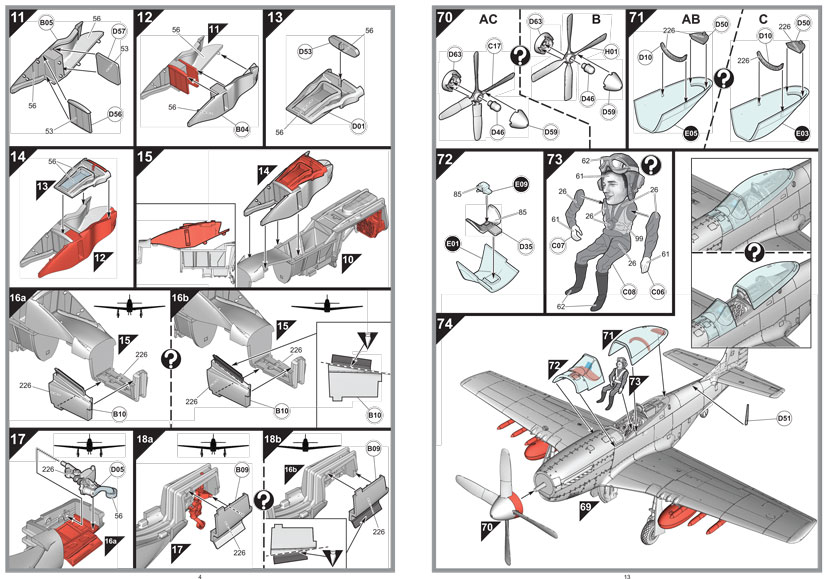
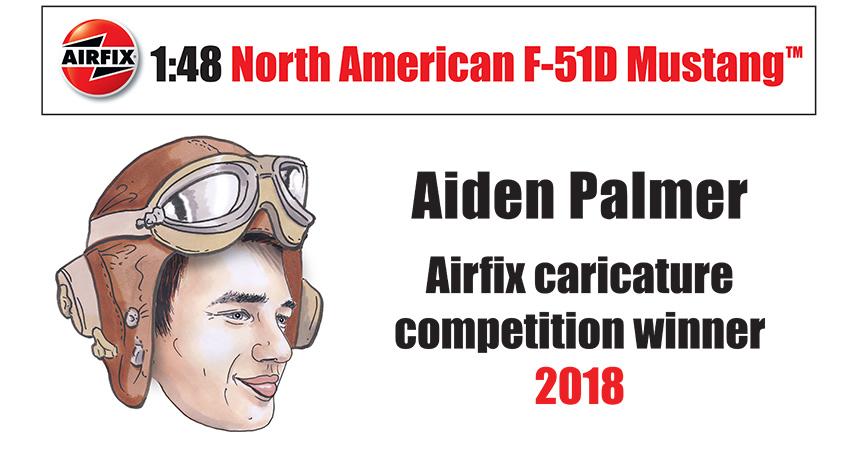
Working sample of the Mustang instruction booklet sheet which features the caricature pilot figure of our competition winner Aiden Palmer
Little did we realise when planning our new Airfix Workbench blog back in the summer of 2015, just how popular a feature it would become from almost the very first edition and how many Airfix modelling enthusiasts would become loyal supporters of our new development blog. This enduring support has been without doubt the most humbling aspect of producing our blog over the years and for that reason, achieving the milestone of our 50th Edition was a significant occasion for everyone on the Airfix team. For such an auspicious occasion, we wanted to do something a little bit special to commemorate this benchmark edition and building on the success of two extremely popular recent articles, which featured the production of the iconic Airfix instruction booklets which accompany most kit releases, we had an idea – a caricature competition. After consultation with both the Airfix Marketing Manager and our ultra-talented illustrator Richard Petts, we gained the assurances we needed and planned to offer our competition winner the chance to achieve Airfix modelling immortality and have a caricature representation of their face printed on the instruction booklet of a future Airfix kit release, which would be available on open sale.
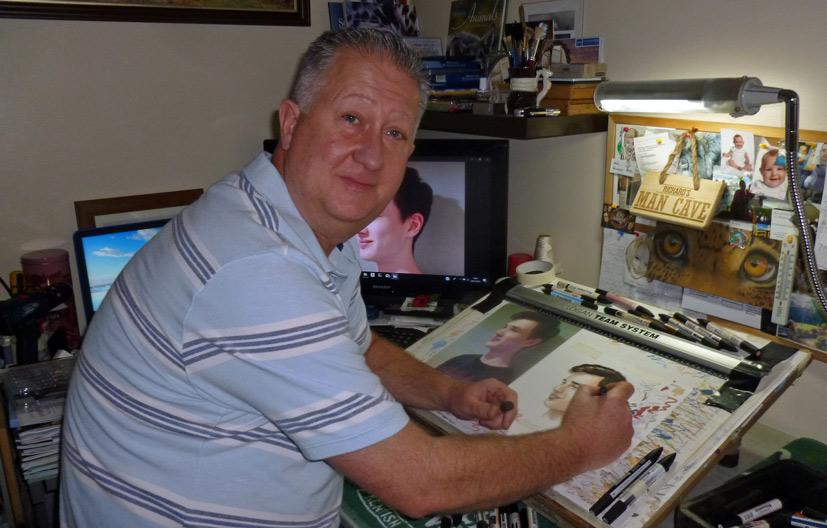
Richard putting some extra hours in, working on the caricature project in his home studio
Although several of these caricature representations had previously appeared within our instruction booklets, these were few and far between and had been restricted to members of the Airfix development team in place at a particular time, however this competition prize would be the first time that a member of the public had been afforded this opportunity. We thought that this was a really great idea and allowed ourselves to get a little excited about the project, but what would our readers think about it? We didn’t have to wait long for our answer. Within hours of the competition’s announcement, we had already received hundreds of entries and they just kept on coming, thousands of them. Our caricature competition really did seem to capture the imagination of our readers and it did not take too long before this was, by some margin, the most popular competition we had ever launched. Not only was this proving to be a major feature on our Workbench blog and the various Airfix social media channels, it was also beginning to attract attention on other modelling websites and enthusiast forums – it seemed as if this was a prize everyone wanted to win. It is important to reaffirm at this point that the competition prize was to have the winners caricature representation appear on the instruction booklet alone and definitely did not include any alterations to the plastic pilot figure included with the kit – nevertheless, this was still going to be a significant and unique prize, bringing with it a little piece of Airfix modelling history.
It was truly exceptional to have so many Workbench readers respond to our competition, but unfortunately there could only be one winner and that person was announced in the review edition of our blog, earlier this year. Our lucky winner was Mr Aiden Palmer, a young modeller living in southern England and whilst it may have been a little quiet on the update front regarding this project over the past few months, there has been plenty going on behind the scenes and Aiden is about to be unleashed on an unsuspecting modelling world. Our illustrator Richard Petts had some specific requests to make of Aiden following his success and we immediately asked for some head and shoulder pictures from several different angles. These were kindly supplied by our winner and passed to Richard, who whilst still maintaining his busy Airfix workload, began the task of producing the artwork which would eventually see Aiden taking his place in Airfix modelling history. His first job was to take the profile pictures and turn them into caricature representations of Aiden, using his vast experience to anticipate which angle would be most appropriate for use in the specific kit release with which the artwork was going to be associated – at this point, the kit which was earmarked for the project was still a closely guarded secret. Richard completed this section of his work at his home studio, where he had worked on many caricature projects in the past, for friends, relations and work colleagues. Thanks to his wife Karen, he is pictured here taking a well earned break from his latest masterpiece, surrounded by pictures of our caricature competition winner.
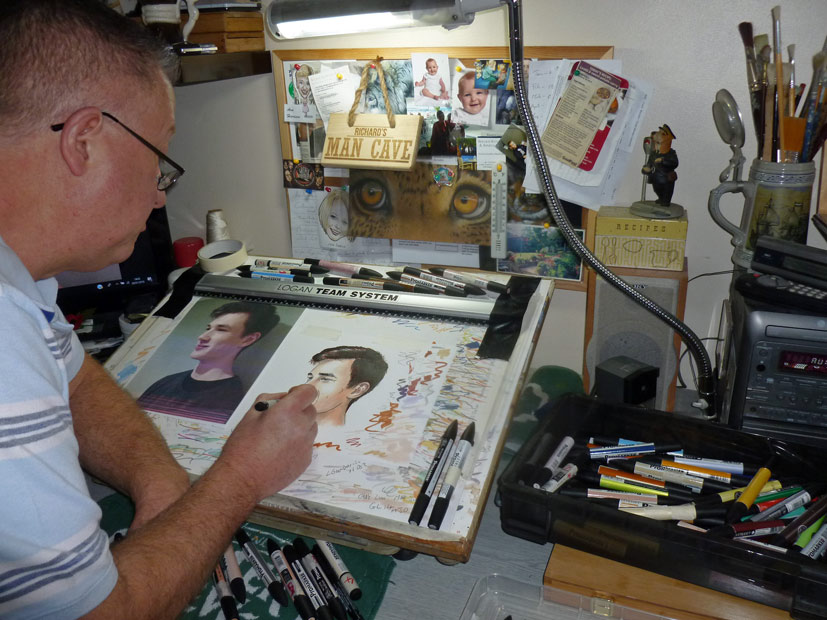
Hard at work. With many years of experience in producing Airfix instruction booklets, Richard knows how the caricature must look to achieve the desired effect
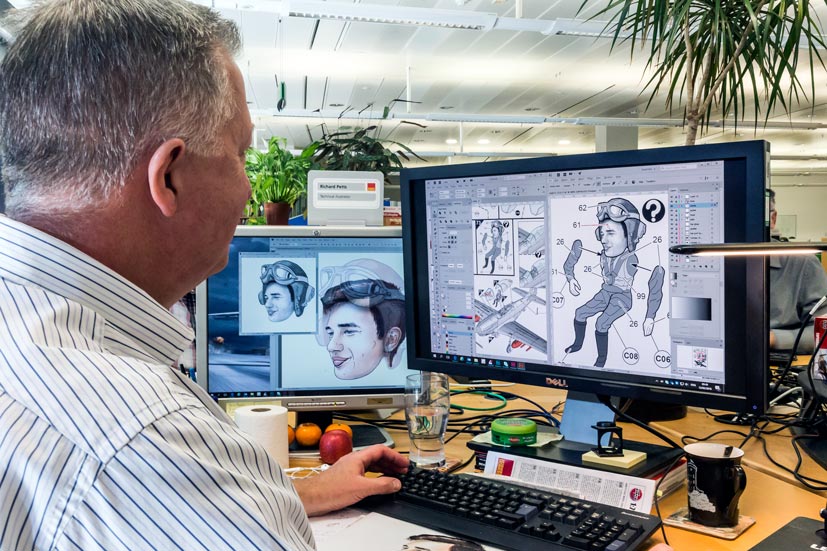
Back in the office and all his homework must be incorporated into the booklet planning for the new Mustang – from day one, Richard has been determined to make this project a success
Once Richard had completed his caricature illustration, he would have to incorporate these images into the instruction booklet artwork itself, using professional graphic design software and conforming to the process usually adopted during this important stage in the production of any new kit release. Richard wanted to make this a particularly unique project to be involved with and one which Aiden would remember for the rest of his life. Knowing which model release the artwork would be supporting, he knew he would also have a little extra space to play with on the page, so he put his plan into action. He wanted to produce artwork which reminded him of the classic sports caricature cigarette card collectables he remembers from his youth and planned to increase the relative size of Aiden’s head to achieve this appearance. As you can see from these later images which were taken at Richard’s Head Office workstation, he has certainly managed to achieve this and whilst the pilot figure is undoubtedly a little different from our usual instruction booklet pilot representation, it has allowed him to include a little more detail of Aiden’s face and make this a totally unique competition prize - a real treat for our winner and a fascinating project which all Airfix modellers can enjoy. So now for the all important question – which kit release and aircraft type will the caricature pilot be associated with?
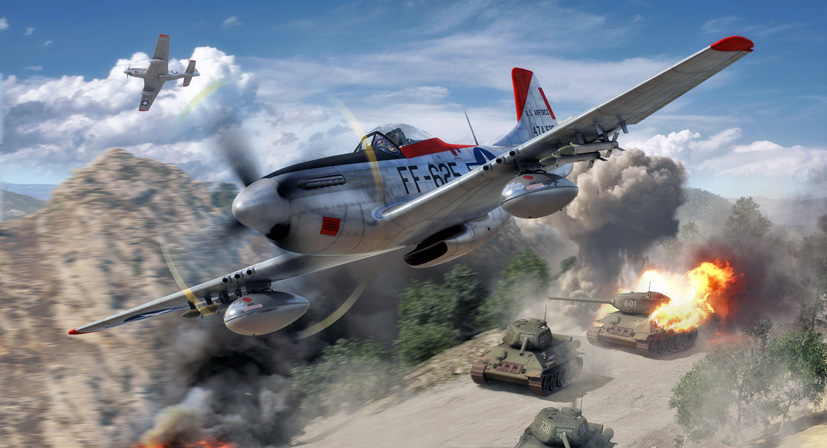
We are pleased to bring Workbench readers this exclusive first look at the dramatic box artwork which will accompany the new F-51D Mustang and Aiden’s caricature instruction booklet debut
We are pleased to confirm that Aiden’s caricature pilot representation will be accompanying the forthcoming 1/48th scale release of A05136 North American F-51D Mustang, which will be supplied with three interesting scheme options for modellers to consider finishing their model. It is perhaps fitting that the Mustang was selected for our caricature competition subject as this is without doubt one of the most successful fighter aircraft of all time, which also went on to become a popular Airshow performer, allowing millions of enthusiasts to experience the thrill of a WWII Warbird in operation. Indeed, many of us often dream of winning a significant sum on the lottery and when that joyous day arrives, the purchase of a Warbird would quickly follow. Although we may have a particular liking for Spitfires or Messerschmitts, a Mustang would usually be viewed as the more sensible option for most and probably be the Warbird of choice for would-be lottery winners.
The Mustang proved to be one of the most successful aircraft of the Second World War and even though its wide-scale deployment only occurred during the final few months of the conflict, it allowed Allied pilots to wrestle a hard fought air superiority from their opposition in every theatre of operation in which it was used. Following the end of WWII, the USAAF selected the Mustang as their primary fighter aircraft, condemning most other types to either secondary support roles, or to the less auspicious fate of the scrap man’s torch. With the US Army Air Force becoming an independent service in 1947, some slight changes to the aircraft designation system it used were initiated the following year, with P for Pursuit being replaced with F for Fighter, thus turning the P-51D into the F-51D Mustang. The outbreak of the Korean War in 1950 saw Mustang Squadrons returning to combat once more, but this time in a strike/fighter-bomber capacity, where its celebrated attributes would be called upon again. The magnificent box artwork which will accompany the release of A05136 shows a pair of USAF Mustangs attacking marauding North Korean T-34 tanks on a mountain pass and whilst Aiden may not be flying the aircraft in this image, it is a particularly dramatic scene with which to announce the impending arrival of this new Mustang and it is a project with which he is certainly connected. Let’s take a closer look at the three scheme options included with the new kit.
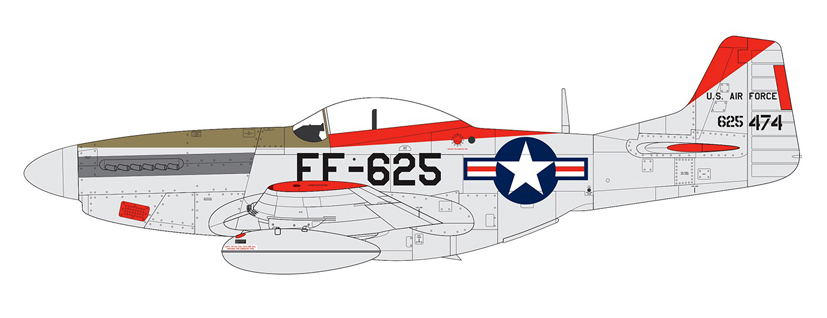
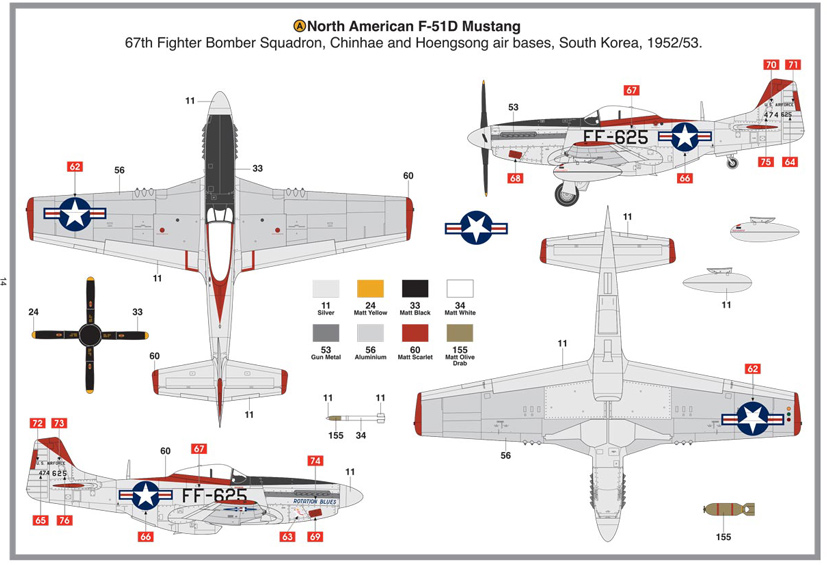
By the time of the Korean War and the arrival of the jet age, the North American Mustang was deemed to be almost obsolete at a fighter, however its proven attributes of range, firepower and manoeuvrability dictated that it was much more suitable than the early US jets for strike missions from American bases in Japan. The urgency of the situation saw the Americans gathering as many suitable Mustang airframes together from home based units and loading them aboard USS Boxer for transportation to the Korean war zone. Once in theatre, the Mustangs were immediately pressed into action, attacking North Korean armoured columns and troop concentrations with a combination of machine guns, rockets, bombs and Napalm. The aircraft helped to stem the tide and played a pivotal role, but at a heavy price – the Mustang pilots were vulnerable to the accurate enemy anti-aircraft fire at these low altitudes and hundreds of aircraft would be lost in this manner during the conflict.
Unusually, the pilots of the 67th Fighter Bomber Squadron, US Air Force would be required to trade in their new Lockheed F-80 Shooting Star jet fighters for propeller driven F-51D Mustangs, as they prepared to take on North Korean forces in savage ground attack sorties. Operating from bases in South Korea, which were challenging at best and dangerous at times, the Mustangs were often required to fly several sorties a day, helping to stem the tide of North Korean forces which were flooding south. By the end of the war, these hard working Mustang pilots had flown tens of thousands of combat sorties over Korea. This particular Mustang 44-74625/FF-625 was used by many of the squadron’s pilots whilst it was stationed at the South Korean forward operating base at Hoengsong, many of whom had experience of flying Mustangs during the Second World War. The aircraft features the nose markings ‘ROTATION BLUES’ on the starboard side cowling, presumably after the record of the same name which was popular in the US at that time. The aircraft has been reported in various modelling publications as being fitted with a fixed tail wheel, possibly as a result of the often difficult operating conditions at its home airfield, not to mention the punishing daily mission schedules these Mustangs were required to fly. Following her USAF service, this aircraft remained in the region and was passed to the care of No.1 Squadron RoKAF, only to be destroyed in a crash during February 1954.
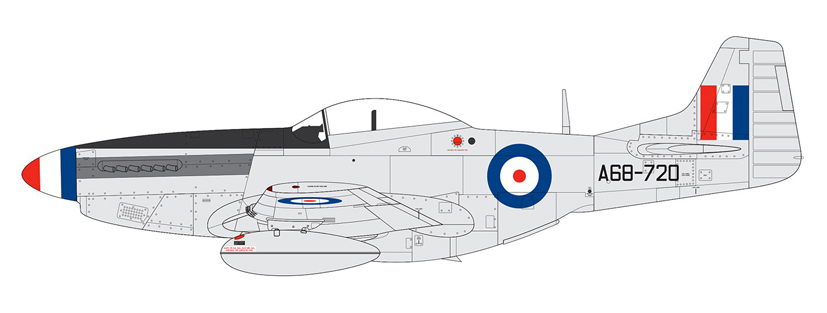
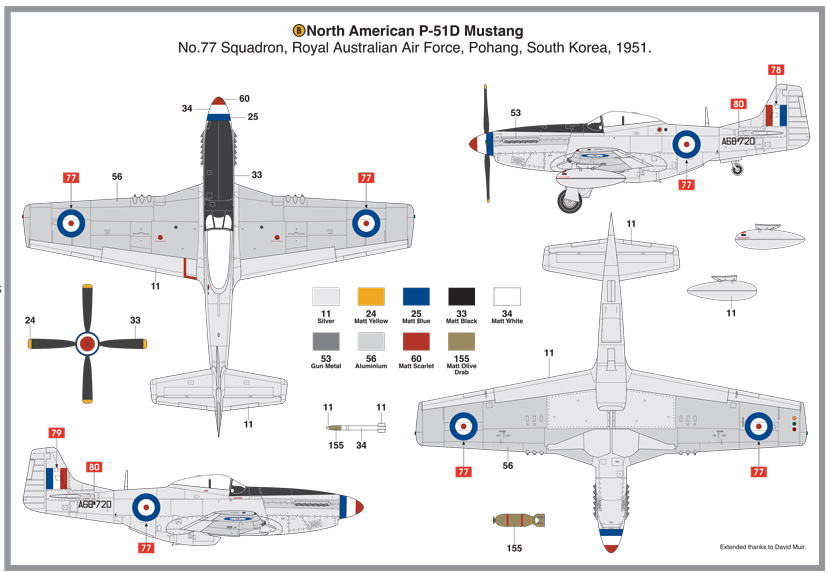
Fighting side by side with the American’s from the early stages of the Korean War, the Mustangs of the Royal Australian Air Force were employed in similar strike operations against North Korean ground units, using guns, rockets, bombs and Napalm. Quickly earning the respect of US forces, the RAAF Mustangs were straight into the thick of the action, joining the Americans in combat just eight days after the war broke out and significantly, the first UN nation to do so. On constant alert, the Australian pilots were ready to respond to any request for support and often flew in the face of murderous anti-aircraft fire, which would be responsible for the deaths of several pilots.
Determined to make a difference, RAAF No.77 Squadron would often use two forward operating bases in Korea, hoping to reduce the turn-around time between flying offensive missions. This resulted in at least one Douglas Dakota being required to carry ammunition and general supplies between the bases, in what must have been particularly hazardous flights, often with nothing more than a CAC Wirraway training aircraft for escort and an extremely volatile cargo. Despite the impressive performance of the RAAF Mustangs, they were desperate to get their hands on the latest jet technology to make their strike sorties even more effective, with the North American Sabre being their aircraft of choice. Unfortunately, as the American’s were themselves re-equipping, there would be no chance of obtaining these fighters any time soon, so the RAAF settled for the Gloster Meteor. On 6th April 1951, No.77 Squadron flew their final Mustang sortie over Korea, before returning to Iwakuni Air Base in Japan the following day to begin their conversion to Meteors.
North American P-51D Mustang A68-720 was supplied to the Royal Australian Air Force having previously seen service with the USAAF. It initially served with No.82 (RAAF) Squadron in Japan, but on its return to Australia was transferred to No.77 Squadron. Seeing extensive service during the Korean war, the aircraft was forced to make an emergency landing at Pusan strip in March 1951 and despite being repaired, the Squadron’s conversion to Gloster Meteor jets saw it remain in storage in Japan. It was later gifted to the RoKAF and is presumed to have been either destroyed or reduced to spares later the following year. Marking a glorious chapter in Royal Australian Air Force history, this beautiful aircraft wears a natural metal finish, as well as a rather patriotic red, white and blue spinner – a really attractive option for Mustang fans looking for something a little different.
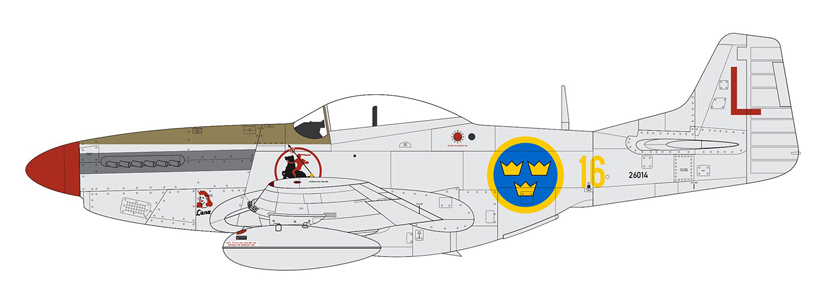
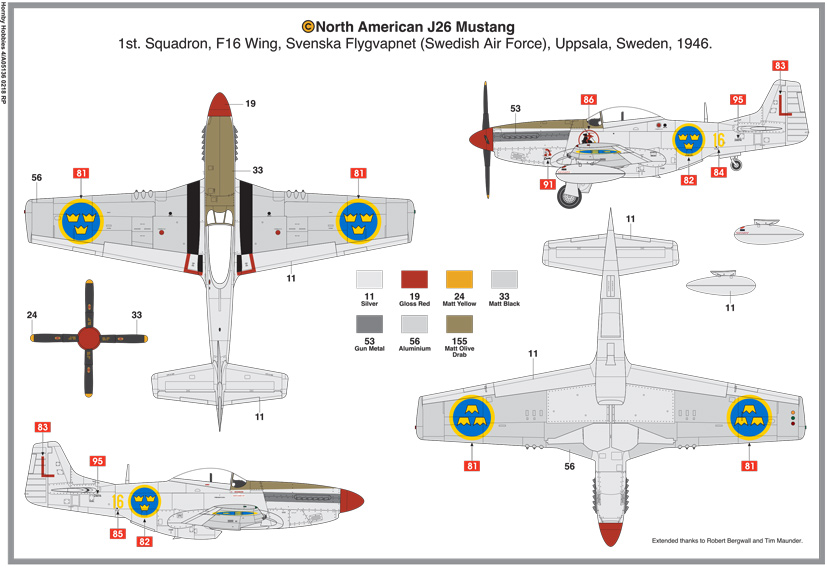
Although Sweden maintained neutrality throughout the duration of the Second World War, the war raging around them ensured that they maintained significant forces to both protect their territory from incursion and prevent possible invasion by hostile forces. Although operating a relatively large air force, many of the fighter aircraft available to them were of inferior quality, such as the American Seversky P-35 (J-9 Swedish designation) and Italian Reggiane Re.2000 (J-12), with severe fuel shortages reducing the flying time of the few aircraft they managed to keep serviceable. New indigenous designs were already in development, however these would take time to enter service and the Swedish Air Force desperately needed a more capable fighter now.
As the intensity of air operations throughout Europe increased, so did the number of damaged and fuel starved aircraft landing on Swedish soil, thus becoming interned for the duration of the conflict. Amongst the aircraft falling into Swedish hands were at least ten examples of the North American Mustang, four of which were pressed into Swedish Air Force service – two razorback P-51Bs and two of the later P-51D variants, aircraft which were given the Swedish service designation J26. Having already made official requests to both Britain and America regarding the purchase of a modern fighter, Sweden had now turned their attentions to the Mustang, an aircraft which was generally regarded as one of the most capable aircraft of the war and possessed an excellent serviceability record. An agreement was signed in April 1945 and deliveries began almost immediately. The US built fighters were delivered to Bromma airfield by American pilots, who presented them to their new owners – the aircraft were quickly repainted with their national insignia and squadron markings, before being flown to their respective units around the country. The advent of the jet age resulted in the Swedish Mustangs quickly being relegated to secondary roles, following the purchase of British de Havilland Vampire fighters, with Sweden becoming a successful early operator of jet aircraft. The Mustangs were later sold to overseas operators, but would go on to provide many years of excellent service with the air forces of Israel, Dominican Republic and Nicaragua. In total, Sweden bought 165 Mustangs, four of which were the airworthy examples confiscated during the war.
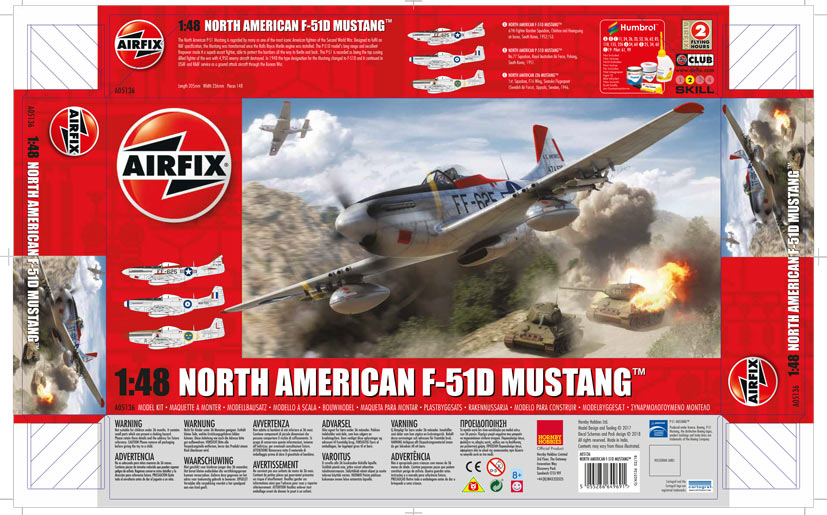
Full product box top layout, which will have us all reaching for this unusual model project, following its July release
It is difficult to apply any scheme on the thoroughbred Mustang and not still have it look absolutely spectacular and that is certainly the case with the relatively simple markings applied to Swedish Air Force Mustangs. There is just something appealing about the three gold crowns on the classic lines of the Mustang which make this such an appealing scheme choice for your latest Mustang modelling project. This No.1 Squadron fighter is coded ‘Red Lima’ and is from the F16 Wing at Uppsala air base, north of Stockholm and benefits from not one, but two examples of fuselage artwork. Under the port canopy framing, behind the exhaust panel is an emblem featuring a mounted Indian brave and lower down the cowling on the same side is the painting of a lady’s face, who is obviously called Carla. With three completely different and totally enthralling schemes to select from with the new kit, it is going to be a difficult choice deciding which one to add to our Mustang collections, not to mention this models undeniable attraction as the project which features our lucky 50th Anniversary edition caricature competition winner. Clearly a significant and discussion worthy addition to the Airfix range, North American F-51D Mustang A05136 is scheduled for a July release.
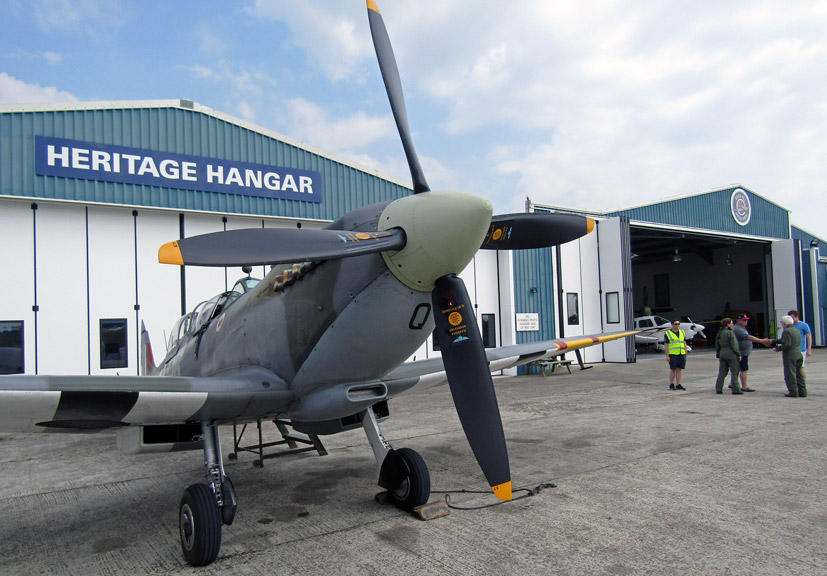
The Heritage Hangar is located at one of the most famous former RAF Fighter Stations, once home to hundreds of Spitfires
We are delighted to end this latest edition of Workbench with the latest feature produced by our Lead Researcher Simon Owen and a recent visit he made to one of Britain’s most famous wartime airfields. All words and pictures which follow are courtesy of Simon and we are sure you will enjoy his repot from Biggin Hill Heritage Hangar – over to Simon.
The Supermarine Spitfire is undoubtedly one of, if not THE, most iconic aircraft of all time. Here at Airfix, as I am sure you the reader will know, we are hardly unfamiliar with the subject, having just in my 8 years of working for the brand researched and produced variants ranging from the beautiful and svelte Mk.I right up to the mighty and powerful Mk.22. Our first Spitfire kit was released in 1955 and I am sure that you will see more editions of this famous fighter coming from us here in Kent at some point. But even in the 21st century we are not the only people producing this famous fighter. Not far from us in Kent is a treasure trove of Supermarine’s finest, the Biggin Hill Heritage Hangar.
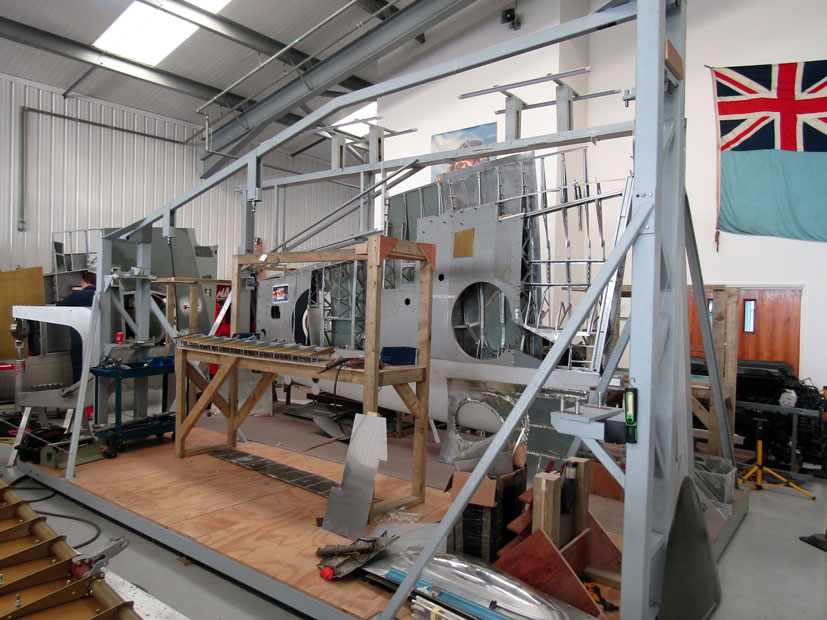
As well as complete airframes, there are several Spitfires at various stages of restoration, hopefully soon to take to the skies once more
Situated on the historic Biggin Hill Airfield the Heritage Hangar was founded in 2011, initially to work upon just one Spitfire. An example owned by company founder and Ryan Air captain Peter Monk. But word of the hard work and expertise going into this machine soon spread and now in 2018 the business has expanded to two hangars, one a store for various amazing machines (more on this later) and the other a veritable Spitfire production line. With on my visit at least 4 aircraft in various stages of strip down, restoration and one receiving the finishing touches before it once more will grace the skies. The Hangar itself employs a team of 20 engineers, each with different specialities on the restoration/production line. Many of whom have worked for a veritable who’s who of the aviation restoration industry. It really was quite astounding to wander round the hangar and see such hard work and attention to detail going into the work on each of the airframes. Speaking with General Manager Richard Verrall (who also pilots the firms two seat machines – and I thought I had a fun job?) he estimated that a full rebuild would take on average two years, with the vast majority of work being done in house at Biggin. The engines being the exception, with them being sent to Retro Track and Air for overhaul. Some of the more complex sheet metal work is also handled offsite, but the construction and finishing of the airframes is all done at Biggin.
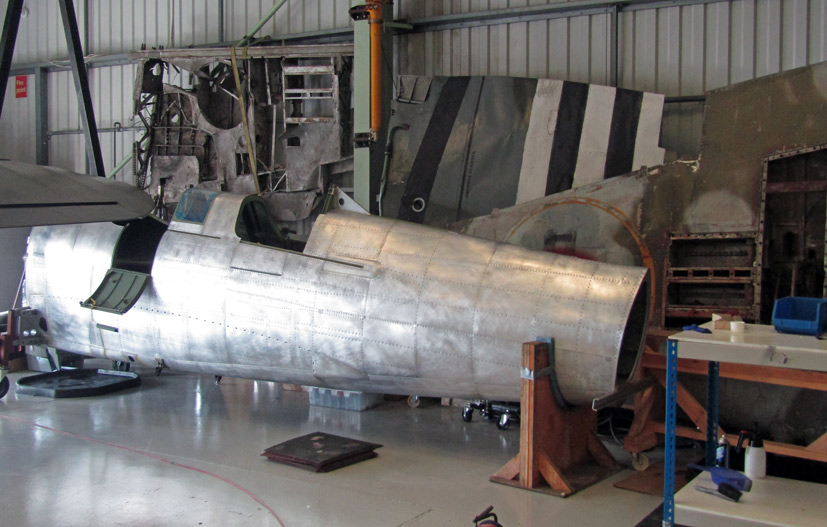
Biggin Hill is inextricably linked with the Spitfire and everywhere you look in the Heritage Hangar, there are examples, or sections of Britain’s most famous fighter
But how does this link to Airfix? As stated we have designed a fair number of Spitfires. And like to think that on our recent models, the Mks I and V we have the shape of the airframes pretty well nailed down. This is because we have access to a full set of Supermarine drawings. Please note here avid readers and forum members, we have NEVER scanned a Spitfire - we don’t need too, we have the drawings! Now these same drawings were to be seen on my visit to Biggin. As the exact same ones we use for working out the shapes of cowlings, oil coolers and radiators were on display. With the hardworking staff producing full size machines rather than 1/72 or 1/48 examples as we do here.
Speaking to one of the engineers, Paul, he explained that they are invaluable, telling the engineers all they need to know about how to build and look after these thoroughbred machines. He also agreed with me on some of the drawings shortcomings! ‘They can be a touch vague’ he mentioned, something we have discovered with a few of the Supermarine drawings, especially those that deal with the shape of the wing!
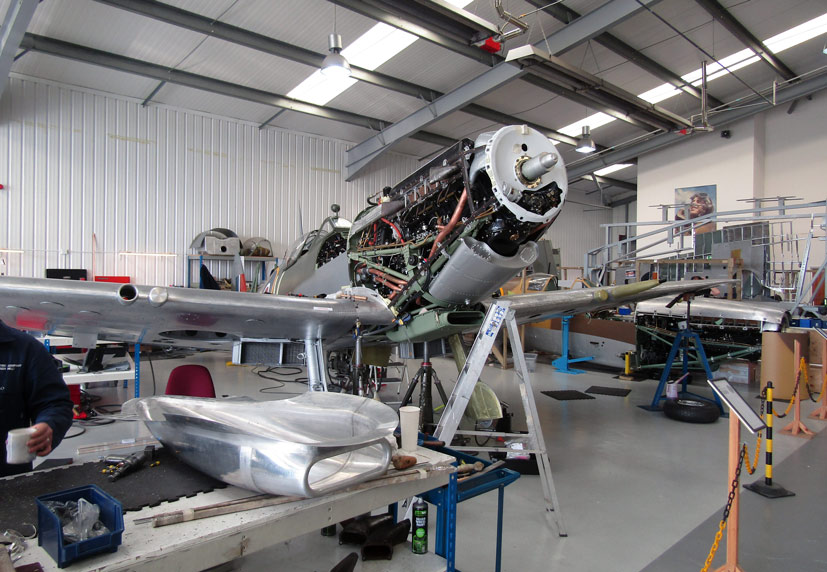
Underneath the beautiful sweeping lines of a Spitfire lies a hugely complex machine, which requires the attention of specialist technicians
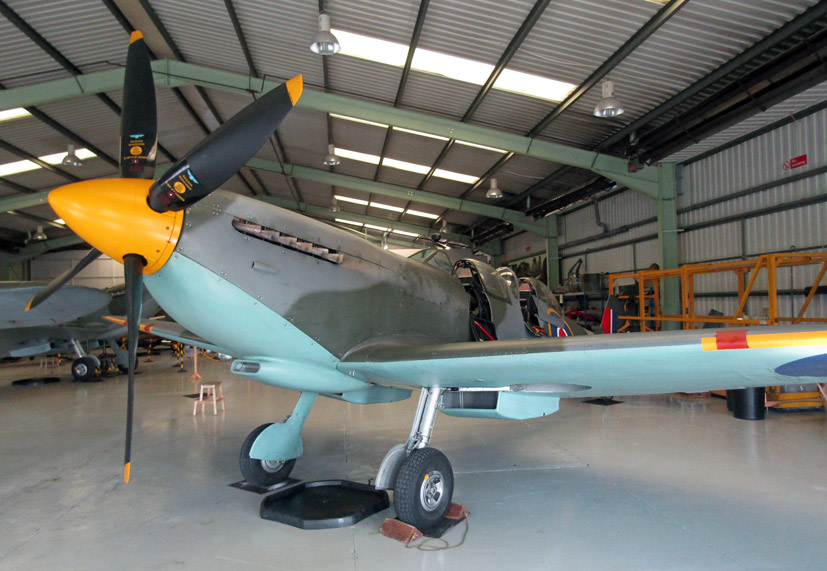
Prototype Spitfire T.VIII two-seat trainer MT818 is just one of the historic aircraft currently based at the Heritage Hangar
Another similar area of our work is on the painting of the airframes. Often individual customers will request a scheme and then it is down to the team at Biggin to research and accurately reproduce the scheme. Something that sounds very familiar with the way I work here at Airfix. They even go to the same lengths I do to ensure that the interior colours are to the correct shade, using official documentation of the time. One major advantage they have of course is that they can have paint produced to an exact match…..no using the best available Humbrol shade for them!
But the incredible restoration work that goes on here is just half the story. For some time now Biggin Hill has been the destination for two seat Spitfire pleasure flights. What could be better than to fly from such an important historic airfield, in sight of the city of London, in an aircraft as historic as the Spitfire?
One of the major reasons as to why the Heritage Hangar has seen such growth is the CAA ruling of 2014 that allowed paying passengers to go up in the rear cockpit of two seat Spitfires. This ruling has allowed the Heritage Hangar, through its Fly A Spitfire arm to truly expand. Over the past three years they have seen interest in the flights grow and grow, with visitors coming from all over the world, as far as Australia and Singapore and from all different age groups and genders. On my visit two gentleman and a lady took to the skies, in just the space of a few hours on a sunny Tuesday afternoon. Each returning to earth with a beaming smile and memories that will undoubtedly last for ever. Hundreds of such customers take to the air with the group each year, flown by a selection of highly qualified pilots, on my visit was ace aerobatic pilot Anna Walker at the controls of the MKIX.
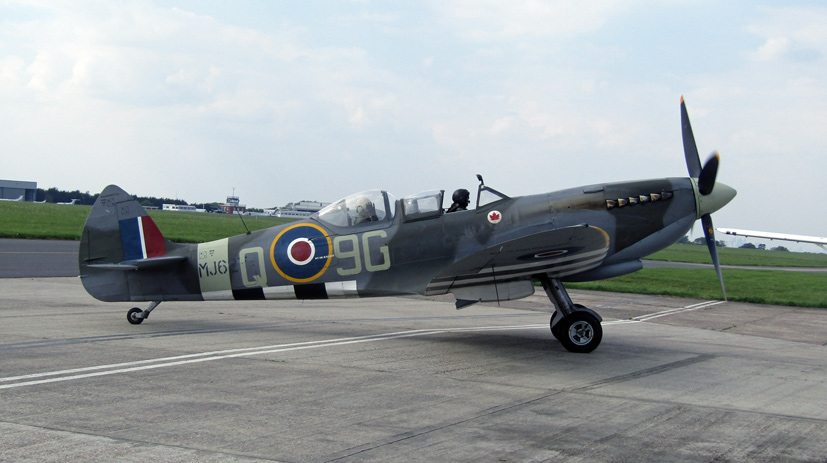
Anna Walker returns in Spitfire T.9 MJ627 after helping one lucky person realise their dream of flying in a Spitfire
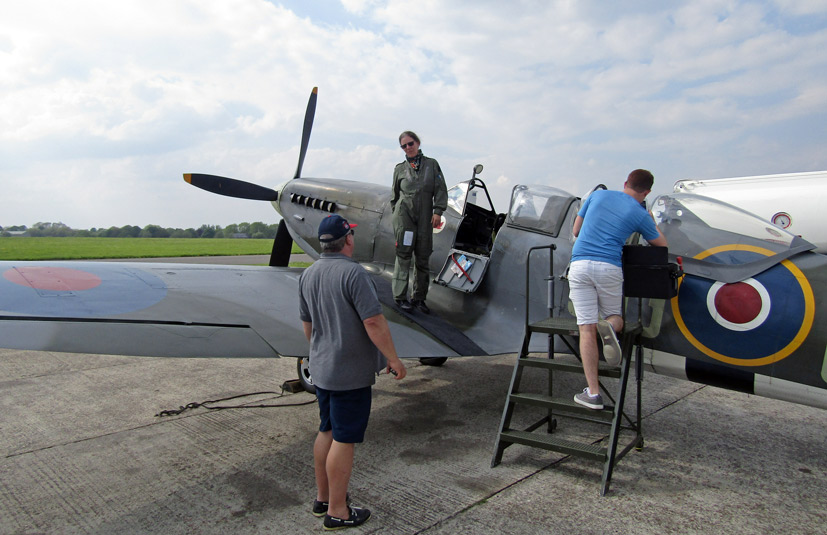
Home and tea. Another successful sortie for experienced Spitfire pilot and a case of the severe grins from her latest lucky passenger
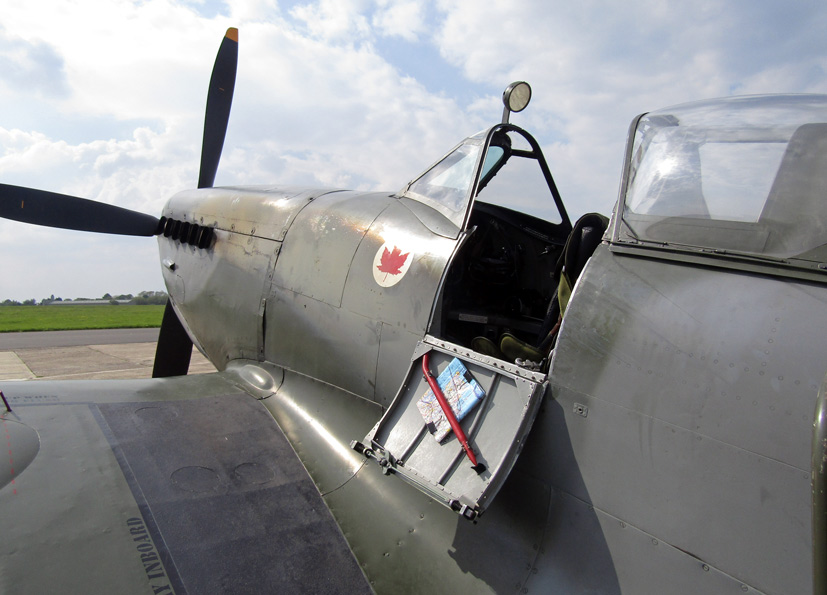
One of the world’s most iconic machines – the incomparable Spitfire
Benefitting from the fact that the runway is concrete, and the airfield can operate in all (reasonable) weather conditions the flights take place most of the year round, with their being a choice of two airframes to be used. One, a MKIX MJ627 has combat history, flying with the Royal Canadian Air Force in the Second World War. The other, is the original two seat Spitfire, a MKVIII, that still has the tell-tale panels on its spine showing where the spin recovery parachute was installed as part of the test programme.
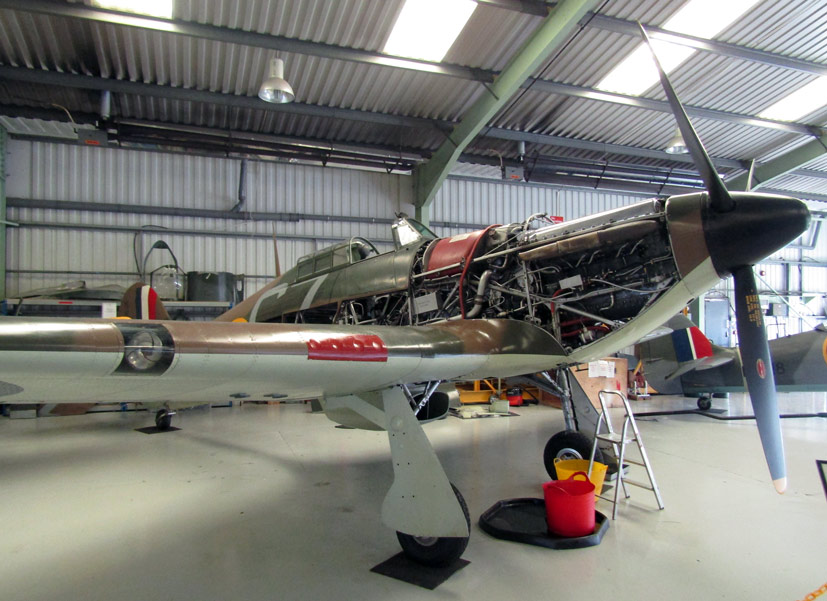
Although outnumbered by Spitfires, this Hawker Hurricane can remind its more famous hangar-mates which aircraft really won the Battle of Britain!
A team of 6-7 people assist in the operating of the flights, handling everything from refuelling to the safety briefings, a professional team operating these historic aircraft in a professional way.
But just like Airfix it isn’t only Spitfires. Nestling in the second hangar was another Merlin powered masterpiece, a Hurricane. Maybe one day soon we will see two seat Hurricane flights as well? As a lover of the underdog that would certainly be something I’d be interested in! And along with these Allied fighters, a rather more sinister shape occupied a space at the end of the hangar. An original Messerschmitt Me109E-4. Awaiting its engine before it can return to the air the 109E looked somewhat out of place in the patriotic hangar, but who could resist a two-seat flight in a Spitfire, that involved a mock dogfight with a REAL 109E?! Not something they are currently offering, but rather something this author hopes they will!
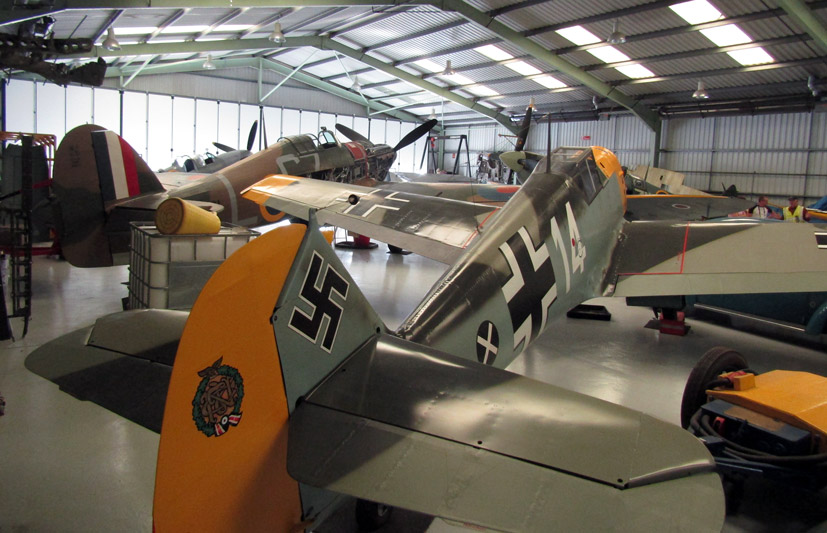
'Beware the Hun in the Hangar'. This Bf 109E is arguably one of the most historic aircraft in the world today, having reputedly been flown by celebrated Luftwaffe Ace Hans Joachim Marseille during the Battle of Britain
All in all it was an incredible day and I’d urge anyone who can to go along and view the incredible work going on there, either on a tour, or as a precursor to a flight, go on, treat yourself!
A big thank you to all at The Heritage Hangar for accommodating my visit.
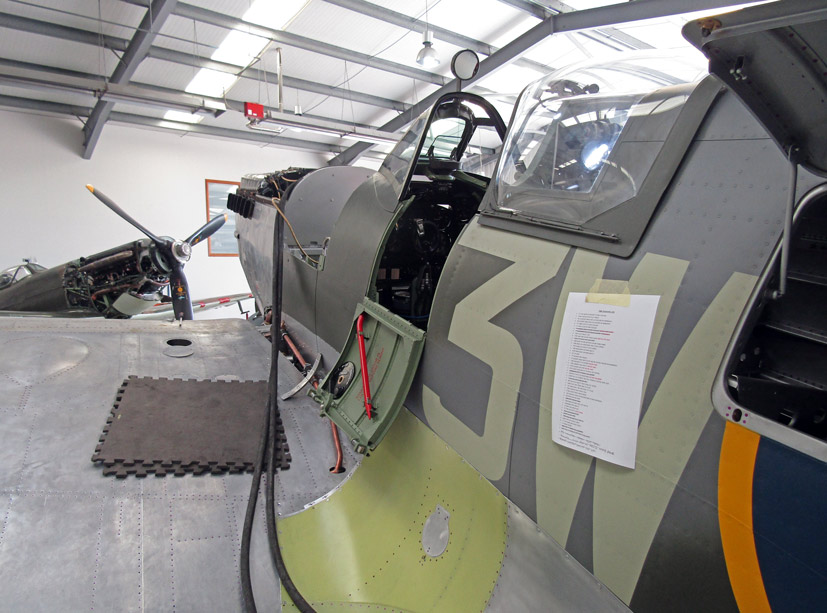
Spitfire’s galore. We couldn’t end a review of the Biggin Hill Heritage Hangar operation with the picture of a Messerschmitt, could we!
That’s all we have for you in this latest edition of Workbench, but we will be back as usual in two weeks’ time with more exclusive announcements, news and features from the fascinating world of Airfix modelling. In the meantime, if you have any suggestions for subjects you would like to see covered in a future edition of the blog, or ways in which we could enhance your enjoyment of Workbench, please do not hesitate in contacting us. We can be reached via our usual e-mail address workbench@airfix.com or by contributing to our Workbench thread over on the Airfix Forum. If social media is more your style, you could access either the Airfix Facebook page or our Twitter channel, using #airfixworkbench where you will find plenty of modelling news, views and discussion. Whichever medium you decide to use, please do get in touch, as it is always interesting to hear from fellow modelling enthusiasts and the projects you have on the go at the moment.
As always, the Airfix website is the place to go for all the latest model release information, with our New Arrivals, Coming Soon and Last Chance to Buy sections all accessed by clicking on the above links. As updating the website is a constant process, a quick search through each section of the Airfix web pages will reveal new information and updated images in many of the product sections and this is always an enjoyable and rewarding way to spend a few minutes.
The next edition of Workbench is due to be published on Friday 8th June, when we look forward to bringing you all the latest news, updates and exclusives from the fascinating world of Airfix modelling.
Thank you for your continued support.
The Airfix Workbench Team
© Hornby Hobbies Ltd. All rights reserved.