Welcome to this latest edition of Workbench and all the news, updates and exclusive announcements from the fascinating world of Airfix modelling.
As you would expect, we have yet another feature packed edition of Airfix modelling goodness for you, this time beginning with something a little bit different for a Workbench blog – a look behind the development of a recently released Quickbuild model kit. These snap together models have been a popular addition to the Airfix range over the years and have recently benefitted from significant tooling investment, which has allowed a welcome subject boost to the range. We will be hearing about Quickbuild from one of the talented Airfix product designers and how these eye-catching models take their place in a design schedule which also includes Buccaneers, Spitfires and Tiger tanks.
In addition to this, we have our usual collection of exclusive images, box artwork reveals and scheme detail confirmations to bring you, as well as checking in with a hugely popular ‘Classic’ model which is due to join the growing ranks of the Vintage Classics aviation subjects over the next few weeks. Staying in the air, we see how an impending kit re-release will serve as a fitting modelling tribute in this 80th anniversary year of the Battle of Britain and also how Germany became experts at re-purposing captured and appropriated armour during the Second World War. We hope to have something for every modelling taste in this 118th edition of Workbench.

Although most modellers will undoubtedly be familiar with the Quickbuild range of push together construction kits which were first introduced by Airfix back in 2013, it is likely that few will have actually attempted to build one, unless they have younger family members at home. Indeed, as far as the Workbench blog is concerned, we have never previously featured the development of a Quickbuild model and where they fit into the Airfix product range – we intend to rectify that right now and think you might be pleasantly surprised by what you are about to discover.
Regular attendees at the many model shows which take place the length and breadth of the United Kingdom will probably have been surprised by the number of Quickbuild models they have seen on various display stands over the years, particularly as they are surely kits for kids and not ‘serious models’. In fact, nothing could be further from the truth and the reason the models feature on displays is perhaps because whilst they are unashamedly aimed at the younger, less experienced modeller, they do build into faithful and appealing representations of the aircraft, car or tank they are based upon. Indeed, these clever little kits are now an important part of the Airfix product range, with each kit selling in ever increasing numbers to a growing customer base. To give some indication on production numbers, the original J6000 Spitfire has sold well over 100,000 kits, each one designed and manufactured in the UK – as you can see, these are no modelling bit part players.
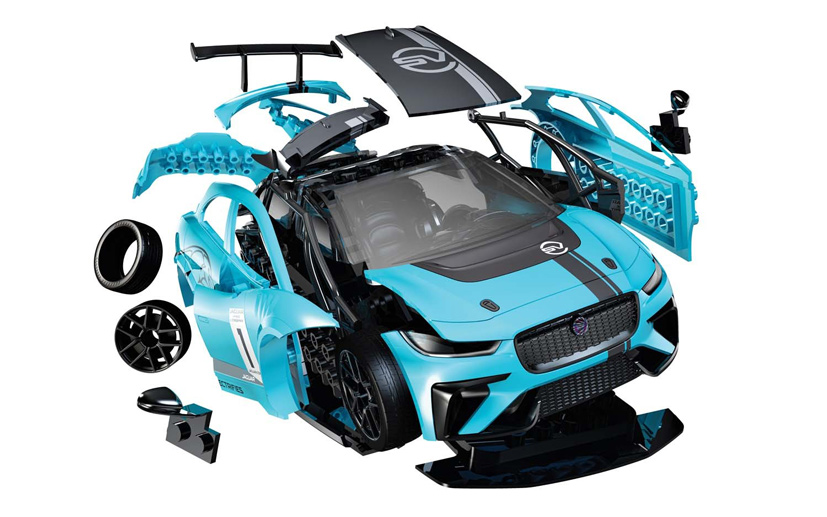
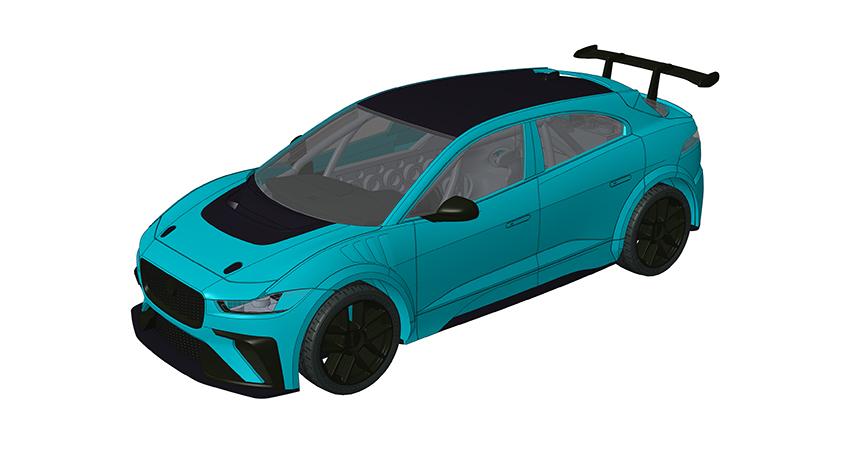
Featuring the new Jaguar I-PACE eTrophy tooling, this graphic shows how the individual Quickbuild parts come together to make a handsome representation of the car itself
With the launch of the new Jaguar I-PACE eTrophy J6033 (which sold out on initial allocation, but with more arriving soon), we were fortunate enough to have the opportunity of speaking with the model’s designer Matt, a man who is also responsible for such Airfix classics as the Buccaneer and new Beaufort and to ask him what it was like to work on this very different kind of project. Matt’s insightful input proved to be quite an eye-opener and may give Workbench readers a clearer appreciation of Quickbuild models.
Our first question was probably quite an obvious one, where we asked 'What it was like to work on a Quickbuild model after designing something ‘classic Airfix’ like the Buccaneer or Beaufort?' Matt was quick to point out that Quickbuild projects are different models to work on, intended for a different market to experienced kit builders and as such, have a very specific set of design parameters to adhere to. Rather than simply being dumbed down Airfix kits from a development perspective (which many of us may think), Matt informed us that the design of a Quickbuild kit can actually be much harder in many ways. Whilst producing a model which faithfully recreates the appearance of the subject machine, the individual parts have to go together in a simple, logical manner for the first time modeller to attempt, whilst being robust enough to withstand being played with once build. Then, it may be taken apart again and the entire process repeated – these really do have to be tough little devils.
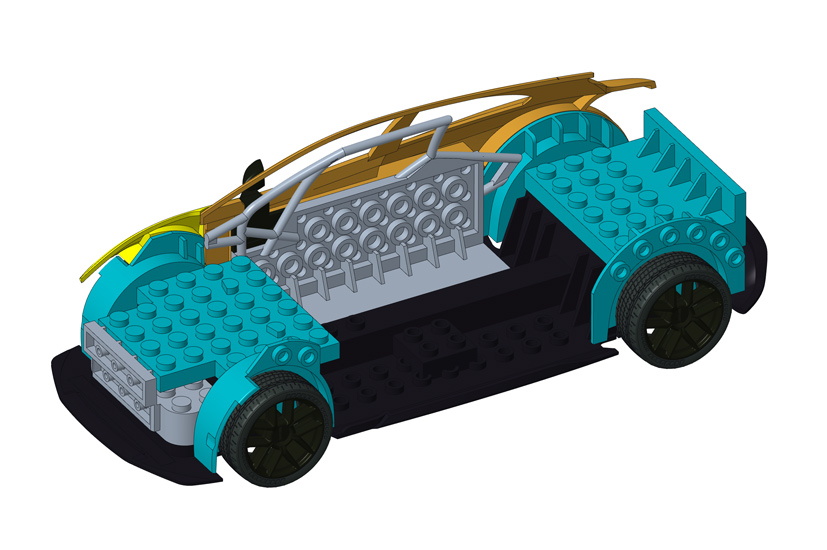
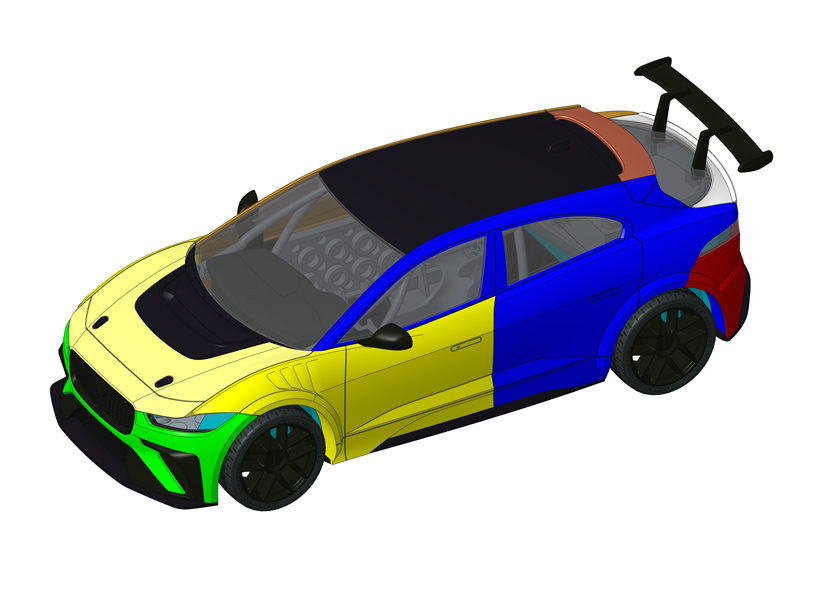
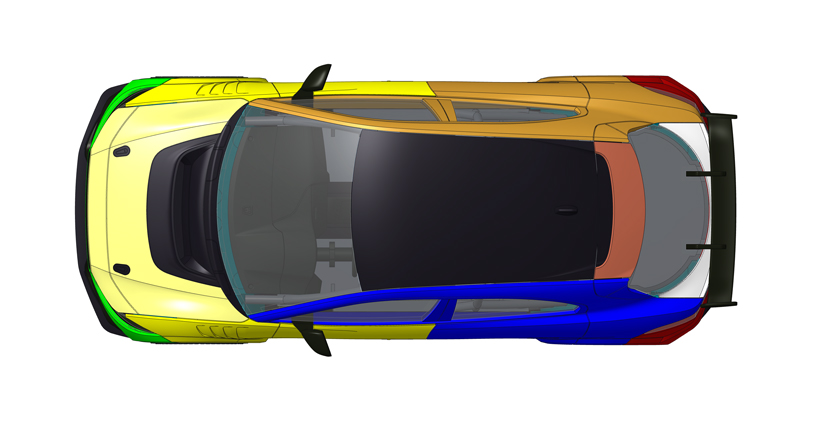
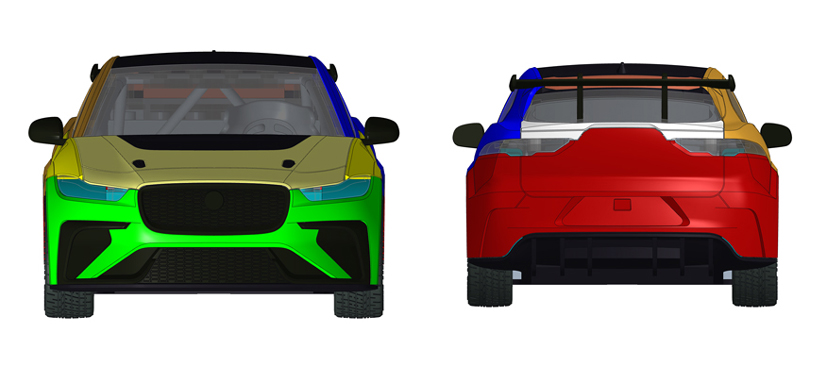
Kindly supplied to us by the products designer Matt, these Jaguar I-PACE e-Trophy development CAD screen shots are being shown outside the Airfix development team for the first time and help to shed some light on how these incredibly popular kits are designed
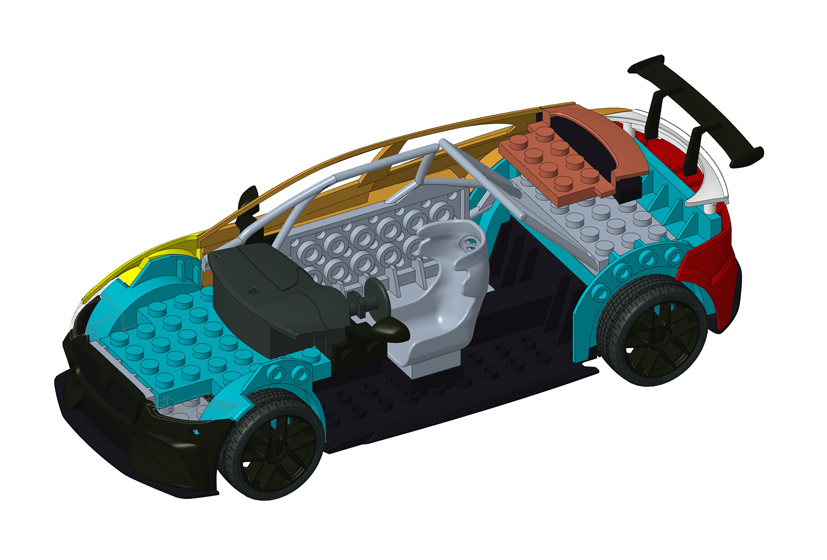
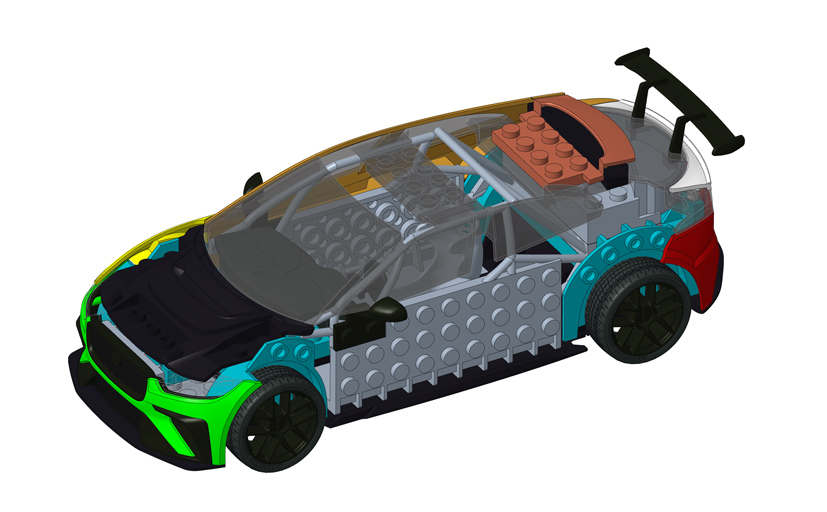
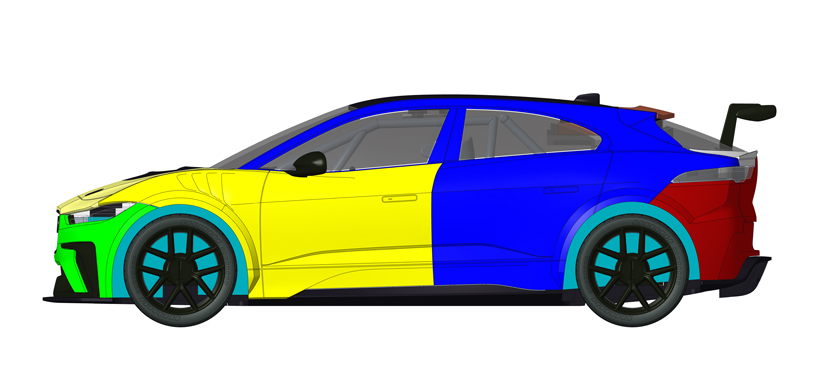
The logical construction of the kit can have far reaching implications during the design process, with everything from the number, size, shape and fit of parts all having to remain faithful to the Quickbuild ranges’ target market, whilst at the same time always keeping an eye manufacturing limitations and cost. Something which was extremely interesting to learn, individual parts which may look very similar in kit construction terms have to be designed with slight differences, so they are easily identifiable for the people picking the components during the product packing of the finished kits.
On the question of development timescales, we asked if ‘Quickbuild models were quicker and easier to work on than a traditional Airfix kit?’ and we were again surprised to learn that there was actually very little difference. Although Matt saved some time at the start of the project, as he didn’t have to complete the same level of research needed for something like a Buccaneer for example, this extra time will be more than used up during the design stage itself, which in many ways can be more challenging than a traditional Airfix kit. In the case of the new Jaguar I-Pace project, Jaguar supplied excellent CAD files for the vehicle, which served as a design trace for Matt, providing accurate 3D shape reference for him to work from. All he had to do now was to work this shape backwards and produce a Quickbuild kit – easy, when you know how.
Another interesting fact which emerged from our discussions with Matt concerned the tooling moulds for Quickbuild models. Again, most of us would probably think that these models intended for youngsters would not require particularly expensive tooling, but once again we would be mistaken. The moulds are extremely complicated and incorporate additional side actions to create the parts needed for a Quickbuild kit and in addition to this, the tooling costs can be made greater by the simple fact that each kit may require four or five separate moulds. Apparently, each different coloured part used on the model will require its own mould.
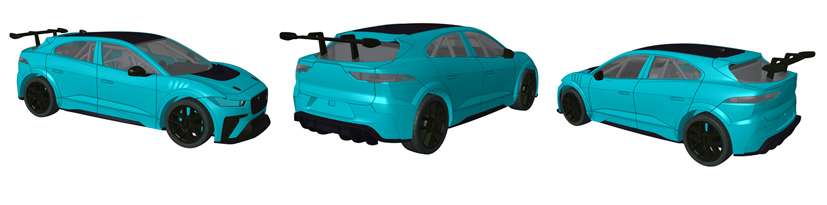
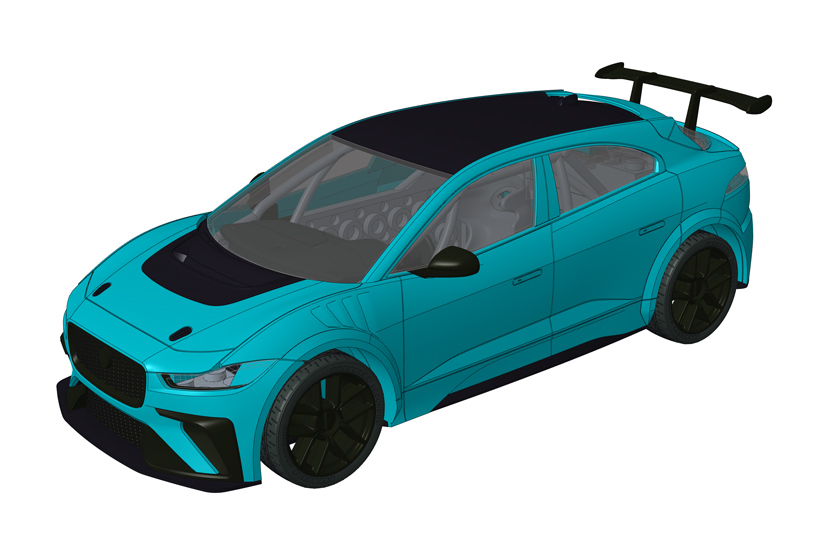
Over the years, the Airfix brand has gained a proud reputation for incorporating quality toys and games into its product range, in addition the model kits which it is so famous for and the Quickbuild models are simply a continuation of this tradition. Representing a significant investment in the range, these latest model additions have been developed specifically to make them even more faithful to the subject vehicle or aircraft, whilst at the same time incorporating even greater levels of detail to the interior of each model. Ensuring each kit is as enjoyable to build as it is robust to play with once built, the new Quickbuild models are better than ever and serve to introduce young and first time modellers to the joy of our hobby, without the need for glue or paints.
The final question we put to Matt was, ‘Do you enjoy working on the Quickbuild models as much as the construction kits Airfix are more famous for?’ He said that it is a nice change of scenery from working on Victors and Buccaneers, even though it is no less of a challenge. Having to channel all your design thoughts towards how a younger modeller would attempt the build is really refreshing, especially as Matt has two young children of his own at home. As each projects progress, his kids become rather cost effective market research consultants, as he has the opportunity to try out his latest designs on this particularly unforgiving customer demographic group. Able to take home product test shots and instruction sheet proofs, he is able to see how his kids cope with the build and if he needs to make any changes. Valuable feedback for the Quickbuild range, but possibly a big fingers crossed moment for Matt.
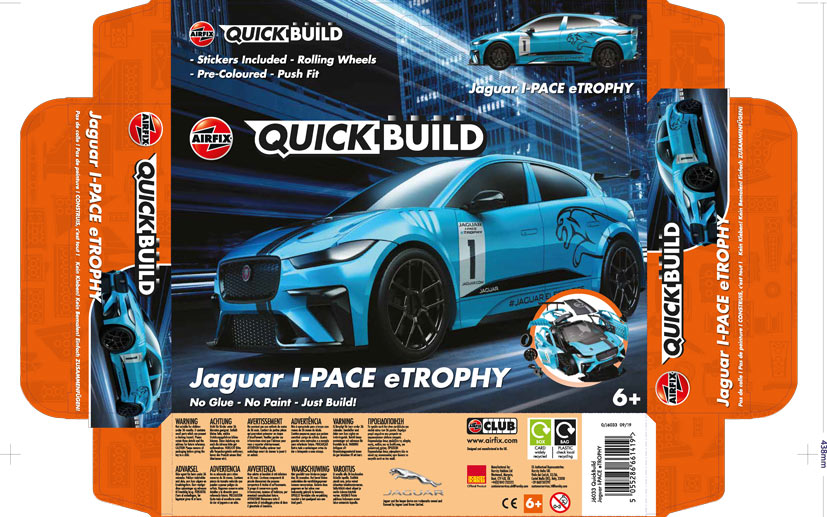
Available in model stores now, the first of this new generation of Quickbuild models will be moving quicker than an eTrophy Jaguar I-PACE as it approaches the chequered flag
Taking the Airfix brand out to a younger audience, this range of beautifully produced traditional construction toys have a distinctly modern edge to their design and manufacture and now take an important position in the current Airfix product range. Available in many more sales outlets than traditional model kits, Quickbuild is taking the Airfix brand to a much wider audience and hopefully, producing a new influx of younger modelling enthusiasts along the way.
Dare you take the Quickbuild challenge at your next family get together?
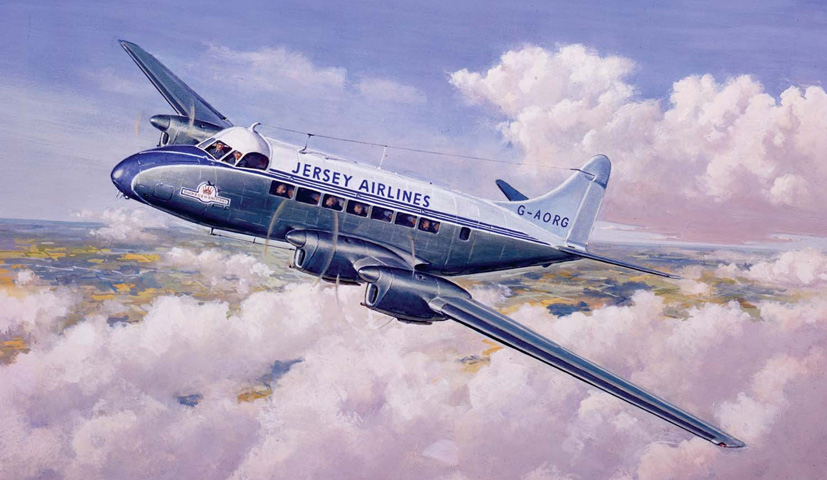
The impending re-launch of this classic DH.114 Heron II kit has meant a new lease of life for this evocative 1993 artwork by Mike Renwick
The immediate post war years proved to be a fascinating period for British aircraft manufacturers and resulted in the production of many advanced an interesting types, several of which would go on to be regarded as ‘Classics’. Even though only 150 de Havilland Heron airliners were built, the beautifully clean lines of this regional airliner and the fact that it saw civilian and military service in over 30 countries must surely allow it to be described in classic terms. From the perspective of the modeller, the inclusion the highly regarded De Havilland DH.114 Heron II kit in our 2019 Vintage Classics range came as a welcome surprise for many, and as this model is currently inbound to the UK from its manufacturing facility, we thought it was time for a little Workbench update.
Building on the success of de Havilland’s previously introduced twin engined Dove small passenger and communications aircraft, the company’s attempt to produce a slightly larger regional airliner resulted in the first flight of the Heron in May 1950. Capable of comfortably carrying 17 passengers, the Heron had a longer fuselage and extended wing length over its predecessor and employed an additional pair of Gipsy Queen engines, which whilst providing the aircraft with more power, also served as multi-engined assurance for both passengers and crew alike.
Early models of the aircraft were produced with a fixed tricycle undercarriage, but the Mk.II variant introduced a number of significant upgrades and improvements, most noticeably being the adoption of a retractable undercarriage system, with the resultant reduction in drag providing a welcome boost in performance for the aircraft. This later variant would go on to become the most heavily produced version of the de Havilland Heron. Although only 150 of the type were built, Heron’s went on to also serve with both the RAF and Royal Navy.
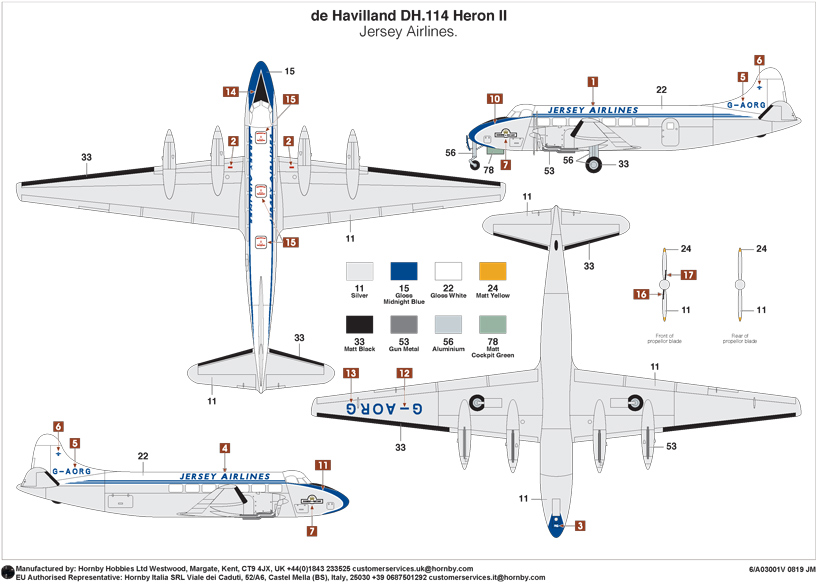
Scheme details for the ‘Duchess of Brittany’ which will be included with the Heron kit
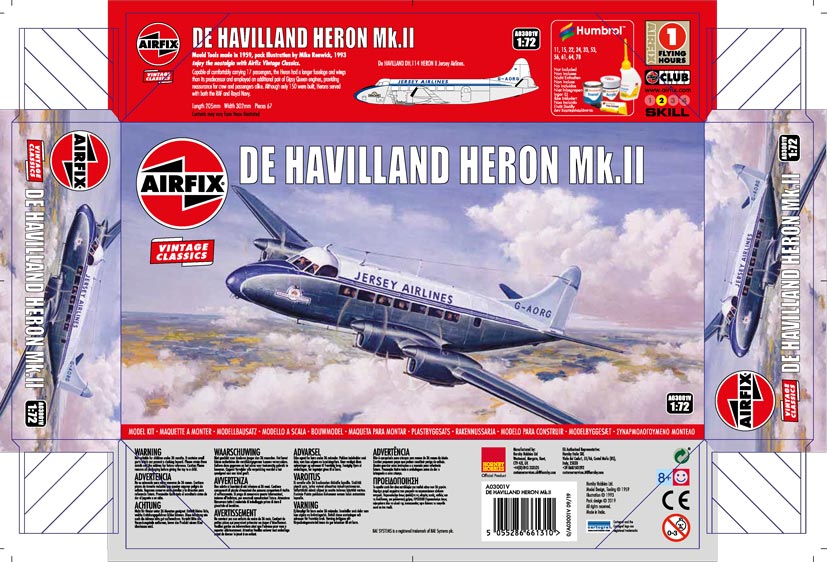
A fabulous new Vintage Classics release, make sure you don’t miss out on one of these beauties
The Airfix de Havilland Heron kit was first released as a new tooling back in 1959, instantly becoming one of the most popular models of that period. Four years later, it would benefit from a new box, new artwork and new decals, as it continued its position of prominence in the Airfix range, a welcome change from kits with a more military leaning. In 1993, the kit was re-issued once more, but this time benefitting from beautiful new box artwork from the brush of talented illustrator Mike Renwick and including decals for Jersey Airlines Heron G-AORG ‘Duchess of Brittany’, an aircraft which is currently preserved with the Jersey Airlines Heron ‘Duchess of Brittany’ Heritage Group on the island.
A classic model which has stirred fond modelling memories for many a Workbench reader, this latest aviation Vintage Classics addition A03001V is being released with the same artwork and decals as featured back in 1993, although the decal scheme itself actually dates all the way back to the original 1959 release of this kit – prepare for some imminent classic de Havilland Airfix modelling action.
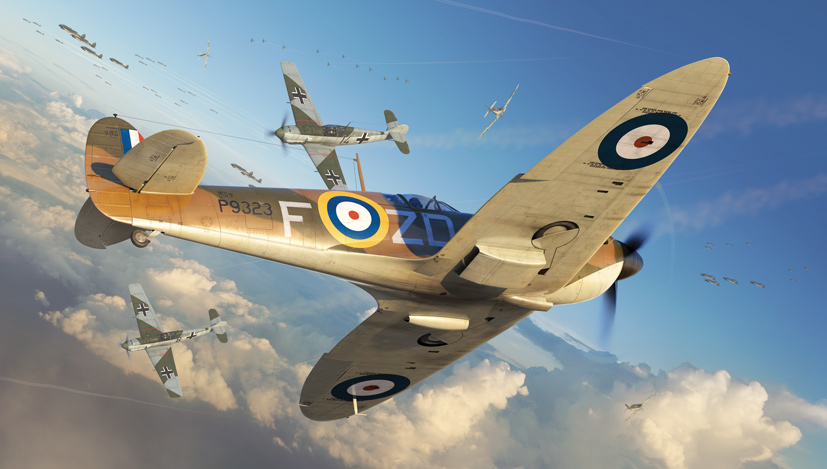
With stunning artwork like this, is it any wonder that the Spitfire is always amongst the most popular kit releases in any Airfix range
Historic aviation enthusiasts will be hoping that the coming Airshow season will prove to be one of the most memorable for many a year, as the nation prepares to mark the 80th Anniversary of the Battle of Britain, one of the most crucial aerial clashes of the Second World War. With show organisers keen to ensure impressive numbers of Spitfires and Hurricanes will be taking part in their respective shows, it is just possible that events such as Duxford’s Flying Legends and their September Battle of Britain show may just witness the largest number of these famous fighting aeroplanes in British skies since the days following the end of the war, which is a tantalising prospect and one which will see many thousands heading for the shows.
Without doubt the names Airfix and Spitfire are inextricably linked and for 65 years, we have had a Spitfire kit in our range, with this aircraft always maintaining its position as one of the most popular subjects in any Airfix catalogue. For that reason, it is somehow fitting that the first kit we are releasing in 2020 to mark our own modelling tribute to this significant anniversary year is the re-issue of our popular 1/48th scale Supermarine Spitfire Mk.1, a model which was first released in 2015 and is already regarded one of the most successful kits of the modern Airfix era. With two new expertly researched early Spitfire scheme and decal options for modellers to consider, this forthcoming release also benefits from stunning new box artwork which manages to capture both the graceful lines of the Spitfire and the frantic air combat which took place during the Battle of Britain, where the aircraft forged its enduring legacy.
Let’s take a closer look at the two scheme options included with this new Spitfire kit.
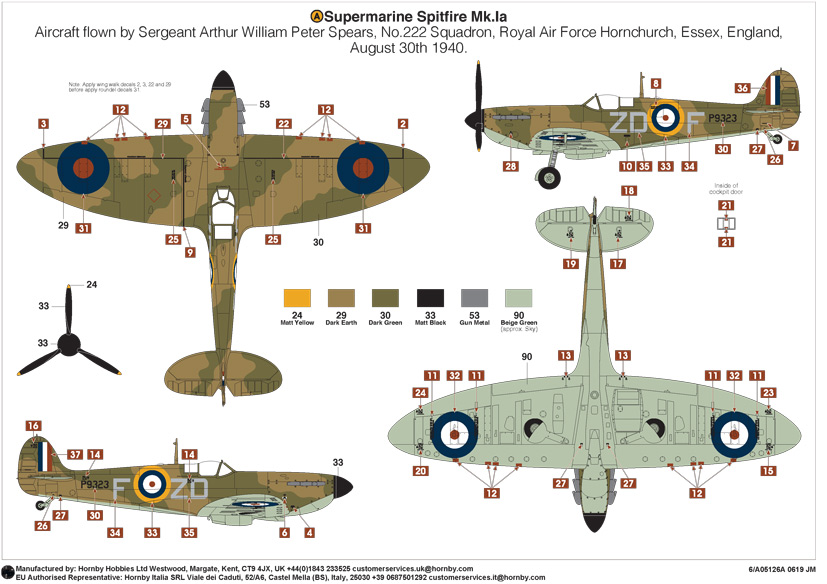
Although the Spitfire is often lorded as the hero of the Battle of Britain, the real heroes were the young men of Fighter Command who rose to meet the fearsome challenge of the Luftwaffe day after day during the summer of 1940. One such pilot, Sergeant Arthur W.P Spears, was the nephew of Great War air ace James McCudden VC and originally joined the Royal Air Force as an aircraft apprentice in 1932. Later applying for pilot training, he successfully completed his course and was initially posted to No.12 FTS, where he would go on to fly Hawker Harts and later, Avro Ansons.
In 1940, Spears converted to Bristol Blenheims and was posted to No.222 Squadron at Duxford. When his squadron exchanged their Blenhiems for Spitfires later the same year, Spears, like so many of his contemporaries, made his first flight in this powerful new fighting aeroplane after an evening studying the ‘Pilot’s Notes’, which were presented to all pilots attempting to tame the Spitfire.
On 30th August 1940, at the height of the Battle of Britain, Spears was shot down after engaging in combat with a large number of Messerschmitt Bf 109s over the Thames estuary – fortunately, he managed to bale out of his stricken aircraft, with Spitfire P9323 crashing at South Lees Farm, on the Isle of Sheppey, just seconds later. Making his way back to Hornchurch using public transport whilst the air battles raged above, Spears was soon back in the action.
Highlighting the perils faced by Fighter Command pilots during and after the Battle of Britain and the courage displayed by each and every one of them, Spears would see regular contact with the Luftwaffe over the next few months and indeed would suffer at the hands of the feared Messerschmitt fighter once more. On 4th April 1941, was engaged in combat with more Bf 109 fighters over Kent, when his aircraft was once again shot down by his enemy. This time, he was unfortunate enough to have become the 58th victory for celebrated Luftwaffe ace Adolf Galland.
Despite regularly attracting the attentions of the Luftwaffe during WWII, Arthur W.P Spears survived the war and lived to the grand age of 82, no doubt with plenty of fascinating wartime stories to tell anyone who was lucky enough to be the recipient of them.
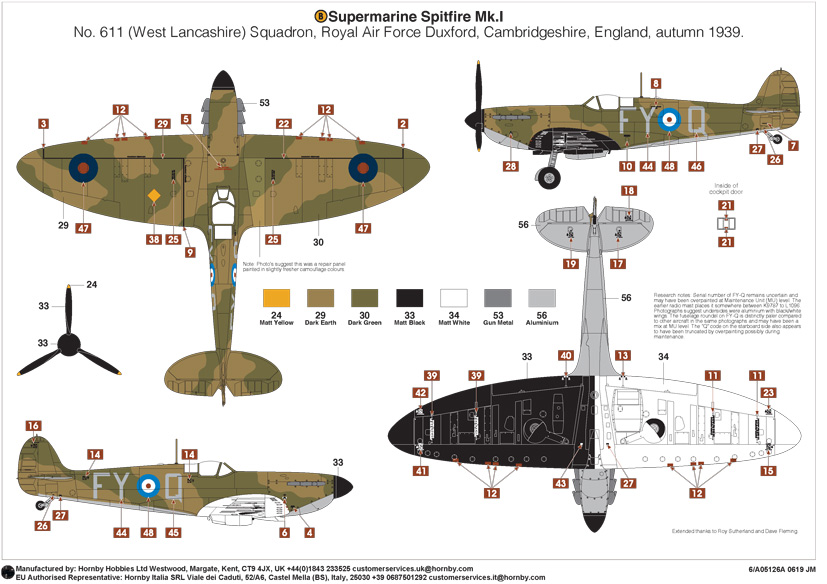
Established in 1936, No.611 (West Lancashire) Squadron originally formed at RAF Hendon as a day bomber unity, but would make its first permanent home at RAF Speke near Liverpool, where the unit also served to inspire the local population to consider a career in the force.
As the clouds of war gathered, No.611 Squadron converted to a fighter unit and received the new Spitfire Mk.I fighter during the early summer of 1939. By Autumn, the squadron had transferred to Duxford, where they would form part of Fighter Command’s No.12 Group and fly defensive coastal patrols, hoping to deter possible Luftwaffe incursions. During May 1940, the squadron became fully operational from a new base at RAF Digby in Lincolnshire, from where its fighters would see plenty of action during the Dunkirk evacuations and the Battle of Britain. As the war progressed, the pilots of the squadron would relinquish their current Spitfires for the latest variant of this famous fighter, as and when they became available.
The latest research into the history of this particular aircraft highlighted some uncertainties regarding the FY-Q codes applied to the fighter, which may actually have been overpainted during time spent at a Maintenance Unit. Also, the early style ‘pin’ radio mast places this aircraft somewhere between K9787 and L1096 in the Spitfire production records. Photographic evidence suggests that during the period represented here, this Spitfire retained the distinctive under surface markings of silver fuselage and horizontal stabilisers, with black and white on the wing undersides. Marking this as an early ‘Phoney War’ era Spitfire, this beautiful scheme features the distinctive national insignia markings of the period, with no roundels on the undersides of the wings and no fin flashes on the tail.
An extremely popular kit, in the slightly larger 1/48th scale, this re-released Spitfire Mk.I A05126A will make for a spectacular modelling tribute to the ‘Few’ of the Battle of Britain and will surely be a popular build project in this significant 80th anniversary year. Scheduled for production imminently, this latest Spitfire kit should be in model stores in just a few weeks’ time.
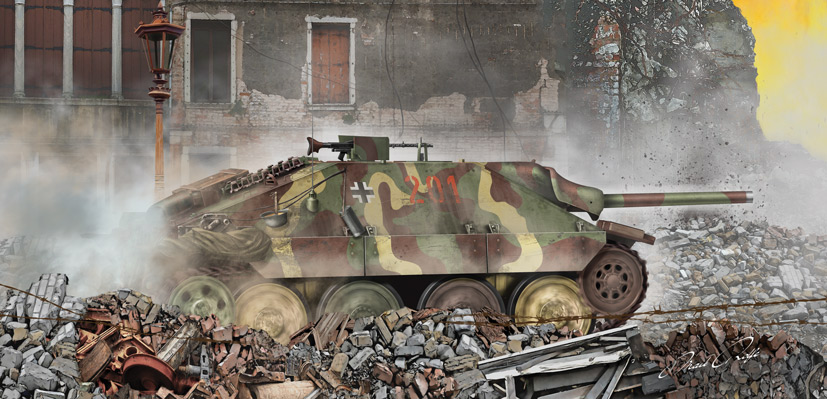
With its low profile and powerful gun, a lurking Jagdpanzer 38(t) Hetzer would prove a nasty surprise for any Allied tank commander coming across one
Although it could be described as one of the most diminutive military vehicles of the Second World War, the Jagdpanzer 38(t) was undoubtedly one of the most interesting. Developed due to German’s dire need for additional military vehicles when combat losses were exceeding the production of new tanks, the Hetzer combined a powerful gun on the chassis of an existing, proven design and was much cheaper (and easier) to produce than the larger, specifically designed late war tank hunters.
The idea behind producing the Jagdpanzer was not a new one, as Germany had successfully introduced such vehicles as the Marder and Nashorn earlier in the war, both of which combined powerful anti-tank guns mounted on the chassis of existing vehicles - in the case of the Marder, this utilised captured French vehicles. These two machines both had open fighting compartments and relatively tall profiles and whilst they were effective against Allied armour, they were extremely vulnerable to return fire from both armour and infantry.
The Hetzer was a continuation of this tank hunter doctrine and married the 7.5mm Pak 40 gun with the chassis of a Czech designed Panzer 38(t), although the original chassis had been slightly widened, lengthened and benefitted from modified suspension, road wheels and engine. Importantly, the Hetzer had an incredibly low profile, which made it difficult to detect on the battlefield, with its main gun being capable of taking out most Allied armoured vehicles. Incredibly, it only took 4 months from the drawing board to the first Hetzer being available for trials and testing, which is just as well for the German’s, who by that time were desperately in need of new AFVs.
In addition to its powerful main gun and low profile, the Hetzer (or Baiter) had steeply sloping frontal armour and a remotely controlled 360° traversing top mounted machine gun, which could be fired from inside the vehicle. Unfortunately, when the ammunition drum was expended, a crewman had to climb out of the vehicle to re-load it and he could usually expect to receive a hostile reception during the process. Indeed, the operation of this relatively small vehicle cannot have been easy, as the four man crew were squashed together in a tiny fighting compartment, one which required the gun to be offset to the right to give a little more room.
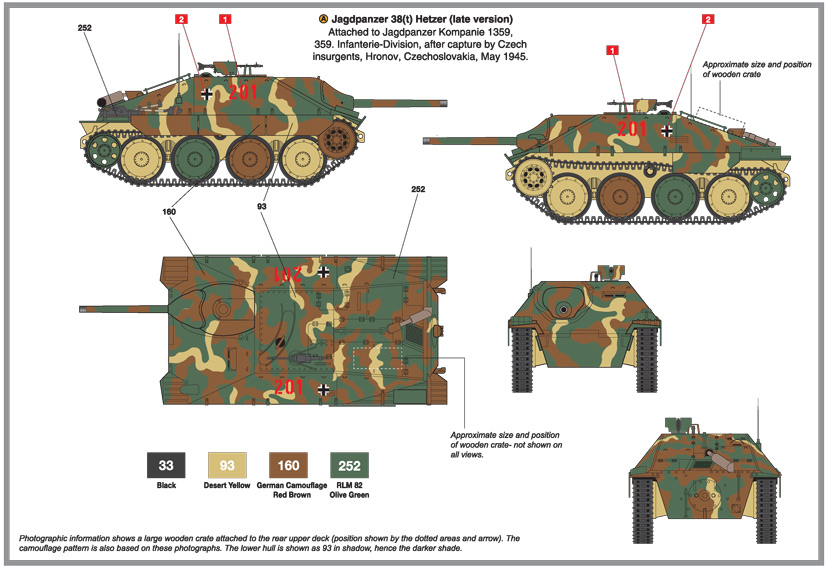
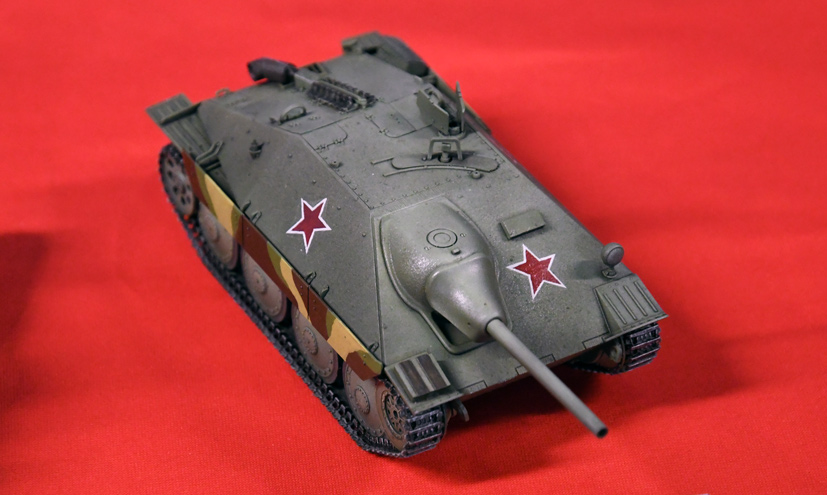
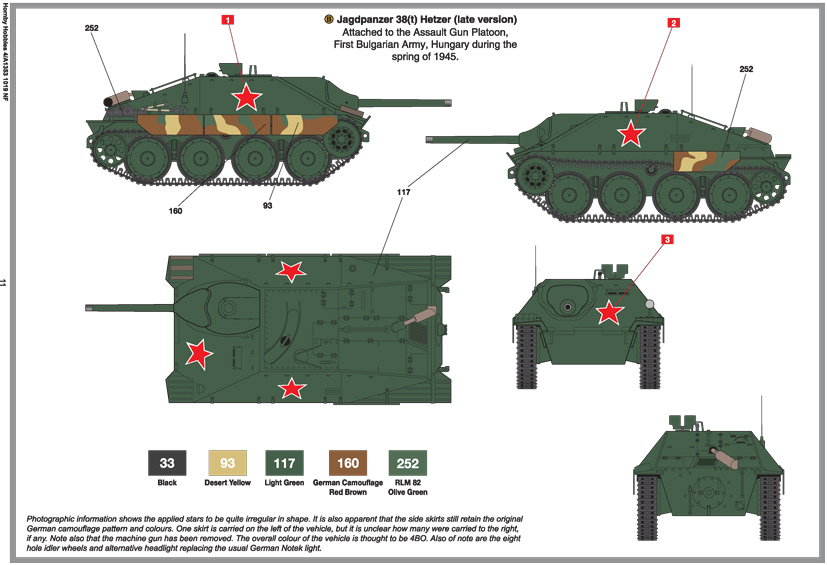
Hetzer image selection. The three images displayed here show the two scheme options which are included with the soon to be releases A1353 Jagdpanzer 38(t) Hetzer, as well as a build sample of the model, which was displayed on the Airfix stand at the recent Bolton Model Show
Extremely vulnerable to enemy flanking attack, the Hetzer’s own method of attack was to use its low profile to lurk in a concealed position, often inside ruined buildings and sometimes covered with foliage of even in a haystack. Needing to fire the first shot in any engagement, the entire vehicle would need to be facing the direction of their intended target, as the gun could only traverse 5° to the left and 11° to the right, which was rather limiting. After taking their shot, the Hetzer’s crew would invariably have to withdraw and re-position, adopting shoot and scoot tactics.
When operated as part of a hunting pack, several Hetzers could be positioned to create a killing zone and in the hands of competent crews, could take a heavy toll of any Allied armour that came their way. Conversely, as the war progressed and Europe was awash with Allied armour, troops and aircraft, the tiny Hetzer was not the vehicle you wanted to be in, especially if you happened to be a little claustrophobic.
This latest model in our 1/35th scale Military Vehicles range is due into production imminently, so you can expect to see this incredibly appealing little Hetzer kit to arrive in model stores in just a few short weeks’ time. As always, please keep an eye on the Coming Soon section of the Airfix website for all the latest model release details.
We are afraid that’s all we have for you in this latest edition of Workbench, however, we will be back as usual in two weeks’ time with a further selection of Airfix modelling delights for your enjoyment. If you have any suggestions for subjects you would like to see covered in a future edition, please use this workbench@airfix.com link to contact us.
In between new editions of our blog, the Airfix conversation continues over on our Airfix Forum Worbench thread, with further discussions taking place on both the official Airfix Facebook page and the Airfix Twitter channel - please do get involved in the discussions and let us know what you think about Workbench.
Whenever you decide to visit, the Airfix website is always the place to be for all the latest model availability information, previous editions of our blog, a selection of modelling tips and much more.
The next edition of Workbench is due to be published on Friday 21st February, when we will have more interesting features from the world of modelling.
On behalf of the entire Workbench team, thank you for your continued support our Airfix blog.
The Airfix Workbench Team
© Hornby Hobbies Ltd. All rights reserved.