
Welcome to this latest edition of Workbench and all the news, updates and exclusive announcements from the fascinating world of Airfix modelling.
Perhaps more than at any time in almost five years of producing our Workbench blog, the nation’s modelling community is in need of a little Airfix distraction from what everyone is facing in these worrying times. Clearly not wishing to trivialise the seriousness of recent developments, this 121st edition of our blog will try to provide a few moments respite from official announcements and ongoing restrictions, something we will continue to do over the coming weeks and months and certainly for as long as this unprecedented, developing situation will allow.
With yet another feature packed edition awaiting your inspection, we have our usual selection of product updates, box artwork reveals and exclusive built model images featuring the latest models from the 2020 range. We begin by looking at a re-issued model in 1/48th scale, which will surely prove incredibly popular in this 80th Anniversary year of the Battle of Britain and will see how the lead scheme option helps to commemorate the significant contribution made by Polish pilots during the battle and throughout the Second World War. We will also be featuring a scale representation of arguably the most important tank of WWII, in addition to showcasing exclusive images featuring several built samples from our impressive 1/35th scale Military Vehicle range. All this and more awaits your inspection in this latest edition of our Workbench blog.
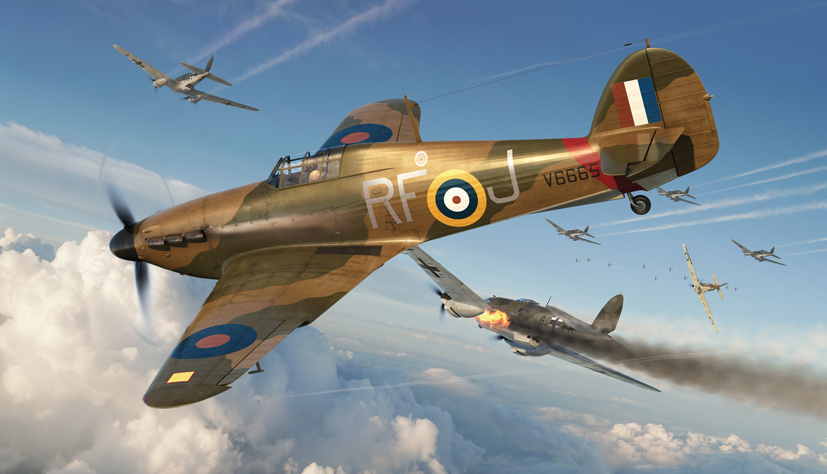
This magnificent box artwork does a great job in depicting the frantic nature of the aerial fighting which took place during the Battle of Britain and the bravery of the young men who rose to the challenge
As Hitler and his staff stared across the Dover Narrows to the white cliffs of southern England following the fall of France in the summer of 1940, it must have seemed as if the defeat of Great Britain was inevitable and only weeks away. Initially not particularly keen on mounting a seaborne invasion, Hitler had been angered by Britain’s defiance in the face of spectacular Wehrmacht military successes and ordered his staff to make invasion preparations. In order for such an operation to take place, the skies had to be controlled by the Luftwaffe and required the destruction of the Royal Air Force, just like the Polish, Belgian, Dutch and French air forces before them. The scene was set for an aerial struggle the like of which the world had never previously seen.
Having endured the full force of Germany’s Blitzkrieg which included facing the most powerful air force in the world, thousands of Polish service personnel made their way across a war torn Europe, determined to continue fighting their hated enemy. Amongst this number were hundreds of trained pilots who arrived in Britain ready to take on the Luftwaffe, using aircraft which were far superior to the ones they had been flying in Poland, our Hurricanes and Spitfires. RAF officials initially viewed the Polish airmen with some scepticism and after what they had faced over the previous months, questioned their fighting spirit, not to mention the potential difficulties posed by language differences. In the end, the dire situation in which Britain found herself would force their hand and Poland’s pilots would prove to be a fighting revelation.
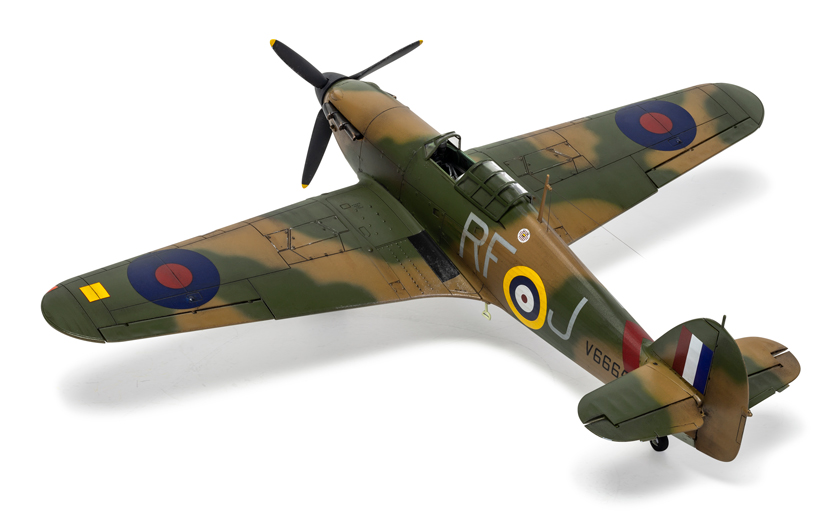
Another Paramjit masterpiece, this time he turns his attention to this 1/48th scale RAF No.303 Squadron Battle of Britain Hurricane
In an agreement between Britain and the exiled Polish Prime Minister, the RAF established two Polish wings, No.302 ‘Poznan’ and No.303 ‘Kosciuszko’ and after a period of training using Hawker Hurricane fighters, both were sent to stations in the south of England. Flying from RAF Northolt and boasting several experienced veterans in its ranks, No.303 Squadron were the first to be made operational on 31st August 1940, almost one year to the day since Poland had been invaded by the Germans and once unleashed, they were determined to make their mark.
With the benefit of the RAF’s organisational infrastructure and flying heavily armed Hawker Hurricane fighters, the Polish pilots immediately displayed their skill and bravery in the face of overwhelmingly superior enemy aircraft numbers. Scoring victories from their first operational sortie, the Polish airmen did not conform to existing RAF combat doctrines and would dive headlong into enemy formations with little regard for their own safety, challenging them to break formation or risk collision. In one instance, six Hurricanes dived into a formation of 150 Luftwaffe aircraft, causing them to break in all directions and resulting in the melee of a ferocious dogfight. In addition to this, the Polish airmen would close to within yards of their intended target before firing their guns, determined that each bullet would find its mark.
With the fate of Britain hanging in the balance and with the opposing forces being so evenly matched with all things being considered, it is thought that the Polish fighter pilots of the Royal Air Force made such a telling contribution at a vital point in the Battle of Britain, that their introduction may have made the difference in the outcome of the battle, ensuring the Second World War did not end with this mighty clash of eagles. The magnificent box artwork featured at the head of this section will support the release of our latest 1/48th scale Hurricane Mk.I A05127A and graphically illustrates the drama which was taking place in the skies above Britain during September 1940 and the determined, close quarters attacks mounted by the pilots of No.303 Squadron.

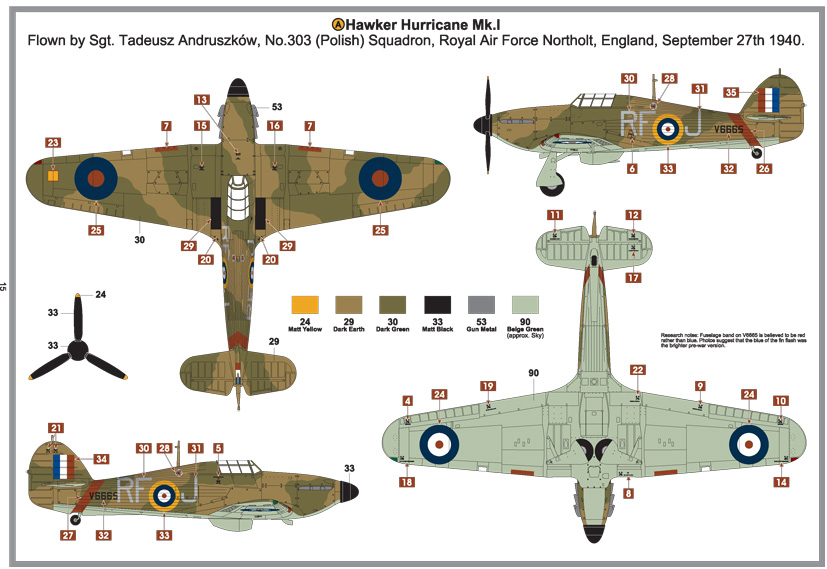
A young pilot of just 18 years when the Germans launched their attack against Poland on 1st September 1939, Tadeusz Andruszkow was fighting with 162nd Fighter Squadron, attached to the Lwow Army, however, with a German victory inevitable, he was evacuated to Romania with the rest of the unit. Eventually making his way to France, he began training with the Armee de l’Air on his arrival, only to have to flee the attentions of the Luftwaffe for a second time. Finding himself in training once more, his latest mount would be an RAF Hawker Hurricane fighter and after successfully completing his conversion course at Blackpool, was posted to the mainly Polish No.303 Squadron at Northolt.
During combat on 15th September 1940, the young pilot tasted victory for the first time, when he shared in the destruction of a Dornier Do17 bomber, but later in the same sortie, would himself be shot down by a marauding Messerschmitt Bf 109 over Dartford. His Hurricane came down in Lower Stoke, Kent, but not before he had successfully taken to his parachute.
Climbing back into the cockpit of another Hurricane almost immediately, September 26th would see Andruszkow claiming his first full victory, as a Heinkel He-111 fell to the guns of his new fighter. Highlighting the savage nature of the fighting during the battle, the young pilot would be shot down and killed whilst engaged a patrol over Horsham the following morning – Flying Hurricane Mk I V6665 RF-J, he was bounced by a Messerschmitt Bf 109E of l./JG 53, possibly a machine flown by Luftwaffe pilot Heinrich Kopperschager. The RAF fighter crashed at Holywych Farm, Cowden, with the young pilot tragically still strapped in his seat.
Fighting for the survival of Britain and the free world, Sgt. Tadeusz Andruszkow’s name is inscribed on the Polish War Memorial in London, as well as appearing on the Battle of Britain Monument.
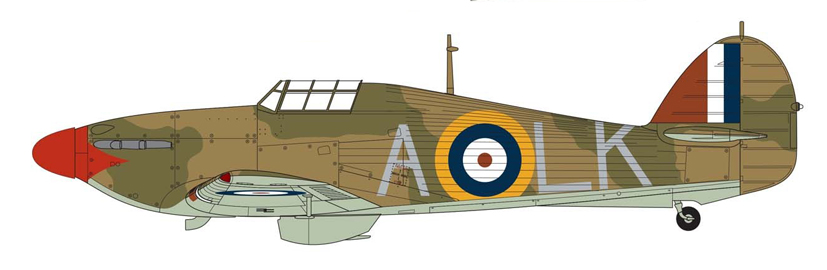
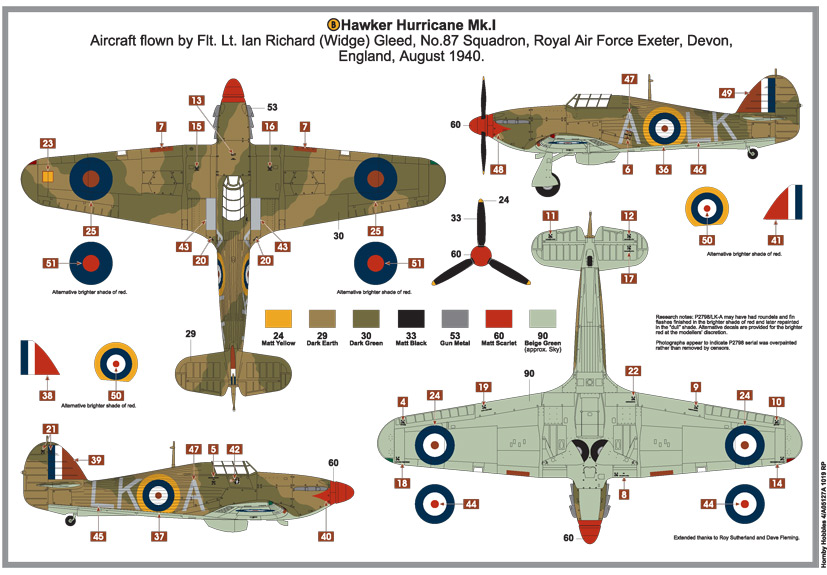
Having already gained a pilot’s licence as a civilian, Ian Richard Gleed successfully applied for an RAF commission in 1936 and on completion of his training, was posted to No.46 Squadron at Kenley, to fly Gloster Gauntlet fighters. Later transferring to No.266 Squadron as a Flight Commander, Gleed was fortunate to survive an incident in early 1940 when the Spitfire he was flying broke up in mid-air. Whilst he was able to get out of the aircraft safely, the incident did resulting in him requiring a period of hospitalisation.
On his return to flying duties, Gleed was posted to the Hawker Hurricanes of No.87 Squadron, who were flying in France as part of the Royal Air Force component of the British Expeditionary Force. He would immediately make his mark on the fighting, not only showing great courage in the face of the enemy, but also taking a heavy toll of Luftwaffe aircraft in the process. It is thought that Flt. Lt. Gleed became the fastest RAF pilot to achieve ‘Ace’ status, taking just two days to dispatch 2 Bf 110s, a Bf 109 and two Do17 bombers, in addition to further aircraft either shared or claimed probables. Despite this, the inexorable advance of the Germans could not be stopped and the Hurricanes of No.87 Squadron soon returned to England.
Once back in Britain, 87 Squadron were initially based at Church Fenton in Yorkshire, but were soon transferred to Exeter. Unusually, the Squadron refused the opportunity to trade their Hurricanes for Spitfires, as it was reported that Gleed and fellow pilot Roland Beamont were able to easily outmanoeuvre Spitfires during mock dogfight trials. Seeing service throughout the Battle of Britain, once the Luftwaffe’s raids moved to night bombing attacks, No.87 Squadron were given the task of providing nightfighter protection for Bristol and whilst this force was still very much in its infancy, Gleed was able to add a further two Luftwaffe aircraft to his growing tally.
Perhaps one of the most famous Hurricanes of the Battle of Britain period, Ian Gleed’s Hurricane P2798 was the subject of several famous wartime photoshoots, ones which show the aircraft in a number of different guises. Featuring its distinctive red spinner and in some cases, a very unusual red painted area on the engine cowling behind the propeller, the aircraft also sports unique ‘Figaro the Cat’ artwork on the starboard side of the fuselage, under the cockpit – he appears to be enthusiastically smashing a swastika. This aircraft would also be used during the transfer to night operations, with the standard day camouflage overpainted in black, with some reference photographs showing the rudder still retaining its camouflage. This is a beautifully presented Hurricane and one which will make a fitting modelling tribute to the hero pilots of the Battle of Britain, irrespective of their nationality.
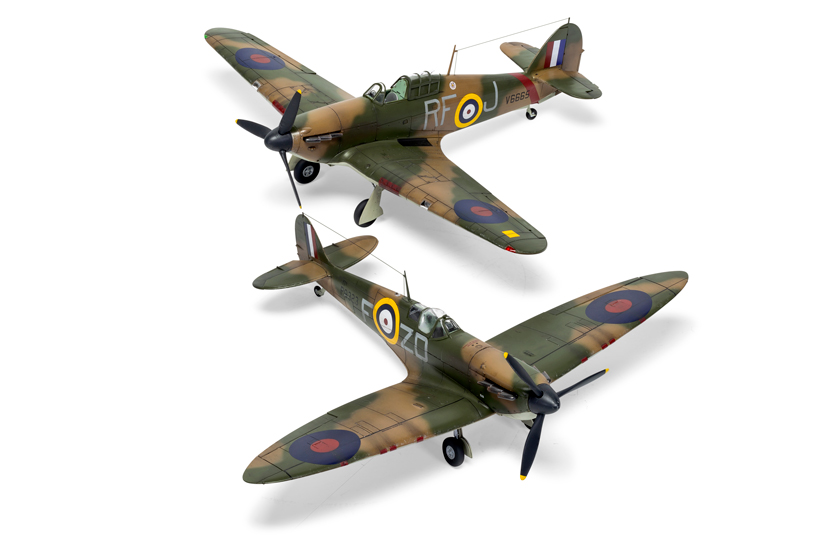
Brothers in arms, could there possibly be a more iconic pairing of aircraft types in the history of aerial warfare?
Over the previous few editions of Workbench, the name Paramjit Sembhi has cropped up a few times, as we have admired his work as the newest member of the Airfix product design team, in addition to his skill as a rather accomplished modeller. Well, to the benefit of Workbench readers all over the world, we are pleased to say that he has been at it again, this time working on a pair of model builds which serve to commemorate the impending 80th Anniversary of the Battle of Britain and in support of two impending 1/48th scale Airfix kit re-introductions.
Having marvelled at several of Paramjit’s model builds over the past few months, we did ask him if he ever has time for sleep, as he clearly spends many hours working on his latest modelling projects – we were a little taken aback by his answer. Rather than burning the midnight oil after a busy day designing his latest Airfix masterpiece in the office, Paramjit is a man who likes his sleep and will usually be tucked up in bed not long after 9pm. Having said that, he rarely retires without spending a happy hour or two at his workbench, so it clearly has to be eating that is making way for his modelling exploits.
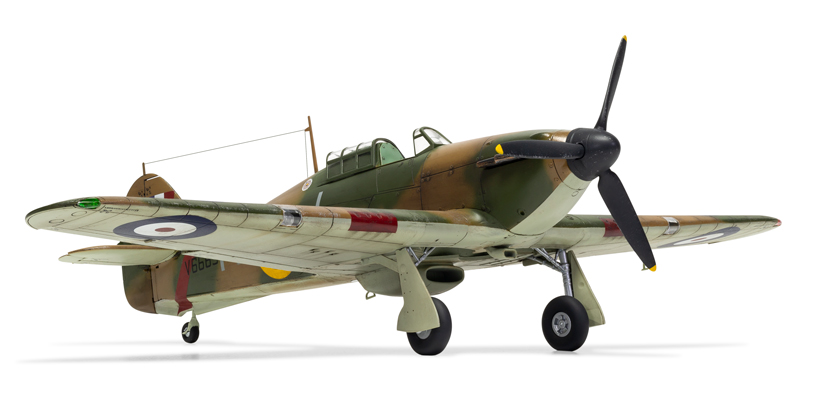
We are delighted to bring you pictures of the latest model build to emerge from Paramjit’s workbench, a stunning representation of an RAF No.303 (Polish) Squadron Hawker Hurricane Mk.I (A05127A)
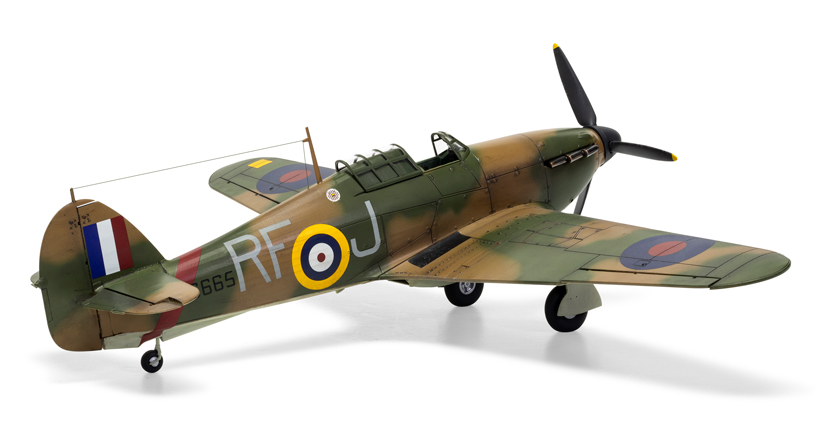
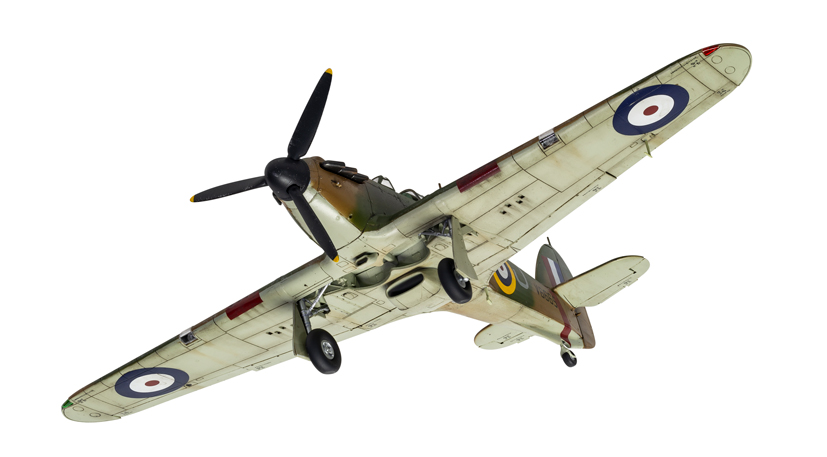
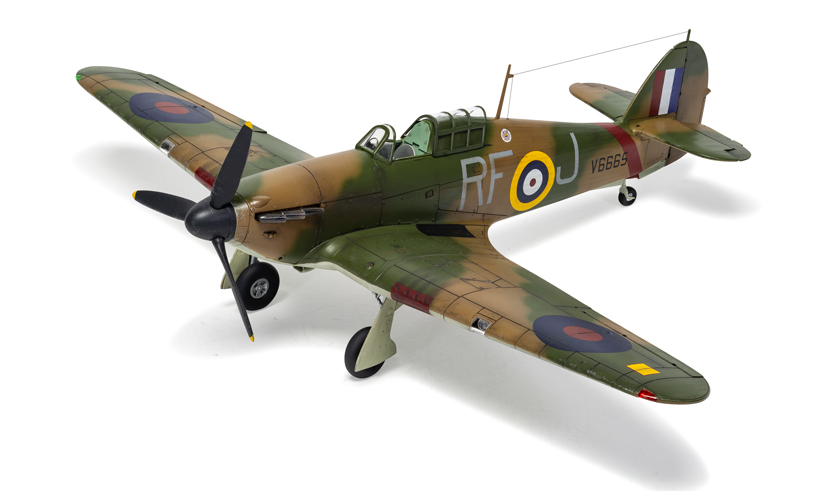
Perfectly timed to support the release of what will clearly be two of the most popular kit releases of the year, his latest dual build features Hawker Hurricane Mk.I A05127A which we looked at earlier, as well as Supermarine Spitfire Mk.I A05126A, which we featured in the 118th edition of Workbench and don’t they look magnificent. Both models have been finished in the lead scheme options included with each kit, schemes which are also featured on the magnificent box artwork which is now such an important feature of each new Airfix kit release. Most modellers will tell you that you can never have too many Spitfires and Hurricanes lined up as future build projects and the sight of Paramjit’s latest creations will probably ensure that both of these kits disappear from the shelves of UK model stores almost as soon as they arrive in stock – we will all have to be on the ball if we are going to get hold of one of these beauties.
Despite the fact that we have previously featured the scheme details associated with this latest 1/48th scale Spitfire release, the sight of Paramjit’s latest model build makes it worthwhile revisiting these details, particularly as many readers will undoubtedly be building an example over the coming months.
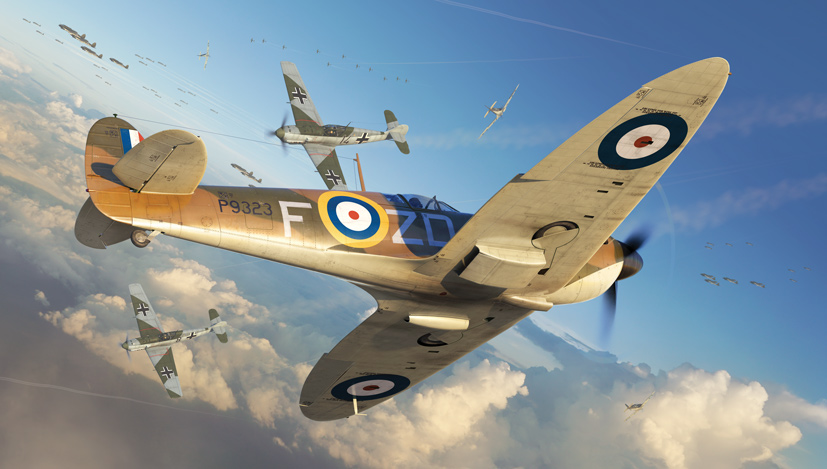
Although the Spitfire is often lorded as the hero of the Battle of Britain, the real heroes were the young men of Fighter Command who rose to meet the fearsome challenge of the Luftwaffe day after day during the summer of 1940. One such pilot, Sergeant Arthur W.P Spears, was the nephew of Great War air ace James McCudden VC and originally joined the Royal Air Force as an aircraft apprentice in 1932. Later applying for pilot training, he successfully completed his course and was initially posted to No.12 FTS, where he would go on to fly Hawker Harts and later, Avro Ansons.
In 1940, Spears converted to Bristol Blenheims and was posted to No.222 Squadron at Duxford. When his squadron exchanged their Blenhiems for Spitfires later the same year, Spears, like so many of his contemporaries, made his first flight in this powerful new fighting aeroplane after an evening studying the ‘Pilot’s Notes’, which were presented to all pilots attempting to tame the Spitfire.
On 30th August 1940, at the height of the Battle of Britain, Spears was shot down after engaging in combat with a large number of Messerschmitt Bf 109s over the Thames estuary – fortunately, he managed to bale out of his stricken aircraft, with Spitfire P9323 crashing at South Lees Farm, on the Isle of Sheppey, just seconds later. Making his way back to Hornchurch using public transport whilst the air battles raged above, Spears was soon back in the action.
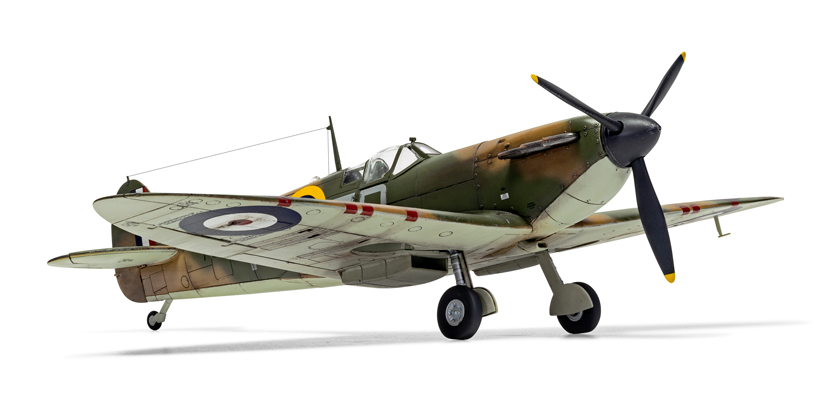
More modelling goodness from the hands of Airfix Product Designer Paramjit Sembhi, this time in the shape of Supermarine Spitfire Mk.I P9323 / ZD-F, flown by Sergeant Arthur William Peter Spears during the Battle of Britain
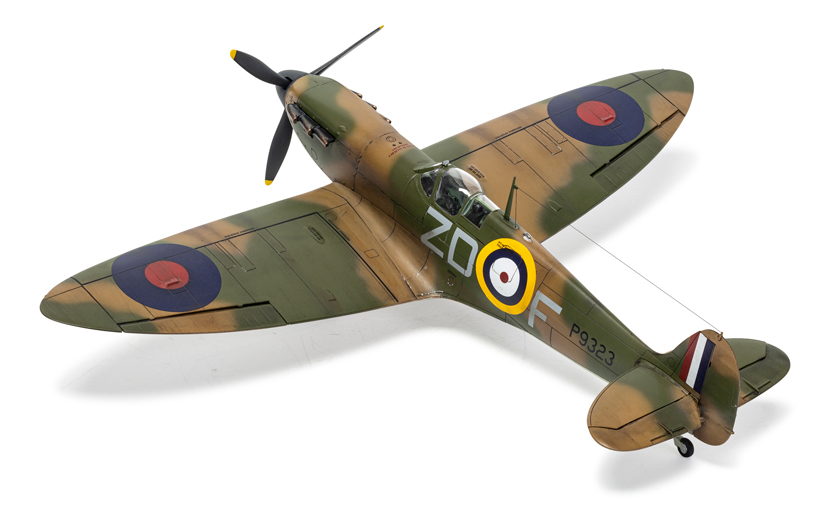
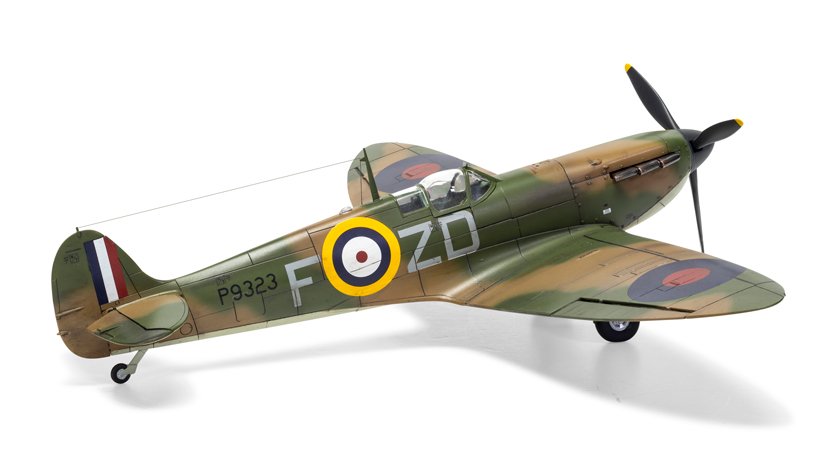
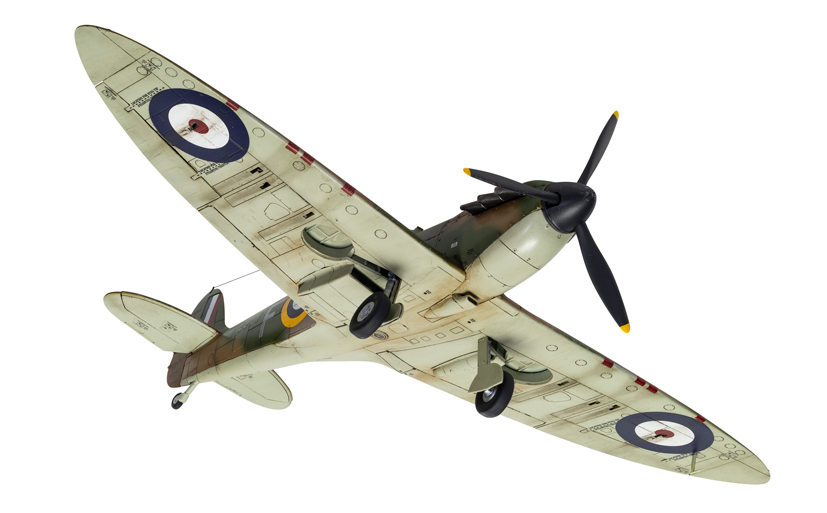
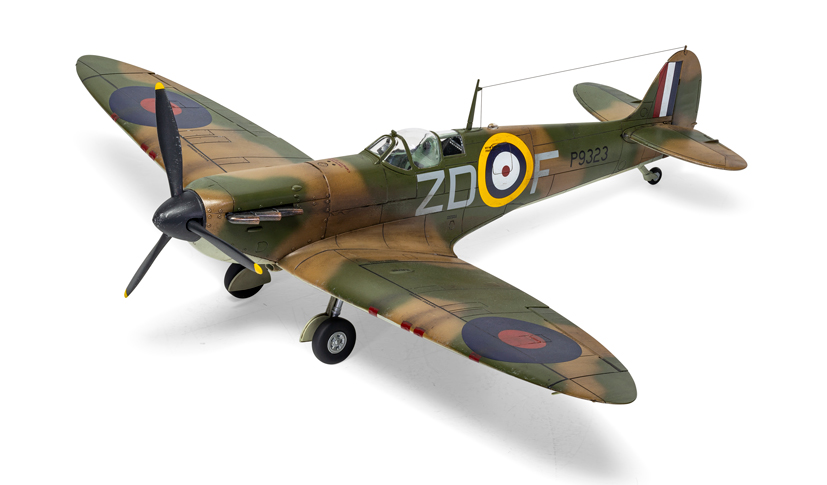
Highlighting the perils faced by Fighter Command pilots during and after the Battle of Britain and the courage displayed by each and every one of them, Spears would see regular contact with the Luftwaffe over the next few months and indeed would suffer at the hands of the feared Messerschmitt fighter once more. On 4th April 1941, was engaged in combat with more Bf 109 fighters over Kent, when his aircraft was once again shot down by his enemy. This time, he was unfortunate enough to have become the 58th victory for celebrated Luftwaffe ace Adolf Galland.
Despite regularly attracting the attentions of the Luftwaffe during WWII, Arthur W.P Spears survived the war and lived to the grand age of 82, no doubt with plenty of fascinating wartime stories to tell anyone who was lucky enough to be the recipient of them.
Thanks to Paramjit and his model making prowess, we are pleased to have been in a position to bring you exclusive pictures of his magnificent 1/48th scale Battle of Britain fighter pair, particularly as we know many of our readers will be looking forward to having a go at these kits following their imminent release.
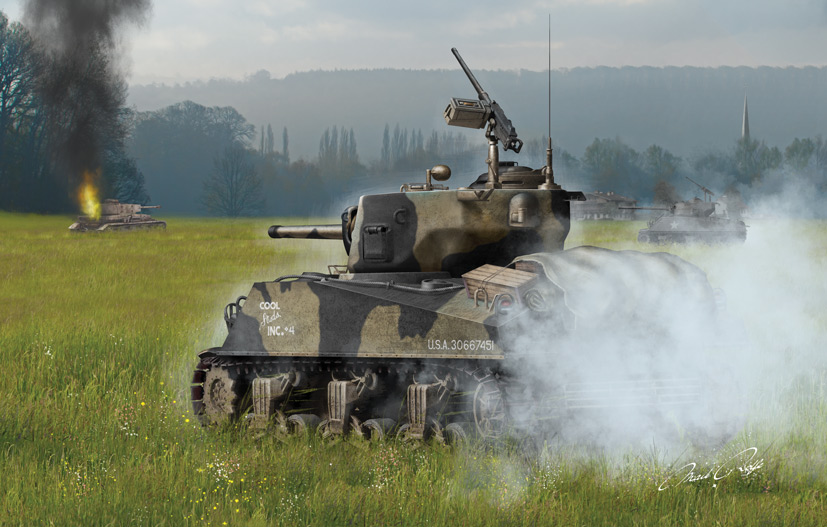
As one of the most important tanks of the Second World War, it is rather sobering to think that of the almost 50,000 M4 Sherman medium tanks which went on to flood the world’s battlefields, the first prototype machine was only produced in September 1941. Introduced into combat by the British Army at the Second Battle of El Alamein in October 1942, one of the many interesting facts about the Sherman’s design was that each tank was manufactured in the US and would therefore have to be shipped around the world to fight – in order to allow the tanks to be loaded and unloaded from ships effectively, each one was produced with a robust lifting ring at each corner of the tank. As most would be deployed overseas, this would also have an impact on the overall weight allowance for the Sherman, as dockside cranes around the world would need to be strong enough to lift them off the delivery ships.
Work on the M4A3(76) variant of the Sherman began in 1942, when the Ford Motor Company were asked to manufacture the medium tank powered by the 500 HP V8 engine they were developing. As this new engine was at that time untested, the M4A3 was initially restricted to service with US based training units, until all the anticipated ‘bugs’ could be ironed out, but by the summer of 1943, the tank was cleared for overseas service. They were so impressed with the reliability of the A3 that they decreed it should be reserved for combat use by US units only.
Almost as soon as these latest Shermans began to roll off the production lines, the feasibility of equipping the tank with a powerful 76mm gun began, however, the project initially stalled as there was no way they could shoe-horn the gun into the existing turret. Once a new, larger turret had been designed, the Sherman was immediately up-gunned to better combat the German heavy Panzers they were now facing in combat.
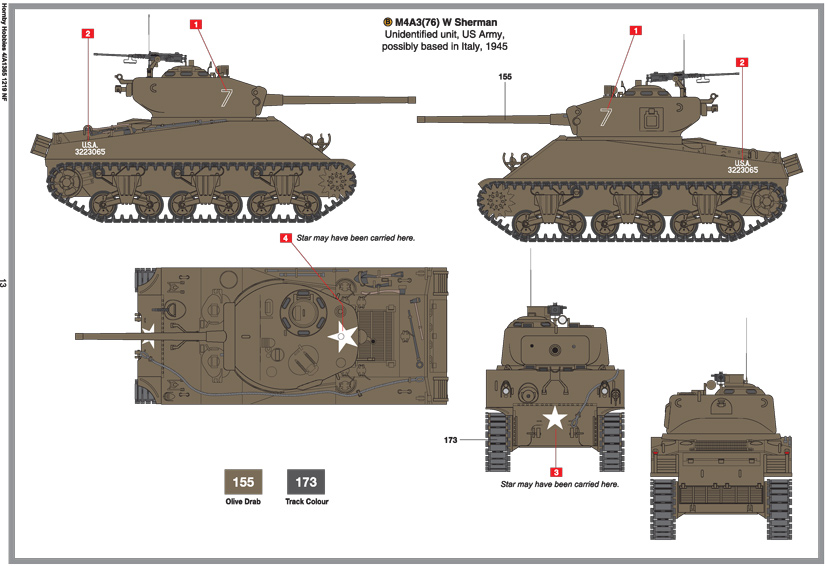
The B scheme included with this new Sherman kit marks a tank which operated in Italy during the latter stages of WWII. This variant of the Sherman was sent simultaneously to Italy and the invasion beaches of Normandy, following production
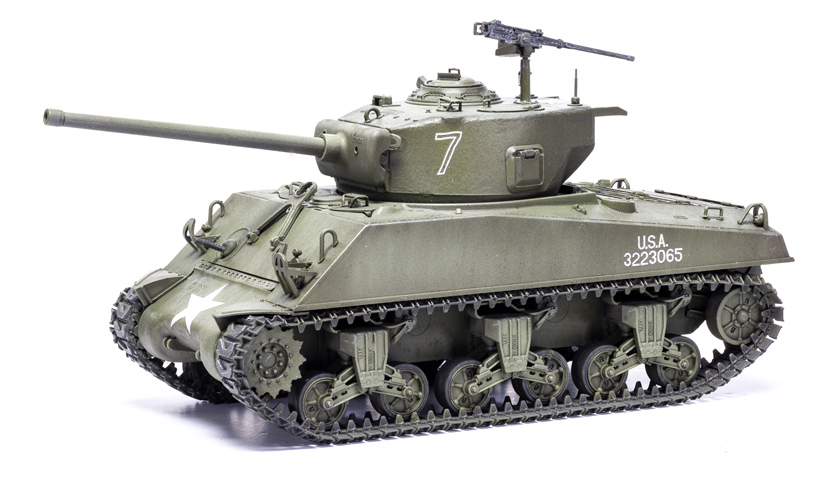
The ‘W’ included in the description of the M4A3(76)W variant indicates that these tanks were equipped with ‘Wet Stowage’ for their main gun ammunition. In order to allow tank crews a few extra seconds to evacuate the tank in the event of a shell strike, the ammunition was stored in liquid filled chambers and if hit, the liquid would seep out and hopefully buy the crew precious seconds before exploding or causing an internal fire. The development proved to be rather unpopular with crews, not only because it didn’t really work, but also because this system reduced the amount of ammunition these tanks could carry by between 10 and 12 shells. This meant they would have to conduct the potentially dangerous process of rearming in the combat zone more regularly.
Whilst the Ford engined Shermans were generally reserved for use by US Army units, it is thought that the combat debut of this variant is likely to have been made by elements of the French 2nd Armoured Division. Attached to the US Third Army, they received a handful of the very first examples of the tank to arrive in Northern Europe and quickly thrust them into combat. During the Battle of Paris, a French crew were credited with firing the first ‘Kill Shot’, as they took out a German Panther tank on the Place de la Concorde.
Like all variants of the Sherman, the tanks saw gradual improvement and modification with each new production batch and from the modellers perspective, it can be quite a challenge to definitively produce a 100% accurate representation of any Sherman which saw active service (tanks rolling off the production line are a different matter). When these new Ford engined Shermans were combined with the excellent Horizontal Volute Spring Suspension (HVSS), these were generally regarded as the ultimate operational variant of this famous tank.
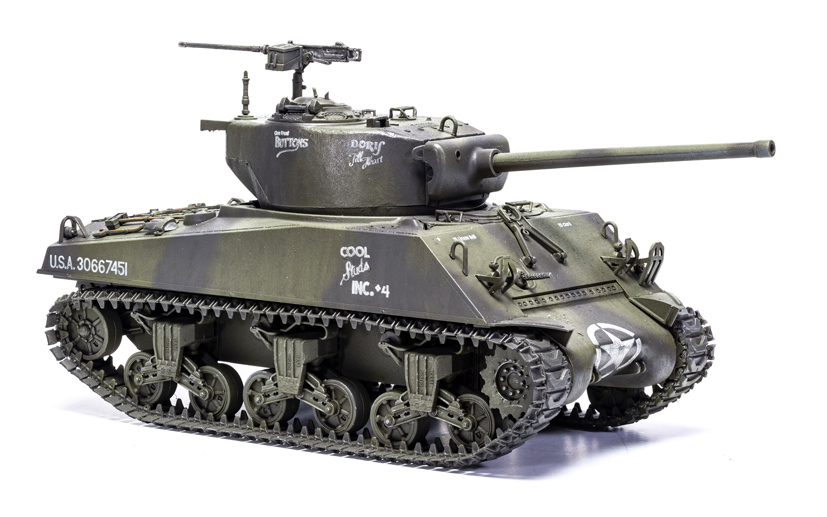
A beautifully built example of a late war Sherman M4A3(76)W operated by the 761st Tank Battalion ‘Black Panthers’ during the Battle of the Bulge
Manufacture of the Ford engined M4A3(76)W Shermans was taken over by Chrysler from March 1944 and the vast majority of the first vehicles they produced were designated for immediate shipment to Europe to support the D-Day landings. At first, these tanks would follow the usual Atlantic voyage route to arrive at British ports on the West Coast, but as far south as possible (with D-day in mind). They would then be transported to the invasion beaches by LSTs (Landing Ship Tank) until the temporary harbours were available and port facilities secured, when they would be shipped direct to France.
Newly manufactured Shermans would arrive in the UK and France covered in shipping sealant and would need to be prepared by Ordnance Motor Vehicle Distribution Companies. The sealant would be removed, as would any temporary disguising of national insignia and unit markings applied to the vehicle. The tanks were fuelled up and all guns and ammunition checked, prior to releasing the vehicle to its assigned unit – the logistics of war must have been truly astonishing during WWII.
Arriving in France at Omaha Beach in the days which followed the Normandy landings, the 761st Tank Battalion ‘Black Panthers’ were the first entirely African-American tank unit in the US Army and would go on to make a significant contribution to the Allied war effort as the Germans were pushed back towards their homeland. In a similar manner to the famous Tuskegee Airmen, the tank crews of the 761st were forced to overcome racial discrimination in order to serve their country, but did so with honour and fierce determination. They certainly lived up to their motto, which was ‘Come out fighting’.
As a replacement unit in George Patton’s Third Army, the 761st would never be too far away from the action and their effectiveness in carrying out what would prove to be extremely challenging battle orders earned them the reputation of being ‘Patton’s most effective unit’. Making history on 8th November 1944 when they became the first African-American tank unit to see combat in the US Army, they would quickly adapt to the savage fighting in Europe, often dislodging stubborn German resistance, allowing a stalled advance to continue forwards.
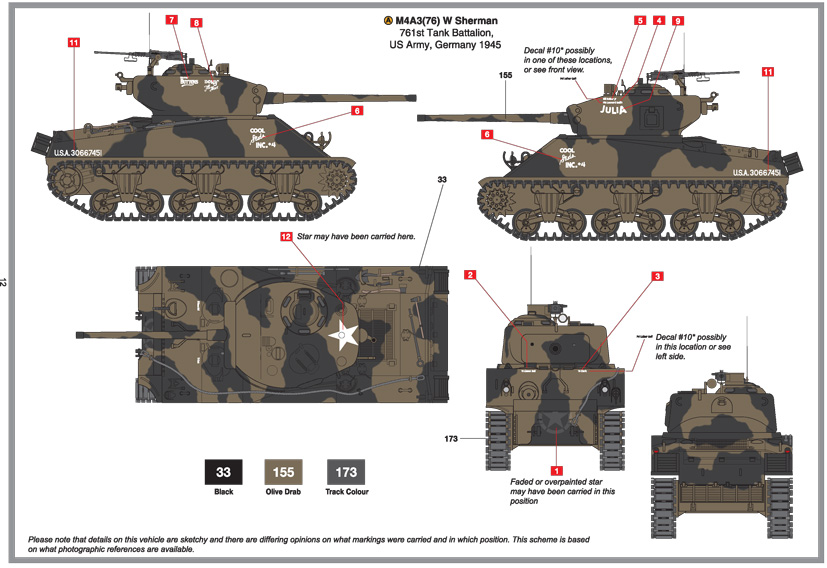
Taking part in the Battle of the Bulge, the 761st would prove instrumental in relieving the beleaguered 101st Airborne Division at Bastogne and as they pushed on towards the German border, would be responsible for liberating in excess of 30 previously occupied towns. Continuing their advance against retreating German units until the end of WWII, the unit did not receive the recognition it deserved until it was belatedly awarded a Presidential Unit Citation in 1978.
“Throughout its period of combat, the courageous and professional actions of the members of the ‘Black Panther’ battalion, coupled with their indomitable fighting spirit and devotion to duty, reflect great credit on the 761st Tank Battalion, the United States Army and this nation.”
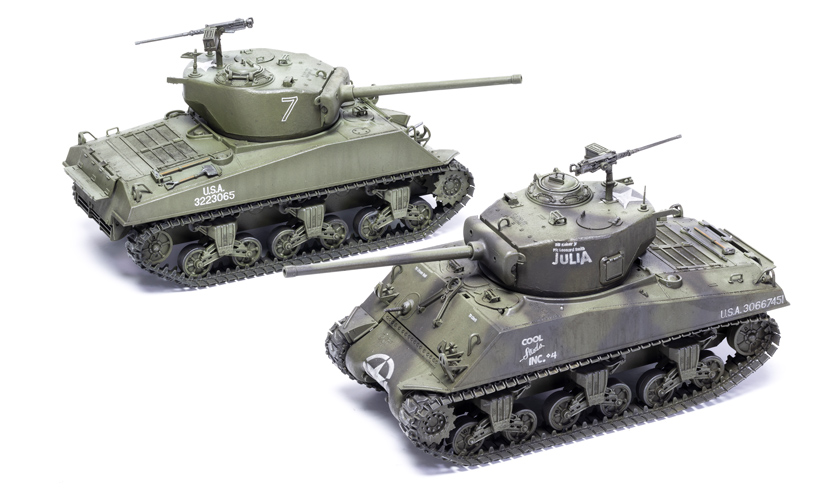
The Sherman modelled here is one of the 761st ‘Black Panther’ machines which were deployed during the final months of the Second World War, as the Allied advance took them into Germany itself. Adorned with several additional ‘unofficial’ markings on the hull and turret, this black and olive drab M4A3(76)W makes for a fascinating modelling subject and one which helps tell the inspiring story of the first African-American tank unit to see combat in the US Army.
This latest addition to our popular 1/35th scale Military Vehicle range is scheduled to arrive in model stores in the next couple of weeks.
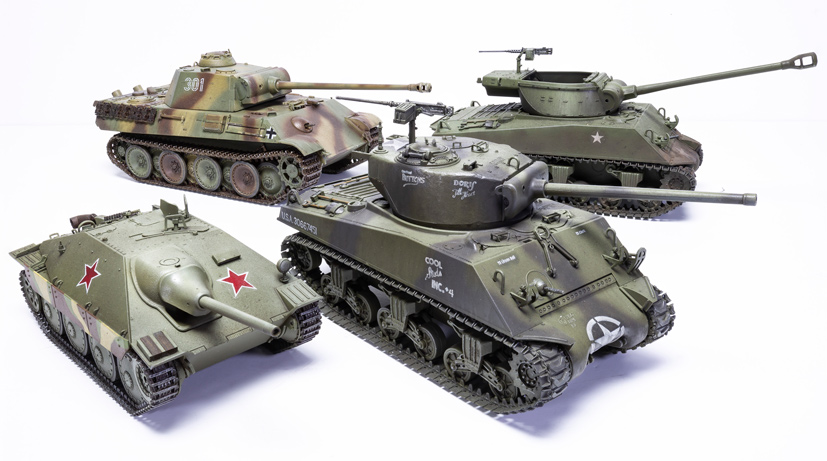
An armoured feast for sore eyes, we end this latest edition of Workbench with a real treat for military modellers, as we have a spectacular selection of 1/35th scale built tank models for your viewing pleasure
We would like to end this latest edition of Workbench in some style, whilst at the same time maintaining the theme of famous WWII military vehicles. The start of this year has been a little hectic from a blog perspective to say the least, with so much information to bring our readers that it has been quite a challenge to fit everything into respective editions. During that time and in support of the early year preview events and Toy Fairs, the Airfix team have commissioned the building of many models which make up the 2020 range, with further built samples also arriving a little late from models announced in last year’s range.
During a recent visit to Head Office and after a quick stroll around our impressive showroom, it was clear that several extremely appealing built models from the 1/35th scale Military Vehicle range were on display there, but had yet to feature within Workbench. As we know our readers love to see these built models, both to assist in selecting future build projects and to act as modelling inspiration, this was something we had to address. Thanks to our company photographer David, without whom our enjoyment of the Workbench blog would not be quite the same, we are now in a position to bring you something of a built model Armourfest treat, one which we hope you are going to enjoy.
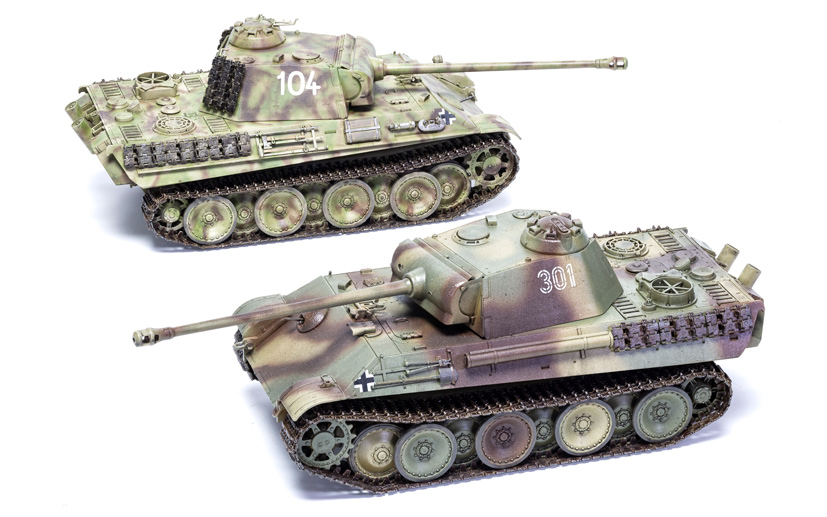
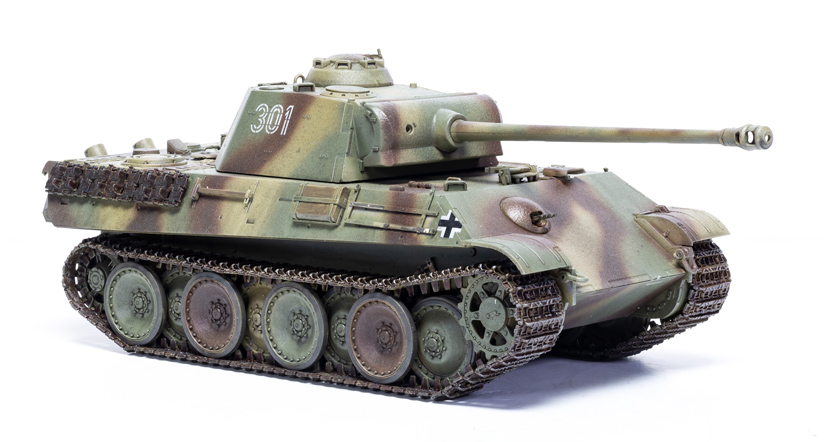
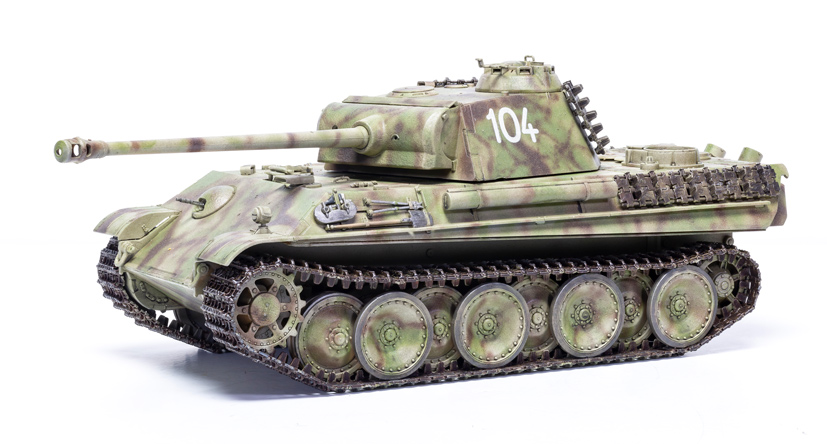
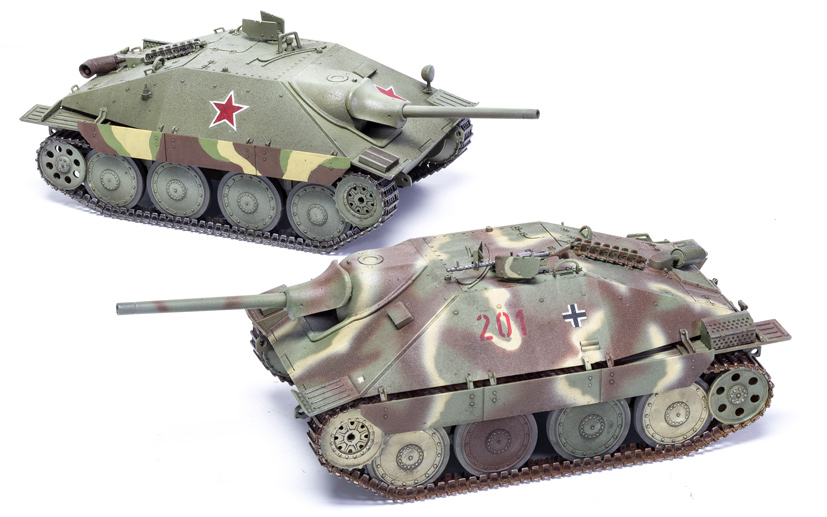
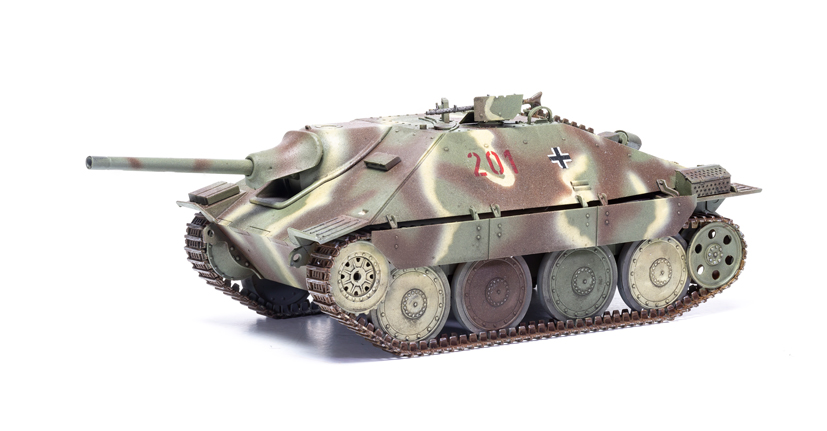
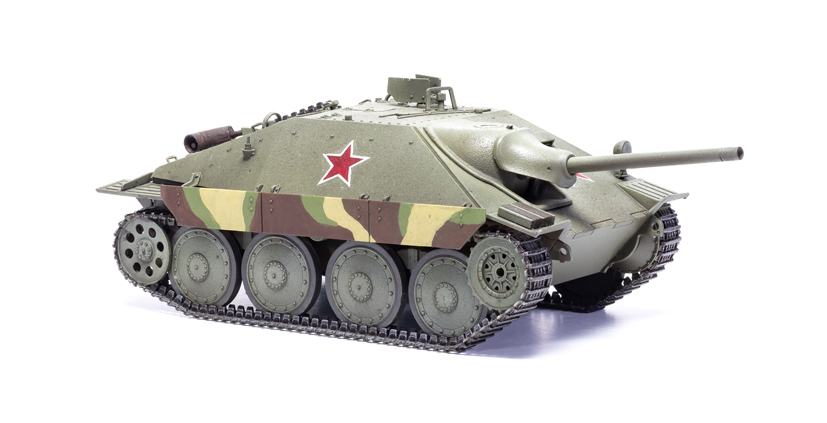
This first group of images show two examples of WWII German armour, but from completely different operational perspectives. Needing absolutely no introduction whatsoever, the mighty Sd.Kfz.171 Panzerkampfwagen V Panther may have been described as a medium tank by the Germans, but at 45 tons was very much a battlefield heavyweight. One of the finest tanks ever produced, the Panther was the perfect blend of firepower, speed, manoeuvrability and armament and was available in much greater numbers than the much vaunted Tiger tank.
At the opposite end of the armoured fighting vehicle spectrum, the Jagdpanzer 38(T) Hetzer was a particularly diminutive tank hunter which highlighted Germany’s dire need for military vehicles in the final months of WWII and how they were rather effective at adapting vehicles which were previously used in other roles. With its low profile, the ‘Baiter’ could hide in damaged buildings or in roadside foliage and would prove a nasty surprise for unwary tank commanders who encountered it. For the crew, fighting in the cramped interior of this machine must have been absolutely unbearable and if they were in territory which lacked the support of Wehrmacht troops, were extremely vulnerable to the actions of enemy infantry.
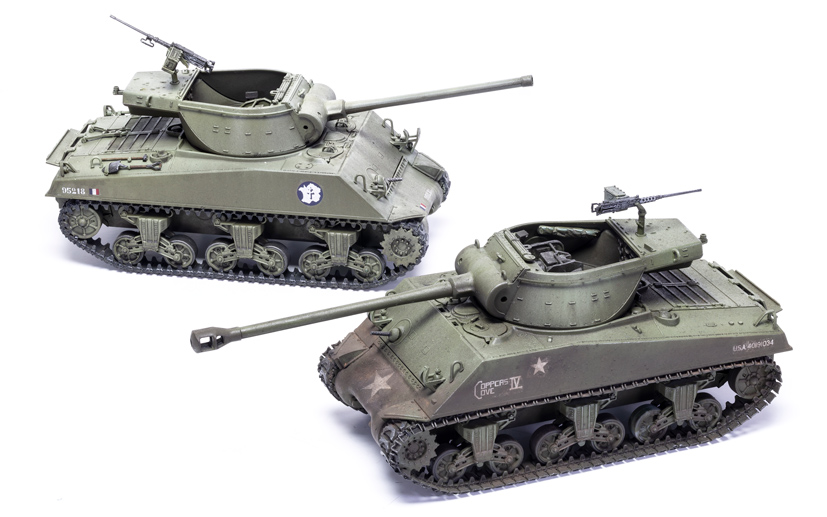
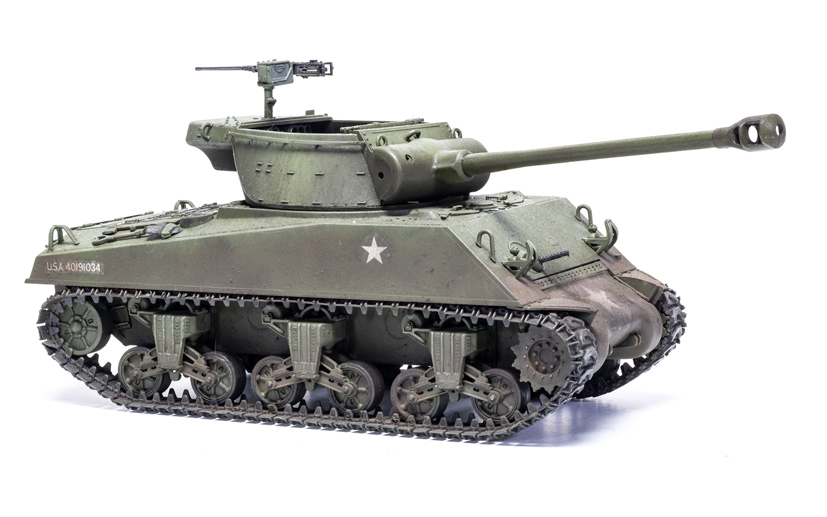
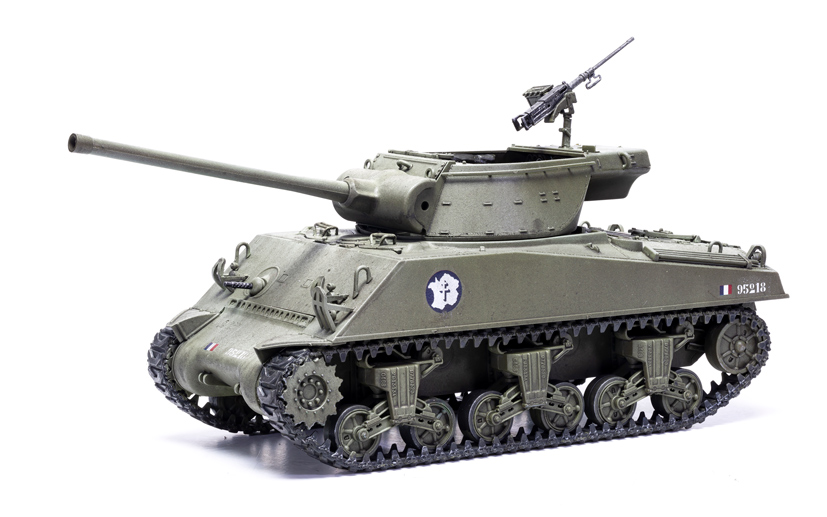
An Allied derivative of the tank hunter concept, the M36 Jackson (90mm Gun Motor Carriage, M36) could hardly have been more different from the Hetzer, as it probably stood twice the height of their diminutive opponent. A highly effective American tank destroyer from the final months of WWII, the M36 combined the tried and trusted chassis and drive train of the M4 Sherman with a powerful 90mm main gun and was developed specifically to hunt down the latest German Tiger and Panther heavy tanks. Unlike earlier tank destroyers, the M36 could engage German armour at distances which did not make it quite so vulnerable to enemy fire.
The final picture features the two Sherman M4A3(76)W schemes which will be included with the impending release of A1365, one of which is a Sherman of the famous 761st Tank Battalion ‘Black Panthers’. With each of the above built model images highlighting the appeal of this impressive range, it appears we are all going to have a difficult choice in selecting which model will be the first AFV project we intend to tackle in 2020.
We are afraid that’s all we have for you in this latest edition of Workbench, however, we will be back as usual in two weeks’ time with a further selection of Airfix modelling delights for your enjoyment. If you have any suggestions for subjects you would like to see covered in a future edition, please use this workbench@airfix.com link to contact us.
In between new editions of our blog, the Airfix conversation continues over on our Airfix Forum Worbench thread, with further discussions taking place on both the official Airfix Facebook page and the Airfix Twitter channel - please do get involved in the discussions and let us know what you think about Workbench.
Whenever you decide to visit, the Airfix website is always the place to be for all the latest model availability information, previous editions of our blog, a selection of modelling tips and much more.
The next edition of Workbench is due to be published on Friday 3rd April, when we will have more interesting features from the world of modelling.
On behalf of the entire Workbench team, thank you for your continued support our Airfix blog.
The Airfix Workbench Team
© Hornby Hobbies Ltd. All rights reserved.