
Welcome to this latest edition of our Workbench blog and all the news, updates and modelling exclusives from the fascinating world of Airfix.
Well, that turned out to be quite a start to the year! Over the past few days, we held our exclusive Spitfire: An icon in Airfix event at Duxford, in conjunction with our friends at the Imperial War Museum, unveiled a new 1/24th scale Spitfire Mk.IXc kit whilst we were there, then returning to the Airfix offices in time to announce the new 2022 model range the following day. Hopefully by now, most Workbench readers will have had an opportunity to inspect the new range and familiarise themselves with all the new models we have scheduled for release throughout the coming year, from exciting new tooling projects and recent releases benefitting from new parts, to the latest re-introductions to the Vintage Classics range we were looking at in the previous blog. If you have yet to do so, the best advice we can give you is to head for the Airfix website to enjoy a pleasant few minutes on a voyage of new model discovery, but if you would like us to give you a quick overview first, that’s exactly what we intend to do in this latest edition of our blog.
In addition to looking at some of the many highlights from within the 2022 Airfix model range, we will also be bringing you a series of images taken during our Duxford Spitfire: An icon in Airfix event last Sunday, as well as looking at some of the early pre-order front runners from the range. From next week, we will be reverting to our usual format of looking a little more closely at individual model projects form the new range and to uncovering the fascinating details behind the work of our product design team, as their latest scale kit masterpieces negotiate the various development stages on their way to eventual release. It’s going to be another extremely busy year, so let’s make a start straight away.
A CAD rendered image showing the new Gloster Meteor F.8 kit which will be joining the Airfix range in 2022.
Here at Airfix HQ, we realise that the return to work after a nice Christmas and New Year break can be quite a challenge for many, so we came up with a little something to try and ease that transition somewhat, particularly for those of us with modelling in our blood - the release of our latest extensive product range. The culmination of many months of work by every member of the Airfix Team and utilising the specialist skills of our on-line department, everything seemed to proceed without a hitch this year, something which has not always been the case at range launch. As scheduled, on Monday afternoon last, a new collection of Airfix delights was unleashed on an expectant modelling world and if our web stats are to be believed, tens of thousands of people from all over the world were waiting to see what we had to offer them over the coming twelve months.
Clearly, any collection of new tooling projects Airfix announce will usually delight some, whilst disappointing others, particularly as our designers are tasked with producing new kits to cover different subject matter and to satisfy specific areas of our extensive product range. That being said, each new project can only progress to the design stage once our hugely experienced team have assessed its merits and how it will take an important place in the continuing Airfix story - none of these decisions are taken lightly. Perhaps of even greater importance to modellers, this year’s range announcement is the confirmation of continued significant new tooling investment in the brand and consequently, some spectacular new kits for us all to look forward to.
We are delighted to confirm that the 2022 Airfix range is made up of around 50 new items, which includes our headline new tooling projects, recent introductions benefitting from additional parts, re-introductions which feature new schemes and decals and the return of some classic Airfix model kits. As our readers would expect, Workbench will endeavour to bring all the details behind these new models in future editions of the blog, following each project as they negotiate the various development stages towards final release and including our usual selection of exclusive updates and images. This will be backed up with the inclusion of designer interviews and features which look in some detail at how we bring our kits to market, and with so much new product activity to report on, this embarrassment of modelling riches means that we will have no shortage of content to bring you this year. With our new weekly production schedule in place, it’s going to be a busy and exciting year for us here at Airfix and we are looking forward to sharing it with you.
Adding a little classic styling to our new trio of Starter Set car kits, can any vehicle possibly claim to be in the same ‘looks league’ as the stunning Jaguar E-Type?
In the previous edition of Workbench, we looked at the many suggestions sent in by our readers regarding the kits from Airfix years past they would like to see reintroduced as part of our popular Vintage Classics range and it was interesting to note just how many people had a clear affection for the car kits we have manufactured over the years. This proved particularly interesting for the Airfix team, as we were just about to release three newly tooled car models into our strategically crucial Starter Set range. Beautifully designed kits which are big on quality and detail, but feature less parts than usual, these models are intended for the less experienced modeller, providing a quick and enjoyable build experience, where the result is a beautifully detailed representation of a truly eye-catching vehicle, one which you can be proud to display.
This new concept of starter set first appeared in our 2020 range, with the announcement of our new Spitfire, Hawk T.1, Tiger and Sherman tank kits, and following release, immediately proved to be a hit with modellers of all ages and abilities. Remaining faithful to the beautiful lines of the aircraft or vehicle on which they are based, the hope is that once several of these kits have been enjoyed by a modeller, they will be ready to progress to kits within our standard ranges, with a whole world of modelling enjoyment before them. The three newly tooled models added to this range are the Bugatti Chiron, the Pagani Huayra and the timeless supercar classic that is the Jaguar E-Type. Having already had the opportunity to inspect the prototype models of each new design, we can confirm that they all feature impressive levels of detail, with the spoked wheels of the E-Type being particularly noteworthy.
Once described by Enzo Ferrari as the most beautiful car ever made, the E-Type is as breath-taking now as it was when first released in 1961. Based on Jaguar’s Le Mans winning D-Type, the E-Type had racing DNA combined with extremely competitive pricing and a claimed 150mph top speed, this led to it quickly becoming a 1960’s icon. The earliest cars or series one as they have become known, portrayed by this kit, were produced between 1961 and 1967 with two different engines, a 3.8L and 4.2L. Over 22,000 E-Types were sold. Jaguar produced the E-type in various guises including a 2+2 coupe, the limited edition ‘Lightweight E-Type’ and the low drag coupe along with many other variants.
We look forward to bringing you plenty of development information from these new kits in the very near future. Before we leave the subject of new vehicle kits, the 2022 range also includes two new models in our Quickbuild range, both featuring the classic styling of the iconic Jeep brand. For those with a leaning towards real muscle vehicles, the Jeep Gladiator Overland will definitely appeal to you, however, if you prefer a new take on the classic Jeep ethos, perhaps the Quicksand Concept would be more your style. Both models are produced using the push together, no glue construction method they have made famous and will build into beautiful representations of the actual vehicles they were inspired by, to either take their place on a display shelf as a handsome model in its own right, or broken down to be built time and time again. There are hours of fun to be had with a Quickbuild kit.
An early box artwork reveal for Workbench readers, as we feature the beautiful new North American F-86F-40 Sabre announcement, a kit modification which will be of interest to many jet modellers.
The above title is a little disingenuous really, because even though they do feature new parts to allow alternative versions of these aircraft to be built, both kits were only released into the range relatively recently. Spitfire fans will be pleased to see that our 1/48th scale FR.Mk.XIV kit has been enhanced by the addition of a separate frame of parts, allowing the ground attack Spitfire F.XVIII variant of this famous aircraft to be modelled and moving on into the jet age, the Canadair Sabre F.4 tooling announced last year has again been further enhanced with new parts to allow the quite different North American F-86F-40 variant of the mighty Sabre to be modelled.
One of the most important aircraft of the early jet era, the North American F-86 Sabre was in many ways a jet powered version of the company’s hugely successful P-51D Mustang from WWII and an aircraft which made full use of captured German aerodynamic research material. Featuring a distinctive 35 degree wing sweep, the Sabre also incorporated three nose mounted .50 calibre machine guns positioned on either side of the aircraft’s nose, with this jet powered gunslinger sharing many design philosophies with its famous piston engined predecessor. On entering service with the U.S Air Force in 1949, the North American F-86 Sabre would have the distinction of not only being America’s first swept wing fighter, but also the fastest fighter aircraft in the world at that time, a true aviation classic.
A later development of the classic Sabre, the F-86F-40 variant was the ultimate day fighter version of this famous aircraft and featured a number of improvements which kept the Sabre at the forefront of world fighter technology. With a new engine giving the aircraft more power this variant re-introduced the leading edge slats to the ‘6-3’ wing area increase, enhancing the dogfighting capabilities of this famous fighter, whilst at the same time reducing the aircraft’s landing approach speed to a much more manageable 124 mph. These modifications proved so successful that many earlier variants of the Sabre were retrospectively upgraded to include these advancements.
During the Korean War, the Sabre posted an impressive victory to loss ratio of 10:1 and helped 40 US pilots to achieve the coveted status of air ‘Ace’ during the conflict.
HMS Fearless was a popular suggestion when we recently asked readers to nominate which models they would like to see joining the Vintage Classics range.
We found it really interesting when collating all the Vintage Classics suggestions you sent us recently, firstly because of the sheer size of the response we were lucky enough to receive and secondly, by the number of suggested kit we knew were ready to take their place in the new 2022 range just a week or so later. By now, you will have probably all seen which kits will be joining this popular range over the next twelve months and will have noticed that save for a couple of exceptions, we intentionally kept clear of hinting at any of the impending additions, however, we can confirm that every new addition receive plenty of nomination support during this exercise.
We were left in absolutely no doubt that our back kit catalogue of scale warships is fondly regarded by a large section of the modelling community and they will no doubt be pleased to see the re-introduction of our HMS Fearless kit, complete with its famous and hugely impressive box artwork. One of the most famous British ships of the post war period, HMS Fearless was a modern Amphibious Assault Ship known in naval terms as an LPD (Landing Platform Dock), a modern development of the vessels which proved so important during the D-Day landings towards the end of the Second World War. The first purpose built ship of her type to be used by the Royal Navy, Fearless also had the distinction of being the last steam powered surface ship supplied to the force.
Fearless and her sister ship HMS Intrepid provided Britain and the Royal Navy with an incredibly flexible and highly mobile assault force, able to replenish at sea and therefore capable of steaming to military hotspots anywhere in the world. Her internal vehicle decks could carry 400 troops and their equipment, in addition to up to fifteen Challenger tanks, but this could be increased to 700 troops if no tanks were carried. The stern of the ship could be submerged to allow the operation of four LCU landing craft, delivering troops and vehicles to the landing beaches quickly and effectively, immediately returning to reinforce the beachhead with more troops. A large flight deck increased the effectiveness of the ship still further, with helicopters usually up to the size of a Sea King further enhancing the flexibility of the ship’s delivery capabilities.
During the Falklands War, HMS Fearless played a significant role as part of the British Naval Task Force, acting as a command ship for the operation, with her Bofors guns claiming at least two Argentine Air Force attack aircraft destroyed during the conflict. Following the surrender of Argentine forces on the Islands, Fearless played host to a number of high ranking Argentine Army officers, underlining the importance of her role.
One of the front runners in our recent poll, the de Havilland Canada Beaver will be a popular addition to the latest Vintage Classics range.
The 2022 Vintage Classics range can actually boast the re-introduction of no fewer than thirteen classic kits, including two figure sets, two tanks, two warships and seven aircraft, including the gargantuan Harrier GR.1 in 1/24th scale and the robust de Havilland Canada Beaver, another kit which featured prominently during our recent poll. One of the most rugged aircraft ever built, the DHC Beaver was designed to operate in the vast and often inhospitable expanses of the Canadian north and was able to fly into areas where other aircraft simply could not go. With the ability to operate using wheels, skis or floats, the Beaver possessed outstanding STOL capabilities and was specifically designed around the requirements of bush pilots working in these challenging conditions. Also described in many aviation sources as the safest aircraft ever built, the Beaver was also used by many air arms across the world, including Britain’s Army Air Corps, who operated 46 of these magnificent aircraft. They were used to great effect as reconnaissance/intelligence gathering aircraft in Northern Ireland during the 1970s and 80s.
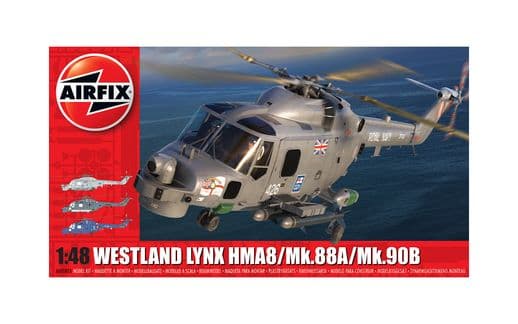
Rotary modellers will be delighted to see the return of the Westland Navy Lynx in the impressive 1/48th scale.
For obvious financial reasons, most Workbench readers will appreciate that every successive Airfix kit range will mainly consist of models which have been released previously, some which are still available from the previous year’s range, with others introduced once more featuring new decal scheme options. There are a number of kits which fall into the ‘new schemes’ category this year, including the 1/72nd scale Spitfire F Mk.22 and Channel Dash Fairey Swordfish in the same scale, but one re-introduced kit which already appears to be commanding significant pre-order attention is the welcome return of the 1/48th scale Westland Navy Lynx, a stunningly impressive kit.
The Westland Lynx is a British multi-role helicopter which haw seen service in both land based army forms, as well as ship based naval variants. Entering service in 1977, the Lynx has since seen many upgrades and improvements throughout its service history. The Mk.8 naval variant entered service with the Royal Navy in the early 1990s and has since gone on to provide them with an excellent maritime attack helicopter, performing well in the anti- submarine role as well as search and rescue and more recently anti-piracy operations off the coast of Somalia. Ferociously armed with missiles, depth charges and a beam mounted heavy machine gun, the Lynx is a formidable machine and is more than capable of taking on the best of the world’s surface vessels as well as any potential underwater threat.
Building into a really impressive kit, the re-introduction of the Navy Lynx will see modellers presented with three colourful and attractive schemes in which to consider finishing their helicopter, from a classic Fleet Air Arm machine, to a real stunner from the Royal Danish Navy. It will be so nice to have rotary kit subject matter in this popular scale once again.
With so many impressive new models to choose from, our workstations are going to be rather crowded over the coming twelve months. Our new 1/48th scale Avro Anson looks like being a spectacular addition to the range.
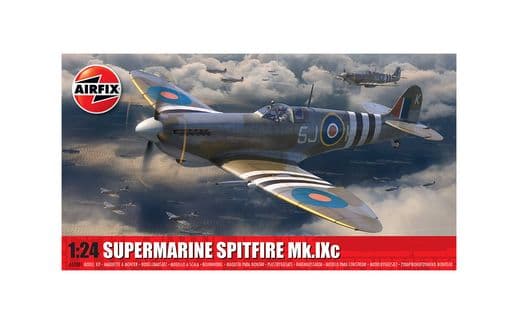
Okay, we have skirted around the main event for long enough now, so let’s get on to the subject which we know commands the most reader attention following the launch of any new range, our new aircraft and military vehicle tooling announcements for the coming year. Representing another significant year of investment in the Airfix brand, in addition to the three vehicle kits already covered, we also have four new aircraft kits joining the range in 2022, in addition to a further three new military vehicle toolings in our 1/35th scale range. In 1/72nd scale, we can look forward to the arrival of the Gloster Meteor F.8, a later development of the only British jet fighter to see operational service during the Second World War and a thoroughbred early jet design if ever their was on. In contrast to this, our historic 1/24th scale ‘Superkit’ range can now boast the inclusion of an impressive new Supermarine Spitfire Mk.IXc, but we will have more on this kit a little later.
Moving on to 1/48th scale and we have two absolute crackers to get excited about, both worthy of headlining any range launch in any normal year, but as you can see, this is no normal year for new tooling announcements. An aircraft which was a firm favourite with modellers following its initial Airfix release as a 1/72nd scale kit back in 1962, the Avro Anson may not be one of the most widely recognised British aircraft of WWII, but it was one which was produced in large numbers and performed numerous vital roles throughout the wartime years. The original 1/72nd scale kit was an impressively rotund model and one which many of us will have fond memories of building, so can you imagine how appealing the same aircraft will be in the larger 1/48th scale, after being designed using all the latest industry advancements? This model will immediately shoot to the top of many people’s build schedules for later in the year and will look absolutely magnificent once completed - we really can’t wait to follow the development of this beauty.
Highly detailed and including plenty of build options, the new 1/48th scale Blackburn Buccaneer S.2 is a real heavyweight of a model kit and one which will make a fitting centrepiece for any model display.
Also coming in 1/48th scale, the Blackburn Buccaneer S.2 will undoubtedly be a range highlight for many modellers and has to be considered as something of a modelling mike drop moment. We don’t think anyone saw this one coming and we are really excited to see what people think of this significant new model, once the first kits start arriving on workstations later in the year. Featuring almost 300 parts, this is a beast of a model kit, one which includes masses if impressive detail and comes complete with many build options and weapons configurations. Following the successful release of our 1/72nd scale Buccaneer kit in 2019, we overheard many happy modellers saying, ‘Wouldn’t it look spectacular in 1/48th scale’ and we thought why not!
A mighty naval strike aircraft which can trace its origins back to Britain’s response to a massive naval expansion programme by the Soviet Navy in the 1950s and the introduction of their Sverdlov Class Cruisers, the Blackburn Buccaneer was designed to have exceptional low altitude performance and the ability to effectively neutralise this new naval threat. Required to operate from the relatively confined space aboard one of Britain’s aircraft carriers, this subsonic strike jet was the most capable aircraft of its kind in the world and a real triumph for Britain’s aviation industry - it also happened to be the heaviest aircraft ever operated by the Royal Navy. In order to allow its effective operation at sea, the Buccaneers design not only included the ability to fold its wings, but also the nose (radar housing) and rear speed brake could be folded back and split open respectively, allowing for more effective carrier stowage, whilst maintaining the aerodynamic integrity of the aircraft. Entering Royal Navy service in July 1962, there were no two seat trainer versions of the Buccaneer, so even though the pilot would have had the benefit of several flights as a back seat observer in the new aircraft, his first flight as pilot would therefore be his Buccaneer solo. Thankfully, the Blackburn designers included many hi-tech automated features in the Buccaneer’s roomy cockpit, all of which were intended to reduce pilot workload.
There is something aviation enthusiasts find particularly fascinating about the operation of aircraft at sea and the intrepid aviators who flew aeroplanes from the heaving decks of aircraft carriers under steam, particularly when aviation entered the jet age. The unforgiving nature of these operations dictated that naval aircraft had to be extremely tough, in addition to being capable of carrying out the mission for which they were required, attributes the Blackburn Buccaneer possessed in abundance. The introduction of the S.2 variant of the aircraft in late 1965 saw a major upgrade of the Buccaneer’s capabilities, but centred around the adoption of a new powerplant, the famous Rolls Royce Spey turbofan. Possessing greater thrust and increased range, the Buccaneer S.2 was an even more capable naval strike aircraft and one which must have struck fear into the hearts of every Soviet naval commander. With its increased power, the S.2 was now able to land back on its home carrier with one engine shut down if required, but still having enough thrust to safely go around again, should the aircraft fail to catch the arrestor hook.
The Buccaneers of No.800 Naval Air Squadron were famously involved in the destruction of the stricken oil tanker Torrey Canyon, off Land’s End in March 1967, as the government attempted to avert an environmental catastrophe by breaking open the vessel and burning its flammable cargo. Operating from RAF Brawdy, eight Buccaneers from No.800 NAS dropped 42,000 lbs of high explosive bombs on the tanker, achieving an impressive 75% success rate.
Diminutive in profile, but undoubtedly one of the most famous tank designs in the history of warfare, the Panzer III will be a welcome addition to our ever growing 1/35th scale Military Vehicle range.
Moving on to our 1/35th scale Military Vehicle range, the three new models added this year all saw service with the German Military during the Second World War, with two being specialist adaptations of the Panzer IV chassis and the other one of the most famous tank designs in the history of warfare. Both the Sturmpanzer IV Brummbär and Stug IV Sd.Kfz.167 used the existing Panzer IV production lines to develop mobile assault guns to support Wehrmacht operations, with the Brummbär having the job of dealing with heavily fortified enemy positions.
Of more traditional design the Panzer III is a classic tank, one which we are all used to seeing on wartime footage, particularly during the early stages of WWII. The Panzer III was in actual fact only available in relatively small numbers at the time of the German invasion of Poland, with around 180 tanks supplementing the more numerous, faster and lighter Panzer I and II tanks. Despite the popular misconception that Germany began the war having placed huge investment in tank production, much of the early burden of mechanized Blitzkrieg was born by smaller, lighter tanks and enemy machines captured and pressed into Wehrmacht service.
The Panzer III Ausf (model) J was a later production development of this famous tank and one which represented quite an advancement over earlier models. A slightly redesigned hull allowed for the addition of increased armour protection and a new gun mantlet facilitated the installation of the more powerful 50 mm KwK 38 L42 gun, although these modifications did take far too long in development. By the time this variant of Panzer III entered service with Panzer Divisions on the Eastern Front, they were struggling to match the heavily armed Soviet KV-1 and T-34 tanks they were facing, and in addition to this, the larger ammunition used by the new gun reduced the internal stowage capacity from 90 to 84 rounds. Although the Ausf. J was the most heavily produced variant of this famous tank, by 1943, the Panzer III was outclassed on the battlefield and not produced as a tank any more, although the main chassis was still used in the production of the excellent Sturmgeschütz III assault gun/tank destroyers.
These three new tooling additions to the range come in addition to the new Austin K2/Y Ambulance we have yet to welcome to the range, so it could be argued that 2022 will see the addition of four appealing new tooling projects to our 1/35th scale Military Vehicle range. We hope to be in a position to bring you a K2/Y update in the very near future.
Delegates at last Sunday’s Spitfire: An icon in Airfix event at Duxford were the unexpected participants in the launch of a spectacular new 1/24th scale Supermarine Spitfire Mk.IXc.
Airfix modelling enthusiasts had something of a pre-range launch surprise last Sunday, as an unexpected feature of our Spitfire: An icon in Airfix event at IWM Duxford saw the unveiling of a spectacular new model. The event was timed to coincide with the museum’s spectacular Spitfire: Evolution of an icon exhibition and as delegates at our sold out event settled down to enjoy talks by our Head of Brand and his product design colleagues, they soon found out that they were actually also going to be part of a significant new model announcement. Before our lead researcher and one of our senior product designers enthralled delegates with details of how they immortalise aircraft and vehicles into the historic Airfix range of model kits, our new 1/24th scale Spitfire Mk.IXc was placed on the display table to great excitement.
As everyone grabbed a picture or two of the impressive new model, the Airfix website and official social media channels were all updated to carry news of the announcement and whilst the rest of us settled in to hear from our research and design teams, the Spitfire pre-orders started to flood in. Also serving to increase excitement for the following day’s range announcement, it was somehow fitting that this significant announcement for our new Spitfire was taking place at the spiritual home of the Spitfire, the airfield were the RAF took delivery of their first example and a venue which has become synonymous with the post war restoration and display of Britain’s most famous aircraft.
Any modeller will be fully aware that Airfix and the Spitfire also enjoy an extremely close association, with the first aircraft kit we ever released back in 1955 being an example of the Spitfire, a kit which proved to be the first of many examples across various scales. This latest kit is without doubt our most accurate and most detailed representation of this magnificent aircraft and the culmination of almost eighteen months of concerted effort by our designer Chris Joy, the man who was also responsible for bringing us the Hellcat and more recently, the new Vulcan. We look forward to speaking with Chris in a future edition of Workbench, where we can find out all the triumphs and challenges he faced whilst tackling this aviation icon.
Holding modelling court, Airfix Head of Brand Dale Luckhurst addresses the audience in the IWM Duxford lecture theatre, prior to unveiling the new Airfix 1/24th scale Spitfire Mk.IXc.
That’s where we are going to leave this 2022 range launch overview edition of Workbench and end by simply imploring readers to head for the Airfix website and discover the range in a little more detail for yourselves, particularly if you have yet to do so. As you would expect, all the new tooling announcement have been attracting significant pre-ordering activity, with the new Spitfire leading the way with many hundreds of orders already placed on-line. It’s shaping up to be a very exciting year for us here at Airfix and we look forward to keeping our readers fully informed with all the latest developments, through the medium of our blog.
Thank you so much for joining us for this latest range launch edition of Workbench - we will be back as usual next Friday with more modelling news and exclusive images from the wonderful world of Airfix. If you have any comments regarding our blog or would like to suggest a subject to be covered in a future edition, please do drop us a quick line at our usual workbench@airfix.com address. It would be great to hear from you.
To catch up with all the latest Airfix news, please check the Airfix Forum or our various official social media sites, or head for the Airfix website.
Thank you for continuing to support our Airfix Workbench blog.