We would like to welcome all our readers to this latest edition of Airfix Workbench, your regular behind the scenes look at the fascinating world of Airfix modelling. In our previous edition, we devoted the majority of the blog to providing a comprehensive project update on the new 1/72nd scale McDonnell Douglas Phantom FG.1 tooling and we are pleased that so many of you found this interesting. We will be following a similar format in this latest edition, providing you with the very latest information from another new 2017 tooling, this time in the larger 1/48th scale. No less iconic than the Phantom but representing an earlier era of flight, the subject of this 53rd edition of Workbench is the magnificent Mustang. Our update will include confirmation of the scheme options to be included in the kit, a look at the beautiful box artwork which will surely serve as inspiration for many a build project over the coming months and exclusive pictures featuring a sample model build of this highly detailed new kit. Without further delay, let’s begin by looking at why the Mustang continues to be such a source of fascination for both modellers and enthusiasts.
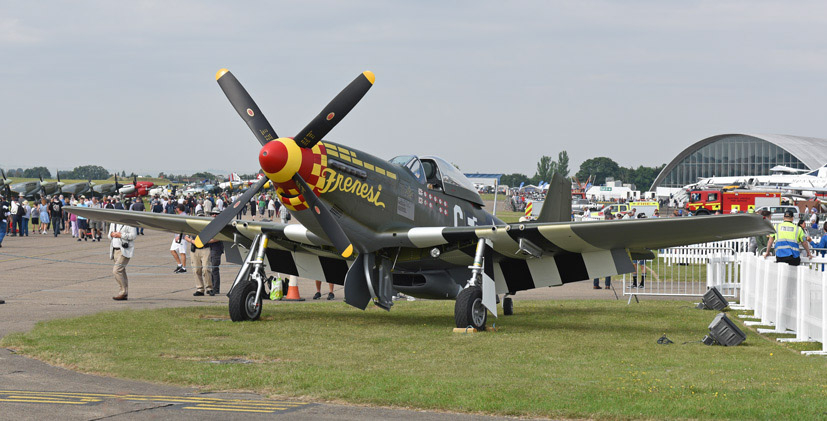
Surely one of the most attractive fighters of the Second World War
The fascinating story of the North American Mustang is a combination of American design expertise, a pressing British requirement and German organisation. This strange combination of factors resulted in the production of arguably the finest fighter aircraft to ever enter combat and one which proved decisive in the outcome of the Second World War. Desperate to obtain more fighter aircraft with which to take on the Luftwaffe, Britain approached North American Aviation to build Curtiss P-40 fighters for them under licence, as the Curtiss factory was already running at maximum capacity. Convinced he could do better (but without much substance behind the claim), the president of the company James H Kindelberger said he could develop a superior fighter to the P-40, in around the same time it would take the company to tool up to build the Curtiss fighters. In a move that showed surprising faith in North American Aviation, the British agreed and work on the new fighter started straight away.
The German connection to this story came when the then North American Aviation President James Kindelberger visited the country in 1938, where he was given the opportunity to tour both the Heinkel and Messerschmitt manufacturing plants and was extremely impressed by their level of organisation. His observations during these visits were important in ensuring the North American production lines were extremely efficient and ultimately resulted in the prototype aircraft being ready just 102 days after the British contract was signed. The early aircraft possessed many exceptional qualities, but were powered by the Allison V-1710 engine which gave indifferent performance at altitudes above 15,000 and saw the RAF use the aircraft as a fighter-bomber and reconnaissance aircraft - what they really needed was a fighter that could take on the Luftwaffe. The decision to install a Rolls Royce Merlin engine in the Mustang proved to be a revelation and unleased the true potential of this magnificent aircraft. Significantly, the Allies now had a fighter that could make a real difference.
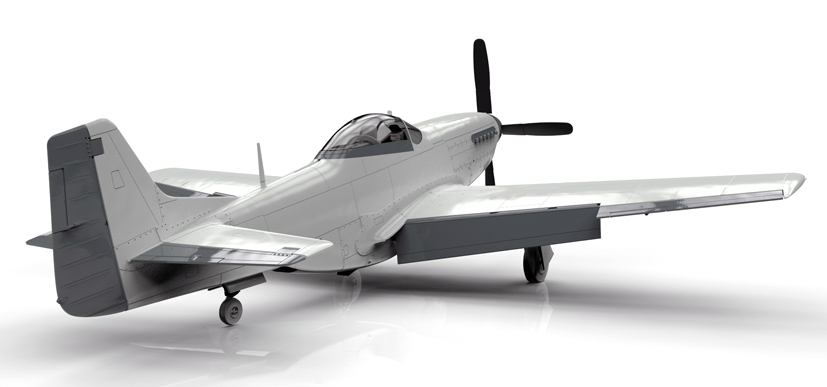
One of the computer rendered 3D images from the new P-51D Mustang project
One of the key areas where the new Mustang fighters made an instant impact on the air war was protecting the USAAF bomber streams as they headed for their targets deep into Germany. Existing P-47 and P-38 fighters could only support the bombers for part of the mission when attacking the furthest German targets, even with the addition of the disposable fuel tanks which made such a significant difference to their range performance. The Luftwaffe were fully aware of these limitations and would delay their attacks until the vulnerable bombers were on their own, wreaking devastation on the formations and claiming the lives of many American airmen. The Mustang changed all this and for the first time, the bombers could rely on fighter cover all the way to and from their targets. Perhaps even more important than this, as more Mustangs became available, they not only provided protected the bombers, they were released to go on the offensive and began hunting for the Luftwaffe, destroying large numbers of enemy aircraft both in the air and on the ground.
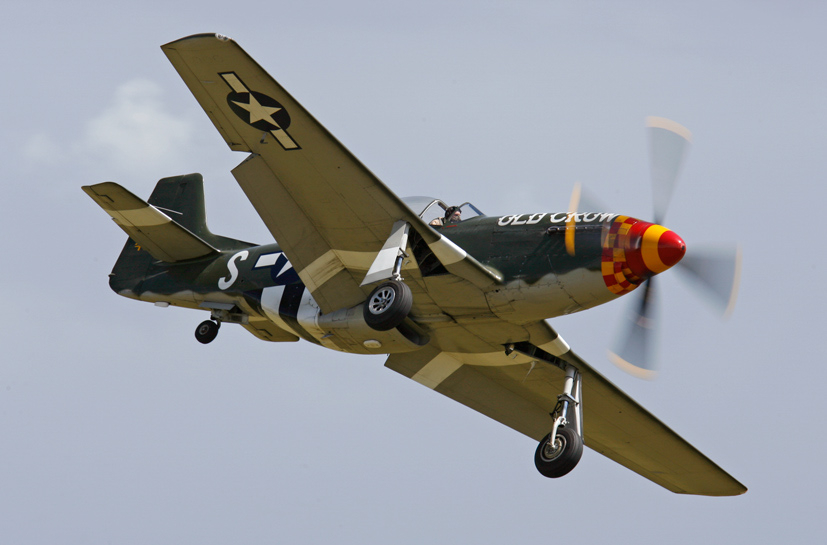
A restored Mustang making a classic curved approach to land
Clearly, as one of the most significant aircraft of the Second World War, the Mustang was always destined to become a popular subject with modellers and enthusiasts, but it is interesting to consider why the passage of time has only served to strengthen this fascination. Undoubtedly, the Mustang is an extremely handsome aeroplane and its looks will certainly have contributed to its popularity, especially as some of the units who operated them embellished their aircraft with distinctive artwork and names. It could also be that the arrival of the Mustang coincided with a discernible shift in the fortunes of war, with the Allied forces moving very much on to the offensive. It was also around this time that more service personnel began to document their endeavours photographically, including much more use of colour technology – these images have inspired and enthralled in the years since the end of WWII and aided both the historian and the modeller to accurately represent these aircraft. Ultimately though, it could just be the effectiveness of this superb aircraft and the brave men who flew them in combat, many miles from their home bases. They needed to have complete faith in their aircraft, not only because they were operating deep into enemy territory, but they were also engaging the Luftwaffe in their own back garden, where they would clearly be able to mount multiple defensive sorties against the Allies and should they have to bail out, would have the security of being over home soil.
Perhaps the simple answer to the Mustang’s enduring popularity is the fact that because it appeared relatively late in the war and was quite an advanced aeroplane, many aircraft ended up on the civil register after WWII and were regular performers at Airshows in Europe and the US. Indeed, if we are being honest with ourselves, many of us have probably dreamt of winning the lottery and the possibility of owning our own Warbird – even if our favourite aircraft is a Spitfire, Bf 109 or Corsair, the Mustang just seems like the more practical option for the novice Warbird owner (if only!). One thing is certain, everyone loves a Mustang, even if most of us have to make do with a scale representation of this classic fighter.
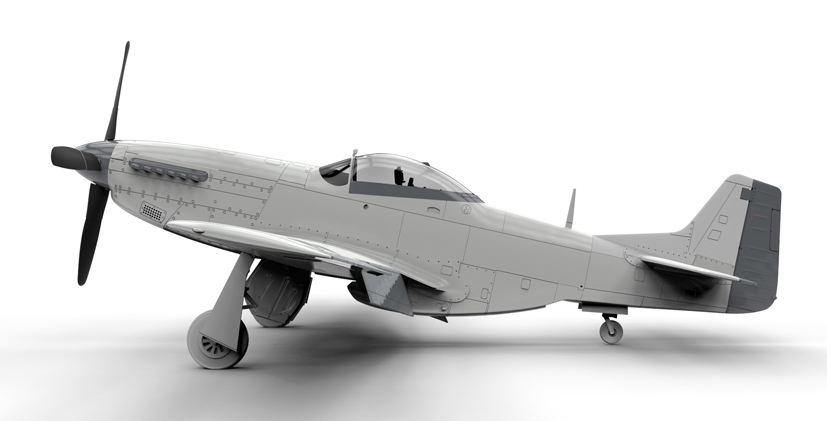
The classic lines of the North American P-51D Mustang
We are pleased to be bringing you this latest update from our exciting new Mustang project, which is already shaping up to be one of the releases of the year. Benefiting from exceptional levels of detail and including parts and build options never previously available in a Mustang kit of this scale, we are extremely proud of this new model, which we feel is a beautiful representation of this famous aircraft. As the Mustang continues to be one of the most popular modelling subjects around the world, we know that our new model will find a large audience looking to see if we have produced a new take on a classic subject – we are confident that you are going to be very pleased with what you see. Here are the decoration guides and scheme options that will accompany the new 1/48th scale P-51D Mustang A05131:
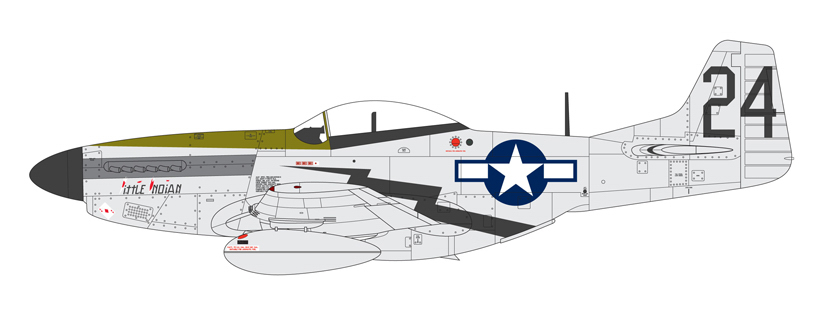
Profile artwork showing the markings for a USAAF 2nd ACG aircraft
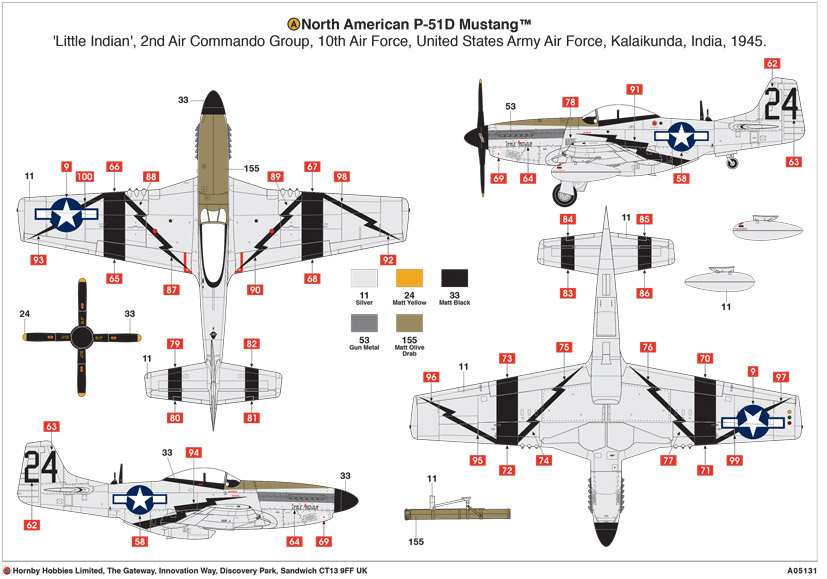
North American P-51D Mustang ‘Little Indian’, 2nd Air Commando Group, 10th Air Force, USAAF, Kalaikunda, India, 1945.
Perhaps not as well known as the Eighth Air Force Mustang fighter operations in the skies above Western Europe, the aircraft was also involved in the re-taking of Burma from Japanese control during 1944-45, where it proved to be a more than capable ground attack platform. The US Air Command Groups were specifically formed to provide air support for deep-penetration missions behind enemy lines in Burma and consisted of fighter, transport and communications/liaison units. As the tide of war had begun to change in favour of the Allies, much of this work involved the air transportation of troops around the area, but the P-51D Mustangs of the 2nd ACG saw plenty of action in support of the British 14th Army’s offensive to take Rangoon. Operating from bases in West Bengal on the Burmese border, these Mustangs were deployed to harass and disrupt enemy troop concentrations and provide support to ground troops coming across particularly stubborn opposition. As well as using their six 50 calibre Browning machine guns to strafe enemy positions, the aircraft were also equipped with a combination of bombs, rockets, triple bazooka clusters and napalm to effectively achieve their task.
Mustangs operating in this theatre wore some distinctive and unusual schemes that are certainly of interest to the modeller. This particular aircraft named ‘Little Indian’ wore an overall natural metal finish, with striking lightning flashes on both sides of the fuselage and on the top and bottom of the wings. Black theatre bands on the wings and stabilisers, along with a black spinner (for unit recognition) identified the fighters to friendly units on the ground, in the hope of minimising friendly fire incidents. The Mustang went on to see significant action in a ground attack role during the Korean War, but was found to be vulnerable to anti-aircraft fire when operating over heavily defended targets, which resulted in the significant loss of 335 aircraft.
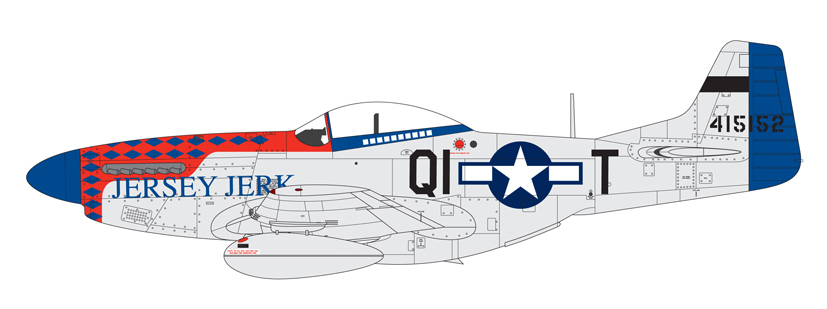
356th Fighter Group Mustangs were amongst the most distinctive of WWII
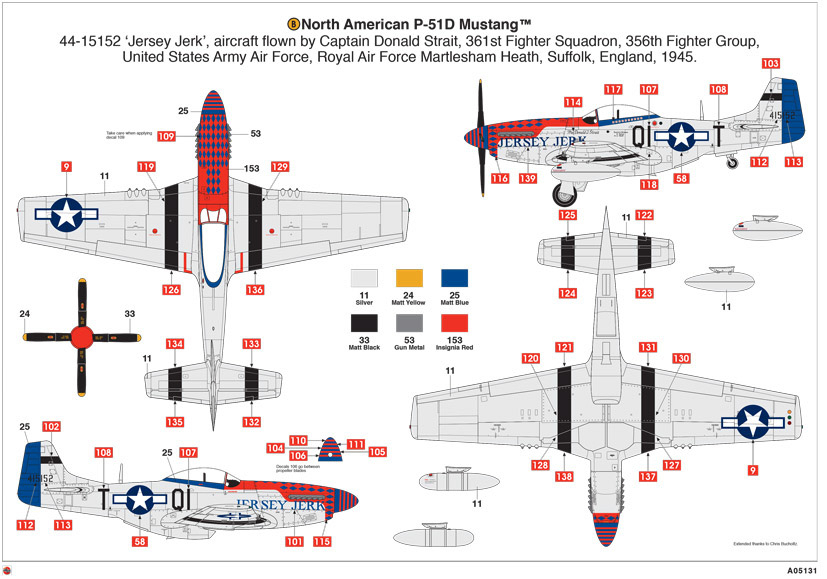
North American P-51D Mustang 44-15152 ‘Jersey Jerk’, Captain Donald Strait, 361st Fighter Squadron, 356th Fighter Group, USAAF, Martlesham Heath, Suffolk, England, 1945.
As far as distinctive Mustangs of the Second World War are concerned, there can be few that were as colourful as the machines flown by the 356th Fighter Group. Flying out of RAF Martlesham Heath in Suffolk, just a short flight from Britain’s North Sea coast, the group were known colloquially as the ‘Martlesham Playboys’ and the ‘Blue Diamonds’ for obvious reasons. The 356th only adopted the use of squadron colours relatively late in the war, with the 359th Fighter Squadron having yellow tails and spinners, the 360th using red and the 361st taking blue. Operating the mighty Republic P-47 Thunderbolt when the unit first deployed to England, they only received their Mustangs in November 1944, flying their first combat mission on the 20th of the month - the very day that Captain Don Strait assumed command of the 361st Fighter Squadron.
After successfully completing his flight training in the US, Donald J Strait arrived in England to fly the P-47 Thunderbolt in the Autumn of 1943. A native of Verona, New Jersey, he proudly took the name of his home state into combat with the Luftwaffe in the skies above Europe, naming his aircraft ‘Jersey Jerk’. Achieving three aerial victories whilst flying the Thunderbolt, Strait was to enjoy his most prolific period of combat success once his unit converted to the new P-51D Mustang at the end of 1944. Wearing the now distinctive markings of the 356th Fighter Group, Captain Strait and his ‘Jersey Jerk’ were to score a further 10.5 confirmed aerial victories in the final months of WWII, including a rather productive day on 20th February 1945 when he dispatched no fewer than three Fieseler Storch observation aircraft. With a total of 13.5 aerial victories, Donald Strait ended the war as the most successful ace pilot in the 356th Fighter Group.
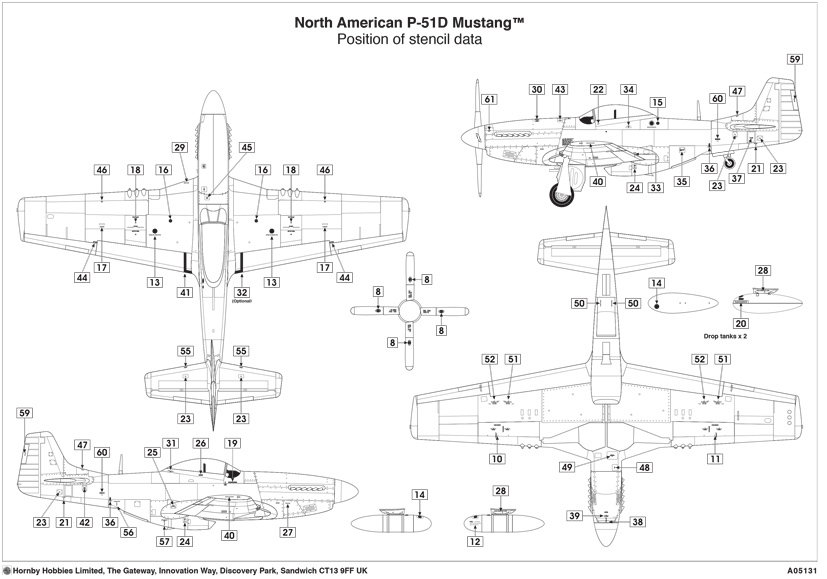
Extensive stencil data placement guidance is included in the instruction booklet
Flying 413 missions between 15th October 1943 and 7th May 1945, the 356th Fighter Group had the unenviable reputation of suffering the highest loss to kill ratio in the Eighth Air Force during combat operations against the Luftwaffe. Known as the ‘Hard Luck Outfit’, despite the skill and professionalism of its pilots, they regularly found themselves facing superior numbers of enemy fighters during dogfights, whilst other 8th A.F units were struggling to engage the enemy in combat. Perhaps the Luftwaffe had a particular liking for the distinctively marked Mustangs of the 356th.
Our new 1/48th scale North American P-51D Mustang presents the modeller with a host of alternative parts and construction options and will be a stunning addition to our growing range of 1/48th scale kits. Scheduled for a September 2017 release, this beautiful new model is already destined to become one of our most popular models and will continue the modellers love affair with this magnificent aircraft.
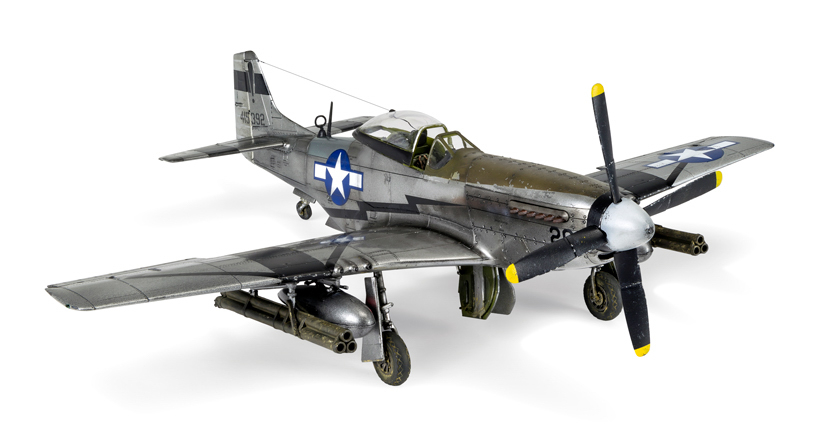
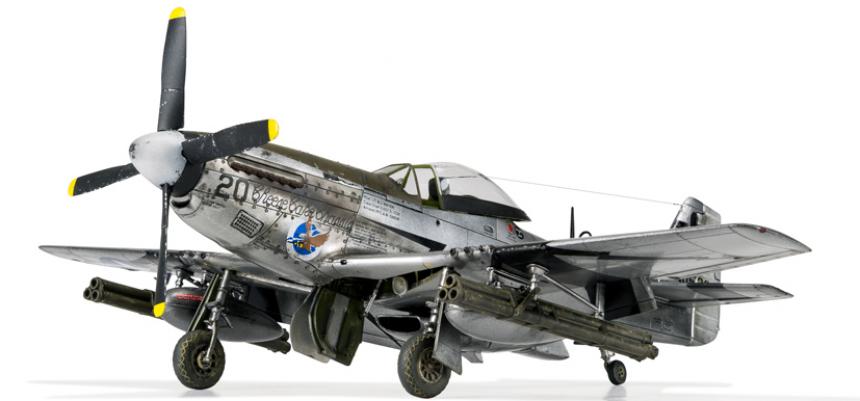
A beautifully finished built sample of the new 1/48th scale Airfix Mustang
As our new P-51D Mustang kit speeds towards its release date, the Airfix development team have the opportunity to inspect the latest component sprue frames for detail and accuracy, which includes the essential process of actually constructing one of the kits. This important stage allows the team to assess the quality of the tooling moulds and the impact of any modifications and alterations they may have requested since assessing the previous samples. At this time, they may also choose to release one of the component sets for construction by one of our modelling contacts, both to gauge their opinion on the new kit and to use the finished model for marketing and promotional purposes. We are pleased to bring you this exclusive collection of images, which show our new P-51D Mustang kit finished in the markings of a USAAF 2nd Air Commando Group machine similar to the A scheme which will be included with the kit.
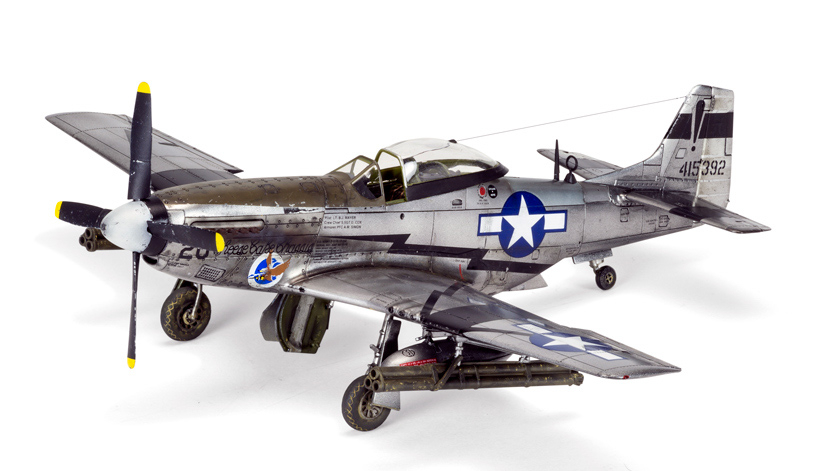
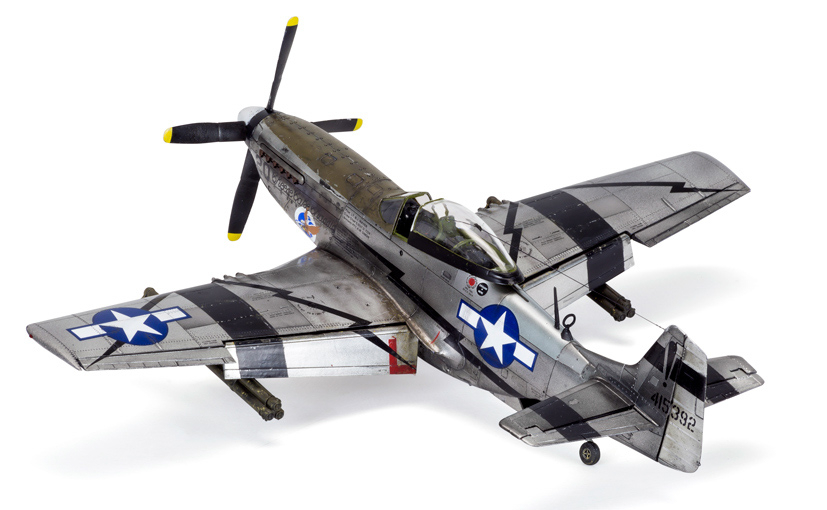
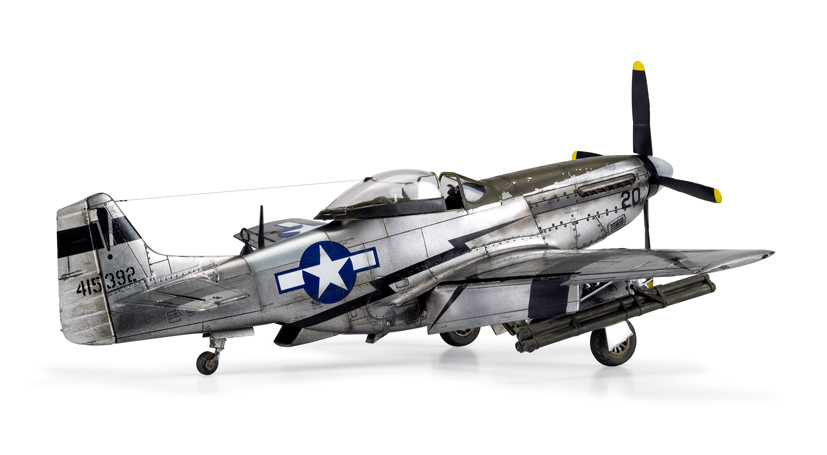
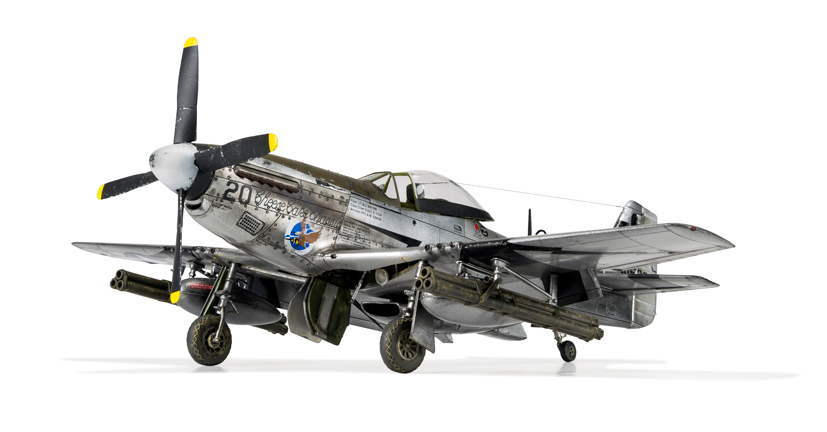
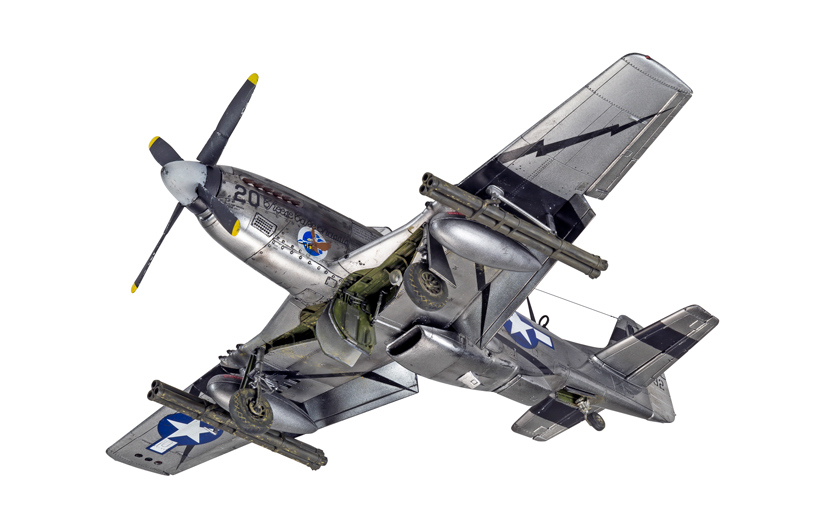
This beautiful representation of a late war P-51D Mustang shows the aircraft configured for a ground support role, including the sinister looking wing mounted triple bazooka tube cluster, which gave the Mustang some extra hitting power. Mustang 44-15392/20 was the personal mount of Lt. B.J Mayer of the 2nd Fighter Squadron, 2nd Air Commando Group (10th Air Force) of the USAAF in January 1945. Carrying the unusual name ‘Cheese Cake Chassie’, this aircraft flew operations out of Cox’s Bazaar airfield on the Indian-Burma border in support of British ground operations against the Japanese in Burma. This attractive scheme looks fantastic on our new Mustang and helps to draw attention to this little-known area of WWII Mustang operations.
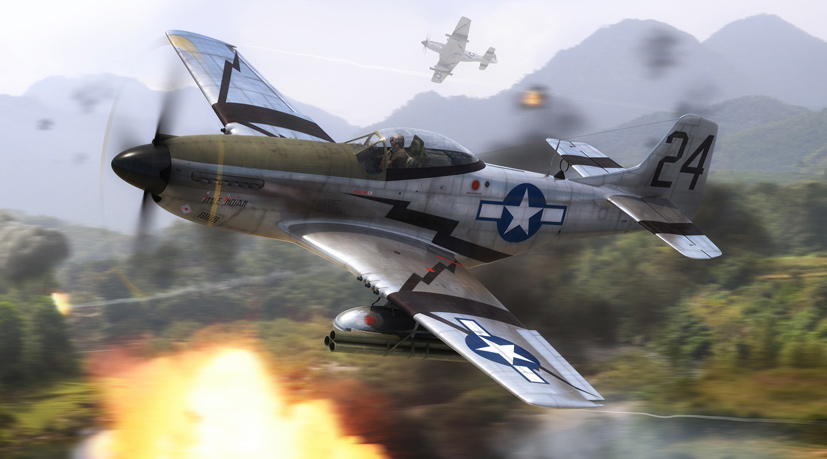
Mustangs of the 2nd ACG supporting advancing British troops in Burma
We conclude this full Mustang project update with a look at the stunning box artwork which will be adorning the packaging of our new 1/48th scale P-51D Mustang. Once again featuring the talents of prolific digital artist Adam Tooby, it depicts one of the USAAF 2nd Air Commando Group Mustangs causing havoc amongst Japanese forces during operations to drive them out of Burma during late 1944 and early 1945. It is a highly visual reminder that the Mustang was used widely in a number of theatres of operation and not just against the fighters of the Luftwaffe in the skies above occupied Europe. For modellers around the world, the release of any new tooling box artwork is usually an indication that the model is fast approaching release and we can start to look forward to adding it to our build schedules. Although we are looking at a September release for this much-anticipated new Mustang, we always advise checking the Coming Soon pages of the Airfix website for the latest information.
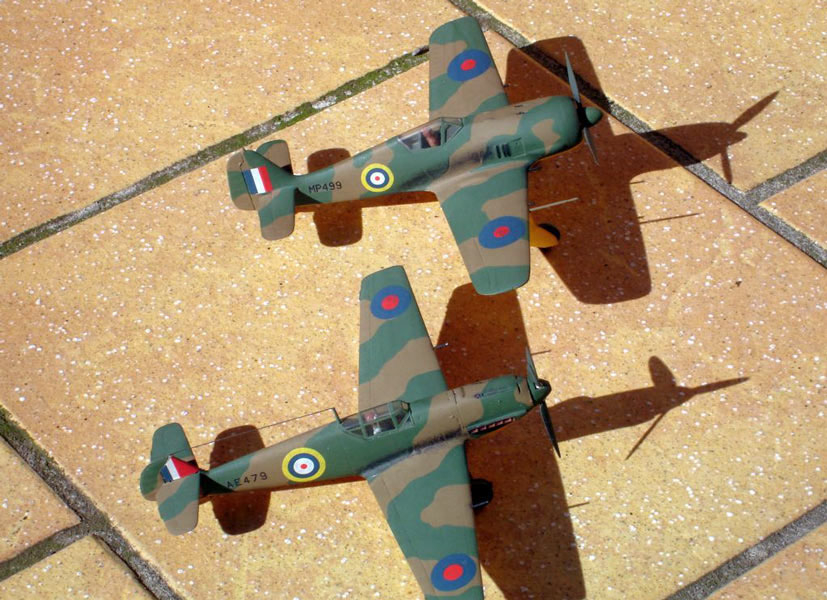
Aircraft of RAF No.1426 Flight ‘The Rafwaffe’ sent in by Stefan Muller
In the previous edition of Workbench, we appealed to readers for help in producing a special feature in a future edition of our blog, looking at a fascinating story of the RAF operated Enemy Aircraft Flight during WWII. Often referred to as the ‘Rafwaffe’, the flight demonstrated captured enemy aircraft to Allied pilots and personnel at airfields all over the country, allowing them the opportunity to view the aircraft at close quarters. With such famous aircraft as the Messerschmitt Bf109, Fw190, Bf110, Heinkel He-111 and Junkers Ju-88 under their charge, these machines must have been of huge interest to RAF personnel who were more accustomed to either avoiding them or engaging them in combat. They will, however, have looked a little strange wearing RAF camouflage and markings.
Clearly this is a subject that is of interest to a great many of our readers and we are grateful for the fantastic response we have already received. Many of you have kindly pointed us in the direction of interesting websites, specific images and authoritative publications on the subject and whilst grateful for this information, we were hoping for something slightly different. We are looking for readers who may have finished one of their own models as one of the aircraft from the wartime Enemy Aircraft Flight to send us pictures of their model, so that it could possibly be used to illustrate this feature in a future edition of Workbench. We have had several fantastic submissions already, including the picture of the Messerschmitt and Focke Wulf displayed above, which was sent in by Stefan Muller. If you can help with this project, please send your images to our usual workbench@airfix.com address and thank you to everyone who has responded so far. This is already shaping up to be a really interesting feature, with some great models to illustrate it.
That’s all we have for you in this latest edition of Workbench. As usual, we are always interested to hear what our readers have to say and are grateful for any modelling features or build pictures you may care to send us. There are several ways you can contact us, including our dedicated e-mail address workbench@airfix.com and of course the Workbench thread over on the Airfix Forum.
If social media is more your style, you could access either the Airfix Facebook page or our Twitter channel, using #airfixworkbench, where you will find plenty of modelling news, views and discussion. Whichever medium you decide to use, please do get in touch, as it is always interesting to hear from fellow modelling enthusiasts.
Finally, the Airfix website is the place where you can always find all the latest model release information, with our New Arrivals and Coming Soon sections all accessed by clicking on the above links. As updating the website is a constant process, a quick search through each section of the Airfix web pages will reveal new information and updated images in many of the product sections and this is always an enjoyable and rewarding way to spend a few minutes.
Until the next edition,
Happy modelling!
The Airfix Workbench Team
Hornby Hobbies Ltd. All rights reserved.