
Welcome to this latest edition of our Workbench blog and all the news, updates and modelling exclusives from the fascinating world of Airfix.
As you may well have guessed from the title above, our subject for this latest blog update is an impending addition to our incredibly successful range of 1/35th scale Military Vehicle kits and whilst this particular vehicle may have used the familiar chassis of one of the most famous tanks of the Second World War, it definitely shouldn't be described a tank. During the course of this update, we will see how the world of armoured fighting vehicles may well have been one of heavy, powerfully armed machines, but also demanded resourcefulness and no little ingenuity in ensuring that the modern, mechanized battlefield had the right machines in the right places for both defensive and offensive operations. We will also see how through the medium of our 1/35th scale Military Vehicle range, the modeller can build his or her way through the development of WWII armour from the first armoured rumblings into Poland in 1939, right through until the guns eventually fell silent on VE Day.
One of three new tooling Armoured Fighting Vehicle additions announced with the launch of the current 2022 model range, our update subject for this week is the mighty SdKfz 166 Sturmpanzer IV Brummbär, a German armoured vehicle you certainly would not want to encounter when tucked up in your foxhole.
At the start of the Second World War, even though more modern German tank designs were already in production, the mechanized power behind Blitzkrieg came from the small, light tanks already in service, such as Panzer Is and IIs and this Pz.Kpfw 35(t) Light Tank.
With the frightening success of Germany's Blitzkrieg across Europe at the start of the Second World War suggesting a significant technological supremacy for the Wehrmacht in AFV design and production at that time, it can actually be quite confusing to learn that much of this success was actually down to exceptional planning and military field craft, as opposed to being able to call upon the support of legions of the latest tank designs. Indeed, when Hitler came to power in 1934, German industry was still very much under the limitations of the Treaty of Versailles, which imposed strict limitations on their military capability and industrial ability to produce machines such as tanks. They did initiate production of tanks in contravention of these restrictions, describing the machines as 'Agricultural Tractors', but these first machines were rather primitive and made in something of a bespoke manner and definitely not the mass-produced weapons of war Germany would later become adept at producing.
With war clearly already on his mind, Hitler dispatched a team of senior military and industrial figures to Russia not long after he came to power, with the specific remit of assessing Russia's processes for the mass production of tanks and armoured fighting vehicles, so that similar industrial capability could be established in Germany. Despite this, progress proved to be relatively slow and the manufacture of Germany's early tanks was still somewhat laborious, as they persisted with a more of bespoke and over-engineered method of production, with the Wehrmacht still relying heavily on horses for the transportation of artillery and the supply of troops. Even though new tank designs were finally entering production, such as the Panzer III and the ubiquitous Panzer IV, military planners were quick to inform Hitler that sufficient numbers of tanks to enable Germany to go to war may not be available until 1941 and possibly even the year after, but as we all now know, war was by that time inevitable and the Wehrmacht would have to make do with what they had, if they were to obey their Führer's orders.
With the first German tanks designed for speed and to support the advance of a new kind of mechanised warfare, the difficulties Germany had in establishing the mass production of their new tank designs was overcome to a large extent by using captured and commandeered enemy vehicles, something they would become quite proficient at throughout the war. For example, the Light Tank model 35 was a machine which was in widespread Czech military service at the time of the German occupation in 1938 and as a consequence, around 244 of them were commandeered for immediate Wehrmacht use – this acquisition effectively doubled German tank inventory for the lightning battles which lay ahead. The 35(t) tanks were used extensively during the invasion of Poland and the strike west, however, by the time of Operation Barbarossa, a lack of spares and continued mechanical problems saw the type relegated from front line operatorial use. Highlighting the fascinating history of this tank, the letter (t) used in its description identifies is as tschechisch (German for Czech).
Despite making significant strides in producing ever greater numbers of the latest tank designs, the vast majority of Panzer units committed to battle during the invasion of Poland were equipped with the smaller and effectively obsolete Panzer I and Panzer II light tanks, with their numbers bolstered by the former Czech machines which had been pressed into service. Just a few hundred of the newer Panzer III and even less of the heavier Panzer IV tanks would be available, however, as they were opposed by incredibly valiant, yet poorly equipped Polish ground forces, the speed and effectiveness of the German attack meant that victory was swift in coming. Despite this, when Germany struck towards the West the following year, their tank inventory was still made up of a majority of the older Panzer Is and IIs.
The famous Panzer IV was the only German tank to remain in production throughout WWII and its chassis would provide the basis for several specialist battlefield derivatives.
The Panzer IV has to be considered one of the most important tanks of the Second World War and certainly one which became synonymous with German military ground operations during the conflict. It would go on to become the most heavily produced German tanks of WWII and the only one to be in constant production throughout the war, forming the backbone of the Wehrmacht’s panzer divisions throughout the conflict.
Originally developed under a cloak of international secrecy as a ‘Medium Tractor’, due to restrictions placed on Germany by the Treaty of Versailles and their inability to build weapons of war, the first production vehicles began to appear in 1936 and represented the very pinnacle of world tank design at that time. The designation of these first tanks was Panzerkampfwagen IV, Ausf A and perhaps the most impressive legacy of these machines is that the final H and J variants which were deployed during the Allied invasion of Europe and in defence of the Reich, were of the same basic design as those first tanks produced in the pre-war years. Upgraded and improved throughout its service life, the Panzer IV was continually modified to enhance both its combat effectiveness and battlefield durability, although it has to be said that these changes mainly involved increasing the tank’s armour protection, equipping it with a more powerful main gun, or fitting the latest vision and sighting equipment in the tank, as opposed to actual re-design.
In this picture which features two built models from our latest addition to the 1/35th scale Military Vehicle range, it is easy to see the Panzer IV heritage of a Sturmpanzer IV Brummbär, as both have been finished without the addition of secondary spaced side armour.
Designed from the outset to be relatively simple for its crew to maintain and earning an impressive reputation for battlefield reliability, the Panzer IV actually shared many components with the earlier and lighter Panzer III and whilst Hitler became somewhat obsessed with producing bigger, heavier and more complex tanks as the war progressed, it would be the Panzer IV which continued to equip armoured divisions in their battles against Allied ground forces following D-Day and as the fighting later moved into German territory. Even though the Allied bombing campaign became much more effective during the latter stages of the Second World War, German tank production actually increased during this period, highlighting both the determination and resourcefulness of German manufacturing at that time, if not their production methods. Forced labour was used in tank production, with worker sabotage thought to have played a significant role in general armoured vehicle serviceability issues at that time.
Throughout the war and reflecting the fact that there is much more to the subject of armoured fighting vehicles than the tank alone, the continually shifting requirements of the world's modern battlefields resulted in requests for specialist machines from military commanders, mobile artillery pieces which could keep up with advancing infantry and even mobile anti-aircraft vehicles, which could be deployed to protect the advance from aerial attack. The chassis of the ubiquitous Panzer IV would be utilised during the production of several of these specialist vehicles, such as the Sturmgeschütz IV self-propelled assault gun, the Jagdpanzer IV self-propelled anti-tank gun, the Wirbelwind self-propelled anti-aircraft flak gun and the SdKfz 166 Sturmpanzer IV Brummbär self-propelled infantry support gun. Over 8,500 of these various Panzer IV derivatives would eventually be built, making this the most heavily produced German tank of the war and the second most heavily produced German fully tracked armoured vehicle type.
A fearsome weapon, the heavy main gun of the Brummbär was intended to support German infantry in their efforts to dislodge particularly stubborn areas of Allied resistance, especially when fighting in towns and cities.
Built on the chassis of the successful and reliable mass produced Panzer IV, the Sd.Kfz 166 Sturmpanzer assault tank was developed from a need to equip fast moving infantry units with an effective heavy howitzer for use against fortified positions and particularly when operating in urban combat situations. The Sturmpanzer replaced the turret of the Panzer IV with a large armoured casemate style superstructure, with the increased height of the sloped frontal armour allowing the installation of a ball mounted 15cm Sturmhaubitze 43 L/12 gun which was developed by Skoda, firing existing ammunition stocks. The altered superstructure resulted in a much more spacious fighting compartment than tank crews had, however, the huge projectiles and propellant charges they needed were heavy, so the loader’s job in particular was an extremely difficult one. Each Sturmpanzer could carry approximately 38 rounds with separate propellant charges, but if the gun was operated in a highly elevated position, loading it was a challenge and could take quite some time for the crew to complete. In operation, the poorly ventilated fighting compartment could quickly fill with noxious fumes during heavy firing, leaving some crews to fight with the casemate rear armoured doors open for ventilation, something which left the vehicle and its crew vulnerable to enemy infantry attack.
The Sturmpanzer IV is often referred to as the Brummbär, which roughly translates to grumbling or bad-tempered bear, but it is thought that this was simply an Allied reporting name for the vehicle and not one actually used by the Germans - they tended to refer to the assault tank as a Stupa 43, a direct reference to the gun the vehicle used. The Sturmpanzer served with 4 Assault Battalions, with Sturmpanzer-Abteilung 216 being the first committed to combat during Operation Zitadelle and the mighty clash of armour in the Kursk salient. These vehicles would go on to see significant action throughout the Soviet Union, as well as in Poland, Italy and the Battle of Normandy, although as was the case with most German armour during the latter stages of the war, there were never enough serviceable Sturmpanzers available at any one time and as mounting losses could not be replaced effectively, their operational numbers dwindled steadily as the fighting intensified.
Around 306 Sturmpanzer IVs were built, with only three or four of the distinctive armoured fighting vehicles surviving in various museums to this day.
With the release our own 1/35th scale representation of this famous WWII armoured fighting vehicle now only days away, let's take a quick look at the scheme options modellers will be provided with on opening the distinctive box of this new kit.
In order to fulfil the role for which they were intended, Brummbär units would never be positioned too far from combat hotspots and once they had dealt with one particularly stubborn area of Allied resistance, their close support services would invariably be required elsewhere. The Brummbär would mainly see service with four main battalions - Sturmpanzer Abteilungen Nos 216, 217, 218 and 219, with 216 being the first unit to use the type in combat, during the Kursk offensive in the summer of 1943.
During the savage fighting in Normandy which followed the successful Allied landings on D-Day, the Sturmpanzers of No.217 Assault Tank Battalion were heavily involved in the street fighting which took place across the region, using their heavy 15 cm StuH 43 L/12 assault howitzers to dislodge particularly stubborn areas of Allied resistance. Initially ordered to the area from their holding base in Germany, by the time the unit arrived in Normandy, not all of the machines had made it, some having fallen victim to mechanical issues along the way, which initially resulted in just 11 Brummbärs being available for combat deployment, with two more immediately undergoing maintenance. The vehicles were so valuable that the ones which broke down along the way would have been hauled to the nearest field service depot, repaired and sent on to be assigned to whichever unit was in most need of its services at that time.
Due to the fluid nature of the fighting in Normandy, these vehicles could be assigned to various units, often operating in pairs, but always requiring the protection of both infantry units and tanks/tank destroyers, because the hard hitting Brummbär made for rather a conspicuous target for any Allied gunner spotting it. Although German Assault Tank Battalion units would suffer relatively heavy casualty rates, they were seen as being the fist of the infantry and as such, crews were held in high regard by the troops on the ground. Replacement vehicles were available, but not in anywhere near enough numbers to shore up the attrition of war, as the Allies gained their long threatened foothold in Fortress Europe.
A trio of images featuring the first Normandy Bocage Brummbär scheme included with this new kit.
When the Allies eventually managed to close the Falaise pocket, most of the remaining serviceable Brummbärs managed to escape encirclement and were be re-assigned to new fighting units. Following actions in Normandy, surviving Sturmpanzers were withdrawn for a period of rest, refit and replenishment, prior to once again playing a significant role during the Battle of the Bulge, the last major German offensive on the Western Front. After the failure of a military gamble which was seen as something of a final roll of the dice for Germany, the Wehrmacht would gradually settle in to retreating defensive actions, which would continue right up until the end of WWII.
This particular Brummbär is painted in a typical scheme for operations in the Normandy Bocage, one which suited the lush green foliage of this difficult fighting terrain. Although this scheme would have been useful whilst the vehicle was making its way from one fighting hotspot to the next, it would have been less effective when the Sturmpanzer was deployed in its usual operating environment, that of destroying a building stronghold in a village, town or city.
Scheme B - Sturmpanzer IV Brummbär (mid production version), Sturmpanzer-Abteilung 216, Rome area, Italy, June 1944.
For crews assigned to Sturmpanzer IV units, life inside one of these close infantry support vehicles must have been relatively pleasant when compared to the inside of a standard Panzer IV tank (and not when under fire). The casement style superstructure of the assault gun meant that the fighting compartment had much more space than in a tank turret and even though the Brummbär was capable of storing an impressive 38 rounds of ammunition for its slightly offset 15 cm StuH 43 L/12 gun, there was still plenty of room for the crew to move around. The main drawback of this particular AFV was its relatively high profile, something which was not in itself an issue when operating in its usual ruined town environment, but if caught on a rural road or in open countryside, the Brummbär became easy prey for Allied tank and anti-tank commanders.
Although many Sturmpanzers were finished with the application of Zimmerit anti-magnetic mine paste over much of their hulls, this particular defence against the fear of enemy infantry attached magnetic mines proved not to be required during combat against Western Allied forces, as they were not equipped with this kind of weapon. On reflection, all the application of Zimmerit did in the west was to add additional weight to the vehicle, making it less fuel efficient and even more difficult to operate in the field, but from a modeller's perspective, did provide us with some fascinating, if challenging scheme finish options to replicate.
What was of much more use from a self-defence perspective was the use of secondary 'spaced armour' and in particular, 'Schürzen armoured skirts, which were fixed to many armoured fighting vehicles. These skirts proved to be an effective defence against anti-tank rifles and many kinds of infantry fired anti-tank projectiles, with this spaced armour intended to absorb much of the impact of such an attack, significantly reducing the damage capability of the weapon on the hull of the tank itself. Whilst never intended to completely absorb the damage of a shaped charge attack, once the warhead had passed through the skirt armour, its disruptive core would be less stable and may even be deflected harmlessly away from the tank itself, or at least that was the hope. Again adding additional weight to any vehicle onto which it was attached, at least this modification had a positive impact on the potential battlefield survivability of the vehicle.
Finished in the scheme option which is a representation of the machines which were rushed to Italy to help stem a powerful Allied onslaught through the country, in this image, you can clearly see the relatively tall casemate superstructure which presented Brummbär crews with a roomier fighting compartment, but made the vehicle more vulnerable to enemy anti-tank fire.
Whilst many German armoured units were stationed in France, in preparation to repel the anticipated Allied landing in Normandy which could come at any time, others were required to engage Allied forces which were already advancing in continental Europe, through Italy in the spring of 1944. Sturmpanzer-Abteilung 216 were ordered to make their way to a rallying point near Pisa-Lucca in Italy, however, due to the increasingly challenging situation at that stage of the war and the aerial supremacy held by the Allies, this journey would have to be made under the cover of darkness, with vehicles travelling at pre-determined intervals and having first received aerial reconnaissance reports covering that night's route. They would be travelling through areas of known partisan activity, but the situation dictated that the journey still had to be made, with each crew member allocated a sidearm and on the understanding that they should be prepared to fight at any time along the way.
With the added responsibility of finding adequate concealment at the end of each 40 or 50km stretch of the journey, if the didn't fall victim to an Allied air strike, or partisan assault along the way, crews knew that on their arrival, they would be thrust into combat with a more powerful opponent, with little prospect of receiving further reinforcements in the immediate future. The fighting in Italy would prove to be the end for this particular Assault Tank Battalion, as overwhelming Allied superiority resulted in them constantly being forced to withdraw to the north, until eventually having to destroy their remaining vehicles, prior to surrendering to the Allies.
Sturmpanzer IV Brummbär kits finished in both scheme options included with this impressive new kit, one which helps to tell the fascinating story of mechanized armoured combat during the Second World War.
This particular Sturmpanzer IV features a modified version of the previous camouflage scheme, one which was intended for use in North African and Mediterranean theatres. The standard dark yellow colour was over-sprayed with a disruptive squiggle pattern of olive green, intended to provide camouflage for vehicles operating in Mediterranean scrubland, proving to be particularly effective around coastal areas and in mountainous regions. For many modellers, the camouflage variation applied to armoured fighting vehicles is one of the most appealing features of spending time building these magnificent 1/35th scale kits.
The first of three new tooling additions to our 1/35th scale Military Vehicle range announced at the start of the year, this Sturmpanzer IV Brummbär is scheduled to arrive in our warehouse next week and should be available in all good model stores by the end of the month.
When our 1/35th scale range of Military Vehicles was announced with the launch of our 2019 model range, modellers were presented with a mature range of model kits which represented many of the armoured fighting vehicles which saw service during the Second World War, therefore not forcing us to wait for newly tooled models to slowly grow the range over time. Since then, new models have continued to be added to the range, to a point where it now caters for most military modeller's tastes, allowing us to chart the progress of armoured fighting vehicle development throughout the Second World War.
If German armour happens to be a particular interest of yours, the range will allow you to build everything from a scale representation of a Pz.Kpfw.35(t) Light Tank from early in the war, right through to the mighty Tiger II which arguably proved to be the zenith of WWII tank design. In between the two, it is also possible to build many of the multitude of specialist vehicles the German's introduced throughout the conflict, most of which utilised the chassis of the various existing panzer designs.
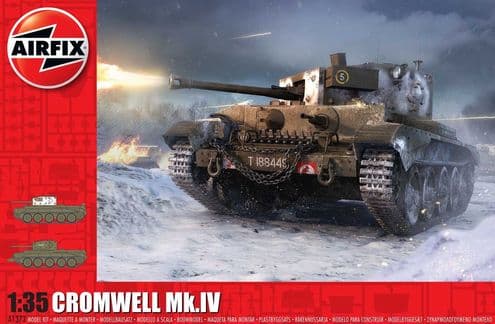
With new models being added every year since launch, this current year will see the arrival of our newly tooled Austin K2/Y Ambulance and the addition of a further three German armoured classics, the Sturmpanzer IV Brummbär we featured earlier, the Sd. Kfz.167 Sturmgeschütz IV (StuG IV) assault gun, another machine which utilised the ubiquitous Panzer IV chassis, and the Panzer III Ausf J. Once you have completed your German armour model collection, you might then decide to turn your attentions to building a collection of the Allied armour which faced them on the battlefield, including our beautiful new British Cromwell tank and the famous Sherman and Soviet T-34, the two most heavily produced tanks in the history of warfare.
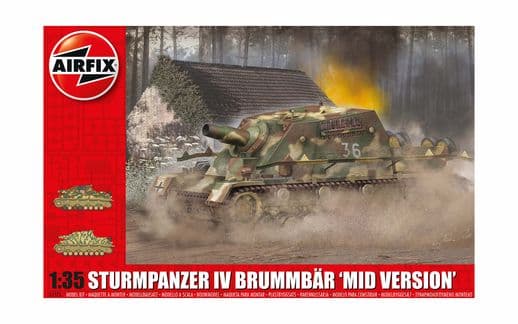
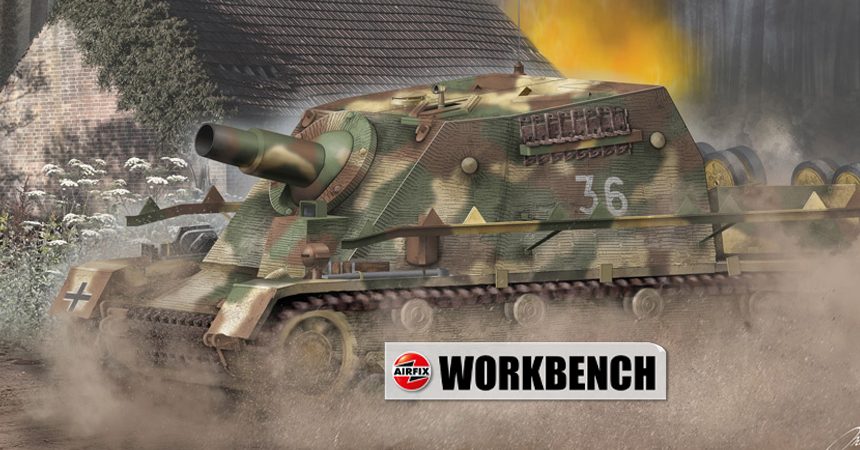
Evocative box artwork produced in support of our new Sturmpanzer IV Brummbär, a sight which should be gracing model store shelves over the next few weeks.
If this feature has encouraged you to plan your first foray into the world of 1/35th scale military modelling, perhaps one of our web exclusive Mystery Boxes may be of interest to you, as they offer an impressive haul of kits and an attractive saving of 40% when compared with buying the included kits separately. Whatever you military vehicle modelling taste, we really do think that Airfix will have the kit for you.
That’s all the news we have for you this week, but as ever, we are always keen to hear your views on all things Airfix and particularly in relation to our Workbench blog, so if you ever feel like dropping us a line, please use our workbench@airfix.com contact e-mail address.
All our social media sites can be accessed by clicking the respective link icons at the foot of this page, or by heading to the Airfix homepage. Other useful links are:
Please join us for more Airfix updates next week and thank you for your support.