Welcome to this latest edition of Workbench and all the news, updates and exclusive announcements from the fascinating world of Airfix modelling. If you were to ask anyone with knowledge of aviation the question, “What was the most advanced aircraft to see service during the Second World War?”, most people would probably nominate the Messerschmitt Me 262 as their suggestion. As the world’s first operational jet powered fighter, the Me 262 not only pointed the way to future aircraft development, but also posted performance figures which exceeded those posted by the most advanced Allied fighters of the day by almost 100 mph, posing a serious threat to Allied mastery of the skies in the months which followed the D-Day landings. In this latest edition of Workbench, we will see how the next release announcement from our popular 1/72nd scale Messerschmitt Me 262 tooling includes new parts, which will allow the fighter bomber variants of this devastating aircraft to be modelled and will include both images of the new component frame and a review of the two scheme options which will be featured in the kit. We also welcome another batch of classic Airfix military vehicles to the ever popular Vintage Classics range and see how these models which evoke happy memories of our childhood are now also being enjoyed by younger modellers who may be discovering their delights for the very first time. We end with a fantastic show review article supplied by one of our Australian readers, who has actually featured in a previous edition of Workbench, when we reported on his epic journey to take part in Scale ModelWorld 2018 – now back in his homeland, he kindly sent us a selection of images from a recent show he helps to organise. Before we head ‘down under’, we have an appointment with arguably the most capable fighting aircraft of the Second World War.
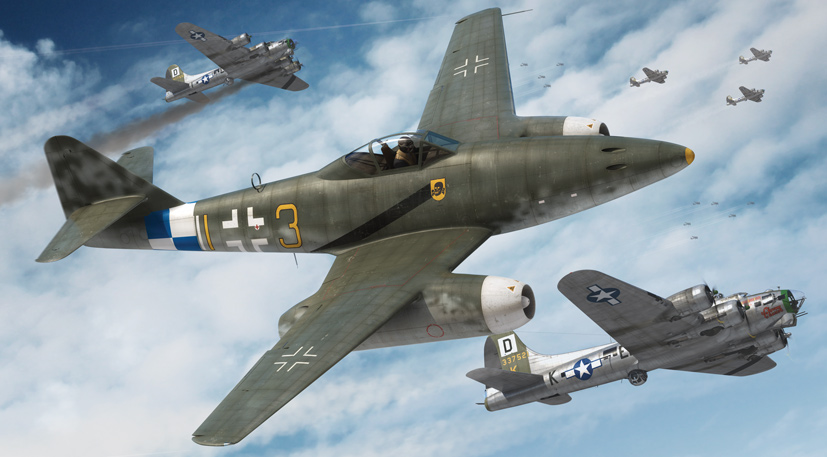
The Luftwaffe thought that their new wonder jet would help them to stem the tide of Allied air raids which were crippling German industry
As the Second World War entered what we now know to nave been its final phase, the airmen of the Allied air forces had finally managed to get the better of the Luftwaffe and whilst their enemy were still capable of inflicting significant damage on any given day, superior Allied numbers and a lack of men and replacement aircraft to shore up the crippling attrition rates being suffered, would eventually prove decisive. Hitler thought the answer to this dire situation lay in technological advancement and the development of new weapons which were more capable than anything the Allies had in service at that time, but whilst these reprisal weapons were nearing completion, essential resources were again being directed away from an increasingly futile situation, which even at this stage would prove to be irreversible. As the first V-1 Doodlebugs began their indiscriminate flights towards southern England and V-2 ballistic missiles underwent the final stages of testing prior to deployment, the Luftwaffe would also be the recipient of an astonishing new weapon, the world’s first operational jet fighter. Representing a huge leap in terms of aviation technology, the Messerschmitt Me 262 was unlike any operational fighting aeroplane that had gone before it, with no propellers, swept wings and a fuselage which resembled the body of a shark, an analogy which was further perpetuated by the colours in which it was painted and the impressive speed at which this new fighter could launch its devastating attacks. Potentially, this new jet aircraft was a serious threat to Allied air operations over Europe and could take such a heavy toll of aircraft that the progress of the war could be delayed by months, allowing Germany to introduce more of their wonder weapons – hunting Hitler’s jets became an absolute priority.
Allied pilots first began reporting the appearance of a strange new aircraft in the skies above Germany during the early summer of 1944, much to the consternation of Allied military planners. The Luftwaffe’s new fighter was reported to be capable of astonishing speed, far in excess of even the latest Allied fighters and yet did not appear to have a propeller. As those early contacts usually ended with the strange German aircraft diving away at high speed, with their pilots at that time forbidden from contact with the enemy, missions were immediately launched to investigate these reports, with reconnaissance aircraft searching for signs of unusual aircraft activity at Luftwaffe airfields deep into occupied Europe and Germany. They would not have to wait long for confirmation of this fearsome new foe, as the first combat missions of the new Messerschmitt Me 262 jet fighter were mounted in August 1944 and the technological superiority of this astonishing aircraft were clear for all to see. Heavily armed and capable of speeds far in excess of the latest Allied fighters and reconnaissance aircraft, military planners must have been fearful of the devastation these new aircraft could wreak on their bombing offensive and their continued air supremacy - how many of these fighters did the Luftwaffe have and how could they be stopped?
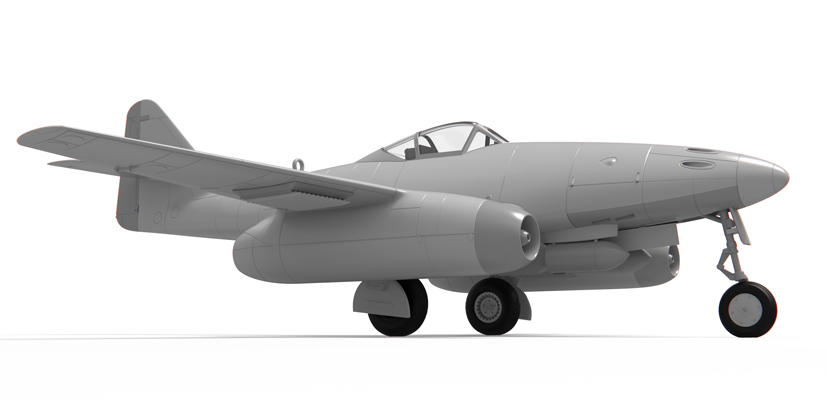
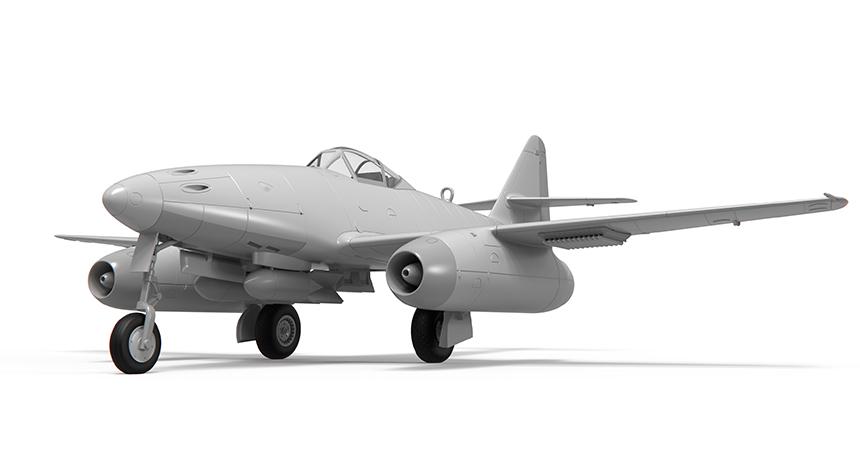
Computer rendered 3D image of the latest Messerschmitt Me 262 release, including the new parts which allow this fighter-bomber version of the jet to be modelled
Although the aviation history books will often describe the Messerschmitt Me 262 as the most advanced and capable fighter aircraft of the Second World War, perhaps the most reliable opinions are from those who actually had the opportunity to pilot the jet. Eloquently described by famous British test pilot Eric ‘Winkle’ Brown as ‘the most formidable WWII aircraft he ever flew’, he went on to say that in his opinion, ‘the Me 262 represented a quantum leap in aviation performance terms and should be regarded as one of the most significant aircraft in the history of flight’. Thankfully, Captain Brown flew the Me 262 after the war in Europe had ended and after the potential threat this devastating aircraft possessed had been neutralised. Indeed, from the time this aircraft started to arrive at the test and evaluation unit, its safe operation could not be guaranteed and the constant threat of Allied air attack saw operating airfields having to move deeper into Germany, in order to allow conversion to this very different aircraft to take place. In addition to this, the very different flight characteristics and extremely high speed of the aircraft dictated that only the most proficient fighter pilots were initially selected to fly the Messerschmitt jet and the lack of a two seat trainer variant at that time meant that pilots would have their first experience of jet-powered flight during their first sortie. These highly experienced pilots would surely have been better employed fighting against the huge formations of Allied bombers and their supporting fighter escorts, which were pulverising German targets on a daily basis, leaving this job to less experienced men and only serving to worsen the overall war situation for the beleaguered Luftwaffe. In a high profile aviation case of too little, too late, fuel and material shortages would also result in shortcuts and work-arounds being employed during Messerschmitt Me 262 production, which was already both expensive and extremely labour intensive, with the most profound impact being on the effectiveness of the ground breaking Junkers Jumo 004 jet engines which powered the fighter. These highly advanced units were originally manufactured with something of a ‘no expense spared’ approach, but as the Me 262 finally entered full production, the cost and availability of the rare metals used during the engine’s construction could not be relied upon and cheaper alternatives were regularly employed. The dramatic consequences of using lower grade materials during engine construction meant that most of these units were unable to withstand the high temperatures generated during operation and even though the impressive design of the Messerschmitt Me 262 made it relatively easy for engineers to change an engine, they would usually be required to do so after as little as 10 hours use and certainly after no more than 25 hours at best. Indeed, it was not uncommon to find engine changes required after an aircraft had only conducted a single sortie.
Despite the difficulties of introducing completely new aviation technology during the increasingly challenging position Germany found itself in during 1944, the impact the Messerschmitt Me 262 had on the European air war and the awesome potential it possessed posed serious challenges to Allied air superiority and their destruction either in the air or on the ground became a strategic priority. With reconnaissance aircraft searching for airfields operating the new jet fighter and the bombing campaign targeting aircraft manufacturing plants, airfields and general infrastructure, swarms of roving fighter units would mercilessly hunt down the Luftwaffe jets, quickly learning that these early jet engines were relatively slow to respond to changing power settings, especially during the crucial landing and taking off phases of flight. The only thing that mattered was preventing these aircraft from attacking Allied bombers and whether their destruction took place on the ground or in the air, they had to be stopped by all means.
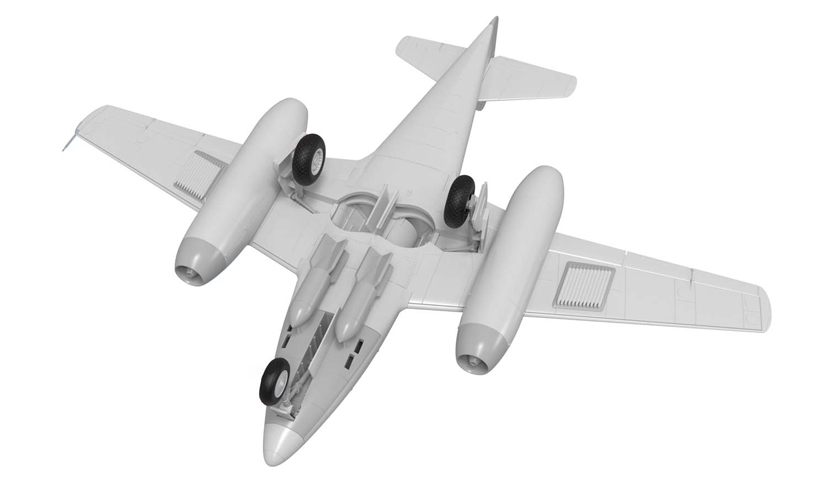
This underside rendered 3D CAD image shows the positioning of both the two 250kg nose mounted bombs and the R4M ‘Orkan’ rocket packs which were a feature of this fighter-bomber variant of the world’s first operational jet fighter
Occupying such a prominent position in the history of aviation, it is no wonder that the Messerschmitt Me 262 continues to be a source of fascination for modellers and aircraft enthusiasts to this day, despite the aircraft making its first flight over 77 years ago. With its futuristic profile not only pointing the way towards the future of aviation development, but also looking dramatically different to any aircraft which had gone before it, the impact of the Me 262’s introduction could not have been more dramatic and had its development been free of political interference, this aircraft could have been introduced months earlier, to even more devastating effect. As it was, despite the fact that over 1400 of these aircraft were built, it is thought that the Luftwaffe never had more than 200 available at any one time and due to difficulties with the engines, pilot training and Allied air superiority, it was rare for more than 30 or 40 aircraft to be committed to a single attack, as they were in as much danger of destruction as the bombers they were hunting. To illustrate the futility of the situation facing Me 262 pilots, on 18th March 1945, 37 Me 262s of JG.7 massed for a concerted attack against a large Allied air raid approaching Germany. What lay ahead of them was a mighty force of 1,221 heavy bombers, protected by 632 escort fighters and even though the jets managed to claim twelve bombers and one fighter destroyed for the loss of only three Me 262s, their technological superiority was never going to be able to overcome such overwhelming numerical disadvantages as these. Every time these aircraft took to the air, they would be heavily outnumbered by an enemy who were desperate to destroy them and if they did not fall during combat, they would invariably suffer attack whilst attempting to land back at their home airfield. From an Allied perspective, thankfully the world’s first operational jet fighter would never be in a position to have the strategic impact its advanced technology possessed and the Messerschmitt Me 262 jet simply became a highly prized target for Allied fighter pilots during the final months of WWII.
With the newly tooled 1/72nd scale example of the Messerschmitt Me 262 proving to be a popular addition to the Airfix range following its release in 2017, modellers will be delighted to learn that the next model to be produced in this series will include additional parts to allow another important variant of this first operational jet to be modelled. In an attempt to further harness the destructive potential of this magnificent fighting aeroplane, both its attack and strike capabilities were enhanced, allowing this dedicated interceptor fighter to now operate as a high speed fighter-bomber. Two new scheme options will accompany the release of this latest kit, which we are pleased to detail here –
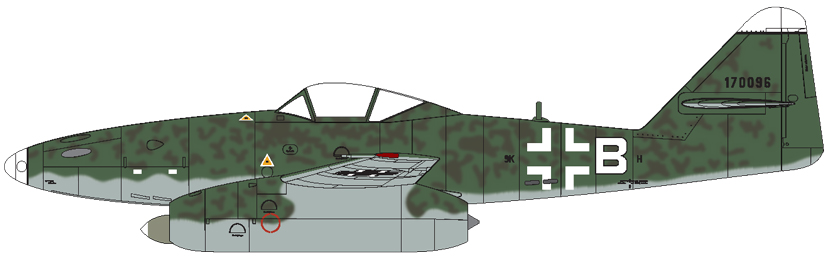

With this camouflage scheme clearly illustrating why the Me262 was sometimes likened to a flying shark, this magnificent scheme option represents the high speed bomber concept Hitler had hoped would repel any Allied invasion of Northern Europe
When assessing the wartime impact of the introduction of the Messerschmitt Me262 jet fighter, many reports cite the decision to develop the aircraft as a fighter-bomber to be disastrous, as this both delayed production and reduced the effectiveness of the aircraft. In actual fact, the requirement to use the jet as a ‘Schnellbomber’ was a perfectly sound one and was taken in the months prior to the Allies launching the D-Day landings and specifically to combat such a threat. Hitler and his generals knew that the Allied forces were planning to land on the coast of Northern France, but were and when were strategic uncertainties which were keeping vast numbers of men and their equipment spread across a huge area. With the ability to send large numbers of high speed jet bombers against the landing beaches, at speeds which made them almost impervious to Allied air or anti-aircraft attack, the Me 262 ‘Jabos’ (fighter-bombers) could potentially wreak havoc on the landing beaches, buying ground units valuable time to amass their panzer forces and drive the Allies back into the sea. Unfortunately for Hitler, the Allies had already broken out from their landing beachheads whilst the Me 262 fighter-bombers were still in development and even though they would ultimately still possess the ability to mount strategic bombing raids at great speed, the main intended offensive objective for their development had already taken place and the battle lost.
With the introduction of bombs to the front under-nose section of the Me 262’s fuselage, both the centre of gravity and flying characteristics of the aircraft would be dramatically altered, however, such was the performance of the world’s first operational jet that it was able to cope with these changes without too much loss of performance. Given the nickname ‘Blitzbomber’, the Me 262A-2 variant was fitted with two ETC 503 bomb racks under the nose of the aircraft, just forward and either side of the rear of the front undercarriage door. Each rack was capable of carrying a 500kg bomb, although only a single bomb of this size could be carried operationally – the more usual configuration was for two 250kg blast or fragmentation bombs to be carried, depending on the type of attack mission being flown. In order to save weight, the top two MK 108 30mm cannons were removed, as was some armour plating, allowing the aircraft to maintain its impressive performance and should the need arise, the top guns could be replaced and the bomb racks removed, if the aircraft was to revert back to interceptor configuration. Bombing attacks in such a fast aeroplane were not without their problems and had to be carried out in level flight, or at just a very shallow dive angle. If the dive attack was too steep or began too far away from the target, the clean configuration of the aircraft resulted in a rapid build up of speed and the possibility of encountering the as yet unknown phenomenon of compressibility rendering the control surfaces ineffective, causing the aircraft to crash into the ground. With the aircraft not fitted with a bomb sight, these horizonal bombing attacks were usually performed at low altitude and could be quite effective if carried out by an experienced pilot, especially when using cluster bombs, which had a much wider field of effect.
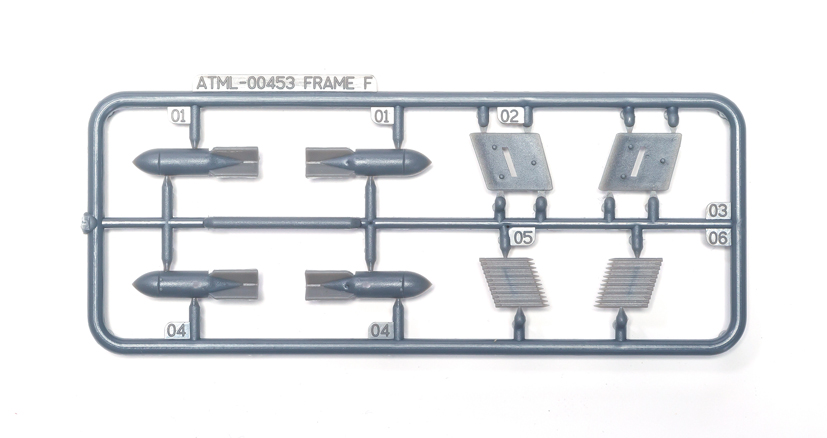
The latest Workbench exclusive, this image shows the additional part frame which will allow the fighter-bomber version of the Messerschmitt Me262 jet to be modelled
The first unit to operate the Me262A-2 ‘Blitzbomber’ were Kampfgeschwader 51 ‘Edelweiss’, flying out of Rheine airfield in northern Germany and tasked with attacking strategic Allied targets in Holland and Belgium. Approaching the target at speeds of around 420 mph, the attack force would usually consist of four aircraft, flying at an altitude of around 4,000 metres and once the bombs were dropped, the aircraft would use their great speed to evade interception, always with the option of using their two 30mm cannons should the need arise. Although unlikely to be intercepted by Allied fighters during their attack run, returning to base was a different matter and these light bombing strikes would ultimately prove to be nothing more than a defiant gesture. The aircraft covered in this scheme option wears the distinctive ‘scribble’ camouflage pattern, which was a feature of all KG51 Me 262s – 9K+BH (WK Nr.170096) was also the subject of some very clear wartime photographs, which have proved invaluable to modellers and researchers in the years following the end of WWII.
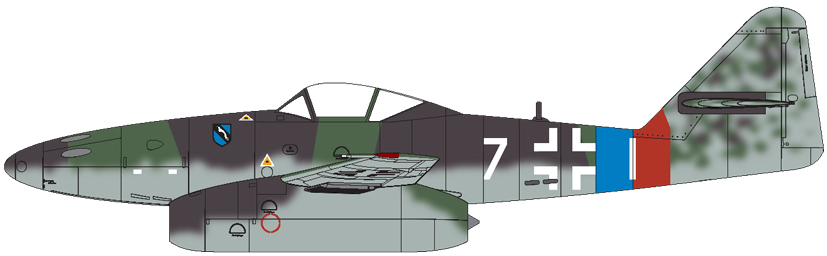
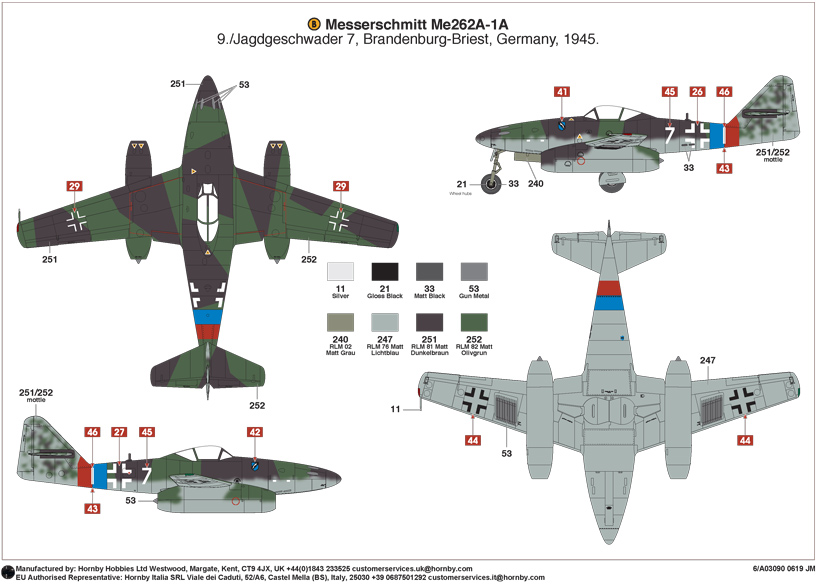
Although highly advanced and arguably the most capable fighting aeroplane of the Second World War, the Messerschmitt Me262 was very much a case of too little, too late and could not prevent Germany’s inevitable defeat at this stage of the war
Representing the primary production variant of the Messerschmitt Me262, the A-1A was the ‘Jabo’ fighter-bomber version of the aircraft desired by Hitler and was capable of being used as an interceptor fighter, or configured to carry bombs or air-to-air mortars on the under-nose stores pylons. With the aircraft’s four powerful nose mounted cannons used to devastating effect against the massed formations of USAAF bombers sent to attack German targets during daylight hours, the offensive firepower of some of these aircraft was further enhanced by the addition of the R4M ‘Orkan’ (Hurricane) rocket pack, one carried under each wing of the aircraft. Based around a rather rudimentary wooden mounting rack, twelve R4M stabilised rockets could be carried under each wing and whilst they were simple rocket projectiles, they had a similar trajectory to the main cannon shells, which allowed the pilot to use his cockpit mounted Revi gunsight to target the weapon. At around 2ft 8 ins in length and employing an explosive Hexogen filled warhead, the rockets would be loaded onto the wooden wing rack from back to front, with the stabilising fins folded forward and held in place by a spring and steel wire. The top (eighth) fin was also folded forward, but in such a way as to keep the retention wire in place, so that when it was fired, this top fin would spring open and release the other fins, thus giving the projectile a more predictable and stabilised trajectory towards the target. An R4M ‘Orkan’ rocket attack would usually be launched at a range of around 600 metres behind a bomber formation, with four salvoes of six rockets being unleased by each Me262. Despite the rather indiscriminate and slightly haphazard use of this weapon, each rocket had the potential to bring down a bomber, even before the attacking Messerschmitt had brought its cannon to bear, underlining why these jet fighters posed such a significant threat to Allied air operations and had to be stopped.
Occupying a unique position in the history of aviation, Jagdgeschwader 7 was the first operational jet fighter unit in the world, established in late 1944 and exclusively operating the Messerschmitt Me262 jet fighter. Formed from the nucleus of the initial test and evaluation unit of the new jet fighter, JG7 had pilots with the most experience in operating the Me262 and were therefore committed to combat against Allied air forces before any other unit, gaining valuable experience which could be passed on to other units. Suffering from a lack of fuel and aircraft spares, the transition from piston powered flight to jet propulsion was not without incident and around ten of the new jets were lost as a result of pilot error during training flights in the first few weeks of operation. During March 1945, the Me 262 fighters of JG7 began mounting larger scale raids against Allied bombers, but even though their success rates began to improve and they were destroying more aircraft than they were losing, they were already swimming against an Allied tide of victory, facing ever increasing numbers of enemy aircraft and unable to effectively replenish their own losses. In another significant first for JG7, their aircraft were the first to deploy the unguided R4M ‘Orkan’ rockets against Allied bombers, another ingenious, yet ultimately futile Luftwaffe attempt to regain superiority of the skies above Germany.
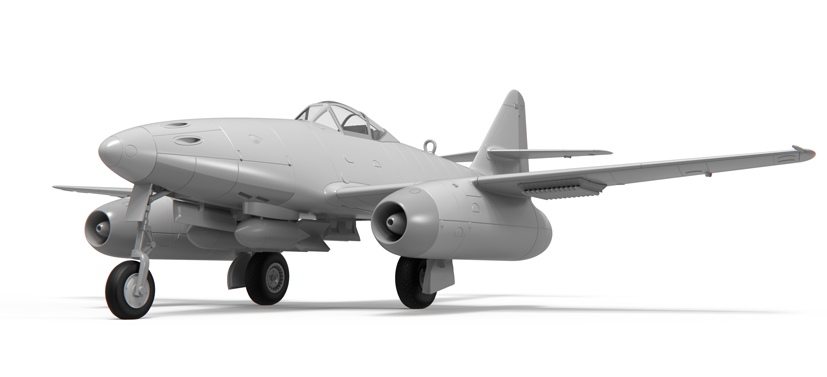
A final look at the profile of the new fighter-bomber variant of the famous Messerschmitt Me262, which is scheduled for an Autumn release
A Messerschmitt Me262 fighter from JG7 would go on to claim the final Luftwaffe aerial victory of WWII on 8th May 1945 and whilst combat victory claims by German jets during the final stages of WWII have proved notoriously difficult to corroborate, it is thought that as many as 420 Allied aircraft could have been shot down by the world’s first jet fighter unit.
Scheduled for an Autumn release, Messerschmitt Me262A-2a ‘Sturmvogel’ kit A03090 will be an extremely appealing addition to the Airfix range, with the additional parts helping to mark this significant version of the world’s first operational jet fighter.
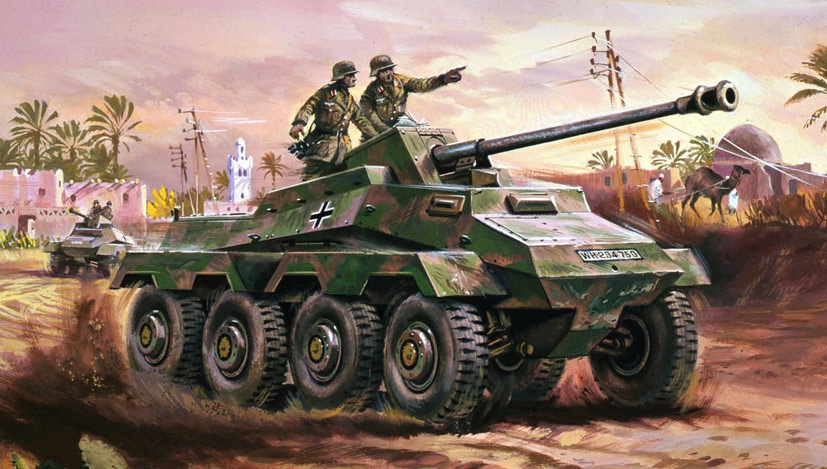
When the idea of revisiting a selection of classic and original Airfix model kit toolings was first discussed several years ago, we could have hardly imagined how popular the project would prove to be, rekindling modelling memories of old and encouraging many lapsed modellers back to the hobby. With the sight of classic Airfix box artwork in model shops once more, these attractively priced models have been flying off the shelves and relatively conservative production estimates have had to be revised to cope with demand. Clearly bringing back happy memories for modellers of a certain vintage, these classic models have allowed people who remember building them in their youth to have another go, bringing all their modelling skills to bear in producing a much more pleasing effort than the one which was originally built to allow a new model type to contest the crucial ‘carpet wars’ we all enjoyed acting out. Significantly, at a price which is roughly equivalent to the pocket money rates of old, the re-introduction of these nostalgic kits allows everyone to simply have a go at modelling, including those who may be experiencing the delights of model making for the first time – we all have to start somewhere and a classic Airfix kit is an ideal first modelling project.
The latest batch of impending Vintage Classics releases includes four military vehicle kits which many Workbench readers will have fond memories of building in years past, with the sight of the evocative box artwork reminding us of a time when securing your next model kit was definitely the most pressing priority in our lives. Amongst this group, Sd. Kfz.234 Armoured Car A01311V will certainly be remembered as one of the most interesting military models produced by Airfix and marked a vehicle which illustrated Germany’s wartime search for the ideal blitzkrieg support vehicle. With the ability to travel at speed over any terrain, The Sd.Kfz (Special Purpose Vehicle) 234 was a series of eight wheeled armoured cars which were only produced in relatively small numbers, but were configured in four very distinctive ways, each one based on the same chassis design. Featuring an innovative eight wheel steering mechanism, the Sd.Kfz.234 was initially produced with a small turret, which housed a 5 cm L/60 gun, however this was quickly replaced by an open topped version which proved much more effective in operation. Other variants included an armoured car equipped with a short barrelled 7.5ch gun for infantry support duties and the version modelled here, which was a mobile anti-tank vehicle. Although this attractive armoured car was no match for Allied heavy armour, it was in production from 1943 until the end of the war and could be regularly found on the battlefields of Europe and the Eastern Front, where it used its impressive speed and mobility to report enemy ground movements to heavier armoured units bringing up the rear.
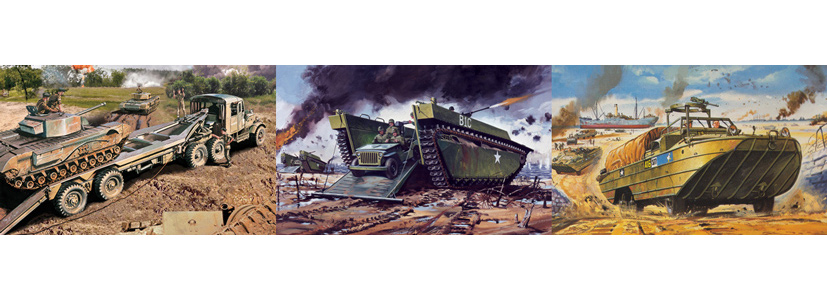
A classic Airfix Armoured Fighting Vehicle image montage. These magnificent kits are all destined to delight modellers over the coming weeks, a new challenge for some and a welcome reappearance for many
The Sd.Kfz.234 is joined by a trio of Allied armoured fighting vehicles, which whilst not tanks, can claim to be amongst the most interesting machines found on the battlefields of the Second World War. The British Churchill infantry tank was certainly one of the most distinctive tanks of WWII and whilst famed for its cross country performance, particularly when climbing hills, it was much quicker to transport the tank to the latest battlezone on the back of a Scammell Tank Transporter. Again producing an iconic Airfix modelling sight, the tank transporter with a Churchill or Cromwell on the back of its trailer is a thing of modelling beauty and was usually tackled once we had managed to build up a little more confidence in our abilities. Without doubt, amphibious vehicles of WWII allowed the Allies armoured flexibility which was simply not available to Axis forces and represented a crucial ability to move men and equipment quickly and efficiently from the landing beachheads. Although the ungainly looking DUKW is usually dismissed as an effective fighting vehicle, it proved to be one of the most useful Allied vehicles following the D-Day landings, possessing great on-road performance, as well as the ability to operate on water, if and when required. Used extensively during the American Pacific campaigns, the Buffalo amphibian could carry men and equipment from the landing support ships straight to the landing beaches, providing heavy supporting fire for troops desperate to move inland. This particular kit is suppled with a Willys Jeep and again builds into one of the most interesting AFV kits in the Airfix range. Sure to all be popular with vintage Airfix fans, all four of these models are scheduled for a late Summer, early Autumn release and can be pre-ordered on the Airfix website, or through you usual model supplier now.
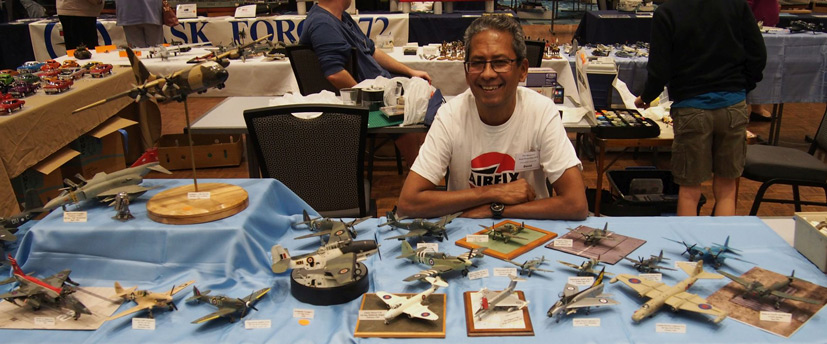
With Scale ModelWorld 2018 now just a distant memory, it is back to organising his local model show for Australian reader David Connolly
Regular Workbench readers will probably remember a blog article we included earlier this year which featured a well-travelled original 1956 Airfix Hawker Hurricane model we stumbled across at last year’s Scale ModelWorld show and the man who brought it all the way from Australia, so it could take its place on the Classic British Kits SIG display at the show. It was an absolute pleasure to make the acquaintance of Mr David Connolly, who described how his latest visit to England was his first since 2000 and not only included an enjoyable visit to the Telford show, but also a number of museum visits, catching up with relatives and several internet scale model forum contacts, plus a visit to our very own Hornby Visitor Centre at Margate. Well, David has been at the modelling again and has kindly sent us a short report from his local model expo in his home town of Port Macquarie, New South Wales, a show which he helped to organise. Having recently moved into a new home following a downsizing, David only unpacked his models from storage in days leading up to the show, but still managed to arrange an impressive display, with Airfix models featuring heavily.
David informed us that Port Macquarie Panthers Scale Model Expo 2019 took place over the weekend of 13th/14th July and how this coastal town of around 60,000 residents managed to attract 1,200 visitors to their modelling exhibition. Some visitors and exhibitors came from as far away as Canberra, bringing their 1/72 warships with them! A variety of scale models were represented, from working G and N scale railway layouts, to exquisitely carved wooden period ships, radio-controlled warships and aircraft, along with the more usual plastic models of all genres, paper models (one took Best in Show!) and model soldiers etc.
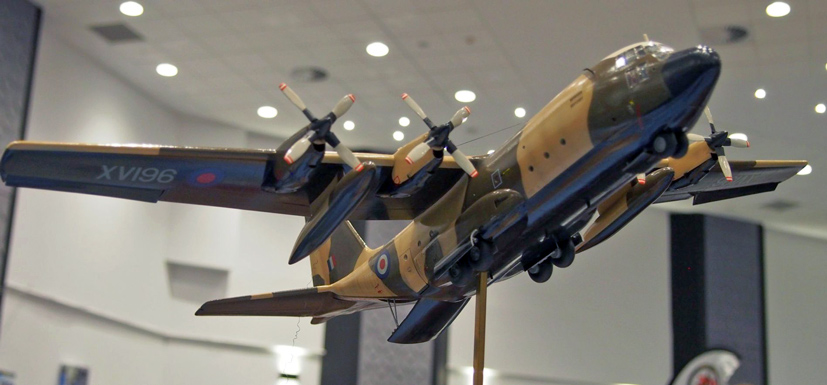
David claims that this was his first attempt at incorporating LED lighting into his modelling – we are not too sure about the results!
As for David’s display, he described how ‘All but one of the front row are Airfix models, all 1/72 unless noted below, with the closest thing to new tool is the 1/48 Airfix Club edition Spitfire XVI. Additionally, the Canberra, Saro Stingray (ok, so I have a fertile modelling imagination) and Lightning T.4 are all modified from the (sometimes very) basic, but still enjoyable old Airfix kits. The first generation 1/48 Ju-87 has been completed with acetate canopies and the 1/48 Jaguar has a resin cockpit and flaps, along with hollowed-out u/c bays behind the closed doors. The RAF Hercules was my first not-very-successful attempt at featuring LED lighting in one of my model displays. Due to my current circumstances, this year’s display was built around whatever I managed to unpack in time for the show and there is no build amongst this current collection that has been completed in the last 3 years or so. With the show now over, I need to try and find some time to drool over the relatively modest model haul I managed to pick up from the Model Expo traders on site’.
Once again, we would like to thank David for kindly sending us details of the Port Macquarie Model Show and it is great to see the hobby is alive and kicking in this picturesque corner of New South Wales – great t-shirt by the way!
Here is a final selection of Airfix related pictures from the show.
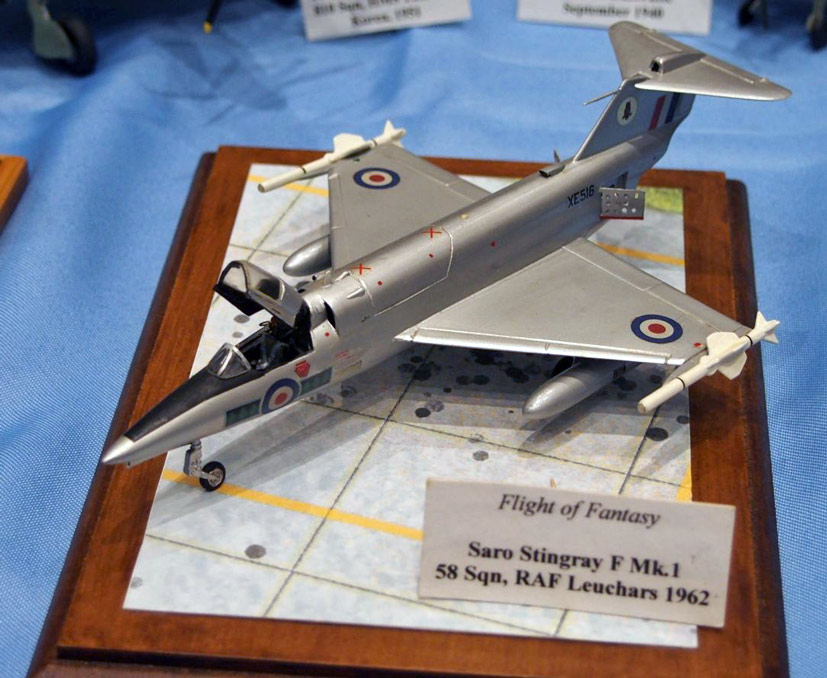
David is a real fan of building ‘what if’ and ‘Flights of Fantasy’ models, where he can really let his modelling imagination run riot
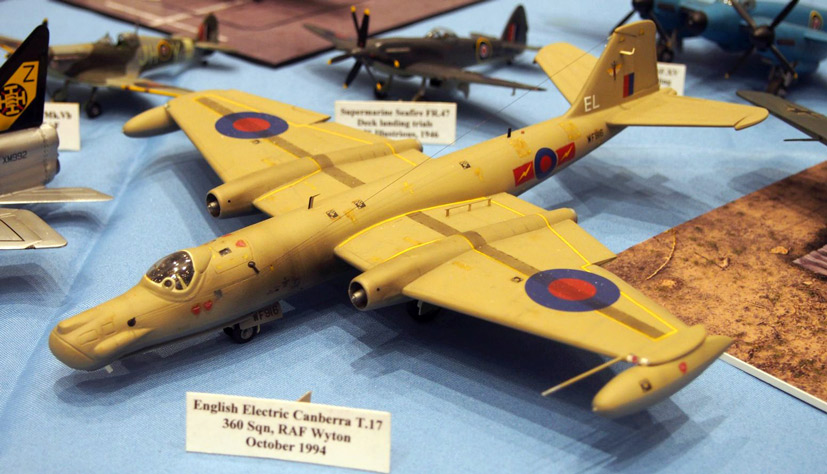
Still one of our most impressive kits, in this significant 70th Anniversary year, is there a better modelling project to start than an example of Britain’s first jet bomber?
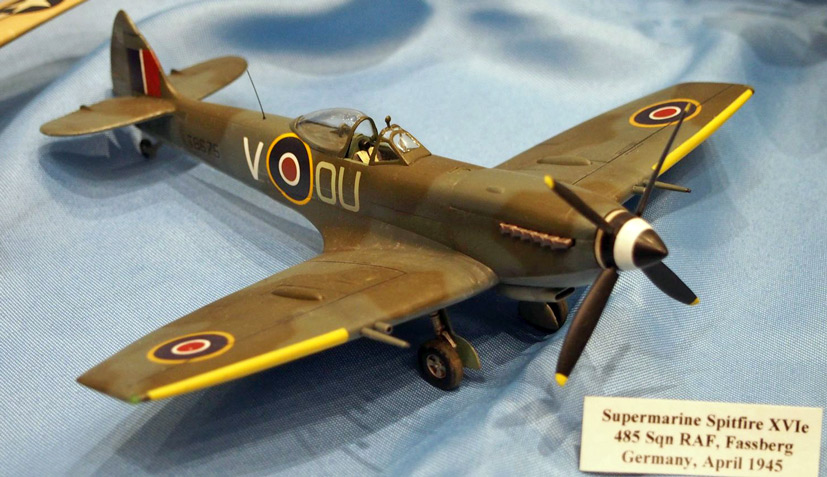
Always a popular modelling subject, Airfix will forever be inextricably linked with the incomparable Supermarine Spitfire
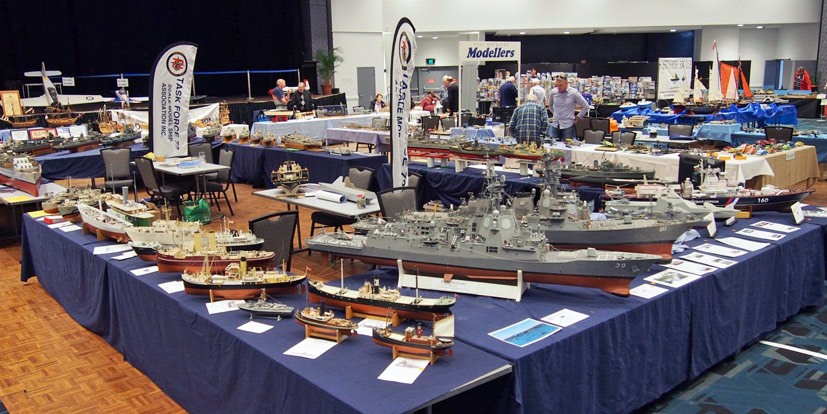
Ship ahoy. This magnificent display of ship models was a significant feature of the recent Port Macquarie Panthers Scale Model Expo
We are afraid that’s all we have for you in this latest edition of Workbench, however, we will be back as usual in two weeks’ time with a further selection of Airfix modelling delights for your enjoyment. In the meantime, if you have any suggestions for subjects you would like to see covered in a future edition of the blog, or ways in which we could enhance your enjoyment of Workbench, please do not hesitate in contacting us. We can be reached via our usual e-mail address workbench@airfix.com or by contributing to our Workbench thread over on the Airfix Forum. If social media is more your style, you could access either our Airfix Facebook page or Twitter channel, (using #airfixworkbench), where you will find plenty of modelling news, views and discussion taking place. Whichever medium is your preference, please do get in touch, as it is always interesting to hear from fellow modelling enthusiasts and the projects you have on the go at the moment.
As always, the Airfix website is the place to go for all the latest model release information, with our New Arrivals and Coming Soon sections both quickly accessed by clicking either of the links above. As updating the website is an ongoing process, a quick search through each section of the Airfix web pages will often reveal new information and updated images in many of the product sections and this is always an enjoyable way in which to spend a few spare minutes.
The next edition of Workbench is due to be published on Friday 2nd August, when we will have more news and modelling features from the fascinating world of Airfix.
On behalf of the entire Workbench team, thank you for your continued support our Airfix blog.
The Airfix Workbench Team
© Hornby Hobbies Ltd. All rights reserved.