Welcome to this latest edition of Workbench and all the news, updates and exclusive announcements from the fascinating world of Airfix modelling.
This week has witnessed the triumphant arrival of the first release from our new 1/72 scale Blackburn Buccaneer S Mk2 tooling A06021 and as we know this fantastic kit will be high on the list of a great many of our reader’s winter build schedules, we are unashamedly devoting the entire content of this latest blog to Blackburn’s classic strike jet, by way of a little modelling inspiration. Featuring an impressive selection of exclusive images, we will be bringing you pictures of built model samples finished in both of the scheme options included with this first release, as well as showing how this latest release perfectly complements another classic Airfix Fleet Air Arm related kit, one which only preceded the Buccaneer by a few months and one which has already become an Airfix favourite.
Also, by way of advanced notification, can you believe that we are now only 3 editions of Workbench away from the modelling extravaganza that is Scale ModelWorld and in the next edition of our blog, we will be bringing you an interesting update on how all our show preparations are coming along. It is already looking like attendance figures will be amongst the highest in the event’s history for this year’s show, so it is probably about time we all started to get a little bit excited and check that our attendance arrangements are in place. We will certainly be looking forward to meeting modelling friends old and new at the event, so if you are heading down to Telford’s International Centre over the weekend of 9th/10th November, please do come and find the Airfix team and see what we have brought along for your delectation. Right then, let’s head straight for the deck of HMS Ark Royal, or the modelling equivalent of it.

As one of Britain’s most successful and distinctive post war strike jet designs, the Blackburn Buccaneer proved itself during the dangerous years of the Cold War and whilst always proudly displaying its unmistakable naval aviation heritage, would also go on to serve the Royal Air Force with distinction. Perhaps the most appropriate word to describe the Buccaneer is ‘tough’, as this deceptively large aeroplane was required to undertake the extremely demanding role of performing low altitude strike sorties, often at wave-top heights and often at high subsonic speeds. Lacking many of the advanced flight control systems found on the current breed of combat aircraft, this was a real pilot’s aeroplane, reassuringly stable, no matter at what height you were operating.
The Blackburn Buccaneer can trace its development history back to the 1950’s and a massive naval expansion programme undertaken by the Soviet Navy. With their intention to introduce large numbers of their new Sverdlov Class Cruisers into service, the Royal Navy were concerned that they would not be in a position to mount an effective defence against this new threat with their existing force alone. Simple economics dictated that Britain would not be in a position to undertake a similar expansion programme of their own, so it was quickly decided that a capable new naval strike aircraft would be the most effective way to meet this challenge, one able to operate from existing carriers, but possessing the ability to detect and destroy the new Soviet vessels.
The aircraft would be the first of its type to be developed from the outset as an ‘under radar’ design and would need to provide excellent performance at low altitudes, as well as the capability to deliver nuclear munitions on their target, if required. Clearly, these parameters would place extreme demands on any aircraft, however, the new jet would need to achieve all this whilst operating from one of Britain’s diminutive aircraft carriers – this would have to be a very special aeroplane indeed.
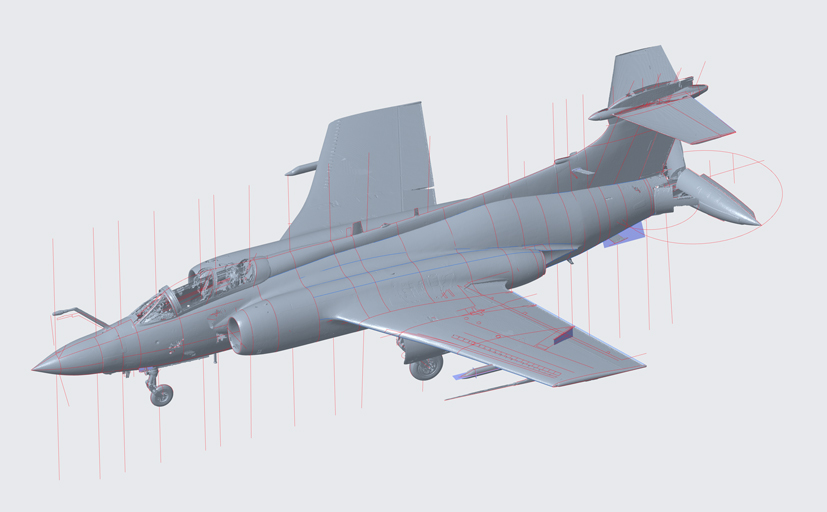
Airfix Buccaneer beginnings and the start of the 3D modelling process. 2D curves are carefully drawn, following the complex surface contours of the scan data. Where possible, these are positioned to line up with the frames and ribs of the full size structure, so that the original drawings can be referenced
Developed under a cloak of international secrecy, the favoured design was submitted by famous British naval aircraft manufacturer Blackburn and was referred to as the Blackburn Advanced Naval Aircraft (BANA), an acronym which would stay with the aircraft throughout its life and a somewhat predictable nickname of the ‘Banana Jet’, although its fuselage did certainly possess a banana like resemblance. Although well versed in the production of naval aeroplanes, this would be the Company’s first jet aircraft and the demands placed on its operating and performance criteria dictated that the project would pose many manufacturing problems for the Blackburn team, not least the fact that the strength and durability of the aircraft would require components to be worked from solid blocks of metal.
The technology required to undertake this kind of work would usually be sourced from the US, however, this would not be possible in this case, as the lead time would be an unacceptably long three years – Blackburn set about producing their own bespoke machinery. Clearly, producing an aircraft capable of withstanding the rigors of carrier operation and the stresses associated with fast, low level operations dictated that their new aircraft would have to be tough, but this strength would come at a cost. Building in the necessary levels of strength and durability into the design resulted in an aerodynamic penalty and the performance of the aircraft would therefore be compromised, nevertheless, what they eventually produced was a truly exceptional aeroplane.
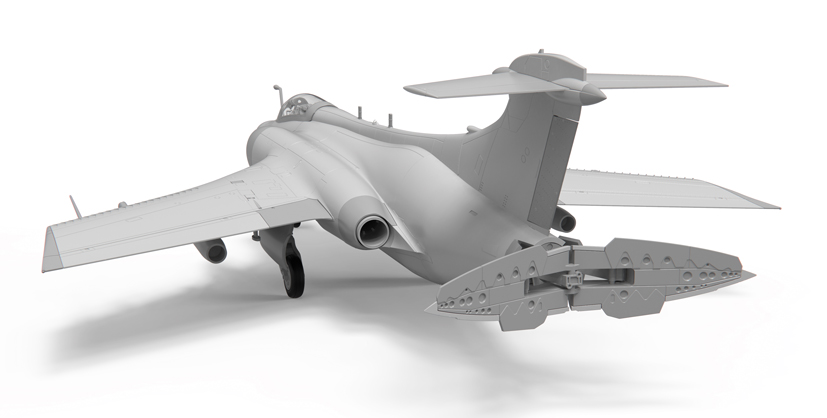
Computer rendered image of the new 1/72nd scale Blackburn Buccaneer, produced to illustrate this exciting new project for both catalogue and website purposes
Their Buccaneer may not have been capable of supersonic performance, but it was highly manoeuvrable, built like a brick outhouse and was without doubt, the most capable aircraft of its kind in the world – it also happened to be the heaviest aircraft the Royal Navy had ever operated. Fulfilling its original design specification requirements to the letter, the Buccaneer was a potential nightmare for the Soviet Navy and brought our own Royal Navy the reassurance it needed in the face of significant Soviet naval capability upgrade.
The Buccaneer posses such rich post war aviation pedigree, that it has long been a favourite subject for both the aviation enthusiast and modeller alike and news that the Airfix development team had started work on a highly detailed new 1/72nd scale kit of the aircraft at the beginning of 2019 was of great interest to many. With this incredibly popular new model now available in good model shops everywhere, we are pleased to be in a position to bring you this exclusive series of images which feature a pair of completed advanced sample models, each one finished in the two scheme and decal options included in the new kit – a pair of Fleet Air Arm beauties.
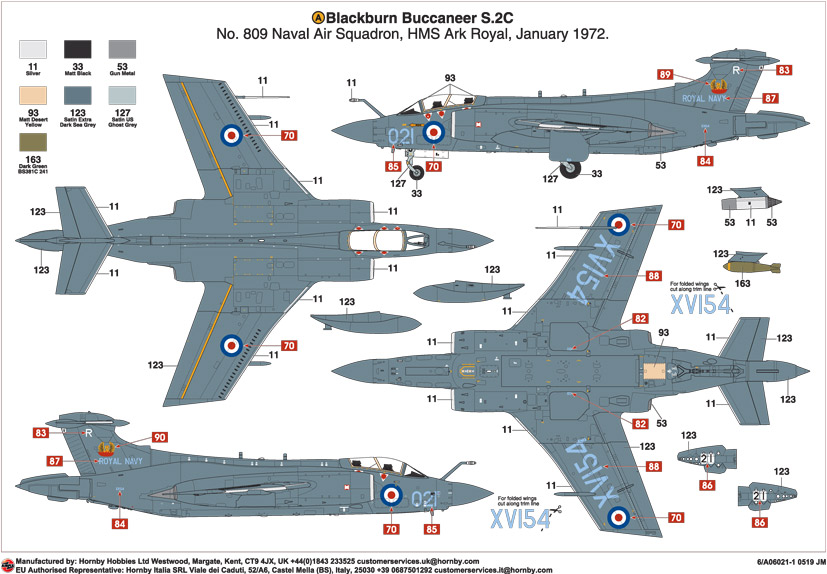
Full scheme details which allow modellers to produce one of the two Blackburn Buccaneers which rather effectively ‘buzzed’ Belize City in January 1972
The Buccaneer was a very large aeroplane, which served onboard Britain’s relatively small aircraft carriers with other large and powerful aeroplanes. Initially, these would have been De Havilland Sea Vixens, but this twin boom naval fighter was replaced in 1970 by the even larger McDonnell Douglas Phantom. The sight of these mighty aircraft operating from the decks of HMS Ark Royal must have been truly magnificent, if a little terrifying for those involved – there would certainly have been no room for error. During the final eight years of her service life, the strike component of Ark Royal’s air wing comprised 14 Buccaneer S.2s of No.809 Naval Air Squadron, along with Phantom FG.1s, Fairey Gannets, along with Sea King and Wessex helicopters, usually around forty aircraft in total.
No.809 Naval Air Squadron’s association with the Buccaneer began back in early 1963, when they re-formed as the second FAA Buccaneer squadron, at that time operating the original S.1 variant aircraft. They received the much improved S.2 in 1966, aircraft which replaced the half white-half dark sea grey scheme of their predecessors for a smart all-over extra dark sea grey livery, whilst still retaining the units famous ‘Phoenix’ emblem on their tails. With six aircraft embarking on the deck of HMS Hermes for the first time in 1966, the squadron’s longest shipborne association would prove to be the almost eight years spent on HMS Ark Royal, where from 1972 onwards, No.809 Naval Air Squadron became the last Fleet Air Arm squadron to operate the Buccaneer.
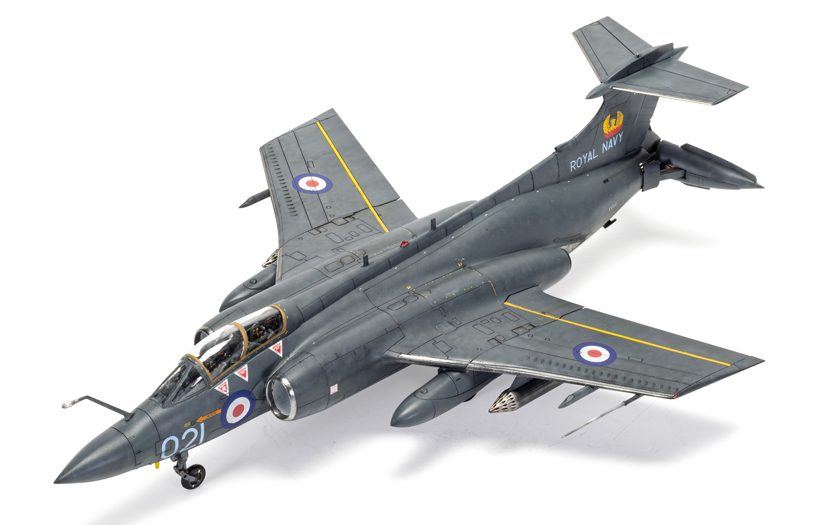
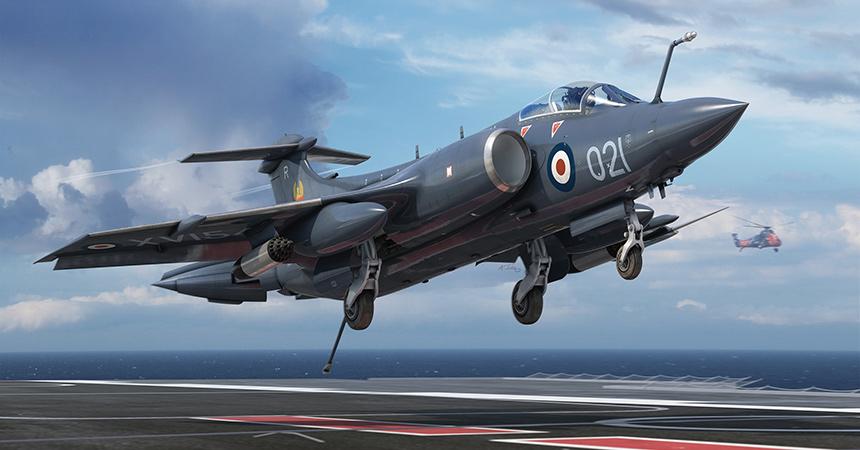
This exclusive selection of build images show an advanced sample of our new Buccaneer kit finished in the lead scheme, XV154 embarked on HMS Ark Royal during 1972
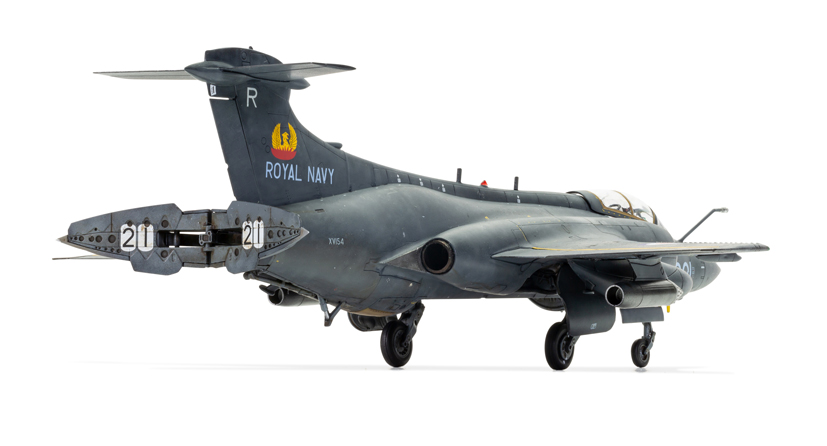
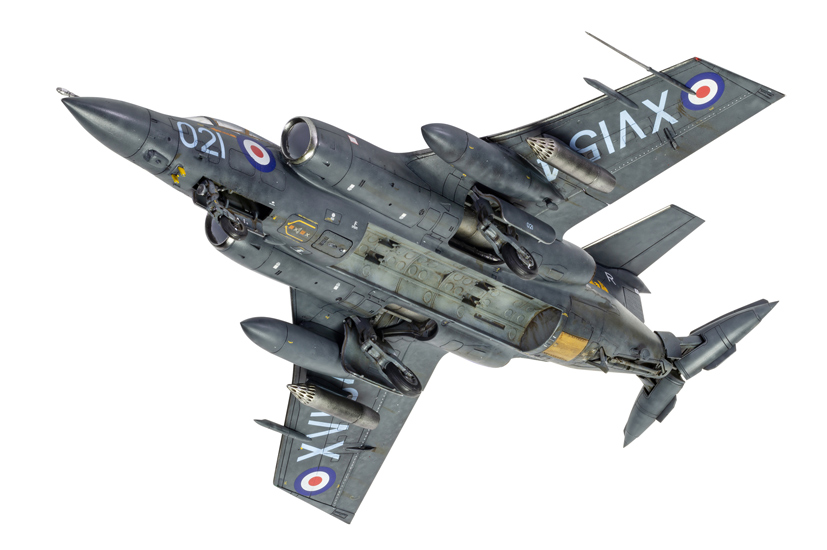
During their time on Ark Royal, navy Buccaneers were involved in many exercises and international deployments, but perhaps non as interesting as a situation which arose in 1972. Following a breakdown in negotiations between Britain and the Guatemalan Government over the disputed sovereignty of British Honduras, there was the very real threat of a hostile invasion and Britain were keen to show their intentions to repel such an incursion. Ordered to steam for the region with some haste, the crew of HMS Ark Royal immediately began to draw up a plan, whereby their air wing could display a show of their awesome striking potential, in an attempt to prevent this disagreement from escalating into conflict.
As soon as the ship was within range, she launched four of her Buccaneer strike jets on what turned out to be a momentous 2600 mile, six hour sortie to reassure the people of British Honduras and to strike fear into the hearts of Guatemalan forces who may have been preparing for invasion. With two of the Buccaneers acting as ‘buddy tankers’, the remaining two Buccaneers announced their presence over Belize City with two noisy and attention grabbing orbits, underlining the fact that should it come to it, HMS Ark Royal possessed much greater destructive potential than anything the Guatemalan forces could call upon. Thankfully, crisis was averted and the reputation of the Buccaneer’s striking capabilities (and long sea legs) saved the day.
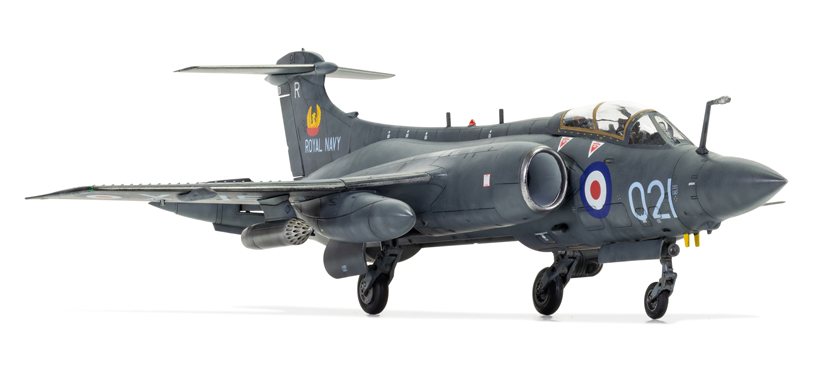
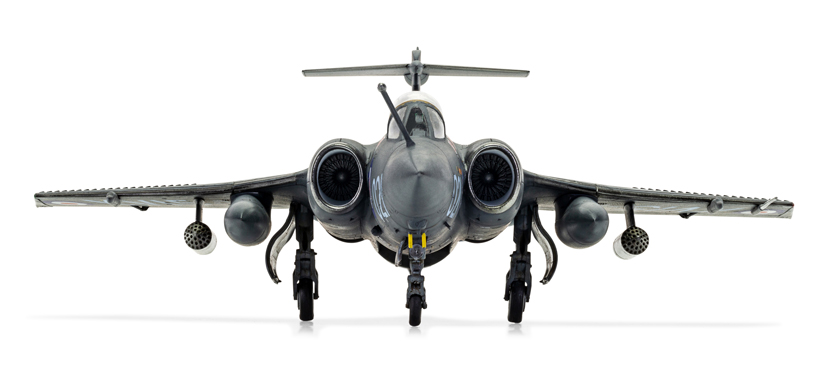
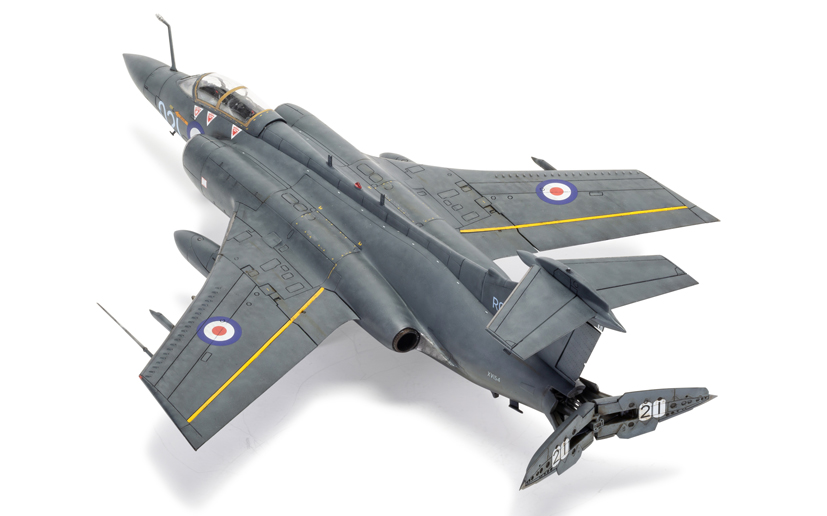
This particular Atlantic deployment proved to be one of Ark Royal’s most eventful cruises and actually resulted in the loss of one of her Buccaneer S.2s. During deck handling manoeuvres at night, Buccaneer XT269 fell off the deck of the ship and into a watery grave, a rather expensive mistake which must have seen at least one person reporting to the Captain first thing in the morning.
The lead Buccaneer scheme details to be included with the release of our new 1/72nd scale kit allows the modeller to finish their model as one of the two Buccaneers which performed the invasion preventing ‘Buzz job’ over Belize City in January 1972, which at that time, was one of the longest missions of its kind ever to be undertaken – an interesting episode in the illustrious history of the Blackburn Buccaneer. Interestingly, No.809 NAS and their ‘Immortal Phoenix’ will re-commission in April 2023 as Britain’s second Lockheed Martin F-35B Lightning II squadron, carrying the naval standard of this unit into the future, as they once again operate one of the world’s premier fighting aeroplanes.
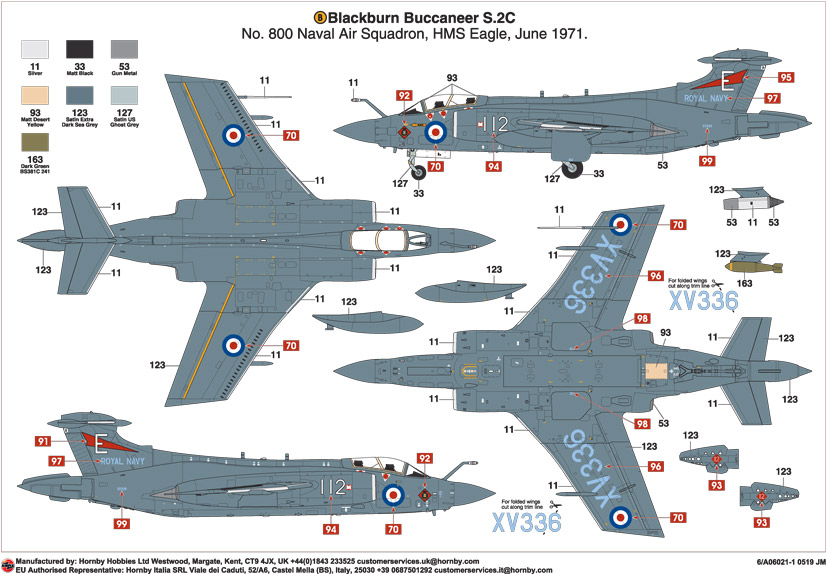
Again sporting a rather colourful tail, this scheme option marks one of HMS Eagle’s Buccaneer S.2s during her final year of service and only months before this aircraft was transferred to Royal Air Force service and a new career as a land based strike fighter.
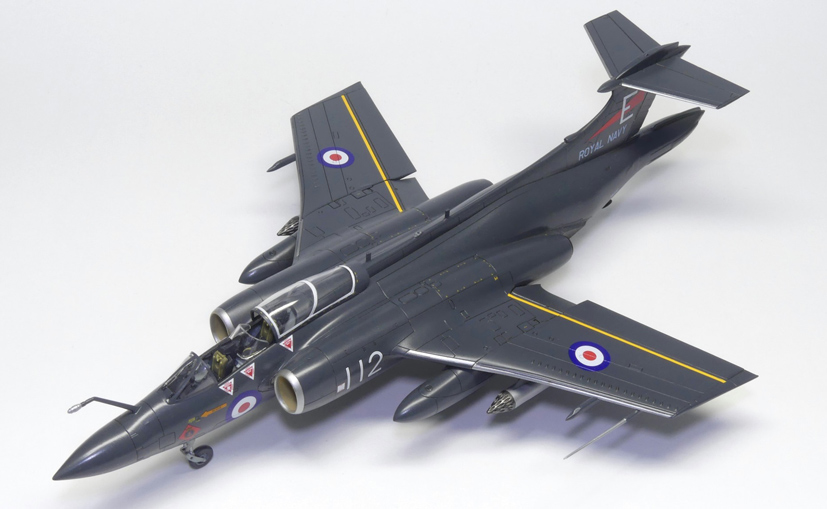
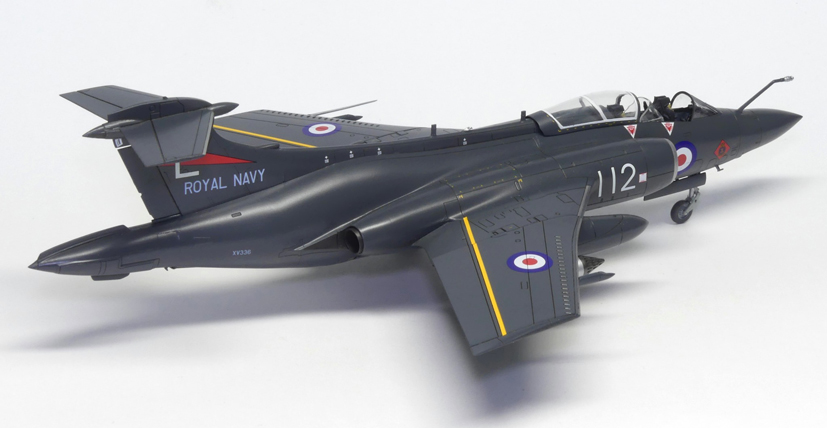
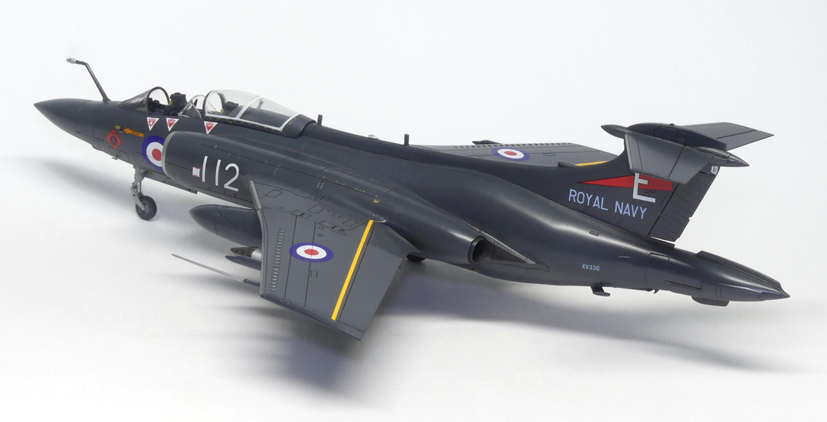
Equipped with the Buccaneer S.1 from March 1964 and operating from the decks of HMS Eagle, No.800 NAS would launch their aircraft with a full weapons load, but only limited fuel, as the size of the carriers deck and the relatively low power of the aircraft’s Gyron Junior engines would not allow the aircraft to do both. Following launch, these early Buccaneers would take on more fuel from waiting Supermarine Scimitar tankers, before embarking on their latest mission. This complex scenario was eradicated with the arrival of the Rolls Royce Spey powered Buccaneer S.2 in 1966, as its improved performance allowed the aircraft to be operated with both fuel and weapons, making this the ultimate fleet strike aircraft.
With its exceptional low altitude performance and ability to carry a wide weapons load, the Buccaneer was a feared adversary and one which maintained the Royal Navy as one of the world’s elite fighting units. The Buccaneers of No.800 NAS were famously involved in the destruction of the stricken oil tanker Torrey Canyon off Lands End in March 1967, as the government attempted to avert an environmental catastrophe by breaking open the vessel and burning its flammable cargo. Operating from RAF Brawdy, eight Buccaneers from No.800 NAS dropped 42,000 lbs of high explosive bombs on the tanker, achieving an impressive 75% success rate.
After their involvement in this historic event, the squadron’s Buccaneers would be associated with HMS Eagle for the remainder of its service life, mainly operating with Sea Vixen and Gannet aircraft, but also used to trial the Navy’s adoption of the mighty McDonnell Douglas Phantom. The normal operating configuration of the carrier’s Buccaneers would be ten aircraft maintained in their usual strike configuration, two configured for reconnaissance duties and the remaining two as buddy tankers – in this way, the squadron were ready to face any potential mission scenario, allowing the carrier to be at her most effective.
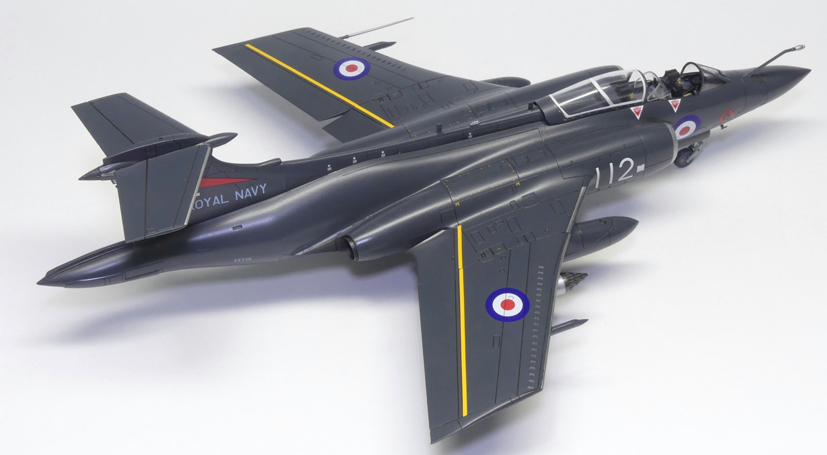
Finished in this attractive No.800 NAS scheme, HMS Eagle’s Buccaneer XV336 is the second scheme option available with the release of the first kit from this new 1/72nd scale tooling
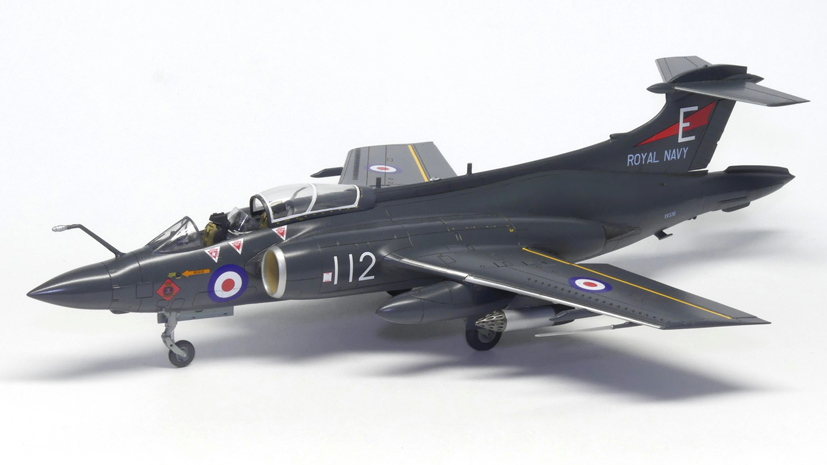
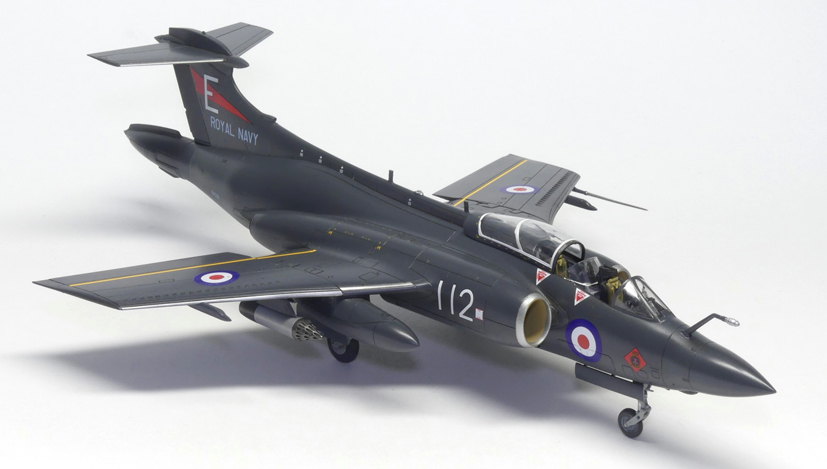
Although thought to be in better cosmetic condition than her sister ship HMS Ark Royal, the decision not to refit Eagle for Phantom operation saw the transferral of 20 Fleet Air Arm Phantoms to Royal Air Force service and ultimately, the withdrawal from service of this famous ship. As she docked at Devonport in early 1972, she was stripped of all useable components and her Buccaneers flew to Lossiemouth, where they effectively came under the control of the RAF. With the disbandment of the squadron in the same month, the Fleet Air Arm were left with just one operational Buccaneer squadron, the flying Phoenix of No.809 NAS.
Blackburn Buccaneer S.2 XV336 was constructed at Brough during 1966, making her maiden flight from Holme-on-Spalding Moor on 31st January the following year. She entered Fleet Air Arm service on 28th February 1967 and would spend much of the next four years operating from the decks of HMS Eagle, providing the Navy with a capable strike force. Like most of the former Fleet Air Arm Buccaneer S.2 airframes, XV336 was passed to the Royal Air Force in 1972, where she would spend the majority of her service life wearing the camouflage of a land based strike jet, though still retaining her naval heritage. She was scrapped at Shawbury in October 1991, an ignominious end for one of the Cold War’s most effective naval strike jets.
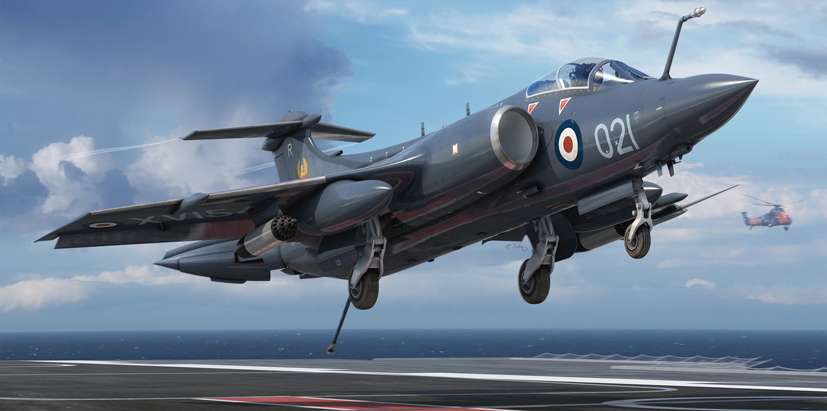
This distinctive box artwork is about to become a regular sight in model shops all over the world, although the initial release of the new Buccaneer kit is destined to sell out in super quick time
It is somehow fitting that the first two scheme options included with the release of our new 1/72nd scale Buccaneer S Mk2 tooling A06021 should reflect the naval heritage of the aircraft, which was originally intended to equip the Royal Navy with a world leading strike option. Even though the aircraft would end its service life wearing the markings of the Royal Air Force, this magnificent aircraft was built for service at sea and excelled in this role. Our fantastic new Buccaneer kit is available now, with pre-ordered models in the process of being dispatched and good model shops everywhere receiving their supplies as we speak. As one of the most eagerly anticipated new tooling announcements of recent years, these first kits will not be around for long, so please do not delay in making sure one is sitting on your own workbench.
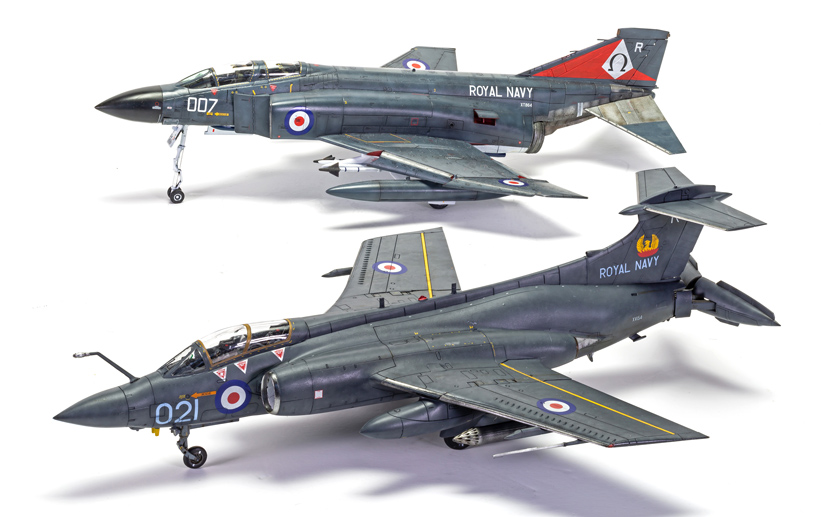
For many people of a certain age, the name Ark Royal conjures up images of Britain’s iconic post war aircraft carrier and the nation’s high profile floating air force, which gave our military great flexibility when it came to international influence. Undoubtedly, this will be due in no small part to the magnificent ‘Sailor’ TV series which was aired during 1976 and followed the ship and her crew during a lengthy deployment to North America. Originally aired consecutively over a 10 week period, the series showed every aspect of life on Britain’s relatively diminutive ‘flat top’ and effectively portrayed the excitement and potential dangers of operating fixed wing aircraft from what was in relative terms, quite a small aircraft carrier.
Central to the success of this series was the unforgettable sight of Fleet Air Arm Buccaneers and Phantoms slamming down on the deck of the carrier, underlining the capabilities of naval aviators and the strength of their robust mounts. Who can forget the sight of a Buccaneer safely grabbing the arrestor wire on the deck of Ark Royal, coming to a violent halt, whilst another Buccaneer is already turning onto finals in the background? These thrilling images left a lasting impression on millions of people and gave us a real admiration for the aircrews and deck personnel who ensured all this action was carried out in a safe and orderly manner.
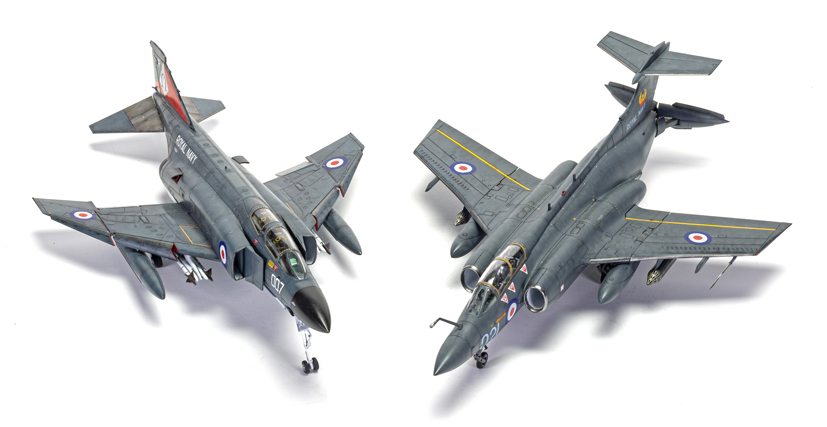
Looking at the relative size of these two beautiful models, it is not difficult to imagine how exciting a place the deck of HMS Ark Royal must have been during the 1970s
Ark Royal’s final air wing usually consisted of a compliment of 39 aircraft, which included both the Blackburn Buccaneer and McDonnell Douglas Phantom, two of the heaviest and most powerful aircraft to operate from the deck of a British aircraft carrier. Indeed, Ark Royal had the distinction of being the only non-US ship to operate the mighty Phantom at sea. From a modelling perspective, the release of our new 1/72nd scale Buccaneer will allow modellers to potentially replicate the fascinating scenes we all remember from the ‘Sailor’ series and mark the final air wing embarked on this famous aircraft carrier during the 1970s. To give Workbench readers an idea of what we are talking about, these exclusive build sample images will certainly serve as inspiration for many and will probably result in many readers adding both the Phantom and the new Buccaneer to their future build schedules. We are sure you will agree, they look absolutely magnificent!

Last weekend’s Battle of Britain Airshow, held at the Imperial War Museum’s famous Duxford site, served up an absolute feast of aviation and one which not only effectively brought the 2019 Airshow season to a close, but also provided a poignant commemoration to the airmen who took part in the air battles during the summer of 1940. The beautiful weather forecast for Saturday saw huge crowds descending on the airfield, all attracted by the promise of seeing large numbers of Spitfires and Hurricanes in the air during the afternoon and a display programme which was undoubtedly one of the most appealing of this current show season. Saturday’s show certainly lived up to its impressive billing and even the worsening conditions experienced on Sunday could not take the gloss of a hugely enjoyable event and fitting tribute to the airmen of the Battle of Britain.
As Duxford occupies such a significant position in the history of British aviation, their Airshows are always a magnet for both hardened enthusiasts, as well as people simply looking for an enjoyable day out and significant crowd numbers always ensure an impressive number of ground displays and trade stands are available for inspection over the show weekend. As you might expect, the Airfix brand is strongly represented at any Duxford show, with our famous logo (and kits) appearing in the Duxford shops and on any number of trade stands across the site. This year, as well as gathering information for our Aerodrome blog, a small Airfix team were in attendance at Duxford, manning an impressive display showcasing our popular Quickbuild models, which for the first time at a Duxford show included examples of the new D-Day Spitfire and Mustang models. Allowing visitors to have a go at building the models, with a selection of completed Quickbuilds serving as construction inspiration, the team were busy all weekend, especially during the showers of Sunday afternoon and were delighted to meet so many Airfix fans, young and old.
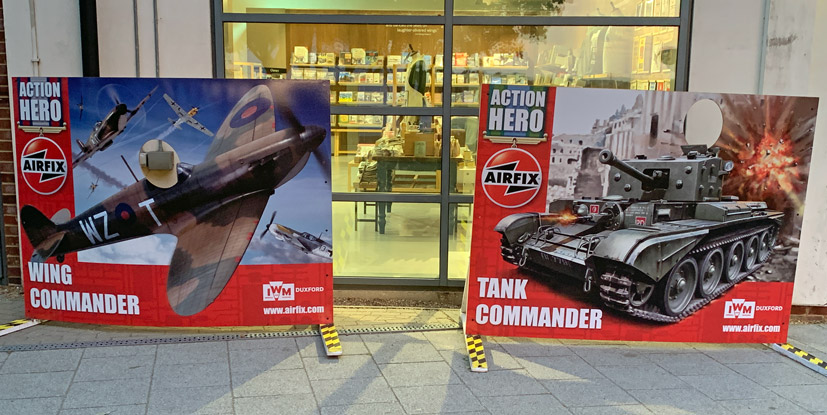
There will have been plenty of Airfix Action Heroes at last weekend’s Duxford Battle of Britain Airshow
At the eastern end of the airfield, outside the main entrance and near to the huge AirSpace hangar, we spotted an unusual Airfix attraction we made a couple of years ago - it was great to see it and to know it is still proving popular with Duxford visitors. If any Workbench readers took the opportunity to become an Airfix Action Hero over the weekend, please do send pictures to our workbench@hornby.com contact address, so we can share your achievement with fellow readers. You can never turn down the opportunity of finding yourself in the cockpit of a Spitfire, especially at Duxford!
We are afraid that’s all we have for you in this latest edition of Workbench, however, we will be back as usual in two weeks’ time with a further selection of Airfix modelling delights for your enjoyment. In the meantime, if you have any suggestions for subjects you would like to see covered in a future edition of the blog, or ways in which we could enhance your enjoyment of Workbench, please do not hesitate in contacting us. We can be reached via our usual e-mail address workbench@airfix.com or by contributing to our Workbench thread over on the Airfix Forum. If social media is more your style, you could access either our Airfix Facebook page or Twitter channel, (using #airfixworkbench), where you will find plenty of modelling news, views and discussion taking place. Whichever medium is your preference, please do get in touch, as it is always interesting to hear from fellow modelling enthusiasts and the projects you have on the go at the moment.
As always, the Airfix website is the place to go for all the latest model release information, with our New Arrivals and Coming Soon sections both quickly accessed by clicking either of the links above. As updating the website is an ongoing process, a quick search through each section of the Airfix web pages will often reveal new information and updated images in many of the product sections and this is always an enjoyable way in which to spend a few spare minutes.
The next edition of Workbench is due to be published on Friday 11th October, when we will have more news and modelling features from the fascinating world of Airfix.
On behalf of the entire Workbench team, thank you for your continued support our Airfix blog.
The Airfix Workbench Team
© Hornby Hobbies Ltd. All rights reserved.