Welcome to this latest edition of Workbench and all the news, updates and exclusive announcements from the fascinating world of Airfix modelling. How do you follow the excitement of our centenary blog edition and all those details from the development of our magnificent 1/24th scale Grumman F6F-5 Hellcat? The only way we know how, with more Airfix exclusives and just a little more Hellcat action. In this 101st edition of Workbench, we begin by looking at the latest new kit announcement from our newly tooled 1/72nd scale Vickers Wellington, including an exclusive first look at the additional part frames to be included with this model and a closer look at the two scheme options featured in the kit. We return to the subject of our new Grumman Hellcat just prior to its release date, in order to feature the remaining three scheme and decal options included with the kit, details which were not covered in our previous edition, before ending with a modelling tribute to the magnificent North American Mustang, an aircraft type which continues to fascinate modellers, no matter which scale the kit is produced in. First though, let’s look at how one of Britain’s most famous wartime bombers was pressed into service as a U-Boat hunter, in a relatively unsung battle to protect Allied shipping from these unseen raiders.
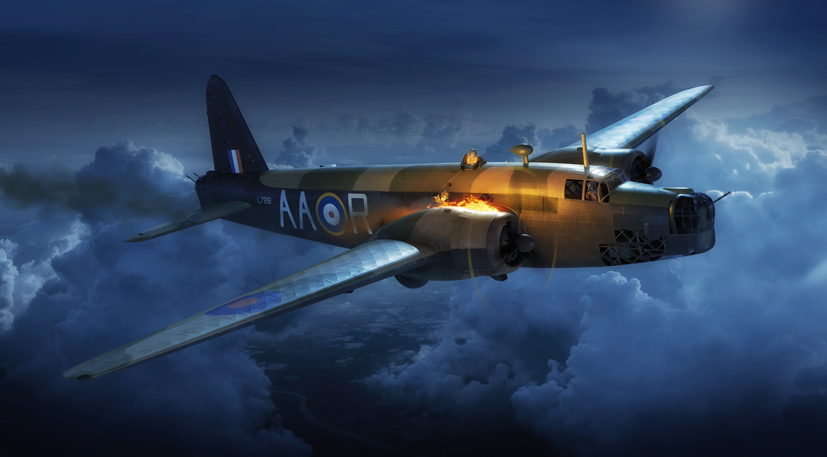
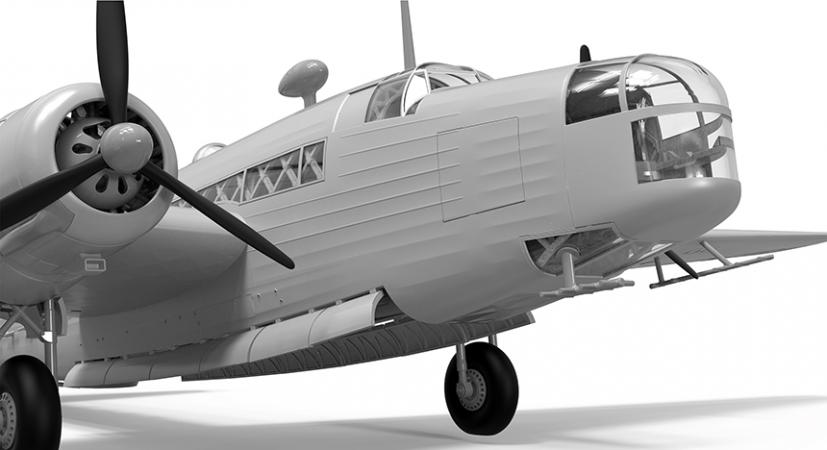
Since the launch of the new Airfix Vickers Wellington tooling, it has proved that this famous bomber is still an incredibly popular modelling subject
Although the Spitfires and Hurricanes of the Battle of Britain are usually regarded by most people as the most important British aircraft during the early months of the Second World War, there are other aircraft types which also qualify for inclusion in this group, with the Vickers Wellington being perhaps the most notable. Britain’s bomber force at the beginning of WWII only consisted of around 300 aircraft in total and was made up of both light and medium bomber squadrons. The most capable medium bomber in service at that time was the twin-engined Vickers Wellington, an aircraft which first flew 1936 and entered RAF service with No.99 Squadron at Mildenhall in October 1938. These early production aircraft bore little resemblance to the prototype machine, which was in truth, a rather unusual looking aeroplane and one which did not appear to display any future military usage, however, further development would give the Wellington a much more aggressive appearance. Compared to contemporary medium bombers already in service, the Wellington gave the impression of being a much more advanced bomber and an aircraft to be feared by any potential enemy. Its sleek monoplane design and heavy defensive armament placed the new Wellington as one of the most advanced and capable medium bombers in the world and it would go on to play a significant role in the conflict to come.
Perhaps the most significant feature of the Wellington’s design was the adoption of a geodetic construction method, which was developed by famous British engineer and inventor Barnes Wallis. Duralumin W-beams were used to form a metal lattice-work construction on to which wooden battens would be screwed, which would then allow the doped fabric outer skin of the aircraft to be attached. The resultant fuselage was relatively light in weight but possessed great strength and whilst this method of construction posed challenges for companies engaged in manufacturing Wellington bombers, the inherent strength of the design would prove crucial when the aircraft was thrust into the flames of conflict. Capable of withstanding significant battle damage, it has been reported that numerous RAF Wellingtons managed to bring their crews back home safely, despite having sustained heavy punishment, damage which would have resulted in the destruction of most other bomber types.
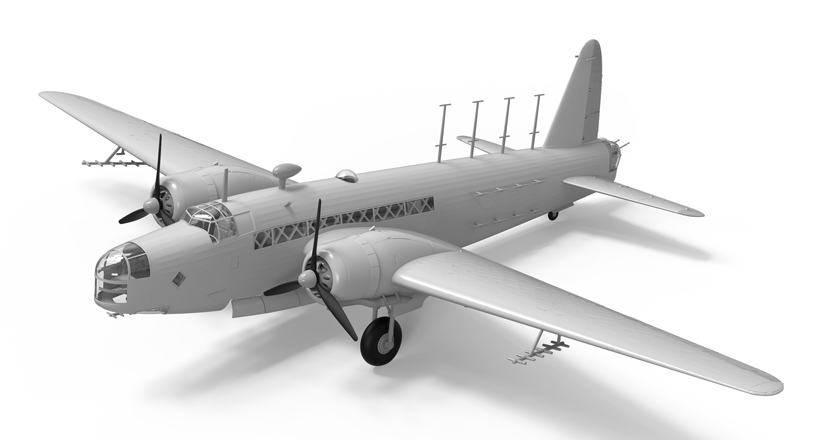
Only a relatively small number of Coastal Command Wellingtons were modified to carry both the ASV Mk.II radar and Leigh Lights, however, they would force a change in tactics for German U-boats charging their batteries and made a significant contribution to the Allied war effort
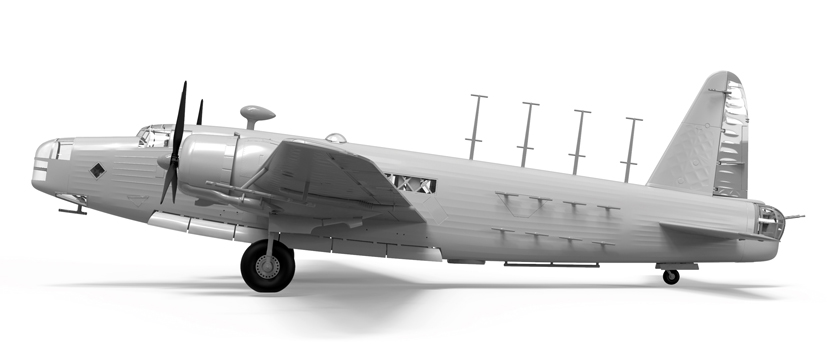
Involved in bombing strikes against enemy targets from the first day of the Second World War, the Wellington would go on to form the backbone of Bomber Command, taking the fight to Germany, even after the introduction of the first British four engined heavy bomber types. It would also be pressed into service around Britain’s coastline, with the Wellington’s size, endurance and adaptability making it the only suitable aircraft at that time to undertake these crucial missions. Initially employed in both laying and destroying anti-shipping mines, Wellingtons would go on to help fight one of the most crucial battles of the Second World War, the Battle of the Atlantic. The struggle to keep Britain’s sea lanes open was a battle the country had to win, as the alternative would have seen the nation starved into submission and the Germans further tightening their grip on Europe. Entering service in the April 1942, the Wellington GR Mk.VIII was a development of the RAF’s Mk.IC, specifically built for Coastal Command duties and equipped with new equipment designed to detect and destroy U-Boats. Distinctive by the addition of an array of fuselage mounted aerials, these Wellingtons were equipped with ASV Mk.II radar, an Air-to-surface (vessel) system carried to help the aircraft detect the presence of U-Boats, which would be attacked straight away. These long ocean patrols proved to be incredibly successful against the U-Boat menace, specifically as the submarines could no longer hunt with the relative impunity they initially enjoyed and were force to completely re-evaluate how they operated – in effect, the hunters had become the hunted.
Some of Coastal Command’s Wellington Mk. VIII aircraft were modified to carry a Leigh Light, which was designed to help with the night detection of surfaced U-Boats. An essential weapon in the battle against the U-Boats, the Leigh Light was a powerful 22 million candlepower carbon arc searchlight which was carried in a cradle, which could be lowered from the fuselage of the aircraft, behind the wing root. Used in conjunction with the radar unit, the crew of the aircraft would have already detected the U-boat, however, it would have been difficult to attack their target in the dark without the aid of this powerful light. Used from June 1942 onwards, the light allowed Coastal Command crews to attack German submarines which had surfaced to re-charge their batteries, with the cloak of darkness having previously made them safe from attack by enemy aircraft. With the presence of the U-Boat already detected, the light would only be switched on during the final moments of the Wellington’s attack, not giving the vessel enough time to take evasive action and giving them the best chance of success. This attack method proved to be so successful that U-boats were forced to carry out their battery re-charging during daylight hours, clearly making them much more vulnerable to enemy attack, but allowing their look-outs more time to react to the presence of aircraft. Crucially, the use of Leigh Light equipped Wellingtons brought about a significant reduction in shipping losses due to U-boat operations, falling from 600,000 tons per month to 200,00 tons.
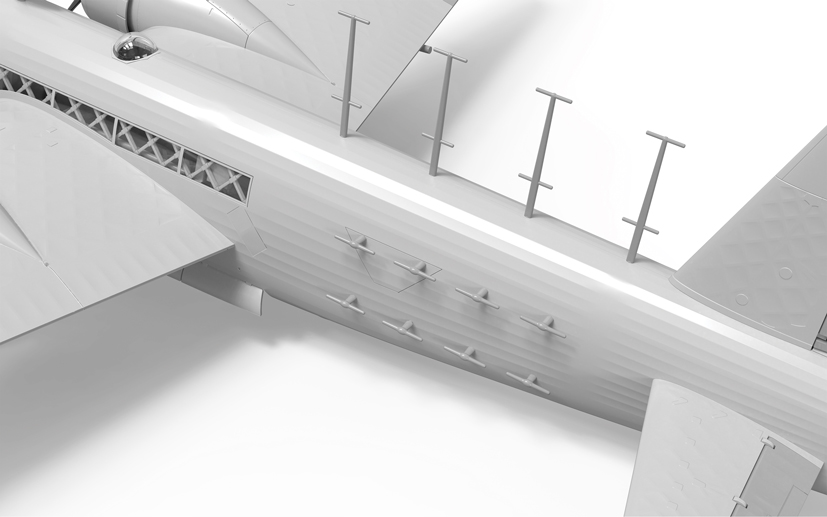
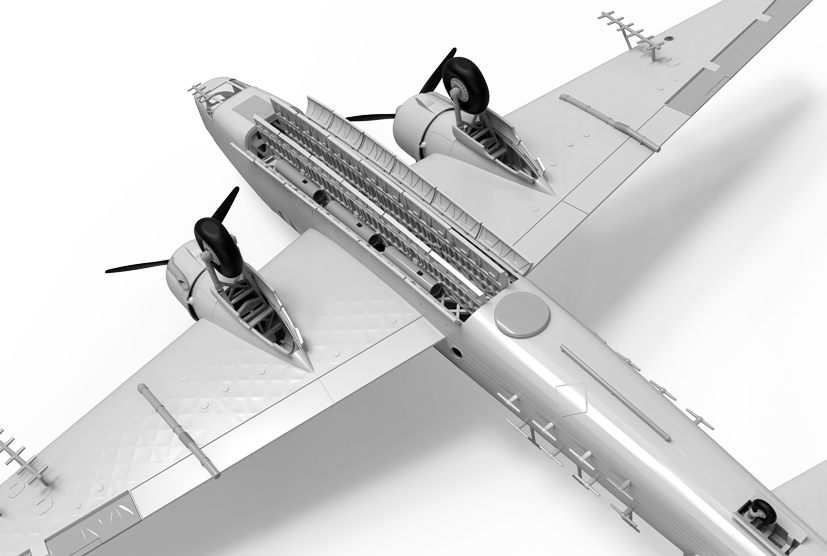
These 3d CAD screenshots show the installation of some of the additional parts included with the forthcoming release of the Coastal Command Wellington GR Mk.VIII
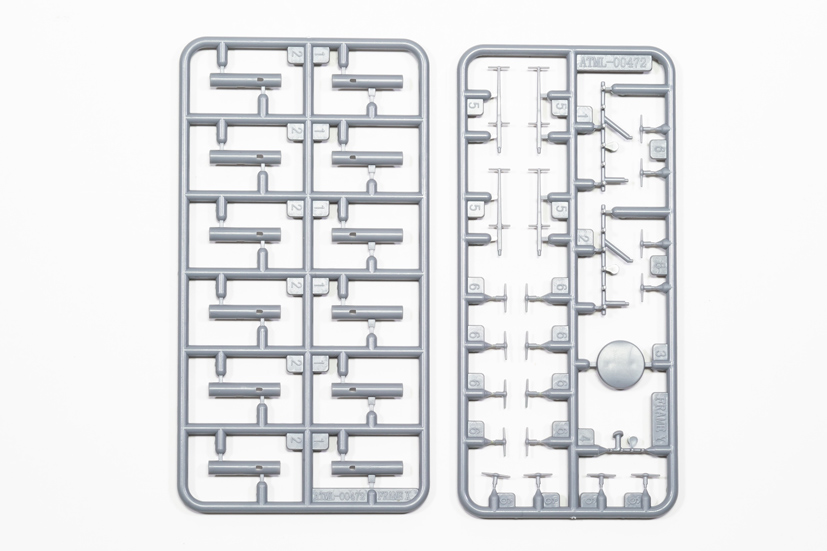
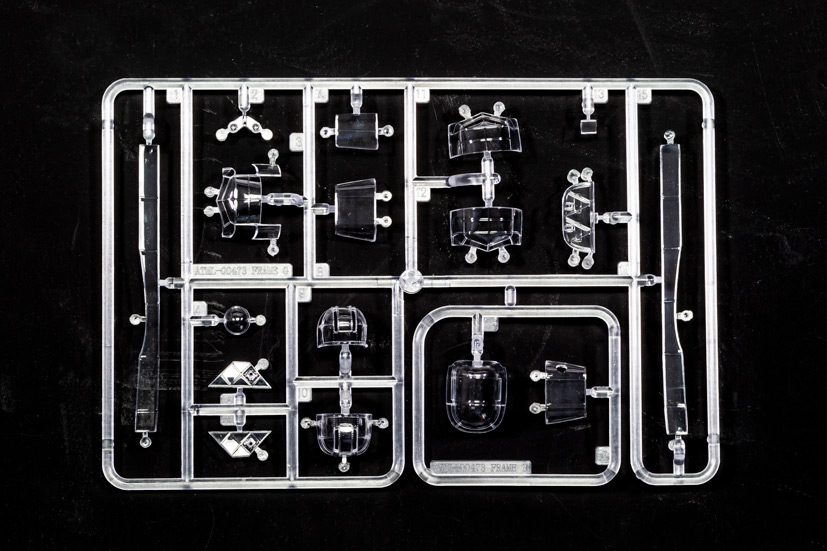
An exclusive first look at the new part frames which will allow the unusual GR Mk.VIII variant of the Vickers Wellington to be constructed
The installation of Leigh Lights is a fascinating aspect of the air war during WWII and one which made a significant contribution to the Battle of the Atlantic. There was a wide variation in the type of installations used to attach these lights to Coastal Command aircraft, with most fitted in a fuselage lowered cradle, but others installed under the wings of aircraft and when used in conjunction with the increasingly effective airborne radar units, this rather innocuous looking device proved to be a decisive weapon in combatting the U-boat menace.
The latest release from our popular 1/72nd scale Vickers Wellington tooling is scheduled for September and will include additional part frames to allow the modeller to produce the GR Mk.VIII variant of the aircraft, which was employed in maritime operations both at home and overseas. The exclusive pictures of the frame components we have included above clearly show that two different versions of this mark of Wellington can be built and as both display some distinct differences, it could be a difficult choice in selecting which one to model. The lead scheme presents a Wellington equipped with the powerful Leigh Light, which proved so effective in disrupting U-Boat operations from the middle of 1942, whilst also representing a significant technological advancement in the capabilities of Coastal Command. Wellington HX379 has the full antenna array which was a feature of the ASV Mk.II radar equipment installation and has the front turret removed and glazed over. As most modellers tend to display their finished models on their undercarriage and the Leigh Light had to be retracted before a Wellington could land, this is how the design team decided to represent this particular aircraft. WN-A is also presented wearing a distinctive Coastal Command scheme.
The second build option is to produce a Wellington GR Mk.VIII wearing a typical RAF Desert Air Force scheme and whilst the aircraft still displays the full ASV Mk.II radar antenna array, it still retains its front turret. Both options are equally appealing and it will be something of a challenge choosing one over the other. Let’s take a closer look at both of these scheme options.
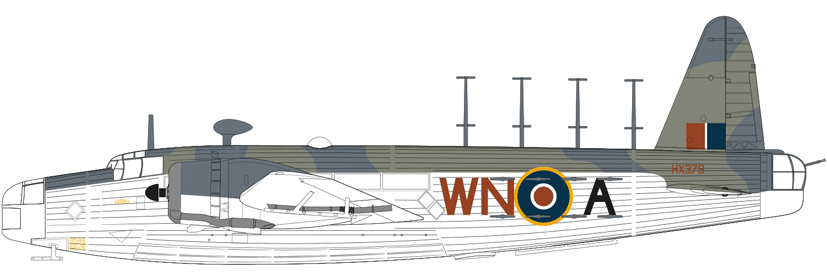
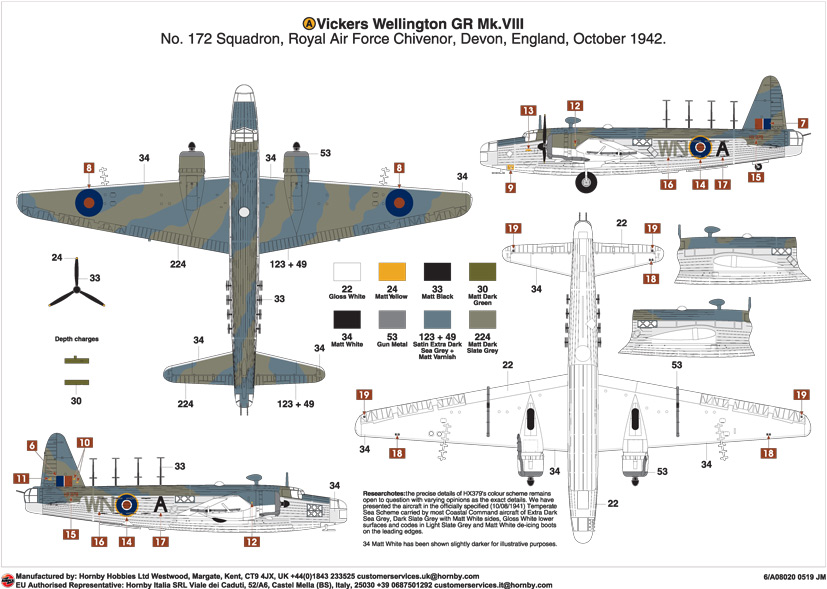
Full scheme details featuring a Leigh Light equipped Wellington GR Mk.VIII of No.172 Squadron, a beautiful new representation of this famous bomber and a little known feature of its wartime use
A Maritime version of the Wellington Mk.IC used so successfully by the Royal Air Force, the GR Mk.VIII was produced in three distinct variants, the most distinctive of which were the 58 aircraft equipped with both ASV Mk.II radar and a powerful Leigh Light, intended for use in night time operations against surfaced U-boats. The first RAF Squadron to be equipped with the Leigh Light Wellington was No.172 Squadron, formed at Chivenor on 4th April 1942, having initially been designated No.1417 (Leigh Light) Flight. On its first patrol, a Wellington from the squadron detected and attacked the Italian submarine Luigi Torelli – piloted by Squadron Leader Jeaffreson Greswell, his Wellington detected and illuminated the Italian vessel, which remained surfaced and even fired identification flares, assuming the aircraft was friendly. The Wellington made two attack runs on the submarine, dropping depth charges and badly damaging the vessel, forcing it to make for port in Spain, but also proving the effectiveness of the radar/Leigh Light detection system. The squadron’s first confirmed submarine kill occurred on 5th July 1942, when U-502 was destroyed in the Bay of Biscay, west of La Rochelle.
With the ability to either destroy or significantly disrupt enemy U-boat activity, the Leigh Light equipped Wellingtons of Coastal Command were in great demand and wherever U-boats posed a particular threat, the aircraft would be dispatched to deal with them. This would see the Wellingtons flying from various airfields, both in the UK and the Mediterranean, as the essential work of maintaining Britain’s sea lanes continued throughout the war. After serving with No.172 Squadron and helping to establish the operational credentials of these unusual anti-submarine aircraft, Wellington GR Mk.VIII HX379 transferred to No.179 Squadron, where it would fly similar operations from RAF Gibraltar. On the night of 2nd/3rd June 1943, it was one of four aircraft sent to patrol the approaches of the Mediterranean against enemy U-boat activity. After the aircraft had been patrolling for some time, the crew reported that one engine had failed and they were immediately returning to base. Little is known about what happened next, but the aircraft was later reported as having ditched in the sea, some 19 miles west of Gibraltar. In what must have been a particularly heavy ditching, some of the crew sustained significant injuries and with their life raft damaged in the incident, they were all left clinging to debris floating on the sea. Two men decided to try and swim to the Spanish coast to raise the alarm and were fortunate to be picked up by a fishing boat when they were on the point of exhaustion – tragically, nothing more was heard of the crew mates they were forced to leave behind.
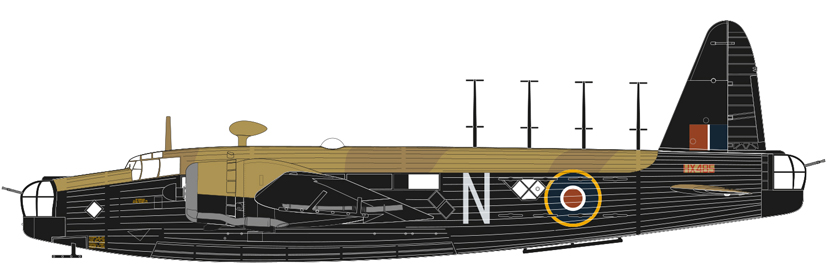
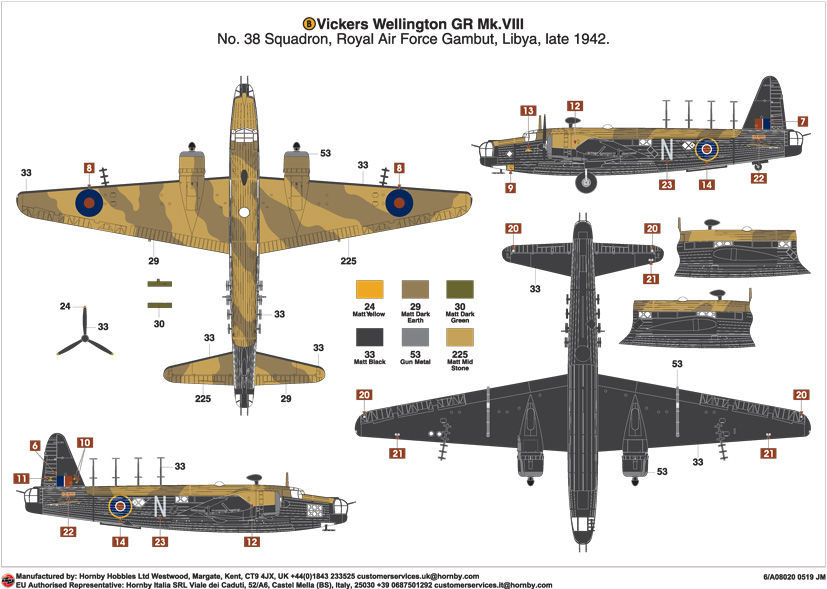
Wearing a Desert Air Force night bomber scheme, this extremely unusual Wellington scheme retains the front turret, but includes the radar antenna which mark this as a shipping strike machine
Although the Wellington is more readily associated with Bomber Command operations against German targets in Europe, the aircraft also made a significant contribution to Allied maritime operations during WWII. RAF No.38 Squadron had a relatively uneventful start to the Second World War, mounting long patrols out into the North Sea, but avoiding the costly early raids into Germany and occupied Europe, however, all this would change when they were sent to Egypt in November 1940 and operations against German and Italian forces in the region. They would spend the next year attacking Axis bases in the Mediterranean, supporting Allied advances and disrupting the enemy’s ability to fight, with the Wellington serving as the main attack bomber of the Middle East night bomber force. At the beginning of 1942, the squadron received their new Wellington GR Mk.VIII radar equipped bombers and were re-trained to launch night attacks against Axis shipping in the Mediterranean, a role at which the aircraft excelled, making a significant contribution to Allied fortunes in the region. Radar equipped Wellingtons, which were colloquially referred to as ‘Snoopingtons’, would patrol the shipping lanes in search of Axis shipping convoys at night and once detected, they would report their position to torpedo equipped Wellingtons, or ‘Torpingtons’. With their attacks needing to be made at heights of only 70 feet above the waves in the dead of night, the torpedo equipped Wellington crews would need all the help they could get and their radar equipped counterparts would either shoot flares over the target, or if equipped with the powerful Light Lights, could provide a more stable illimitation of the target.
These dangerous operations were essential in reducing the enemy’s ability to re-supply and re-deploy their forces and played a significant role in reducing the effectiveness of Axis operations in the Mediterranean Theatre. Indeed, as enemy shipping losses continued to mount, it became more difficult for these maritime Wellingtons to find targets and their patrol areas were expanded for this reason, making their already dangerous missions even more hazardous. The scheme worn by Wellington GR Mk.VIII HX485 ‘N’ represents a machine in standard RAF Middle Eastern night bombing colours, even though it is equipped with the ASV Mk.II radar unit which proved so effective against Axis shipping targets, including surfaced U-boats. As was the case with the aircraft covered in the A scheme, this aircraft was also lost at sea, having developed engine problems during one of its long ocean patrols – diching into the sea west of Bengazi, not all the crew would survive the incident, a fate which tragically befell a great many Allied airmen engaged in protecting the sea lanes.
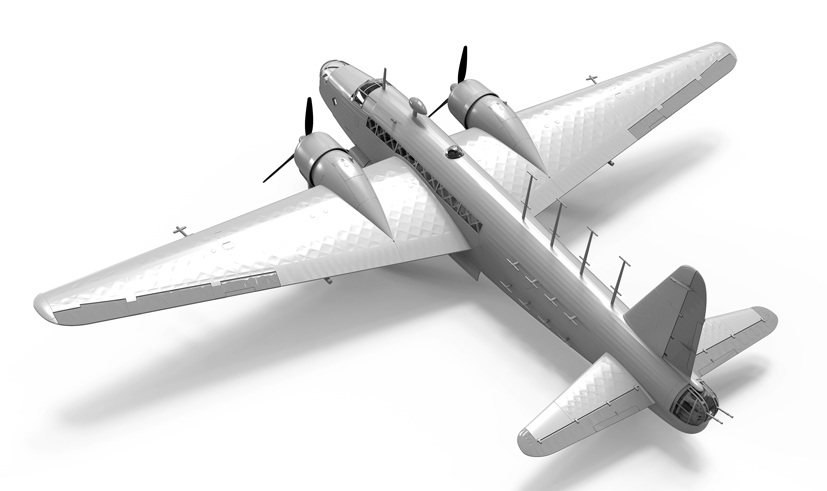
This submarine hunting Wellington will appeal to many modellers and would look great displayed next to a model finished in the Bomber Command scheme more readily associated with this classic British bomber
The latest kit release from our new Vickers Wellington tooling (A08020) presents the aircraft as it was employed in the vital struggle to protect Allied shipping and to detect and destroy the feared German U-boats, using specialist equipment and some distinctive fuselage additions. They not only represent a relatively unknown wartime use for this venerable old bomber, but will also provide the modeller with an appealing subject for their latest build project. The Wellington GR Mk.VIII A08020 is scheduled for a September release and we look forward to bringing you confirmation of what promises to be spectacular box artwork in a forthcoming edition of Workbench.
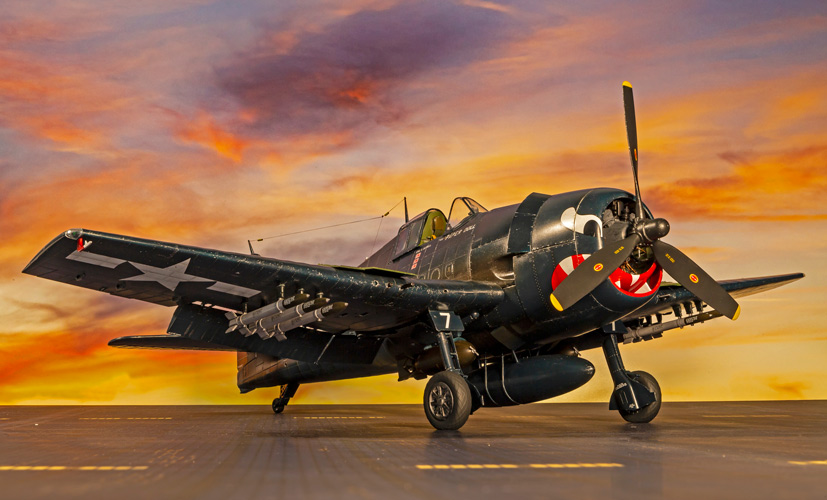
With the coordinated release date of our new 1/24th scale Grumman F6F-5 Hellcat fast approaching, there really was only one subject for the auspicious occasion of our 100th blog, in the previous edition of Workbench – a full development review of this magnificent model. Undoubtedly, the Airfix team have excelled themselves once more with this latest kit in our historically successful large scale aviation range, immortalising one of the world’s great fighting aeroplanes in highly detailed kit form. An aircraft which may not have seen much service in Western Europe, the Hellcat is still familiar to anyone with an interest in WWII aviation history as one of the most important aircraft of the conflict and the one which proved significant in turning the tide of war in the Pacific Theatre, posting some unbelievable combat statistics in the process. Produced in just two major variants, the Hellcat was introduced relatively late in the war, but nevertheless made a huge contribution to the eventual Allied victory. With the first Mitsubishi Zero fighters falling to the guns of US Navy Hellcat pilots in October 1943, over the next two years, the Hellcat would post an unequalled combat ratio of 19 to 1 and made ‘Aces’ of no fewer than 305 US Navy pilots. Amazingly, the Hellcat was responsible for 75% of all aerial combat victories claimed by US Navy pilots during WWII, despite its relatively late introduction. Without doubt, the new Airfix Grumman Hellcat serves to pay detailed tribute to one of the world’s great fighting aeroplanes and arguably the finest naval fighter in the history of warfare. It will make a fine addition to the Airfix range, with huge international appeal and a nice departure from the more usual aircraft subjects which fought predominantly in the European Theatre.
The combat record of the Grumman Hellcat is unquestionable, but when you look a little deeper into the notable history of this aircraft, perhaps its most impressive attributes were all centred around the Grumman production lines at Long Island. Even as the Japanese Navy launched their surprise attack against US forces at Pearl Harbor, it is claimed that many of their military planners thought that the attack would only allow them a further six months of relatively unopposed operation, before America would finally be in a position to challenge them effectively. Indeed, although never historically corroborated, it is thought that the raid planner Admiral Isoroku Yamamoto was reputed to have said in the aftermath of the raid, ‘All we have achieved is to awaken a sleeping giant’. Rather than break the resolve of the American people, it galvanised a nation which had until that point, seemed reluctant to be dragged into war, but following the Pearl Harbor attack, seemed hell bent not only on revenge, but on achieving ultimate victory. As far as the Japanese were concerned, the Hellcat was the very embodiment of this fear and when America’s industrial prowess was brought to bear in producing the right naval fighter for the Pacific air war, they got everything right. Engaging the input of current US Navy fighter pilots, they listened to what attributes they would hope for in any new fighter and incorporated these into the design of the Hellcat. A completely different aircraft from its Wildcat predecessor, the Hellcat was ready for war as soon as it arrived with combat units, the latest rugged product of the famous Grumman ‘Ironworks’ – not only would the Hellcat help the average squadron pilot to score victories, it would also be capable of bringing him home safely, a luxury which was not enjoyed by Japanese pilots. Using world leading production and quality control techniques, as more and more Hellcat fighters arrived on the decks of US Navy carries, more and more Japanese fighters were falling to their guns. To make matters much worse, Japan could not produce aircraft at anything like the rate they were loosing them and their replacement pilots were little better than trainees. The Hellcat wrestled a hard fought superiority of the air from the Japanese and ensured they would never be in the ascendancy again.
In the previous edition of Workbench, we looked closely at the rather colourful lead scheme option which will accompany the release of the new Hellcat kit and how this badly damaged aircraft made its pilot an ‘Ace in a Day’, bringing him safely back to a US carrier, despite sustaining significant damage. Let us now take a look at the three other scheme options which will be tempting modellers following the release of this stunning kit.
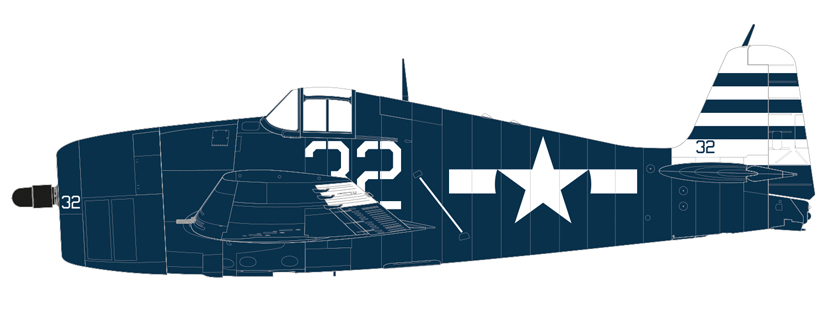
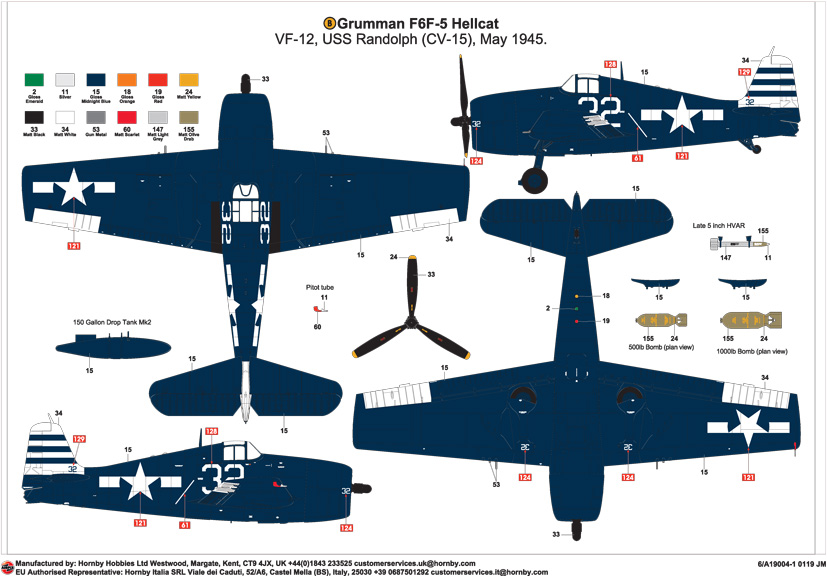
Full scheme details of this VF-12 Hellcat, which was heavily engaged in protecting US warships from the indiscriminate kamikaze attacks which were hurled at US forces during the final months of WWII
As if to underline the rugged, no nonsense reputation of the Grumman Hellcat, few US Navy and Marine Corps machines were presented as flamboyantly as some of the American aircraft which operated in the European Theatre. The first F6F-3 Hellcats were presented in the classic US Navy scheme of the time, which was two tone blue upper surfaces with white undersides and pilots were quick to recognise the fighting prowess of their new fighter, proudly displaying their victory tally under the cockpits of their machines. Once the Navy adopted the overall Midnight Blue scheme for their aircraft, it was relatively unusual to find Hellcat units which went into combat with flamboyantly presented machines and certainly not as distinctive as the VF-27 ‘Angry cat mouth’ artwork Hellcats, a scheme also available with the release of the new kit.
One exception to this general rule were the Hellcats on board USS Randolph, during the final months of the War in the Pacific. Their overall midnight blue scheme was complimented by white coloured ailerons top and bottom, along with four white stripes on their tails. Originally established in January 1943, VF-12 was assigned to USS Randolph in January 1945 and would be heavily involved in the savage island hopping offensives, as American forces prepared for the final onslaught against the Japanese home islands. With overwhelming superiority in men, equipment and supplies, an ultimate American victory was almost assured, however, the desperate resistance of the Japanese at Iwo Jima and Okinawa was cause for real concern, as American causalities were unacceptably high. These offensives also saw the emergence of a devastating new threat which the Hellcats of VF-12 would have to defeat – Kamikaze. With the Americans now holding a firm superiority of the air, Japanese aerial tactics became increasingly desperate and using any airworthy aircraft at their disposal, would pack them with explosives and launch suicide attacks against the American task forces. Despite facing sometimes obsolete aircraft, flown by inexperienced pilots, the Hellcats of VF-12 were facing new dangers, such as the threat of damage from the exploding aircraft they were trying to bring down, or the fear that multiple diversionary attacks may see one of their fanatical adversaries get through their defensive shield. When not engaged in protecting the fleet against Kamikaze attack, they would either protect carrier strike aircraft, or engage in strike operations themselves. Representing the Hellcat at the end of its relatively short WWII combat career, this scheme marks the aircraft which rose to face this sinister new airborne threat.
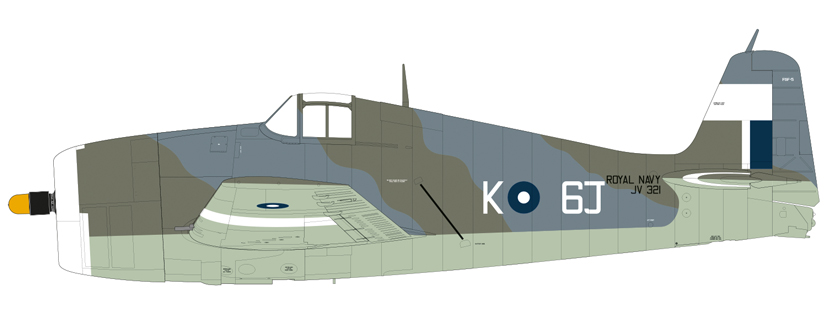
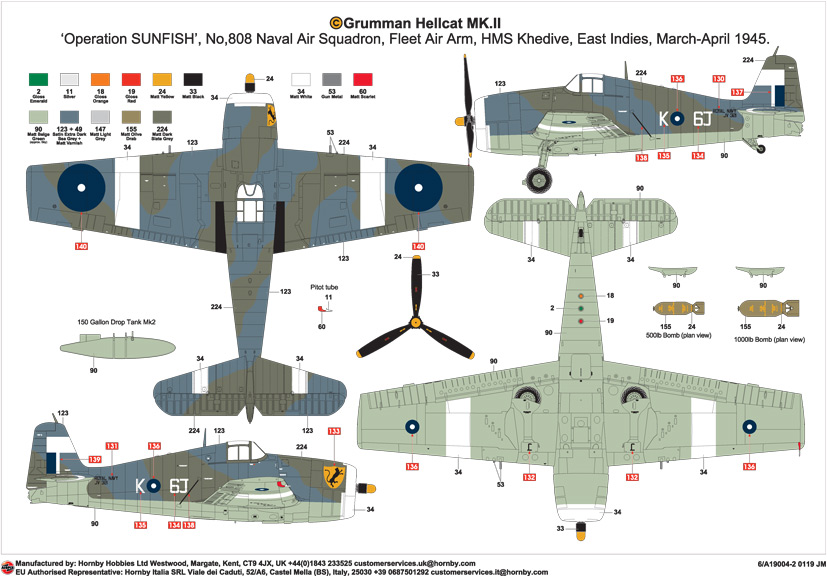
Fleet Air Arm subject matter is always popular with modellers and the combination of our new 1/24th scale Hellcat in a Royal Navy scheme may prove too difficult to resist for many
As arguably the finest naval fighter aircraft of the war, it was obvious that the fighting qualities of the Grumman Hellcat would come to the attention of other air arms, who were keen to add the aircraft to their own aerial arsenals. Britain was allowed to take a significant number of Hellcats under the vital Lend-Lease programme, with 1,177 aircraft eventually supplied, made up of F6F-3, F6F-5 and F6F-5N variants. The first Hellcats to enter Royal Navy service were actually known as ‘Gannets’, but the naming of US built aircraft was standardised from January 1944 onwards – F6F-3 was referred to as the Hellcat I in Fleet Air Arm service and the F6F-5 the Hellcat II.
It would not only be Hellcats which arrived with British units courtesy of the Lend-Lease programme, but also sometimes the ships they operated from. HMS Khedive was constructed as a US BOGUE class escort carrier and transferred to British operation in September 1943 – these vessels were vital in the final push for victory, as Axis forces were now beginning to yield some of the territorial gains they had made earlier in the war and the Allies needed to keep up the pressure. The Hellcat IIs of No. 808 NAS arrived on the decks of HMS Khedive in early 1945 and would play a significant role in the forthcoming ‘Operation SUNFISH’ and actions against Japanese forces on Sabang Island, as the Allies attempted to force a massed enemy retreat in the region. The operation comprised two distinct phases, firstly to gather detailed reconnaissance information of the area, whilst also conducting strikes against enemy shipping, with the second to attack Japanese positions at Emmahaven and Padang. Although Japanese air power in this region was not available in the same strength as that facing American carriers in the Pacific, they still posed a significant threat to the task force and Fleet Air Arm Hellcats would be required to form an aerial shield to protect the ships from attack. The British would end the Pacific War with 52 Hellcat kills, predominantly because they were not facing anything like the enemy aircraft numbers the US Navy were forced to combat, however, British Hellcats provided the Fleet Air Arm with the same rugged naval air asset which was proving to be such a combat revelation for US units. Following the end of WWII, most airworthy British Hellcats were sent back to the US, in accordance with the terms of the Lend-Lease agreement. The attractive Fleet Air Arm scheme included with the new Hellcat kit will prove irresistible for many British modellers and will result in a particularly attractive display model.
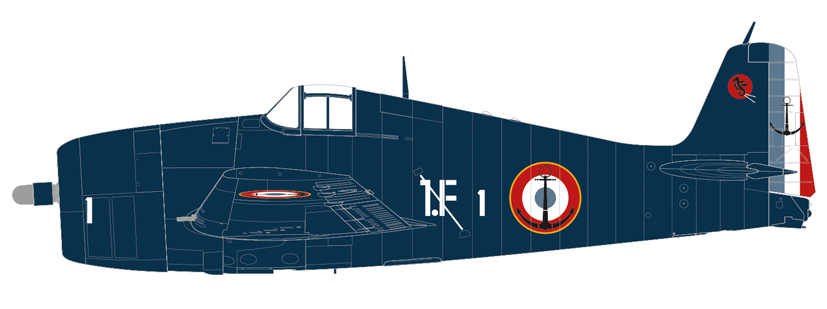
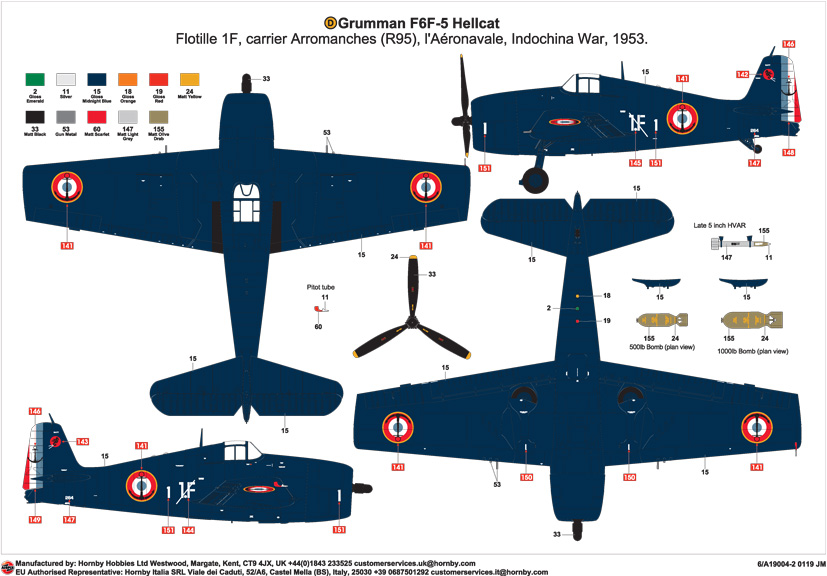
The French Navy were significant operators of the Grumman Hellcat during the Indochina War, operating the aircraft from the former British carrier Arromanches
Another relatively heavy user of the Hellcat was the French Navy, but only after the end of the Second World War and after they had become members of NATO. Around 179 Hellcats were supplied to the French, as they engaged in their fight to prevent the perceived threat of spreading Communism in Indochina – the aircraft would see service with both the French Air Force and Navy. The majority of the aircraft received were the F6F-5 fighter variant and in the main, they would retain the Midnight Blue schemes adopted by their former owners, but with the addition of French insignia, making for a relatively unusual sight. Flottille 1F was the first of the French Navy units to receive the new Hellcat, having relinquished their ageing Supermarine Seafires and immediately saw the qualities of this supreme naval fighter – they would see action from the decks of the carrier Arromanches, which was formerly HMS Colossus. Interestingly, during these operations, they would be working in tandem with the strike aircraft of Arromanches, which were also a product of America’s aviation industry, the Curtiss SB2C Helldiver.
After operations in Indochina, the French Navy continued to operate Hellcats, but mainly in a training and support role. Most of the remaining aircraft would be scrapped in 1960, as French Air Forces were now very much in the jet age.
The impending release of the new 1/24th scale Grumman F6F-5 Hellcat A19004 will not only see our large scale aircraft kit range increasing with the addition of WWII’s premier Allied naval fighter, but also a kit which incorporates even greater levels of detail and accuracy, a clear indication of the continued development of the modelling hobby. With huge numbers of this kit already sold, we know that many Workbench readers will be looking forward to attacking this fantastic kit over the coming months, but the question is, which of the four attractive scheme options available will be the one for you? We very much look forward to seeing your finished models appearing in the Customer Images section of the Airfix website.
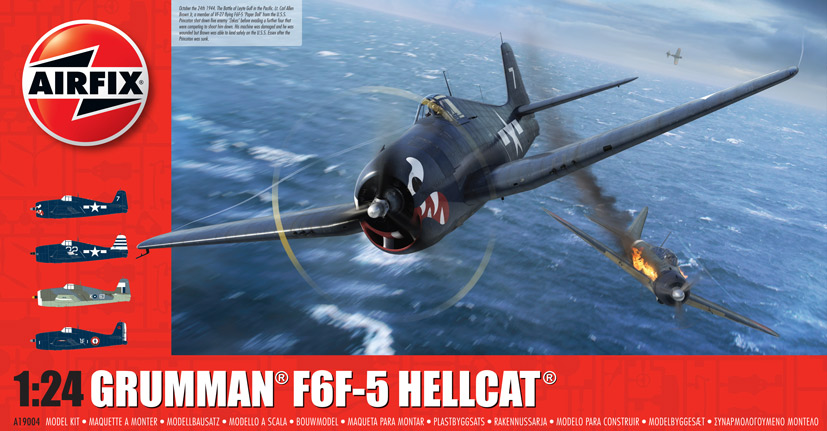
A sight which will soon be gracing the shelves of good model shops everywhere – the new Airfix F6F-5 Hellcat
Before we leave the subject of the new Grumman Hellcat, over the coming months, we intend to include a series of build features within Workbench, intending to provide some build guidance to anyone taking on the Hellcat and copiously illustrated with detailed pictures. Our talented product designer Paramjit is also an incredibly accomplished modeller and he has now taken on two complete Hellcat builds, both finished to an exceptionally high standard and as part of his latest build, he produced a photographic build log, which he thought might be of use to fellow modellers. With huge thanks to Paramjit, we will be bring you a series of these features, following the construction stages of the Hellcat and providing some guidance throughout these various stages – please keep an eye out for these.
Right then, who will be receiving the first UK Hellcat kit this week? Firstly, could we please thank everyone who took the time to enter our Hellcat competition, which saw thousands of people all hoping to be the first owner of this spectacular kit. Unfortunately, there can only be one winner and that lucky Workbench reader, selected at random from the list of correct entries was Tim Crockett – congratulations Tim and we hope you enjoy building this fabulous new kit.
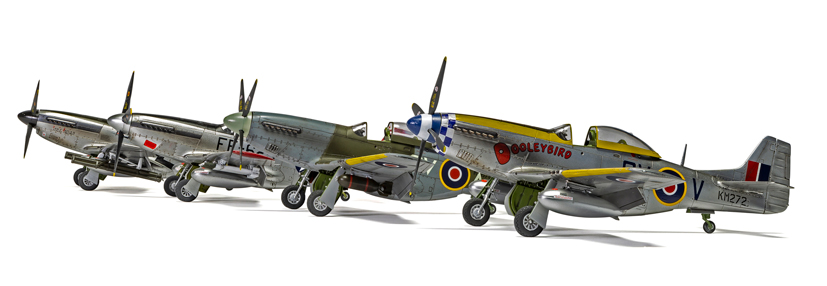
We end this latest edition of Workbench with a modelling tribute to the North American Mustang, one of the finest aircraft of the Second World War and one which enjoys an enduring fascination with modellers all over the world. Wouldn’t you know it, this exclusive selection of build images is also brought to you courtesy of our Product Designer Paramjit and his astonishing modelling talents, as we feature several of his recent model builds based on different representations of the Mustang and looking like the line up from what would be something of a classic Flying Legends Airshow (in scale, of course). We also have to stress that every one of Paramjit’s model builds are done in his own time, a fact which has led many in the Airfix office to question whether he actually bothers to sleep, because the standard of the builds he produces are so impressive – for a modelling magician, he actually looks quite normal!
These builds all feature the new(ish) 1/48th scale Airfix Mustang kit and clearly illustrate the wide variation in attractive scheme options available to modellers when increasing their Mustang collections and even though this was one of the most effective fighter aircraft of WWII, it really is a thing of beauty. Everyone loves a Mustang, so with that in mind, here is a beautiful modelling selection of Mustang images for readers to enjoy.
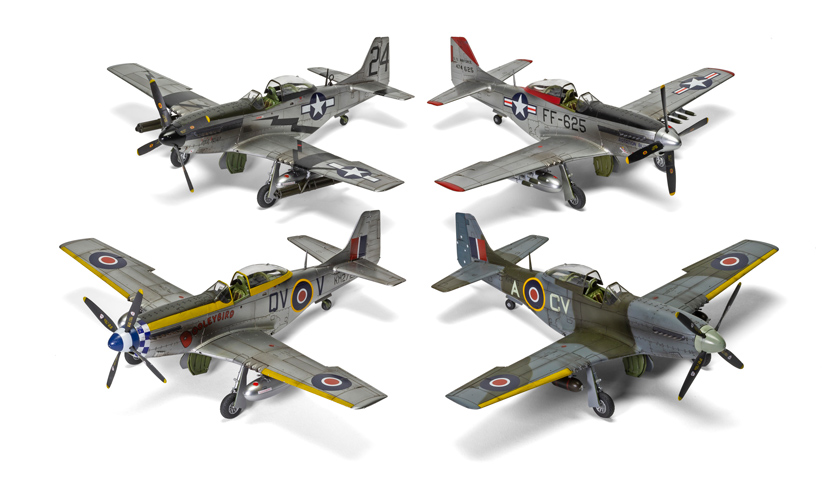
What a magnificent collection – if you made nothing more than 1/48th scale Mustang kits, you would have a display of models featuring interesting schemes and one of the best looking aircraft ever to take to the skies
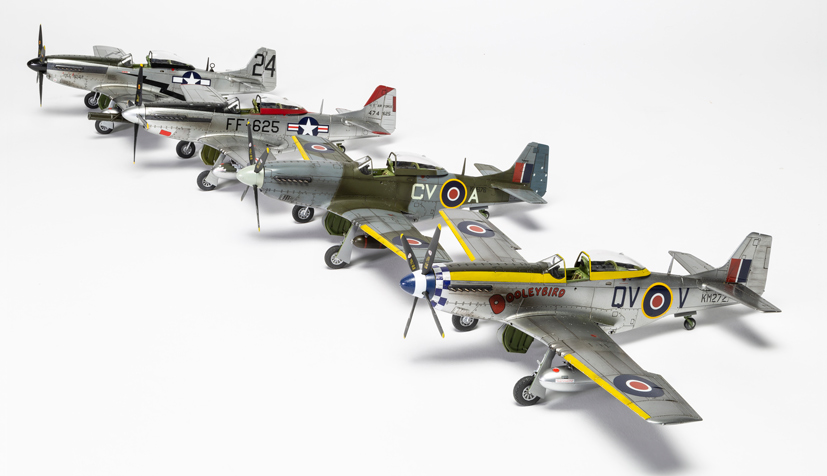
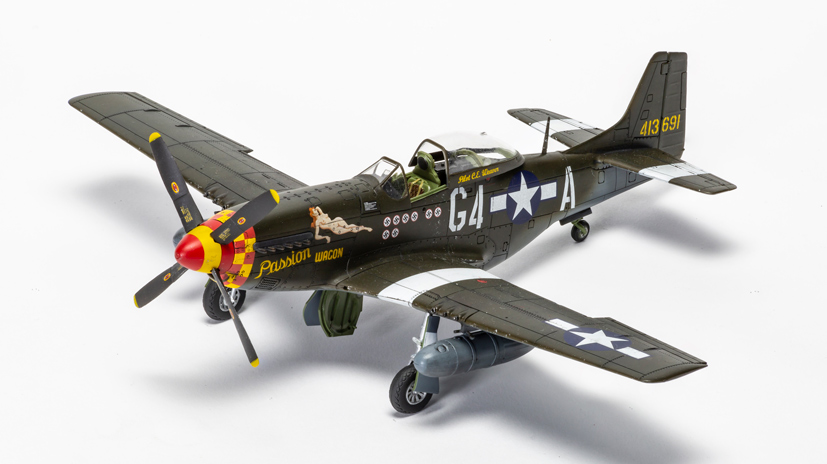
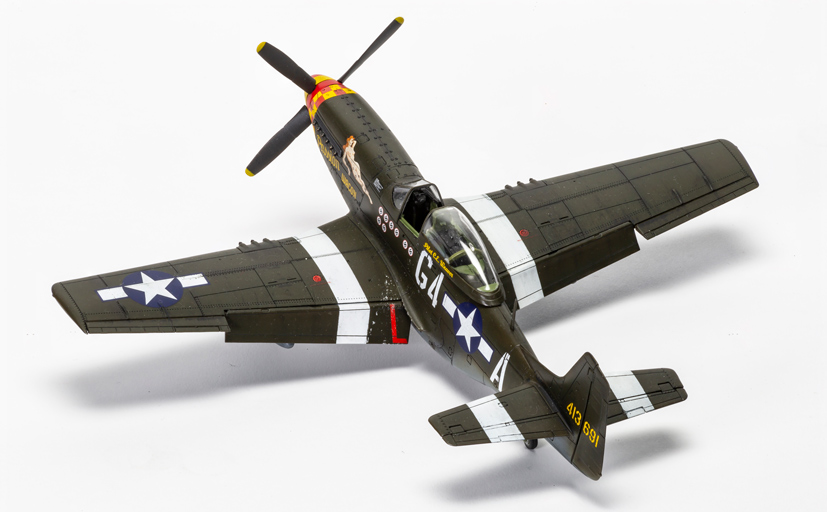
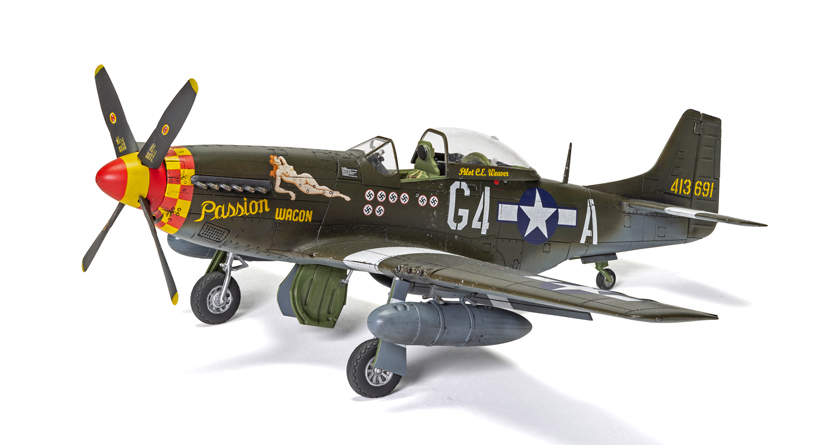
This final selection of images feature a Mustang which benefitted from spectacular nose artwork, the like of which is more readily associated with USAAF bomber aircraft. ‘Passion Wagon’ was actually flown by two different US aces, Arval Robertson and Claude Weaver, both flying with the 357th Fighter Group. The aircraft was modified to have the stabilisation ‘tail fillet’ in the field, so historic images of the aircraft in both configurations can be seen
We are afraid that’s all we have for you in this latest edition of Workbench, however, we will be back as usual in two weeks’ time with a further selection of Airfix modelling delights for your enjoyment. In the meantime, if you have any suggestions for subjects you would like to see covered in a future edition of the blog, or ways in which we could enhance your enjoyment of Workbench, please do not hesitate in contacting us. We can be reached via our usual e-mail address workbench@airfix.com or by contributing to our Workbench thread over on the Airfix Forum. If social media is more your style, you could access either our Airfix Facebook page or Twitter channel, (using #airfixworkbench), where you will find plenty of modelling news, views and discussion taking place. Whichever medium is your preference, please do get in touch, as it is always interesting to hear from fellow modelling enthusiasts and the projects you have on the go at the moment.
As always, the Airfix website is the place to go for all the latest model release information, with our New Arrivals and Coming Soon sections both quickly accessed by clicking either of the links above. As updating the website is an ongoing process, a quick search through each section of the Airfix web pages will often reveal new information and updated images in many of the product sections and this is always an enjoyable way in which to spend a few spare minutes.
The next edition of Workbench is due to be published on Friday 21st June, when we will have more news and modelling features from the fascinating world of Airfix.
On behalf of the entire Workbench team, thank you for your continued support our Airfix blog.
The Airfix Workbench Team
© Hornby Hobbies Ltd. All rights reserved.